


































































































































































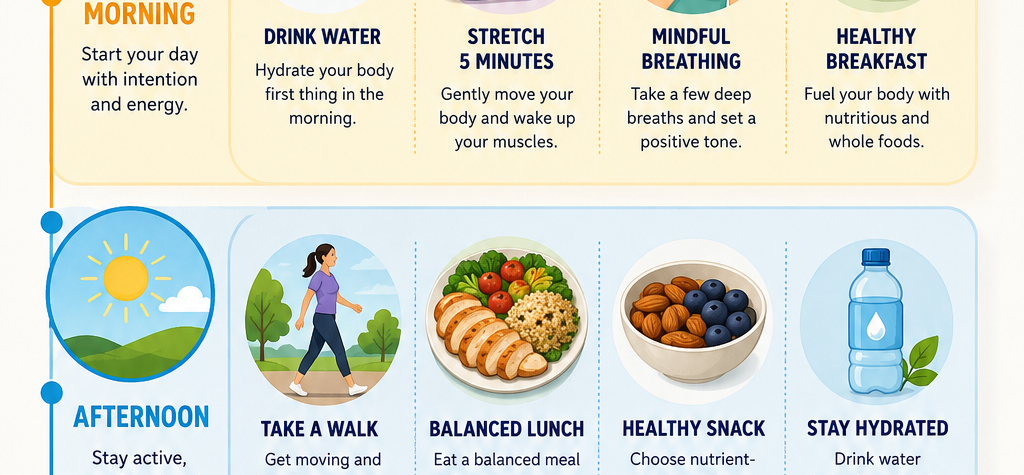
Daily Holistic Wellness Routine for Beginners: 10 Simple Habits
Author: RVLNSV PRASAD
Fact-Checked By: Wellness Research Team
Last Updated: July 2026
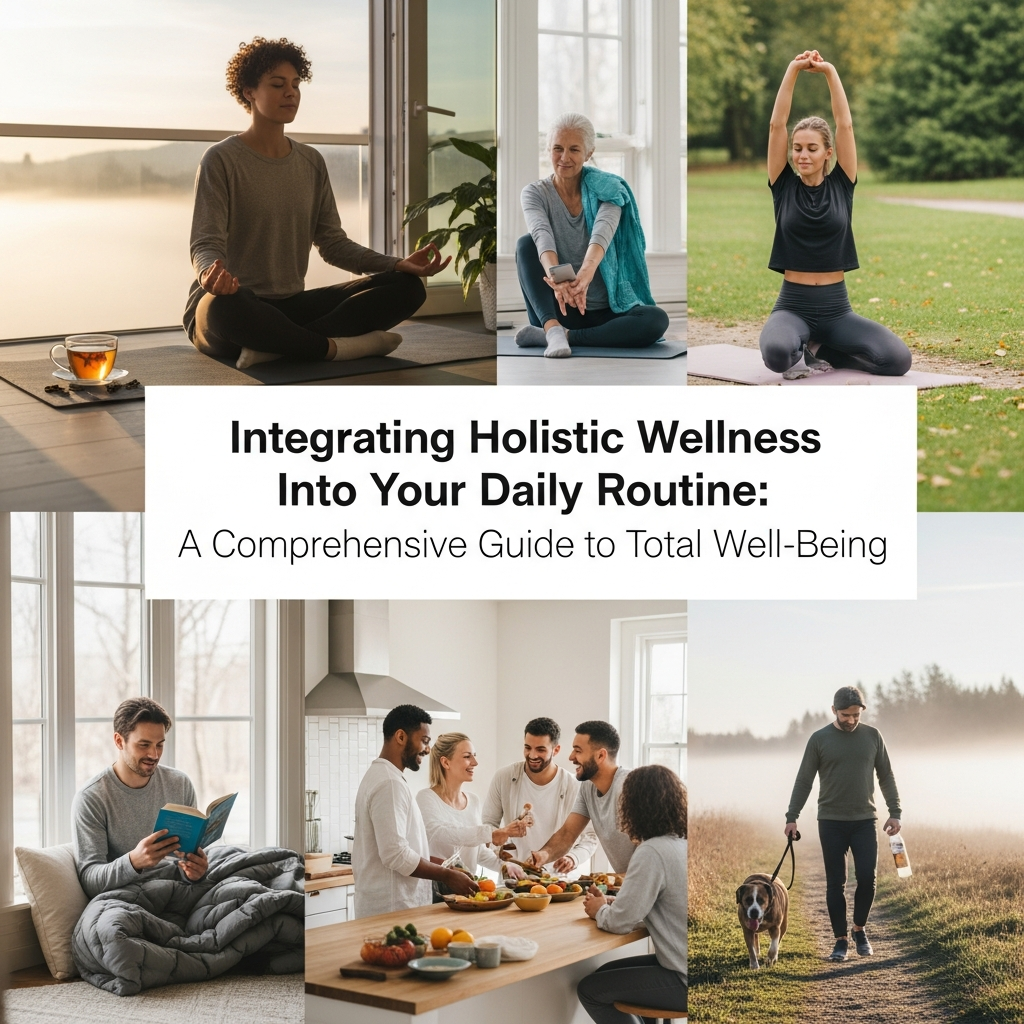
Author’s Note
Author: R.V.L.N.S.V. Prasad
This article references the latest recommendations from respected medical and public health organizations, including the World Health Organization (WHO), National Institutes of Health (NIH), National Center for Complementary and Integrative Health (NCCIH), Mayo Clinic, Harvard Health Publishing, and the American Psychological Association (APA). It pairs wellness advice grounded in research with easy, beginner-friendly tips that help readers create healthy habits that last.
Medical Disclaimer
Medical Disclaimer: The information provided in this article is for educational purposes only and should not be considered professional medical advice, diagnosis, or treatment. Always check with your doctor before making any major lifestyle changes, especially if you have a medical condition, are pregnant, or take prescription medication.
Quick Summary
| Topic | Details |
|---|---|
| Best For | Adults beginning a healthier lifestyle |
| Difficulty | Beginner |
| Time Required | 15–60 minutes daily |
| Main Goal | Build sustainable physical, mental, and emotional wellness habits |
| Evidence Level | Supported by recommendations from WHO, NIH, NCCIH, CDC, Mayo Clinic, and Harvard Health |
| Results | Gradual improvements with consistent daily practice |
Holistic Wellness Program for Beginners
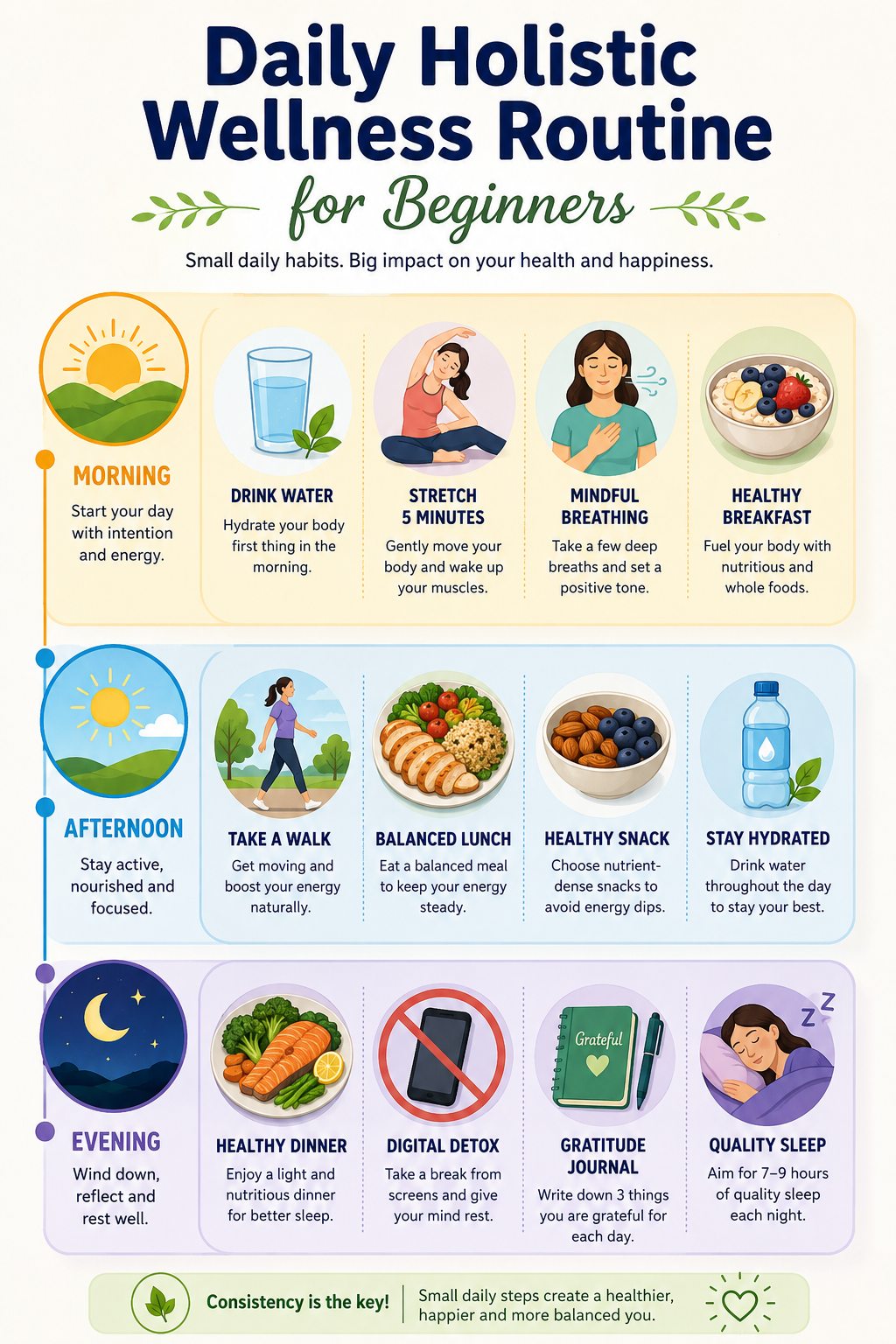
Starting a holistic wellness routine for beginners. It doesn’t mean you have to make significant changes all at once. In fact, most successful wellness journeys generally start with just one or two basic habits done consistently.
Many people become excited when they start a new health routine. They purchase gym equipment, download health apps, or develop elaborate regimens. But those plans are often difficult to follow after a few weeks because they ask for too many changes at once.
It is not a holistic approach.
Rather than focusing on one objective, such as losing weight or exercising more, it focuses on your total well-being. Better physical health, mental clarity, emotional balance, quality sleep, proper nutrition, stress management, relationships, and daily purpose all contribute to better health.
Research consistently demonstrates evidence that lifestyle habits have a substantial impact on long-term health. Regular physical activity, healthy eating, good sleep, stress management, and social interaction lead to higher overall well-being and a lower risk of many chronic diseases. The World Health Organization and Centers for Disease Control and Prevention are among those that recommend adopting these behaviors gradually, rather than looking for quick fixes.
One reason newcomers struggle is that internet wellness advice can be overwhelming. One article advocates rigorous diets. Another encourages complex workout schedules. Some people recommend buying expensive vitamins or equipment even before you start.
The truth is considerably simpler.
Good living is not about big change; it’s about the small decisions we make every day.
Real-Life Experience
After reviewing hundreds of evidence-based wellness recommendations from trusted health organizations, one pattern emerged: People who start with manageable habits are generally more successful than those who try to make complete lifestyle transformations overnight.
For example, substituting one sugary beverage daily with water might seem like a tiny change. But with a short daily walk, a consistent bedtime, and a few minutes of focused breathing, these habits can steadily build a healthier routine that feels sustainable, not exhausting.
The goal isn’t perfection.
The goal is consistency.
In this guide, you’ll learn practical, science-backed techniques to help you create a beginner wellness routine that’s easy to incorporate into everyday life. You’ll find simple tips to eat healthier, become more active, handle stress, sleep better, and develop daily healthy habits that will help you stay healthy over time without feeling deprived.
So if you’re just starting your wellness journey after years of a sedentary lifestyle, or if you want to lead a more balanced lifestyle, these ideas can help you develop a routine that’s flexible, fun, and easier to follow.
Why a Holistic Approach Works Better Than Quick Fixes
Health trends that promise quick results are plentiful. Extreme diets, tough training challenges, and detox programs typically grab attention because they seem to promise immediate changes.
Unfortunately, they seldom form lasting habits.
A holistic lifestyle focuses on lasting change rather than quick results. It doesn’t look at one area of your health in isolation but understands how your body and mind interact. American College of Lifestyle Medicine – https://lifestylemedicine.org/
For example:
- Poor sleep can reduce energy for exercise.
- Chronic stress can impact your nutrition.
- Lack of movement can impair your mood.
- If you become dehydrated, you may feel tired and unable to concentrate.
- A healthy diet will help you to function well both physically and mentally.
Improving one area typically leads to beneficial adjustments in other areas.
This interconnected approach is why many healthcare professionals encourage lifestyle medicine instead of relying solely on individual health interventions whenever appropriate. American College of Lifestyle Medicine – https://lifestylemedicine.org/
Quick Comparison: Traditional Health Goals vs. Holistic Wellness
| Traditional Approach | Holistic Wellness Approach |
|---|---|
| Focuses only on weight | Focuses on overall health |
| Short-term motivation | Long-term sustainable habits |
| Extreme dieting | Balanced nutrition |
| Intense exercise plans | Consistent enjoyable movement |
| Ignores mental health | Supports emotional well-being |
| One goal at a time | Multiple areas working together |
| Quick fixes | Lifelong healthy habits |
What Is Holistic Health?
Holistic wellness is the practice of taking care of the full person, not just one piece of health.
Instead of asking,
How Can I Lose Weight?
a holistic mindset asks,
“What daily behaviors can help me feel healthier physically, psychologically, emotionally, and socially?”
In this expanded view, we recognize that several interconnected elements influence wellness, such as:
- Exercise
- Healthy eating
- Quality of sleep
- Emotional wellness
- Stress control
- Social relations
- Self-development
- Environmental health
When one area improves, it helps the others.
For example, one might get restorative sleep that puts them in a better mood, and that might help them stay active and prepare healthier foods the next day. Also, frequent activity can help lower stress, which can help you sleep better and be more emotionally resilient.
The Eight Dimensions of Holistic Wellness
Many health experts describe wellness as consisting of several interconnected dimensions. While different organizations use slightly different models, these eight areas provide a practical framework for beginners. WHO – Health Promotion https://www.who.int/health-topics/health-promotion
| Wellness Dimension | Why It Matters | Simple Beginner Habit |
|---|---|---|
| Physical Wellness | Supports strength, energy, and disease prevention | Walk for 20–30 minutes on most days |
| Emotional Wellness | Helps manage stress and emotions | Practice gratitude or journaling |
| Mental Wellness | Improves focus and learning | Read for 15 minutes daily |
| Social Wellness | Strengthens relationships | Spend quality time with family or friends |
| Spiritual Wellness | Provides meaning and purpose | Reflect, meditate, or pray |
| Occupational Wellness | Supports work-life balance | Take regular breaks during work |
| Environmental Wellness | Creates healthier surroundings | Keep your living space organized |
| Financial Wellness | Reduces stress from money concerns | Follow a simple monthly budget |
Holistic well-being is not about perfection.
It’s about making conscious choices that are beneficial for your overall quality of life over time.
Why Beginners Are So Overwhelmed
It’s easy to get excited about a healthy daily routine for beginners, but many people lose motivation because they expect results too soon or try to change too many habits at once.
Typical problems are the following:
- Setting unreachable objectives
- All at once, you may be following numerous health trends.
- Comparing yourself to others.
- Limited time
- Inconsistent sleep schedules.
- You can’t expect your motivation to stay high every day.
Real-Life Insight
Many beginners believe motivation comes first. In reality, action often comes first.
On a low-energy day, a five-minute walk may not seem like much, yet it builds the habit of turning up. These little things over weeks and months build confidence and make healthy choices feel more automatic.
That’s one reason experts advocate picking routines that are easy to repeat rather than striving to make them perfect.
Benefits of Following a Holistic Wellness Routine
Sticking to a holistic health regimen on a regular basis can bring you a lot of benefits for your overall wellness. NIH – https://www.nih.gov/
Potential benefits include the following:
- More daily energy.
- Better sleep quality.
- More effective ways to manage stress.
- Improved mood.
- More attention and focus.
- More physical strength and mobility.
- Healthier eating habits.
- Better hydration.
- More confidence in maintaining healthy routines.
- All-around, it leads to a better quality of life.
It is vital to note that everyone responds differently. Results will vary depending on age, lifestyle, pre-existing health issues, and consistency. Wellness is a long-term journey, not a short-term problem.
What You Will Learn Next
In the next section, you’ll learn about a complete holistic wellness routine for beginners that schedules a realistic morning-to-night schedule, the 10 most successful daily wellness habits, practical starter suggestions, common mistakes to avoid, and simple techniques to develop healthy routines that persist.
Beginner’s Guide to Holistic Wellness: Daily Routine for Newbies
Learning about healthy habits is one thing, but the real change happens when you build a routine in your daily life. A holistic wellness routine for beginners doesn’t mean waking up at 5 a.m., stringent diet plans, or hours at the gym. Instead, it centers on tiny, repetitive behaviors that promote your physical, mental, and emotional well-being throughout the day.
The routine below is meant to be flexible. If your work hours, family needs, or health needs dictate the timing, change it but keep the healthy habits.
Beginner Tip: Don’t try to do it all on your first day. Pick 2 or 3 behaviors this week, then add a new one every 7-10 days as it becomes part of your routine.
A Simple Daily Wellness Routine
| Time | Wellness Habit | Main Benefit |
|---|---|---|
| Morning | Drink water | Supports hydration after sleep |
| Morning | Gentle stretching or yoga | Improves flexibility and circulation |
| Breakfast | Balanced meal | Provides steady energy |
| Mid-Morning | Short walk | Encourages movement and focus |
| Afternoon | Healthy lunch | Supports sustained energy |
| Afternoon | Mindful breathing | Helps manage daily stress |
| Evening | Light exercise or family walk | Supports heart health and relaxation |
| Evening | Screen-free time | Prepares the mind for sleep |
| Night | Consistent bedtime | Promotes quality sleep and recovery |
Morning: Lay a Positive Foundation
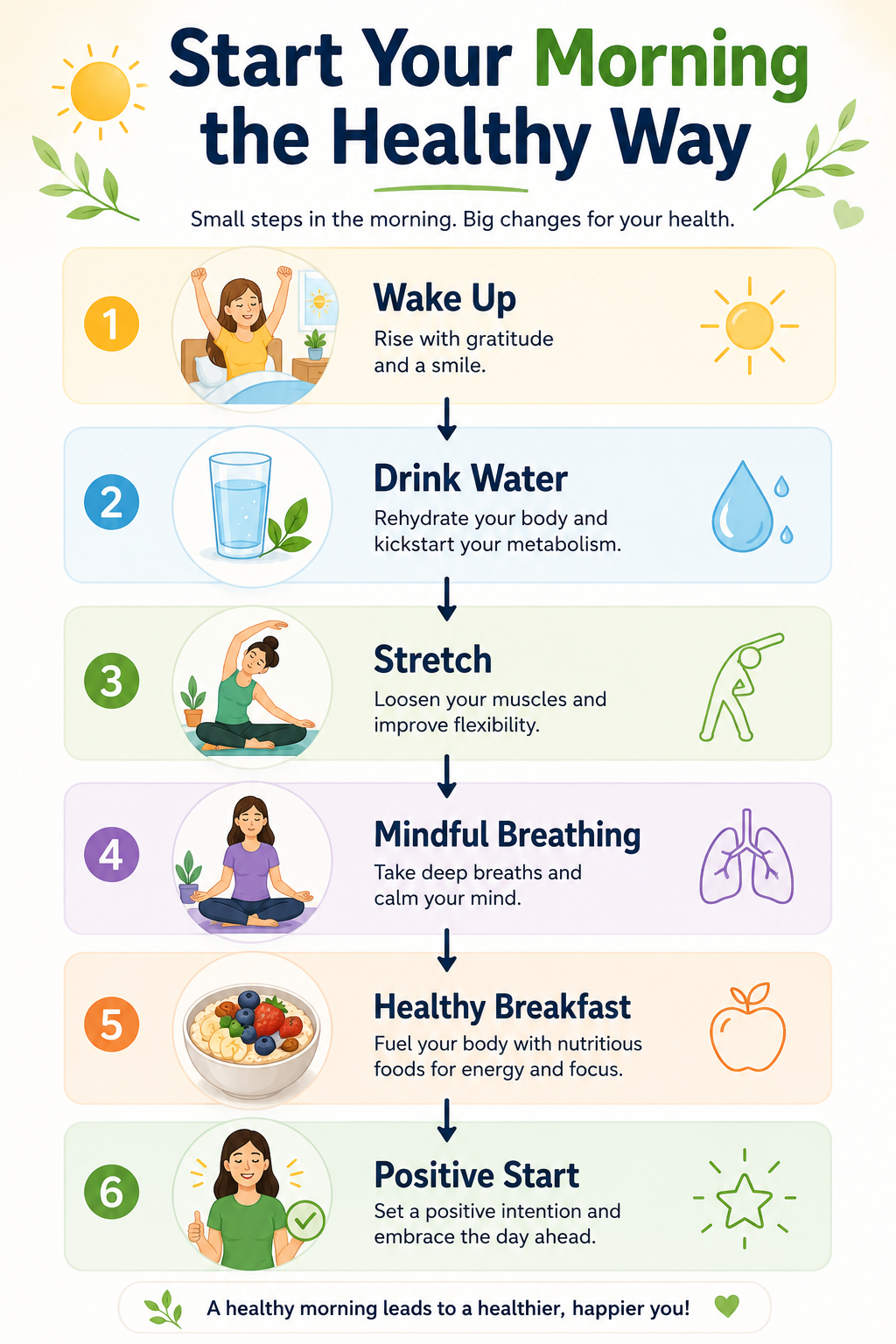
The first hour after you wake up is generally the tone-setter for the rest of your day. Instead of immediately checking your phone or rushing off to work, take a few minutes to tend to your body and mind.
1. Rehydrate Your Body
You lose water when you sleep, naturally. A glass of water early in the day helps replace fluids and maintain normal physiological functions. Harvard T.H. Chan School of Public Health – Water https://nutritionsource.hsph.harvard.edu/water/
Adding lemon is optional. While lemon water can make plain water more enjoyable for some people, it doesn’t “detox” the body. Your liver and kidneys already perform that job effectively.
Why It Works
Proper hydration helps to regulate temperature, circulation, digestion, and optimal mental functioning. Mild dehydration can sap your energy or make you feel fatigued. Harvard T.H. Chan School of Public Health – Water https://nutritionsource.hsph.harvard.edu/water/
Real-Life Experience: For many beginners, simply drinking water before coffee makes them feel more energized in the morning. It’s a small habit that’s easy to keep and often leads to healthier choices throughout the day.
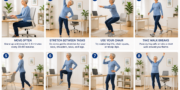
2. Five Minutes of Stretching
Slow movement helps wake up muscles and joints after several hours of sleep.
Simple stretches to begin with include:
- Neck rolls
- Shoulder circles
- Cat-Cow stretch
- Standing side stretch
- Gentle hamstring stretch
- Hip circles
If you love yoga, a few beginner poses such as Child’s Pose, Cat-Cow, or Mountain Pose can help with flexibility and mindful breathing.
Why This Works
Stretching in the morning helps enhance blood flow and mobility while reducing stiffness. It also gives us a moment to relax before the busy day begins.
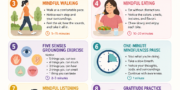
3. Practice Mindful Breathing
Before opening your emails or scrolling social media, take two to five minutes to pause.
Focus on breathing slowly.
The following little exercise should prove useful:
- Inhale for 4 seconds.
- Hold for two seconds.
- Exhale slowly for six seconds.
- Repeat 5-10 times.
This simple technique builds awareness of the present moment and may help to lessen feelings of tension before the day’s duties begin.
Pro Tip for Beginners: If you struggle with meditation, start with 1 minute. “It’s more important to be consistent than to sit a long time.
4. Have a Healthy Breakfast
Breakfast doesn’t have to be difficult.
Aim to include
- Lean protein
- Whole grains
- Fruit
- Healthy fats
Examples are
- Nuts and berries on oatmeal
- Fruit and Greek Yoghurt
- Eggs on whole wheat bread
- Vegetable omelet
- Fruit and spinach protein shake
A nutritious breakfast helps keep your energy levels stable and may help you eat less later in the day.
Morning Wellness Checklist
| Habit | Completed |
|---|---|
| Drank water | □ |
| Stretched | □ |
| Practiced mindful breathing | □ |
| Ate a balanced breakfast | □ |
| Avoided checking my phone immediately | □ |
Mid-Morning: Maintain Your Energy
For many people, energy levels begin to dip a few hours into the workday. Don’t reach for sugary snacks right away; use this time to replenish your body with easy movement.
Take a Short Walk Break
Walking is one of the most accessible types of physical activity for beginners.
Even a short 10- to 15-minute walk can
- Improve circulation
- Re-energize your brain
- Minimize prolonged sitting
- Promote heart health
- Increase daily activity
In addition, walking outdoors can have other benefits, such as exposure to natural light and a change of scene.
Real-Life Experience: People are generally more consistent about taking short walks when they schedule them on their calendars than when they wait to “find time.” Treating movement like an appointment makes it easier to maintain.
Practice Better Posture
If you spend long hours sitting, check your posture several times each day.
Simple reminders include:
- Relax your shoulders.
- Keep both feet on the floor.
- Position your screen at eye level.
- Stand up every 30–60 minutes.
- Stretch your back and neck.
Muscles can become uncomfortable when you stay in the same position for long periods of time. A few little changes in posture may reduce the discomfort.
Midday: Nourish Your Body
Lunch is more than just filling your stomach. It supplies nutrients for energy, concentration, and general health in the second half of the day.
Choose balanced meals instead of restrictive diets.
A simple rule of thumb is to fill your plate with:
- Half vegetables
- ¼ lean protein
- 1/4 whole grains or healthy carbohydrates
You can also add healthy fats like olive oil, avocado, seeds, or almonds in moderation.
Build a Balanced Lunch
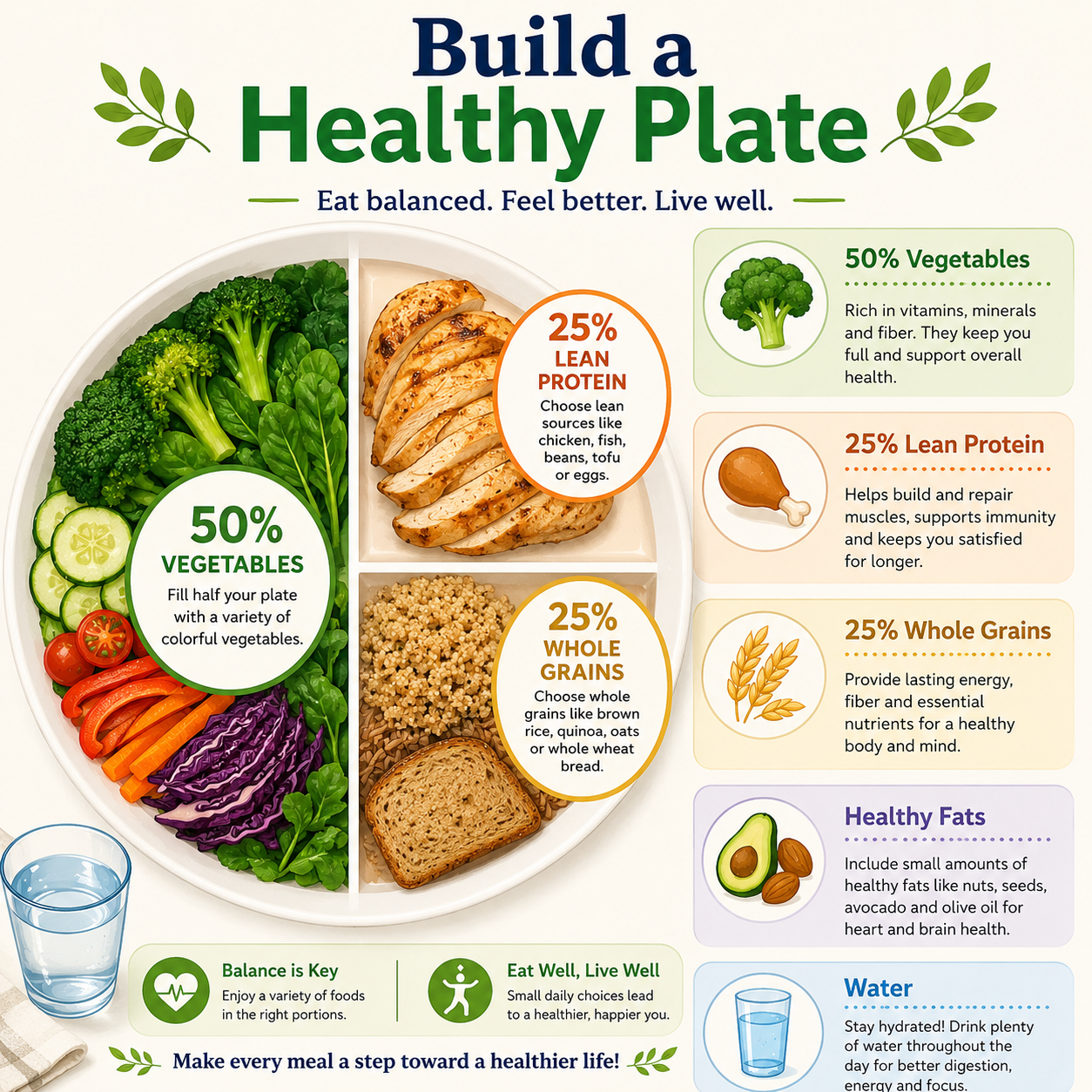
| Food Group | Examples |
|---|---|
| Vegetables | Broccoli, spinach, carrots, cucumbers, peppers |
| Lean Protein | Chicken, fish, beans, lentils, tofu |
| Whole Grains | Brown rice, quinoa, whole-wheat bread |
| Healthy Fats | Avocado, olive oil, almonds, walnuts |
| Fruit | Apple, orange, berries, pear |
Eat Mindfully
Many people eat lunch while answering emails or watching videos.
Mindful eating encourages you to:
- Slow down.
- Chew thoroughly.
- Notice flavors and textures.
- When you are comfortably full, stop eating.
Doing so can assist in raising awareness of hunger and fullness cues.
Stay Hydrated All Day
Hydration is often ignored in a daily wellness regimen, yet it plays a crucial role in sustaining overall health.
Don’t wait until you’re thirsty:
- Have a reusable water bottle with you.
- Drink water at mealtimes.
- Increase fluids during hot weather or exercise.
- Try to choose water more often than sugary drinks.
Daily fluid consumption also includes foods such as watermelon, cucumbers, oranges, tomatoes, and strawberries.
Pro Tip: Put your water bottle somewhere you’ll see it often. Visual reminders can help new habits become automatic.
Afternoon: Recharge Without losing steam
Many novices struggle with less focus and motivation in the afternoon.
Try practices that revive the body and mind rather than just using caffeine or sugar.
Take a Five-Minute Mindfulness Break
Stop working.
Close your eyes if comfortable.
Concentrate on steady breathing.
Notice if you feel any strain in your shoulders, jaw, or neck.
Simple mindfulness exercises like these might help you return to work feeling calmer and more focused.
Healthy Midday Snack Ideas
When possible, choose snacks that contain protein and fiber.
Examples include:
Apples sliced with peanut butter
Greek yogurt
Mixed nuts
Vegetables with hummus
Cottage cheese with fruit
Roasted chickpeas
These foods provide a more sustainable source of energy than heavily processed nibbles.
Common Morning and Afternoon Mistakes
| Mistake | Better Choice |
|---|---|
| Skipping breakfast | Eat a balanced meal with protein and fiber |
| Drinking very little water | Sip water throughout the day |
| Sitting for several hours | Walk or stretch every hour |
| Eating lunch at your desk every day | Take a short break whenever possible |
| Choosing sugary snacks | Pair protein with fruit or vegetables |
| Waiting for motivation | Follow your routine consistently, even on low-energy days |
Why Small Habits Result in Long-Term Success
Many associate long-term health with the idea of radical change.
But research on behavior change suggests the opposite.
Small habits are easy to repeat, and the more you do, the more they become routine. Healthy decisions become automatic, which requires less motivation and mental work.
For instance:
- A five-minute walk can easily turn into a 20-minute walk.
- One extra glass of water a day creates a lifelong hydration habit.
- Eventually, a minute of breathing exercises can be a daily mindfulness practice.
These gradual improvements are more maintainable than trying to do a drastic lifestyle overhaul.
Experience-Based Insight: If you take a closer look at the advice of the health experts, one thing is clear: permanent health requires regular, acceptable habits, not perfect implementation. Usually, those who are just starting out and celebrate the small victories are more successful in maintaining a healthy lifestyle pattern over months and years than those looking for immediate results.
Evening: Take It Slow and Start Again
As the day approaches its end, your body naturally begins to prepare for bed. Maintaining a regular bedtime pattern signals to your brain that it’s time to relax, which makes it simpler to unwind and enjoy a good night’s sleep.
Morning habits are designed to stimulate you; evening habits are designed to slowly decrease physical and mental stimulation.
Beginner Tip: You don’t have to have a lengthy nighttime ritual. Taking purposeful care of yourself for even 20–30 minutes at a time can have a cumulative effect over time.
1. Enjoy Light Physical Activity
If you’ve been sitting for much of the day, little light activity in the evening will help ease stiffness and boost circulation.
Options that are friendly for beginners are:
- 20–30 minute walk
- Gentle yoga
- Stretching
- Light cycling
- Gardening
- Outdoor play with children
- Easy bodyweight exercises
If intense exercise interferes with your sleep, avoid it within one to two hours of bedtime.
Why This Works
Regular activity is good for your cardiovascular health, muscle strength, joint mobility, and stress management. If practiced regularly, it can also lead to a better sleep quality. CDC – Physical Activity Basics https://www.cdc.gov/physical-activity-basics/
Practical Experience: Many novices think that only strenuous exercise “counts.” In reality, the movement you enjoy and can do daily is frequently the easiest to stick with and, over time, will give you meaningful health benefits.
2. Eat a Well-Balanced Dinner
Dinner should be filling but not so filling that it prevents sleep.
A plate that’s balanced might have the following:
- Lean protein
- Colorful vegetables
- Whole grains or starchy vegetables
- Healthy Fats
Examples include:
- Brown rice with grilled fish and steamed vegetables
- Lentil soup and whole-grain bread
- Chicken stir-fry with vegetables
- Quinoa and roasted vegetables with tofu
If possible, try to eat two to three hours before going to sleep.
3. Cut down on screen time
Phones, tablets, TVs, and computers are part of everyday life, but using screens too much before bed could make it harder for some people to relax. Sleep Foundation – Sleep Hygiene https://www.sleepfoundation.org/sleep-hygiene
Instead, use the last 30-60 minutes before sleeping to do relaxing activities such as
- Reading a book
- Gentle stretching
- Journaling
- Listening to relaxing music
- Meditation practice
- Talking with your family
These habits make for an easier transition into sleep.
4. Look back on your day
Holistic wellness is not just about physical health; it’s about emotional health, too.
You might find it useful to spend a few minutes reflecting to notice your progress, not just what you have left to do.
A few simple journaling prompts are the following:
- What was helpful today?
- What healthy decision am I proud of?
- What moved me today?
- One thing I will do better tomorrow?
- What am I thankful for?
Beginner Tip: You don’t have to write large journal entries. Three simple statements can help you to be more self-aware and create better habits.
Night: Prioritize Rest and Recovery
Sleep is a vital component of a holistic health routine, although it is often neglected. NIH – Sleep https://www.nhlbi.nih.gov/health/sleep
While you are sleeping, your body does plenty of important things, such as repairing tissues, consolidating memories, regulating hormones, and supporting your immune system. NIH – Sleep https://www.nhlbi.nih.gov/health/sleep
Build a Healthy Bedtime Routine
Intend to:
- Go to bed at the same time.
- Keep your bedroom cool, quiet, and dark.
- Don’t eat a giant dinner before bed.
- If caffeine is disrupting your sleep, cut back on it later in the day.
- If your mind feels occupied, try relaxation techniques.
Why This Works
A restful sleep helps:
- Mental focus
- Mood
- Physical recovery
- A healthy metabolism
- Immune system functioning
- General well-being
Experiential Insight: Many novices attempt to improve their health by exercising more and sleeping only five or six hours a night. The truth is . . . when you sleep better, it might be a lot simpler to eat healthy, exercise regularly, and handle stress.
10 Daily Wellness Habits Every Beginner Should Develop
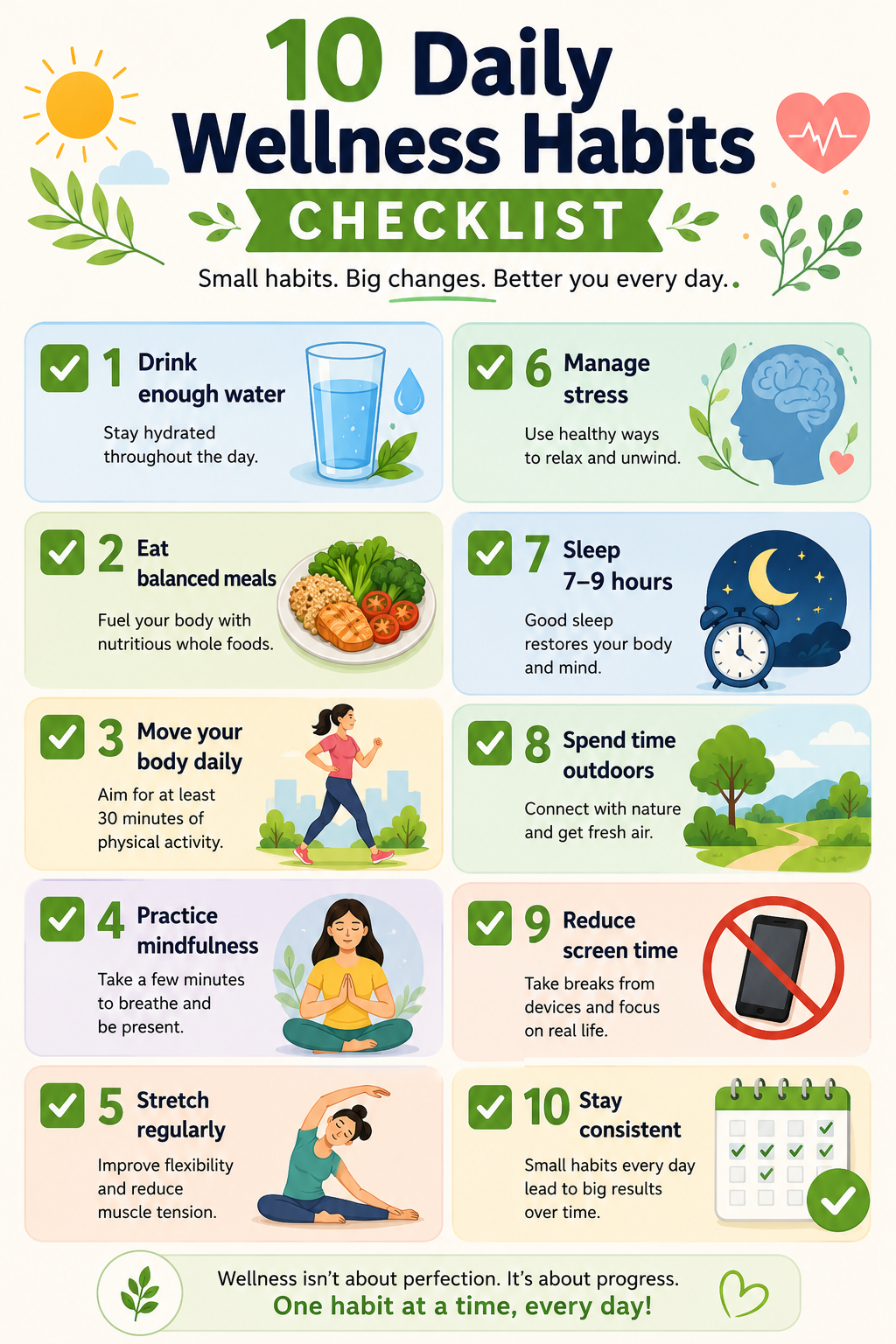
It’s far easier to develop a holistic wellness routine for beginners if you’re focusing on a few regular habits instead of trying to alter everything at once.
1. Drink enough water Why it matters
Water is essential for almost every system in your body.
Beginner Action
Carry a reusable water bottle throughout the day.
Common Mistake
Waiting until you feel thirsty.
2. Move Your Body Every Day
Movement doesn’t need to be complicated.
Walking, stretching, gardening, dancing, or cycling all count.
Beginner Action
Aim for 20 to 30 minutes of movement that you like.
How Does It Work
Regular activity promotes heart health, mobility, energy, and emotional well-being.
3. Consume More Whole Foods
Choose foods in their natural state.
For example:
Fruit
Vegetables
Whole grains
Beans
Nuts
Seeds
Fish and eggs
Beginner Action
Eat one more portion of vegetables a day with your meals.
4. Engage in Mindfulness
Mindfulness can help you be present, rather than stressing about the past or the future.
Simple practices include:
- Deep breathing
- Meditation
- Prayer
- Nature walks
- Body awareness
Common Mistake
Thinking meditation has to last 30 minutes.
Even five minutes can be a valuable starting point.
5. Prioritize Quality Sleep
Sleep supports nearly every aspect of health.
Beginner Action
Choose a regular bedtime and follow it most nights.
6. Form Positive Relationships
Good social relationships are beneficial for your emotional health.
Choose people who encourage healthy behaviors and give you emotional support.
7. Manage Daily Stress
Stress is a normal part of life, but it is important to learn to cope with it in healthy ways. American Psychological Association – Stress https://www.apa.org/topics/stress
Healthy ways include:
- Walking
- Deep breathing
- Yoga
- Reading
- Talking with someone you trust
- Spending time outdoors
8. Practice Gratitude
Seeing the good things that happen can help you to think in a healthy way.
Write down three things you were grateful for that day every night.
9. Keep on Learning
Personal growth is a vital aspect of holistic wellness.
Read books, learn new skills, or listen to educational podcasts about healthy living
10. Celebrate the Small Wins
Progress is rarely linear.
Don’t demand perfection. Celebrate every healthy choice you make.
Examples:
- Opting for water instead of Coke.
- Going for a little walk.
- Making a balanced lunch.
- Small victories build confidence and create lasting habits
Small victories build confidence and lasting habits.
Common Beginner Mistakes (and How to Avoid Them)
| Common Mistake | Why It Can Be a Problem | Better Approach |
|---|---|---|
| Trying to change everything at once | Often leads to burnout | Introduce one new habit every week |
| Following extreme diets | Difficult to maintain | Focus on balanced nutrition |
| Skipping rest days | May increase fatigue | Include recovery and flexibility |
| Comparing yourself to others | Reduces motivation | Measure your own progress |
| Expecting instant results | Creates frustration | Focus on consistency |
| Ignoring stress | Affects physical and mental health | Practice daily stress-management techniques |
| Sleeping too little | Reduces energy and recovery | Aim for a consistent sleep schedule |
| Giving up after one setback | Interrupts progress | Restart the next day without guilt |
Printable Daily Wellness Checklist
| Daily Habit | ✓ |
|---|---|
| Drank enough water | □ |
| Ate balanced meals | □ |
| Included fruits and vegetables | □ |
| Moved my body | □ |
| Practiced mindful breathing | □ |
| Took short movement breaks | □ |
| Limited sugary drinks | □ |
| Connected with family or friends | □ |
| Practiced gratitude | □ |
| Reduced screen time before bed | □ |
| Slept at a consistent time | □ |
Pro Tips for Long-Term Success:
✔ Begin Small.
Start with one or two habits.
It is typically too much to try to learn ten behaviors in one week.
✔ Do it the night before
Lay out your workout clothes, pack healthy snacks, or fill up your water bottle.
Small changes to remove barriers can make healthy choices easier.
✔ Follow Your Progress
Use a calendar, habit tracker, or notebook.
Looking back at how far you’ve come can be a motivator.
✔Expect imperfection
If you miss a healthy habit, you haven’t lost all your progress.
Tomorrow, get back into your routine instead of waiting for the “perfect” time to do so.
✔ Consistency above perfection
“One healthy meal doesn’t make you healthy, and one unhealthy meal doesn’t make you unhealthy.”
It’s the long-term habits that matter much more than the occasional slip-ups.
Experience-Based Insight: From reviewing evidence-based wellness guidance, I’ve learned consistently that sustainable routines win out over short-lived bursts of motivation. People who create simple habits such as drinking more water, walking every day, eating balanced meals, and sleeping at a regular time are usually better able to stick to a beginner health program than those who rely on willpower alone.
Looking Ahead
By now, you should know how to create a realistic morning-to-night holistic wellness routine for beginners, as well as the daily habits that support long-term physical, mental, and emotional well-being.
7-Day Beginner Holistic Wellness Plan
Creating lasting habits doesn’t require changing your entire lifestyle in a single day. This simple 7-day plan helps you build one habit at a time, making your holistic wellness routine for beginners feel achievable and sustainable.
Beginner Tip: Repeat this plan for several weeks until the habits feel natural. Consistency is more important than intensity.
| Day | Focus | Simple Action |
|---|---|---|
| Monday | Hydration | Drink a glass of water after waking up and carry a reusable water bottle. |
| Tuesday | Movement | Take a 20–30 minute walk or complete a beginner-friendly stretching routine. |
| Wednesday | Nutrition | Add one extra serving of vegetables and one serving of fruit to your meals. |
| Thursday | Mindfulness | Practice five minutes of deep breathing or meditation. |
| Friday | Sleep | Go to bed at the same time and avoid screens for 30–60 minutes before bedtime. |
| Saturday | Social Wellness | Spend quality time with family or friends or call someone you care about. |
| Sunday | Reflection | Review your progress, celebrate small wins, and prepare for the upcoming week. |
Weekly Wellness Habit Tracker
Tracking your progress helps reinforce healthy behaviors and keeps you motivated.
| Healthy Habit | Mon | Tue | Wed | Thu | Fri | Sat | Sun |
|---|---|---|---|---|---|---|---|
| Drank enough water | □ | □ | □ | □ | □ | □ | □ |
| Ate balanced meals | □ | □ | □ | □ | □ | □ | □ |
| Exercised or walked | □ | □ | □ | □ | □ | □ | □ |
| Practiced mindfulness | □ | □ | □ | □ | □ | □ | □ |
| Slept 7–9 hours | □ | □ | □ | □ | □ | □ | □ |
| Limited screen time before bed | □ | □ | □ | □ | □ | □ | □ |
| Practiced gratitude | □ | □ | □ | □ | □ | □ | □ |
How to Stay Consistent With Your Wellness Routine
Starting a routine is exciting, but maintaining it is where real progress happens. Many people don’t struggle because they lack motivation; they suffer because their routines aren’t realistic.
These are strategies to help you stay consistent.
1. Begin with One Habit
Trying to improve your diet, exercise, sleep, stress management, and productivity all at once.
Instead, focus on one behavior at a time until it becomes a regular part of your routine.
For example:
- Week 1: Drink more water.
- Week 2: 1 walk each day.
- Week 3: Upgrade Your Night Routine.
Little victories build momentum.
2. Stacking Habits
Habit stacking is just layering a new habit on top of something you currently do. Harvard Health Publishing – https://www.health.harvard.edu/
For example:
- Drink water and brush your teeth.
- Make your bed, then brush your teeth.
- Breathe deeply before you eat breakfast.
- After dinner, write in your gratitude journal.
This easy approach helps you to recall new habits.
3. Anticipate Roadblocks
Life isn’t always going to be how you want it.
Don’t aim for perfection; prepare for busy days.
Examples:
- Bring healthy snacks to work.
- Keep a bottle of water in your car.
- Have a 10-minute workout ready to do at home on rainy days.
- If you don’t have fresh vegetables, use frozen ones instead.
Planning ahead helps you stay on track.
4. Celebrate the progress you’ve made
Every good decision matters.
Celebrate the tiny wins:
- The end of your daily trek.
- Drink plenty of water.
- Selecting a well-balanced meal.
- Getting to bed on time
When you highlight improvements, you establish confidence and long-term consistency.
Experience-Based Insight: One of the most common trends we notice in successful lifestyle changes is that people who focus on progress (not perfection) are more likely to sustain good habits over time. Missing a workout or eating an imperfect meal doesn’t delete all your progress. The secret is to return to your routine the following day.
Signs Your Health & Wellness Routine is Working
Beginners of a holistic wellness routine usually show slow effects. Don’t expect significant changes in a few days, but expect steady improvements over several weeks.
You may see:
- Longer-lasting energy during the day.
- Better sleep quality.
- Better mood
- Fewer worries.
- More mobility and flexible
- Better concentration.
- Improved eating habits.
- More confidence in maintaining healthy habits.
- Better digestion.
- Increased general well-being
Understand that not everyone’s improvement is linear. How soon you see changes depends on your age, how active you are, your health, and your lifestyle.
When to Seek Medical Attention
Healthy lifestyle behaviors can improve general well-being, but they are not a substitute for medical care. Mayo Clinic – Healthy Lifestyle https://www.mayoclinic.org/healthy-lifestyle
Talk to your healthcare provider if you
- Have chronic fatigue
- Difficulty sleeping.
- Experience unexplained weight loss or weight gain.
- Feel persistently low or anxious for several weeks.
- Chest pain, lightheadedness, or shortness of breath with exertion.
- Have a chronic condition such as diabetes, heart disease, or kidney disease.
- Are pregnant or breastfeeding.
- Plan to begin a completely new diet or exercise routine
This step is especially important if you have existing health concerns or are taking prescribed medication, where individual medical advice is essential.
Key Takeaways
- Holistic wellness is about caring for your full self—body, mind, emotions, and social well-being.
- Start with one or two healthy habits; don’t try to change everything at once.
- Occasional intense efforts are not as effective as daily consistency.
- Good sleep, balanced meals, regular exercise, hydration, and stress management all contribute to your overall health. WHO – Health Promotion https://www.who.int/health-topics/health-promotion
- Celebrate those little wins and see how far you’ve gone.
- Create habits that fit into your life, not impossible timetables.
- Wellness is a lifelong journey, not a few weeks’ battle.
Conclusion
You don’t require costly programs or dramatic lifestyle changes to create a holistic wellness routine for beginners. Often, tiny consistent actions repeated every day create healthy routines.
Drinking enough water; eating nutritious foods; engaging in regular activity; managing stress; getting quality sleep, and having meaningful relationships all may seem straightforward, but they work together to provide a solid foundation for lifelong health. World Health Organization (WHO) – Health Promotion
https://www.who.int/health-topics/health-promotion
You don’t have to get everything right from the start. Begin with one healthy habit today, practice daily, and build on your achievement. Those little choices can become lifelong habits that help you take care of your physical health, your emotional well-being, and your entire quality of life.
We’re not looking for perfection here, just slow and steady progress toward a healthier, more balanced way of living.
Frequently Asked Questions
1. What is a beginner’s holistic wellness routine?
A holistic wellness program for beginners is a daily program to improve your physical, mental, emotional, and social health through healthy habits like balanced nutrition, regular movement, quality sleep, water, mindfulness, and stress management.
2. How long does it take to develop a wellness routine?
Studies indicate that some people are more or less successful in forming habits. Many people discover that, after a few weeks of consistent practice, routines become easier to do.
3. Do I have to workout every single day?
No. Most adults can benefit from regular physical activity, but so can rest and recovery. You can walk, stretch, do yoga, and strength train. All of them are beneficial things.
4. What is the easiest habit to start for wellness?
For many newcomers, simple, sustainable first steps can include increasing water intake, walking daily, or improving their sleep schedule.
5. How might holistic wellness help with mental health?
“Healthy lifestyle habits such as regular exercise, good quality sleep, mindfulness, and social connection can help support emotional well-being and manage everyday stress. But they’re not a replacement for expert treatment of mental health conditions. NCCIH – Meditation and Mindfulness https://www.nccih.nih.gov/health/meditation-and-mindfulness-effectiveness-and-safety
6. Can older individuals engage in holistic wellness?
Yes. The holistic approach is for all ages of adults. Exercise programs and diet modifications should be adapted to the health needs and reviewed with a healthcare professional as required.
Sources and References
- World Health Organization (WHO) – Health Promotion
- National Institutes of Health (NIH)
- National Center for Complementary and Integrative Health (NCCIH) – Meditation and Mindfulness: Effectiveness and Safety
- Centers for Disease Control and Prevention (CDC) – Physical Activity Basics
- Centers for Disease Control and Prevention (CDC) – Healthy Weight, Nutrition, and Physical Activity
- Harvard Health Publishing
- Harvard T.H. Chan School of Public Health – The Nutrition Source
- Mayo Clinic – Healthy Lifestyle
- American Psychological Association (APA) – Stress
- American Heart Association (AHA) – Healthy Living
- Sleep Foundation – Healthy Sleep Tips
- Body, Mind, and Soul: A Holistic Approach to Health
- Healthy Daily Habits for Stress Reduction
- Mindfulness Practices for Better Mental Health
- 9 Benefits of Yoga for Holistic Health and Well-Being
- 9 Benefits of Yoga for Holistic Health and Well-Being
- 4 Holistic Approaches to Managing Chronic Pain: A Comprehensive Guide
- 6 Mindfulness Practices for Mental Health: A Path to Inner Peace and Emotional Resilience
- Body, Mind, and Soul: A Holistic Approach to Health in the USA










[…] Daily Holistic Wellness Routine for Beginners: 10 Simple Habits […]
[…] Daily Holistic Wellness Routine for Beginners: 10 Simple Habits […]
[…] Daily Holistic Wellness Routine for Beginners: 10 Simple Habits […]
[…] Daily Holistic Wellness Routine for Beginners: 10 Simple Habits […]
[…] Daily Holistic Wellness Routine for Beginners: 10 Simple Habits […]
[…] Daily Holistic Wellness Routine for Beginners: 10 Simple Habits […]
[…] Daily Holistic Wellness Routine for Beginners: 10 Simple Habits […]
[…] Daily Holistic Wellness Routine for Beginners: 10 Simple Habits […]
[…] Daily Holistic Wellness Routine for Beginners: 10 Simple Habits […]
[…] Daily Holistic Wellness Routine for Beginners: 10 Simple Habits […]
[…] Daily Holistic Wellness Routine for Beginners: 10 Simple Habits […]
[…] Daily Holistic Wellness Routine for Beginners: 10 Simple Habits […]
[…] Daily Holistic Wellness Routine for Beginners: 10 Simple Habits […]
[…] Daily Holistic Wellness Routine for Beginners: 10 Simple Habits […]
[…] Daily Holistic Wellness Routine for Beginners: 10 Simple Habits […]
[…] Daily Holistic Wellness Routine for Beginners: 10 Simple Habits […]
[…] Daily Holistic Wellness Routine for Beginners: 10 Simple Habits […]
[…] Daily Holistic Wellness Routine for Beginners: 10 Simple Habits […]
[…] Daily Holistic Wellness Routine for Beginners: 10 Simple Habits […]