



































































































































































How to Reduce Snoring Naturally: 14 Evidence-Based Ways
Author: RVLNSV PRASAD
Updated: September 2026
About Us | Author Bio | Editorial Policy | Contact Us
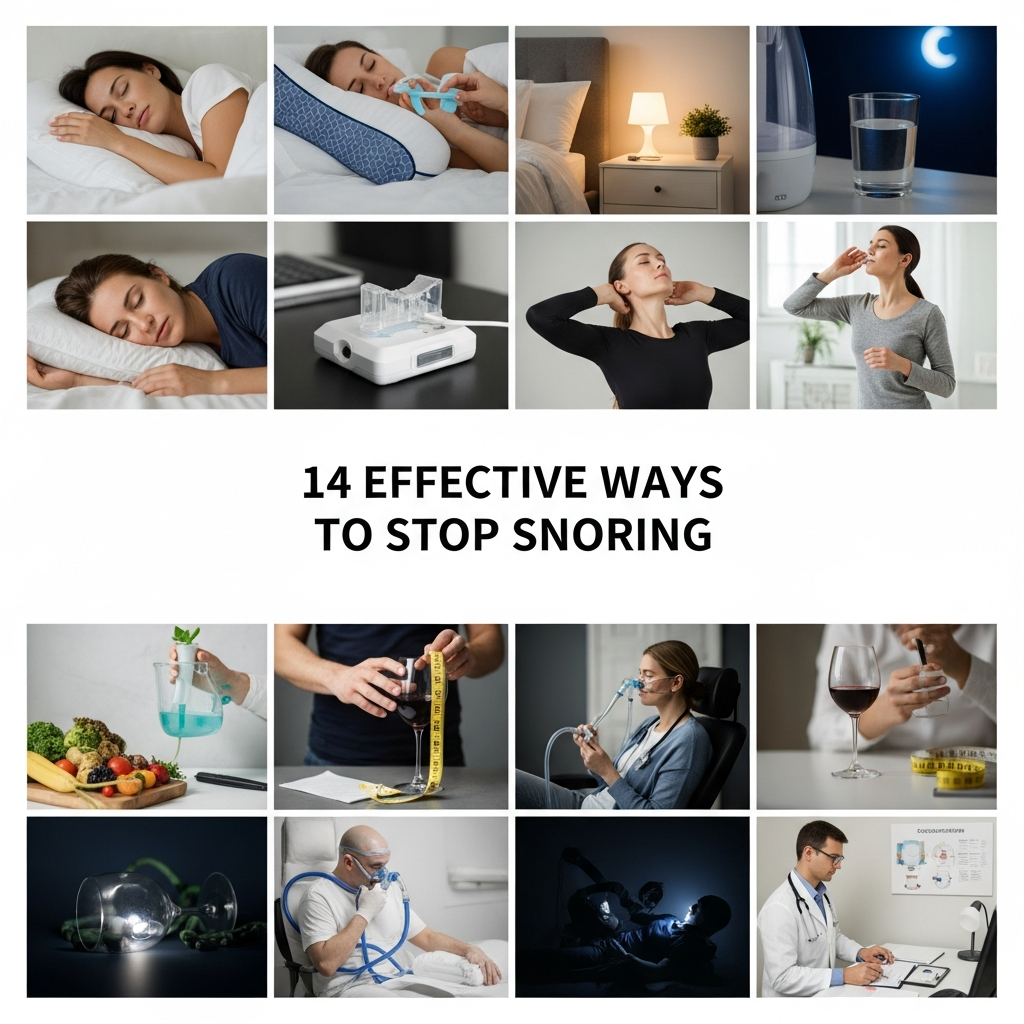
Quick Answer: How Can You Reduce Snoring Naturally?
If you want to know how to reduce snoring naturally, start by looking at what may be contributing to it rather than searching for one universal cure.
For some people, sleeping on their side, avoiding alcohol close to bedtime, treating nasal congestion, getting enough sleep, stopping smoking, or working toward a healthy weight can reduce snoring. These approaches are supported by established medical guidance, although results vary from person to person.
The important exception is persistent loud snoring accompanied by breathing pauses, gasping, choking, excessive daytime sleepiness, or other concerning symptoms. Those signs can point toward obstructive sleep apnea and deserve medical evaluation rather than repeated attempts at home remedies.
Key Takeaways
- Snoring happens when relaxed tissues in the upper airway vibrate as you breathe during sleep.
- Sleeping position can make a noticeable difference for some people.
- Nasal congestion, allergies, alcohol, smoking, sleep deprivation, body weight, and airway anatomy can all contribute.
- There is no single snoring remedy that works for everyone.
- Throat and tongue exercises show some promising evidence, but they should not be presented as a guaranteed cure.
- Nasal strips may help some people with nasal airflow, but they do not treat every cause of snoring.
- Loud snoring with breathing pauses or gasping can be a warning sign of obstructive sleep apnea.
- The goal should not simply be to make the noise quieter. It is also important to understand why the snoring is happening.
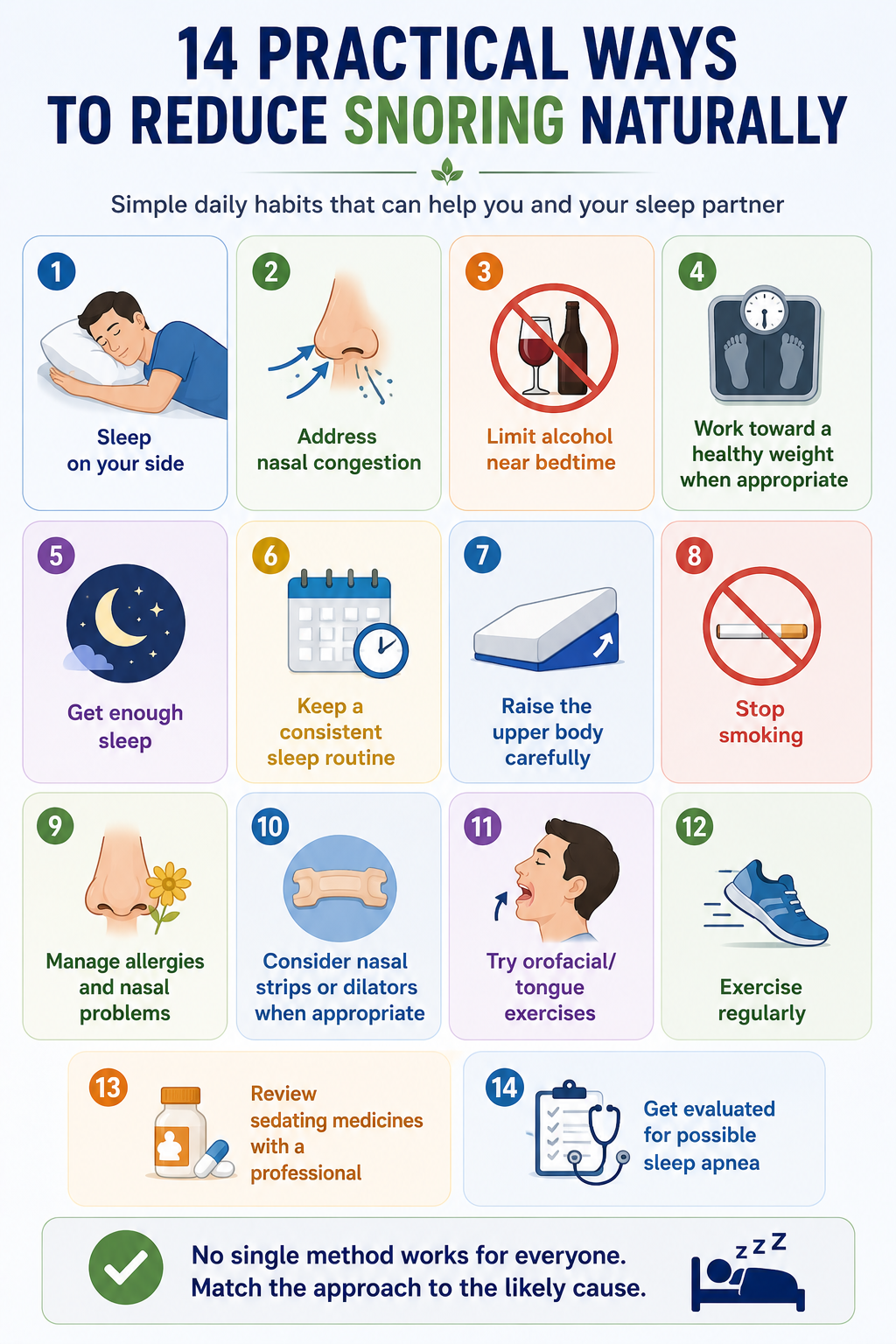
What Actually Happens When You Snore?
Snoring is the rough or harsh sound produced when air moves past relaxed tissues in the throat and causes them to vibrate.
As you fall asleep, muscles in the tongue, soft palate, and throat relax. In some people, the upper airway becomes narrower. Air moving through that narrower passage can make the surrounding tissues vibrate, creating the familiar snoring sound.
The amount of snoring can change from one night to another.
Your sleeping position may matter. Nasal congestion can change airflow. Alcohol can increase relaxation of throat tissues. Being overtired may also contribute to greater airway relaxation. Body weight and individual anatomy can play a role as well.
That is why asking “What is the best snoring remedy?” may not be the most useful question.
A better question is
“What might be contributing to my snoring, and what is the safest way to address it?”
That small change in thinking can prevent people from wasting money on products that do not address the actual problem.
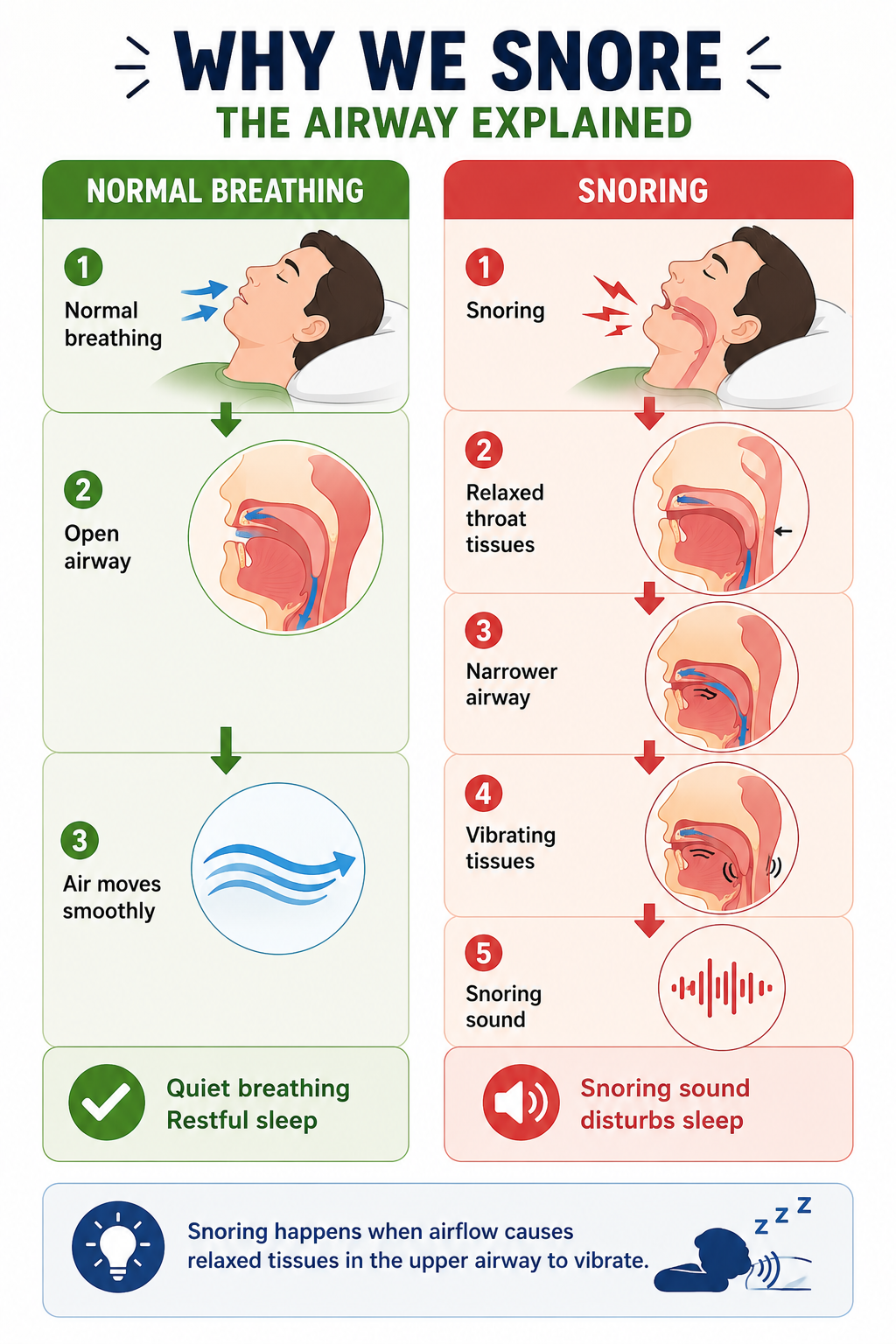
Why Snoring Is Not the Same for Everyone
| Possible contributor | What may happen | Reasonable first approach |
|---|---|---|
| Sleeping on the back | The airway may narrow more easily. | Try side sleeping. |
| Nasal congestion | Nasal airflow becomes restricted. | Address the underlying nasal problem. |
| Alcohol near bedtime | Throat muscles may relax more. | Limit alcohol close to sleep |
| Excess body weight | Extra tissue may contribute to airway narrowing. | Work toward a healthy weight when appropriate. |
| Sleep deprivation | Throat relaxation may increase. | Prioritize adequate sleep. |
| Smoking | Airway irritation may contribute. | Work toward quitting. |
| Possible sleep apnea | Repeated airway obstruction may occur. | Seek medical evaluation. |
This table is a guide, not a way to diagnose yourself. Several factors can occur together, and some people snore even when they do not have obvious lifestyle risk factors. Mayo Clinic identifies anatomy, alcohol, nasal problems, weight, sleep position, and sleep deprivation among contributors to snoring.
My Personal Experience With Snoring
A few years ago, someone in my family started snoring loudly.
At first, we laughed about it. It seemed like a harmless nighttime noise.
Eventually, however, the situation became difficult. The sound disturbed other people in the house, and sleeping through the night became harder.
That experience made me curious about what actually causes snoring.
I began reading about sleep health and looking more carefully at the advice commonly given for snoring. One thing became clear: not every suggested remedy has the same level of evidence, and not every approach is suitable for every person.
In our experience, changing sleeping position and adjusting evening habits appeared to make the snoring quieter.
I regard that as a personal observation, not scientific proof.
That distinction matters. One person’s experience can make us curious about a health problem, but it cannot establish that a particular remedy will work for everyone.
14 Evidence-Based Ways to Reduce Snoring
1. Try Sleeping on Your Side
For many people, sleeping position is one of the simplest places to start.
Snoring tends to be more frequent or louder when some people sleep on their backs because gravity can contribute to narrowing of the throat. Sleeping on your side may reduce that effect.
You do not necessarily need an expensive anti-snoring pillow.
A comfortable side-sleeping position may be enough to test whether your snoring changes.
If you naturally roll onto your back during the night, a body pillow or positioning aid may help you remain on your side.
The useful question is not whether side sleeping is a miracle treatment.
It is whether your own snoring changes when you change position.
2. Address Nasal Congestion
A blocked or persistently congested nose can make breathing more difficult.
Allergies, a cold, chronic nasal inflammation, or structural problems such as a deviated septum can affect nasal airflow and contribute to snoring.
If your snoring appears mainly when your nose is blocked, addressing the nasal problem may be more useful than buying a generic snoring product.
Depending on the cause, treatment may involve appropriate allergy management, saline products, nasal medication recommended by a healthcare professional, or evaluation of a structural problem.
Avoid assuming that every blocked nose needs the same treatment.
3. Limit Alcohol Close to Bedtime
Alcohol can relax the muscles in the throat and increase the likelihood of airway narrowing during sleep.
That can make snoring worse for some people. Mayo Clinic specifically recommends avoiding alcohol close to bedtime as one lifestyle approach to reducing snoring.
If you notice that your snoring is particularly loud after drinking, that pattern is worth paying attention to.
Rather than promising that avoiding alcohol will completely eliminate snoring, think of it as removing one potential contributor.
4. Work Toward a Healthy Weight If Appropriate
Body weight is one factor associated with snoring, but it is important not to oversimplify the issue.
Some people with higher body weight snore because additional tissue around the upper airway can contribute to narrowing. Losing weight can reduce snoring for some people.
At the same time, not everyone who snores is heavier, and weight loss should not be presented as the answer to every snoring problem.
A better approach is to consider weight alongside sleep position, nasal health, alcohol use, anatomy, and other factors.
If weight management is appropriate for you, focus on sustainable habits rather than extreme dieting.
5. Get Enough Sleep
Being severely sleep-deprived can make snoring worse because the muscles supporting the upper airway may relax more during deeper sleep.
Mayo Clinic includes avoiding sleep deprivation among lifestyle measures that may help reduce snoring.
This is easy to overlook.
People often search for complicated snoring remedies while regularly sleeping too little.
Instead of looking for another product, first ask:
Am I consistently getting enough sleep?
Improving your overall sleep routine may be a more sensible first step.
6. Keep a Consistent Sleep Routine
A regular sleep schedule will not magically cure snoring.
However, consistent sleep habits can help you avoid repeatedly becoming overtired, which may contribute to greater throat relaxation.
Try to keep reasonably consistent sleeping and waking times.
Also pay attention to whether your snoring changes after nights of very little sleep.
That pattern can provide useful personal information.
7. Raise Your Upper Body Carefully
Some people find that slightly elevating the upper body changes their breathing pattern and reduces snoring.
A wedge designed for sleeping can be more practical than repeatedly stacking ordinary pillows, which may leave the neck in an uncomfortable position.
This approach should be considered a comfort and positioning strategy rather than a guaranteed treatment.
If you have significant breathing problems at night, do not rely on positioning alone. Persistent symptoms deserve proper assessment.
7. Raise Your Upper Body Carefully
Some people find that slightly elevating the upper body changes their breathing pattern and reduces snoring.
A wedge designed for sleeping can be more practical than repeatedly stacking ordinary pillows, which may leave the neck in an uncomfortable position.
This approach should be considered a comfort and positioning strategy rather than a guaranteed treatment.
If you have significant breathing problems at night, do not rely on positioning alone. Persistent symptoms deserve proper assessment.
9. Manage Allergies and Chronic Nasal Problems
Allergies can leave the nose swollen or congested.
When nasal breathing becomes difficult, some people may be more likely to breathe through the mouth, which can contribute to snoring.
If allergies are a recurring problem, treating the underlying condition may be more useful than simply trying to silence the snoring.
Mayo Clinic identifies allergies and nasal problems among factors that can contribute to snoring.
If congestion persists or occurs frequently, consider discussing it with a healthcare professional.
10. Consider Nasal Strips or Nasal Dilators When Appropriate
Nasal strips and nasal dilators are sometimes marketed as simple solutions for snoring.
They may help people whose main problem involves restricted nasal airflow.
However, they do not address every cause of snoring.
The NHS notes that nasal dilators or strips may be used when the nose is blocked or narrow.
Think of these products as cause-specific tools, not universal snoring cures.
If the main narrowing is deeper in the throat, opening the nostrils may not solve the problem.
11. Consider Orofacial and Tongue Exercises
This is one area where the research is more interesting than many simple internet lists suggest.
Oropharyngeal or myofunctional therapy uses exercises involving the tongue, mouth, and muscles around the upper airway.
A systematic review and meta-analysis found reductions in snoring intensity and time spent snoring among adults who received myofunctional therapy.
More recent research has also examined modified oropharyngeal exercises in people with simple snoring. A randomized controlled trial published in 2024 reported improvements in several snoring outcomes after a four-week exercise intervention.
That does not mean that repeatedly saying vowel sounds is a guaranteed cure.
It means this approach deserves more attention than unsupported “miracle” remedies, while also recognizing that evidence varies by population, exercise program, and outcome.
If you have suspected sleep apnea, do not use exercises as a substitute for evaluation.
12. Exercise Regularly
Regular physical activity supports overall health and may be useful as part of a broader approach to managing factors associated with snoring.
Exercise can also support healthy weight management and general physical fitness.
However, I would avoid the common claim that ordinary exercise automatically “strengthens your throat and stops snoring.”
That statement is too simplistic.
The relationship between physical activity, body composition, sleep quality, and sleep-disordered breathing is more complicated.
Exercise is valuable, but it should be one part of a broader health strategy rather than marketed as a standalone snoring cure.
13. Review Sedating Medicines With Your Healthcare Professional
Some sedating medicines can increase relaxation of muscles involved in maintaining the upper airway.
That is one reason medication can matter when evaluating snoring.
But there is an important safety point:
Do not stop a prescribed medicine simply because you think it may be contributing to snoring.
Instead, tell your healthcare professional about your symptoms.
Mayo Clinic advises discussing sedatives and medication concerns with a doctor rather than making medication changes independently.
This is a small distinction, but it is important for safe health information.
14. Get Evaluated if Snoring Could Be Sleep Apnea
This may be the most important recommendation in the entire article.
Not everyone who snores has sleep apnea.
But loud, persistent snoring accompanied by breathing pauses, gasping, or choking during sleep can be a warning sign of obstructive sleep apnea. Excessive daytime sleepiness and difficulty concentrating can also occur.
If someone who sleeps near you says,
“You stop breathing during the night.”
Do not dismiss that observation.
You may not know what happens while you are asleep.
A healthcare professional can determine whether further assessment, including a sleep study, is appropriate.
Match the Snoring Pattern to the Practical Response
| If your snoring tends to happen with… | A reasonable first step | When to seek professional advice |
|---|---|---|
| Sleeping on your back | Experiment with side sleeping. | If loud snoring continues |
| A blocked nose | Address the nasal problem. | Persistent or unexplained congestion |
| Alcohol near bedtime | Reduce or avoid it close to sleep. | If snoring remains significant |
| Excess weight | Consider sustainable weight management. | Especially if sleep apnea symptoms occur |
| Very little sleep | Improve sleep duration and routine. | If excessive daytime sleepiness continues |
| Allergies | Manage the underlying allergy. | Persistent symptoms |
| Loud snoring plus gasping | Do not rely on home remedies alone. | Seek medical evaluation. |
| Witnessed breathing pauses | Arrange an assessment. | Medical evaluation is important. |
| Persistent snoring despite lifestyle changes | Reconsider the underlying cause. | Discuss it with a healthcare professional. |
This is not a diagnostic tool. It is simply a way of thinking more logically about the problem.
What About Popular Snoring Remedies?
Not every remedy deserves the same level of confidence.
| Popular approach | Evidence/practical view | What to know |
|---|---|---|
| Side sleeping | Reasonable | Particularly useful when back sleeping worsens symptoms |
| Healthy weight management | Reasonable when appropriate | Not every snorer is overweight. |
| Limiting alcohol near bedtime | Reasonable | Can reduce one contributor |
| Treating nasal congestion | Reasonable | Particularly useful when nasal obstruction is involved |
| Nasal strips | Cause-specific | May help nasal airflow but do not address every cause |
| Humidifiers | Limited for snoring itself | May help dryness, but not a universal solution |
| Drinking extra water | Weak as a primary treatment | Should not be marketed as a proven snoring cure |
| Steam inhalation | Limited evidence for snoring | Better to address the underlying nasal problem. |
| Orofacial exercises | Promising but not universal | Research supports potential benefit in selected people. |
| “Miracle” anti-snoring products | Highly variable | Be skeptical of guaranteed claims. |
Mayo Clinic notes that many commercially promoted alternative products for snoring have not been proven effective in clinical trials.
That is an important lesson: a product being marketed specifically for snoring does not mean its effectiveness has been established.
7 Common Mistakes People Make When Trying to Stop Snoring
1. Treating every snoring problem the same way
Snoring caused mainly by nasal congestion is not necessarily the same as snoring associated with airway obstruction during sleep.
The cause matters.
2. Assuming snoring is always harmless
Occasional snoring is common.
Persistent loud snoring accompanied by breathing pauses or gasping deserves more attention.
3. Assuming weight is always the cause
Body weight can contribute, but anatomy, nasal problems, sleep position, and other factors matter too.
4. Buying products before understanding the problem
A nasal strip cannot solve every form of airway narrowing.
Neither can a special pillow, spray, or supplement.
5. Expecting results after one night
Some lifestyle changes require repeated use before you can judge whether they make a difference.
6. Stopping prescribed medication independently
Medication concerns should be discussed with the prescribing professional.
Never make an abrupt medication change based solely on an internet article.
7. Ignoring breathing pauses
This is the mistake I would take most seriously.
If another person repeatedly notices that you stop breathing, gasp, or choke during sleep, that is not simply a noise problem.
Simple 7-Night Snoring Observation Plan
Instead of trying five different remedies at once, consider keeping a simple seven-night record.
Nights 1–2: Observe
Notice your sleeping position and whether your nose is congested.
If possible, ask your partner or another household member whether the snoring is occasional or persistent.
Nights 3–4: Test your sleeping position
Try sleeping on your side.
Record whether the snoring seems different.
Night 5: Remove an obvious trigger
If alcohol is part of your evening routine, avoid it close to bedtime and observe whether the night is different.
Night 6: Prioritize sleep
Give yourself enough time to sleep and maintain a consistent bedtime.
Night 7: Review the pattern
Ask:
- Did side sleeping make a difference?
- Was my nose blocked?
- Did alcohol appear to affect the pattern?
- Was I getting enough sleep?
- Did anyone notice breathing pauses?
- Am I still experiencing significant daytime sleepiness?
This is not a medical test.
It is simply a way to notice patterns instead of randomly trying one product after another.
If concerning symptoms are present, seek professional evaluation rather than continuing an endless series of home experiments.
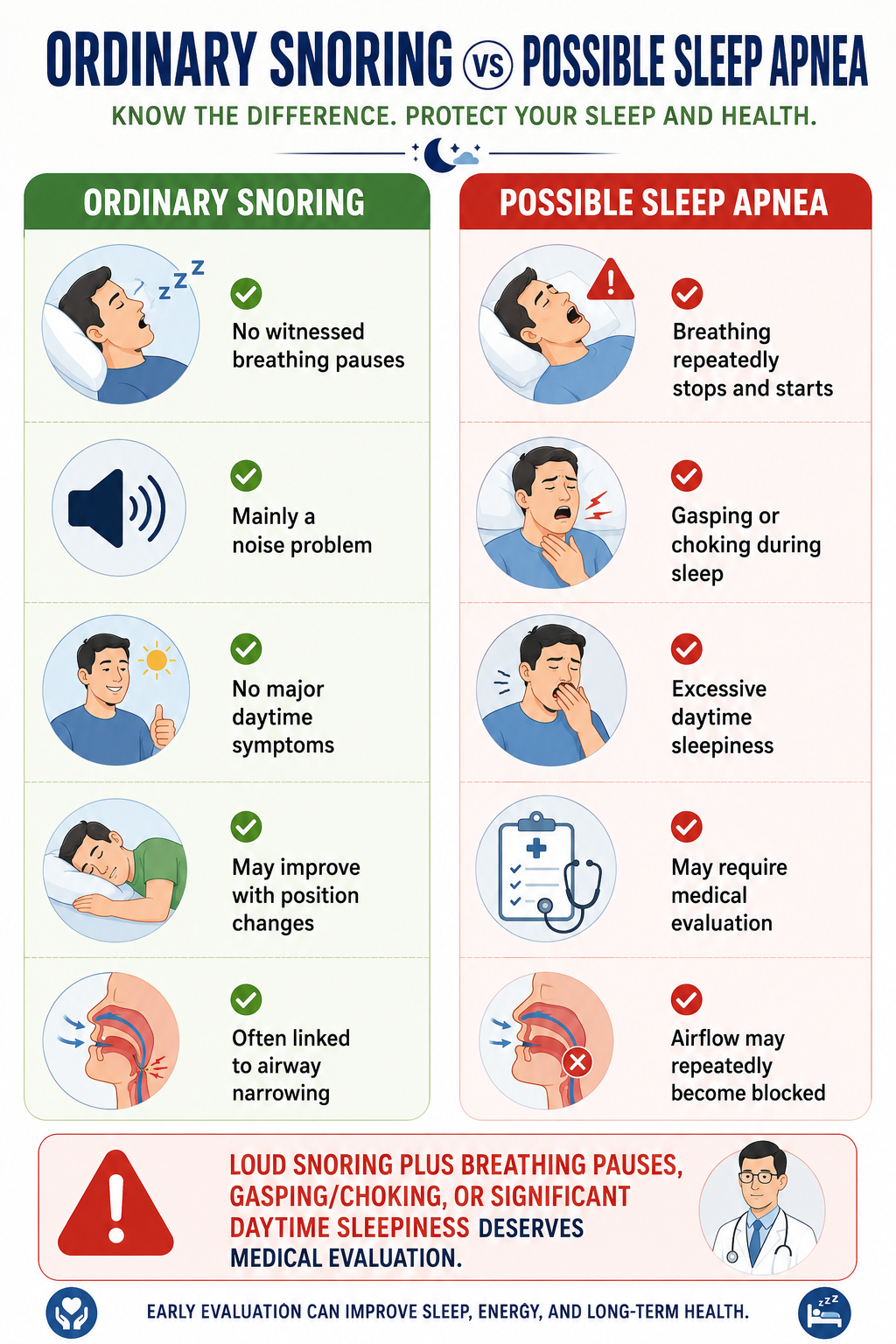
Snoring vs. Possible Sleep Apnea
| Feature | Simple snoring | Possible obstructive sleep apnea |
|---|---|---|
| Snoring | May occur | Often loud and frequent |
| Breathing pauses | Not typical | Important warning sign |
| Gasping/choking | Not typical | Can occur |
| Daytime sleepiness | May have other causes | Common symptom |
| Morning headaches | Not necessarily | Can occur |
| Sleep disruption | May affect partner | Can repeatedly disrupt the sleeper |
| Medical evaluation | Depends on circumstances | Important when warning signs are present |
NHLBI lists breathing that starts and stops, frequent loud snoring, and gasping for air among sleep apnea symptoms. It also notes that a healthcare provider may recommend a sleep study to help diagnose the condition.
Mayo Clinic similarly advises medical evaluation when loud snoring occurs alongside breathing pauses, gasping, excessive daytime sleepiness, morning headaches, or other symptoms.
When Should You See a Doctor About Snoring?
Consider speaking with a healthcare professional if:
- Your snoring is persistent and disruptive
- Your partner notices breathing pauses
- You wake up gasping or choking
- You are unusually sleepy during the day
- You have difficulty concentrating
- You wake with headaches
- Lifestyle changes have not helped
- Your snoring is seriously affecting your household’s sleep
The NHS similarly recommends medical advice when lifestyle changes do not improve snoring, when it significantly affects daily life, or when symptoms suggest sleep apnea.
The purpose of an evaluation is not simply to make the bedroom quieter.
It is to determine whether there is an underlying sleep or airway problem that needs treatment.
What Happens If Snoring Is Related to Sleep Apnea?
When obstructive sleep apnea is diagnosed, treatment is different from simply trying to reduce noise.
Depending on the person and severity, treatment can involve approaches such as positive airway pressure therapy, oral appliances, treatment of nasal obstruction, weight management where appropriate, or other interventions recommended by a healthcare professional.
CPAP, for example, uses air pressure to help keep the upper airway open during sleep.
Oral appliances can reposition the jaw and related structures to help maintain airway space in appropriate patients.
That is why it is risky to think:
“If I can make my snoring quieter, the problem is solved.”
A reduction in noise does not necessarily prove that an underlying breathing disorder has been treated.
Can Throat Exercises Really Reduce Snoring?
There is some encouraging evidence, but the answer needs nuance.
A systematic review and meta-analysis of oropharyngeal and tongue exercises found reductions in snoring intensity and the amount of sleep spent snoring among adults.
A 2024 randomized controlled trial also reported improvements in snoring outcomes after modified oropharyngeal exercises in adults with simple snoring.
However, research on myofunctional therapy in obstructive sleep apnea has produced more mixed certainty for some outcomes. A Cochrane review found potential benefits for several outcomes but described the evidence for reducing snoring frequency as very uncertain.
So the honest conclusion is
Exercises may help some people, but they should not be promoted as a guaranteed cure for snoring or sleep apnea.
Why “Natural” Does Not Always Mean “Better”
The phrase “natural snoring remedy” sounds attractive.
But natural does not automatically mean effective.
Steam, herbs, oils, supplements, and other home remedies can be presented online as if they have strong evidence behind them when the evidence is actually limited.
A better standard is
Is the approach appropriate for the likely cause, reasonably safe, and supported by credible evidence?
That question is more useful than asking whether something is natural.
How to Reduce Snoring Naturally: A Practical Priority List
If you want a simple starting point, I would prioritize the following:
First
Look for obvious triggers.
Check sleeping position, nasal congestion, alcohol, and sleep deprivation.
Next
Make one or two realistic changes.
Try side sleeping, address nasal symptoms, and improve your sleep routine.
Then
Look at longer-term health factors.
If appropriate, work toward a healthy weight, exercise regularly, and stop smoking.
Consider
Evidence-supported approaches such as orofacial exercises.
But understand their limitations.
Most importantly
Watch for signs of sleep apnea.
Breathing pauses, gasping, choking, and significant daytime sleepiness should not be ignored.
Frequently Asked Questions
1. How can I reduce snoring naturally?
Start by identifying likely contributors. Sleeping on your side, avoiding alcohol close to bedtime, addressing nasal congestion, getting enough sleep, stopping smoking, and maintaining a healthy weight when appropriate may help some people.
2. What is the best sleeping position for snoring?
For many people who snore more while lying on their back, side sleeping can reduce snoring. Back sleeping may allow the tongue and other tissues to narrow the airway more easily.
3. Does losing weight reduce snoring?
It can help some people, particularly when excess tissue around the upper airway contributes to narrowing. However, weight is only one possible factor, and people at different body weights can snore.
4. Does alcohol make snoring worse?
Alcohol can relax throat muscles and may increase snoring, particularly when consumed close to bedtime. Limiting alcohol near sleep is therefore a reasonable lifestyle change for people who notice this connection.
5. Can nasal congestion cause snoring?
Yes. Nasal congestion can restrict airflow and contribute to snoring. Allergies, colds, and structural nasal problems can all affect nasal breathing.
6. Do nasal strips stop snoring?
Nasal strips may help some people when restricted nasal airflow is contributing to the problem. They do not address every cause of snoring, especially problems involving narrowing farther down the airway.
7. Can throat or tongue exercises reduce snoring?
Research suggests that oropharyngeal and tongue exercises may reduce snoring in some adults. However, the evidence is not strong enough to describe these exercises as a guaranteed cure for everyone.
8. Does exercise help snoring?
Regular exercise supports overall health and can contribute to healthy weight management. However, it should not be described as a guaranteed direct treatment for snoring. The underlying cause still matters.
9. Why do I snore even if I am not heavier?
Snoring is not caused only by body weight. Sleeping position, nasal congestion, alcohol, sleep deprivation, mouth and throat anatomy, and other airway factors can contribute.
10. How can I stop snoring while sleeping?
There is no universal method that works for everyone. Side sleeping, addressing nasal obstruction, avoiding alcohol near bedtime, and getting adequate sleep are reasonable starting points. Persistent loud snoring should be evaluated if it does not improve.
11. When is snoring a sign of sleep apnea?
Snoring deserves greater attention when it occurs with witnessed breathing pauses, gasping, choking, excessive daytime sleepiness, or other symptoms associated with sleep apnea.
12. Should I see a doctor for loud snoring?
If your snoring is persistent, seriously disrupts sleep, or occurs with breathing pauses, gasping, choking, or significant daytime sleepiness, speaking with a healthcare professional is appropriate.
Final Thoughts
Learning how to reduce snoring naturally is not really about finding one magic trick.
It is about understanding what may be happening during sleep and choosing a sensible response.
For one person, changing sleeping position may make the biggest difference.
For another, nasal congestion may be the main issue.
Someone else may need to address alcohol, smoking, sleep deprivation, or weight-related factors.
And for some people, the most important step is not another home remedy at all. It is finding out whether the snoring is connected to obstructive sleep apnea.
My own experience taught me that snoring can start as something the household laughs about and eventually become a genuine sleep problem.
The evidence adds another important lesson: reducing the noise is not always the same as solving the underlying problem.
If snoring is persistent or accompanied by breathing pauses, gasping, choking, or significant daytime sleepiness, don’t keep experimenting indefinitely. Talk with a qualified healthcare professional.
Author Note
About the author: RVLNSV PRASAD writes health and wellness content with a focus on practical, reader-friendly information.
This article combines personal observation with information reviewed from established medical organizations and peer-reviewed research. Personal experiences are presented as personal observations and should not be interpreted as medical evidence or individualized medical advice.
Medical Disclaimer
This article is provided for general educational and informational purposes only. It is not intended to diagnose, treat, cure, or prevent snoring, obstructive sleep apnea, or any other medical condition.
Snoring can have different causes, and persistent loud snoring may sometimes be associated with sleep apnea. If you experience breathing pauses, gasping, choking during sleep, excessive daytime sleepiness, or other concerning symptoms, consult a qualified healthcare professional.
Do not stop, change, or reduce prescribed medication based solely on information in this article. Discuss medication concerns with your healthcare professional.
Sources
- Mayo Clinic — Snoring: Symptoms and Causes
Mayo Clinic — Snoring: Symptoms and Causes - Mayo Clinic — Snoring: Diagnosis and Treatment
Mayo Clinic — Snoring: Diagnosis and Treatment - NHLBI — Sleep Apnea Symptoms
NHLBI — Sleep Apnea Symptoms - NHS — Snoring
NHS—Snoring - PubMed—Oropharyngeal and Tongue Exercises for Snoring: Systematic Review and Meta-analysis
PubMed — Oropharyngeal and Tongue Exercises for Snoring - PubMed — Modified Oropharyngeal Exercises for Simple Snoring, Randomized Controlled Trial
PubMed — Modified Oropharyngeal Exercises for Simple Snoring - PubMed — Myofunctional Therapy for Obstructive Sleep Apnea
PubMed — Myofunctional Therapy for Obstructive Sleep Apnea - Mayo Clinic — Obstructive Sleep Apnea: Symptoms and Causes
Mayo Clinic — Obstructive Sleep Apnea
Related Articles