



































































































































































Restless Legs at Night: Causes, Iron Tests, and What Helps
Author: RVLNSV PRASAD
Updated On: October 2026
About Us
Author Bio
Editorial Policy
Contact Us
Medical Review: This article has not been independently reviewed by a qualified healthcare professional.
Introduction
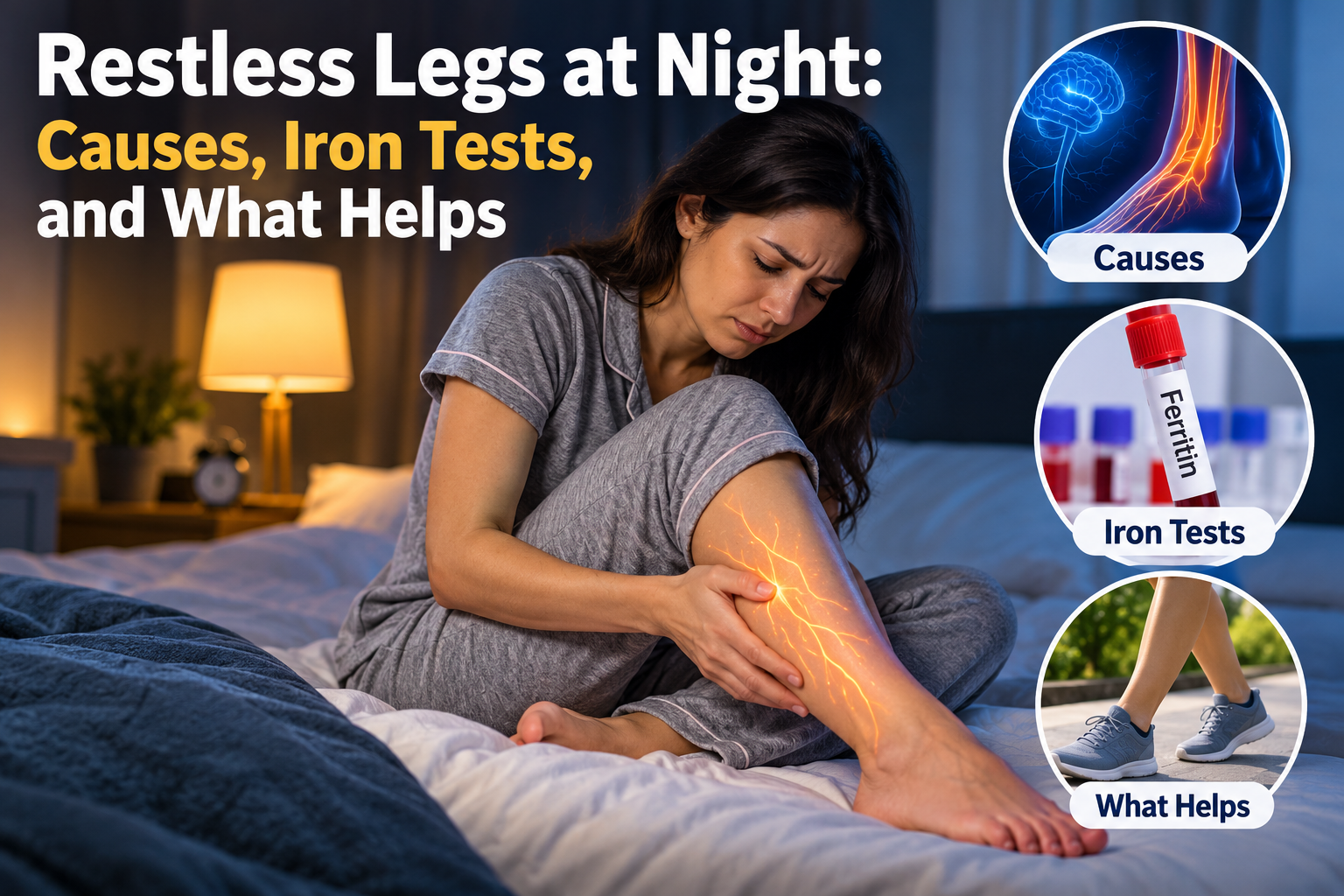
Restless legs at night can make it difficult to fall asleep, stay comfortable in bed, or get enough restorative sleep. You may feel a crawling sensation, tingling, pulling, or an uncomfortable urge to move your legs that eases when you walk but returns after you lie down again. These symptoms may indicate restless legs syndrome (RLS), a neurological condition that often becomes more noticeable during periods of rest and in the evening.
According to the National Institute of Neurological Disorders and Stroke, restless legs syndrome can interfere with sleep and affect daily activities. Iron status is also an important part of assessment. The American Academy of Sleep Medicine’s clinical practice guideline recommends checking iron studies, including ferritin and transferrin saturation, in people with clinically significant symptoms.
In this guide, you will learn about the possible causes of restless legs at night, how doctors distinguish RLS from ordinary leg cramps, which blood tests may be useful, and what current research says about treatment. You will also find practical symptom-tracking tips to help you prepare for a medical appointment and understand which changes may be worth discussing with your healthcare professional.
Author’s Note
Restless legs at night can make it difficult to relax, fall asleep, or stay asleep. Some people describe an uncomfortable crawling sensation, while others experience an almost irresistible urge to move their legs whenever they sit or lie down. These symptoms can affect sleep quality and make the following day more difficult.
This guide explains how to recognize restless legs syndrome (RLS), distinguish it from similar conditions, understand the role of iron testing, and prepare for a medical appointment. It also includes a practical symptom-tracking method to help readers identify patterns worth discussing with a healthcare professional.
Key Takeaways
- Restless legs syndrome is a neurological condition that causes an urge to move the legs, usually during rest and more noticeably in the evening or at night.
- Movement often provides temporary relief, but symptoms may return when you become still again.
- Iron status can matter even when routine blood tests have not shown anemia.
- Leg cramps, nerve problems, medication effects, and other conditions can produce similar symptoms.
- Regular sleep habits and identifying personal triggers may help, although lifestyle changes do not replace medical treatment when symptoms persist.
- Current treatment recommendations emphasize checking iron status, addressing aggravating factors, and carefully selecting medication with a clinician.
What Is Restless Legs Syndrome?
Restless legs syndrome, also called Willis-Ekbom disease, is a neurological sensorimotor disorder characterized by an uncomfortable urge to move the legs. Symptoms usually begin or become stronger during periods of rest, improve temporarily with movement, and are more prominent in the evening or at night.
The sensations vary from person to person. Some describe tingling, crawling, pulling, itching, or an internal feeling that their legs will not stay still. Others experience an urge to move without being able to describe a particular sensation.
According to the National Institute of Neurological Disorders and Stroke, RLS can interfere with sleep and affect daily functioning.
One important distinction is that RLS is not simply ordinary tiredness or the occasional need to stretch after sitting for a long time. The characteristic combination of symptoms, their relationship to rest, and the temporary relief provided by movement helps clinicians identify the condition.
Restless Legs at Night: Symptoms to Recognize
Symptoms can range from occasional discomfort to repeated nighttime disturbances that interfere with sleep.
Common signs include:
- An overwhelming urge to move one or both legs.
- Uncomfortable sensations that begin or worsen while sitting or lying down.
- Temporary relief from walking, stretching, or moving the legs.
- Symptoms that become more noticeable in the evening or at night.
- Difficulty falling asleep because the legs feel uncomfortable.
- Repeated awakenings or difficulty returning to sleep.
- Daytime tiredness, irritability, or difficulty concentrating after disturbed sleep.
Although the legs are most commonly affected, some people experience symptoms in the arms or other body areas, particularly when the condition becomes more severe.
A simple way to recognize the symptom pattern
Consider what happens when you settle down to watch television or go to bed. If discomfort develops while you are still, improves when you walk around, and returns after you lie down again, that pattern is worth discussing with a healthcare professional.
This pattern alone does not establish a diagnosis. A clinician must also consider other explanations for the symptoms.
What Causes Restless Legs at Night?
There is no single explanation for every case. Researchers have linked RLS to iron regulation in the brain, nervous system pathways, genetic factors, and certain medical conditions.
1. Problems with iron availability
Iron is important for several processes in the nervous system, including pathways involved in dopamine function. Dopamine helps regulate movement, although the relationship between dopamine, iron, and RLS is complex.
Some people with RLS have reduced iron availability in the brain even when their blood results do not show conventional iron-deficiency anemia. This is one reason clinicians may assess iron status rather than relying only on a complete blood count.
The American Academy of Sleep Medicine’s clinical practice guideline recommends regular iron studies for people with clinically significant RLS.
2. Family history and genetic factors
RLS can run in families. Having a close relative with the condition may increase the likelihood of developing it, although family history does not mean that symptoms are inevitable.
Genetic susceptibility is one reason some people develop RLS without an obvious lifestyle trigger.
3. Pregnancy
RLS can develop or become more troublesome during pregnancy, particularly later in pregnancy. Changes in iron requirements, hormonal factors, and other physiological changes may contribute.
Symptoms improve for many people after delivery, but persistent or severe symptoms still deserve assessment. Treatment during pregnancy requires particular care because not every medicine is appropriate.
4. Chronic kidney disease
People with chronic kidney disease, especially those receiving dialysis, have a higher likelihood of experiencing RLS. Changes in iron metabolism and other physiological factors may contribute.
People with kidney disease should consult their healthcare team before taking iron supplements or medicines for restless legs.
5. Other contributing factors
Some people experience RLS alongside other health conditions or while using certain medications. Clinicians may consider iron deficiency, peripheral neuropathy, pregnancy, kidney disease, and medication effects when assessing symptoms.
The important point is that identifying a contributing factor can help guide treatment, but not every case has one clear or reversible cause.
Why Do Restless Legs Become Worse When You Lie Down?
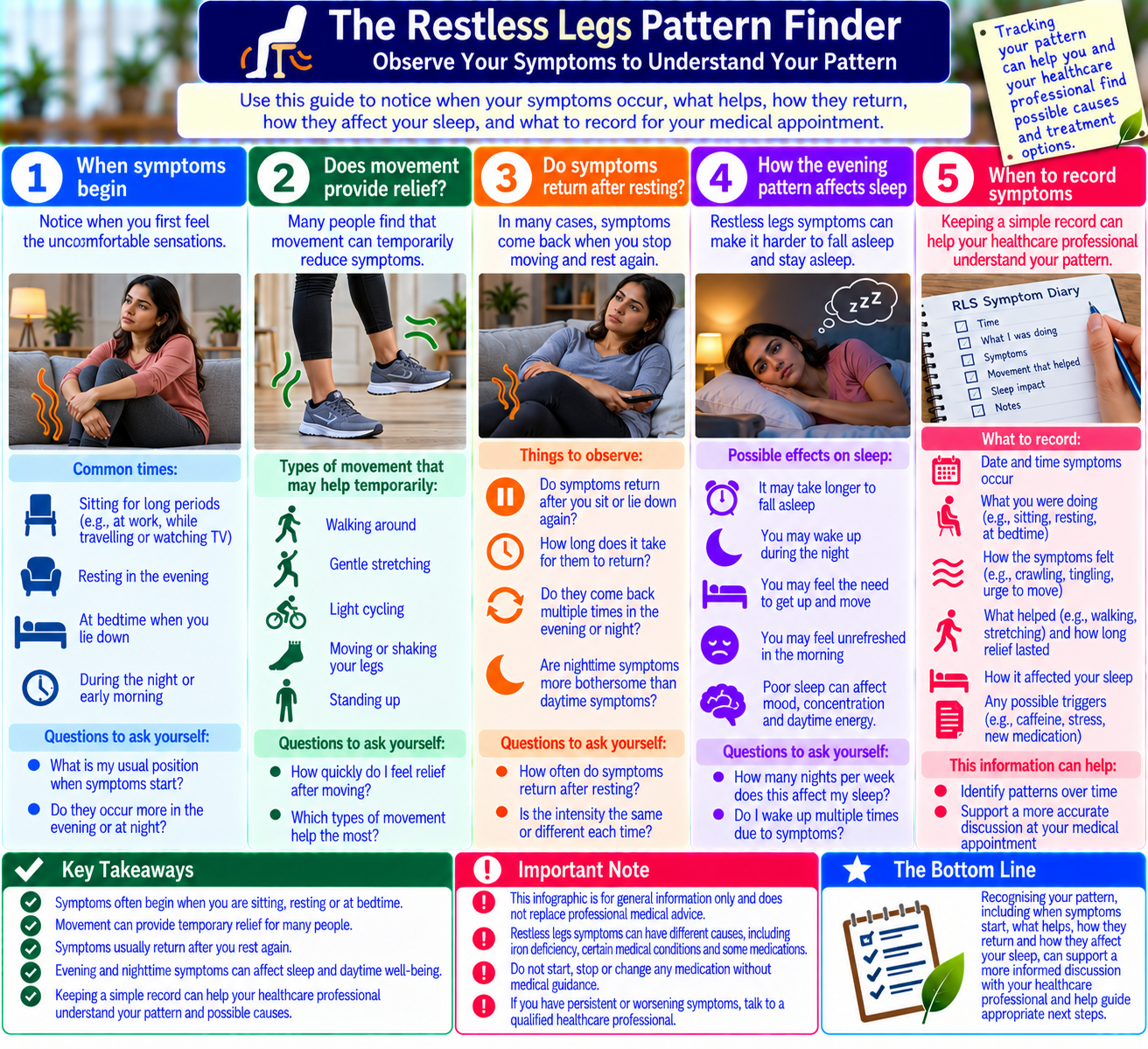
The relationship between rest and movement is one of the most useful clues when assessing RLS.
Symptoms commonly begin or intensify when a person sits quietly, lies in bed, travels in a car, or watches television. Walking or moving the legs may ease the sensations, but relief is often temporary.
RLS also has a circadian pattern, meaning symptoms tend to be more prominent in the evening and at night. This pattern is not identical for everyone, and severe symptoms can sometimes occur earlier in the day.
The rest-to-movement pattern
A typical pattern might look like this:
| Situation | What may happen |
|---|---|
| Sitting still in the evening | An urge to move the legs develops. |
| Lying down to sleep | Discomfort becomes more noticeable. |
| Walking around briefly | Symptoms ease temporarily. |
| Returning to bed | The urge to move returns. |
| Repeated nighttime disturbance | Sleep becomes shorter or less restorative. |
This pattern is a practical observation tool, not a diagnostic test. Recording when symptoms start, how long they last, and whether movement helps can make a medical consultation more informative.
Restless Legs Syndrome vs. Leg Cramps: How to Tell the Difference
RLS and leg cramps can both disturb sleep, but they usually feel different. Understanding the distinction may help you describe your symptoms more accurately.
| Feature | Restless legs syndrome | Typical leg cramps |
|---|---|---|
| Main sensation | Urge to move, crawling, pulling, or internal discomfort | Sudden, painful muscle tightening |
| Relationship to rest | Often begins or worsens during inactivity | May occur at rest or during sleep |
| Effect of movement | Often provides temporary relief | Stretching may help release the cramp. |
| Duration | Can recur repeatedly while resting | Often lasts seconds to minutes |
| Visible muscle tightening | Not usually the main feature | May be obvious or palpable |
| Evening pattern | Common | Nighttime cramps also occur. |
These differences are not absolute. People can experience both conditions, and other problems can resemble either one.
Persistent numbness, burning, weakness, swelling, or severe pain may point toward a different cause. Sudden one-sided leg swelling, warmth, redness, or pain requires urgent medical assessment, particularly when accompanied by chest pain or breathlessness.
How Doctors Diagnose Restless Legs Syndrome
There is no single blood test that confirms RLS. Diagnosis is generally based on the person’s history, characteristic symptoms, and assessment of other possible causes.
A clinician will typically ask whether:
- There is an urge to move the legs, often accompanied by uncomfortable sensations.
- Symptoms begin or worsen during rest.
- Movement provides at least temporary relief.
- Symptoms are more prominent in the evening or at night.
- Another medical condition or behavior does not better explain the symptoms.
Your clinician may also ask about sleep quality, family history, pregnancy, kidney disease, medicines, and the impact on daily life.
Which tests might be useful?
Depending on your history, the clinician may request:
- Complete blood count: Helps identify anemia and other blood abnormalities.
- Serum ferritin: Provides information about the body’s iron stores.
- Transferrin saturation: Helps assess how much iron is available in the blood.
- Kidney function tests: May be appropriate when kidney disease is suspected or already present.
- Other tests: Vitamin B12, glucose, or additional investigations may be considered when symptoms suggest another condition.
A sleep study is not routinely necessary to diagnose typical RLS. It may be useful if the clinician suspects another sleep disorder, such as obstructive sleep apnea, or needs to investigate unexplained sleep disruption.
Why a normal hemoglobin result may not be enough
Hemoglobin measures the oxygen-carrying protein in red blood cells. Ferritin, by contrast, provides information about stored iron, although inflammation and other factors can affect its interpretation.
Consequently, a person may not have anemia but may still need a more detailed iron assessment. This does not mean everyone with restless legs needs iron treatment. The decision depends on the full clinical picture and appropriate laboratory results.
Restless Legs and Iron Deficiency: What Tests Matter?
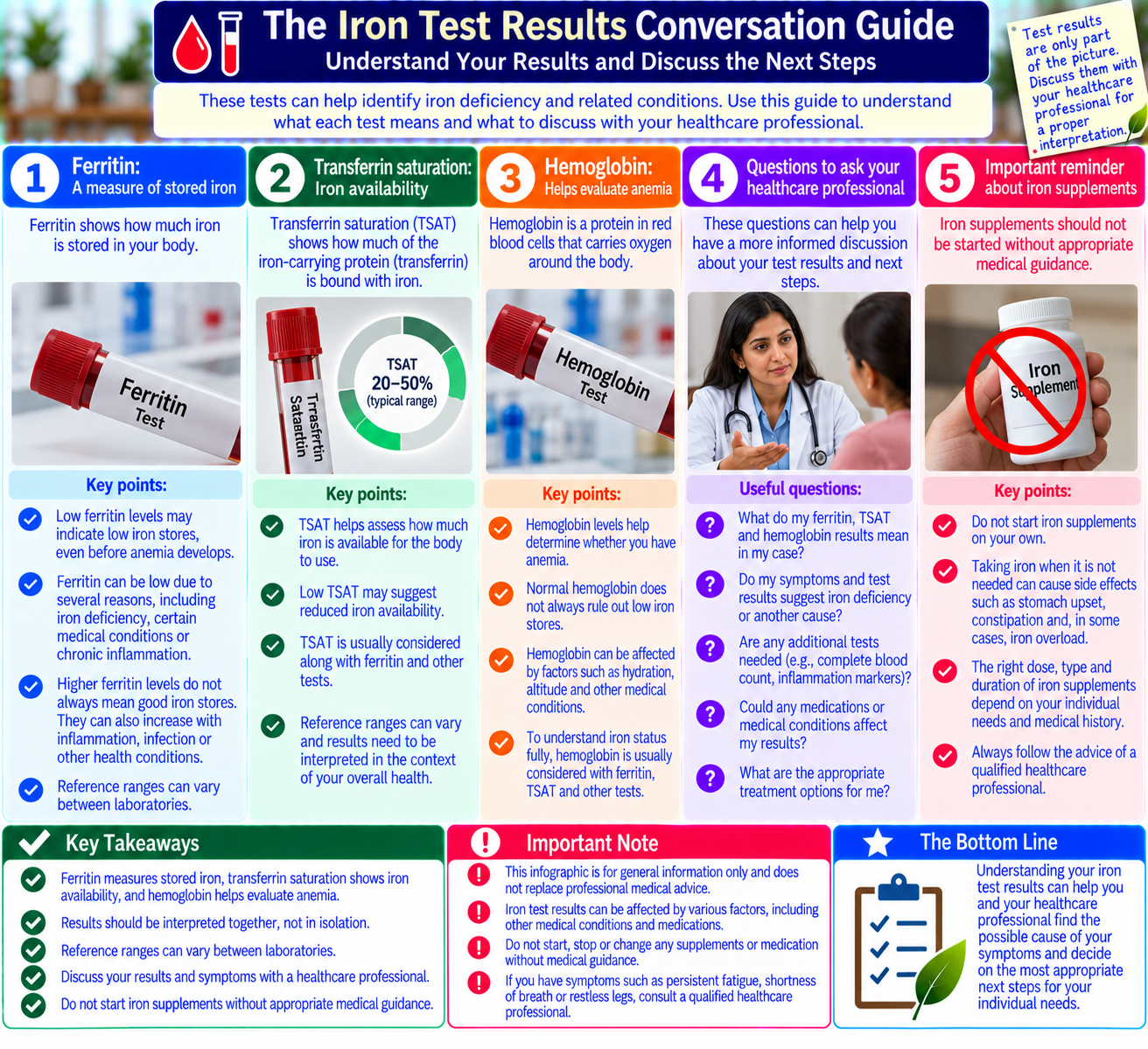
Iron assessment is an important part of modern RLS management.
The 2025 American Academy of Sleep Medicine guideline states that clinicians should assess iron studies, including ferritin and transferrin saturation, in people with clinically significant RLS. Its consensus guidance uses thresholds that differ from those commonly used to assess iron deficiency in the general population.
For adults, the guideline describes considering iron supplementation when ferritin is 75 ng/mL or lower or transferrin saturation is below 20%. It also describes a different approach to oral versus intravenous iron when ferritin is between 75 and 100 ng/mL. These are clinical treatment considerations, not instructions to self-diagnose or start supplements.
Read the full AASM clinical practice guideline for the recommendations and their limitations.
What should you do if iron levels are low?
Ask your clinician whether your results could contribute to your symptoms and whether treatment is appropriate. If iron deficiency is confirmed, the next step is to understand why it developed.
Possible contributors include heavy menstrual bleeding, inadequate dietary intake, pregnancy-related requirements, gastrointestinal blood loss, or impaired absorption. The appropriate investigation depends on age, symptoms, medical history, and other risk factors.
Iron supplements can cause constipation, nausea, and abdominal discomfort. Excess iron can be harmful, and supplementation may be inappropriate for some people. Do not begin high-dose iron or intravenous iron without medical supervision.
Practical Ways to Manage Restless Legs at Night
Lifestyle changes may help some people reduce symptom triggers and protect their sleep. They are not guaranteed treatments, and they should not delay assessment when symptoms are frequent or severe.
1. Keep a consistent sleep schedule.
Try to go to bed and wake up at reasonably consistent times. A regular schedule can support sleep, although it will not necessarily remove the underlying urge to move.
If you have a difficult night, avoid responding by repeatedly changing your bedtime or spending long periods checking the clock. Focus on maintaining a sustainable routine the following day.
2. Use gentle movement when symptoms begin.
Walking around the room, doing a few comfortable ankle movements, or gently stretching the calves may provide temporary relief.
Choose movements that feel comfortable rather than forcing a deep stretch. If movement causes pain or worsens symptoms, stop and seek advice.
3. Review caffeine intake.
Coffee, tea, energy drinks, and some soft drinks contain caffeine. Some people notice that caffeine worsens their nighttime symptoms or makes sleep more difficult.
If you suspect a connection, try reducing caffeine or avoiding it later in the day. Track the result rather than assuming caffeine is responsible for every episode.
4. Consider whether alcohol affects your symptoms.
Alcohol can disrupt sleep, and some people report worse RLS symptoms after drinking. If this seems relevant, record the timing and amount of alcohol consumed and discuss the pattern with your clinician.
5. Try a warm bath or gentle massage.
Some people find a warm bath, a heating pad used safely, or gentle leg massage soothing. Evidence for these measures as reliable RLS treatments is limited, so treat them as comfort strategies rather than proven cures.
Avoid temperatures that could burn your skin, particularly if you have reduced sensation or diabetes-related nerve problems.
6. Review medicines with your clinician.
Certain antihistamines, serotonergic antidepressants, dopamine-blocking medicines, and other drugs may worsen RLS in some people. The effect varies by medicine and individual.
Do not stop prescribed antidepressants, anti-nausea medicines, or other treatment on your own. Ask the prescribing clinician whether an alternative or adjustment is appropriate.
7. Protect your sleep environment
Keep your bedroom comfortable, reduce unnecessary noise, and limit activities that keep you alert when you are preparing for bed. If symptoms force you to get up, use soft lighting and return to bed when you feel ready.
The aim is to make sleep easier without blaming yourself when symptoms continue. RLS is a recognized medical condition, not a failure to relax properly.
A Practical Seven-Night Symptom Tracker
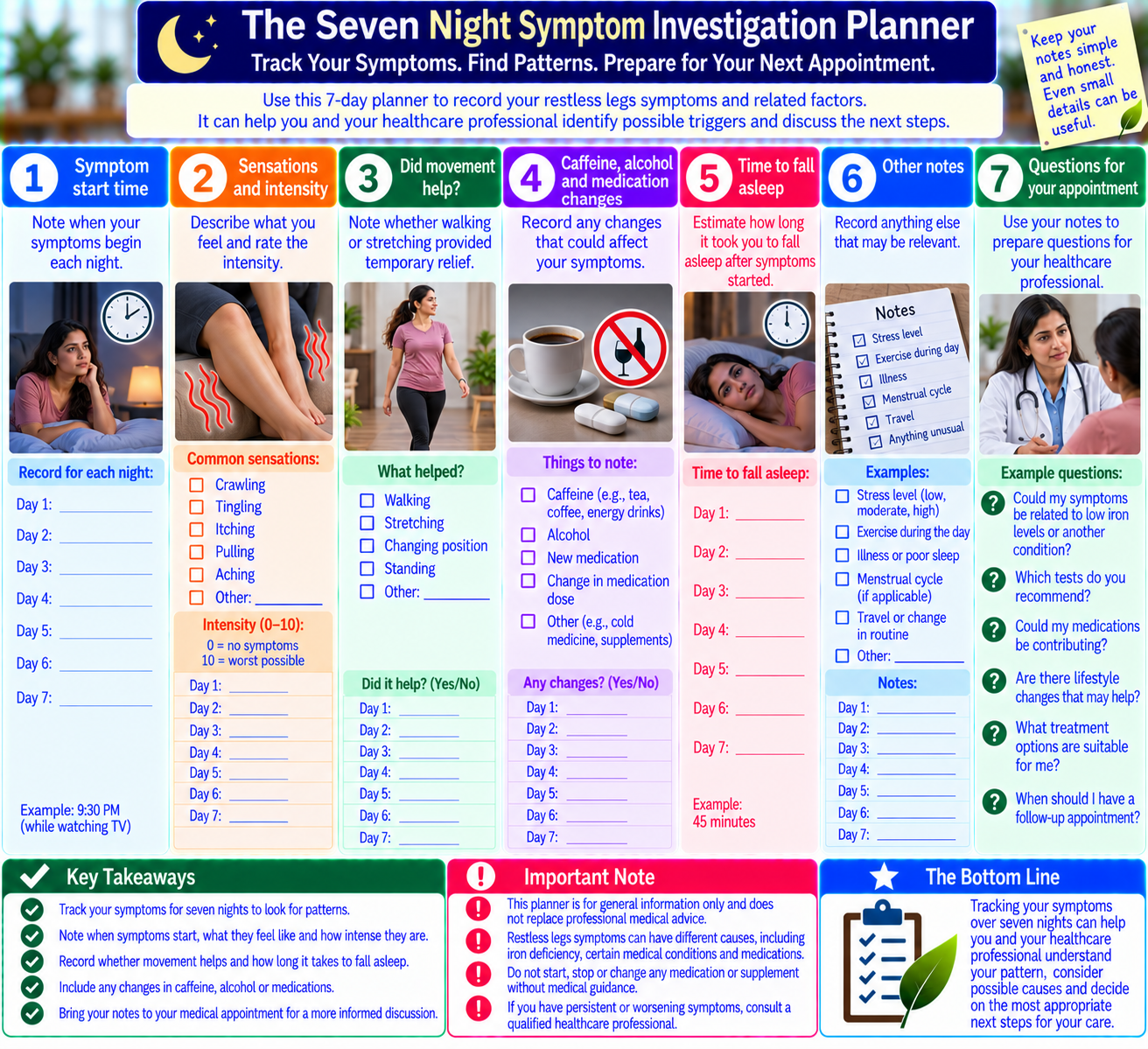
One useful way to prepare for a medical appointment is to record the pattern of symptoms for a week. This is a practical tracking tool, not a validated diagnostic test.
For each evening, write down:
- Start time: When did the urge to move begin?
- Rest position: Were you sitting, lying down, or travelling?
- Sensation: Was it crawling, tingling, pulling, pain, or something else?
- Movement response: Did walking or stretching help, and for how long?
- Possible triggers: Record caffeine, alcohol, unusually strenuous exercise, or medication changes.
- Sleep impact: Estimate how long it took to fall asleep and whether you woke repeatedly.
- Next-day effects: Note tiredness, difficulty concentrating, or changes in daily activities.
How to use the information
After seven nights, look for repeated patterns rather than focusing on a single bad night. You may notice that symptoms usually begin at a similar time, appear during prolonged sitting, or occur alongside other sleep difficulties.
Take the record to your appointment. It may help the clinician distinguish RLS from cramps, nerve symptoms, medication effects, or another sleep problem.
Do not deliberately take a suspected trigger or stop a medicine just to test the theory. Record your normal experience and make treatment changes with professional guidance.
When Should You Seek Medical Advice?
Arrange a medical appointment if restless legs repeatedly interfere with sleep, occur several times a week, affect your work or daily activities, or are becoming more troublesome.
You should also seek assessment if symptoms begin during pregnancy, occur alongside known kidney disease, or are accompanied by persistent numbness, burning, weakness, or unexplained pain.
Seek urgent medical care for sudden one-sided leg swelling or severe leg pain, especially if the leg becomes warm or red. Chest pain, fainting, or sudden breathlessness requires emergency assessment.
These symptoms are not typical features of uncomplicated RLS and may indicate another condition that needs prompt treatment.
Latest Research on Restless Legs Syndrome: What Changed in 2025 and 2026?
Research and clinical guidance have increasingly emphasized iron assessment, the long-term safety of medicines, and individualized treatment rather than relying on short-term symptom relief alone.
The 2025 American Academy of Sleep Medicine guideline
The 2025 AASM clinical practice guideline recommends addressing aggravating factors and assessing iron status. It strongly recommends several medicines in the gabapentinoid group for appropriate adults with RLS and recommends intravenous ferric carboxymaltose for selected patients.
The guideline also suggests against the standard use of several dopamine agonists, including pramipexole and ropinirole, because their long-term risks can outweigh their benefits for many patients. One important concern is augmentation, in which symptoms begin earlier, become more severe, or spread to other body areas during treatment.
This does not mean these medicines are never appropriate. Treatment decisions depend on individual circumstances, previous response, side effects, and specialist advice.
A 2025 systematic review of iron treatment
A systematic review and meta-analysis published in 2025 examined 12 randomized controlled trials involving 511 participants. The researchers found that iron treatment improved several measures of RLS severity, quality of life, and sleep compared with placebo, although overall adverse events were more common. The review also highlighted the need to weigh benefits and risks rather than assuming iron is suitable for everyone.
Read the 2025 iron-treatment meta-analysis for the study methods, results, and limitations.
The updated 2026 treatment algorithm
A further important development is the updated algorithm published in Mayo Clinic Proceedings in 2026 by the Scientific and Medical Advisory Board of the Restless Legs Syndrome Foundation.
The 2026 updated RLS management algorithm discusses oral and intravenous iron, medications that may worsen symptoms, gabapentinoids for chronic persistent RLS, dopamine-agonist risks, management of augmentation, and options for difficult-to-treat cases. It also addresses special situations such as pregnancy, childhood, kidney failure, and the period around surgery.
What readers should take from this research: RLS treatment is becoming more focused on identifying contributing factors and choosing treatments with long-term safety in mind. The newest guidance does not establish a universal cure, and the best approach still depends on a person’s symptoms, test results, other health conditions, and treatment history.
Common Mistakes to Avoid
Assuming every nighttime leg sensation is RLS: Cramps, nerve problems, circulation-related symptoms, and other conditions may feel similar. The timing, sensation, and response to movement help guide assessment.
Taking iron without testing: Too much iron can be harmful. Have a clinician interpret appropriate blood tests before starting supplementation.
Using sleeping pills to solve the problem without evaluation: Sedation does not necessarily treat the underlying cause, and some medicines may create additional risks.
Stopping a prescribed medicine suddenly: If you suspect a drug is worsening symptoms, ask the prescriber to review it rather than making an abrupt change.
Expecting stretching or massage to cure persistent RLS: These measures may provide comfort, but recurring symptoms can require a more complete medical assessment.
Frequently Asked Questions
1. Why do I get restless legs only at night?
RLS commonly follows an evening and nighttime pattern, and symptoms often become noticeable during rest. The exact mechanisms are not fully understood, and some people also experience symptoms during the day.
2. Can low iron cause restless legs without anemia?
Iron availability can be relevant to RLS even when hemoglobin is normal. A clinician may assess ferritin and transferrin saturation to decide whether iron treatment is appropriate.
3. Does walking help restless legs syndrome?
Walking or moving the legs often provides temporary relief. However, symptoms may return when you stop moving, so walking alone may not be enough for persistent cases.
4. What is the difference between restless legs and nighttime leg cramps?
RLS typically causes an urge to move and uncomfortable sensations that worsen at rest. Cramps usually involve a sudden, painful tightening of a muscle. Both can occur at night, and both may need assessment if frequent or severe.
5. Which foods help restless legs syndrome?
No particular food has been established as a cure. A balanced diet can support general health, but confirmed iron deficiency may require treatment beyond dietary changes. Ask a clinician or registered dietitian about your individual needs.
6. Can magnesium cure restless legs?
There is not enough reliable evidence to recommend magnesium supplements as a general cure for RLS. Supplements may also cause side effects or interact with health conditions and medicines. Discuss them with a healthcare professional, especially if you have kidney disease.
7. Is restless legs syndrome dangerous?
RLS is not usually a medical emergency, but persistent symptoms can seriously affect sleep, mood, concentration, and quality of life. New or unusual symptoms, especially one-sided swelling, weakness, or severe pain, should not automatically be attributed to RLS.
8. When should I see a doctor for restless legs at night?
Seek medical advice when symptoms repeatedly disrupt sleep, become more severe, or interfere with daily activities. A clinician can assess iron status, possible triggers, other medical conditions, and suitable treatment options.
Summary
Restless legs at night can make it difficult to relax and sleep, but the symptoms deserve more than guesswork. The characteristic urge to move, worsening during rest, temporary relief with movement, and evening predominance can help identify possible RLS.
Keeping a short symptom diary, reviewing potential triggers, maintaining a consistent sleep routine, and arranging appropriate medical assessment are practical first steps. Iron testing and treatment may be important for some people, while persistent symptoms may require prescribed therapy.
Current clinical guidance emphasizes individualized treatment, careful review of aggravating factors, and attention to long-term medication safety. If symptoms are frequent or affecting your quality of life, speak with a healthcare professional rather than relying on home remedies alone.
Research Methodology
This article was prepared using clinical practice guidance from the American Academy of Sleep Medicine, a 2025 systematic review and meta-analysis of iron treatment, and the updated 2026 management algorithm published in Mayo Clinic Proceedings. The sources were used to summarize symptom patterns, diagnostic considerations, treatment approaches, and recent developments.
This is an educational overview, not a systematic review of every available study. Recommendations may change as further evidence becomes available.
Medical Disclaimer
This article is for educational purposes only and does not replace medical advice, diagnosis, or treatment. Restless legs syndrome can resemble other medical conditions, so persistent or concerning symptoms should be evaluated by a qualified healthcare professional. Do not start iron supplements, stop prescribed medicines, or change treatment without appropriate medical guidance.
Fitness Disclaimer
The physical activity and gentle exercise suggestions discussed in this article about restless legs at night are intended for general educational purposes only. Activities such as walking, stretching, and gentle leg movements may provide temporary relief for some people with restless legs syndrome (RLS), but they are not a guaranteed treatment or a substitute for medical care.
Choose movements that match your comfort and physical abilities. Avoid forceful stretching or exercises that cause pain, dizziness, or worsening symptoms. The U.S. Centers for Disease Control and Prevention (CDC) provides general guidance on safe physical activity and adapting exercise to individual needs.
If restless legs symptoms frequently disrupt your sleep, interfere with daily activities, or worsen despite self-care, consult a qualified healthcare professional. Seek medical advice before beginning a new exercise routine if you have an existing medical condition, an injury, or concerns about your ability to exercise safely. For more information about restless legs syndrome and its medical management, consult the National Institute of Neurological Disorders and Stroke (NINDS).
HealthTipsToYou.com does not guarantee that exercise or lifestyle changes will relieve restless legs symptoms. Individual experiences and treatment needs vary.
Sources and references
1. American Academy of Sleep Medicine (2025)
Treatment of Restless Legs Syndrome and Periodic Limb Movement Disorder: A Clinical Practice Guideline.
Supports the sections on iron testing, treatment options, medication-related triggers, and current clinical recommendations.
2. Silber MH, et al. — Mayo Clinic Proceedings (2026)
An Updated Algorithm for the Management of Restless Legs Syndrome.
Supports the latest research section, including updated treatment approaches, iron therapy, medication safety, and management of persistent symptoms.
3. National Institute of Neurological Disorders and Stroke (NINDS)
Restless Legs Syndrome.
Supports the overview of symptoms, neurological features, and effects on sleep and daily functioning.
4. American Academy of Sleep Medicine — Quality Measures (2025 update)
Provides additional guidance on evaluating iron stores and monitoring patients with RLS.
5. Mayo Clinic Proceedings — Previous management algorithm (2021)
The Management of Restless Legs Syndrome: An Updated Algorithm.
Provides background on treatment categories, non-drug approaches, iron supplementation, and management of persistent or difficult-to-treat symptoms.
These sources are not interchangeable: the AASM guideline provides evidence-graded clinical recommendations, while the 2026 article provides an updated management algorithm. The NINDS page is useful for general patient education.
Related Articles