

























































































































































15 Daily Health Habits for Better Overall Health: A Practical Guide
Author: RVLNSV PRASAD
Updated On: October 2026
About Us
Author Bio
Editorial Policy
Contact Us
Medical Review: This article has not been independently reviewed by a qualified healthcare professional.
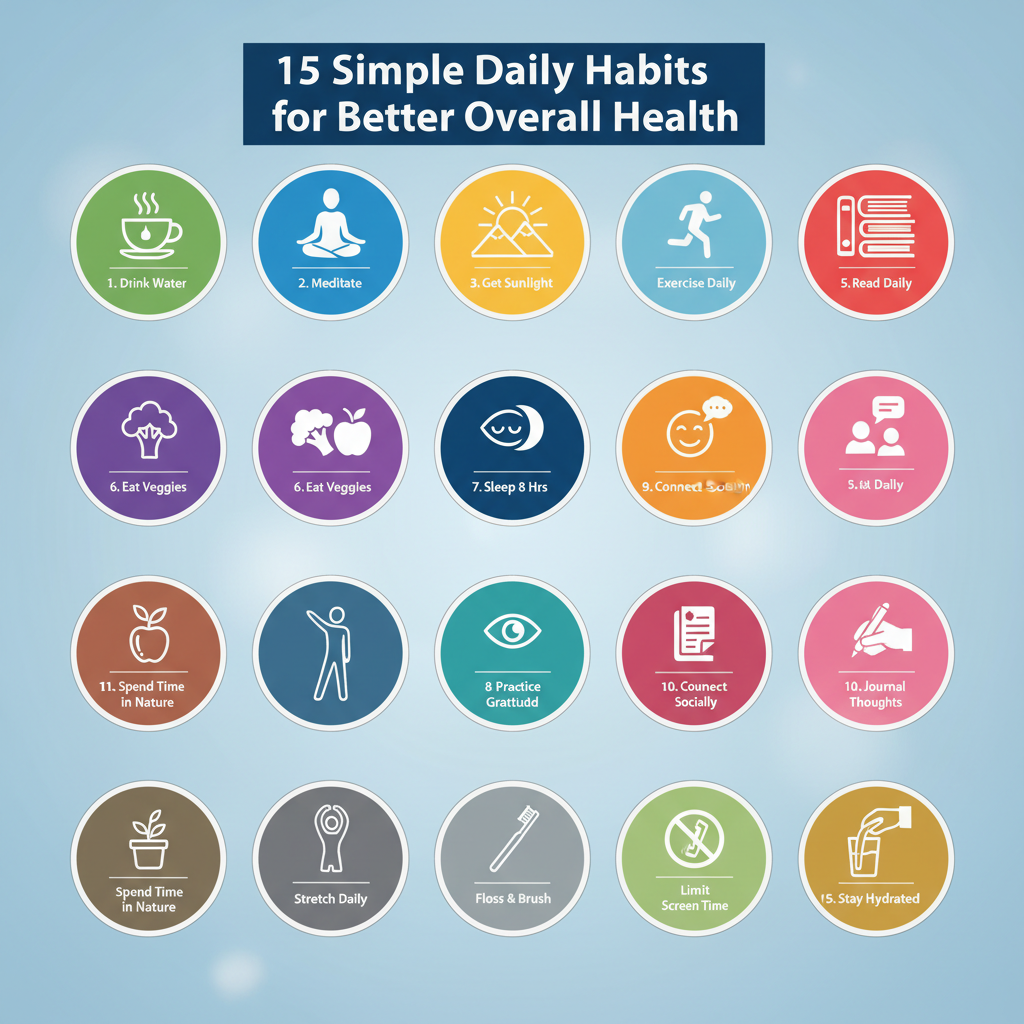
Quick Answer: What Are the Best Daily Health Habits?
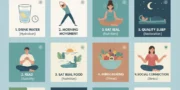
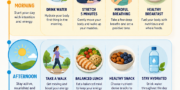
The best daily health habits are manageable actions that support your nutrition, movement, sleep, mental well-being, and long-term health. These include eating a variety of nutritious foods, drinking enough water, walking regularly, interrupting long periods of sitting, getting sufficient sleep, managing stress, maintaining social connections, and following appropriate preventive healthcare advice.
You do not need to change your entire lifestyle in one day. Begin with one or two practical habits, attach them to activities you already do, and gradually build a routine that fits your circumstances.
Key Takeaways
- Small, repeatable actions are more practical than attempting a complete lifestyle makeover.
- A balanced diet should include vegetables, fruit, pulses, whole grains, and other suitable sources of protein.
- Adults should work toward at least 150 minutes of moderate-intensity physical activity each week, with muscle-strengthening activity on at least two days.
- Regular sleep, stress management, and meaningful social contact also deserve attention.
- Habit formation takes different amounts of time for different people; missing a day does not mean you have failed.
- Tracking useful actions can help you identify what works without turning health into a competition.
Introduction: Better Health Starts With What You Repeat
Improving your health can feel complicated when advice seems to change from one article to the next. One recommendation focuses on diet, another emphasizes exercise, and a third suggests changing your sleep schedule. Trying to follow everything immediately can leave you overwhelmed before you have established a single lasting routine.
A more practical approach is to focus on the ordinary decisions that shape your day. What do you eat when you are busy? How often do you move between periods of sitting? Do you have a regular opportunity to unwind before bed? These details may seem small, but they are useful starting points for building a healthier lifestyle.
The World Health Organization’s guidance on healthy diets and recommendations on physical activity provide a foundation for making these changes. The challenge is translating broad recommendations into routines that work with your schedule, budget, preferences, and physical abilities.
This guide takes that practical approach. Rather than asking you to follow a perfect morning routine, it explains 15 daily health habits, why they matter, and how to make each one easier to maintain.
One important distinction is that a healthy routine does not need to look identical for everyone. A person working at a desk may benefit from movement breaks, while someone doing physical work may need more attention to recovery. Someone with a chronic condition may require individualized dietary or exercise advice.
The goal is not perfection. It is to create a pattern of everyday choices that supports your health over time.
1. Build a More Balanced Plate at Your Main Meals
A balanced meal provides a mixture of nutrients rather than relying heavily on one food group. Vegetables, fruit, whole grains, pulses, and appropriate protein sources can help you obtain the nutrients your body needs.
The WHO recommends that people older than 10 aim for at least 400 grams of fruit and vegetables daily, alongside adequate dietary fiber from foods. Its healthy diet guidance also emphasizes variety and limiting excess salt, free sugars, and unhealthy dietary patterns.
You do not need expensive ingredients to start. Indian meals can include dal, chickpeas, beans, vegetables, whole-wheat roti, millets, brown rice, curd, eggs, fish, or other suitable protein foods.
A practical habit: Before serving your meal, check whether it contains a vegetable or fruit, a source of protein, and a suitable carbohydrate source. Adjust portions to your appetite, needs, and medical advice.
For example, you could pair vegetable curry with dal and roti, or combine rice with sambar and a vegetable side dish. These are flexible examples, not mandatory meal plans.
A useful reader insight: Improve one meal you already eat regularly before redesigning your entire diet. Familiar meals are often easier to maintain than complicated recipes that require extra time or money.
2. Add More Fiber-Rich Foods Gradually
Fiber supports normal bowel function and is part of a healthy eating pattern. Foods containing fiber include vegetables, fruit, beans, lentils, chickpeas, oats, and whole grains.
The WHO healthy diet recommendations advise adults and older children to obtain fiber from foods rather than depending on highly refined carbohydrate sources alone.
However, suddenly increasing fiber can cause gas or bloating in some people. A gradual change is often more comfortable.
Try this: Add vegetables to a familiar dish, choose whole fruit instead of juice more often, or include beans or lentils in a meal. Increase fiber over time and drink adequate fluids unless your healthcare professional has advised a fluid restriction.
People with certain digestive conditions may need individualized guidance about fiber intake. More is not always better for every person.
3. Make Water Easy to Reach
Water helps regulate body temperature, supports normal bodily functions, and prevents dehydration. Dehydration can contribute to symptoms such as headache, constipation, dizziness, and difficulty concentrating.
The US Centers for Disease Control and Prevention explains these benefits in its March 2026 guidance on water and healthier drinks.
Fluid needs vary according to activity, weather, age, pregnancy, illness, and other factors. People living in hot climates or exercising heavily may need more fluids than those in cooler conditions.
A simple habit: Keep drinking water where you normally work or spend time. Drink with meals and take water breaks when appropriate, particularly during hot weather or physical activity.
You can also obtain fluid from foods and other beverages. There is no universal requirement for everyone to drink exactly the same number of glasses daily.
Avoid this mistake: Do not force excessive amounts of water to meet an arbitrary target. People with kidney, heart, or other conditions that affect fluid balance should follow their clinician’s advice.
4. Move More Throughout the Day, Not Only During Exercise
A planned workout is useful, but your daily movement matters too. Walking to a nearby shop, taking the stairs when appropriate, doing household tasks, or moving during work breaks can add activity to your day.
The WHO’s physical activity recommendations state that adults should generally aim for 150–300 minutes of moderate-intensity aerobic activity per week, or an equivalent amount of vigorous activity. Muscle-strengthening activity is also recommended on at least two days each week.
You do not have to complete the entire weekly target immediately. The CDC’s adult activity guidance emphasizes that some activity is better than none.
A practical habit: Walk for five to ten minutes after a convenient meal, take a brief movement break during a long sitting period, or walk while making a phone call when safe.
The useful distinction: Exercise sessions and ordinary movement are related, but they are not identical. A daily walk is valuable, and strength training may still be needed to address muscle strength.
5. Interrupt Long Periods of Sitting
Even people who exercise can spend much of the day sitting. If you work at a desk, drive frequently, or spend long periods using a screen, consider how often you change position and move.
The WHO’s guidelines on physical activity and sedentary behavior recommend limiting sedentary time and replacing it with physical activity of any intensity where possible.
Research does not establish one perfect break interval that works for every individual. The key is to find a reminder system you can realistically follow.
Try this: After finishing a task, stand up, stretch gently, refill your water bottle, or walk around for a short period. You could also place a recurring reminder on your phone or computer.
If standing is difficult, adapt the movement to your abilities. Seated movement and advice from a physiotherapist may be appropriate for some people.
6. Include Strength-Building Activities in Your Week
Strength is important for everyday tasks such as carrying shopping, getting up from a chair, climbing stairs, and maintaining physical independence.
Adults should include muscle-strengthening activity involving the major muscle groups on at least two days per week. The CDC’s adult physical activity guidance explains this recommendation.
You can begin with suitable bodyweight movements, resistance bands, light weights, or exercises recommended by a qualified professional. Household objects may work for some exercises, provided they can be held securely and used safely.
A beginner-friendly approach: Choose a few basic movements that match your abilities. Learn the correct technique before increasing resistance, repetitions, or difficulty.
Avoid treating soreness as proof of an effective workout. Recovery, gradual progression, and correct technique matter more than attempting the hardest exercise available.
People with significant joint pain, balance difficulties, heart conditions, or other health concerns should seek appropriate guidance before starting strenuous activity.
7. Protect a Regular Sleep Opportunity
Sleep supports physical health, attention, memory, and emotional well-being. Adults aged 18–60 generally need at least seven hours of sleep per night, although individual needs vary.
The CDC explains age-specific sleep recommendations and the importance of sleep in its official sleep guidance.
A regular sleep schedule can make it easier to create a predictable bedtime routine. However, sleep problems are not always caused by poor habits. Pain, medications, sleep disorders, stress, and medical conditions can also interfere.
Try this: Choose a realistic wake-up time and work backward to allow enough time for sleep. Reduce stimulating activities before bed if they make it harder to unwind, and keep the sleeping environment comfortable.
If you repeatedly struggle to fall asleep, wake frequently, or feel unusually sleepy during the day, discuss the problem with a healthcare professional. Persistent symptoms may need assessment rather than another bedtime tip.
8. Create a Short Wind-Down Routine
Many people finish work and move straight into household tasks, scrolling, or late-night entertainment. A brief transition between daytime responsibilities and bedtime may help make evenings more predictable.
Your routine does not need to involve expensive products or a complicated wellness ritual.
Choose one or two options:
- Read a few pages of a book.
- Prepare clothes or essentials for the next day.
- Take a warm shower if it suits you.
- Write down unfinished tasks so you can revisit them tomorrow.
- Dim lights and reduce stimulating screen use when it helps you relax.
The CDC’s sleep guidance offers further information about healthy sleep.
A useful distinction: A wind-down routine can support better sleep habits, but it is not a cure for insomnia or another sleep disorder. Seek professional help when sleep problems persist or affect daily functioning.
9. Use a Simple Stress-Management Practice
Stress is a normal response to challenges, but persistent stress can affect mood, sleep, relationships, and everyday decisions. The purpose of stress management is not to eliminate every difficult feeling. It is to develop ways to respond without becoming overwhelmed.
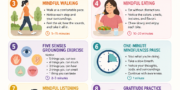
One accessible option is slow, comfortable breathing. Another is a brief walk, journaling, mindfulness practice, or talking with someone you trust.
Try this: Set aside two minutes between tasks. Relax your shoulders, breathe comfortably, and notice what is happening around you. Do not force deep breathing or hold your breath if it feels uncomfortable.
The National Center for Complementary and Integrative Health’s information on relaxation techniques discusses meditation and mindfulness, including their potential benefits and limitations.
Different techniques work for different people. If stress is persistent, interferes with daily life, or is accompanied by significant anxiety or depression, consider professional support rather than relying solely on self-help methods.
10. Maintain Meaningful Social Connections
Social well-being is an important part of overall health. Supportive relationships can provide companionship, practical help, and opportunities to share concerns.
However, social connection does not require a large group of friends or constant communication. A meaningful conversation with a family member, friend, colleague, neighbor, or community member may be more valuable than frequent but unsatisfying interactions.
A practical habit: Contact one person you care about, share a meal when possible, or make time for a conversation without repeatedly checking your phone.
If you are naturally quiet or have limited opportunities to socialize, begin with small, comfortable interactions. Community activities, interest groups, volunteering, and supportive online communities may help some people connect with others.
Do not interpret loneliness as a personal failure. Life changes, caregiving responsibilities, disability, grief, and geographical distance can all affect relationships. Seek additional support if isolation is affecting your mental health.
11. Make Your Environment Support Healthy Choices
Willpower is not equally available every day. Your surroundings can make certain choices easier or more difficult.
For example, fruit that is washed and ready to eat may be easier to choose than a snack that requires preparation. Walking shoes placed near the door may remind you to take a walk. A phone kept away from the bed may reduce late-night checking.
This approach is sometimes called changing the choice environment. It does not guarantee a healthy decision, but it reduces the effort needed to begin.
Try a five-minute environment reset:
- Put one nutritious food where you can see it.
- Keep water accessible.
- Prepare an item you need for tomorrow’s activity.
- Move one distraction away from your usual work or sleep area.
The goal is to make the preferred action more convenient, not to create a perfect home or spend money on special equipment.
This can be especially helpful when you are tired, busy, or trying to establish a new routine.
12. Use Habit Pairing Instead of Relying on Motivation
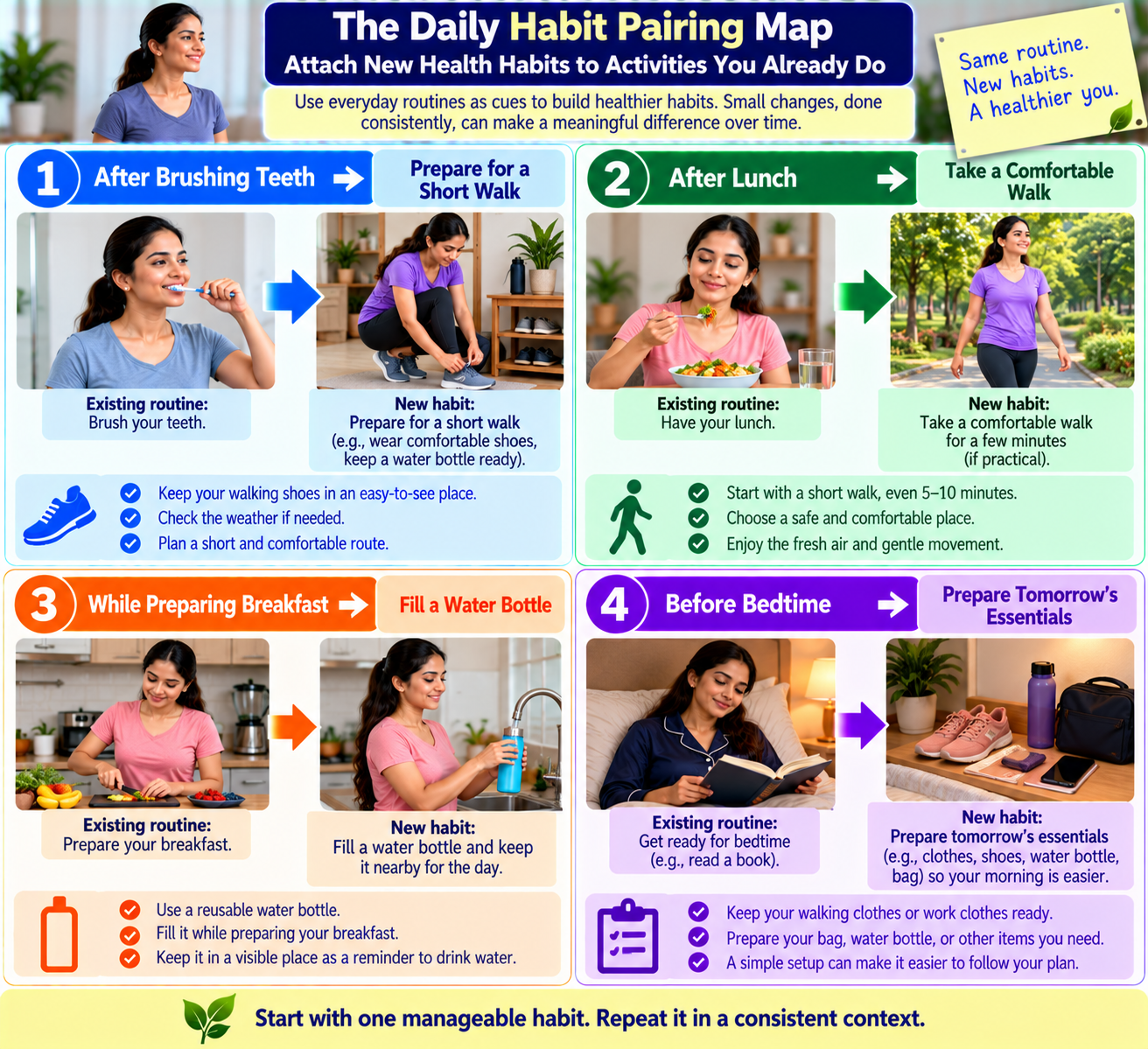
A new habit is easier to remember when it is connected to an existing activity. For example, you might stretch gently after brushing your teeth, prepare a water bottle while making breakfast, or take a short walk after lunch.
This approach gives the new action a clear cue. It also reduces the need to decide repeatedly when to do it.
Research provides useful context. A 2024 systematic review and meta-analysis on health behavior habit formation included 20 studies involving 2,601 participants. It found that habit development varied substantially across individuals and behaviors. Reported times differed widely, and the evidence had limitations, including a high risk of bias in many included studies.
The popular idea that every habit takes exactly 21 days is therefore not a reliable rule.
A practical formula: “After I do [existing activity], I will do [small new action].”
For example: “After I finish lunch, I will walk for five minutes.”
Keep the first version small enough that you can repeat it under ordinary circumstances. Once it feels manageable, increase it gradually.
13. Track Actions, Not Just Outcomes
Many health goals are expressed as outcomes: losing weight, lowering cholesterol, improving fitness, or getting better sleep. These outcomes can matter, but they may not change immediately, and they are influenced by factors beyond your daily choices.
Tracking the action itself can provide more useful feedback.
Instead of checking your weight every day to judge whether a new routine works, you might record how often you walked, prepared a balanced meal, or followed your intended bedtime routine.
Try a simple weekly record:
| Habit | What to record | Why it helps |
|---|---|---|
| Walking | Minutes or sessions | Shows your activity pattern |
| Balanced meals | Meals that included varied food groups | Highlights opportunities to improve variety |
| Sleep routine | Approximate bedtime and wake time | Helps identify irregular schedules |
| Stress management | Whether you tried a technique | Shows whether the routine is practical |
| Strength activity | Sessions completed | Helps you monitor weekly consistency |
You do not need to track every habit. Choose one or two measures that are useful and do not create anxiety.
For health measurements such as blood pressure, blood glucose, or cholesterol, follow the monitoring plan recommended by your healthcare professional. Home measurements should be interpreted in context rather than used to diagnose yourself.
14. Practice Basic Oral Hygiene and Keep Up With Preventive Care
Everyday health includes areas that are easy to overlook when attention is focused on food and exercise.
Brush your teeth regularly with fluoride toothpaste, clean between your teeth using an appropriate method, and seek dental care when needed. The American Dental Association’s oral health guidance provides practical information about dental care.
Preventive healthcare is another important part of a sustainable routine. Appropriate vaccinations, screening tests, and check-ups depend on age, medical history, family history, risk factors, and local recommendations.
You do not necessarily need every available test or a check-up at the same interval as another person. Ask a qualified healthcare professional which preventive services are appropriate for you.
A useful habit: Keep a note of upcoming appointments, medications, allergies, and questions for your clinician. This can make consultations more productive.
Daily habits can support health, but they do not replace necessary screening, diagnosis, dental treatment, or medical care.
15. Review Your Routine Weekly and Make One Adjustment
A healthy routine should fit your actual life, not an idealized schedule. Reviewing your week gives you an opportunity to identify what worked, what felt difficult, and what could be simplified.
This is different from judging yourself for every missed activity.
Ask three questions:
- Which habit felt easiest to repeat?
- What regularly prevented me from following my plan?
- What one change would make next week more manageable?
For example, if you planned a long walk but repeatedly lacked time, try two shorter walks. If meal preparation felt difficult, choose one simple dish to prepare in advance. If a bedtime routine failed because of work, identify a realistic alternative for busy evenings.
The key principle: Modify the routine before abandoning the goal. A smaller habit that fits your life may be more useful than an ambitious plan you rarely follow.
If you have a health condition, are recovering from illness, or have limitations that affect daily activities, adjust your goals with appropriate professional guidance.
A Practical Table: Which Health Habit Should You Start With?
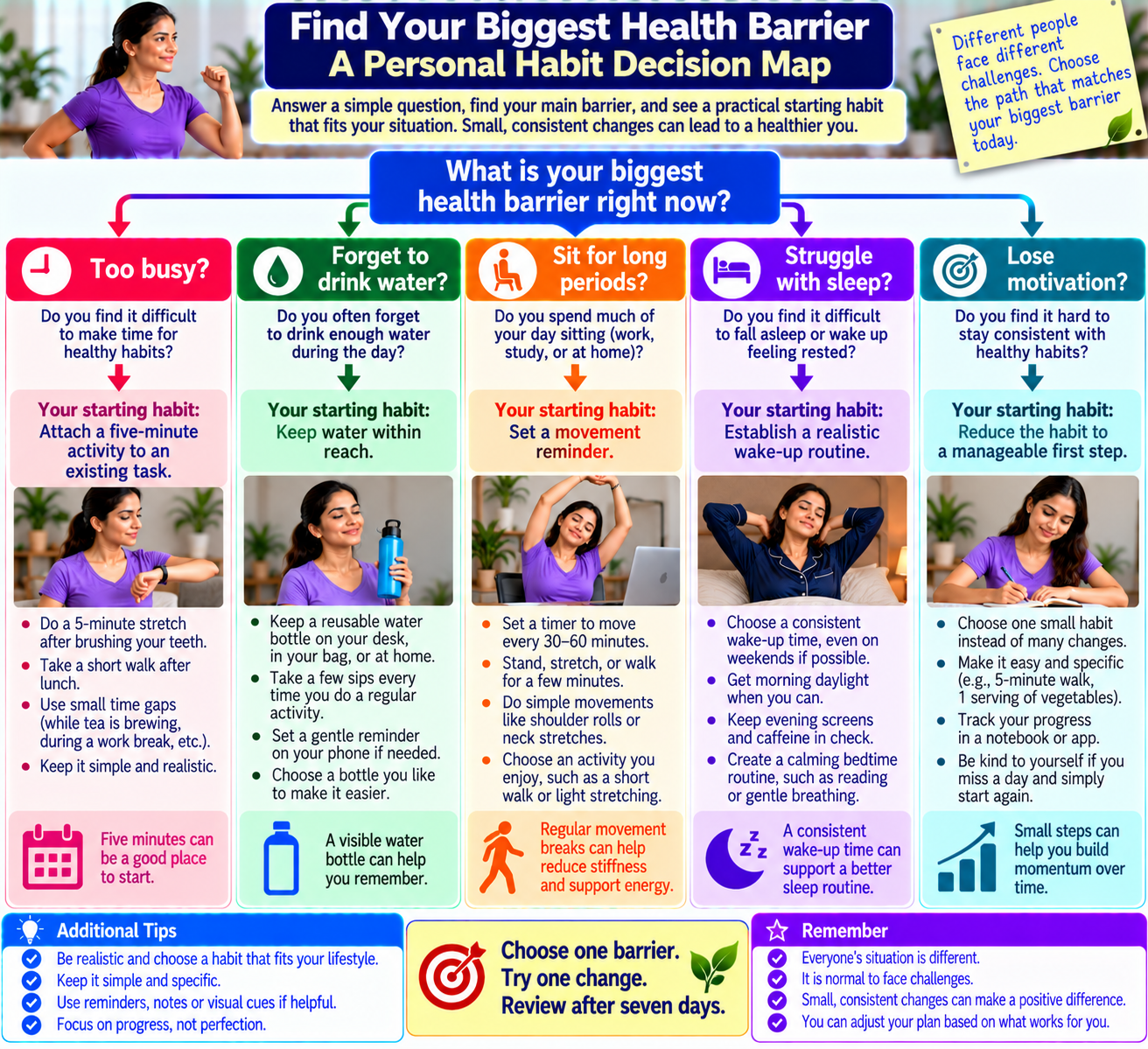
| If your main difficulty is… | Start with… | A realistic first step |
|---|---|---|
| Irregular meals | Improve one familiar meal. | Add a vegetable or a suitable protein source. |
| Drinking too little | Make water accessible. | Keep a bottle nearby and drink regularly. |
| Sitting for long periods | Add movement cues. | Walk or change position between tasks. |
| Lack of exercise | Begin with a manageable activity. | Try a short walk suited to your ability. |
| Unpredictable sleep | Establish a consistent wake-up time. | Set a realistic sleep opportunity. |
| Stressful days | Create a brief pause. | Try comfortable breathing or a short walk. |
| Difficulty staying consistent | Use habit pairing. | Attach one new action to an existing routine |
| Losing motivation | Track behavior. | Record one useful action each day. |
These are starting points rather than medical prescriptions. Choose the option that addresses your most important barrier.
Latest Research Developments: What Habit Science Tells Us
Research into healthy behavior increasingly examines not only which habits are beneficial but also how people can maintain them. A useful distinction is that established public-health recommendations provide guidance about health behaviors, while habit-formation studies investigate how those behaviors become more automatic.
1. Habit formation does not follow a fixed 21-day rule.
The 2024 systematic review and meta-analysis of habits related to health behavior found substantial variation in how long people took to develop habits. Across the included studies, some reported median estimates of approximately 59–66 days, while reported mean estimates were longer. The range across participants and behaviors was wide.
These numbers should not be treated as a deadline. The review included only 20 studies, and many had a high risk of bias. Different behaviors also require different levels of effort and opportunity.
Practical implication: Repeat a manageable action in a consistent context, then judge progress by whether it is becoming easier to perform—not by whether a certain number of days has passed.
2. Small amounts of activity still count.
Current guidance continues to emphasize that people who are inactive can benefit from becoming more active, even before reaching the full recommended target.
The CDC’s adult physical activity guidance explains how activity can be accumulated throughout the week. The WHO physical activity guidance also recommends regular activity and limiting sedentary behavior.
Practical implication: People who find a 30-minute workout difficult to schedule can begin with shorter periods of movement and build gradually. Short sessions are a starting strategy, not a reason to ignore the eventual weekly activity recommendation.
3. Current dietary guidance emphasizes overall patterns.
The WHO’s healthy diet fact sheet emphasizes dietary diversity, suitable food choices, and limiting excessive salt, free sugars, and unhealthy dietary patterns. It also recognizes that healthy diets can differ according to culture, available foods, and individual needs.
Practical implication: There is no need to copy an expensive diet trend to eat more healthfully. Familiar foods such as vegetables, pulses, fruit, and whole grains can form part of a balanced eating pattern.
4. Hydration advice should account for individual needs.
The CDC’s water and healthier drinks guidance, updated in March 2026, explains that adequate fluid intake supports normal body function and that needs vary with activity, climate, age, and other circumstances.
Practical implication: Use thirst, routine, weather, activity, and professional advice to guide fluid intake instead of treating a single water target as appropriate for everybody.
What these findings do—and do not—mean
These sources support practical changes in movement, nutrition, hydration, and habit-building. They do not prove that following a particular 15-step routine will prevent every disease, extend life by a specific number of years, or work equally well for all readers.
The most responsible approach is to combine established public health guidance with small, sustainable actions and individualized care when needed.
A Seven-Day Plan to Begin Building Healthy Habits
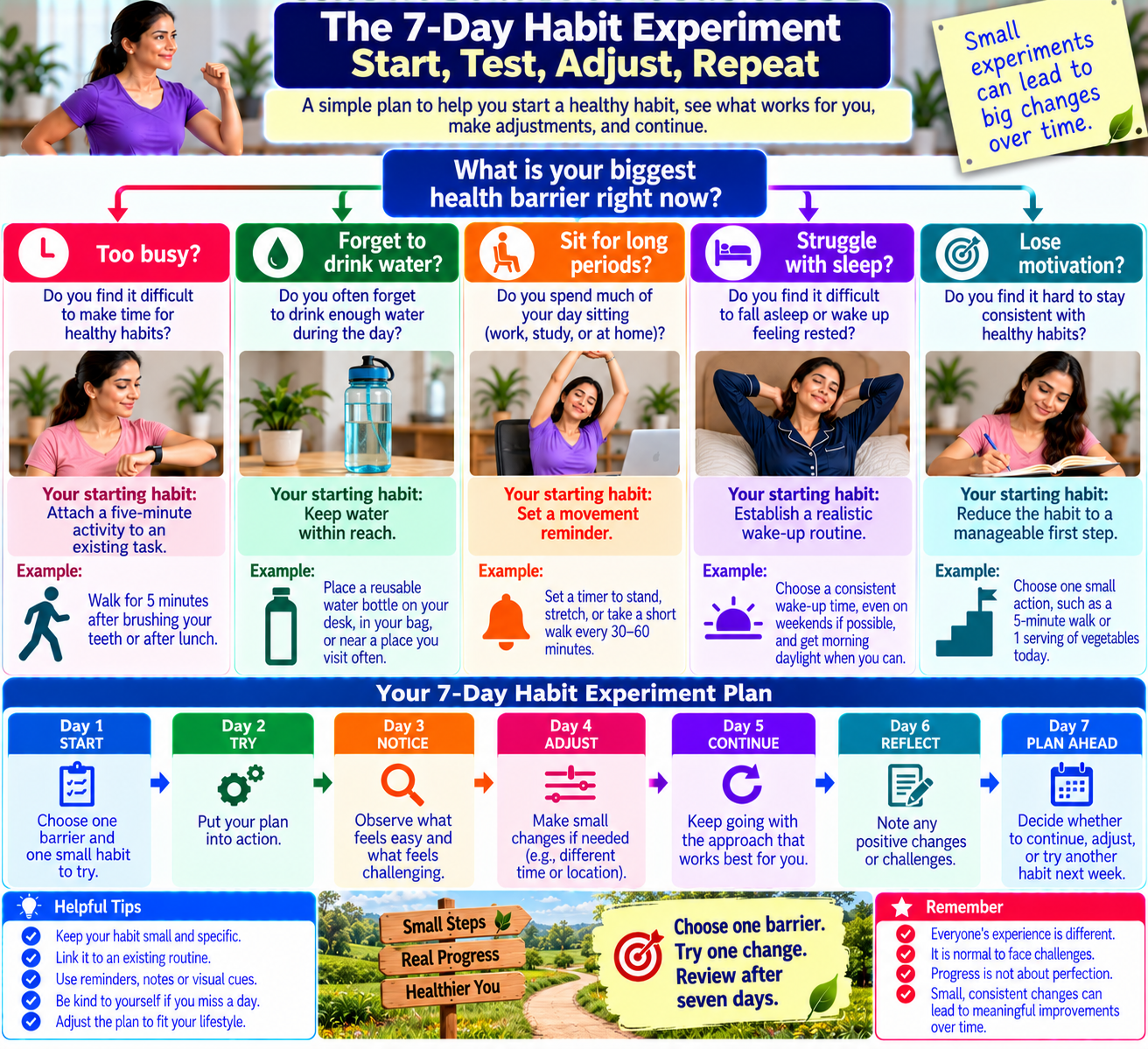
You do not have to start all 15 habits at once. Use this seven-day plan to practice a few of the ideas without making your schedule unnecessarily complicated.
| Day | Suggested action | How to keep it manageable |
|---|---|---|
| Day 1 | Improve one meal. | Add a vegetable, fruit, pulse, or suitable protein source. |
| Day 2 | Make water easier to access. | Place a bottle where you usually work. |
| Day 3 | Add a short period of movement. | Walk or move for a few minutes when convenient. |
| Day 4 | Review your sleep routine. | Choose a realistic bedtime or wake-up target |
| Day 5 | Practise a stress-management technique. | Try two minutes of comfortable breathing. |
| Day 6 | Contact someone supportive. | Make time for a conversation. |
| Day 7 | Review the week. | Keep what worked and adjust one obstacle. |
The plan is a practical starting framework, not a scientifically validated seven-day treatment. Its purpose is to help you discover which actions fit your circumstances.
At the end of the week, select one or two habits to continue. Add another only when you feel ready.
Common Mistakes That Make Healthy Habits Harder to Maintain
Trying to change everything immediately
An ambitious plan can become exhausting when it involves new meals, long workouts, early mornings, and multiple tracking systems at once. Begin with a manageable action and build from there.
Depending entirely on motivation
Motivation changes with sleep, workload, stress, and life events. Use reminders, prepared equipment, and existing routines to make healthy actions easier to start.
Treating one missed day as failure
An interrupted routine is normal. Return to the next planned opportunity instead of waiting for a new week or month.
Copying somebody else’s diet or workout
A routine that suits another person may not suit your medical needs, budget, abilities, or schedule. Adapt general guidance to your circumstances.
Ignoring persistent symptoms
Lifestyle changes can support health, but ongoing fatigue, sleep problems, pain, digestive symptoms, or other concerns may require assessment. Do not assume that every symptom can be corrected by improving habits.
Using supplements as a substitute for daily care
Supplements are not a replacement for a varied diet, appropriate exercise, sleep, or prescribed treatment. Some products interact with medicines or are unsuitable for particular health conditions. Discuss their use with a qualified healthcare professional when necessary.
Frequently Asked Questions
What are the most important daily health habits?
A balanced diet, regular physical activity, sufficient sleep, appropriate hydration, stress management, and preventive healthcare are important foundations. The best starting point depends on your current routine and health needs.
How can I improve my health if I have very little free time?
Start with actions that fit existing activities. Walk during a suitable break, add nutritious ingredients to a meal you already prepare, keep water accessible, or create a short wind-down routine. Small changes can help you begin without requiring a complete schedule overhaul.
How long does it take to form a healthy habit?
There is no universal timeline. A 2024 systematic review found substantial variation across behaviors and participants. Repetition, a stable context, and choosing an action you can realistically maintain may help.
Do I need to exercise every day?
You do not need a strenuous workout every day. Adults should generally work toward the recommended weekly amount of aerobic activity and include muscle-strengthening activity on at least two days. Recovery and individual medical needs matter, too. See the CDC’s physical activity recommendations.
Is drinking eight glasses of water a day necessary?
Not for everyone. Fluid requirements vary, and water also comes from foods and other beverages. Climate, physical activity, health conditions, and medications can influence individual needs. Follow medical advice if you have been told to limit fluids.
What is the best time to sleep?
There is no single bedtime that suits every adult. A regular schedule that allows sufficient sleep and fits your responsibilities is a practical starting point. Persistent sleep difficulties warrant professional assessment.
Can daily habits replace medication?
No. Healthy habits may support health and help manage some risk factors, but they cannot replace prescribed medication or necessary treatment. Speak with your healthcare professional before changing medication or a treatment plan.
How can I stay consistent when I lose motivation?
Reduce the size of the action, connect it to an existing routine, and make the necessary equipment or ingredients easy to access. Tracking a small behavior may also help you notice progress. If you miss a day, restart at the next reasonable opportunity.
Conclusion: Build a Healthier Routine One Repeatable Action at a Time
Better overall health does not require a perfect diet, an expensive gym membership, or an elaborate morning routine. It begins with practical decisions that you can repeat: choosing a more balanced meal, moving regularly, getting enough sleep, making time to unwind, and staying connected with people who support you.
The most useful daily health habits are those that fit your real life. A short walk may be a better starting point than an unrealistic workout plan. Improving one familiar meal may be easier than following a restrictive diet. A simple reminder may help more than relying on motivation alone.
Research on habit formation also shows why patience matters. Different behaviors take different amounts of time to become more automatic, so progress should not be judged by an arbitrary deadline.
Choose one habit from this guide and decide exactly when you will practice it. Repeat it in a manageable way, review what gets in the way, and make adjustments when necessary.
Consistency does not mean never missing a day. It means finding a reasonable way to return to the actions that support your health.
Author’s Note
This article is intended to help readers understand practical, evidence-informed lifestyle habits. Recommendations may need to be adapted to individual circumstances, cultural food preferences, available resources, physical abilities, and medical needs.
Medical Disclaimer
This article is for general educational purposes only and does not replace individualized medical advice, diagnosis, or treatment. Consult a qualified healthcare professional about persistent symptoms, chronic conditions, dietary restrictions, medication concerns, or changes to your treatment plan.
Fitness Disclaimer
Exercise recommendations should be adapted to your current fitness, mobility, medical history, and abilities. Start gradually and use a suitable technique. Stop exercising and seek appropriate medical advice if you experience concerning symptoms such as chest pain, fainting, or unusual severe breathlessness.
Evidence-Based Sources and Further Reading
- World Health Organization — Healthy Diet. Guidance on dietary variety, fruit and vegetable intake, fiber, salt, and free sugars. Read the WHO guidance.
- World Health Organization — Physical Activity. Recommendations on aerobic activity, strength-building, and physical activity across adulthood. Read the WHO guidance.
- Centers for Disease Control and Prevention — Adult Activity: An Overview. Practical recommendations for weekly aerobic activity and muscle strengthening. Read the CDC guidance.
- Centers for Disease Control and Prevention — About Sleep. Sleep-duration recommendations and information about sleep and health. Read the CDC guidance.
- Centers for Disease Control and Prevention — About Water and Healthier Drinks. Information on hydration, dehydration, and choosing water. Read the CDC guidance.
- Time to Form a Habit: A Systematic Review and Meta-Analysis of Health Behavior Habit Formation and Its Determinants. A 2024 review examining the time required to develop health-related habits and factors associated with habit strength. Read the full research article on PubMed Central.
- National Center for Complementary and Integrative Health — Meditation and Mindfulness: Effectiveness and Safety. An overview of evidence and safety considerations for mindfulness and meditation practices. Read the NCCIH information.
- American Dental Association — MouthHealthy. Educational information about oral health and everyday dental care. Explore the ADA’s oral health resources.
Related Posts
- Healthy Habits Category
- 14 Ways to Increase Protein Intake Daily Tips
- Home
- Fuel Your Body Right: 6 Best Ultimate Guide to Smart Nutrition
- Healthy Eating Meal Plan for Wellness
- 12 Best Ways to Work Life Balancing Health : The American Health Challenge









[…] 15 Simple Daily Habits for Better Overall Health […]
[…] 15 Simple Daily Habits for Better Overall Health […]
[…] 15 Simple Daily Habits for Better Overall Health […]
[…] 15 Simple Daily Habits for Better Overall Health […]
[…] 15 Simple Daily Habits for Better Overall Health […]
[…] 15 Simple Daily Habits for Better Overall Health […]
[…] 15 Simple Daily Habits for Better Overall Health […]
[…] 15 Simple Daily Habits for Better Overall Health […]
[…] 15 Simple Daily Habits for Better Overall Health […]