




















































































































































12 Best Daily Habits to Help Prevent Kidney Stones Naturally
Author
RVLNSV PRASAD
Fact-Checked By
Wellness Research Team
Last Updated
August 2026

Author Note
RVLNSV PRASAD writes evidence-based wellness articles that simplify complex health topics into practical daily habits readers can apply in real life. This guide combines current medical research, trusted public health recommendations, and practical lifestyle strategies to help readers better understand kidney stone prevention. The information is based on guidance from organizations including the National Institute of Diabetes and Digestive and Kidney Diseases (NIDDK), the National Kidney Foundation (NKF), the Mayo Clinic, the Cleveland Clinic, and other reputable medical sources.
Introduction
Best Daily Habits to Help Prevent Kidney Stones Naturally, it can make a meaningful difference, as preventing kidney stones is often easier than treating them after they develop.
Many people think kidney stones happen suddenly. In reality, they usually develop over time as everyday habits gradually influence the balance of minerals and fluids in the urinary system. Something as simple as drinking too little water each day or regularly eating foods high in sodium may quietly increase the risk without causing obvious symptoms. National Institute of Diabetes and Digestive and Kidney Diseases (NIDDK))
Several years ago, I spoke with someone who had experienced kidney stones twice within three years. The second episode surprised them because they believed the first stone had been a one-time problem. They looked at their routines and found that on busy workdays, they typically forgot to drink water, ate packaged meals, and rarely exercised. Their experience was a reminder that it is usually the mundane daily choices, not the dramatic occurrences, that build up long-term health.
In my research on kidney health, I found that most doctors recommend prevention over quick fixes. The frequent advice to stay well hydrated, eat a balanced diet, maintain a healthy body weight, and engage in regular physical activity targets the common elements that contribute to stone formation. (National Kidney Foundation)
The encouraging news is that there are sustainable lifestyle choices that can help prevent many kidney stones. No regimen is foolproof, but regular healthy habits may reduce the risk of developing stones later in life, as well as improve your health. (Mayo Clinic)
This guide covers practical strategies, evidence-based preventive techniques, healthy dietary choices, hydration suggestions, and everyday routines that may help protect your kidneys for years to come.
Quick Answer
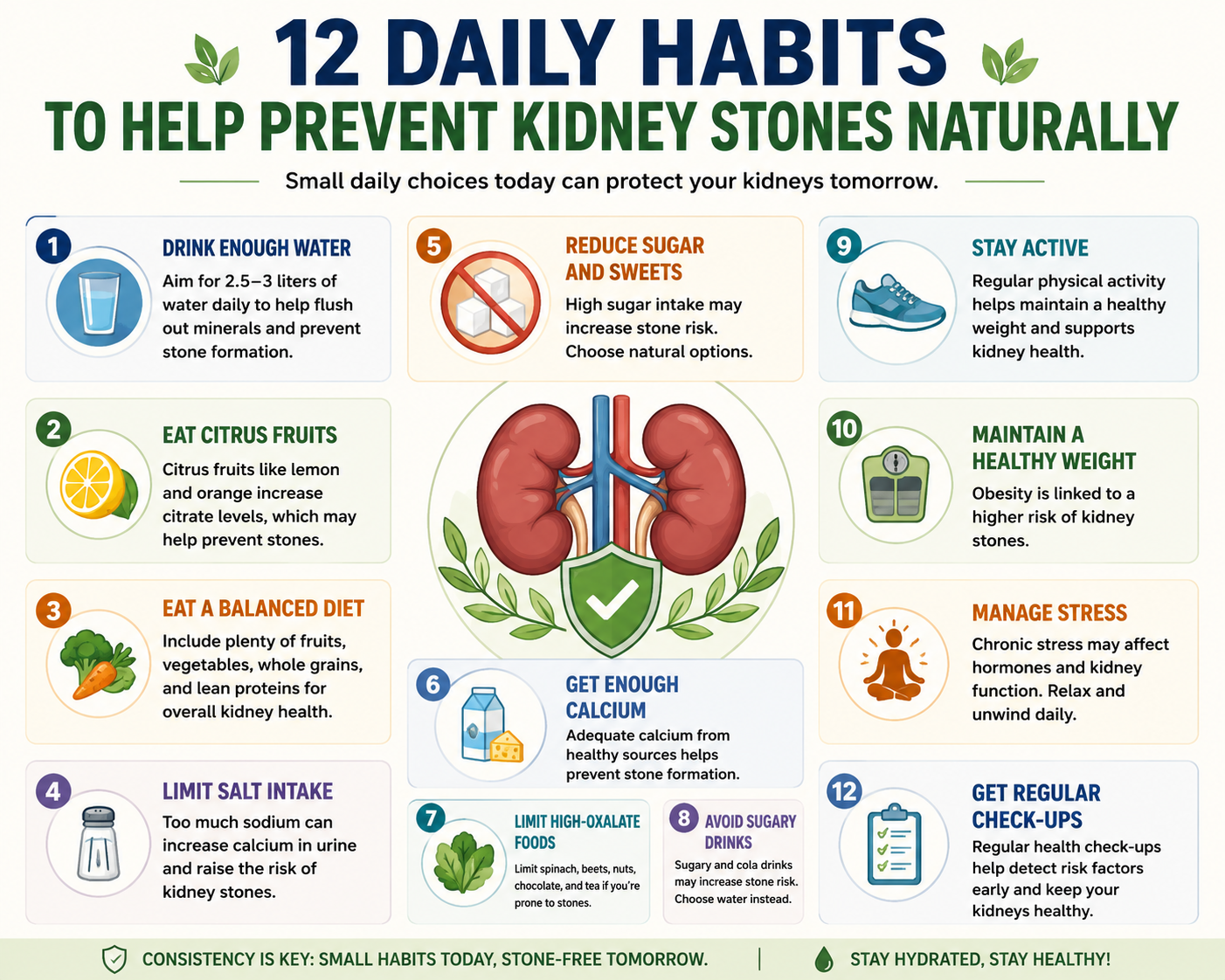
The Best Daily Habits to Help Prevent Kidney Stones Naturally, these habits include drinking plenty of water during the day, reducing excess salt, getting enough calcium from foods, balancing oxalate-rich foods, being physically active, keeping a healthy weight, and eating a balanced diet. Regularly following these daily habits may help lower the risk of developing kidney stones and support kidney health over time. (National Kidney Foundation)
Summary Table
| Daily Habit | How It May Help |
|---|---|
| Drink enough water. | Dilutes urine and reduces mineral concentration |
| Eat enough calcium from food. | Helps reduce oxalate absorption |
| Reduce excess sodium. | May lower calcium levels in urine |
| Balance oxalate-rich foods. | Helps reduce calcium oxalate stone formation |
| Choose whole foods. | Supports overall kidney health |
| Stay physically active. | Helps maintain a healthy body weight |
| Limit sugary drinks. | May reduce kidney stone risk |
| Eat more fruits and vegetables. | Supports healthy urine chemistry |
| Maintain a healthy weight. | Helps reduce several kidney stone risk factors |
| Don’t ignore the urge to urinate. | Supports normal urinary function |
| Schedule regular health check-ups. | Helps identify risk factors early |
| Build consistent healthy routines. | Supports long-term kidney wellness |
Why Daily Habits Matter More Than Quick Fixes
Most people start looking for kidney stone cures only after they have felt the discomfort. Unfortunately, by that time, the stone has often been forming for months or even years.
In my investigation, one thing that stood out was that health professionals rarely discuss kidney stone prevention as a single subject. Instead, they consistently emphasize a combination of healthy lifestyle practices that work together over time. Drinking extra water may not be enough if you’re eating a diet rich in sodium all the time. Likewise, a balanced diet may not fully compensate for persistent dehydration. Prevention usually depends on the combined effect of multiple healthy choices rather than one “miracle” remedy. (National Kidney Foundation)
Kidney stones are also known for recurring. Many people who develop one stone remain at increased risk of developing another unless they identify and address the underlying causes. That’s why building daily habits for kidney health is often more valuable than searching for short-term fixes after symptoms appear. (National Institute of Diabetes and Digestive and Kidney Diseases (NIDDK)
Another lesson I’ve learned is that sustainable habits always seem to trump radical health regimens. Drinking enough water, eating balanced meals, taking regular walks, and paying attention to hydration. These may seem like tiny steps. Over months and years, however, these habits can have a meaningful impact on your overall kidney health and may help reduce kidney stone risk. (Cleveland Clinic)
1. Hydrate First Every Day
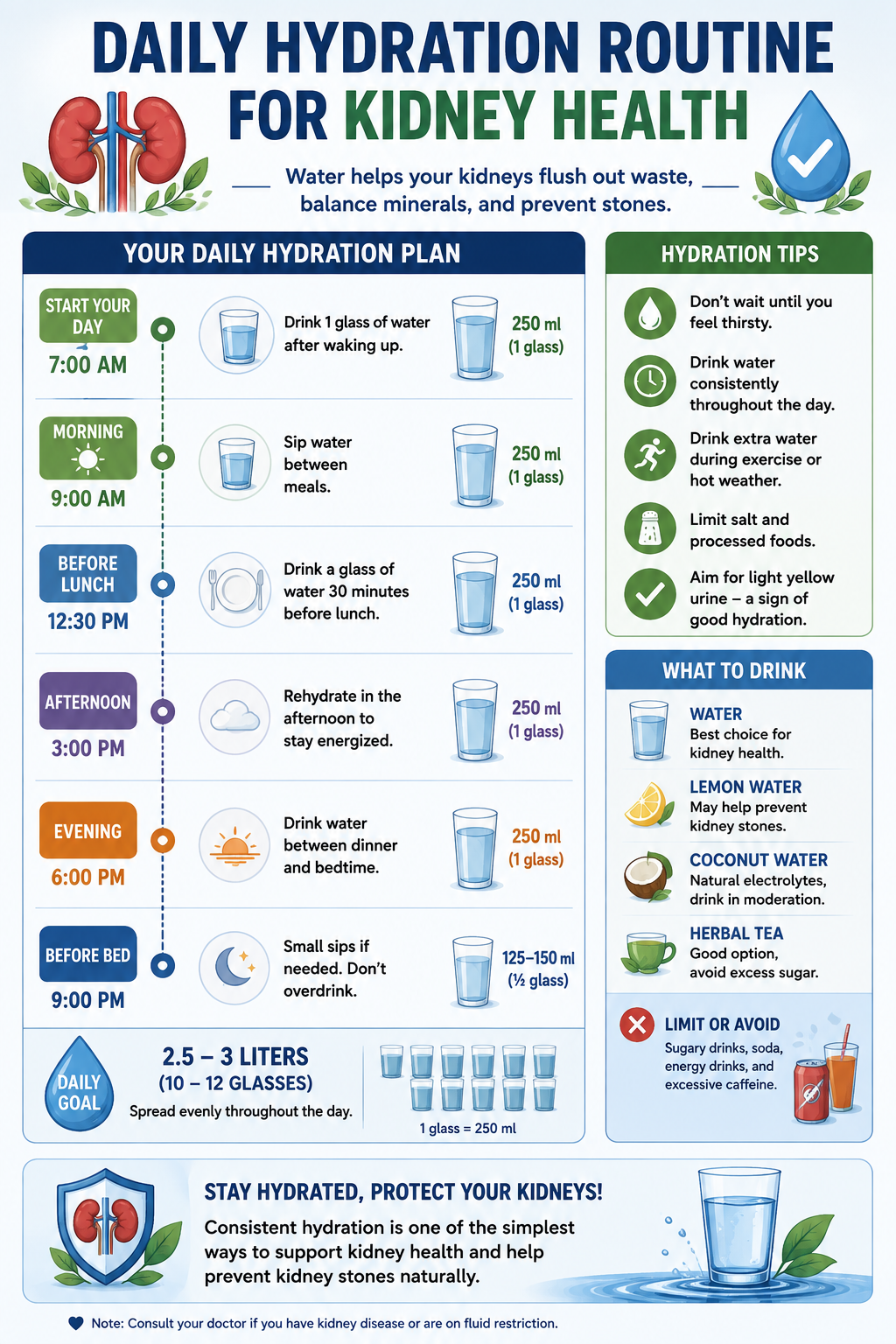
One of the easiest ways to help your kidneys stay healthy is to drink enough water throughout the day. Water dilutes your urine, which makes it less likely that minerals will concentrate and form crystals. Over time, those crystals can grow into kidney stones if conditions are right. National Institute of Diabetes and Digestive and Kidney Diseases (NIDDK))
Many people only drink water when they feel thirsty. However, thirst can be a sign that your body is already becoming mildly dehydrated. Instead of waiting until you’re thirsty, developing the habit of drinking water regularly can be beneficial for kidney health.
I’ve seen this scenario happen on hectic working days. When I get to work, it often takes me a while to drink a glass of water. At the end of the day, I often realized I had consumed very little. Simply keeping a reusable water bottle on my desk made it much easier to drink consistently without thinking about it.
Practical Tips
- Drink water shortly after waking up.
- Carry a refillable water bottle.
- Instead, drink water throughout the day, rather than in large amounts all at once.
- When it is hot or during activity, drink plenty of fluids.
- Choose water instead of sugary soft drinks whenever possible.
Beginner Tip
Link drinking water with daily routines such as meals or work breaks.
Common Mistake
Drinking several large glasses at the end of the day instead of staying hydrated consistently.
Daily Hydration Guide
| Time | Habit |
|---|---|
| Morning | Drink one glass of water after waking up. |
| Breakfast | Drink another glass with your meal. |
| Mid-morning | Refill your water bottle. |
| Lunch | Drink water before and during lunch. |
| Afternoon | Continue sipping regularly. |
| Evening | Drink enough to stay hydrated, but avoid excessive intake right before bed |
2. Choose Foods That Support Kidney Health Every Day
A healthy eating pattern does much more than provide energy. It also influences the balance of minerals in your urine, which plays an important role in kidney stone prevention.
Many people assume preventing kidney stones means avoiding dozens of foods. In reality, most people benefit more from following a balanced eating pattern than from eliminating large groups of foods unnecessarily.
Research suggests eating plenty of vegetables, fruits, whole grains, legumes, and other minimally processed foods may help promote overall kidney health while limiting excess sodium and added sugars. (Mayo Clinic)
One of the things I’ve found in my nutrition research is that simple meals are generally more sustainable than restrictive diets. Instead, a few times per week, create some healthy, balanced meals at home. This approach makes it much easier to choose healthy meals instead of relying on processed convenience foods every day.
Foods That Support Kidney Health
- Fresh vegetables
- Fruits (fresh)
- Whole grains
- Beans and lentils.
- Low-fat dairy (when acceptable)
- Healthy fats from nuts, seeds
- Plenty of water
Beginner Tip
Try to include nutritious foods first before you start cutting out everything you love.
Common Mistake
Following very restrictive diets without expert help.
Foods to Include More Often
| Food Group | Why It May Help |
|---|---|
| Vegetables | Rich in vitamins, minerals, and fiber |
| Fruits | Provide hydration and important nutrients. |
| Whole grains | Support balanced nutrition. |
| Beans | Good source of plant protein |
| Low-fat dairy | Provides dietary calcium for many people |
| Water | Helps dilute urine |
3. Reduce Excess Sodium Before It Becomes a Habit
One of the most overlooked kidney health tips is reducing excess sodium.
Salt not only affects blood pressure. Eating too much sodium may increase the amount of calcium excreted into the urine, which can contribute to the formation of certain kidney stones. (National Kidney Foundation)
The surprising part is that most sodium doesn’t come from the salt shaker. Packaged meals, processed meats, fast food, canned soups, salty snacks, and restaurant meals often contribute much more than people realize.
I once compared the nutrition labels of two similar soups at the grocery store. One contained nearly twice as much sodium as the other, even though they tasted very similar. That simple comparison reminded me how useful it is to review food labels before buying packaged products.
Simple Ways to Reduce Sodium
- Cook more meals at home.
- Read nutrition labels.
- Select low-sodium products wherever you can.
- Use herbs, garlic, lemon juice, and spices to flavor foods rather than adding excessive salt.
- Limit highly processed foods.
Beginner Tip
Reduce sodium gradually so your taste buds have time to adjust.
Common Mistake
Avoiding table salt while continuing to eat large amounts of processed foods.
High-Sodium Foods to Limit
| Food | Better Alternative |
|---|---|
| Processed meats | Fresh lean poultry or fish |
| Instant noodles | Homemade soups |
| Potato chips | Unsalted nuts or fresh fruit |
| Fast food | Home-cooked meals |
| Processed frozen meals | Fresh, balanced meals |
4. Get Enough Calcium From Foods Instead of Avoiding It
Many people believe that eating less calcium is the best way to prevent kidney stones. This is one of the most common misconceptions.
For many people, getting enough calcium from food may actually help reduce the risk of calcium oxalate stones, the most common type of kidney stone. Dietary calcium binds with oxalate in the digestive tract before it reaches the kidneys, reducing the amount of oxalate that enters the urine. (National Institute of Diabetes and Digestive and Kidney Diseases (NIDDK)
While researching kidney health, I was surprised to learn that healthcare professionals usually don’t recommend avoiding calcium-rich foods unless they advise it. Instead, experts often encourage obtaining calcium through foods rather than relying on high-dose supplements.
This doesn’t mean everyone should consume large amounts of dairy products. The goal is to achieve a balanced intake that meets your nutritional needs.
Good Food Sources of Calcium
- Low-fat milk
- Plain yogurt
- Cheese (in moderation)
- Calcium-fortified plant-based milk
- Tofu made with calcium
- Kale
- Broccoli
Beginner Tip
Include one calcium-rich food with meals that contain oxalate-rich foods whenever appropriate.
Common Mistake
Eliminating calcium-rich foods without professional medical advice.
Calcium From Foods vs. Supplements
| Source | Why It Matters |
|---|---|
| Calcium from foods | Generally preferred for most people |
| High-dose calcium supplements | May increase kidney stone risk in some individuals if not medically indicated |
| Balanced intake | Helps support bone and kidney health |
5. Stay Physically Active and Maintain a Healthy Weight
Exercise supports much more than muscles and heart health. Regular movement also contributes to healthy lifestyle habits that may help reduce several risk factors associated with kidney stones.
People who spend long periods sitting every day often become less active overall. Combined with poor hydration and unhealthy eating habits, such a lifestyle may increase the risk of weight gain and other health concerns that can contribute to kidney stone formation. (National Kidney Foundation)
I like that physical activity doesn’t have to be complex. You don’t need an expensive gym membership or intensive workouts every day. Perfection is less important than consistency.
Even simple activities can make a meaningful difference:
- Brisk walking
- Cycling
- Swimming
- Light strength training
- Yoga
- Gardening
- Taking the stairs
During particularly busy weeks, I’ve found that scheduling short walks into my calendar makes them much more likely to happen. Small habits often become lasting routines because they feel manageable.
Beginner Tip
Start with 20–30 minutes of moderate activity most days of the week.
Common Mistake
Jumping into high-intensity exercise after extended periods of idleness instead of gradually building up to it.
Simple Weekly Activity Plan
| Day | Activity |
|---|---|
| Monday | 30-minute walk |
| Tuesday | Light stretching or yoga |
| Wednesday | Strength training |
| Thursday | Brisk walk |
| Friday | Cycling or swimming |
| Saturday | Outdoor activity |
| Sunday | Gentle recovery walk |
6. Learn Which Foods Increase the Risk
Not everyone needs to avoid the same foods. Kidney stone prevention is rarely about eliminating one ingredient forever. What it does mean, however, is knowing which foods could contribute to stone development and how to eat them in moderation.
For example, some foods naturally contain higher amounts of oxalates. Eating large quantities of these foods without following a balanced diet may increase the risk of certain kidney stones in susceptible individuals. (Mayo Clinic)
Foods commonly discussed include:
- Spinach
- Beet greens
- Rhubarb
- Almonds
- Peanuts
- Chocolate
- Sweet potatoes
That doesn’t mean these foods are “bad.” Many are highly nutritious. The key is balance.
In my research on nutrition, I discovered that absolutely avoiding nutritious foods can cause unnecessary stress. Or, understanding portion sizes and combining foods well generally results in a more sustainable eating routine.
Foods That May Increase Risk When Consumed Excessively
| Food | Better Approach |
|---|---|
| Spinach | Eat in moderation and pair with calcium-rich foods. |
| Salty snacks | Choose unsalted alternatives. |
| Sugary soft drinks | Replace with water or unsweetened beverages. |
| Processed meats | Choose fresh lean protein. |
| Highly processed meals | Cook more meals at home |
Beginner’s Tip
Don’t try to exclude foods entirely, but rather make balanced meals with a mix of good ingredients.
Common Mistake
Following social media recommendations that eliminate food groups without considering your unique health needs can be harmful.
Why Your Small Daily Choices Matter
One of the most surprising things I learned when researching kidney stone prevention is that there is no one diet, or one habit, that predicts your future kidney health.
Instead, your kidneys respond to the combined effect of hundreds of daily decisions.
Drinking one extra glass of water.
Preparing one healthy meal.
Taking one evening walk.
Reading one nutrition label.
Each step may seem small on its own, but when you put them all together, they lead to healthy habits that are much easier to stick with than drastic diets or 30-day challenges.
That’s why sustainable habits are typically more effective than fast cures. Long-term renal wellness is about consistency, not perfection.
7. Hydrate When Your Body Needs It Most
Many individuals obsess about drinking the same amount of water each day. But your fluid needs are different based on your weather, exercise level, and overall health.
Hot weather, vigorous activity, fever, and outdoor exposure can lead to increased fluid loss through sweat. If you don’t replace that fluid, your urine may become more concentrated, increasing the likelihood that minerals will crystallize. (National Kidney Foundation)
I’ve noticed this pattern during summer months. On busy days spent outside, I naturally needed more water than on cooler days. Paying attention to urine color rather than following a fixed number of glasses helped me stay more consistent with hydration.
Signs You May Need More Fluids
- Dark yellow urine
- Dry mouth
- Feeling thirsty
- Headache
- Fatigue
- Dizziness
Beginner Tip
Carry a refillable bottle whenever you’re away from home.
Common Mistake
Assuming eight glasses of water is enough every day, regardless of the weather or activity, is a common mistake.
8. Limit Sugary Drinks and Excess Soft Drinks
Many people think only salty foods increase kidney stone risk. However, drinking large amounts of sugar-sweetened beverages may also contribute to dietary patterns associated with increased risk of kidney stones. (Harvard Health Publishing)
Replacing sugary drinks with water usually is one of the easiest lifestyle changes you can make.
Better choices include:
- Plain water
- Sparkling water without added sugar
- Lemon-infused water
- Herbal tea
- Water with fresh fruit slices
I found that replacing one sugary drink each day with water was much easier than trying to eliminate every unhealthy beverage overnight.
Beginner Tip
Reduce sugary drinks gradually instead of quitting all at once.
Common Mistake
Thinking fruit-flavored soft drinks are the same as drinking water.
9. Maintain a Healthy Body Weight
Your body weight contributes to many aspects of your overall health, including risk factors for kidney stones.
Studies suggest that excess weight or obesity increases the risk of kidney stones. You can reduce this risk by maintaining a healthy body weight through a balanced diet and physical activity. (Source: National Institute of Diabetes and Digestive and Kidney Diseases (NIDDK).)
Instead of rapid weight loss, focus on sustainable habits such as
- Eat nutritious foods.
- Stay active
- Sleep well.
- Manage stress.
- Drink enough water.
From my experience investigating wellness themes, the folks who thrive long-term are generally those who make small adjustments continuously rather than adopting drastic diets.
Tips for Beginners
Concentrate on small improvements rather than big improvements.
Common Mistake
You start to follow crash diets that are tough to keep up with.
10. Listen to the early warning signs.
Kidney stones rarely come without warning.
Sometimes the body gives few signs before symptoms get worse.
Warning signs may be:
- Side or lower back pain
- Burning during urination
- Hematuria (blood in the urine)
- Frequent urge to urinate
- Cloudy or foul-smelling urine
Seeking medical care early can help prevent complications and ensure appropriate treatment. (Mayo Clinic)
Beginner Tip
Don’t wait until the pain becomes unbearable before contacting a healthcare professional.
Common Mistake
One common mistake is assuming that all back pain is caused by muscle strain.
11. Schedule Regular Health Check-Ups
Many risk factors for kidney stones cannot be diagnosed based only on symptoms.
Regular health check-ups may help detect:
- High blood pressure
- Diabetes
- Recurrent urinary tract infections
- Abnormal urine chemistry
- Other conditions that increase stone risk
Routine medical care is especially important if you’ve had kidney stones before because recurrence is common. (Cleveland Clinic)
I once assumed annual health check-ups were only necessary when something felt wrong. Learning how preventive care works has completely changed my perspective. Early awareness often allows for lifestyle changes before major problems develop.
Beginner Tip
Document past kidney stones and discuss them with your doctor during your regular check-ups.
Common Mistake
Only seeing a doctor after severe symptoms appear.
12. Build Habits You Can Maintain for Years
The final habit may be the most important.
Healthy routines work only if they’re part of everyday life.
Don’t try to change everything in one week. Try changing one habit at a time.
For example:
Week 1
✓ Drink more water.
Week 2
✓ Reduce processed foods
Week 3
✓ Walk after dinner
Week 4
✓ Prepare more meals at home
Small habits gradually become automatic.
That’s one lesson I’ve seen repeated across nearly every evidence-based wellness topic I’ve researched. Consistency almost always beats intensity.
Beginner Tip
Choose one new habit each week until it becomes part of your routine.
Common Mistake
Trying to change every lifestyle habit at once is a common mistake.
Kidney Stone Prevention Checklist
Use this checklist to monitor your daily progress.
| Habit | ✓ |
|---|---|
| Drink enough water. | ☐ |
| Eat more fruits and vegetables. | ☐ |
| Choose mostly whole foods. | ☐ |
| Limit excess sodium. | ☐ |
| Get enough calcium from foods. | ☐ |
| Stay physically active. | ☐ |
| Maintain a healthy weight | ☐ |
| Limit sugary drinks. | ☐ |
| Read food labels. | ☐ |
| Schedule regular health check-ups. | ☐ |
| Sleep 7–9 hours. | ☐ |
| Build consistent healthy routines. | ☐ |
Foods to Eat vs. Foods to Limit
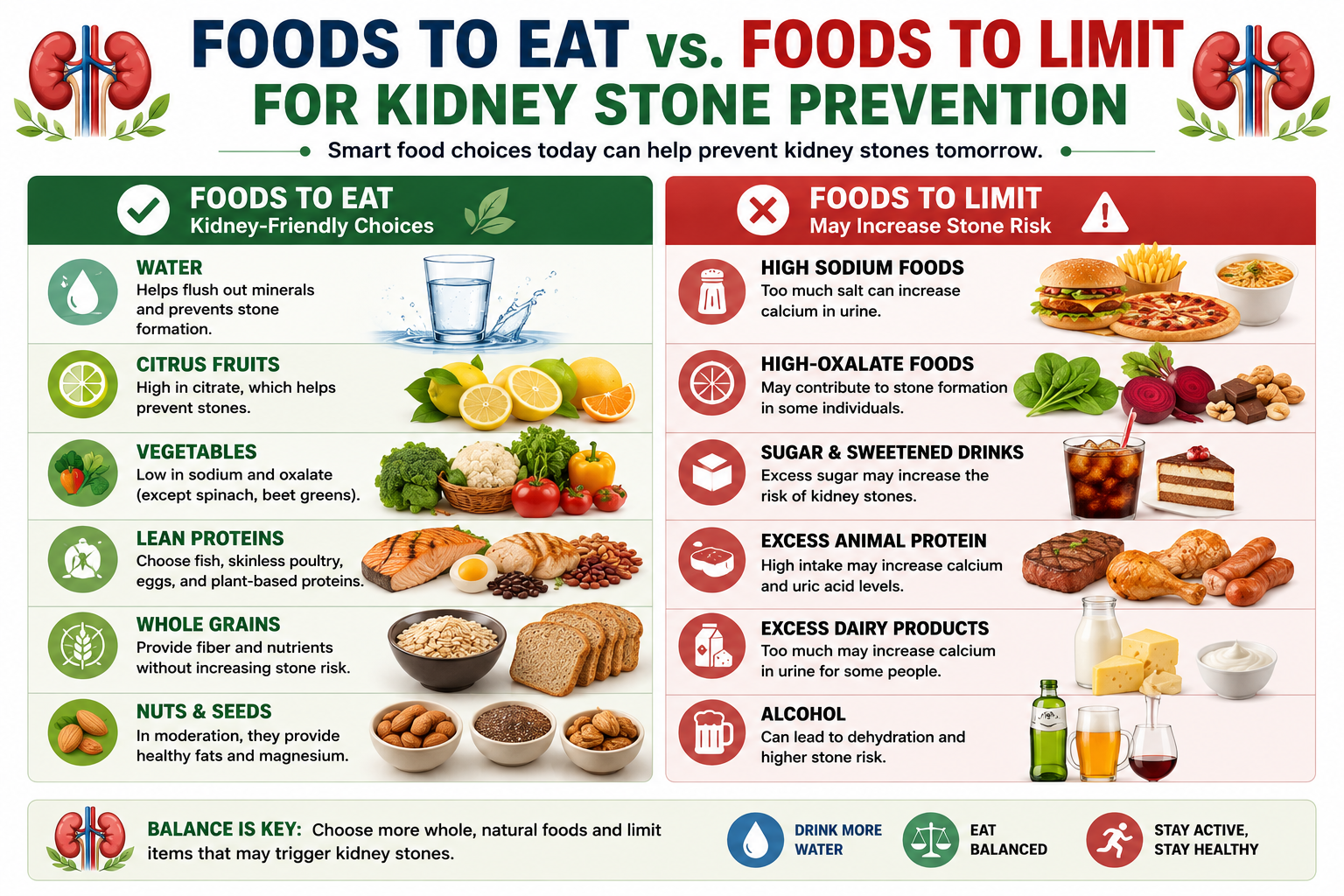
| Eat More Often | Limit |
|---|---|
| Water | Sugary soft drinks |
| Fresh fruits | Highly processed foods |
| Vegetables | Excess sodium |
| Whole grains | Processed meats |
| Beans and lentils | Large amounts of ultra-processed snacks |
| Low-fat dairy (if appropriate) | Excess added sugar |
| Citrus fruits | Frequent fast food |
Kidney Stone Risk Factors
| Risk Factor | Can You Reduce It? |
|---|---|
| Low water intake | ✔ Yes |
| High sodium intake | ✔ Yes |
| Obesity | ✔ Often |
| Family history | ✖ No |
| Previous kidney stones | ✖ Cannot change, but recurrence risk can be reduced |
| Certain medical conditions | ✔ Often with medical care |
| Some medications | ✔ Discuss with your healthcare provider |
Myths vs. Facts
| Myth | Fact |
|---|---|
| Only older adults develop kidney stones. | Kidney stones can affect adults of many ages. |
| Drinking less water reduces bathroom visits and helps kidneys. | Adequate hydration is important for kidney health. |
| Everyone should avoid calcium. | Many people benefit from getting enough calcium from foods. |
| Natural remedies can replace medical treatment. | Home remedies may support prevention but are not a substitute for appropriate medical care. |
| Once a kidney stone passes, it won’t return. | People who have had kidney stones may develop them again without preventive measures. |
Research and Expert Insights
Current research suggests that the most effective prevention of kidney stones is a combination of lifestyle behaviors, not any one single cure.
Experts from the National Institute of Diabetes and Digestive and Kidney Diseases, the National Kidney Foundation, and the American Urological Association, among others, recommend drinking enough fluids, limiting excess sodium, eating a balanced diet, staying physically active, and understanding your personal risk factors based on the type of kidney stone. (NIDDK, National Kidney Foundation, American Urological Association)
Researchers also note that preventive methods need to be tailored. Dietary guidelines for a person with calcium oxalate stones differ from those for a person with uric acid stones. That’s why it helps healthcare experts offer more targeted prevention strategies when they know the type of stone, when feasible.
My Personal Reflection
One of the biggest lessons I’ve learned in the course of researching healthy lifestyle practices is that long-term health is rarely achieved through radical change. And it usually comes from simple choices made consistently.
When I started to read about kidney health, I thought that preventing kidney stones would need a strict diet or complicated regimen. I did discover that experts kept coming back to simple behaviors such as drinking enough water, eating balanced meals, being active, and focusing on day-to-day routines.
It was most surprising to me how these practices benefit more than just the kidneys. They also promote heart health, proper weight management, improved energy, and overall well-being.
That event changed my perspective on preventive health. I’ve learned the value of setting up healthy routines before problems begin, rather than waiting for symptoms. No lifestyle can guarantee you will never get kidney stones, but consistent daily practices can help reduce your risk and support healthier kidneys over time.
Conclusion
The best daily habits to help prevent kidney stones start with simple choices that are easy to do every day. Maintaining optimal kidney health, and possibly a lower risk of developing kidney stones in the future, can be helped by drinking enough water, eating a well-rounded diet, reducing excess salt, being physically active, and maintaining a normal body weight.
Usually, one good habit isn’t enough. But when numerous good habits come together, they build a solid foundation for long-term kidney health.
Remember that prevention is an ongoing practice and not a quick fix. Small modifications applied with consistency can make a bigger difference than huge lifestyle changes that are difficult to maintain.
If you’ve had kidney stones before, talk to your health care professional about your own risk factors and how to establish a plan for prevention. Taking action today can help protect your kidney health for years to come.
Frequently Asked Questions
1. How can kidney stones be naturally prevented?
You can prevent many kidney stones by building healthy daily habits such as drinking many fluids, eating a well-rounded diet, limiting excessive sodium, maintaining a normal body weight, and following your healthcare provider’s advice. Prevention depends on the type of kidney stone you have and your risk factors.
2. How much water should I drink to help prevent kidney stones?
Fluid demands vary with age, activity level, climate, and health conditions. Many experts say you should drink enough fluids to make your urine light yellow or almost clear, which could mean you’re hydrated enough. Depending on your particular needs, your provider can help you find the right amount for you.
3. Can lemon water help prevent kidney stones?
In certain people, the citrate in lemons may help reduce the formation of some types of kidney stones. Lemon water is not a miracle cure, but it can be part of a healthy lifestyle. (National Kidney Foundation)
4. What foods to avoid if you have kidney stones?
The answer depends on what kind of kidney stone you have. Some people may benefit from cutting back on sodium, added sugars, or some high-oxalate diets. Instead of cutting out meals on your own, talk to a qualified dietitian or other healthcare professional for dietary advice specific to you.
5. Is kidney stone hereditary?
A family history can raise your chances of having kidney stones, but genetics is only one reason. Healthy living practices can still help reduce your total risk.
6. Do I have to exercise to prevent kidney stones?
Regular physical exercise improves general health and may help you maintain a healthy body weight, which is related to a lower risk of certain kidney stones. Proper hydration and balanced nutrition are most beneficial when accompanied by exercise.
7. When do I need to see a doctor?
Seek medical help if you have severe discomfort, fever, chills, prolonged vomiting, trouble urinating, or blood in the urine. These symptoms may demand emergency medical care.
8. What is the most important daily behavior to prevent kidney stones?
No single habit works for everyone. However, one of the most commonly recommended strategies is to ensure that you are adequately hydrated. The ideal long-term approach is a combination of water, healthy food, frequent physical activity, and routine medical follow-up.
Trusted References
- National Institute of Diabetes and Digestive and Kidney Diseases (NIDDK) – Kidney Stones
https://www.niddk.nih.gov/health-information/urologic-diseases/kidney-stones - National Kidney Foundation – Kidney Stones
https://www.kidney.org/kidney-topics/kidney-stones - Mayo Clinic – Kidney Stones
https://www.mayoclinic.org/diseases-conditions/kidney-stones - Cleveland Clinic – Kidney Stones
https://my.clevelandclinic.org/health/diseases/15604-kidney-stones - American Urological Association – Kidney Stones Guideline
https://www.auanet.org/guidelines-and-quality/guidelines/kidney-stones-medical-management-guideline - Harvard Health Publishing – Kidney Health
https://www.health.harvard.edu/topics/kidney-health - National Institutes of Health (NIH) – Kidney Diseases
https://www.nih.gov
Similar Articles
- 10 Causes of High Blood Pressure & Treatment
- 4 Holistic Approaches to Managing Chronic Pain: A Comprehensive Guide
- 7 Simple Health Changes to Reduce The Risk of Chronic Disease
- 12 Best Ways to Treat Acne
- Polycystic Kidney Disease Diagnosis Treatment
- Home











[…] 12 Best Daily Habits to Help Prevent Kidney Stones Naturally […]
[…] 12 Best Daily Habits to Help Prevent Kidney Stones Naturally […]
[…] 12 Best Daily Habits to Help Prevent Kidney Stones Naturally […]
[…] 12 Best Daily Habits to Help Prevent Kidney Stones Naturally […]
[…] 12 Best Daily Habits to Help Prevent Kidney Stones Naturally […]
[…] 12 Best Daily Habits to Help Prevent Kidney Stones Naturally […]