






































































































































































10 Essential Vitamins and Minerals for Women Over 50: Benefits, Food Sources,
and Safety
Author: RVLNSV PRASAD
Updated On: October 2026
About Us
Author Bio
Editorial Policy
Contact Us
Introduction
Turning 50 can bring changes that deserve attention, but there is no single supplement routine that every woman needs. Some women continue to meet their nutritional requirements through a varied diet, while others may need extra attention to vitamin B12, vitamin D, calcium, or other nutrients because of dietary restrictions, medical conditions, medication use, or changes in absorption.
You might notice tiredness, reduced strength, changes in sleep, or concerns about bone health. These symptoms can have many causes, and taking a multivitamin without understanding the underlying problem may not help.
The best approach is to understand which nutrients support healthy aging, identify the foods that provide them, and use supplements when they are appropriate.
According to the National Institute on Aging’s guidance on vitamins and supplements, older adults can have different nutritional needs, but supplements are not automatically necessary for everyone. The goal is to meet nutritional requirements safely rather than take as many products as possible.
This guide explains ten important vitamins and minerals for women over 50, practical food sources, supplement considerations, common mistakes, and the questions worth discussing with a healthcare professional. It also covers why persistent fatigue should not automatically be blamed on a vitamin deficiency.
Quick Answer: Which Vitamins and Minerals Matter Most After 50?
Vitamin D, calcium, and vitamin B12 deserve particular attention because of their roles in bone health, nutrient absorption, nerve function, and blood cell formation. Other nutrients, including vitamin B6, folate, vitamin C, magnesium, zinc, and vitamins A and E, also support normal body functions.
However, the best vitamins for women over 50 depend on individual needs. Iron requirements generally decrease after age 50, and women who no longer menstruate usually need less iron than younger women. Taking extra iron without a clear reason may cause harm.
A food-first approach is a sensible starting point. A supplement may be useful when diet alone does not meet nutritional needs, when a deficiency is confirmed, or when a healthcare professional identifies a specific reason for supplementation.
Key Takeaways
- Women over 50 do not automatically need ten different supplements.
- Vitamin D and calcium help maintain bone health, while vitamin B12 supports nerve function and red blood cell formation.
- Fatigue can result from many causes, including sleep problems, thyroid conditions, anemia, medication effects, and depression.
- Food sources provide nutrients alongside protein, fiber, and other beneficial compounds.
- Iron supplements should not be taken routinely without considering individual needs.
- High doses of certain vitamins can cause side effects or interact with medicines.
- A healthcare professional can help identify whether dietary changes, blood tests, or supplements are appropriate.
Why Nutritional Needs Can Change After 50
Age alone does not determine which supplements a woman needs. Nevertheless, several changes can influence nutritional requirements and the body’s ability to use certain nutrients.
Bone health becomes an important consideration.
Bone density can decline with age, particularly after menopause. Adequate calcium and vitamin D help support bone maintenance, while resistance exercise, balance training, and sufficient protein also contribute to healthy aging.
Vitamin B12 absorption may become less efficient.
Vitamin B12 naturally occurs in animal foods and is also available in fortified foods and supplements. Some older adults absorb B12 from food less effectively because of changes in stomach acid or certain digestive conditions.
The NIH Office of Dietary Supplements’ vitamin B12 fact sheet explains why some adults over 50 may benefit from fortified foods or supplements. However, the appropriate approach depends on diet, absorption, and medical history.
Diet, medication use, and health conditions matter.
A vegetarian or vegan diet, digestive disorders, reduced food intake, or some medicines can affect nutrient intake or absorption. For example, certain medications can affect vitamin B12 or magnesium status.
This is why a personal review is more useful than choosing supplements based on age alone.
10 Important Vitamins and Minerals for Women Over 50
1. Vitamin D: Supports Bone Health and Calcium Absorption
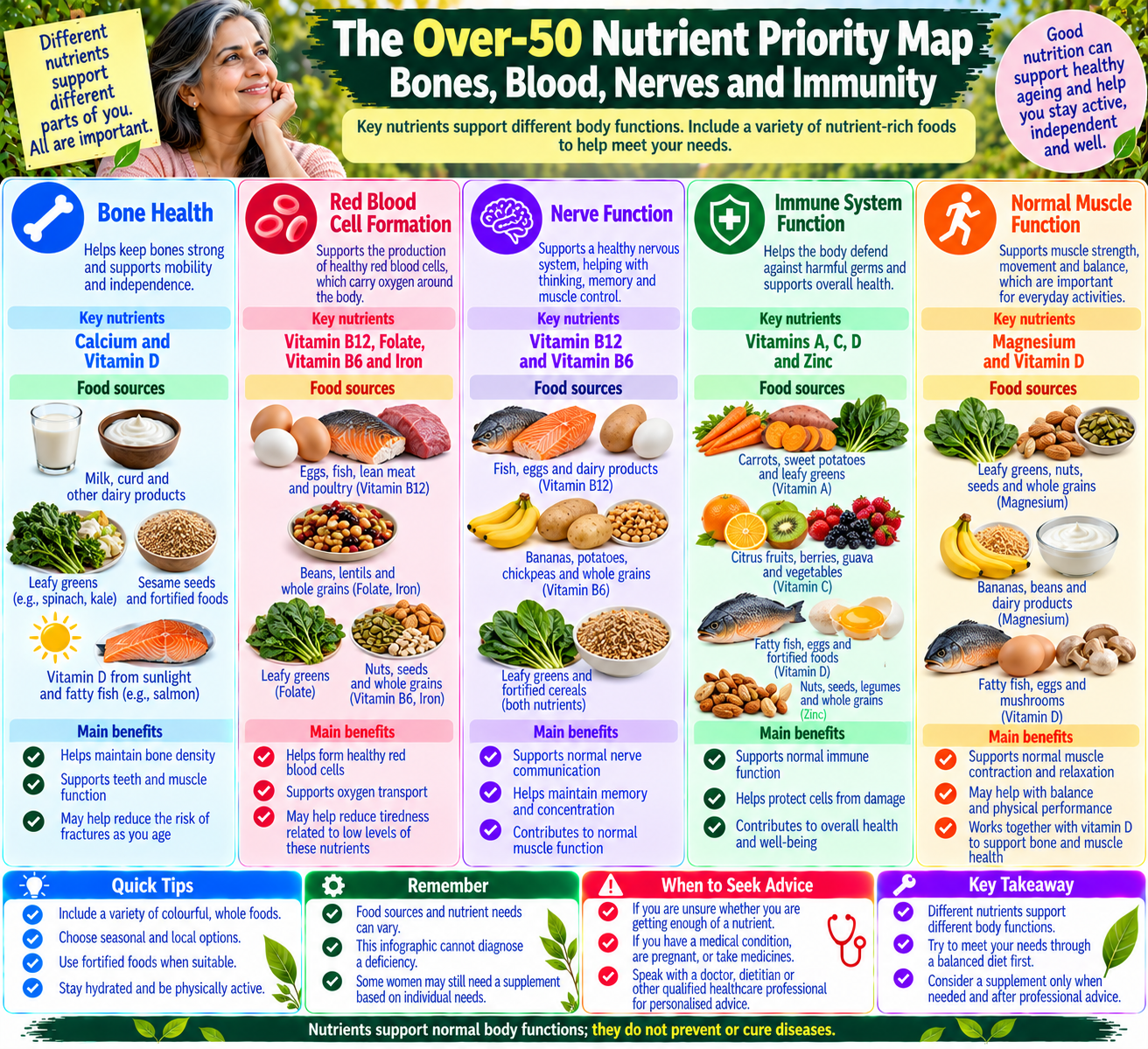
Vitamin D helps the body absorb calcium and supports normal muscle and immune function. It is particularly relevant for women concerned about bone health as they age.
The body produces vitamin D after exposure to sunlight, but production varies with skin pigmentation, age, season, location, clothing, and sun-protection habits. Food sources include oily fish, egg yolks, and fortified foods where available.
The NIH Office of Dietary Supplements’ vitamin D fact sheet explains its functions, dietary sources, and supplement considerations.
Practical food ideas: Include suitable fortified foods, eggs, or fish if they fit your diet. In India, fortified milk or other fortified products may be options, depending on availability and labeling.
A vitamin D supplement may be appropriate for someone with low intake, limited sunlight exposure, a diagnosed deficiency, or another clinical reason. However, high doses can cause excessive calcium levels and other complications.
Do not assume that more vitamin D means stronger bones. Discuss testing and supplementation with a healthcare professional if you have risk factors or concerns.
2. Calcium: Helps Maintain Strong Bones and Teeth
Calcium is the most abundant mineral in the body. It is needed for bones and teeth, muscle contraction, nerve signaling, and several other normal functions.
Women may pay particular attention to calcium after menopause because bone loss can accelerate during this stage. However, calcium supplements are not a substitute for an overall bone health plan.
The NIH calcium fact sheet lists average recommended intake levels of 1,200 mg daily for women aged 51–70 in the United States and 1,200 mg for adults aged 71 and older. These are US reference values, and local recommendations may differ.
Food sources include milk, yogurt, cheese, calcium-set tofu, certain leafy greens, and fortified foods. Some fish eaten with their soft bones can also provide calcium.
A practical approach: Review your usual meals before considering a supplement. If you regularly consume calcium-rich foods, you may already meet much of your requirement.
Calcium supplements can cause constipation and may interact with some medicines. High total calcium intake can also increase the risk of kidney stones in certain circumstances, so individual needs matter.
3. Vitamin B12: Important for Nerves and Red Blood Cells
Vitamin B12 helps maintain nerve function and supports the formation of red blood cells and DNA. Low levels can cause fatigue, weakness, anemia, and neurological problems.
Some adults over 50 have difficulty absorbing B12 naturally present in food. Risk may also be higher among people who eat few or no animal foods, have certain gastrointestinal conditions, or use particular medications over long periods.
The NIH vitamin B12 fact sheet explains that fortified foods and supplements can provide B12 in a form that does not require the initial release from food proteins.
Food sources include fish, eggs, dairy products, meat, and fortified foods. People following vegan diets need a reliable source of B12 through appropriately fortified foods or supplementation.
Important: B12 supplements are not guaranteed to increase energy if your B12 status is already adequate. If you have persistent fatigue, numbness, balance problems, or concentration changes, seek medical advice rather than self-treating.
A clinician may recommend a blood test and decide whether oral supplements, higher-dose treatment, or injections are appropriate.
4. Vitamin B6: Supports Protein Metabolism and Nerve Function
Vitamin B6 is involved in protein metabolism, neurotransmitter production, immune function, and hemoglobin formation.
It occurs in foods such as chickpeas, fish, poultry, potatoes, bananas, and fortified cereals. A varied diet generally provides B6 for many people, so a high-dose supplement is not automatically necessary.
The NIH vitamin B6 fact sheet describes its functions and food sources. It also notes that high supplemental doses can cause nerve damage.
Practical tip: Include a variety of protein foods, vegetables, legumes, and whole grains rather than relying on a high-dose B-complex supplement for energy.
Be particularly cautious about taking multiple products that contain vitamin B6, because the total dose can add up. If you use a multivitamin, a B-complex product, and a separate supplement, check the labels together.
5. Folate: Supports Cell Division and Red Blood Cell Formation
Folate, also known as vitamin B9, is needed for DNA production and normal cell division. It also supports red blood cell formation.
Food sources include lentils, beans, leafy greens, citrus fruits, and fortified grain products. For many women, including these foods regularly is a practical way to support folate intake.
The NIH folate fact sheet explains the difference between naturally occurring food folate and folic acid used in fortified foods and supplements.
Folate supplements may be appropriate in specific situations, but high doses of folic acid can conceal some signs of vitamin B12 deficiency while neurological damage continues. This is one reason to avoid taking large doses without a clear indication.
If you are considering folate because of fatigue or anemia, discuss the possibility of B12 deficiency and other causes with a healthcare professional.
6. Vitamin C: Supports Collagen Formation and Iron Absorption
Vitamin C helps the body make collagen, supports wound healing, and improves the absorption of non-heme iron found in plant foods. It also contributes to normal immune function.
Good food sources include guava, oranges, amla, kiwi, tomatoes, bell peppers, and other fruits and vegetables. Guava and amla can be particularly practical choices in many Indian diets.
The NIH vitamin C fact sheet provides further information about food sources, recommended intake, and supplement safety.
You do not need a high-dose vitamin C product simply because you are over 50. Regularly eating a variety of fruit and vegetables is a useful starting point.
Large supplemental doses can cause digestive discomfort and may increase kidney-stone risk in susceptible individuals. If you have kidney disease or a history of kidney stones, ask a healthcare professional before using high-dose vitamin C.
7. Magnesium: Supports Muscle, Nerve, and Bone Function
Magnesium is involved in hundreds of enzyme systems and helps support normal muscle and nerve function, energy metabolism, and bone structure.
It occurs in nuts, seeds, beans, whole grains, and leafy green vegetables. Pumpkin seeds, almonds, peanuts, lentils, and whole-grain foods can help add magnesium to everyday meals.
The NIH magnesium fact sheet describes its role in the body and groups at greater risk of inadequate intake.
A supplement may be useful when a clinician identifies a need, but it should not be treated as a guaranteed remedy for insomnia, anxiety, or muscle cramps.
Magnesium from supplements can cause diarrhea and abdominal discomfort. The risk of toxicity is higher when kidney function is impaired because the body may have difficulty removing excess magnesium.
If you take medicines regularly, check for interactions before adding a magnesium product.
8. Iron: Supports Oxygen Transport, but Extra Iron Is Not Always Needed
- Iron is needed to produce hemoglobin, the protein in red blood cells that carries oxygen around the body. Iron deficiency can cause anemia, fatigue, weakness, and reduced exercise tolerance.
- However, iron requirements change with age. The US reference intake for adult women aged 19–50 is 18 mg daily, while the recommended intake for adults aged 51 and older is 8 mg daily. These figures reflect US guidance and should not automatically replace local recommendations.
The NIH iron fact sheet explains iron’s role, food sources, and risks.
Food sources include lentils, beans, chickpeas, meat, seafood, and iron-fortified products. Vitamin C-rich foods can improve absorption of non-heme iron from plant foods.
Do not take iron just because you feel tired. Fatigue can have many causes, and unnecessary iron can cause constipation, nausea, abdominal discomfort, and more serious problems when taken in excess.
A healthcare professional may recommend a complete blood count and iron studies if symptoms or medical history suggest deficiency. Women with unexplained anemia or bleeding after menopause need appropriate medical evaluation rather than relying on supplements.
9. Zinc: Supports Immune Function and Wound Healing
Zinc is needed for immune function, DNA synthesis, cell division, and wound healing. It is found in seafood, meat, dairy foods, beans, nuts, seeds, and whole grains.
Plant-based diets can provide zinc, although its absorption may be affected by compounds such as phytates in some grains and legumes. Eating a varied diet and using suitable preparation methods can help support overall nutrient intake.
The NIH zinc fact sheet provides information about dietary sources, deficiency, and supplementation.
Zinc is not a guaranteed way to prevent infections or improve immunity beyond normal requirements. High doses taken for a long time can interfere with copper absorption and may cause other adverse effects.
If you are considering zinc for repeated infections, poor wound healing, or a suspected deficiency, discuss the symptoms with a healthcare professional rather than assuming supplementation is the answer.
10. Vitamins A and E: Important Nutrients That Usually Do Not Need High-Dose Supplements
Vitamins A and E perform different roles in the body.
Vitamin A supports normal vision, immune function, and the maintenance of tissues. Sources include eggs, dairy products, and foods rich in beta-carotene, such as carrots, pumpkin, and leafy greens.
Vitamin E helps protect cells from oxidative damage. Nuts, seeds, and vegetable oils are useful sources.
The NIH vitamin A fact sheet and vitamin E fact sheet explain their functions, food sources, and safety considerations.
For most women, a varied diet is a sensible way to obtain these nutrients. High-dose vitamin A can be toxic, particularly in the form of preformed vitamin A, while high-dose vitamin E supplements can increase bleeding risk and interact with some medicines.
The US Preventive Services Task Force recommends against using vitamin E supplements to prevent cardiovascular disease or cancer. Its 2022 recommendation on vitamin and mineral supplementation also concludes that evidence is insufficient to recommend multivitamins for these purposes in generally healthy adults without known deficiencies.
This does not mean that vitamin E from food is harmful. It means that taking extra vitamin E pills has not been shown to provide the same benefits as eating a balanced diet.
Comparison Table: Nutrients, Food Sources, and Supplement Considerations
| Nutrient | Main role | Practical food sources | When to discuss supplements |
|---|---|---|---|
| Vitamin D | Calcium absorption and bone health | Oily fish, eggs, fortified foods | Low intake, deficiency risk, or clinical need |
| Calcium | Bone, muscle, and nerve function | Dairy, calcium-set tofu, suitable greens, fortified foods | Dietary intake is insufficient, or a clinician recommends it |
| Vitamin B12 | Nerves and red blood cells | Fish, eggs, dairy, fortified foods | Vegan diet, absorption problems, or confirmed deficiency |
| Vitamin B6 | Protein metabolism and nerve function | Chickpeas, potatoes, fish, poultry | Suspected deficiency or specific clinical indication |
| Folate | DNA and red blood cell formation | Lentils, greens, beans, citrus | Confirmed deficiency or another clinical indication |
| Vitamin C | Collagen formation and iron absorption | Guava, amla, citrus, peppers | Restricted intake or specific clinical need |
| Magnesium | Muscle, nerve, and energy metabolism | Nuts, seeds, beans, whole grains | Low intake, absorption concerns, or clinician advice |
| Iron | Oxygen transport | Lentils, beans, meat, seafood | Suspected or confirmed deficiency |
| Zinc | Immune function and wound healing | Seafood, dairy, legumes, nuts | Deficiency risk or specific clinical need |
| Vitamins A and E | Vision, tissue maintenance, antioxidant functions | Colorful vegetables, nuts, seeds, oils | Deficiency or a specific medical indication |
The table is intended as a practical guide, not a personalized supplement prescription. Nutrient requirements and safe supplement doses depend on age, diet, medical conditions, medications, and local guidance.
A Practical Food-First Strategy for Women Over 50
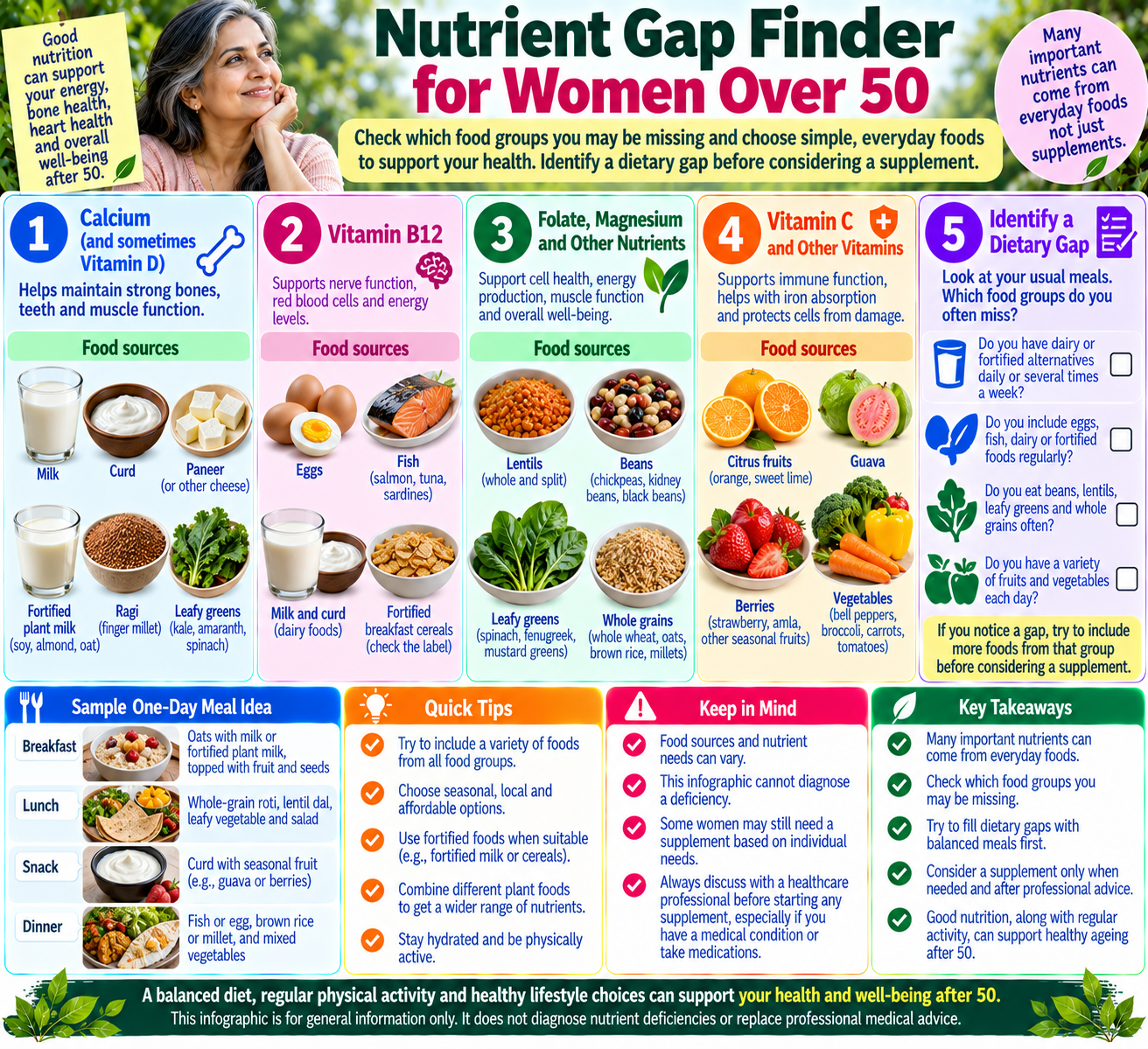
You do not need to purchase ten supplements to improve your diet. A more manageable starting point is to look at the meals you already eat and identify a few areas that could be improved.
Build meals around different food groups.
Try to include vegetables, fruit, protein foods, and suitable whole grains throughout the day. Depending on your preferences, protein can come from lentils, beans, eggs, dairy products, fish, poultry, tofu, or other foods.
The National Institute on Aging’s healthy-eating guidance provides practical information on building balanced meals as you age.
Use familiar foods instead of expensive supplements.
A few affordable examples include:
- Lentils or chickpeas for protein, folate, and other nutrients.
- Groundnuts, sesame seeds, or pumpkin seeds for selected minerals and healthy fats.
- Leafy vegetables for folate and other micronutrients.
- Guava, amla, or citrus fruit for vitamin C.
- Milk, yogurt, or suitable fortified alternatives for calcium.
- Eggs, fish, or fortified foods for vitamin B12, depending on your diet.
No single food supplies everything you need. Variety matters more than labeling a particular food a “superfood.”
Review your diet before buying another product.
Keep a simple food record for a few days if you find it helpful. Note whether you regularly eat calcium-rich foods, reliable B12 sources, fruits, vegetables, legumes, and protein foods.
If you identify a gap, consider whether it can be addressed through food, fortified products, or a supplement recommended for your circumstances.
This approach is usually more useful than buying a large multivitamin because it promises to improve energy, immunity, skin, hair, sleep, and digestion all at once.
How to Decide Whether You Need a Supplement
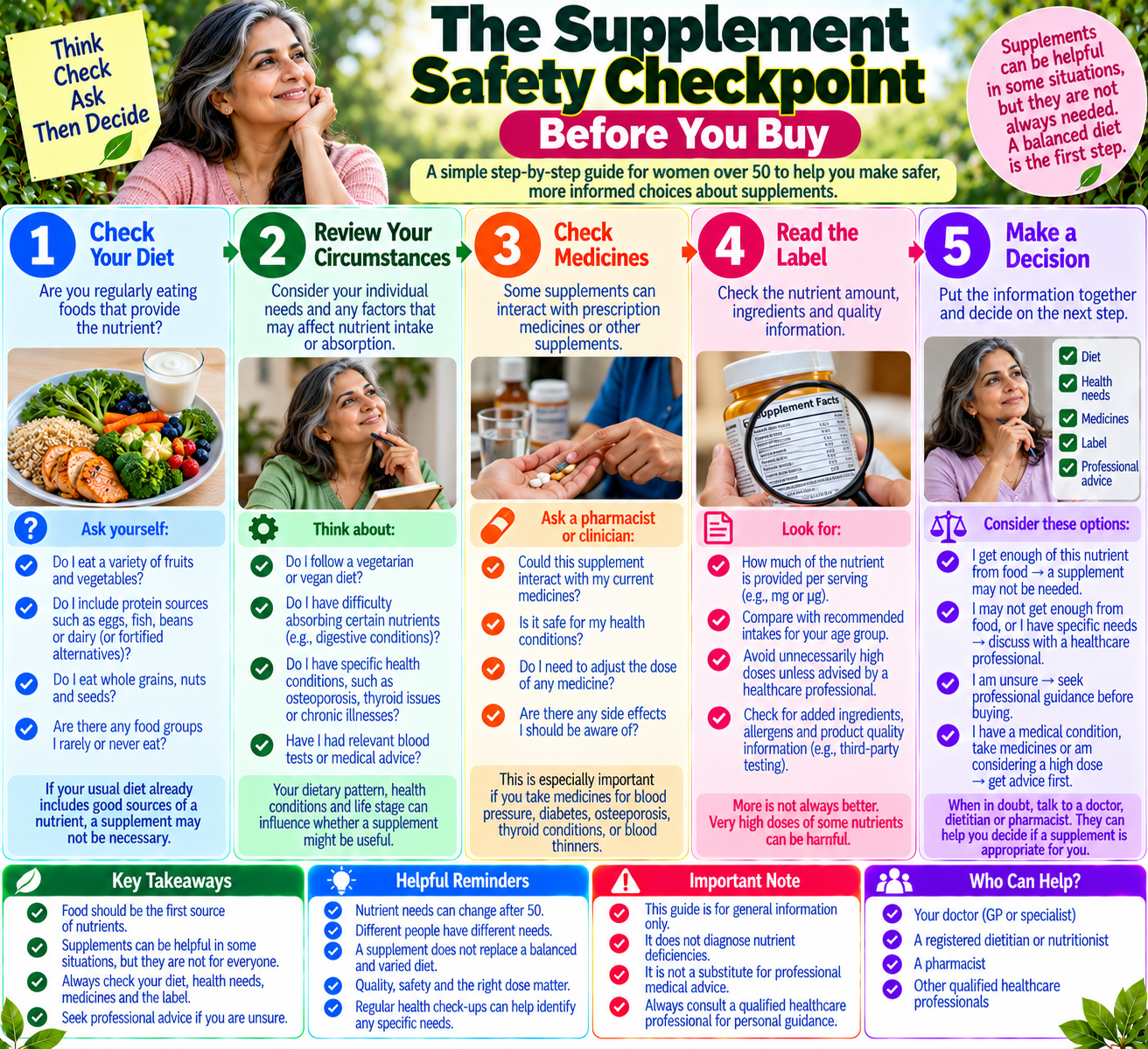
A supplement can be helpful when there is a clear reason for taking it. The decision should take account of diet, medical history, medications, symptoms, and possible nutrient deficiencies.
Step 1: Identify the concern.
Are you worried about bone health, fatigue, a restricted diet, or a diagnosed deficiency? Be as specific as possible because different concerns require different assessments.
Step 2: Review your food sources.
Consider whether your usual diet provides the nutrient. For example, someone who eats little or no animal food may need a reliable B12 source, while a woman who rarely consumes calcium-rich foods may need to review her calcium intake.
Step 3: Ask whether testing or assessment is appropriate.
Not every nutrient requires a routine blood test. A clinician can decide which tests, if any, are appropriate based on symptoms and risk factors.
Step 4: Check the full supplement label.
If a supplement is recommended, review the amount per serving and compare it with other products you use. Avoid accidentally taking several products containing the same nutrient.
Step 5: Reassess when your circumstances change
Diet, medication use, and health conditions can change over time. A supplement that was useful for one reason may no longer be necessary, while a new medical issue may create a different need.
Common Mistakes Women Over 50 Should Avoid
Assuming fatigue always means vitamin deficiency
Fatigue may be linked to anemia, thyroid disorders, poor sleep, depression, chronic illness, medication effects, or many other causes. Taking supplements without identifying the cause can delay appropriate care.
Taking iron without a clear reason
Iron is essential, but extra iron is not automatically beneficial. Seek assessment if fatigue, weakness, or other symptoms raise concern about anemia.
Combining several supplements without checking the doses
A multivitamin may already contain vitamin D, B6, zinc, or vitamin E. Adding separate products can raise your total intake unnecessarily.
Believing that natural products are always safe
Supplements can cause side effects and interact with medicines. Some high-dose vitamins and minerals can be harmful even when they are sold without a prescription.
Using supplements as a substitute for meals
Multivitamins do not supply all the protein, fiber, energy, and other beneficial compounds found in food. The NIH guidance on multivitamin and mineral supplements explains why supplements cannot replace a varied diet.
Expecting supplements to reverse every age-related change
Nutrients support normal body functions, but they cannot guarantee more energy, prevent every disease, or reverse the effects of aging. Bone health, muscle strength, sleep, physical activity, and regular medical care also matter.
What About Omega-3, Probiotics, and Fiber Supplements?
These products often appear in lists of the best supplements for women over 50, but they are not vitamins.
Omega-3 fatty acids are fats found in foods such as oily fish, walnuts, and certain seeds. They play roles in normal body function, but whether an omega-3 supplement is appropriate depends on diet, health conditions, and treatment goals.
Probiotics are live microorganisms used in some foods and supplements. Their effects depend on the strains and the condition being studied, so they should not be treated as a universal solution for digestive or immune problems.
Fiber is a type of carbohydrate that supports bowel function and can help with some aspects of cholesterol and blood glucose management. Beans, lentils, fruit, vegetables, oats, and whole grains are useful sources. A fiber supplement may be useful in certain circumstances, but the appropriate product and amount depend on individual needs.
Do not add these products simply because they are marketed for healthy aging. Review your diet and health goals first, and discuss supplements with a qualified professional if you take medication or have a medical condition.
When Should You Speak With a Healthcare Professional?
Seek advice if you have persistent fatigue, unexplained weight changes, numbness or tingling, unusual weakness, repeated falls, or concerns about bone health. These symptoms should not automatically be attributed to age or nutritional deficiency.
A clinician may review your medical history, diet, medicines, and risk factors before recommending tests or supplements. If anemia, vitamin B12 deficiency, or another condition is identified, treatment should address the cause as well as the nutrient level.
Women who experience bleeding after menopause should obtain medical evaluation rather than attempting to manage the problem with iron supplements.
If you have kidney disease, a history of kidney stones, osteoporosis, or take medicines such as blood thinners or thyroid medication, discuss supplements before starting them. Certain nutrients can interact with treatment or require closer monitoring.
Frequently Asked Questions
1. What are the best vitamins for women over 50?
Vitamin D, vitamin B12, and other nutrients may deserve particular attention depending on diet and health circumstances. Calcium is an important mineral for bone health. No single supplement is best for every woman.
2. Should every woman take a multivitamin after 50?
No. Some women may benefit from a multivitamin because of dietary gaps or specific circumstances, while others may not need one. The National Institute on Aging’s supplement guidance explains why supplement choices should be individualized.
3. Which vitamins help with low energy?
Vitamin B12, iron, and other nutrients are involved in normal blood or energy-related processes, but supplements generally help most when a deficiency or specific need is present. Persistent fatigue deserves medical assessment rather than automatic supplementation.
4. Is vitamin D important after menopause?
Vitamin D supports calcium absorption and bone health. Whether a supplement is needed depends on dietary intake, risk factors, and individual clinical circumstances.
5. Do women over 50 need more vitamin B12?
Some older adults have difficulty absorbing B12 from food, and people following vegan diets need a reliable B12 source. Supplementation is not automatically required for everyone, but a clinician can help assess risk and decide whether testing is appropriate.
6. Should women over 50 take iron supplements?
Not routinely. Iron requirements are generally lower after age 50 than during menstruating years, and unnecessary supplementation can cause harm. Iron should be used when there is a clear indication.
7. Can vitamins improve sleep or mood?
Correcting a nutrient deficiency may improve symptoms caused by that deficiency, but vitamins are not guaranteed treatments for insomnia, depression, or anxiety. Persistent symptoms should be discussed with a healthcare professional.
8. Is it better to get vitamins from food or supplements?
Food is the preferred starting point for most nutrients because it also supplies protein, fiber, and other beneficial compounds. Supplements can help fill specific gaps when food intake is insufficient or a clinician identifies a need.
9. Are high-dose vitamin supplements better?
No. High doses can cause side effects, interact with medicines, or create toxicity. More is not necessarily better.
10. How can I know whether I have a vitamin deficiency?
Symptoms alone cannot reliably identify a specific deficiency. A healthcare professional can review your history and decide whether blood tests or other assessments are appropriate.
Conclusion: Choose Nutrients Based on Your Needs, Not Marketing Claims
The best vitamins for women over 50 are not necessarily the products with the longest ingredient lists or the biggest promises. Vitamin D, calcium, vitamin B12, and other nutrients play important roles in normal health, but the need for supplements varies from person to person.
Start by building a varied diet with suitable protein foods, fruit, vegetables, legumes, whole grains, and reliable sources of essential nutrients. Consider supplements when dietary intake is insufficient, a deficiency is identified, or a healthcare professional recommends them for a specific reason.
Be especially cautious with high-dose iron, vitamin A, vitamin E, vitamin B6, and other products that can cause harm when used inappropriately. If you are tired, weak, or experiencing other persistent symptoms, investigate the cause instead of assuming that a vitamin will solve the problem.
Healthy aging is supported by several factors working together: balanced nutrition, appropriate physical activity, adequate sleep, preventive healthcare, and treatment of medical conditions when needed. A personalized plan is more useful than taking every supplement marketed to women over 50.
Author Note
Author: RVLNSV PRASAD
This article provides general educational information about nutrition and supplements for women over 50. It uses guidance from established health organizations and is not a personalized supplement prescription.
Add a first-person account only if it reflects your genuine experience. If you have personally changed your diet or discussed a supplement with a healthcare professional, describe what you actually did and what you learned without implying that your experience proves the same result for everyone.
Medical Disclaimer
This article is for informational purposes only and does not diagnose, treat, or prevent any medical condition. Nutritional requirements vary according to age, diet, health conditions, medication use, and other factors. Consult a qualified healthcare professional before starting high-dose supplements, particularly if you have kidney disease, a history of kidney stones, a bleeding disorder, or take regular medication.
Fitness Disclaimer
Regular physical activity can support bone health, muscle strength, balance, and healthy aging, but exercise should match your current ability and medical circumstances. Begin gradually, choose suitable activities, and seek professional advice if you have osteoporosis, recent fractures, balance difficulties, or other health conditions that affect exercise.
National Institute on Aging — Vitamins and Supplements
Sources
- National Institute on Aging — Vitamins and Minerals for Older Adults
- NIH Office of Dietary Supplements — Vitamin D
- NIH Office of Dietary Supplements — Calcium
- NIH Office of Dietary Supplements — Vitamin B12
- NIH Office of Dietary Supplements — Vitamin B6
- NIH Office of Dietary Supplements — Folate
- NIH Office of Dietary Supplements — Vitamin C
- NIH Office of Dietary Supplements — Magnesium
- NIH Office of Dietary Supplements — Iron
- NIH Office of Dietary Supplements — Zinc
- NIH Office of Dietary Supplements — Vitamin A
- NIH Office of Dietary Supplements — Vitamin E
- NIH Office of Dietary Supplements — Multivitamin and Mineral Supplements
- US Preventive Services Task Force — Vitamin and Mineral Supplementation to Prevent Cardiovascular Disease and Cancer
- National Institute of Arthritis and Musculoskeletal and Skin Diseases—Calcium and Vitamin D: Important for Bone Health
Smart Nutrition and Active Living: Keys to a Healthier USA
Related Articles
- Category Wholesome Nutrition
- Nutrient-8 Dense Foods for Immune System Support: A Comprehensive Guide to Boosting Your Immunity Naturally
- 10 Effective Weight Loss Tips at 40 For Woman
- 12 Best Supplements for Skin Health
- 12 Best Fat Burning Supplements Women
- 7 Strength Training Exercises for Women Over 40: A Comprehensive Guide









[…] 10 Best Vitamins for Women After 50 to Boost Energy and Health […]
[…] 10 Best Vitamins for Women After 50 to Boost Energy and Health […]