






































































































































































Table of Contents
ToggleDaily Habits to Reduce Anxiety Naturally: 7 Simple Ways
Updated On: September 2026
About Us
Author Bio
Editorial Policy
Contact Us
Introduction
Anxiety can make ordinary days feel unusually difficult. A busy morning may leave your mind racing, a small problem can feel much bigger than it is, and worries may continue even when there is nothing immediate to solve.
The good news is that daily habits can support better anxiety management. They do not need to be complicated. Regular movement, adequate sleep, controlled breathing, mindfulness, balanced meals, less caffeine, and supportive human connection can all become part of a practical routine.
The National Institute of Mental Health explains that healthy habits such as exercise, adequate sleep, regular meals, reducing excessive caffeine, mindfulness, and relaxation techniques can support mental health and help manage anxiety. At the same time, lifestyle changes do not replace professional treatment when someone has an anxiety disorder that is interfering with daily life. National Institute of Mental Health: Generalized Anxiety Disorder
That distinction matters.
The goal is not to promise that anxiety will disappear after one breathing exercise or one healthy meal. Instead, the goal is to build a daily environment that gives your body and mind more opportunities to settle.
This guide explains 7 daily habits to reduce anxiety naturally, what the research says, how to start without overwhelming yourself, common mistakes to avoid, and when self-care is not enough.
Quick Answer
The most practical daily habits to reduce anxiety naturally include:
- Practicing slow, controlled breathing.
- Getting regular physical activity.
- Protecting your sleep routine.
- Practicing mindfulness or meditation.
- Reducing caffeine if it worsens your symptoms.
- Eating regular, balanced meals.
- Staying connected with supportive people.
These habits can support anxiety management, but they are not a replacement for professional care when anxiety is severe, persistent, or interfering with work, relationships, sleep, or everyday activities. NIMH: Caring for Your Mental Health
Key Takeaways
- Anxiety is a normal response to stress, but persistent anxiety can become a health concern.
- Small daily habits are often easier to maintain than dramatic lifestyle changes.
- Exercise has growing evidence for reducing anxiety symptoms.
- Slow breathing can be a useful short-term calming technique.
- Poor sleep and excessive caffeine can make anxiety harder to manage.
- Mindfulness may reduce anxiety symptoms, although research quality varies between interventions.
- Social connection can provide emotional and practical support.
- Natural strategies should complement—not automatically replace—professional treatment.
- The most useful routine is the one you can continue consistently.
What Does Anxiety Feel Like?
Anxiety can affect both the mind and the body.
You may notice excessive worrying, restlessness, difficulty concentrating, irritability, muscle tension, sleep problems, or physical sensations such as a racing heart.
Occasional anxiety is different from an anxiety disorder. NIMH notes that anxiety becomes more concerning when symptoms are difficult to manage, remain present, interfere with everyday life, or cause avoidance. NIMH: Stress and Anxiety Fact Sheet
This is why an article about natural anxiety relief should not suggest that everyone needs the same remedy.
One person may notice that caffeine is a major trigger. Another may sleep poorly and feel more anxious the next day. Someone else may benefit most from regular exercise or structured relaxation.
Finding your personal pattern is often more useful than following a rigid checklist.
1. Practice Slow, Controlled Breathing
Breathing is one of the easiest habits to practice almost anywhere.
When people feel anxious, breathing can become rapid or uncomfortable. Deliberately slowing the breath can provide a simple way to redirect attention toward the body.
Research supports breathing-based interventions as a potentially useful approach for anxiety and stress. A systematic review published in 2025 included 19 studies and found that many reported improvements in anxiety or stress, although the researchers also noted that larger, stronger trials are still needed. PubMed: Systematic Review of Breathing Exercise Interventions
A simple breathing practice
Try this:
- Sit comfortably.
- Relax your shoulders.
- Breathe in gently through your nose.
- Allow the breath to leave slowly.
- Keep your attention on the sensation of breathing.
- Continue for several minutes without forcing the breath.
You do not need an extreme breathing pattern.
If holding your breath makes you uncomfortable, skip the breath-holding step. The goal is comfortable, controlled breathing rather than trying to achieve a particular number of seconds.
A useful people-first tip
Do not wait until anxiety becomes overwhelming before practicing.
A few minutes during a relatively calm part of the day can help you become familiar with the technique. Then it may feel easier to use when stress rises.
2. Make Regular Movement Part of Your Day
Exercise is one of the strongest lifestyle habits to include in an anxiety-management routine.
You do not have to begin with a difficult workout. Walking, cycling, swimming, dancing, stretching, or another activity you enjoy can make movement more approachable.
A 2026 systematic review and meta-analysis examined exercise interventions for generalized anxiety symptoms in adults. It included 10 studies involving 2,408 participants and found evidence suggesting that exercise can reduce anxiety symptoms, with potentially beneficial findings for aerobic and mind-body exercise. The authors also noted limitations in the available evidence. PubMed: Exercise and Generalized Anxiety Symptoms
Mayo Clinic similarly recommends regular physical activity as part of anxiety management and advises starting slowly and increasing activity gradually. Mayo Clinic: Anxiety Diagnosis and Treatment
You do not need a perfect workout.
Try choosing movement based on your current energy.
| Situation | Practical option |
|---|---|
| Very little time | 5–10 minute walk |
| Feeling mentally tired | Comfortable walking |
| Want more intensity | Brisk walking or cycling |
| Prefer home exercise | Light aerobic workout |
| Enjoy music. | Dancing |
| Prefer quiet movement | Yoga or mobility work |
| Low fitness level | Short, easy sessions |
The important point is consistency.
A 15-minute walk that you actually repeat may be more useful for your lifestyle than a demanding workout that you abandon after three days.
A practical idea
Connect movement with an existing routine.
For example, take a short walk after lunch or dinner. When the activity has a natural place in your day, you do not have to rely entirely on motivation.
3. Protect Your Sleep Routine
Sleep and anxiety can influence each other.
An anxious mind may make it difficult to sleep, while insufficient or poor-quality sleep can make the following day harder to manage.
NIMH recommends making sleep a priority and maintaining a consistent sleep schedule as part of caring for mental health. NIMH: Caring for Your Mental Health
Build a simple evening routine.
Instead of trying to completely transform your bedtime, start with a few repeatable habits:
- Keep a relatively consistent bedtime.
- Give yourself time to wind down.
- Reduce stimulating activities close to bedtime.
- Keep the bedroom comfortable and quiet.
- Avoid using caffeine late in the day.
- Put unresolved tasks on paper instead of repeatedly thinking about them in bed.
The last point can be surprisingly useful.
If your mind keeps repeating tomorrow’s responsibilities, write down the tasks you need to remember. You are not solving everything at that moment. You are simply giving your brain a place to store the information.
Don’t turn sleep into another performance test.
One common mistake is becoming anxious about getting the “perfect” number of hours.
A healthier approach is to build a consistent sleep routine and address persistent sleep problems with a healthcare professional.
4. Practice Mindfulness Instead of Fighting Every Thought
Anxiety often creates a cycle of worrying about what might happen.
Mindfulness offers another approach. Instead of trying to force every unwanted thought away, you notice what is happening and gently return your attention to the present moment.
NIMH describes mindfulness as actively paying attention to the present moment and includes mindfulness, meditation, and relaxation activities among approaches that can support mental health. NIMH: Stress and Anxiety Fact Sheet
Recent research is also encouraging.
A 2026 systematic review and meta-analysis of second-generation mindfulness interventions included 37 anxiety studies involving 3,199 participants. The analysis found significant reductions in anxiety symptoms, although many studies had methodological concerns, so the findings should be interpreted thoughtfully rather than as proof that every mindfulness program works equally well. PubMed: Mindfulness Interventions and Anxiety
Try a five-minute practice.
Sit comfortably and notice:
- the feeling of your feet touching the floor
- your breathing
- sounds around you
- physical sensations
- thoughts that appear and disappear
You do not have to judge each thought as good or bad.
When your mind wanders, gently bring your attention back.
That is the practice.
5. Check Your Caffeine Intake
This is one of the most overlooked daily habits for anxiety.
Coffee, tea, energy drinks, cola, and some other products contain caffeine. For some people, caffeine can increase feelings such as nervousness, restlessness, or a racing heartbeat.
A 2024 meta-analysis found an association between caffeine intake and increased anxiety, with stronger effects reported at higher doses. The researchers also noted variation between individuals. PubMed: Caffeine Intake and Anxiety Meta-Analysis
A newer systematic review published in 2026 similarly reported evidence of a dose-dependent relationship between caffeine and anxiety symptoms in healthy individuals, while noting differences between people with different habitual caffeine use. PubMed: Caffeine and Anxiety Systematic Review
Don’t assume you must quit coffee completely.
That is not necessary for everyone.
Instead, notice what happens after caffeine.
Ask yourself:
- Do I feel more restless?
- Does my heart feel faster?
- Does caffeine affect my sleep?
- Do I feel more anxious after energy drinks?
- Does reducing caffeine make a noticeable difference?
If you suspect caffeine is contributing to your symptoms, reducing it gradually may be more comfortable than making a sudden major change.
Mayo Clinic also recommends limiting or avoiding caffeine when it worsens anxiety. Mayo Clinic: Diet and Anxiety
6. Eat Regular, Balanced Meals
Food is not a cure for an anxiety disorder, but your everyday eating pattern can support general physical and mental well-being.
Going long periods without eating may leave some people feeling tired, irritable, shaky, or uncomfortable. Those sensations can sometimes be mistaken for or amplify feelings of anxiety.
NIMH recommends healthy, regular meals as part of basic mental-health self-care. NIMH: Caring for Your Mental Health
Mayo Clinic also recommends a balanced eating pattern that includes foods such as vegetables, fruits, whole grains, and fish, while noting that more research is needed to understand the relationship between diet and anxiety. Mayo Clinic: Anxiety Treatment and Lifestyle
Build a simple plate.
Rather than searching for a special “anti-anxiety food,” focus on an overall pattern.
| Include regularly. | Why it matters |
|---|---|
| Vegetables and fruits | Provides fiber and micronutrients |
| Whole grains | Provides carbohydrate and fiber |
| Beans, lentils, eggs, or other protein foods | Supports balanced meals |
| Nuts and seeds | Provides healthy fats and nutrients |
| Fish where appropriate | Provides protein and, for some fish, omega-3 fats |
| Water | Supports normal hydration |
The important distinction is this: healthy eating supports your overall health; it should not be marketed as a substitute for anxiety treatment.
7. Stay Connected With People You Trust
Anxiety can encourage isolation.
You may think you should solve everything alone, particularly when you do not want to burden someone else. Yet supportive relationships can be an important part of mental health care.
NIMH recommends staying connected with friends or family members who can provide emotional support and practical help. NIMH: Caring for Your Mental Health
You do not need to have a long conversation every time.
A simple message can be enough:
“I have been feeling stressed lately. Can we talk for a few minutes?”
That small action may break the feeling that you have to carry everything privately.
If talking feels difficult
Start with someone you already trust.
You could take a walk together rather than sitting face-to-face. Some people find it easier to talk while doing an ordinary activity.
For social anxiety, however, avoidance can become part of the problem. Professional treatment may use gradual exposure and other structured approaches rather than simply telling someone to “be more social.” NIMH: Social Anxiety Disorder
A Simple Daily Anxiety-Management Routine
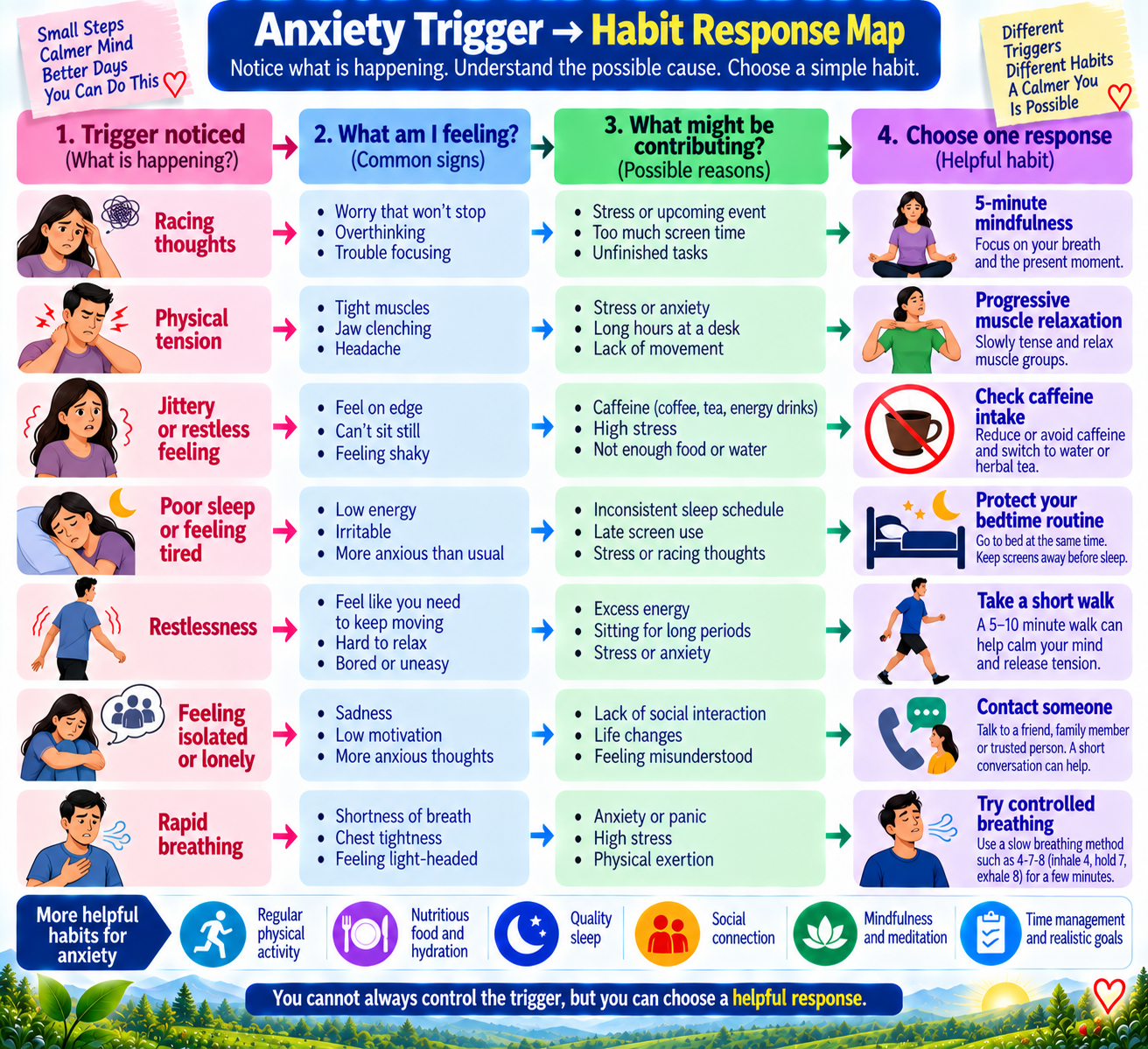
You do not need to practice all seven habits perfectly from day one.
Try a routine like this:
| Time | Habit | Practical action |
|---|---|---|
| Morning | Breathing | 3–5 minutes of comfortable slow breathing |
| Morning | Movement | Short walk or other enjoyable activity |
| Daytime | Nutrition | Eat regular balanced meals. |
| Daytime | Caffeine check | Notice whether caffeine increases symptoms. |
| Afternoon | Connection | Message or speak with someone supportive. |
| Evening | Mindfulness | 5–10 minutes of quiet attention |
| Night | Sleep routine | Begin winding down at a consistent time |
This is not a medical prescription.
It is simply a framework that can be adapted to your schedule.
A Better Strategy: Choose a “Minimum Habit”
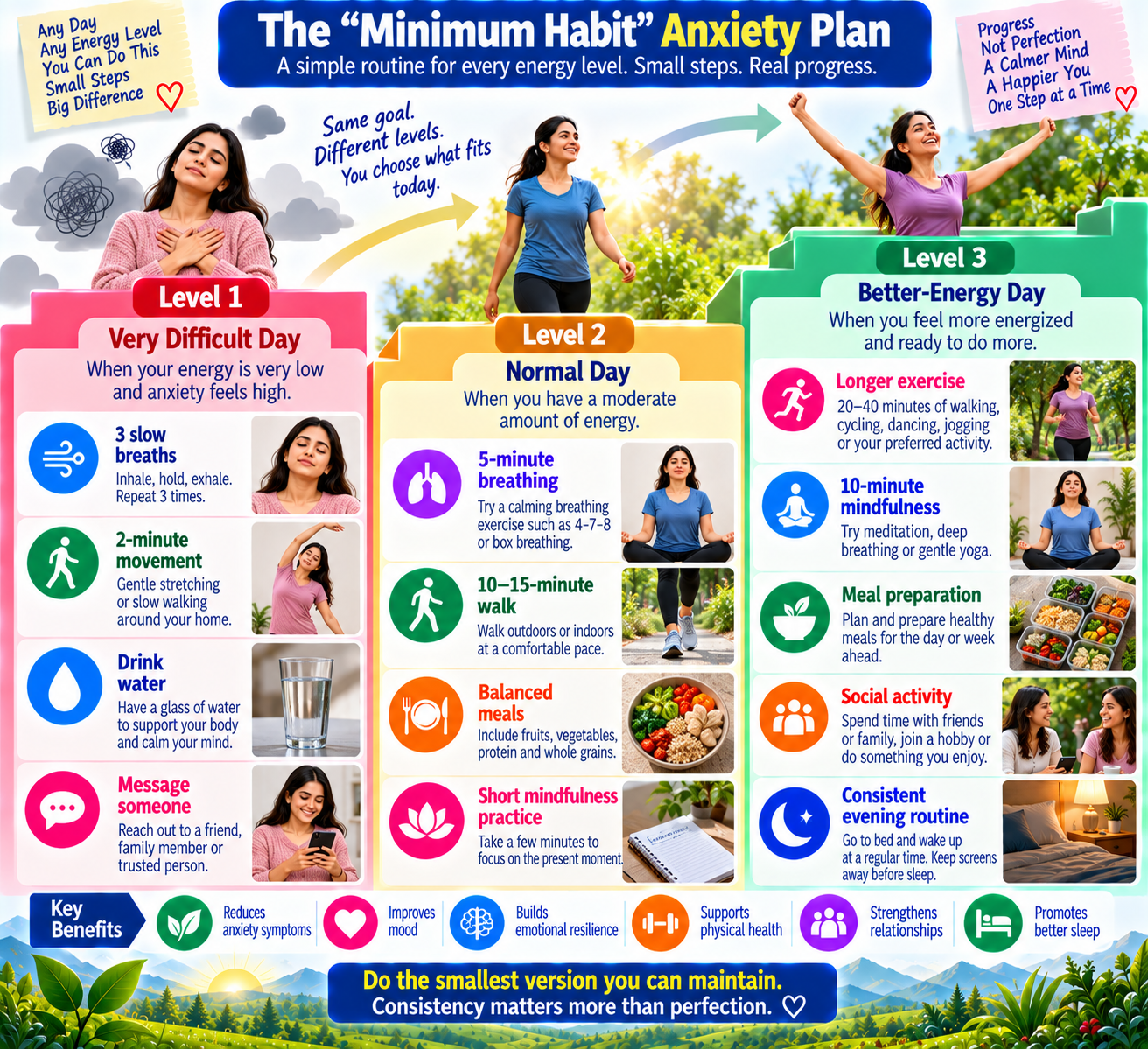
One of the biggest mistakes people make is starting too aggressively.
They decide to meditate for 30 minutes, exercise for an hour, eliminate every unhealthy food, stop all caffeine, sleep perfectly, and journal every evening.
That sounds impressive.
It is also difficult to maintain.
Instead, create a minimum version of each habit.
For example:
- 3 minutes of breathing
- 10 minutes of walking
- one balanced meal
- one caffeine reduction
- 5 minutes of mindfulness
- one supportive conversation
- a consistent bedtime
On better days, you can do more.
On difficult days, maintain the minimum.
This approach turns anxiety management into a routine rather than another source of pressure.
One Often-Missed Habit: Create a “Worry Parking Lot”
This is a simple strategy that can be useful when your mind repeatedly returns to unfinished tasks.
Keep a notebook or note on your phone.
When a worry appears, write it down:
What am I worried about?
Then ask:
Is there an action I can take today?
If yes, write the smallest next step.
If no, write:
Not actionable right now. Revisit later.
This does not eliminate anxiety, and it is not a substitute for therapy. But it can help separate an actionable problem from repetitive mental rumination.
NIMH recommends identifying stress triggers and experimenting with coping techniques because different strategies work differently for different people. NIMH: Stress and Anxiety Fact Sheet
Another Underused Technique: Progressive Muscle Relaxation
Progressive muscle relaxation is different from meditation.
You gradually tense and relax muscle groups while paying attention to the difference between tension and relaxation.
A 2026 systematic review and meta-analysis of 31 randomized controlled trials involving 2,277 participants found that progressive muscle relaxation improved sleep quality and reduced anxiety, although substantial variation between studies means the findings should not be interpreted as a guarantee for every person. PubMed: Progressive Muscle Relaxation Meta-Analysis
A simple evening version can take several minutes.
Start with your hands, gently tense the muscles for a short period, then release them. Move through the shoulders, face, abdomen, legs, and feet.
Do not tense any area that is painful or injured.
What About Herbal Remedies?
This is where many online anxiety articles become misleading.
Natural does not automatically mean safe.
Some herbs and dietary supplements have been studied for anxiety, but evidence varies considerably. Supplements can also interact with medicines or have safety concerns.
Mayo Clinic specifically notes that herbal and dietary supplements are not monitored in the same way as prescription medicines and that some can interact with medications. Mayo Clinic: Anxiety Treatment and Alternative Medicine
For that reason, I would not make herbal supplements a central part of a beginner’s anxiety routine.
Start with lower-risk lifestyle habits and discuss supplements with a healthcare professional if you are considering them.
Common Mistakes When Trying to Reduce Anxiety Naturally
Trying everything at once
Changing ten habits simultaneously makes it difficult to know what actually helps.
Start with one or two.
Expecting immediate results
Some techniques may provide short-term relief, while other lifestyle changes require consistent practice.
Avoid judging a habit after one attempt.
Using exercise as punishment
Exercise should support your health rather than become another source of pressure.
Choose an intensity you can recover from.
Drinking caffeine when already feeling jittery
If caffeine consistently makes you restless, continuing to increase your intake may work against your goal.
Searching for the perfect anxiety remedy
There may not be one.
Your triggers, health history, sleep, medications, lifestyle, and anxiety pattern all matter.
Treating serious anxiety with self-care alone
This is the most important mistake to avoid.
Healthy habits can complement treatment, but anxiety disorders may require psychotherapy, medication, or both. NIMH: Generalized Anxiety Disorder Treatment
What the Latest Research Says
Research on anxiety management continues to move beyond the idea that one technique works for everybody.
Exercise
A 2026 systematic review found evidence suggesting that exercise may reduce generalized anxiety symptoms, with promising findings for aerobic and mind-body exercise. However, the authors noted that the evidence base still has limitations. Latest PubMed Exercise Meta-Analysis
Mindfulness
A 2026 meta-analysis involving thousands of participants found reductions in anxiety symptoms following second-generation mindfulness interventions. At the same time, many included studies had some methodological concerns, which is why the results should be interpreted with appropriate caution. 2026 PubMed Mindfulness Meta-Analysis
Breathing exercises
Recent systematic reviews support breathing exercises as a potentially useful complementary strategy, but researchers continue to call for larger and better-designed trials. PubMed Breathing Exercise Review
Caffeine
Recent evidence continues to suggest that caffeine can increase anxiety symptoms in some people, particularly at higher doses. Individual responses differ, so personal observation matters. PubMed Caffeine and Anxiety Research
Digital lifestyle interventions
A 2025 systematic review and meta-analysis covering 61 studies found small-to-moderate beneficial effects of digital lifestyle interventions on depression, anxiety, and stress. This suggests that structured digital support may have a role, although digital tools should not automatically be considered equivalent to professional mental health treatment. PubMed: Digital Lifestyle Interventions Meta-Analysis
A 7-Day Beginner Plan
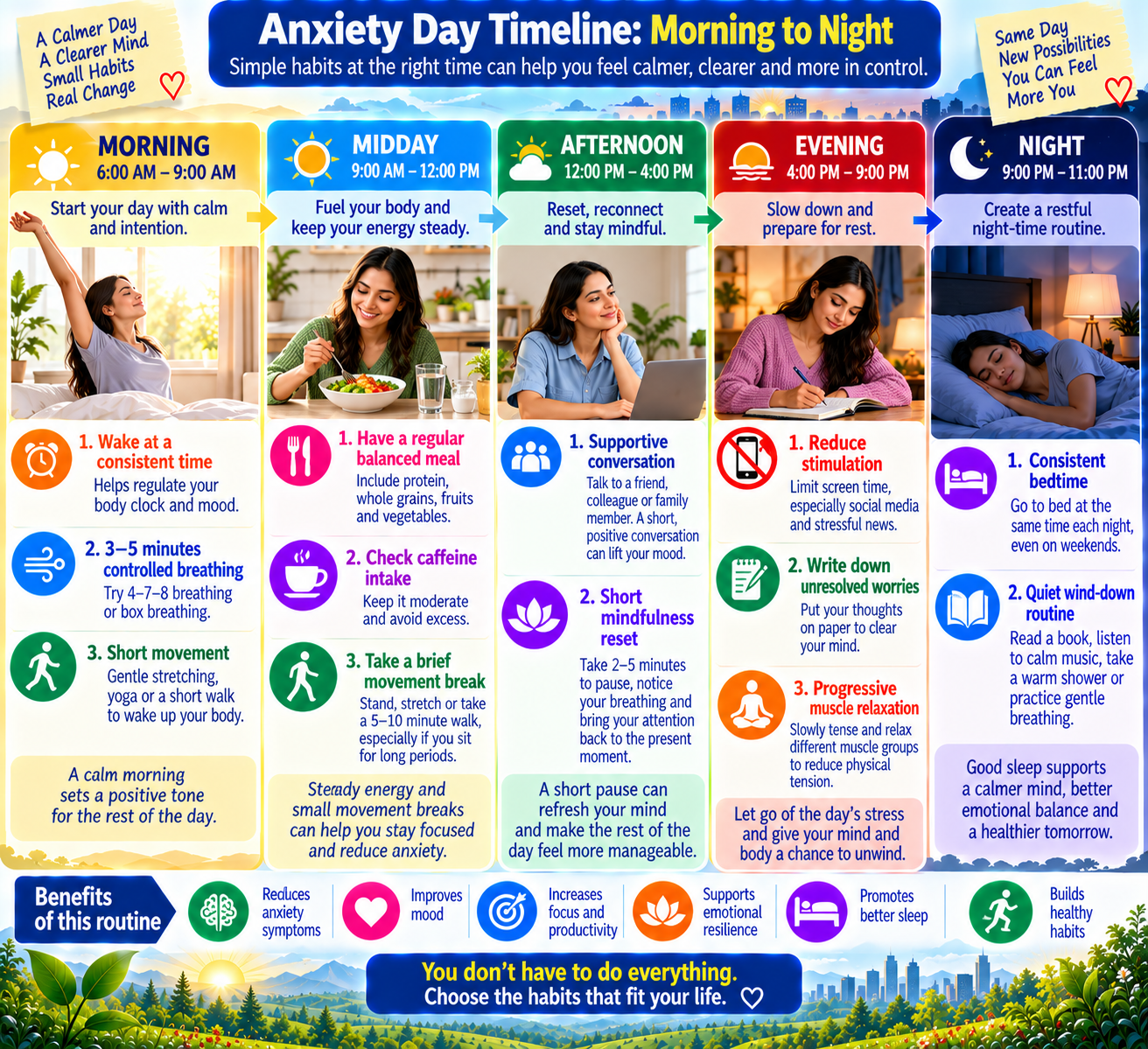
If you want to put these ideas into practice, start small.
Day 1
Practice slow breathing for five minutes.
Day 2
Add a short walk.
Day 3
Keep the walking habit and create a consistent bedtime.
Day 4
Try five minutes of mindfulness.
Day 5
Look at your caffeine intake and notice whether it affects your anxiety.
Day 6
Have a meaningful conversation with someone you trust.
Day 7
Review the week.
Ask yourself:
- What felt useful?
- What was difficult?
- What felt natural?
- What increased stress instead of reducing it?
- Which two habits can I realistically continue?
That final question is more important than trying to maintain all seven habits perfectly.
Personal Experience: How to Add This Section Honestly
Because personal experience can strengthen an E-E-A-T article, you can include your own genuine experience here only if it is true for you.
For example, if you personally noticed that a fixed sleep schedule, walking, breathing practice, or reducing caffeine helped you manage stressful periods, describe exactly what you did and what you noticed.
Avoid writing that you treated other people, diagnosed anxiety, or achieved a specific medical outcome unless you have the appropriate professional background and evidence.
A genuine first-person account should explain the experience rather than turn it into a universal recommendation.
That distinction makes the article more trustworthy.
When Natural Strategies Are Not Enough
Lifestyle changes can be useful, but they are not appropriate as the only approach for everyone.
Consider professional help if anxiety:
- interferes with work or school
- disrupts relationships
- causes significant sleep problems
- leads you to avoid normal activities
- feels difficult to control
- remains persistent or becomes worse
- causes significant physical or emotional distress
NIMH recommends seeking professional help when symptoms are severe or distressing, particularly when they interfere with normal activities. NIMH: Do I Need Help?
For diagnosed anxiety disorders, evidence-based treatments can include psychotherapy and medication depending on the condition and individual circumstances. NIMH: Generalized Anxiety Disorder
If you are already receiving treatment, don’t stop medication or therapy simply because a lifestyle strategy seems helpful.
Use healthy habits as support unless your healthcare professional advises otherwise.
A Simple “Anxiety Reset” for a Difficult Day
When the day feels overwhelming, don’t try to fix your entire life in one afternoon.
Try this sequence:
- Step 1: Put the phone down for a few minutes.
- Step 2: Sit somewhere comfortable.
- Step 3: Take slow, comfortable breaths.
- Step 4: Drink some water if you have not had enough fluids.
- Step 5: Take a short walk if you feel physically able.
- Step 6: Write down the main thing worrying you.
- Step 7: Decide whether there is one small action you can take.
- Step 8: Contact someone you trust if you need support.
This is not a treatment for an anxiety disorder.
It is simply a practical way to create a little space between the anxious feeling and your next decision.
Frequently Asked Questions
What are the best daily habits to reduce anxiety naturally?
Regular physical activity, adequate sleep, controlled breathing, mindfulness, balanced meals, appropriate caffeine intake, and supportive social connection are practical habits that may help manage anxiety.
How quickly can natural anxiety relief work?
There is no universal timeline. Some techniques, such as controlled breathing, may feel calming during or shortly after practice, while habits involving sleep, exercise, or mindfulness generally require consistent practice.
Can walking help anxiety?
Walking is a practical form of physical activity and may support mental health. Research on exercise suggests that physical activity can reduce anxiety symptoms in some people. Mayo Clinic: Exercise and Anxiety
Can caffeine make anxiety worse?
Yes, particularly for people who are sensitive to caffeine. Recent research has found an association between caffeine consumption and increased anxiety symptoms, especially at higher intake levels. PubMed: Caffeine and Anxiety Meta-Analysis
Is meditation good for anxiety?
Mindfulness and meditation may reduce anxiety symptoms for some people. Recent systematic-review evidence is encouraging, although the quality and type of interventions vary. PubMed: Mindfulness and Anxiety Meta-Analysis
Can natural remedies replace anxiety medication?
Not necessarily. Lifestyle strategies can support anxiety management, but diagnosed anxiety disorders may require psychotherapy, medication, or both. Treatment decisions should be made with an appropriate healthcare professional. NIMH: Generalized Anxiety Disorder
What should I do if anxiety is affecting my everyday life?
Speak with a healthcare professional or mental health professional. Persistent anxiety that interferes with work, relationships, sleep, or normal activities deserves proper evaluation rather than being treated only with self-care.
Key Takeaways
The most useful daily habits to reduce anxiety naturally are not complicated tricks.
They are ordinary behaviors practiced consistently.
Regular movement can support mental health. Controlled breathing can provide a practical calming technique. Protecting sleep gives your body and mind time to recover. Mindfulness can help you relate differently to anxious thoughts. Reducing caffeine may help if you are sensitive to it. Regular balanced meals support general well-being, while supportive relationships can reduce isolation.
The strongest lesson is to avoid turning anxiety management into another source of pressure.
You do not need to perform every habit perfectly.
Choose one or two habits that fit your life, practice them consistently, and observe what changes.
If anxiety remains severe, persistent, or disruptive, move beyond self-care and seek professional support.
Author’s Note
This article is designed to provide practical, evidence-informed information about everyday habits that may support anxiety management.
The recommendations are intentionally simple because a useful health habit is one that a person can realistically continue.
Research is continuing to develop, and not every strategy works equally well for every person. The goal is not to promise a cure. It is to help readers understand practical options while recognizing when professional care is appropriate.
Medical Disclaimer
This article is for general educational purposes only. It is not intended to diagnose, treat, cure, or prevent anxiety disorders or any other medical condition.
Natural approaches may support general well-being, but they should not automatically replace professional mental health care. If anxiety is persistent, severe, worsening, or interfering with daily life, speak with a qualified healthcare professional.
If you are experiencing thoughts of suicide, self-harm, or an immediate mental-health crisis, seek emergency help or contact an appropriate crisis service in your country immediately.
Fitness Disclaimer
Physical activity is generally beneficial, but the appropriate type and intensity vary between individuals.
If you have a medical condition, significant physical symptoms, an injury, or have been inactive for a long time, consider discussing an exercise plan with a healthcare professional before starting vigorous activity.
Stop exercising and seek appropriate medical attention if you experience concerning symptoms such as severe chest pain, fainting, severe shortness of breath, or other unusual symptoms.
Research Methodology
For this article, evidence was reviewed from authoritative health organizations and recent peer-reviewed research, with particular attention to systematic reviews, meta-analyses, and guidance from organizations such as the National Institute of Mental Health and Mayo Clinic.
Recent evidence was specifically reviewed for exercise, mindfulness, breathing exercises, progressive muscle relaxation, caffeine, and digital lifestyle interventions.
Where evidence remains uncertain or varies between studies, the article uses cautious language rather than presenting a lifestyle habit as a guaranteed treatment.
Strong EEAT Evidence Links
For readers who want to investigate the evidence directly, these are the main authoritative resources used throughout the article:
- National Institute of Mental Health — Generalized Anxiety Disorder
- National Institute of Mental Health — Caring for Your Mental Health
- National Institute of Mental Health — Stress and Anxiety
- Mayo Clinic — Anxiety Diagnosis and Treatment
- NHS — Generalised Anxiety Disorder
- PubMed — Exercise and Generalized Anxiety Symptoms, 2026
- PubMed — Mindfulness Interventions and Anxiety, 2026
- PubMed — Progressive Muscle Relaxation Meta-Analysis, 2026
- PubMed — Caffeine and Anxiety Meta-Analysis
- PubMed — Caffeine and Anxiety Systematic Review
- PubMed — Breathing Exercise Systematic Review
- PubMed — Digital Lifestyle Interventions Meta-Analysis
Conclusion
Learning daily habits to reduce anxiety naturally is not about finding one magical remedy.
It is about creating a routine that supports your physical and mental health.
Start with something manageable. A short walk, a few minutes of controlled breathing, a consistent bedtime, or less caffeine may be a reasonable first step. Once that habit feels natural, another can be added.
Most importantly, listen to the pattern rather than chasing perfection.
If a habit helps you feel more settled, keep it. If it increases pressure, adapt it. If anxiety continues to interfere with your life, seek professional support rather than trying to manage everything alone.
Small habits cannot solve every anxiety problem, but they can become meaningful pieces of a healthier daily routine.
Related articles
- Category Mind & Mood
- 4 Main Types Of Anxiety Disorders
- How to Improve Your Mood with Healthy Habits: A Comprehensive Guide
- How to Overcome Social Anxiety Disorder Tips
Post Views: 2,105







[…] 7 Natural Ways to Reduce Anxiety and Stress Daily: A Comprehensive Guide […]
[…] 7 Natural Ways to Reduce Anxiety and Stress Daily: A Comprehensive Guide […]
[…] 7 Natural Ways to Reduce Anxiety and Stress Daily: A Comprehensive Guide […]
[…] 7 Natural Ways to Reduce Anxiety and Stress Daily: A Comprehensive Guide […]
[…] 7 Natural Ways to Reduce Anxiety and Stress Daily: A Comprehensive Guide […]
[…] 7 Natural Ways to Reduce Anxiety and Stress Daily: A Comprehensive Guide […]
[…] 7 Natural Ways to Reduce Anxiety and Stress Daily: A Comprehensive Guide […]
[…] 7 Natural Ways to Reduce Anxiety and Stress Daily: A Comprehensive Guide […]