








































































































































































7 Nature Walk Benefits for Beginners: Simple Ways to Improve Health
Author: RVLNSV PRASAD
Updated On: October 2026
About Us
Author Bio
Editorial Policy
Contact Us
Medical Review: This article has not been independently reviewed by a qualified healthcare professional.
About the Author
By RVLNSV PRASAD, a wellness writer focused on healthy habits, nutrition, physical activity, and everyday well-being.
This article combines practical insights with evidence-based research to explain the benefits of nature walks. Health information is supported by trusted sources, including the CDC’s physical activity guidelines and published research on nature exposure and mental health, helping beginners make informed choices about their walking routines.
Quick Answer: What Are the Benefits of Nature Walking?
Nature walking may help reduce stress, improve mood, support heart health, and increase daily physical activity. Beginners can start with 10–20 minutes at a comfortable pace and gradually build a consistent routine. The CDC’s physical activity guidelines and research on nature exposure and mental health provide useful evidence-based guidance.
Introduction
Nature walk benefits for beginners include opportunities to increase physical activity, manage everyday stress, and support overall well-being. You do not need an expensive gym membership or a demanding workout routine to become more active. A simple walk through a park, garden, or tree-lined path can be a practical starting point for a healthier lifestyle.
A few years ago, I spent much of my day indoors, sitting in front of a computer for long periods. By evening, I often felt physically tired and mentally drained. One day, I decided to take a walk in a nearby park. I was not trying to lose weight or complete a fitness challenge; I simply wanted fresh air and a break from screens.
Over the following weeks, those quiet walks became a regular part of my day. I found them relaxing and began to appreciate how a small, manageable habit could make my daily routine feel better. Although personal experiences cannot prove a health benefit, research suggests that spending time in natural environments may support mental well-being and encourage physical activity.
A systematic review of nature exposure and health examined associations with outcomes such as mental health, sleep, blood pressure, and physical activity. The Centers for Disease Control and Prevention (CDC) also explains how regular physical activity can support physical and mental health.
Nature walks are not a cure for health conditions, and their effects vary from person to person. However, they can be an accessible way to begin moving more consistently. In this guide, you will discover seven potential benefits of nature walking, beginner-friendly tips, safety advice, and a simple plan to help you build a sustainable walking habit.
Why Nature Walk Benefits for Beginners Matter More Than Many People Think
Modern life keeps people indoors for most of the day. Work is often the main reason for such behavior. Sitting long hours in the office and in front of computers leaves little time to spend outdoors.
Phones and laptops can take up a lot of our time. With traffic, busy schedules, and daily responsibilities, it can be difficult to go outside. Over time, people may become less active and spend less time enjoying the fresh air and natural surroundings.
Such inactivity can affect both your physical and mental well-being.
Health experts from Mayo Clinic, Harvard Health and NIH recommend regular physical activity as part of a healthy lifestyle.
Walking is one of the simplest exercises. You can get started without specific equipment or a gym membership.
You can begin almost anywhere. Nature walks offer more than just physical activity.
You get fresh air, take a break from screens, and give yourself time to slow down and relax.
People can feel calmer and less anxious when they are around trees, plants, and open areas. One reason nature walks have become such a popular wellness routine.
Read: Daily Healthy Stress-Relief Habits
Related: Mental Health Benefits of Morning Walks
See Also: Daily Holistic Wellness Routine for Beginners
1. Nature Walks Help You Move More Without Feeling Like Exercise
Many beginners find traditional workouts challenging. Gyms can feel intimidating, and high-intensity routines may seem difficult to maintain. Nature walks offer a more relaxed way to become active by combining movement with time outdoors.
Instead of focusing on exercise targets, you can enjoy the trees, fresh air, and peaceful surroundings while gradually building a walking habit. The World Health Organization (WHO) recognizes walking as an accessible, low-cost way to increase physical activity.
Benefits of walking in nature may include:
-
Better cardiovascular fitness: Regular walking contributes to physical activity levels that support heart health.
-
Improved mobility and functional fitness: Consistent movement can help maintain physical function as you age.
-
Better mood and energy: Physical activity can improve how you feel and function.
-
A more consistent routine: Choosing an enjoyable activity may make it easier to incorporate movement into everyday life.
The CDC explains the immediate and long-term benefits of physical activity, including improvements in mood, sleep, and overall health.
One major advantage of walking is its flexibility. You can begin with a short, comfortable route and gradually increase the duration as your fitness improves. Unlike demanding exercise plans, nature walks can fit around your schedule and personal preferences.
The key is consistency, not intensity. The WHO recommends starting with small amounts of activity and increasing duration and frequency gradually. Even short walks can be a useful first step toward a more active lifestyle.
2. You Could Be Less Stressed When You Are Outside
Stress is a part of everyday existence.
Work obligations, family duties, and regular phone notifications can make people feel stressed and fatigued.
Sometimes the brain needs a break. Nature is a calmer place.
A walk in a park, garden, or trail frequently seems different than staying indoors all day. Many people report they feel more relaxed when they get outside.
Simple things during a walk can help you relax:
- Take a couple slow inhales
- See trees and flowers
- Hear the birds sing
- Don’t use your phone when walking
These few moments can calm your head. I’ve seen it with my own eyes. Some of my best walks were on stressful days.
The difficulties did not go away. But I felt better able to handle them.
Greenspace and mental health research (NIH):
The Importance of Greenspace for Mental Health (NIH)
Research indicates that access to green space can benefit mental health and help to reduce stress at a population level
American Psychological Association:
APA examines studies that connect exposure to nature with reduced stress, increased mood and enhanced focus
3. Nature Walks Can Be Good for Your Heart Health
Walking is typically suggested as a beginner’s exercise because it is basic and easy on the body.
No particular talents are required. You can start at your own speed.
Health experts from Mayo Clinic and Cleveland Clinic frequently encourage daily walking as part of a healthy lifestyle.
Potential benefits include the following:
- Enhanced blood flow
- Increased stamina
- Supports healthy blood pressure
- Enhanced overall health
You don’t have to walk fast. You don’t have to walk for hours.
Even a short stroll, if done regularly, can help. Consistency is more important than speed.
Mayo Clinic Walking Guide:
Walking: Trim Your Waistline, Improve Your Health (Mayo Clinic)
Walking can help improve heart health, endurance, and general fitness, says the Mayo Clinic.
Cardiovascular Walking Research:
Walking – The First Steps in Cardiovascular Disease Prevention (Peer-Reviewed Study)
There is evidence that walking is connected with cardiovascular health advantages in different age groups
4. Going for a Walk Outside Can Help Boost Your Mood
Many people experience emotional alterations prior to physical ones, and it was true of me too.
When the workload was heavy, I would often feel mentally fatigued. I went for a short walk outside to reset.
My troubles were still there. But they were easier to handle afterwards.
A beginner walking routine may include the following:
- Improved mood
- Less stress
- Better focus
- Greater sense of peace
Scientists are still exploring the effects of nature on mental health. Results will vary from person to person. Many individuals report feeling happier and more relaxed after being outside.
Harvard School of Public Health:
Time Spent in Nature Can Boost Physical and Mental Well-Being (Harvard)
Harvard has identified linkages between exposure to green spaces and enhanced physical and emotional well-being.
Green Space and Mental Health Review:
Green and Blue Space and Mental Health (NIH
Reviews suggest that green space exposure can enhance wellbeing and act as a buffer against stress.
5. Nature Walks Could Promote Other Healthy Behaviors
Good habits lead to other positive habits. I’ve seen this pattern in my own life over the years.
Once I started walking frequently, I paid more attention to other areas of my health.
Some simple behaviors to follow are:
- Increasing water intake
- Going to sleep earlier
- Cutting down on screen time
- Being more activity during the day
Outdoor walking benefits can be a part of a healthy daily routine. It’s generally easier to make small improvements than to try to alter everything at once.
Harvard Exercise and Fitness Hub:
Exercise and Fitness Resources (Harvard Health)
Regular physical activity can help you feel better, sleep better and live longer, says Harvard.
6. Nature Walks Can Help With Balance And Mobility
Moving around helps your body feel better. This aspect is even more crucial as we become older. Many walking trails have slight inclines, twists and turns, and varying surfaces.
Little hills, uneven surfaces, and gentle curves are characteristic of natural walking trails. These features can improve your balance and coordination over time.
Nature Walk Tips for Newbies
- Wear good shoes
- Begin with short walks
- Pick safe areas to stroll
- Walk at a pace that is comfortable
- Take a break if you needed to
No need to hurry. Everyone has to start somewhere. The emphasis should be on the habit of walking, not on walking longer distances.
Great changes over time are often the result of small measures taken frequently
Mayo Clinic Exercise Guidelines:
Exercise: How Much Do I Need Every Day? (Mayo Clinic)
Even small amounts of activity can lead to health benefits.
7. Nature Walks Can Become a Sustainable Long-Term Wellness Habit
Many wellness trends are short-lived. Walking remains one of the most practical habits people can maintain.
Outdoor walking benefits often come from repetition rather than intensity.
A regular ten-minute walk may provide more long-term value than an ambitious routine that lasts only a few days.
One lesson I learned personally was that consistency usually beats motivation. Motivation changes. Simple habits often last.
Research and Expert Opinions on Walking in Nature
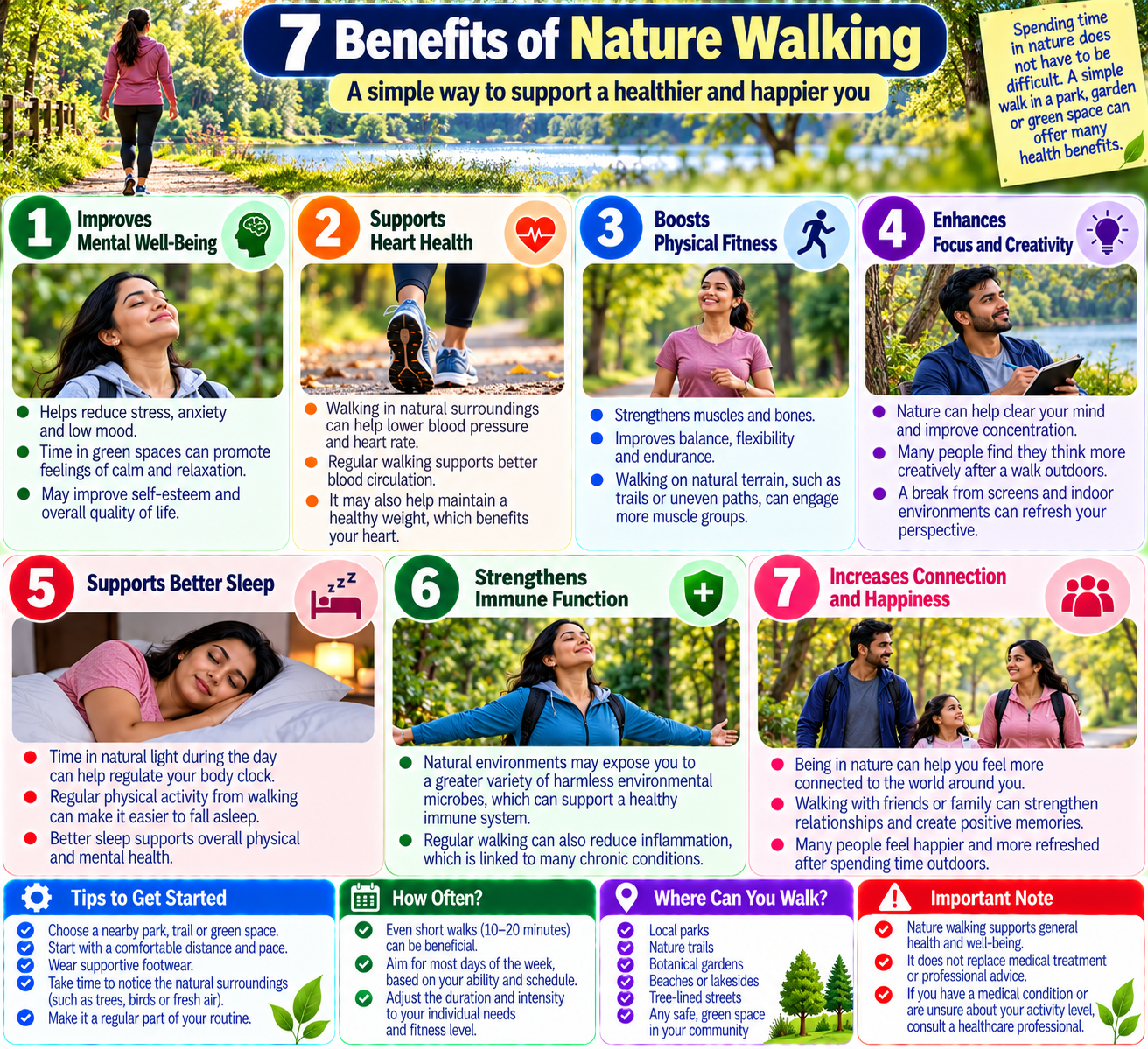
For decades, health professionals have studied walking. They continue to study the effects of movement and time spent outside on overall health.
Many organizations, like Mayo Clinic, Cleveland Clinic, NIH, Healthline, and Harvard, to name a few, regularly promote regular physical activity as part of a healthy lifestyle.
The Health Benefits of the Great Outdoors (Systematic Review)
Researchers are particularly interested in some of the following areas:
- Physical wellness
- Psychosocial health
- Stress reduction
- Heart health
- Healthy aging
The results are not identical. People have varied fitness, lifestyle, and health needs. But one thing remains the same.
Walking is the easiest activity for most novices to start and stick with. It does not need specific talents. You don’t need pricey equipment.
That’s one reason health experts keep recommending it.
Typical Mistakes Beginners Make When Starting Nature Walks
I’ve seen many folks make the same mistakes when starting a new walking routine. That was a mistake I used to make occasionally.
Typical examples include the following:
- Wanting rapid results
- Walking too far on first day
- Wearing bad shoes
- Not drinking enough fluids.
- Comparing their progress to others
Many folks start with a lot of enthusiasm.
And then they try to do too much, too quickly. A better approach is generally simpler. Begin with a short walk.
Add a bit more time when you feel comfortable. Continue even when you don’t feel motivated. Small steps create lasting habits.
Personal Experience: What Nature Walks Have Taught Me About Well-Being
When I first started walking, I expected to notice dramatic changes within a week. I also assumed that longer walks would automatically produce better results. However, my experience was different. The first changes were subtle, and I gradually began to appreciate the value of consistency.
Over time, I noticed that I sometimes felt more focused during the day and less stressed after work. These personal observations encouraged me to continue walking regularly. Research offers some support for this experience: a systematic review of nature exposure and health found associations between time spent in natural environments and several health outcomes, including mental well-being and cognitive performance. However, individual experiences vary, and research associations do not prove that nature walks alone caused these changes.
Another important lesson was that walking became more enjoyable when I stopped treating it as another task on my to-do list. Instead of worrying about distance or speed, I began to appreciate the quiet surroundings and the opportunity to take a break from work.
This approach also fits with the CDC’s guidance on physical activity, which highlights benefits such as improved mood, better sleep, and long-term health. You do not need to make every walk long or intense to begin building a regular routine.
Looking back, I learned that healthier habits do not always require dramatic lifestyle changes. Small, manageable actions repeated over time can help make an active lifestyle more sustainable. For beginners, the most useful goal may be to find a walking routine that feels comfortable enough to continue.
How to Walk in Nature for Beginners
You do not need a complicated plan to start nature walking. A few simple steps can help you build a routine that fits your schedule, fitness level, and daily responsibilities. The CDC recommends starting with manageable amounts of physical activity and gradually building up.
Morning
-
Drink water before heading out if you feel thirsty.
-
Begin with a comfortable 10-minute walk.
-
Enjoy natural daylight while choosing a safe, pleasant route.
Spending time outdoors can support well-being, while regular physical activity offers established health benefits. Research has also explored the relationship between nature exposure and health outcomes in this systematic review published in Environmental Research.
Afternoon
-
Take a short walking break after long periods of sitting.
-
If possible, walk through a nearby park or another green space.
-
Choose a comfortable pace that allows you to talk without becoming overly breathless.
The World Health Organization’s physical activity guidance emphasizes that physical activity can include everyday movement, not just structured workouts.
Evening
-
Enjoy a gentle stroll if it suits your schedule.
-
Reduce screen time before bed if screens interfere with your sleep routine.
-
Give yourself time to unwind after a busy day.
Walking can be a relaxing part of an evening routine, although it does not guarantee better sleep. The CDC’s sleep guidance provides additional advice on supporting healthy sleep habits.
The key is consistency, not perfection. Start with a routine you can manage comfortably, then increase your walking time gradually. If you have a medical condition or difficulty with balance or mobility, adapt your route and activity to your needs.
Beginner Nature Walkers’ Safety Tips
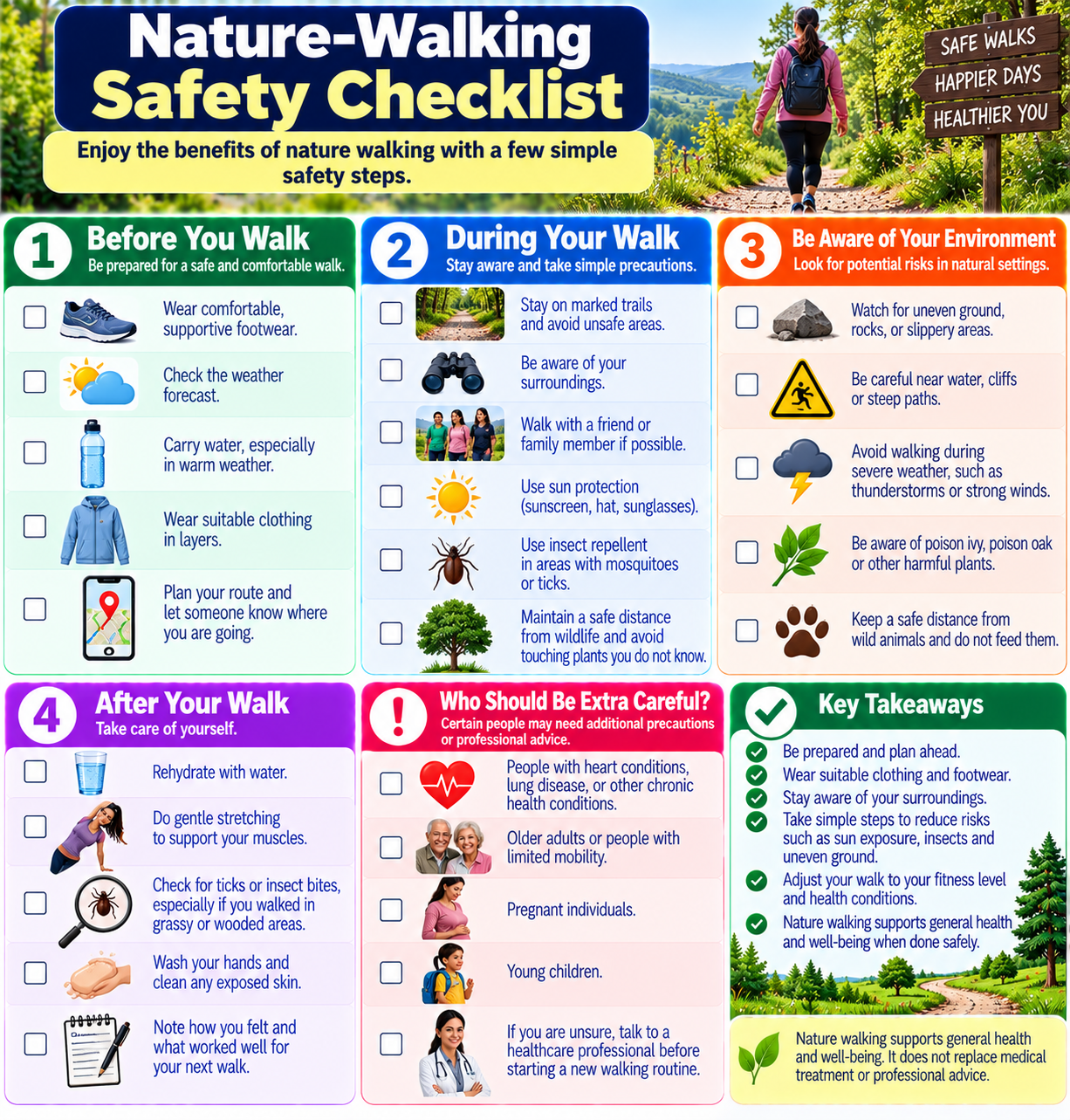
few simple precautions can help make nature walks more comfortable and enjoyable, especially if you are just starting out.
-
Wear comfortable footwear: Choose supportive shoes with good grip for the walking surface.
-
Carry water: Bring drinking water, particularly in hot weather or when walking for longer periods.
-
Use sun protection: Apply sunscreen as needed and consider a hat and lightweight clothing.
-
Choose safe walking paths: Prefer well-maintained routes with suitable surfaces, good visibility, and safe surroundings.
-
Start with short distances: Begin with a manageable walk and gradually increase the duration as your fitness improves.
The CDC’s physical activity guidance recommends starting gradually and building activity over time. In addition, the CDC’s sun safety guidance explains how to protect your skin from harmful ultraviolet radiation.
There is no need to hurry or compete with other walkers. Maintain a comfortable pace, pay attention to your surroundings, and take breaks when needed.
If you have a chronic medical condition, a recent injury, balance difficulties, or limitations that could affect safe walking, consult a healthcare professional about suitable activity levels. Stop walking and seek appropriate medical attention if you experience concerning symptoms such as chest pain, faintness, or unusual shortness of breath.
How Much Walking Should Beginners Do?
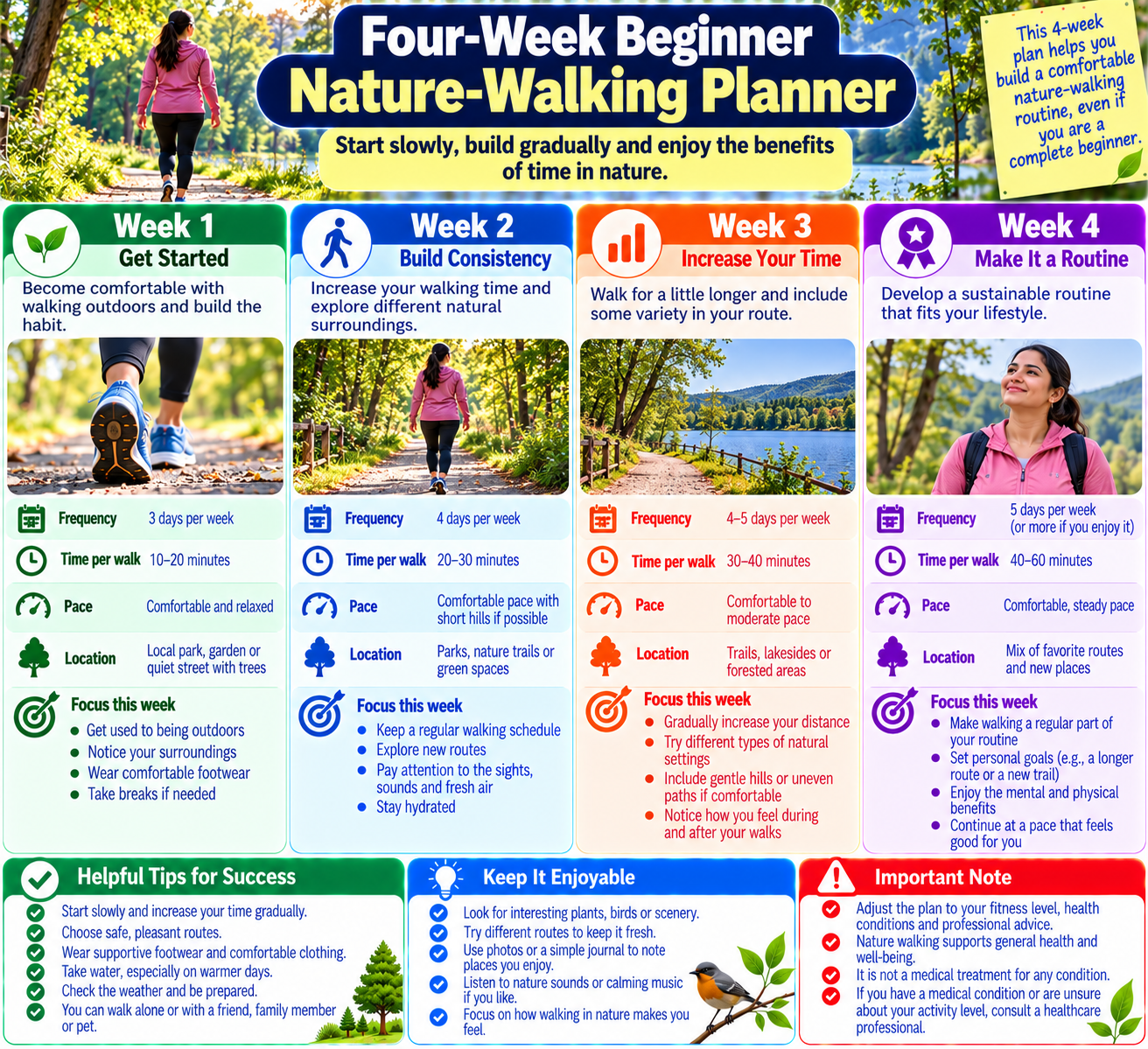
Week Daily Target
Week 1: 10 minutes
Week 2— 15 min
Week 3— 20 mins
Week 4—25 to 30 minutes
Sources
Mayo Clinic. “Walking: Trim Your Waistline, Improve Your Health.”
Mayo Clinic. “The Mental Health Benefits of Nature: Spending Time Outdoors to Refresh Your Mind.”
National Institutes of Health (NIH). “Green Space May Improve Young Children’s Mental Health.”
National Center for Biotechnology Information (NCBI). “Green and Blue Space and Mental Health.”
Conclusion
Nature walk benefits for beginners include an accessible way to become more active, enjoy time outdoors, and support everyday well-being. You do not need expensive equipment, a gym membership, or an intense workout plan to get started. A short walk through a nearby park or green space can be a practical first step toward a healthier routine.
Research suggests that spending time in natural environments may support mental well-being, while regular physical activity offers established benefits for physical and mental health. You can explore the evidence in this systematic review of nature exposure and health and the CDC’s guide to the benefits of physical activity.
Start with 10 minutes at a comfortable pace, choose a safe route, and gradually increase your walking time as your fitness improves. The World Health Organization’s physical activity recommendations emphasize that any amount of physical activity is better than none.
Your first walk does not need to be perfect or particularly long. Focus on building a habit that fits your life. Over time, these simple walks may become a valuable part of your approach to staying active and caring for your well-being.
Medical Disclaimer
This article is intended for educational purposes only and does not replace professional medical advice, diagnosis, or treatment. The information about nature walking and physical activity is based on general health guidance and research, including the CDC’s physical activity recommendations.
Consult a qualified healthcare professional before starting a new walking routine if you have a chronic medical condition, a recent injury, mobility limitations, or concerns about exercising safely. Follow individualized medical advice, and do not delay prescribed treatment based on information in this article. For general guidance on exercising safely, see the NHS advice on exercise.
Fitness Disclaimer
This article provides general information about nature walking and physical activity for educational purposes only. It is not a personalized fitness plan or a substitute for professional medical advice, diagnosis, or treatment. The CDC’s physical activity guidelines offer general recommendations for adults, but appropriate activity levels vary according to individual health, fitness, and ability.
Beginners should start at a comfortable pace and gradually increase walking duration as their fitness improves. Choose safe walking routes, wear suitable footwear, stay hydrated, and take precautions in hot or sunny weather. If you have a chronic medical condition, a recent injury, balance difficulties, or concerns about exercising safely, consult a qualified healthcare professional before starting a new routine.
Stop walking if you experience chest pain, faintness, dizziness, or unusual shortness of breath, and seek appropriate medical attention. For additional guidance, review the NHS advice on exercise.
Nature walks may support general well-being, but individual results vary. Neither the author nor the publisher guarantees specific fitness or health outcomes from following the suggestions in this article.
Frequently Asked Questions
1. What are the main benefits of walking in nature?
Walking in nature combines physical activity with exposure to green spaces. It may support mood, reduce feelings of stress, encourage regular movement, and contribute to general well-being. Research reviews have found promising links between nature exposure and mental health, although results vary across studies. Read the research review on nature exposure and health.
2. Is a 20-minute nature walk enough for beginners?
Yes. A 20-minute walk can be a useful starting point if it feels comfortable for your fitness level. You do not need to begin with long walks to benefit from physical activity. Start with a shorter duration if necessary, then gradually increase your walking time. The CDC’s physical activity guidance explains that adults can gain health benefits from being more active and sitting less.
3. Can walking in nature help reduce stress and anxiety?
It may help. A systematic review and meta-analysis found that nature walks were associated with improvements in anxiety and depression symptoms. However, results do not guarantee the same effect for everyone, and nature walks should not replace professional mental health care when it is needed. Read the systematic review of nature walks and mental health.
4. Is walking in a park better than walking on city streets?
Walking in either setting can provide physical activity. A green space may offer the additional experience of trees, plants, and natural surroundings. Some research suggests that walking in nature may improve mood more than walking in urban environments, but the benefits depend on the individual and the setting. Read a controlled study comparing nature and urban walks.
5. What is the best time of day for a nature walk?
The best time is when you can walk safely and comfortably and repeat the habit consistently. Morning walks may fit some schedules, while an evening walk may suit others. Choose a time with suitable weather, adequate daylight, and a safe route. There is no single time that is best for everyone.
6. How many days a week should beginners walk in nature?
Begin with a manageable routine, such as walking for 10–20 minutes on three or four days each week, and adjust according to your ability. As your fitness improves, you can gradually increase the duration or frequency. For general health, the CDC recommends that adults aim for at least 150 minutes of moderate-intensity aerobic activity per week. This is a longer-term target, not a requirement for your first week.
7. Can nature walks improve heart health?
Regular brisk walking can contribute to cardiovascular health as part of an active lifestyle. The potential benefit comes largely from physical activity rather than from the natural setting alone. Start at a comfortable pace and increase intensity gradually. People with heart conditions or exercise-related symptoms should follow their healthcare professional’s advice. Learn about the health benefits of physical activity from the CDC.
8. Can walking in nature improve mood and mental well-being?
Spending time in natural surroundings while moving your body may support positive mood and emotional well-being. A systematic review of nature-based outdoor activities found improvements in several mental health outcomes, including depressive mood and anxiety, although the studies differed in quality and type of intervention. Read the systematic review and meta-analysis.
9. What should beginners take on a nature walk?
Wear comfortable shoes with suitable grip and choose clothing appropriate for the weather. Carry water, use sun protection when needed, and take a phone if you are walking alone. Choose a familiar, well-maintained route and let someone know your plans if you are exploring an unfamiliar area. Adjust the distance to your fitness and mobility, and stop if you feel unwell.
10. Can nature walking replace exercise or medical treatment?
Nature walking is one useful way to be physically active, but it does not replace every form of exercise or prescribed treatment. Some people may also need strength training, balance exercises, rehabilitation, or care for an existing health condition. Nature walks can complement a broader health routine, but persistent anxiety, depression, chest pain, dizziness, or unusual breathlessness needs appropriate medical attention. Review the CDC’s guidance on physical activity and health.
Medical Disclaimer
This text is for educational purposes only and is not a substitute for professional medical advice. Before making changes to your health, talk to a healthcare professional.
Related Content:
- 8 Rapid Hair Growth Herbals You Should Try
- 15 Ayurvedic Remedies for High Blood Pressure
- Aromatherapy for Stress Relief and Relaxation: A Comprehensive Guide
- Natural Remedies for Boosting Immunity with Plants: A Comprehensive Guide
- How Nature Walks Can Improve Physical Health: A Comprehensive Guide
- 7 Healing Herbs for Boosting Energy Naturally: A Comprehensive Guide
- Benefits of Outdoor Activities for Mental Health: A Comprehensive Guide
- Best Superfoods Revealed: Truth Behind Nutrient Powerhouses
- Check our Blog and Category page (Nature’s & Healing)
- How to Achieve Balance Holistic Wellness Practices
- 22 Natural Remedies for Anxiety: What Really Works?












[…] How Nature Walks Can Improve Physical Health: A Comprehensive Guide […]
[…] How Nature Walks Can Improve Physical Health: A Comprehensive Guide […]
[…] How Nature Walks Can Improve Physical Health: A Comprehensive Guide […]
[…] How Nature Walks Can Improve Physical Health: A Comprehensive Guide […]
[…] How Nature Walks Can Improve Physical Health: A Comprehensive Guide […]
[…] How Nature Walks Can Improve Physical Health: A Comprehensive Guide […]
[…] How Nature Walks Can Improve Physical Health: A Comprehensive Guide […]
[…] How Nature Walks Can Improve Physical Health: A Comprehensive Guide […]
[…] How Nature Walks Can Improve Physical Health: A Comprehensive Guide […]
[…] How Nature Walks Can Improve Physical Health: A Comprehensive Guide […]
[…] How Nature Walks Can Improve Physical Health: A Comprehensive Guide […]
[…] How Nature Walks Can Improve Physical Health: A Comprehensive Guide […]
[…] How Nature Walks Can Improve Physical Health: A Comprehensive Guide […]
[…] How Nature Walks Can Improve Physical Health: A Comprehensive Guide […]
[…] How Nature Walks Can Improve Physical Health: A Comprehensive Guide […]
[…] How Nature Walks Can Improve Physical Health: A Comprehensive Guide […]
[…] How Nature Walks Can Improve Physical Health: A Comprehensive Guide […]
[…] How Nature Walks Can Improve Physical Health: A Comprehensive Guide […]
[…] How Nature Walks Can Improve Physical Health: A Comprehensive Guide […]
[…] How Nature Walks Can Improve Physical Health: A Comprehensive Guide […]
[…] How Nature Walks Can Improve Physical Health: A Comprehensive Guide […]
[…] How Nature Walks Can Improve Physical Health: A Comprehensive Guide […]
[…] How Nature Walks Can Improve Physical Health: A Comprehensive Guide […]
[…] How Nature Walks Can Improve Physical Health: A Comprehensive Guide […]
[…] How Nature Walks Can Improve Physical Health: A Comprehensive Guide […]
[…] How Nature Walks Can Improve Physical Health: A Comprehensive Guide […]