



























































































































































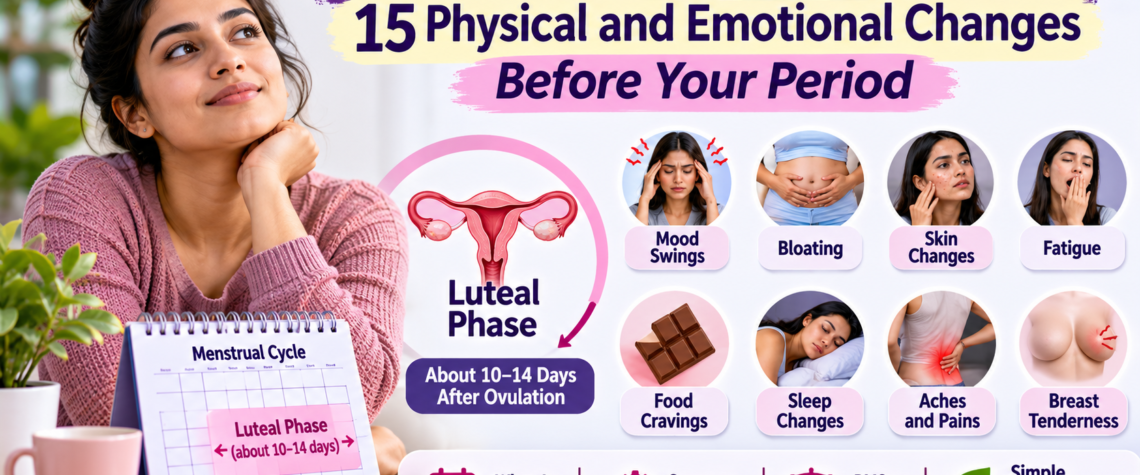
Luteal Phase Symptoms: 15 Physical and Emotional Changes Before Your Period
Author: RVLNSV PRASAD
Updated On: October 2026
About Us
Author Bio
Editorial Policy
Contact Us
Medical Review: This article has not been independently reviewed by a qualified healthcare professional.
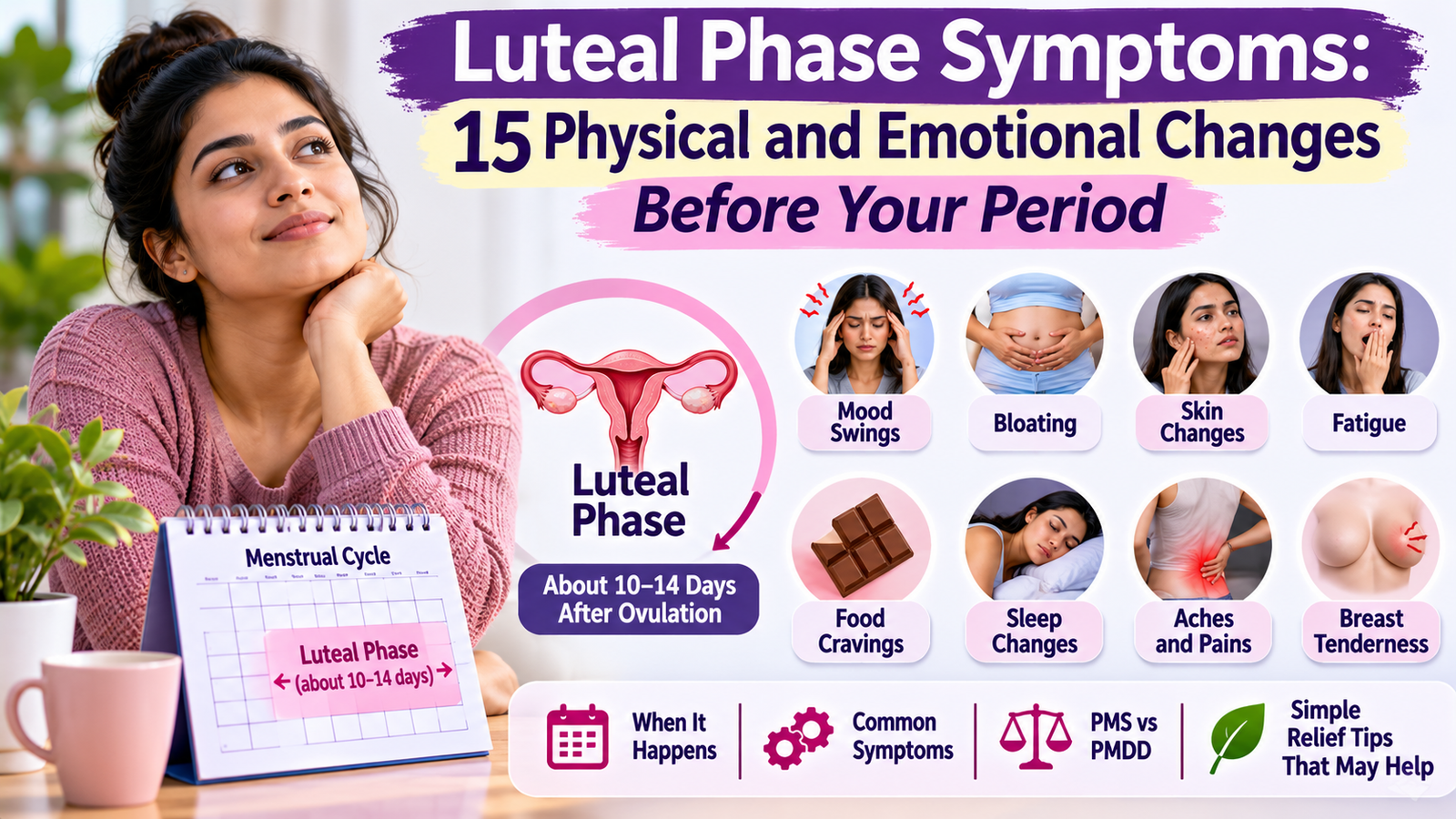
Quick Answer: What Are Luteal Phase Symptoms?
Luteal phase symptoms are physical, emotional, and behavioral changes that some people experience after ovulation and before their next menstrual period. Common examples include bloating, breast tenderness, food cravings, fatigue, headaches, mood swings, irritability, anxiety, and sleep changes.
These symptoms are associated with normal hormonal changes during the menstrual cycle. However, not everyone experiences them, and their severity varies. Mild symptoms may be manageable with everyday adjustments, while recurring symptoms that interfere with work, relationships, or daily activities deserve medical attention.
If symptoms appear in the days before menstruation and improve shortly after bleeding begins, they may fit a premenstrual pattern. Keeping a daily record over two menstrual cycles can help a healthcare professional assess what is happening. The American College of Obstetricians and Gynecologists (ACOG) recommends recording symptoms and menstrual dates to help identify this pattern.
Introduction: Why Does Your Body Feel Different Before Your Period?
Have you ever noticed that your appetite changes, your usual energy levels drop, or small problems suddenly feel more stressful during the days before your period? You might also experience bloating, breast tenderness, restless sleep, or an unusual need for quiet time.
These changes can be connected to the luteal phase of your menstrual cycle.
Luteal phase symptoms develop during the part of the menstrual cycle that begins after ovulation and ends when the next period starts. During this time, the body experiences changing levels of progesterone and estrogen. These hormones help prepare the uterine lining for a possible pregnancy. Their effects can also influence body temperature, breast tissue, digestion, sleep, and mood.
Some people notice only mild physical changes. Others experience a combination of emotional and physical symptoms that affect their daily routines. The difference is important. Occasional discomfort is not necessarily a medical problem, but recurring symptoms that disrupt normal life should not be dismissed as something everyone must tolerate.
The NHS guide to premenstrual syndrome explains that premenstrual symptoms can affect people differently and may include changes in mood, appetite, sleep, and physical comfort. The ACOG clinical guideline on premenstrual disorders also recognizes that symptoms can require a combination of medical and non-medical approaches.
This guide explains 15 common luteal phase symptoms, why they may occur, how they can change as your period approaches, and what practical steps may help. It also explains the difference between ordinary premenstrual changes, premenstrual syndrome (PMS), and premenstrual dysphoric disorder (PMDD).
What Is the Luteal Phase of the Menstrual Cycle?
The luteal phase is the second half of an ovulatory menstrual cycle. It starts after an ovary releases an egg and ends when the next menstrual period begins, provided pregnancy does not occur.
After ovulation, the empty follicle develops into a temporary structure called the corpus luteum. It produces progesterone, a hormone that helps prepare and maintain the uterine lining for a possible pregnancy.
If pregnancy does not occur, the corpus luteum breaks down. Progesterone and estrogen levels fall, and the uterine lining is shed during menstruation.
The length of the luteal phase varies. It is often around 12 to 14 days, but it is not exactly the same for everyone or every cycle.
Understanding the menstrual cycle in four stages
| Cycle stage | What happens | Possible experience |
|---|---|---|
| Menstruation | The uterine lining is shed. | Bleeding, cramps, or tiredness |
| Follicular phase | Follicles develop, and estrogen rises. | Energy and mood may change. |
| Ovulation | An egg is released. | Some people notice mild pelvic discomfort. |
| Luteal phase | Progesterone rises after ovulation and later falls if pregnancy does not occur. | Possible bloating, breast tenderness, cravings, or mood changes |
The stages are useful for understanding patterns, but symptoms cannot reliably tell you the exact day of ovulation. For a helpful overview, see the Cleveland Clinic explanation of the menstrual cycle.
Why Do Luteal Phase Symptoms Happen?
Hormonal changes are an important part of the explanation, but the relationship is more complicated than simply having too much or too little progesterone.
After ovulation, progesterone rises. Estrogen also changes during this phase. These hormones influence several body systems, including the reproductive organs, brain, breasts, and temperature regulation.
Researchers believe that some people are more sensitive to normal hormonal fluctuations than others. This sensitivity may affect brain chemicals and systems involved in mood, sleep, and emotional regulation.
For example, the progesterone metabolite allopregnanolone interacts with GABA-related signalling in the brain. Differences in sensitivity to this process may be relevant to premenstrual mood symptoms. The 2026 JAMA synopsis of the ACOG guideline discusses possible mechanisms involving estrogen fluctuations, serotonin, and sensitivity to progesterone metabolites.
This does not mean that every person with premenstrual symptoms has a hormone imbalance. Routine hormone tests are not usually a simple way to confirm PMS or PMDD.
15 Common Luteal Phase Symptoms: Physical and Emotional Changes
Not everyone experiences all 15 symptoms. You may notice one or two changes, several symptoms together, or no noticeable symptoms at all.
1. Abdominal bloating
Bloating is one of the commonly reported physical symptoms before menstruation. Your abdomen may feel fuller, tighter, or more uncomfortable than usual.
Hormonal changes may influence fluid regulation and digestive activity. Constipation, changes in eating habits, and increased sensitivity to abdominal discomfort can also contribute.
What may help:
- Drink water regularly throughout the day.
- Eat slowly and avoid rushing meals.
- Notice whether particular foods make bloating worse.
- Take a gentle walk after meals if comfortable.
- Avoid suddenly increasing fiber if it makes your bloating worse.
A useful reader tip is to record whether bloating occurs after particular meals or appears at roughly the same point in every cycle. This can help distinguish a recurring menstrual pattern from a food-related digestive problem.
2. Breast tenderness or swelling
Some people experience breast heaviness, sensitivity, or soreness after ovulation. The discomfort may affect both breasts and become more noticeable as menstruation approaches.
Hormonal changes can influence breast tissue and fluid retention. The degree of tenderness varies between individuals.
What may help:
- Wear a comfortable, supportive bra.
- Avoid activities that cause breast discomfort.
- Try a warm or cool compress.
- Record when tenderness starts and when it settles.
A new lump, persistent pain in one specific area, skin changes, or nipple discharge should be assessed by a healthcare professional rather than automatically attributed to the menstrual cycle.
3. Mood swings before your period
You may feel cheerful in the morning and unusually sensitive later in the day. Some people notice sudden sadness, frustration, or emotional reactions that seem stronger than usual.
These mood changes may be linked to sensitivity to hormonal fluctuations and their effects on brain signalling. They are not a sign of weakness or poor emotional control.
What may help:
- Notice recurring situations that trigger distress.
- Avoid making major decisions when you feel overwhelmed; if they can safely wait.
- Give yourself time to rest.
- Discuss recurring mood changes with someone you trust.
If mood changes are severe, persistent, or interfere with daily functioning, speak with a healthcare professional.
4. Increased appetite and food cravings
You may feel hungry more often or want particular foods, such as sweets, salty snacks, or carbohydrate-rich meals.
Appetite and food preferences can change across the menstrual cycle. Individual responses vary, and cravings do not automatically indicate a nutritional deficiency.
Instead of trying to suppress hunger, consider whether your meals are satisfying enough.
Practical approach:
- Include protein in regular meals.
- Add fiber-rich foods such as vegetables, fruit, beans, or whole grains.
- Keep convenient, balanced snacks available.
- Eat enough rather than following a restrictive diet.
For example, a snack combining yogurt and fruit or roasted chickpeas may be more satisfying than eating a small sweet snack and remaining hungry.
5. Fatigue and low energy
Feeling tired during the luteal phase can make familiar activities seem more demanding. You might find it harder to concentrate at work or maintain your usual exercise routine.
Sleep disruption, discomfort, emotional stress, and individual hormonal responses may all contribute. Fatigue should not automatically be blamed on the menstrual cycle, particularly when it continues throughout the month.
What may help:
- Maintain a regular sleep and wake time.
- Avoid skipping meals.
- Choose activity according to your energy level.
- Reduce unnecessary late-night commitments.
- Seek medical advice if fatigue is severe or persistent.
A symptom diary can show whether low energy appears only before menstruation or is present during other parts of the cycle as well.
6. Headaches
Some people experience headaches before menstruation. Others notice that an existing migraine pattern becomes worse around this time.
Changes in reproductive hormones, particularly the fall in estrogen before menstruation, can influence migraine patterns in susceptible individuals.
If headaches recur around the same time each cycle, record their timing, severity, duration, and associated symptoms.
Seek urgent medical help for a sudden, extremely severe headache, a new neurological symptom, fainting, or a headache accompanied by other concerning signs.
7. Sleep problems
You may find it difficult to fall asleep, wake more often during the night, or feel less refreshed in the morning.
The luteal phase is associated with changes in body temperature. Progesterone has a thermogenic effect, meaning core body temperature tends to be higher after ovulation.
A review published in the journal Temperature reported that core body temperature is generally around 0.3°C to 0.7°C higher during the post-ovulatory luteal phase than during the follicular phase. Read the research review on menstrual-cycle temperature regulation.
This temperature change does not mean everyone will experience insomnia. However, it provides one possible reason why some people notice differences in sleep comfort.
What may help:
- Keep your bedroom comfortably cool.
- Follow a consistent bedtime routine.
- Reduce bright screens before bed.
- Avoid large meals immediately before sleeping if they cause discomfort.
- Track whether poor sleep occurs alongside mood changes or physical symptoms.
8. Irritability and frustration
Small interruptions may feel more irritating than usual. You might become impatient, find conversations exhausting, or prefer to spend time alone.
Irritability can be part of premenstrual symptoms. However, it is useful to look at the pattern rather than assuming every difficult day is hormone-related.
Try noting when irritability begins, how long it lasts, and whether it affects relationships or work.
If it becomes intense or causes repeated conflict, consider discussing it with a healthcare professional.
9. Anxiety or nervousness
Some people notice increased worry, tension, or nervousness before menstruation. Everyday concerns may feel harder to manage.
Premenstrual anxiety can occur alongside other symptoms. It may also overlap with an existing anxiety disorder.
One practical approach is to record anxiety separately from general mood. Give it a daily score and note whether it improves after menstruation begins.
If anxiety continues throughout the cycle, becomes difficult to control or affects daily activities, seek professional assessment rather than assuming it is only a luteal phase symptom.
10. Constipation or changes in bowel habits
Bowel habits may change during the menstrual cycle. Some people experience constipation before their period, while others notice loose stools or more frequent bowel movements at different points in the cycle.
Hormonal changes may influence gastrointestinal activity, but diet, hydration, stress, medication, and digestive conditions can also contribute.
Try a simple digestive routine:
- Drink enough fluids.
- Eat fiber-containing foods regularly.
- Increase fiber gradually.
- Walk or move gently each day if comfortable.
- Avoid ignoring the urge to pass stool.
Persistent bowel changes, blood in the stool, unexplained weight loss, or severe abdominal pain need medical evaluation.
11. Acne or skin changes
Some people notice more pimples, oily skin, or breakouts before menstruation. Hormonal changes can influence oil production and skin inflammation.
If breakouts follow a predictable monthly pattern, note where they appear and when they settle.
Use a gentle cleanser and avoid repeatedly scrubbing or applying several strong skincare products at once. Persistent or painful acne may benefit from advice from a dermatologist.
12. Lower back pain and muscle discomfort
A dull ache in the lower back or general muscle discomfort may occur before menstruation. Some people also experience pelvic heaviness.
These symptoms can overlap with menstrual cramps and other conditions. A recurring pattern is useful information, but it does not prove that hormones are the only cause.
Gentle movement, comfortable positioning, and a warm compress may provide relief. Severe, new or worsening pain should be assessed.
13. Reduced concentration or brain fog
You may find it harder to remember small details, organize tasks, or stay focused. Some people describe this as brain fog.
Sleep disruption, pain, stress, and mood changes may all affect concentration. Research into cycle-related cognitive changes is still developing, and it would be misleading to claim that everyone experiences a predictable drop in mental performance.
Try using short task lists, reminders, and planned breaks when concentration feels difficult. If cognitive problems are persistent or worsening, discuss them with a clinician.
14. Changes in sexual desire
Sexual desire can change throughout the menstrual cycle. Some people notice a difference after ovulation, while others experience no noticeable change.
There is no single normal level of sexual desire during the luteal phase. Stress, relationship factors, sleep, medication, and personal health can all influence it.
Avoid treating a change in libido as proof of a hormone problem. If it is distressing or accompanied by other symptoms, a healthcare professional can help assess possible causes.
15. Feeling socially withdrawn or emotionally sensitive
You may prefer quieter activities, feel more sensitive to criticism, or have less interest in social plans before your period.
This experience can be connected to fatigue, anxiety, low mood, or general discomfort. It is worth recording because emotional symptoms can affect daily life even when physical symptoms are mild.
A useful approach is to plan some flexibility into your schedule without isolating yourself or assuming that every social difficulty is caused by your cycle.
How Luteal Phase Symptoms May Change From Early to Late Phase
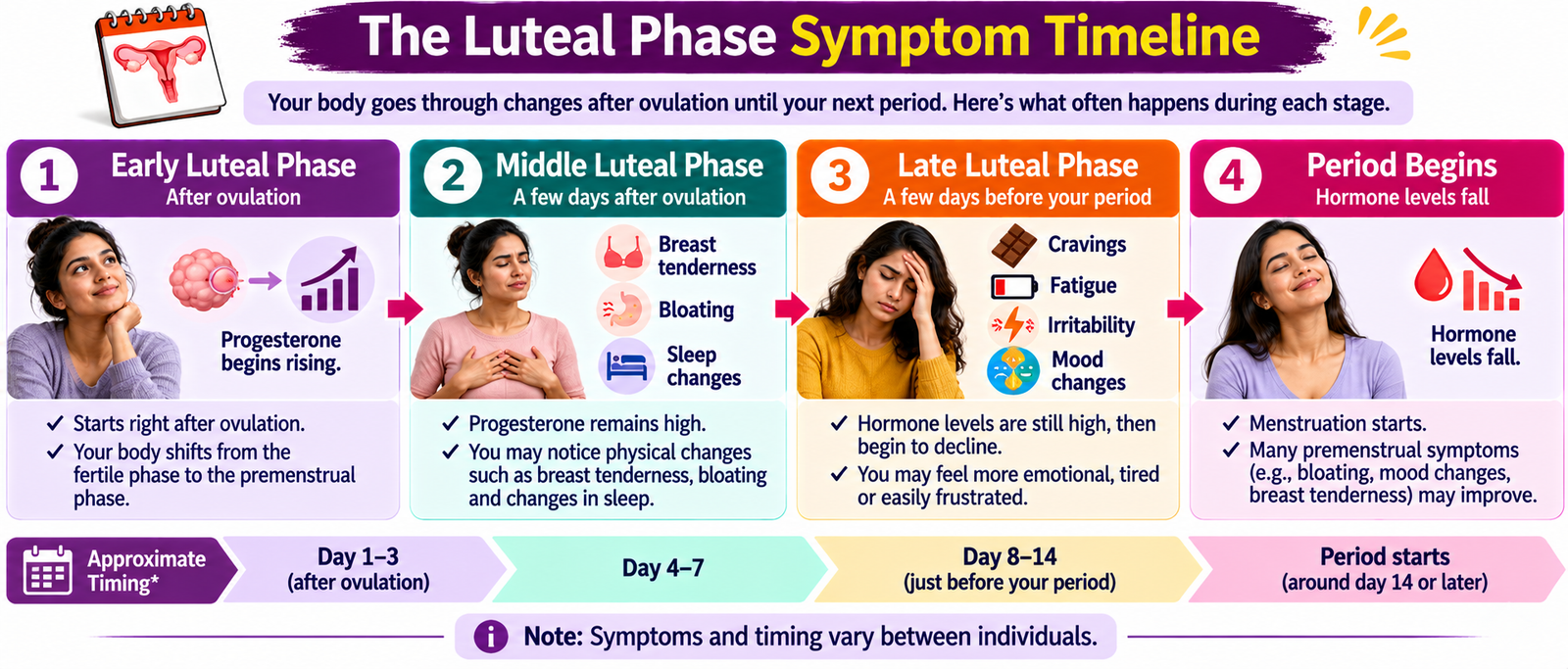
One of the most useful ways to understand your cycle is to look at symptom timing. A symptom that appears shortly after ovulation may have a different pattern from one that develops just before menstruation.
The following table is a general guide, not a medical timetable. Ovulation dates and luteal phase lengths vary, and not everyone experiences symptoms at each stage.
| Stage | What may be happening? | Possible symptoms |
|---|---|---|
| Early luteal phase | Progesterone begins rising after ovulation. | Higher waking temperature; some people notice breast sensitivity or changes in appetite. |
| Middle luteal phase | Progesterone is often higher | Possible bloating, breast tenderness, sleep or digestive changes |
| Late luteal phase | Hormone levels fall if pregnancy has not occurred. | Some people notice mood changes, headaches, cravings, fatigue, or increased premenstrual discomfort. |
| Menstruation begins. | The uterine lining starts shedding. | Premenstrual symptoms may ease, although cramps and bleeding-related symptoms can begin. |
A useful way to read your own pattern
Instead of asking, “Which day should this symptom happen?” ask:
- Does it appear after suspected ovulation?
- Does it become stronger as my period approaches?
- Does it improve after bleeding starts?
- Does it happen in a similar way in the next cycle?
This approach is more useful than comparing your symptoms with another person’s calendar. Your own repeated pattern is the information that matters.
Why Do Appetite, Sleep, and Energy Change After Ovulation?
These three areas deserve attention because they can influence one another.
Appetite and cravings
Changes in appetite may occur during the luteal phase, although the size and direction of the change differ between individuals. Some people feel hungrier, while others notice little difference.
A restrictive eating pattern can make cravings and fatigue harder to manage. If you are hungry, eating a balanced meal or snack is usually more practical than trying to ignore the feeling.
Sleep and body temperature
Progesterone can raise core body temperature after ovulation. Research reviews have described changes in temperature regulation and sleep across the menstrual cycle. The review on the menstrual cycle and sleep discusses how hormonal changes may influence temperature rhythms and sleep-related processes.
A cooler sleeping environment may improve comfort, particularly if you notice feeling warmer at night.
Energy and daily workload
Low energy may be influenced by sleep quality, pain, mood, and eating patterns. Rather than planning every day around an assumed hormonal timetable, use your actual energy levels to guide activity.
For example, if you slept poorly, a shorter walk or lighter workout may be more realistic than forcing a demanding session.
PMS vs PMDD vs Premenstrual Exacerbation: What Is the Difference?
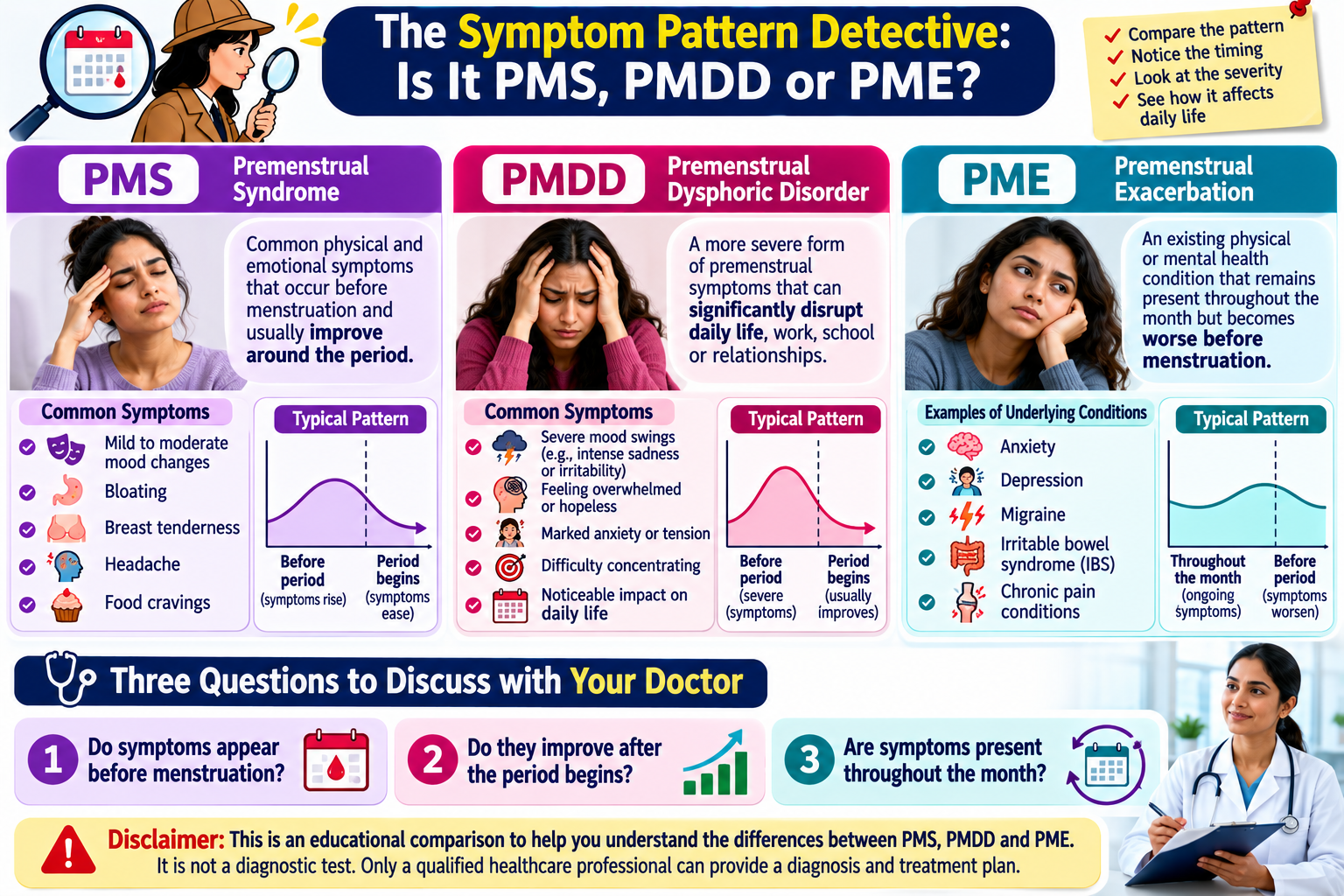
Not all luteal phase symptoms are PMS. Some people experience more severe symptoms that may meet the criteria for PMDD. Others have an existing health or mental health condition that becomes worse before menstruation.
Understanding these differences can help people seek the right support.
| Pattern | What it means | Important feature |
|---|---|---|
| Ordinary premenstrual changes | Mild physical or emotional changes before menstruation | Usually manageable and do not significantly disrupt daily life |
| PMS | A recurring group of physical or emotional symptoms linked to the premenstrual phase | Symptoms cause noticeable distress or interfere with normal activities. |
| PMDD | A more severe premenstrual disorder involving significant mood and other symptoms | Can seriously affect relationships, work, school, or daily functioning |
| Premenstrual exacerbation (PME) | An existing condition becomes worse before menstruation. | Symptoms may also be present during the rest of the cycle. |
What is PMS?
Premenstrual syndrome involves recurring physical or emotional symptoms that occur before menstruation and improve around or shortly after the start of bleeding.
Symptoms may include bloating, breast tenderness, headaches, irritability, anxiety, and fatigue.
The ACOG PMS information page explains how symptom timing and daily records help clinicians assess the condition.
What is PMDD?
Premenstrual dysphoric disorder is a more severe condition that can involve intense irritability, depression, anxiety, mood changes, and physical symptoms.
PMDD is not simply a stronger version of ordinary moodiness. It can significantly affect a person’s ability to function.
If you experience severe depression, hopelessness, or thoughts of self-harm, seek urgent help. If you may act on thoughts of harming yourself, contact emergency services or go to the nearest emergency department.
The ACOG clinical practice guideline outlines evidence-based approaches to managing premenstrual disorders.
What is premenstrual exacerbation?
Premenstrual exacerbation occurs when an existing condition becomes worse during the premenstrual phase.
For example, someone with depression, anxiety, or migraine may experience symptoms throughout the month, with an additional increase before menstruation.
This distinction matters. If symptoms never fully improve after your period begins, a clinician may need to investigate an ongoing condition rather than assuming the problem is PMS or PMDD.
How to Manage Luteal Phase Symptoms Naturally: 10 Practical Steps
Lifestyle adjustments may help some people manage mild symptoms. They are not guaranteed treatments, and they should not replace medical care when symptoms are severe.
1. Build a regular meal routine.
Long gaps between meals may make hunger and energy changes harder to manage.
Try eating balanced meals at reasonably consistent times. Include protein, fiber-rich carbohydrates, vegetables or fruit, and healthy fats.
You do not need a special luteal phase diet. A varied eating pattern that meets your nutritional needs is a sensible starting point.
2. Keep a convenient snack ready.
If you regularly experience hunger before menstruation, prepare a few easy options.
Examples include
- Fruit with unsweetened yogurt
- Roasted chickpeas
- Nuts and fruit
- Whole-grain toast with peanut butter
- A boiled egg with vegetables
The aim is to make satisfying food accessible, not to control every craving.
3. Adjust your bedroom temperature.
If you feel warmer at night after ovulation, try lighter sleepwear, breathable bedding, or a cooler room.
This simple adjustment may improve comfort. It does not treat the hormonal cause of symptoms.
4. Choose a movement that matches your energy.
Walking, gentle cycling, stretching, and yoga may help maintain routine and support general well-being.
You do not need to push through exhaustion or pain. Adjust intensity according to how you feel.
5. Protect your sleep schedule
Try to wake up and go to bed at consistent times. Reduce late-night screen use if it delays sleep, and make your bedroom comfortable.
If sleep problems continue or significantly affect daytime functioning, seek medical advice.
6. Notice your caffeine response.
Caffeine affects people differently. Some notice increased anxiety, palpitations, or difficulty sleeping after consuming it.
If you suspect caffeine makes your symptoms worse, record the amount and timing. You can discuss a gradual reduction with a healthcare professional if needed.
7. Reduce avoidable stress where possible
You cannot eliminate every stressful event, but you may be able to make your routine more manageable.
Try breaking large tasks into smaller steps, taking short breaks, and planning demanding activities around your actual energy levels.
Breathing exercises or mindfulness may help some people feel calmer. They are supportive practices, not cures for PMDD or severe anxiety.
8. Keep hydration consistent.
Drink water regularly rather than waiting until you feel very thirsty. If you notice bloating, also record your salt intake and eating habits.
Do not severely restrict water to reduce swelling. Dehydration can cause additional problems.
9. Use a simple symptom diary.
A diary can help you identify patterns that are difficult to remember later.
Record symptoms, their severity, sleep, appetite, stress, and the first day of menstrual bleeding. A practical tracker appears below.
10. Ask for medical support when symptoms affect daily life.
You do not have to wait until symptoms become unbearable. If they repeatedly affect work, relationships, sleep, or emotional well-being, discuss them with a doctor or gynecologist.
Treatment may include psychological support, medication, hormonal options, or lifestyle measures, depending on the diagnosis and your individual circumstances.
The RCOG guidance on managing PMS describes several treatment options and the importance of reviewing symptom patterns.
A Practical Two-Cycle Luteal Phase Symptom Tracker
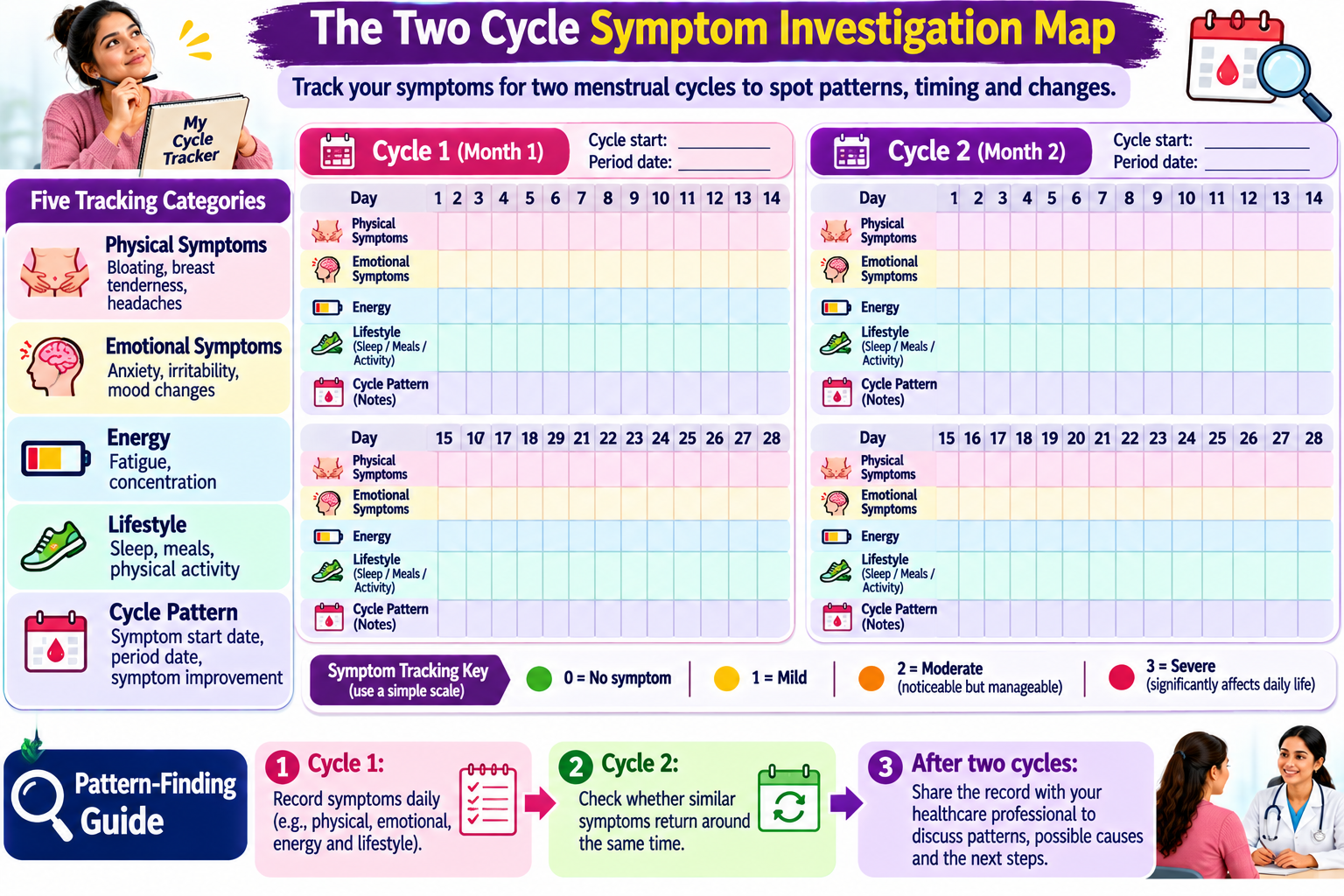
This is one of the most useful steps readers can take before an appointment. Instead of relying on memory, record symptoms every day for at least two complete menstrual cycles.
Clinical guidance recommends prospective symptom recording because it helps identify whether symptoms repeatedly occur before menstruation and improve afterwards. The ACOG guideline discusses daily symptom ratings over consecutive cycles.
How to use the tracker
Rate each symptom from 0 to 3:
- 0: No symptom
- 1: Mild; noticeable but does not affect normal activities
- 2: Moderate; makes some activities harder
- 3: Severe; significantly interferes with daily life
| What to record | Daily entry |
|---|---|
| Date and cycle day | Record the date and day of your cycle. |
| Bleeding | None, light, moderate, or heavy |
| Bloating | 0–3 |
| Breast tenderness | 0–3 |
| Headache | 0–3 |
| Fatigue | 0–3 |
| Mood changes | 0–3 |
| Anxiety or irritability | 0–3 |
| Appetite or cravings | 0–3 |
| Sleep quality | Good, fair, or poor? |
| Daily impact | No impact, some impact, or major impact |
Add three details that make your diary more useful.
1. Record when symptoms begin.
Do not write only that you felt bloated or anxious. Record the date and whether the symptom appeared before or after suspected ovulation.
2. Record when symptoms improve.
Note whether they settle when your period begins, a few days later, or not at all.
3. Record the effect on daily life.
Write down whether you missed work, avoided social activities, struggled to sleep or found it difficult to complete normal responsibilities.
What can you learn after two cycles?
Compare the two records. Look for symptoms that appear at a similar point in both cycles and improve around menstruation.
For example, you may notice that breast tenderness appears several days before your period, while fatigue begins earlier. Another person may experience mood changes that continue beyond the start of bleeding.
The diary does not diagnose PMS or PMDD. It gives your clinician clearer information to assess the pattern. The RCOG patient guidance also recommends keeping a symptom diary across two cycles.
Common Mistakes People Make When Tracking or Managing Symptoms
Mistake 1: Assuming every symptom is hormonal
Headaches, fatigue, anxiety, and digestive problems can have many causes. A menstrual pattern may be relevant, but it should not prevent you from investigating other explanations.
Mistake 2: Comparing your cycle with someone else’s
One person may have no noticeable symptoms, while another experiences significant discomfort. Their experiences do not establish what is normal for you.
Track your own pattern rather than copying another person’s routine.
Mistake 3: Treating every craving as a problem
Food cravings do not automatically mean you lack willpower or have a nutritional deficiency. Restricting food unnecessarily may make hunger more difficult to manage.
Mistake 4: Starting several supplements at once
Supplements marketed for PMS may have different levels of evidence and may interact with medication. Starting multiple products makes it harder to identify what is helping or causing side effects.
Discuss supplements with a qualified healthcare professional, especially if you are pregnant, trying to conceive, breastfeeding, or taking regular medication.
Mistake 5: Using a period-tracking app as a diagnosis
Apps estimate cycle dates using the information entered. They cannot confirm ovulation, diagnose PMDD, or explain the cause of a symptom.
Use an app as a record-keeping tool, not as a replacement for clinical assessment.
Mistake 6: Ignoring severe emotional symptoms
Severe depression, panic, hopelessness, or thoughts of self-harm should never be dismissed as ordinary PMS.
Seek prompt professional help. Severe symptoms deserve attention even when they follow a monthly pattern.
Latest Research Developments: What New Evidence Says
Research into menstrual-cycle-related symptoms is moving beyond the idea that every person responds to hormones in the same way. Current work increasingly examines individual sensitivity, symptom timing, and the relationship between menstrual cycles and mental health.
1. A 2026 clinical overview highlights the importance of cycle-based assessment.
A 2026 review in the British Journal of Clinical Psychology examined evidence and clinical guidance for menstrual-cycle-informed care.
The authors highlighted the value of tracking symptoms daily across at least two cycles. They also discussed how PMDD and premenstrual exacerbation can affect mental health and why clinicians should consider the timing of symptoms when assessing patients.
The review reported that PMDD affects a minority of menstruating individuals and that premenstrual worsening of existing mood disorders may be more common in some clinical populations. These estimates should not be interpreted as applying equally to every population.
Read the 2026 review on menstrual-cycle-informed clinical care.
2. A 2026 JAMA article summarizes updated premenstrual disorder guidance.
A February 2026 JAMA clinical guidelines synopsis discussed the ACOG recommendations for managing premenstrual disorders.
It describes the range of symptoms that may occur during the luteal phase, including mood changes, fatigue, appetite changes, sleep disturbances, and physical discomfort. It also explains that daily symptom assessment across at least two consecutive cycles can help clinicians evaluate the pattern.
Read the 2026 JAMA synopsis of the ACOG guideline.
3. Research continues to examine sleep and body temperature.
Studies have described a rise in core body temperature after ovulation, partly associated with progesterone. Researchers are also examining how temperature rhythms and other cycle-related changes may relate to sleep.
The evidence does not mean that everyone will sleep poorly during the luteal phase. It does, however, provide a biological reason to investigate changes in nighttime comfort and sleep quality.
Read the research review on menstrual-cycle temperature regulation and the review on the menstrual cycle and sleep.
What does this research mean for readers?
The most practical message is to look for a repeated pattern rather than assuming that a particular symptom must occur on a specific cycle day.
Recording symptoms, sleep, appetite, and their effect on daily life can help you describe your experience more clearly during a medical appointment. Research is still developing, and lifestyle adjustments should not be presented as proven treatments for severe PMS or PMDD.
When Should You See a Doctor About Luteal Phase Symptoms?
Mild symptoms that settle around menstruation may not require medical treatment. However, recurring or severe symptoms deserve attention.
Arrange a medical appointment if:
- Symptoms regularly interfere with work, school, or relationships.
- Mood changes become intense or difficult to control.
- Anxiety or depression appears repeatedly before menstruation.
- Headaches or pelvic pain become severe.
- Fatigue continues throughout the month.
- Bloating or digestive changes are persistent or worsening.
- Your periods become unusually heavy, irregular, or painful.
- Symptoms do not improve after menstruation begins.
Seek urgent help if you experience thoughts of self-harm, severe emotional distress, sudden severe pain, fainting, or other emergency symptoms.
A clinician may review your menstrual history, symptom diary, medication use, and general health. Depending on your symptoms, they may assess other conditions that can resemble or overlap with PMS.
There is no single blood test that confirms PMS. The Mayo Clinic explanation of PMS diagnosis explains why a symptom diary and assessment for other conditions can be important.
Frequently Asked Questions About Luteal Phase Symptoms
1. What are the most common luteal phase symptoms?
Common symptoms include bloating, breast tenderness, fatigue, headaches, food cravings, sleep changes, irritability, mood swings, and anxiety. Not everyone experiences these changes, and their severity can differ from one cycle to another.
2. How long do luteal phase symptoms last?
The luteal phase begins after ovulation and ends when the next period starts. Symptoms may appear during part of this phase or become more noticeable closer to menstruation. Their duration varies between individuals.
3. Why do I feel tired during the luteal phase?
Fatigue may be related to sleep disruption, physical discomfort, mood changes, and individual responses to hormonal fluctuations. Persistent tiredness should be assessed because anemia, thyroid conditions, sleep disorders, and other health problems can also cause fatigue.
4. Why do I feel hungry all the time before my period?
Appetite and food preferences may change during the menstrual cycle. Some people notice stronger cravings or increased hunger before menstruation. Eating regular, satisfying meals may help you manage these changes without unnecessary restriction.
5. Is bloating normal during the luteal phase?
Bloating is a commonly reported premenstrual symptom. However, severe, persistent, or unusual abdominal swelling should not automatically be attributed to your cycle. Seek medical advice if it is accompanied by significant pain or other concerning symptoms.
6. Can the luteal phase affect sleep?
Some people notice changes in sleep quality after ovulation. Progesterone is associated with a rise in core body temperature during the luteal phase, which may influence nighttime comfort. Sleep problems can also be related to anxiety, pain and other factors.
7. What causes mood swings after ovulation?
Changing reproductive hormone levels may influence brain signalling in people who are sensitive to those changes. Sleep disruption, stress, and existing mental health conditions may also contribute. Severe or recurring mood symptoms deserve professional assessment.
8. What is the difference between PMS and PMDD?
PMS involves recurring physical or emotional symptoms before menstruation that can cause distress or interfere with daily activities. PMDD is a more severe premenstrual disorder that can involve significant mood symptoms and substantial disruption to everyday life.
9. Can exercise help manage luteal phase symptoms?
Regular physical activity may support general health, mood, and sleep. Some people find walking, cycling, or gentle yoga comfortable during the luteal phase. Exercise is not a guaranteed treatment for PMS or PMDD, and activity should be adjusted if it causes pain or excessive fatigue.
10. How can I track luteal phase symptoms accurately?
Record symptoms every day, including days when you feel well. Note their severity, menstrual dates, sleep quality, and impact on daily activities. Continue for at least two cycles and share the record with your healthcare professional if symptoms are troublesome.
11. Do all women experience luteal phase symptoms?
No. Some people experience noticeable physical or emotional changes, while others have few or no symptoms. There is no requirement to experience PMS symptoms for a menstrual cycle to be normal.
12. When should I worry about symptoms before my period?
Seek medical advice if symptoms are severe, repeatedly disrupt daily life, or continue after menstruation begins or are becoming worse. Severe depression or thoughts of self-harm require urgent support.
Conclusion: Understand Your Pattern Instead of Guessing
Luteal phase symptoms can affect the body, mood, appetite, sleep, and daily energy after ovulation. Bloating, breast tenderness, fatigue, headaches, cravings, and emotional changes are among the symptoms some people notice before menstruation.
However, there is no single symptom pattern that applies to everyone. Your experience may also change from one cycle to another.
The most useful first step is to record what happens throughout the month. Track when symptoms begin, how severe they become, whether they affect your routine, and when they improve. Comparing at least two cycles can give you and your healthcare professional a clearer picture.
Remember that severe symptoms are not something you must simply tolerate. PMS and PMDD can be assessed, and effective treatment options are available. If symptoms interfere with your quality of life, speak with a qualified healthcare professional.
Understanding your menstrual cycle is not about predicting every uncomfortable day. It is about recognizing patterns, responding to your body’s needs, and knowing when to seek support.
Sources and References
The following medical and research sources support the information discussed in this article. Readers can open the original resources for further details.
- American College of Obstetricians and Gynecologists (ACOG) — Premenstrual Syndrome (PMS). Overview of symptoms, diagnosis, and symptom tracking. Read the ACOG guide.
- ACOG — Management of Premenstrual Disorders: Clinical Practice Guideline No. 7. Clinical guidance on assessment and treatment options for PMS and PMDD. Read the clinical guideline.
- JAMA — Synopsis of ACOG Guideline on Management of Premenstrual Disorders (2026). A clinical summary of the guideline and relevant premenstrual symptoms. Read the JAMA article.
- Royal College of Obstetricians and Gynaecologists (RCOG) — Managing Premenstrual Syndrome (PMS). Patient guidance on symptom recording and available management options. Read the RCOG guide.
- NHS — Premenstrual Syndrome (PMS). Information about symptoms, possible causes, and when to seek medical advice. Read the NHS guide.
- British Journal of Clinical Psychology (2026)—Gold-standard Evidence and Best Practice Guidance for Menstrual Cycle-informed Clinical Care. Review of cycle-based assessment and clinical approaches to PMDD and premenstrual exacerbation. Read the research review.
- Fuller et al. — Temperature Regulation in Women: Effects of the Menstrual Cycle. Review of menstrual-cycle-related changes in core body temperature. Read the research article.
- The Menstrual Cycle and Sleep. Research review discussing menstrual-cycle-related changes in sleep and circadian rhythms. Read the review.
- Mayo Clinic — Premenstrual Syndrome: Diagnosis and Treatment. Explains symptom diaries and the assessment of conditions that may resemble PMS. Read the Mayo Clinic guide.
- Cleveland Clinic — Menstrual Cycle. General explanation of the stages of the menstrual cycle. Read the Cleveland Clinic guide.
Author’s Note
This article is intended to help readers understand common changes that may occur after ovulation and before menstruation. Menstrual experiences differ from person to person. The symptom tracker and practical suggestions are educational tools, not diagnostic methods. The article uses published medical guidance and research to explain the topic in accessible language.
Medical Disclaimer
This article is for general educational and informational purposes only. It does not replace professional medical advice, diagnosis, or treatment. Luteal phase symptoms can overlap with other medical and mental health conditions. Do not self-diagnose PMS, PMDD, or a hormonal disorder based on this article. Consult a qualified healthcare professional if symptoms are severe or persistent or interfere with daily life. Seek urgent support for severe emotional distress or thoughts of self-harm.
Fitness Disclaimer
The walking, stretching, yoga, and other physical activity suggestions in this article are general wellness recommendations. They are not a treatment or guaranteed remedy for luteal phase symptoms, PMS, or PMDD. Choose activities that suit your fitness level and comfort. Reduce or stop exercise if it causes pain, dizziness, unusual breathlessness, or worsening symptoms. If you have a medical condition, significant pelvic pain, or concerns about exercising, seek advice from a qualified healthcare professional before changing your activity routine.
You also like this content from this blog
- 10 Severe Depression Warning Signs
- 10 Causes of Low Blood Pressure
- Pregnancy Confirmation Early Symptoms
- How to Improve Your Mood with Healthy Habits: A Comprehensive Guide
- Best 7 Health Benefits Of Exercise