










































































































How to Lower Your Cancer Risk: 15 Evidence-Based Strategies That Fit Real Life
Author: RVLNSV PRASAD
Updated: September 5, 2026
About Us | Author Biography | Editorial Policy | Contact Us
Author Note
I’m RVLNSV PRASAD, the author of this article for HealthTipsToYou. I write health-focused content with an emphasis on practical, easy-to-understand information that readers can use in everyday life.
For this article, I reviewed information from recognized medical and public health sources, including the National Cancer Institute (NCI), Centers for Disease Control and Prevention (CDC), World Health Organization (WHO), and International Agency for Research on Cancer (IARC). The recommendations in this article are based on established evidence rather than personal opinions or promises of preventing cancer.
I also believe cancer prevention should be approached realistically. People cannot control every cancer risk, including age, genetics, and family history. The goal is to focus on the risk factors and health behaviors that can be influenced while discussing screening, vaccination, and professional medical care when appropriate.
My personal observations and experiences included in this article are clearly identified as personal perspectives and should not be interpreted as medical evidence or professional medical advice.
Editorial note: This article is educational and has been reviewed for clarity, accuracy, source transparency, and responsible health communication. It is not a substitute for individualized advice from a qualified healthcare professional.
Introduction
How to lower your cancer risk is not a question with one simple answer.
Cancer is not caused by one food, one habit, or one mistake. Different cancers have different causes, and a person’s risk can be influenced by age, genetics, infections, tobacco, alcohol, body weight, physical activity, diet, ultraviolet radiation, and certain environmental or occupational exposures.
That is why cancer prevention advice should not make people feel that they must control every part of their lives perfectly.
A more useful question is
Which changes have the strongest evidence, and which ones are realistic enough to maintain for years?
That is the approach used in this article.
Why Cancer Prevention Matters
The latest global evidence also shows why prevention matters. A 2026 analysis from the International Agency for Research on Cancer (IARC), part of the World Health Organization, estimated that approximately 37% of new cancer cases worldwide in 2022—about 7.1 million cases—were linked to preventable causes.
The researchers assessed a broad range of modifiable factors, including tobacco, infections, alcohol, excess body weight, physical inactivity, ultraviolet radiation, and occupational exposures.
That statistic does not mean that 37% of all cancers can be individually prevented by making a few lifestyle changes.
It means that prevention has enormous potential at a population level.
For an individual, the goal is more modest and more realistic:
Reduce avoidable risk where you can, use appropriate preventive healthcare, and avoid wasting time or money on unproven promises.
Making Cancer Prevention Practical
I have personally found that health advice becomes easier to follow when it is broken into small, repeatable actions rather than treated as an all-or-nothing lifestyle change. For example, a short quiet walk can feel much more achievable than telling yourself that you must suddenly become extremely fit.
That personal observation is one reason I have emphasized practical habits throughout this article.
I am not a doctor or oncologist, and this article does not replace professional medical advice. My aim is to explain reliable evidence in straightforward language and help readers identify the prevention steps that deserve the most attention.
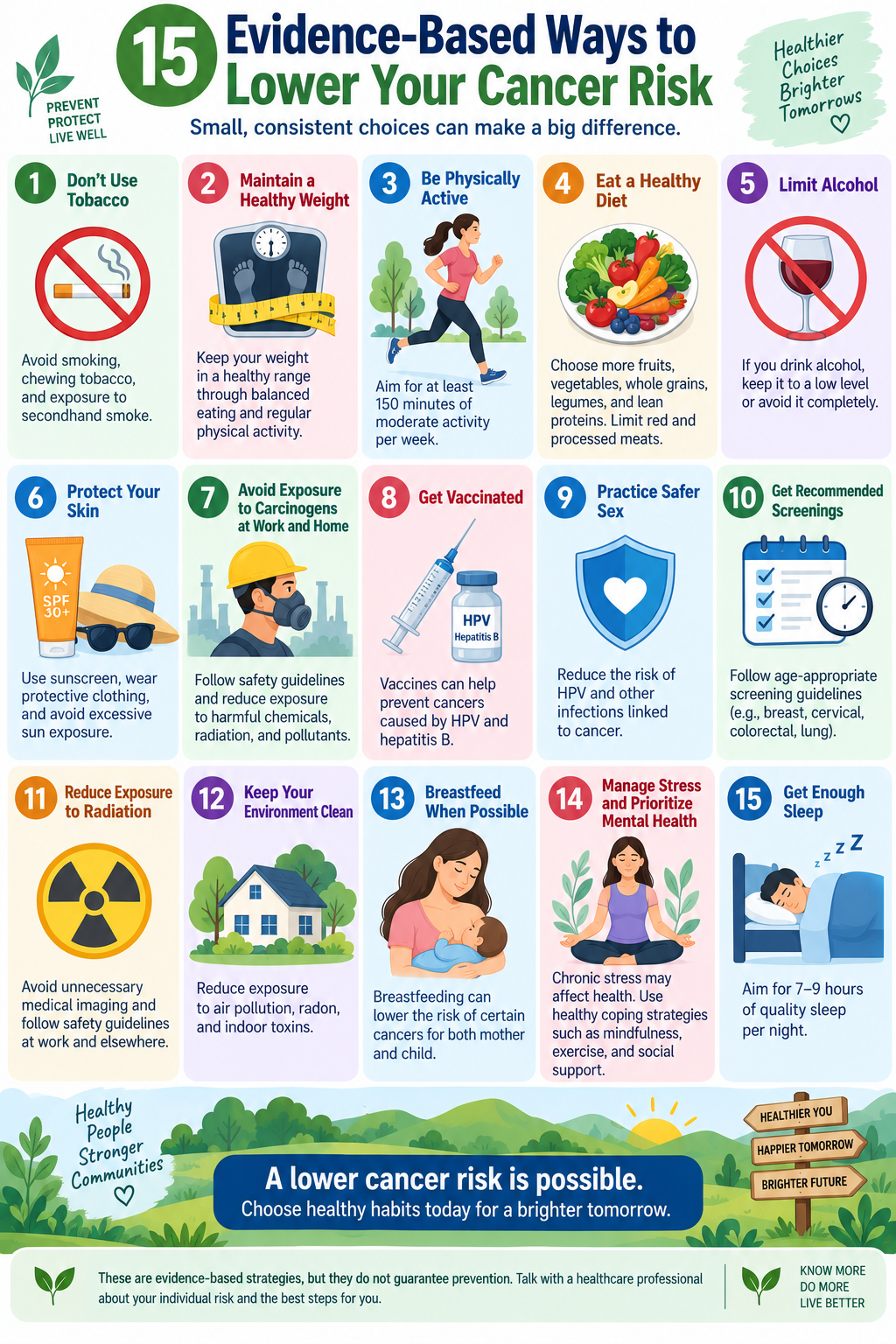
Quick Answer: How Can You Lower Your Cancer Risk?
You can lower your risk of some cancers by reducing established risk factors and following evidence-based prevention strategies.
The most important areas include
- Avoiding tobacco.
- Avoiding secondhand smoke.
- Limiting alcohol or choosing not to drink.
- Maintaining a healthy body weight.
- Staying physically active.
- Eating a healthy overall dietary pattern.
- Limiting processed meat.
- Protecting your skin from excessive ultraviolet radiation.
- Getting recommended cancer screening.
- Staying appropriately vaccinated against cancer-causing infections.
- Understanding your family cancer history.
- Reducing relevant occupational and environmental exposures.
- Avoiding unproven “cancer prevention” supplements and detox products.
The CDC identifies tobacco, alcohol, obesity, physical inactivity, and certain infections among established cancer-related risk factors, while screening and vaccination can provide additional prevention or early-detection opportunities. CDC: Risk Factor-Associated Cancers
The important qualification is that lowering risk does not guarantee that cancer will not develop.
Key Takeaways
- Tobacco avoidance is one of the highest-value cancer-prevention actions.
- Alcohol increases the risk of several cancers.
- Regular physical activity is an important part of a healthy lifestyle.
- Healthy weight management can reduce risk for several cancers.
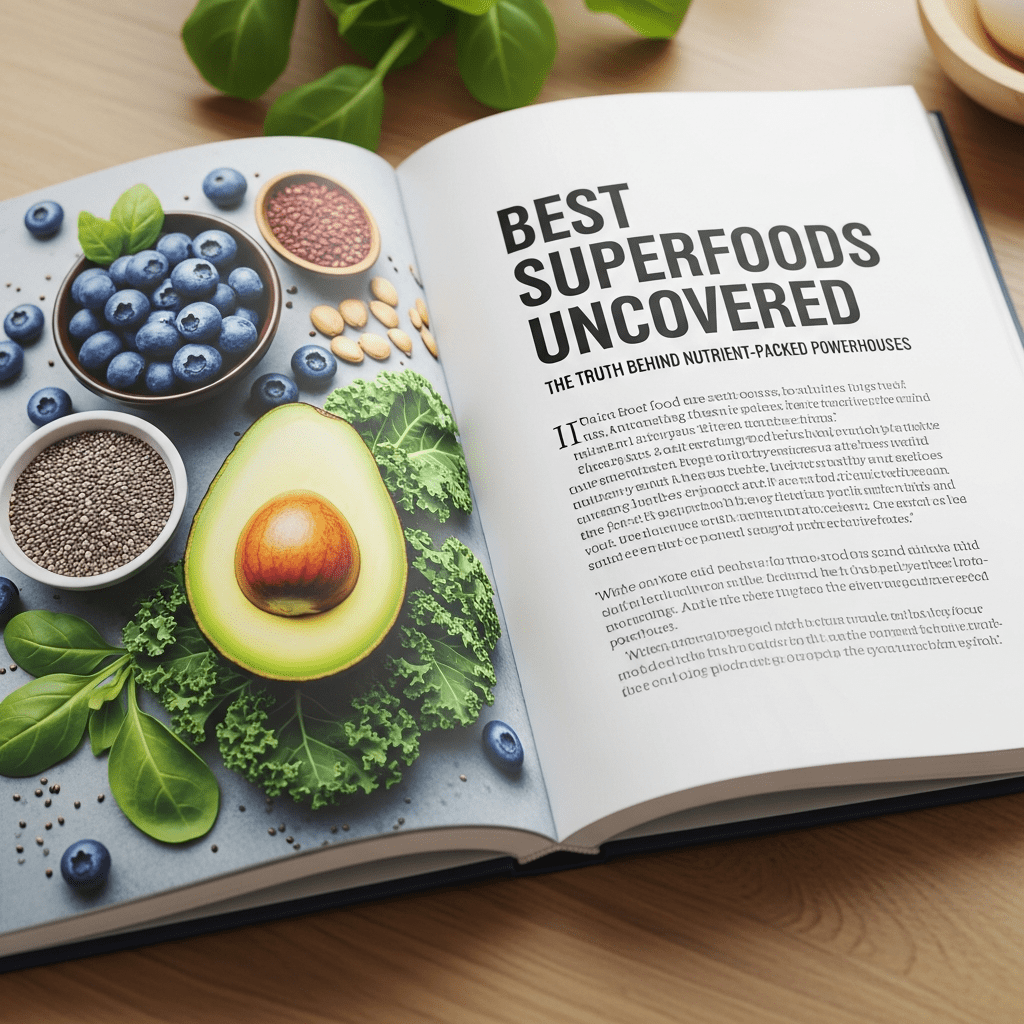
- Overall dietary pattern matters more than individual “superfoods.”
- Processed meat has a well-established association with colorectal cancer.
- UV protection can reduce exposure to a major cause of skin cancer.
- Vaccination can prevent some cancer-causing infections.
- Screening recommendations depend on the person and the cancer type.
- Family history can identify people who may need individualized risk assessment.
- Not every cancer can be prevented.
- “Natural” does not automatically mean effective.
- Prevention should reduce fear, not create it.
Cancer-Risk Reduction: What Matters Most?
| Strategy | Evidence | Why it matters | Practical first step |
|---|---|---|---|
| Avoid tobacco. | Very strong | Tobacco is a major preventable cancer risk. | Quit or seek cessation support. |
| Reduce alcohol. | Very strong | Alcohol causes or contributes to several cancers. | Drink less or avoid alcohol. |
| Maintain a healthy weight. | Strong | Excess body weight is associated with multiple cancers. | Make gradual, sustainable changes. |
| Stay physically active. | Strong | Activity is associated with a lower risk of several cancers. | Walk or exercise regularly. |
| Healthy dietary pattern | Strong | Overall diet influences several cancer-related risk factors. | Eat more plant foods and whole grains |
| UV protection | Strong | UV radiation causes skin cancer. | Use shade, clothing, and sunscreen. |
| Vaccination | Strong for specific infections | HPV and hepatitis B can contribute to cancer. | Follow appropriate vaccination guidance. |
| Recommended screening | Strong for selected cancers | Can detect some cancers early or prevent some cancers | Follow age- and risk-based guidance. |
| Family-history assessment | Important for selected people | Can identify inherited risk | Record family cancer history |
| Exposure reduction | Depends on exposure | Some workplace/environmental exposures increase risk. | Address known exposures |
1. Avoid Tobacco: Put This Near the Top of Your Prevention List
If you are wondering how to lower your cancer risk, tobacco deserves immediate attention.
Smoking is associated with many cancers, including cancers of the lung, mouth, throat, esophagus, pancreas, bladder, kidney, and several other organs. Tobacco exposure remains one of the most important preventable causes of cancer. CDC: Healthy Choices for Cancer Prevention
The benefit is not limited to people who have smoked for only a few years.
Quitting smoking can reduce cancer risk compared with continuing to smoke. NCI explains that stopping smoking has important health benefits at any age. NCI: Harms of Cigarette Smoking and Health Benefits of Quitting
If you smoke, consider practical support rather than relying only on willpower.
You can:
- Set a quit date.
- Identify situations that trigger smoking.
- Tell supportive people about your goal.
- Discuss cessation medication with a healthcare professional.
- Use evidence-based counseling or quit-support services.
- Treat a relapse as a reason to adjust your strategy, not as proof that quitting is impossible.
If you do not smoke, one of the best prevention decisions is simply not to start.
2. Reduce Secondhand Smoke Exposure
Cancer prevention is not only about what you personally consume.
Secondhand tobacco smoke can also expose nonsmokers to harmful substances. CDC identifies secondhand smoke as a cause of lung cancer. CDC: Health Effects of Cigarette Smoking and Tobacco Products
A smoke-free home and vehicle are practical ways to reduce exposure.
If someone close to you smokes, supporting their attempt to quit can protect their health and reduce exposure for others.
This is especially important around children and other people who may have little control over their environment.
3. Treat Alcohol as a Cancer Risk Factor
Alcohol is often discussed as a social or lifestyle issue.
For cancer prevention, it is also a recognized risk factor.
Current CDC guidance states that drinking alcohol increases cancer risk and that drinking less can reduce that risk. Importantly, the type of alcoholic drink does not remove the cancer concern: beer, wine, and spirits all contain alcohol. CDC: Alcohol and Cancer
NCI also reports that the risk of several cancers increases with alcohol consumption, with higher consumption generally associated with greater risk. NCI: Alcohol and Cancer Risk Fact Sheet
Alcohol is associated with cancers, including:
- Mouth
- Throat
- Larynx
- Esophagus
- Liver
- Colorectal cancer
- Breast cancer
The message is not that one drink guarantees cancer.
The message is that alcohol exposure can increase risk.
Practical ways to reduce alcohol
Try:
- Alcohol-free days.
- Smaller servings.
- Alcohol-free alternatives at social events.
- Water between alcoholic drinks.
- Identifying situations where drinking has become automatic.
- Professional support if reducing alcohol is difficult.
For cancer prevention, less alcohol means less alcohol-related risk.
4. Work Toward a Healthy Body Weight
Body weight is sometimes discussed as though it were simply a matter of willpower.
Cancer prevention is more complicated.
NCI reports that higher weight and obesity are associated with an increased risk of several cancers, including colorectal, liver, kidney, pancreatic, and postmenopausal breast cancer, among others. NCI: Obesity and Cancer
That does not mean everyone needs to pursue rapid weight loss.
A more useful approach is sustainable weight management.
Focus on:
- Regular meals.
- Nutritious foods.
- Adequate physical activity.
- Reasonable portion sizes.
- Fewer excess calories from highly processed foods and sugary drinks.
- Habits that can be maintained.
Avoid turning cancer prevention into body shame.
A person’s cancer risk is influenced by many factors, and body weight is only one part of the picture.
5. Stay Physically Active
Physical activity is another important part of a cancer-risk reduction strategy.
NCI summarizes evidence linking physical activity with reduced risk of several cancers and continues to study the amount, intensity, and timing of activity associated with different cancer outcomes. NCI: Physical Activity and Cancer
You do not need a complicated gym routine.
Physical activity can include:
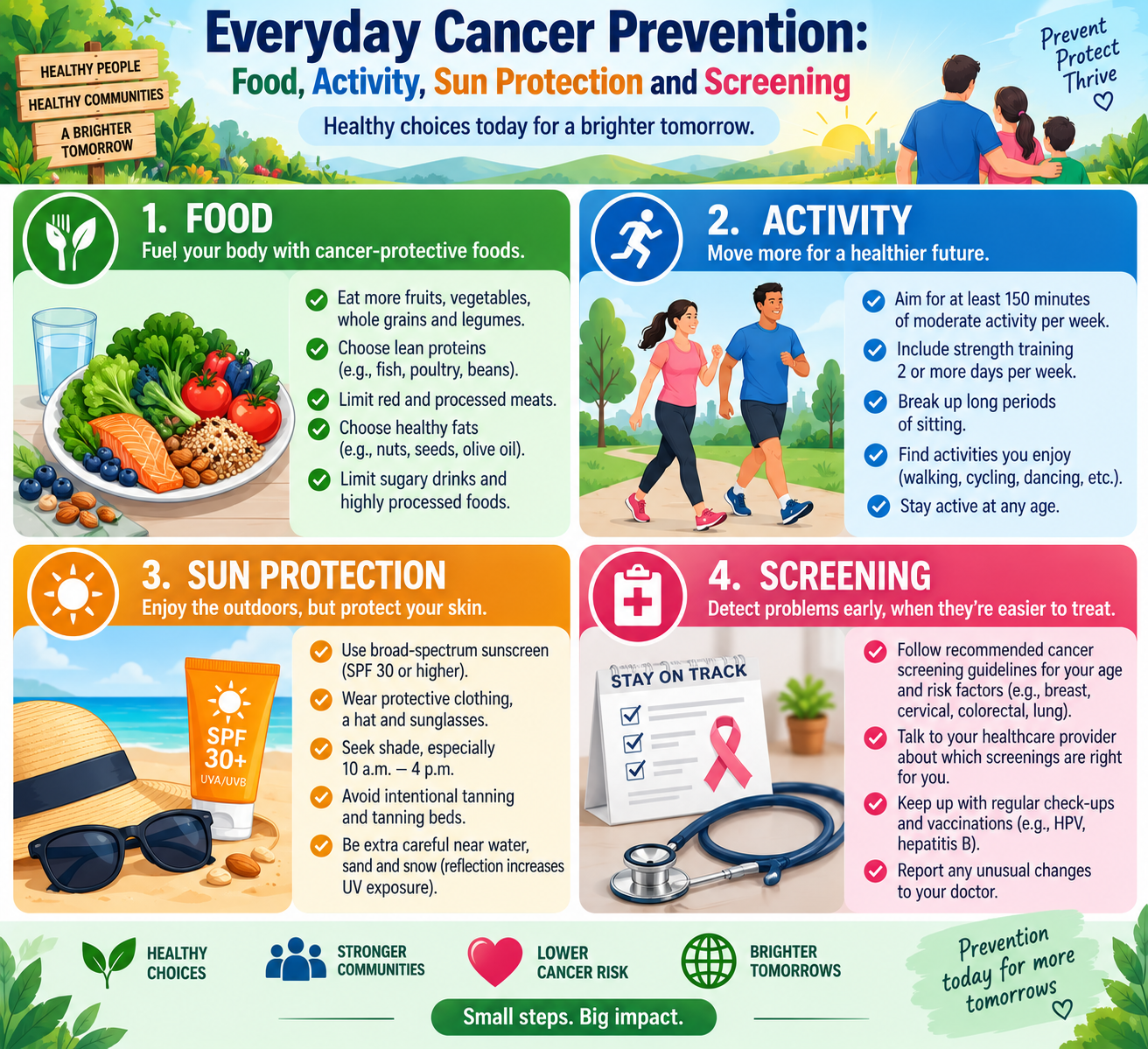
- Brisk walking
- Cycling
- Swimming
- Dancing
- Gardening
- Household activity
- Strength training
- Recreational sports
The CDC recommends that adults generally aim for at least 150 minutes of moderate-intensity physical activity per week or 75 minutes of vigorous activity, plus muscle-strengthening activity on at least two days each week. CDC: Physical Activity Guidelines for Adults
But do not let the recommendation become a reason to do nothing.
If you currently do very little activity, starting with regular walking can be a meaningful first step.
6. Build a Plant-Forward Dietary Pattern
There is no single “cancer-fighting food.”
That is an important point because online health information often turns cancer prevention into a search for one magical ingredient.
A better approach is to improve the overall dietary pattern.
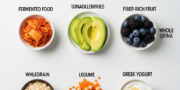
Include foods such as
- Vegetables
- Fruits
- Beans
- Lentils
- Chickpeas
- Whole grains
- Nuts
- Seeds
These foods can fit many different cultural diets.
For example, dal, chickpeas, beans, vegetables, whole grains, nuts, and fruit can all be part of a nutritious dietary pattern.
The goal is not to claim that any one of these foods prevents cancer.
It is to build a diet that supports overall health while reducing exposure to certain established dietary risk factors.
NCI recognizes diet as one of the lifestyle factors that can influence cancer risk. NCI: Cancer Prevention Overview
7. Limit Processed Meat
Processed meat deserves a separate discussion because the evidence is stronger than many readers realize.
IARC classifies processed meat as carcinogenic to humans, based on sufficient evidence that consuming processed meat causes colorectal cancer. IARC: Red Meat and Processed Meat
Examples include:
- Bacon
- Ham
- Sausages
- Hot dogs
- Some cured meats
- Meat preserved through curing, salting, or similar processes
This classification does not mean that eating processed meat guarantees cancer.
It means the scientific evidence supports a causal relationship with colorectal cancer.
A practical response is to reduce how often processed meat appears in your meals and choose other protein sources more often.
Everyday Food Choices: More Often vs. Less Often
| More often | Less often | Practical reason |
|---|---|---|
| Vegetables | Processed meat | Reduce exposure to an established dietary cancer risk. |
| Fruits | Sugary drinks | Helps manage excess calorie intake |
| Beans and lentils | Highly processed foods | Supports a nutritious dietary pattern |
| Whole grains | Excess-calorie foods | Helps build a healthier overall diet |
| Nuts and seeds | Excess alcohol | Alcohol increases cancer risk. |
| Water and unsweetened drinks | Frequent sugary beverages | Supports healthier beverage choices |
This is not a “perfect foods versus bad foods” system.
It is simply a way to shift your normal pattern in a healthier direction.
8. Protect Your Skin From Excessive UV Radiation
Ultraviolet radiation is a major environmental risk factor for skin cancer.
The CDC recommends protecting skin from excessive UV exposure, including by seeking shade, wearing protective clothing, and using sunscreen appropriately. CDC: Healthy Choices for Cancer Prevention
Protection is especially relevant when spending extended time outdoors.
Consider:
- Shade during intense sunlight.
- Protective clothing.
- A wide-brimmed hat.
- UV-protective sunglasses.
- Sunscreen.
- Avoiding indoor tanning.
Recent CDC research continues to emphasize that sunburn and UV exposure are established risk factors for skin cancer, including melanoma. CDC: Sunburn and Skin Cancer Risk
Sunscreen is useful, but it should be part of a broader sun-protection strategy.
9. Get Cancer Screening When It Is Appropriate for You
Screening is one of the areas where generic health advice can become misleading.
It is not accurate to tell everyone:
“Undergo every cancer test regularly.”
Screening depends on factors such as
- Age
- Sex
- Personal history
- Family history
- Smoking history
- Individual risk
- The cancer being considered
- Current screening recommendations
CDC currently recommends screening approaches for certain cancers, including colorectal, cervical, breast, and lung cancers, for eligible populations. CDC: Cancer Screening Tests
Screening can serve different purposes.
Some screening tests primarily help detect cancer earlier.
Others can identify abnormal or precancerous changes before invasive cancer develops.
For example, colorectal screening can identify precancerous polyps that may be removed. Cervical screening can identify abnormal cellular changes that may be treated before cervical cancer develops. CDC: Cancer Screening Tests
But not every cancer has an established routine screening test.
That is why individualized, guideline-based screening is better than buying or ordering random cancer tests.
10. Use Vaccination to Prevent Certain Cancer-Causing Infections
Cancer prevention is not only about lifestyle.
Some cancers are linked to infections that can be prevented.
HPV is a major example.
Persistent infection with high-risk HPV types can cause several cancers, including cervical cancer and some anal, penile, vaginal, vulvar, and/or oropharyngeal cancers. NCI Cancer Trends Progress Report: HPV Immunization
Vaccination against HPV can therefore contribute to cancer prevention.
Hepatitis B vaccination is another important example because chronic hepatitis B infection can contribute to liver cancer.
The CDC specifically identifies HPV and hepatitis B vaccination as measures that can help prevent cancer. CDC: Preventing Cancer
Talk with a qualified healthcare professional about which vaccines are appropriate for your age and circumstances.
11. Know Your Family Cancer History
You cannot choose your genes.
But you can learn about your family history.
NCI explains that a family history of certain cancers can indicate a possible inherited cancer syndrome. NCI: Risk Factors for Cancer
Pay particular attention to patterns such as:
- Several close relatives with related cancers.
- Cancer occurring at unusually young ages.
- Similar cancers have occurred across generations.
- One relative has developed multiple cancers.
- A known inherited cancer-related mutation in the family.
Write down:
- The type of cancer.
- Approximate age at diagnosis.
- Your relationship to the relative.
- Any other cancers they had.
If the pattern concerns you, discuss it with a qualified healthcare professional or genetic counselor.
Family history does not mean cancer is inevitable.
It means your prevention and screening plan may need to be more individualized.
12. Take Environmental and Occupational Exposures Seriously
Cancer risk does not come exclusively from personal choices.
Certain environmental and occupational exposures can also contribute to cancer.
NCI notes that environmental exposures, chemicals, and workplace substances can influence cancer risk. NCI: Cancer Prevention Overview
Depending on the circumstances, relevant exposures can include:
- Asbestos
- Certain workplace chemicals
- Tobacco smoke
- Radon
- Air pollution
- Ultraviolet radiation
- Certain contaminated substances
The correct response is not panic.
Instead, ask:
Is this exposure established as a cancer risk?
How much exposure am I receiving?
Can the exposure reasonably be reduced?
Workplace safety procedures and appropriate protective equipment can be particularly important for people whose jobs involve known carcinogens.
13. Be Skeptical of “Natural Cancer Prevention” Claims
Search online for cancer prevention, and you will quickly encounter claims about:
- Detox drinks
- Special juices
- Alkaline diets
- Herbal mixtures
- High-dose vitamins
- “Immune-boosting” powders
- Miracle foods
- Cancer-cleansing programs
The problem is not that every natural product is useless.
The problem is that the claim often goes much further than the evidence.
For example, a laboratory study showing that a compound affects cancer cells does not prove that consuming the compound prevents cancer in humans.
NCI’s discussion of antioxidants illustrates why biological mechanisms and actual cancer-prevention outcomes need to be distinguished. NCI: Antioxidants and Cancer Prevention
Before spending money on a cancer-prevention product, ask:
- Was it studied in humans?
- Was cancer itself measured as an outcome?
- Was the study large and well designed?
- Is the evidence observational or experimental?
- Has the finding been reproduced?
- Could the product interact with medication?
If a product promises to “detox cancer,” “kill cancer cells naturally” or guarantee prevention, be especially cautious.
14. Keep Sleep and Stress in Perspective
Sleep and stress are important to overall health.
But cancer prevention requires scientific precision.
It is too simplistic to tell readers:
“Stress causes cancer.”
Likewise, it would be misleading to present poor sleep as though it had the same established cancer-prevention evidence as avoiding tobacco.
Stress can affect behaviors such as eating, drinking, smoking, physical activity, and sleep.
That makes stress management useful.
Better sleep can also support healthier routines.
But these should be presented as supportive health behaviors, not replacements for established cancer-risk reduction strategies.
If stress is affecting your daily life, useful approaches may include:
- Regular walking.
- Relaxation practices.
- Consistent sleep routines.
- Time outdoors.
- Social connection.
- Professional mental health support when appropriate.
The goal is better overall health—not fear that every stressful day is causing cancer.
15. Turn Prevention Into a Routine You Can Actually Maintain
The strongest prevention plan is not necessarily the most complicated one.
It is the one you can maintain.
Instead of trying to change ten things tomorrow, start with a few high-value actions.
Start this week.
Choose several:
- Stop smoking or begin a quit attempt.
- Reduce alcohol.
- Walk regularly.
- Add vegetables or beans to meals.
- Reduce processed meat.
- Improve sun protection.
- Check whether you are due for an appropriate preventive visit.
Build over the next month.
Add:
- Regular strength training.
- More whole grains.
- More plant-based foods.
- A sustainable weight-management plan if appropriate.
- Better sleep habits.
- A written family cancer history.
Discuss with a healthcare professional.
Ask about:
- Age-appropriate screening.
- Vaccination.
- Family cancer history.
- Genetic counseling if indicated.
- Smoking cessation.
- Personal risk factors.
- Relevant occupational or environmental exposures.
This approach makes prevention a routine rather than a temporary project.
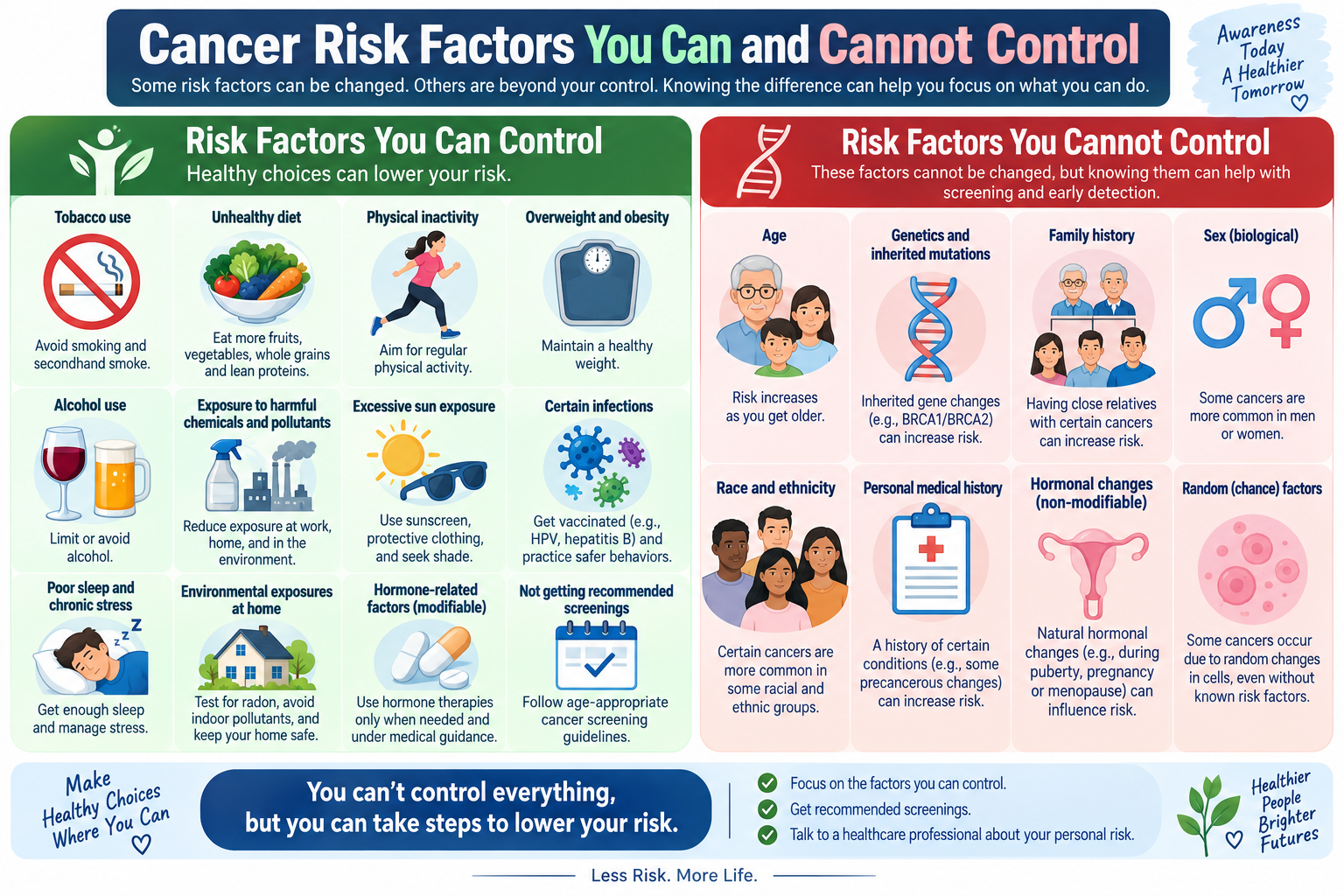
What You Can Influence—and What You Cannot
| You can influence | You cannot fully control |
|---|---|
| Tobacco use | Aging |
| Alcohol exposure | Some inherited genetic factors |
| Physical activity | Random cellular changes |
| Dietary pattern | Every environmental exposure |
| Weight-management habits | Every biological cause of cancer |
| UV exposure | Whether cancer will ever occur |
| Vaccination | Your complete genetic makeup |
| Appropriate screening | Every future health event |
| Some workplace exposures | All cancer-causing processes |
Understanding this distinction matters.
If cancer develops despite healthy habits, it does not automatically mean someone did something wrong.
Cancer is biologically complex.
NCI explains that cancer risk factors include both factors people can influence and factors such as age and family history that people cannot control. NCI: Risk Factors for Cancer
What Cancer Prevention Can—and Cannot—Promise
Cancer prevention is about risk reduction.
It is not a guarantee.
Someone who never smokes, exercises regularly, and eats a healthy diet can still develop cancer.
Someone with several risk factors may never develop cancer.
That is because cancer involves multiple biological processes.
The purpose of prevention is to improve the odds.
The 2026 IARC analysis demonstrates the population-level importance of preventable causes, but population statistics should not be interpreted as a personal guarantee. IARC: Four in ten cancer cases could be prevented globally
This is also why blaming people for cancer is inappropriate.
A healthy lifestyle is not a moral test.
Prevention should give people useful choices—not guilt.
What Is New in Cancer Prevention Research in 2026?
Cancer prevention continues to evolve.
A 2026 President’s Cancer Panel meeting examined modifiable cancer risk factors and their potential relationship with early-onset cancers, reflecting growing scientific interest in why some cancers are appearing at younger ages and which factors might be changed. President’s Cancer Panel: Modifiable Risk Factors
Other active areas of research include
- Early-onset cancer.
- Environmental exposures.
- Obesity and cancer biology.
- Physical activity.
- Dietary patterns.
- Cancer-causing infections.
- Screening strategies.
- Genetic susceptibility.
- Risk prediction.
- Environmental and occupational prevention.
But emerging research should not automatically become health advice.
A study can identify an association.
A series of studies can strengthen confidence.
Clinical guidelines may eventually change when the evidence becomes sufficiently convincing.
That is why readers should be cautious about headlines announcing that a single food, chemical, or habit has suddenly been “proven” to cause or prevent cancer.
Common Cancer-Prevention Mistakes
1. Looking for a miracle food
No single food guarantees cancer prevention.
2. Taking supplements instead of changing major risk factors
A supplement should never be used as an excuse to ignore established prevention strategies.
3. Continuing to smoke while focusing on minor lifestyle details
Tobacco deserves much greater attention than most wellness trends.
4. Assuming wine is protective because it is “natural”
Alcohol is associated with cancer risk regardless of whether it comes from wine, beer, or spirits. CDC: Alcohol and Cancer
5. Skipping screening because you feel healthy
Screening is specifically designed for people who may not yet have symptoms.
6. Believing family history determines your destiny
Genes influence risk, but increased risk is not certainty.
7. Trying to change everything overnight
Extreme plans can be difficult to maintain.
8. Believing “natural” means “clinically proven”
Evidence matters more than marketing language.
9. Becoming frightened by every new cancer headline
One study rarely provides the final answer.
My Personal Perspective on Cancer Prevention
I have personally found that health improvements become easier when they are turned into small actions.
For example, I have used short, quiet walks as a simple way to make movement part of the day rather than waiting for the “perfect” time to exercise.
That experience changed how I think about health advice.
People do not always need another complicated plan.
Sometimes they need a manageable first step.
A person who begins walking regularly, gradually improves food choices, reduces alcohol, stops smoking, or finally discusses appropriate screening with a healthcare professional is already moving in a useful direction.
The important thing is consistency.
This is my personal observation, not medical evidence or professional clinical experience.
I include it because health information should not only explain what research says; it should also help readers think about how they can realistically turn that information into everyday behavior.
Frequently Asked Questions
Can lifestyle changes really lower cancer risk?
Yes. Several modifiable behaviors and exposures are established or strongly associated with cancer risk. These include tobacco use, alcohol consumption, physical inactivity, excess body weight, and certain infections. CDC: Risk Factor-Associated Cancers
However, lifestyle changes cannot eliminate all cancer risk.
What is one of the most important ways to lower your cancer risk?
Avoiding tobacco is one of the most important actions because tobacco causes many types of cancer. CDC: Healthy Choices for Cancer Prevention
If you smoke, getting evidence-based help to quit can be an important step.
Does exercise reduce cancer risk?
Regular physical activity is associated with lower risk for several cancers and provides many additional health benefits. NCI: Physical Activity and Cancer
You do not need to become an athlete. Consistent movement is a useful starting point.
Can healthy eating prevent cancer?
Healthy eating can contribute to lower risk, but no diet guarantees cancer prevention.
Focus on the overall pattern rather than searching for a single cancer-fighting food.
Does alcohol increase cancer risk?
Yes.
Alcohol increases the risk of several cancers, and current CDC guidance states that drinking less can reduce cancer risk. CDC: Alcohol and Cancer
Can I lower my cancer risk if cancer runs in my family?
You may still be able to reduce modifiable risks.
Family history can also identify people who may benefit from individualized screening or genetic counseling. NCI: Risk Factors for Cancer
Do cancer screenings prevent cancer?
Some screening tests can identify precancerous changes and therefore help prevent certain cancers. Others primarily help detect cancer earlier. CDC: Cancer Screening Tests
Screening recommendations vary, so do not assume that every cancer test is appropriate for everyone.
Can vitamins or supplements prevent cancer?
Do not assume that a supplement prevents cancer simply because it contains an antioxidant, vitamin, or plant compound.
Laboratory findings do not automatically translate into proven cancer prevention in humans. NCI: Antioxidants and Cancer Prevention
Can stress cause cancer?
It is too simplistic to say that stress directly causes cancer.
Stress can influence behaviors and overall health, so stress management is worthwhile, but it should not replace established prevention strategies.
Can someone with a healthy lifestyle still develop cancer?
Yes.
Healthy habits can lower risk but cannot guarantee prevention.
Age, genetics, infections, environmental exposures, and biological changes can also influence cancer development. NCI: Risk Factors for Cancer
A Simple Cancer-Prevention Checklist
Tobacco
- ☐ I do not smoke or use tobacco.
- ☐ If I smoke, I have considered an evidence-based quit plan.
- ☐ I avoid secondhand smoke where possible.
Alcohol
- ☐ I understand that alcohol can increase cancer risk.
- ☐ I am reducing alcohol exposure or choosing not to drink.
Food
- ☐ I regularly eat vegetables and fruit.
- ☐ I include beans, lentils, or other plant foods.
- ☐ I eat whole grains regularly.
- ☐ I limit processed meat.
Activity
- ☐ I move regularly throughout the week.
- ☐ I avoid long periods of sitting when possible.
Sun protection
- ☐ I protect my skin from excessive UV exposure.
- ☐ I use shade, clothing, and sunscreen appropriately.
Prevention
- ☐ I know my family cancer history.
- ☐ I understand which screenings may apply to me.
- ☐ I am aware of vaccination recommendations relevant to me.
Information
- ☐ I question miracle cancer-prevention claims.
- ☐ I check important health claims against trustworthy medical sources.
Final Takeaway
The answer to how to lower your cancer risk is not a miracle food, expensive supplement, or complicated detox program.
It is a collection of evidence-supported choices repeated over time.
Start with the changes that have the strongest evidence:
Avoid tobacco.
Reduce alcohol.
Stay physically active.
Work toward a healthy body weight.
Eat a nutritious dietary pattern.
Limit processed meat.
Protect your skin from excessive UV radiation.
Follow appropriate screening recommendations.
Stay appropriately vaccinated.
Understand your family history.
Reduce relevant harmful exposures.
And remember something equally important:
You do not need a perfect lifestyle to make meaningful improvements.
Cancer prevention is about reducing risk, not controlling the future with certainty.
The best prevention strategy is one that is evidence-based, realistic, and sustainable.
Medical Disclaimer
This article is intended for general educational and informational purposes only. It does not provide individualized medical advice, diagnosis, or treatment. Cancer risk and screening recommendations vary according to age, sex, family history, personal medical history, lifestyle, geographic factors, and other circumstances. Speak with a qualified healthcare professional about your individual cancer risk, screening needs, vaccination, symptoms, and treatment decisions.
Sources
- WHO Global Status Report on Cancer 2026
- WHO/IARC: Four in ten cancer cases could be prevented globally
- National Cancer Institute: Cancer Prevention Overview
- National Cancer Institute: Risk Factors for Cancer
- CDC: Preventing Cancer
- CDC: Cancer Screening Tests
You also read
- 12 Best Ways To Lower Blood Pressure
- 7 Simple Health Changes to Reduce The Risk of Chronic Disease
- Home



[…] 15 Effective Ways To Lower Your Cancer Risk […]