





































































































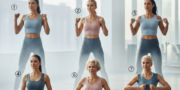
















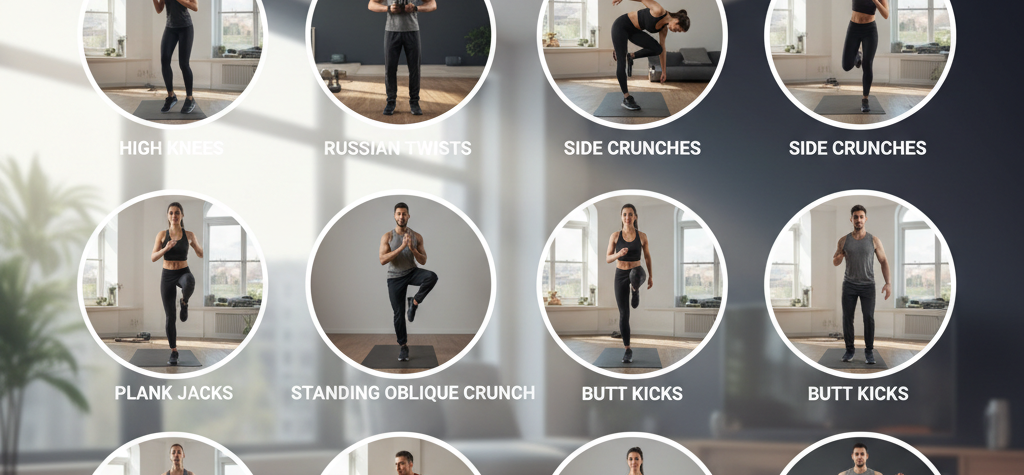
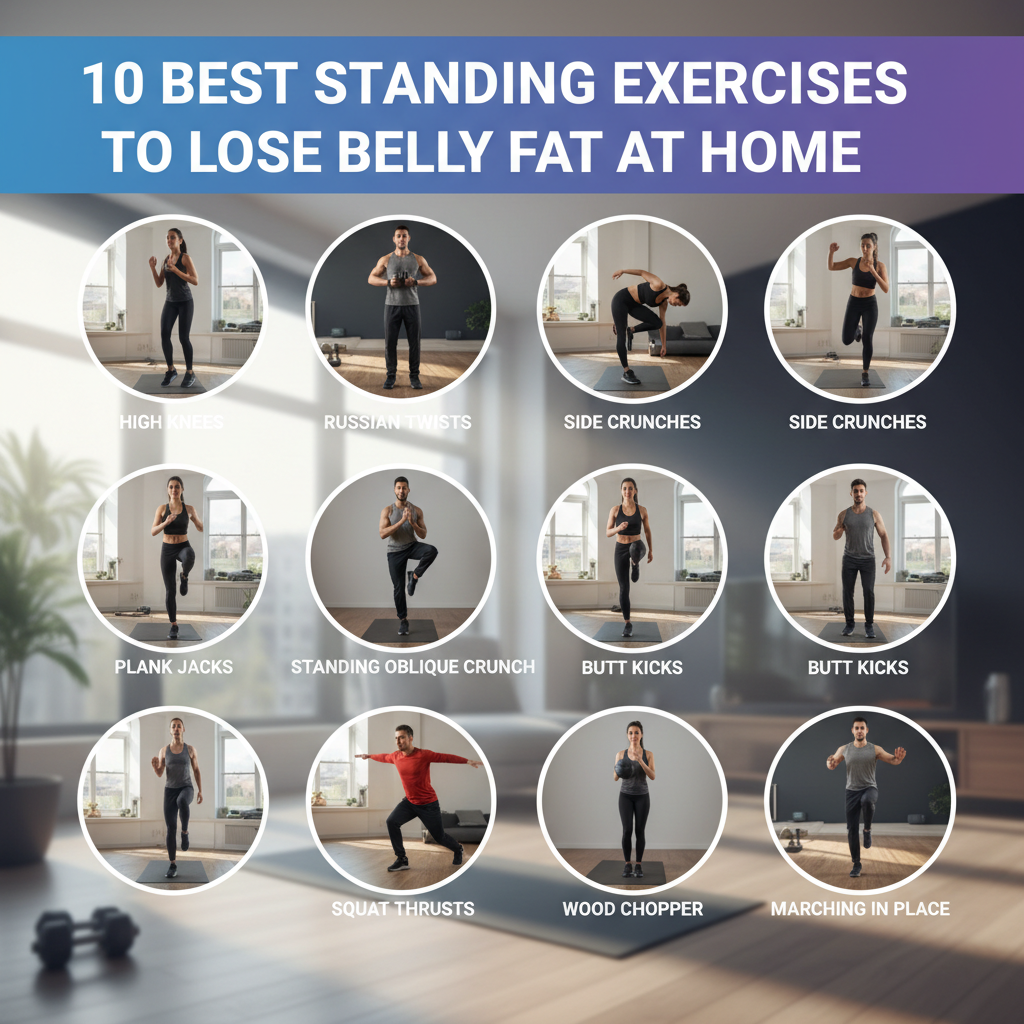
10 Best Standing Exercises to Lose Belly Fat at Home (Beginner-Friendly Guide)
Author
RVLNSV PRASAD
Fact-Checked By
Wellness Research Team
Last Updated
July 2026
Author’s Note
When I first started helping people become more active, I found that many avoided exercise because they thought workouts had to be intense or required special equipment. Standing workouts proved otherwise. They are simple, beginner-friendly, need little space, and fit into busy schedules. In researching this piece, I zeroed in on evidence-based guidance rather than quick cures. These workouts won’t melt belly fat overnight, but paired with a balanced diet and regular physical activity, they can contribute to long-term fat loss, strength, and general fitness.
Key Takeaways
- Beginner-friendly standing exercises to help reduce belly fat at home require little to no equipment.
- Losing overall body fat will reduce belly fat; exercising only one body part won’t.
- In general, adding strength training, walking, and a healthy diet yields better outcomes than exercise alone.
- Good posture and technique will help you activate your muscles and decrease the likelihood of injury.
- It’s the consistency over weeks and months that matters far more than the occasional tough sessions.
- Getting enough sleep, drinking enough water, managing stress levels, and eating a balanced diet all support lasting fat loss.
Introduction
If you’re searching for standing exercises to lose belly fat at home, you’re not alone. Many people want simple workouts that they can do without attending a gym or buying pricey equipment.
Standing exercises can help you move more throughout the day, strengthen different muscle groups, enhance cardiovascular fitness, and burn more calories. They can contribute to total fat loss together with proper nutrition, good sleep, and frequent exercise.
Keep in mind that you can’t spot-reduce belly fat with a workout alone. Research has shown that to lose belly fat, you need to lose general body fat. The best way to do this is with a balanced diet, consistent exercise, stress management, and a calorie deficit that you can sustain.
Standing workouts are perfect for beginners; they enhance balance, build functional strength, and fit easily into everyday life. This guide will show you how to find beginner-friendly workouts, how to incorporate these exercises into a healthy fat-loss regimen, and provide you with practical, evidence-based recommendations on how to stay consistent.
Can standing exercises really help reduce your belly fat?
The quick answer is yes, but only indirectly.
Standing exercises engage many muscle groups and can boost your total daily energy expenditure. They work in conjunction with good nutrition to help create the calorie deficit you need to lose body fat.
Exercise science researchers have found that a combination of aerobic activity with resistance training is often better for improving body composition than either technique alone. Standing workouts generally incorporate elements of both, which is why they are a good choice for beginners.
Standing exercises can also provide these benefits:
- Increase daily movement
- Build muscle strength
- Improve balance and coordination
- Improve your cardiovascular health
- Improve long-term exercise adherence
- Burn more calories than sitting for long periods
Remember it is not just about reducing your waistline. Exercise also reduces the risk of chronic disease, including heart disease, type 2 diabetes, high blood pressure, and obesity, and improves mood, sleep quality, and general quality of life.
What Science Says About Belly Fat Loss
One of the biggest misconceptions in fitness is that hundreds of crunches or abdominal exercises will burn fat directly from your stomach.
Current evidence says otherwise.
Your body decides where fat is stored and where it is lost based largely on genetics, hormones, age, sex, and overall energy balance. Exercise strengthens your abdominal muscles, but fat covering those muscles decreases only when your entire body gradually loses fat.
Experts commonly recommend combining:
- Regular aerobic activity
- Strength training 2 or more times a week
- Movement every day
- Balanced diet
- Sufficient sleep
- Stress reduction
This combination promotes a healthy body composition and increases the likelihood of maintaining weight loss over time.
Why Standing Exercises Are Great for Beginners
Many beginners stop exercising because traditional workouts feel overwhelming.
Standing exercises remove several common barriers.
They often require:
- No gym membership required
- Small space
- Little or no equipment
- Less stress on wrists and shoulders
- Better transitions between motions
- More accessible for many older adults
Because you stay upright, these workouts also imitate regular movement patterns, helping to boost functional fitness while burning calories.
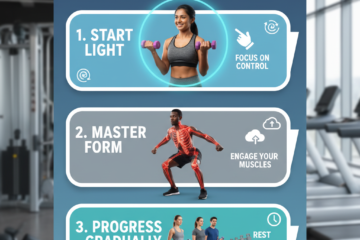
If you are new to exercise, start with 10–15 minutes on most days of the week. Don’t suddenly modify the length, the number of reps you’re doing, or the intensity of your workout—build up one of those things gradually as your fitness increases.
Best Standing Exercises to Burn Belly Fat at Home
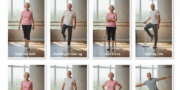
1. Standing Knee Lifts
Difficulty: Beginner
Primary muscles worked: Core, hip flexors, lower abdominal muscles, quadriceps
Why this is useful
Standing knee raises help strengthen your core while gradually increasing your heart rate. They demand balance and coordination, and hence involve many stabilizing muscles at the same time.
How to perform
- Stand with feet shoulder-width apart.
- Tighten your abdominal muscles.
- Lift your right knee toward your chest.
- Slowly lower in control.
- Repeat on the other side.
- Continue alternating legs.
Recommended repetitions
- 2–3 sets
- 12–15 repetitions per leg
Common mistakes
- Leaning backward
- Swinging the legs too quickly
- Holding your breath
- Poor posture
Beginner tip
Use a wall or sturdy chair for balance if necessary.
Progression
For added intensity, reach high or use light dumbbells.
2. Standing March With Arm Swings
Difficulty: Beginner
Primary muscles worked: core, shoulders, hips, calves, and cardiovascular system.
How it works
This basic action gets your heart rate up and is also good for coordination and warming up your entire body. It’s an excellent starting exercise before progressing to more challenging movements.
How to perform
- Stand tall.
- Lift one knee while swinging the opposite arm.
- Alternate sides.
- Keep your posture straight.
- Keep your abdominal muscles lightly engaged throughout.
Suggested time:
- 2-4 mins
Common Mistakes
- Looking down
- One baby step at a time
- Slouching
- Moving too slowly to raise your heart rate
Beginner’s Tip
Start at a comfortable pace and then increase speed.
Progression
As you get fitter, pick up your pace or raise your knees higher.
3. Standing Side Crunch
Difficulty: Beginner to intermediate
Primary Muscles Worked: Hip muscles, obliques, rectus abdominis
Why it helps
Side crunches are effective in strengthening the muscles along the sides of your abdomen and also increase the stability and coordination of your trunk.
They don’t immediately burn fat off your waist, but they help you build stronger core muscles that provide stability for your posture and everyday movement.
How to perform
- Stand with feet slightly wider than shoulder-width apart.
- Place your hands behind your head.
- Lift your right knee sideways.
- Bend your torso a bit toward the raised knee.
- Return to starting position.
- Repeat on other side.
Suggested Repetitions
- 2-3 sets
- 12-15 reps on each side
Common Errors
- Use your hands to stretch your neck
- Bending too much
- Rushing the movement
- Using momentum instead of muscular control
Tip for beginners
Take little steps until you find your balance.
Progression
Learn good technique, then add light ankle weights or pause at the peak of each rep.
4. Cross Body Knee Drive – Standing
Difficulty: Beginners to Intermediate
Muscles Worked: Core, obliques, hip flexors, shoulders, glutes
Why it helps
The standing cross-body knee drive is a single-movement drill that uses balance, coordination, and the core. Your arms and legs coordinate, and your abs and hips remain engaged throughout the exercise, which raises your heart rate.
This won’t melt away fat in one area of your belly, but it will help you burn calories overall while building up your core strength.
How to do
- Stand up straight with feet shoulder-width apart.
- Put both arms above your head.
- Now, raise your right knee to the left elbow.
- Don’t force it; just let your upper body move naturally.
- Return to starting position.
- Repeat on the other side.
- Keep switching sides smoothly.
Suggested repetitions
- 2-3 sets
- 12-15 reps on each side
Common mistakes
- Pulling the knee up too rapidly
- Twisting only the shoulders, not the body
- Holding your breath.
- Slouching your back
Beginner tip
Do the movement slowly until your balance improves.
Progression
Increase speed, keeping appropriate form, or add light dumbbells for added resistance.
5. Bodyweight Squat With Overhead Reach
Level: Beginner
Targeted muscles: Glutes, quads, hamstrings, shoulders, core
Why It Works
Squats are one of the best functional workouts since they work some of the largest muscular groups in the body. The added overhead reach will increase shoulder mobility and promote better posture but will also make the activity slightly more taxing.
The larger your muscles, the more energy they need to function, and compound actions like the squat will also help you burn more calories throughout your workout.
How to perform
- Stand with your feet shoulder-width apart.
- Keep your chest lifted.
- Push your hips backward.
- Lower into a comfortable squat.
- Press through your heels to stand.
- Reach both arms overhead as you return to standing.
- Repeat smoothly.
Recommended repetitions
- 2–3 sets
- 10–15 repetitions
Common mistakes
- Allowing the knees to collapse inward
- Lifting the heels
- Leaning excessively forward
- Squatting deeper than your mobility allows
Beginner tip
Sit back toward a sturdy chair until you become comfortable with proper squat technique.
Progression
Hold light dumbbells or pause for two seconds at the bottom of each squat.
6. Standing Torso Rotation
Difficulty: Beginners
Primary muscles worked: Abdominals, obliques, lower back, shoulders
How it works
Standing and rotating the upper body helps trunk flexibility and turns on the muscles that are responsible for rotational movement. When performed slowly with control, they also help improve posture and coordination.
Remember that twisting exercises strengthen your core but do not specifically burn fat from the waist.
How to perform
- Stand with feet slightly wider than hip-width apart.
- Bend your elbows to about 90 degrees.
- Tighten your abdominal muscles.
- Bend your torso to the right.
- Return to the starting position.
- Turn to the left.
- Switch sides and repeat.
Suggested repetitions
- 2-3 times.
- 15-20 repetitions
Common Errors
- Twisting too quickly
- Moving only the arms
- Knees locked
- Leaning back,
Beginner tip
Begin with a modest range of motion and slowly build flexibility.
Progression
Use a light medicine ball or dumbbell, and keep the movement gradual and controlled.
7. Alternating Front Kick
Difficulty: beginner-intermediate
Muscles Targeted: Core, Hip Flexors, Quads, Glutes, Hamstrings
Why it helps
Alternating front kicks combine flexibility, balance, and cardiovascular exertion. They get your heart rate up and use your abdominal muscles to keep your body steady through each kick.
This exercise also enhances the mobility and coordination of the lower body.
How to Do It
- Stand up with your legs hip width apart.
- Engage your core.
- In a controlled kick, lift your right leg forward.
- Lower the leg slowly.
- Repeat with your left leg.
- Keep switching sides. Keep proper posture.
Suggested repetitions
2-3 sets.
12-15 kicks / leg
Common mistakes
- Swinging the leg with forcefully
- Leaning back
- Locking the standing knee
- Sacrificing balance for height
Beginner Tip
Kick only as high as you can handle with ease.
Progression
Once you’re comfortable, try increasing the speed a bit or adding ankle weights.
8. Standing Side Leg Raise
Difficulty: Beginner
Primary muscles worked: Gluteus medius, gluteus minimus, hip abductors, core muscles
Why it helps
Side leg raises on one leg also build the muscles around your hips and improve your balance and stability. It doesn’t immediately burn belly fat, but it does help you move better and more efficiently throughout your day—and helps you maintain better posture when exercising—when you build stronger hip and core muscles.
This activity is especially good for beginners, older people, and those who are returning to exercise after a break.
How to do it
- Stand with feet close together.
- Place your hands on your hips, or softly hold onto a chair for balance.
- Tighten your abdominal muscles.
- Slowly lift your right leg out to the side.
- Pause briefly at the top.
- Lower your leg with control.
- Repeat before switching sides.
Recommended repetitions
2–3 sets
12–15 repetitions per leg
Common mistakes
- Leaning the body sideways
- Swinging the leg quickly
- Turning the toes outward excessively
- Locking the standing knee
Beginner tip
Hold onto a sturdy chair if balance is difficult.
Progression
Once you get the basic movement down, put a resistance loop band around your ankles.
9. Standing Heel Taps
Level: Beginner
Muscles worked: Core, calves, quadriceps, hip flexors
Why it helps
Standing heel taps are a low-impact cardio move that will increase your heart rate without too much strain while also improving coordination and lower body endurance.” They are easy to learn and can be included in almost any home workout.
How to perform
- Stand with your feet shoulder-width apart.
- Step one heel forward.
- Tap the heel lightly on the floor.
- Return to the starting position.
- Repeat with other leg.
- Keep your arms swinging naturally as you go.
Proposed length of time
- 2-3 min
Common mistakes
- Looking down non-stop
- Taking very small steps
- Bad posture
- Moving without activating the core
Tip for beginners
Begin at a slow pace, then speed up.
Progression
Start tapping your heels for longer periods, or add arm swings.
10. Standing High Knees
Difficulty: Beginner to Intermediate
Main muscles worked: Core, hip flexors, quadriceps, calves, glutes, cardiovascular system
Why it helps
Standing high-knees is one of the best calorie-burning workouts in this plan. They are a fantastic way to get your heart rate up rapidly and build strength in your lower body and coordination.
Because they combine cardio with core engagement, they fit perfectly into workouts designed to support overall fat loss.
How to perform
- Stand upright.
- Tighten your abdominal muscles.
- Lift one knee toward your waist.
- Pump your arms naturally while moving your legs quickly back and forth.
- Lower each leg with control.
- Move at a comfortable pace.
Recommended duration
- 30–60 seconds
- Repeat for 3 rounds
Common mistakes
- Leaning backward
- Landing heavily
- Looking at your feet
- Sacrificing posture for speed
Beginner tip
March in place first before progressing to faster high knees.
Progression
Increase your speed or extend each work interval as your fitness improves.
Quick Comparison: Which Exercise Should You Start With?
| Exercise | Best For | Difficulty | Equipment |
|---|---|---|---|
| Standing Knee Raises | Core activation | Beginner | None |
| Standing March With Arm Swings | Warm-up and cardio | Beginner | None |
| Standing Side Crunch | Oblique strength | Beginner | None |
| Cross-Body Knee Drive | Fat-burning cardio | Beginner–Intermediate | None |
| Squat With Overhead Reach | Full-body strength | Beginner | None |
| Standing Torso Rotation | Core mobility | Beginner | Optional lightweight |
| Alternating Front Kick | Balance and coordination | Beginner–Intermediate | None |
15-Minute Beginner Standing Belly Fat Workout
If you’re unsure where to start, try this simple routine three to five days per week.
| Exercise | Time |
|---|---|
| Warm-up: Standing March With Arm Swings | 2 minutes |
| Standing Knee Raises | 2 minutes |
| Cross-Body Knee Drives | 2 minutes |
| Squat With Overhead Reach | 2 minutes |
| Standing Side Crunch | 2 minutes |
| Standing High Knees | 2 minutes |
| Standing Side Leg Raises | 2 minutes |
| Cool-down Stretch | 1 minute |
Complete the workout at a pace that allows you to maintain proper form. As your fitness improves, increase the duration or repeat the circuit.
Which Exercise Fits Your Goal?
| Goal | Best Exercise |
| Beginner fitness | Standing March With Arm Swings |
| Burn more calories | Standing High Knees |
| Improve core strength | Standing Knee Raises |
| Strengthen obliques | Standing Side Crunch |
| Build lower-body strength | Squat With Overhead Reach |
| Improve balance | Standing Side Leg Raise |
| Low-impact cardio | Standing Heel Taps |
| Functional daily movement | Cross-Body Knee Drive |
Expert Tips to Maximize Your Results
Simply completing these exercises isn’t enough. It’s the small, everyday things that will often make the difference between making a permanent improvement and not.
1. Make protein a priority
Protein is important for maintaining muscle when losing weight and might help keep you feeling full after eating. Include a source of lean protein with every meal, such as eggs, fish, Greek yogurt, beans, tofu, or chicken.
2. Go for a walk every day
Even adding a 20- to 30-minute brisk walk to your standing workout can make a huge difference in your daily calorie expenditure.
3. Develop a routine
If you can, aim to exercise 3-5 times a week. Regular training over a period of months is much more advantageous than random, intense exercise.
4. Improv Sleep Quality
Most adults need seven to nine hours of good sleep per night. Bad sleep can disrupt the hormones that regulate hunger, making it harder to eat healthily.
5. Drink plenty of water
Regular water consumption maintains normal body functions and workout performance. Carry a water bottle with you, especially while you work out.
6. Turn it up a notch
The answer is not to make things harder as you get fitter. Instead, try upping reps, time, or resistance.
7. Mix strength training and cardio
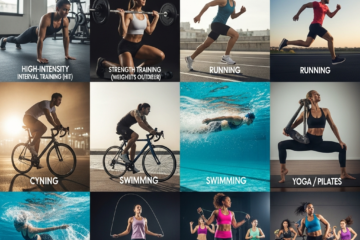
Standing exercises become even more effective when paired with regular walking, cycling, or other aerobic activities and additional strength training during the week.
Common Mistakes That Can Slow Progress
Many beginners make blunders without realizing it that limit their results.
Don’t make these common mistakes:
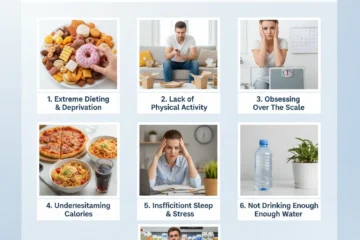
- Expecting to lose belly fat quickly is a common mistake.
- Skipping warm-ups, no cool-downs.
- Poor posture while exercising.
- Exercising inconsistently.
- Working out without paying attention to nutrition.
- Trying to do it too fast without learning the technique can be a problem.
- Holding your breath during exercises.
- Looking at someone else’s accomplishment instead of measuring your growth.
Remember that fat loss is generally a gradual process. Chasing quick outcomes is far less useful than long-term sustainable healthy practices.
How Standing Exercises Can Help You Lose Fat
You may get more mobility in your day and work several muscle groups at the same time by doing standing exercises. They don’t burn as many calories as aggressive jogging or cycling, but they are a more accessible approach to getting more active—especially if you are a novice.
Movement, even when it’s not formal exercise, also contributes to non-exercise activity thermogenesis (NEAT), which is the amount of calories your body burns doing regular, everyday activities. You can promote long-term weight management in a meaningful way by increasing your day-to-day exercise, such as walking, housework, and standing workouts.
Additionally standing exercises help
- Improve postures
- Increase muscular endurance
- Strengthen coordination
- Strengthen your core
- Support joint mobility
- Promote long-term adherence to exercise
These features make it a viable option for anyone who wants to create sustainable workout routines.
Who should be careful?
These workouts are generally considered safe for healthy individuals, but they are not for everyone.
Speak with a healthcare professional before beginning a new exercise program if you:
- Have recently undergone surgery
- Experience severe knee, hip, or ankle pain
- Have uncontrolled heart disease or high blood pressure
- Have significant balance problems or frequent falls
- Are recovering from a serious injury
- Are pregnant and unsure which exercises are appropriate
- Have another medical condition that limits physical activity
Stop exercising immediately if you develop chest pain, severe dizziness, unusual shortness of breath, or sharp joint pain.
Frequently Asked Questions
1. Do standing workouts help reduce belly fat?
Yes. Standing exercises to lose belly fat at home can help support overall fat loss, as they improve physical activity and calorie burn. However, they should be combined with a balanced diet, regular physical activity, adequate sleep, and consistent exercise.
2. How often should I do these exercises?
These workouts are suitable for most beginners and can be done 3-5 days a week. You’ll want to allow your body some time to recover, but gradually increase your activity levels.
3. When will I see results?
Results vary from person to person. Typically, you will see improvements in strength, balance, and endurance within weeks. Visible fat loss depends on several factors, including nutrition, exercise consistency, sleep, and body composition.
4. Will standing exercises help you lose weight?
Standing workouts are a good starting point, but adding walking, resistance training, good nutrition, and healthy living practices will usually lead to better results over time.
5. Do I need any equipment?
No. All the exercises in this tutorial can be performed using only your body weight. As you get stronger, you can add variety with optional resistance bands or light dumbbells.
6. Are these workouts suitable for older adults?
Many of these moves work well for older adults, tailored to their fitness level. A sturdy chair can provide support to help you feel safer and confident as you do balance exercises.
Conclusion
Standing exercises make it easy to be more active, and you don’t need any expensive equipment or gym membership. Standing exercises to lose belly fat at home aren’t going to miraculously make abdominal fat disappear, but they can be an important part of a well-rounded fitness routine that includes a healthy diet, frequent movement, strength training, excellent sleep, and stress management.
The point is consistency, not perfection. You can get stronger, improve your balance, burn more calories every day, and form lasting habits that lead to better health over time—and all it takes is 15 minutes a day. Focus on gradual progress, keep good form, and recognize tiny improvements along the way. With regular practice, these simple standing exercises can become part of a healthy active lifestyle.
Evidence-Based References
The recommendations in this guide align with guidance from these trusted organizations:
- American College of Sports Medicine (ACSM)—Exercise Is Medicine®—Evidence-based guidance on physical activity, exercise prescription, and fitness for health.
- U.S. Centers for Disease Control and Prevention (CDC) – Physical Activity Basics — Official recommendations on physical activity, health benefits, and exercise guidelines for adults.
- National Institutes of Health (NIH) — The primary U.S. government agency supporting biomedical and public health research.
- National Institute of Diabetes and Digestive and Kidney Diseases (NIDDK) – Health Information — Trusted information on healthy weight management, obesity, nutrition, and physical activity.
- American Heart Association (AHA) – Fitness and Physical Activity — Evidence-based advice on exercise, heart health, and maintaining an active lifestyle.
- Harvard Health Publishing – Exercise & Fitness — Physician-reviewed articles on strength training, aerobic exercise, weight management, and healthy aging.
- Harvard T.H. Chan School of Public Health – The Nutrition Source: Healthy Weight — Research-based guidance on healthy weight, diet quality, and long-term weight management.
- World Health Organization (WHO) – Physical Activity — Global recommendations on physical activity and reducing sedentary behavior.
- PubMed — The world’s largest database of peer-reviewed biomedical and medical research.
- Cochrane Library — High-quality systematic reviews and evidence summaries for healthcare interventions.
Research Methodologies
In developing this guidance, we analyzed current recommendations and data from reputable public health organizations and peer-reviewed studies on physical activity, strength training, weight management, and belly fat loss.
We focused our review on:
- Current physical activity guidelines for adults
- Studies on aerobic exercise, strength training, and overall fat loss.
- Research on exercise adherence among novices.
- Research on the myth of spot reduction is also included.
- This section provides tips for safe progression and injury prevention while exercising.
This article is for educational purposes only and is based on the state of scientific knowledge at the time of writing. New studies could lead to revised recommendations.
How We Chose These Exercises
Every exercise featured in this guide met the following criteria:
- They are simple to learn and beginner-friendly.
- It can be performed safely at home.
- Requires little or no equipment.
- Works several muscle groups.
- Promotes better balance, coordination, and functional mobility.
- Supports a healthy lifestyle and increases overall calorie expenditure.
- It can be modified for all fitness levels.
We didn’t choose activities based on social media trends or unsubstantiated claims. We chose routines that are realistic, accessible, and based on evidence-based fitness guidelines.
Author’s Bio
RVLNSV PRASAD is a health and fitness writer who creates evidence-based, beginner-friendly wellness content focused on exercise, nutrition, healthy habits, and long-term lifestyle improvement.
Medical Disclaimer
The article is intended for informational and educational purposes only. This information is not for diagnosing, treating, curing, or preventing any medical issue and should not replace professional guidance.
Consult your physician or another certified healthcare professional before starting any new fitness regimen if you meet any of the following criteria:
- Are pregnant?
- Have heart disease.
- Have uncontrolled high blood pressure.
- Have diabetes with complications.
- Have recently undergone surgery.
- Have chronic joint pain or limited range of motion.
- Have another medical condition that affects your ability to exercise safely.
Stop exercising and call your doctor immediately if you develop chest pain, extreme dizziness, fainting, abnormal shortness of breath, or sudden intense pain.
Fast Beginner Checklist
Before every workout:
Use comfortable and supportive shoes.
Keep a bottle of water with you.
Warm up for 3–5 minutes.
Keep proper posture in every activity.
Breathe regularly; do not hold your breath.
Move slowly and with control.
If you feel sharp or severe pain, stop.
Finish with light stretching.
Building a Sustainable Routine
You don’t achieve long-term results with brief bursts of hard work. You get long-term results with habits you can stick to.
If you’re just starting out:
Weeks 1–2
- 15 minutes of exercise, 3 times a week.
- Concentrate on technique.
Weeks 3–4.
- Exercise for 20 minutes, 4 times per week.
- Add another set to each exercise if you feel comfortable.
Week 5 and Beyond
- Exercise for 25–30 minutes most days of the week.
- Pair standing exercises with walking, resistance training, and stretching for a well-rounded routine.
Go slow. Sustainable change happens through small improvements over time, not by trying to do too much too soon.
Related Topics
- 12 Dynamic Yoga Poses For Rapid Weight Loss
- 7 Strength Training Exercises for Women Over 40: A Comprehensive Guide
- Best 8 Weight Loss Exercises
- 10 Best Core Exercises for Beginners at Home:
- Build a Stronger Core Without EquipmentHow to Lose Belly Fat without Exercise
- Home
- Category Active Living




[…] 10 Best Standing Exercises to Lose Belly Fat at Home (Beginner-Friendly Guide) […]
[…] 10 Best Standing Exercises to Lose Belly Fat at Home (Beginner-Friendly Guide) […]
[…] 10 Best Standing Exercises to Lose Belly Fat at Home (Beginner-Friendly Guide) […]
[…] 10 Best Standing Exercises to Lose Belly Fat at Home (Beginner-Friendly Guide) […]
[…] 10 Best Standing Exercises to Lose Belly Fat at Home (Beginner-Friendly Guide) […]
[…] 10 Best Standing Exercises to Lose Belly Fat at Home (Beginner-Friendly Guide) […]
[…] 10 Best Standing Exercises to Lose Belly Fat at Home (Beginner-Friendly Guide) […]
[…] 10 Best Standing Exercises to Lose Belly Fat at Home (Beginner-Friendly Guide) […]
[…] 10 Best Standing Exercises to Lose Belly Fat at Home (Beginner-Friendly Guide) […]
[…] 10 Best Standing Exercises to Lose Belly Fat at Home (Beginner-Friendly Guide) […]
[…] 10 Best Standing Exercises to Lose Belly Fat at Home (Beginner-Friendly Guide) […]
[…] 10 Best Standing Exercises to Lose Belly Fat at Home (Beginner-Friendly Guide) […]
[…] 10 Best Standing Exercises to Lose Belly Fat at Home (Beginner-Friendly Guide) […]
[…] 10 Best Standing Exercises to Lose Belly Fat at Home (Beginner-Friendly Guide) […]