








































































































































































10 Natural Ways to Lower High Triglycerides: Evidence-Based Tips
Author: RVLNSV PRASAD
Updated On: October 2026
About Us
Author Bio
Editorial Policy
Contact Us
Medical Review: This article has not been independently reviewed by a qualified healthcare professional.

Introduction
Finding out that your triglycerides are high can leave you wondering what to eat, which habits to change, and whether you need medication. The number on a blood test may seem confusing, especially when you feel perfectly healthy.
The good news is that everyday habits can make a meaningful difference. Reducing added sugar, choosing better-quality carbohydrates, staying physically active, limiting alcohol, and managing excess weight can all help lower elevated triglycerides. The right approach depends on your test results, medical history, and other risk factors.
However, natural approaches are not a substitute for medical treatment when treatment is needed. Very high triglyceride levels can increase the risk of acute pancreatitis, a potentially serious inflammation of the pancreas. Some people also need prescription treatment to manage their cardiovascular risk.
The 2026 ACC/AHA dyslipidemia guideline reinforces the importance of lifestyle changes, including reducing added sugar and refined carbohydrates, limiting alcohol, improving physical activity, and addressing excess weight when appropriate. You can read the full 2026 guideline in the Journal of the American College of Cardiology.
This guide explains 10 practical, evidence-based ways to lower high triglycerides naturally, including realistic Indian food choices, common mistakes, and situations where lifestyle changes alone may not be enough.
Quick Answer: What Is the Best Way to Lower High Triglycerides Naturally?
The most useful starting points are to reduce sugary drinks and added sugars, limit refined carbohydrates, eat balanced meals, exercise regularly, lose excess weight gradually if needed, and avoid alcohol when triglycerides are elevated.
These changes work best when they address the reasons your levels are high. Diabetes, thyroid disease, kidney or liver problems, certain medicines, and inherited conditions can also contribute.
The MedlinePlus triglyceride guide explains common causes and lifestyle measures that may help. If your triglycerides are 500 mg/dL or higher, contact your healthcare professional promptly because you may need specific dietary restrictions and medical treatment.
Key Takeaways
- A triglyceride level below 150 mg/dL is generally considered normal for adults.
- Added sugar, refined carbohydrates, alcohol, excess weight, and some medical conditions can contribute to high triglycerides.
- Regular physical activity and a balanced diet are important parts of triglyceride management.
- Losing 5–10% of body weight can reduce triglycerides by approximately 20–30% in appropriate people with higher weight or obesity, although individual results vary.
- Fatty fish can provide omega-3 fats, but over-the-counter fish oil is not equivalent to prescription omega-3 treatment.
- Very high triglycerides can increase pancreatitis risk and may require urgent medical management.
- Do not stop prescribed cholesterol or triglyceride medication because your lifestyle improves.
What Are Triglycerides, and Why Do They Matter?
Triglycerides are a type of fat found in your blood. Your body uses them for energy and stores excess energy in fat cells for later use.
When you regularly consume more energy than your body needs, particularly from added sugars and other rapidly absorbed carbohydrates, triglyceride levels may rise. Alcohol, some medical conditions, genetics, and certain medicines can also affect the result.
Triglycerides are measured as part of a blood test called a lipid panel. The test often measures total cholesterol, LDL cholesterol, HDL cholesterol, and triglycerides.
Elevated triglycerides can be associated with increased cardiovascular risk, particularly when combined with other risk factors. At very high levels, they can also raise the risk of acute pancreatitis.
The MedlinePlus triglyceride test guide explains how these results help healthcare professionals assess risk and decide whether lifestyle changes, further investigations, or treatment are needed.
What Triglyceride Level Is Considered High?
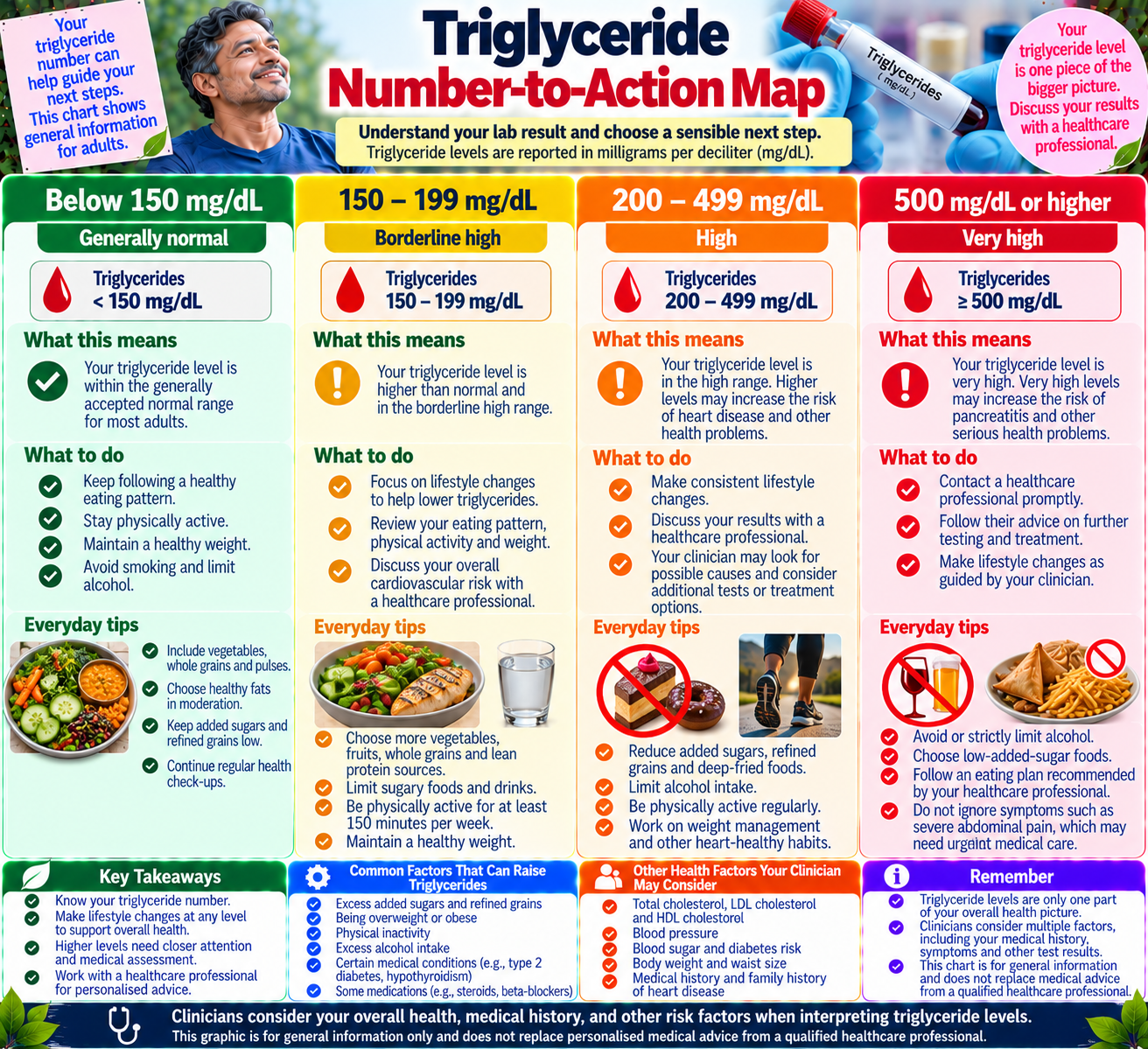
The following are commonly used adult reference ranges. Your laboratory and healthcare professional can interpret your individual result.
| Triglyceride level | Category | What to do |
|---|---|---|
| Below 150 mg/dL | Normal | Continue appropriate heart-healthy habits. |
| 150–199 mg/dL | Borderline high | Review lifestyle habits and overall cardiovascular risk |
| 200–499 mg/dL | High | Discuss lifestyle changes, possible underlying causes, and treatment options. |
| 500 mg/dL or higher | Very high | Contact a healthcare professional promptly for an individualized plan. |
Source: MedlinePlus: Triglycerides.
A triglyceride result is only one part of your health assessment. Your clinician may consider whether the test was fasting, your other cholesterol results, blood sugar, medical history, medicines, and family history.
What Causes High Triglycerides?

High triglycerides do not always result from eating too much fat. Several factors can contribute, and more than one may be present.
| Possible cause | Why it matters |
|---|---|
| Added sugar and refined carbohydrates | Excess intake can increase triglyceride production. |
| Excess weight | Can be associated with insulin resistance and altered fat metabolism |
| Alcohol | Can raise triglycerides, sometimes substantially |
| Poorly controlled diabetes | High blood glucose and insulin resistance can contribute |
| Underactive thyroid | Can affect lipid levels |
| Kidney or liver disease | May contribute to abnormal triglyceride levels |
| Certain medicines | Some medicines can raise triglycerides. |
| Genetic conditions | Inherited factors can cause persistently or severely elevated levels. |
The MedlinePlus medical test resource lists these and other causes.
This is why simply changing your diet may not solve every case. If your levels remain high despite consistent lifestyle changes, ask your clinician whether further testing or a medication review is appropriate.
10 Natural Ways to Lower High Triglycerides
1. Reduce Added Sugar in Your Daily Diet
Reducing added sugar is one of the most useful changes to consider when your triglycerides are elevated. Sugary drinks, sweets, desserts, and heavily sweetened packaged foods can contribute substantial amounts of sugar without making you feel full for long.
Your body can convert excess energy from carbohydrates into triglycerides. This does not mean all carbohydrates are harmful, but the type, amount, and overall dietary pattern matter.
Start with a few manageable changes:
- Replace sugary soft drinks with water or unsweetened drinks.
- Reduce the amount of sugar added to tea and coffee.
- Eat sweets less frequently rather than relying on them every day.
- Check packaged-food labels for added sugars.
- Choose whole fruit more often than fruit juice.
For Indian meals, you can begin by reducing sweetened tea, packaged fruit drinks, sugary biscuits, and frequent desserts. You do not have to change every part of your diet overnight.
The 2026 ACC/AHA dyslipidemia guideline recommends a diet low in added sugars and refined carbohydrates for adults with elevated triglycerides.
A practical tip: Start by changing the sugary drink you consume most often. One repeatable change may be easier to maintain than a long list of strict food rules.
2. Replace Refined Carbohydrates With Higher-Fiber Choices
White bread, refined-flour snacks, pastries, and large portions of refined grains can contribute to a dietary pattern that raises triglycerides, especially when they replace fiber-rich foods.
You do not need to eliminate every carbohydrate. Whole grains, vegetables, beans, and lentils can fit into a balanced eating pattern.
Consider these practical swaps:
| Instead of eating frequently | Try more often. |
|---|---|
| Large portions of refined-flour snacks | Whole-grain options in sensible portions |
| Sugary breakfast cereal | Oats or another minimally sweetened whole-grain option |
| Chips as a regular snack | A small portion of nuts or roasted chickpeas |
| Sweetened fruit drinks | Whole fruit and water |
| Meals with very little fiber | Meals with vegetables, beans, or lentils |
Fiber supports digestive health and can help make meals more satisfying. Whole foods also provide vitamins, minerals, and other nutrients that refined snack foods may lack.
The American Heart Association’s triglyceride guidance discusses dietary choices and lifestyle habits that can help manage triglyceride levels.
An important distinction: Whole fruit is not the same as a sugary soft drink. You generally do not need to avoid whole fruit simply because your triglycerides are high. If your levels are very high, however, your clinician may recommend a more specific diet.
3. Choose Heart-Healthy Fats Instead of Less Healthy Fats
Your body needs dietary fat, but the overall pattern matters. Replacing foods high in saturated fat with unsaturated fat sources can support cardiovascular health.
Useful options include nuts, seeds, fish, and suitable plant oils. In an Indian kitchen, small portions of peanuts, almonds, walnuts, sesame seeds, and other nuts or seeds can fit into balanced meals.
Try to reduce frequent intake of foods that combine large amounts of saturated fat, refined flour, and excess calories, such as certain fried snacks, pastries, and commercially prepared baked goods.
Do not assume that all plant oils are harmless in unlimited amounts. Oils are calorie-dense, so portion sizes still matter. The right amount also depends on your triglyceride level and medical advice.
The 2026 ACC/AHA guideline emphasizes limiting saturated fat alongside added sugars and refined carbohydrates for many adults with elevated triglycerides.
If your triglycerides are 500 mg/dL or higher, do not independently adopt a high-fat diet because it is described as heart-healthy. People with severe elevations may need individualized fat restriction to reduce pancreatitis risk.
4. Exercise Regularly, Starting at Your Current Fitness Level
Physical activity can improve insulin sensitivity, support weight management, and contribute to better cardiovascular health. It is an important part of lowering elevated triglycerides.
You do not need to begin with intense workouts. Walking is a practical option because you can fit it around your usual schedule and increase the duration gradually.
Try this approach:
- Begin with a comfortable 10–15-minute walk if you are inactive.
- Increase the duration as your fitness improves.
- Aim toward at least 150 minutes of moderate-intensity activity per week, if appropriate for your health.
- Add resistance exercise on two days each week when possible.
- Break up long periods of sitting with short movement breaks.
The 2026 ACC/AHA guideline supports regular moderate-to-vigorous physical activity and resistance exercise as part of triglyceride management.
If you have heart disease, significant joint problems, uncontrolled medical conditions, or symptoms during exercise, ask your healthcare professional how to begin safely.
A people-first approach: Do not judge your progress by how hard a single workout feels. A routine you can repeat consistently is often more useful than an intense plan you abandon after several days.
5. Lose Excess Weight Gradually if Needed
If you have higher weight or obesity, gradual weight loss may help lower triglycerides and improve other metabolic risk factors.
You do not need to aim for a dramatic transformation. A modest, sustainable reduction can be meaningful.
The 2026 guideline identifies a 5–10% reduction in body weight as a useful target for appropriate people with excess weight. Earlier ACC/AHA guidance reports that this degree of weight loss can reduce triglycerides by approximately 20–30% in some people. Results vary according to the person’s starting level, diet, activity, genetics, and underlying health conditions. See the ACC/AHA guideline evidence.
For example, someone weighing 90 kg would need to lose 4.5–9 kg to reach a 5–10% reduction. This is an illustration of the calculation, not a recommended target for every reader.
Focus on sustainable changes:
- Eat regular meals that include protein and fiber.
- Reduce frequent sugary drinks and highly processed snacks.
- Increase activity gradually.
- Get adequate sleep.
- Avoid crash diets and unverified weight-loss products.
Very restrictive diets can be unsuitable, particularly for people with very high triglycerides, diabetes, kidney disease, or other medical conditions. Ask your clinician or registered dietitian for a plan that matches your results.
6. Avoid Alcohol if Your Triglycerides Are High
Alcohol can raise triglyceride levels, and the effect varies between individuals. In some people, it can cause a substantial increase.
If your triglycerides are elevated, reducing alcohol is a sensible step to discuss with your healthcare professional. If your levels are very high, the recommended approach may be complete avoidance.
Do not assume that wine is automatically better for triglycerides than beer or spirits. Alcohol content, amount consumed, accompanying food, and individual metabolism all matter.
The 2026 ACC/AHA dyslipidemia guideline recommends minimizing alcohol for many adults with triglycerides between 150 and 499 mg/dL. For levels of 500–999 mg/dL, it recommends no alcohol as part of the dietary approach.
If you do not drink, there is no health reason to start drinking for heart protection.
7. Eat Omega-3-Rich Fish, but Understand the Limits
Omega-3 fatty acids are found in certain fish and other foods. Fatty fish such as sardines, salmon, and mackerel can be part of a balanced eating pattern.
Depending on your preferences and availability, you may include suitable fish in meals regularly. If you do not eat fish, discuss appropriate alternatives with a registered dietitian or healthcare professional.
However, eating fish is not the same as taking prescription omega-3 medication. Prescription products are used for selected patients and specific medical purposes. Over-the-counter fish-oil supplements vary in their ingredients and doses, and they should not be treated as interchangeable with prescription treatment.
The American Heart Association’s information on triglycerides provides background on triglycerides and their management. For people with severe elevations, a clinician may recommend prescription medication alongside dietary changes.
Do not start high-dose fish oil without discussing it with your healthcare professional, particularly if you take medicines that affect bleeding or have other medical conditions.
8. Improve Sleep and Keep a Consistent Routine
Sleep is important for general metabolic health, energy, and appetite regulation. Poor sleep may make it harder to maintain healthy eating and activity habits.
A consistent routine is a practical place to start. Try to go to bed and wake up at similar times, reduce stimulating activities before bed, and create a comfortable sleeping environment.
If you work shifts, care for family members, or have another reason for irregular sleep, aim for realistic improvements rather than an ideal schedule that does not fit your life.
Sleep should not be presented as a stand-alone treatment for high triglycerides. The more direct priorities remain dietary changes, activity, weight management when appropriate, alcohol reduction, and management of underlying medical causes.
If you regularly snore loudly, wake gasping, or feel excessively sleepy during the day, ask your clinician whether a sleep disorder needs assessment.
9. Identify and Manage the Underlying Cause
One of the most overlooked steps is finding out why triglycerides are elevated. Diet and activity matter, but they are not the only explanations.
For example, poorly controlled diabetes can substantially affect triglyceride levels. An underactive thyroid, kidney or liver disease, some medicines, and inherited lipid disorders can also contribute.
Ask your healthcare professional whether your evaluation should include blood glucose or HbA1c, thyroid testing, a medication review, or other investigations based on your history.
Do not stop prescribed medicines because you suspect they may affect your lipid levels. Your clinician can decide whether a medicine is contributing and whether an alternative is appropriate.
The MedlinePlus triglyceride test resource explains why underlying conditions and certain medicines may need to be considered.
Why this matters: If your levels remain elevated despite meaningful lifestyle changes, it does not necessarily mean you have failed. The next step may be to identify a medical or inherited contributor that needs specific treatment.
10. Repeat Your Blood Test and Review the Results With Your Clinician
Lifestyle changes are more useful when you know whether they are working. A repeat lipid panel can show how your triglyceride level has changed and whether your treatment plan needs adjustment.
Your clinician can advise when to repeat the test, whether fasting is needed, and whether additional tests are appropriate.
Before the appointment, write down your current medicines, supplements, alcohol intake, usual eating pattern, and any recent health changes. This information may help explain your results.
Do not rely on how energetic you feel to judge whether triglycerides have improved. High levels often cause no noticeable symptoms, which is why blood testing matters. The MedlinePlus guide to triglyceride testing explains this point.
If you already take a statin or another prescribed medicine, continue following your treatment plan unless your clinician changes it. Better test results do not automatically mean medication is no longer needed.
A Practical Indian Meal Plan for Supporting Lower Triglycerides
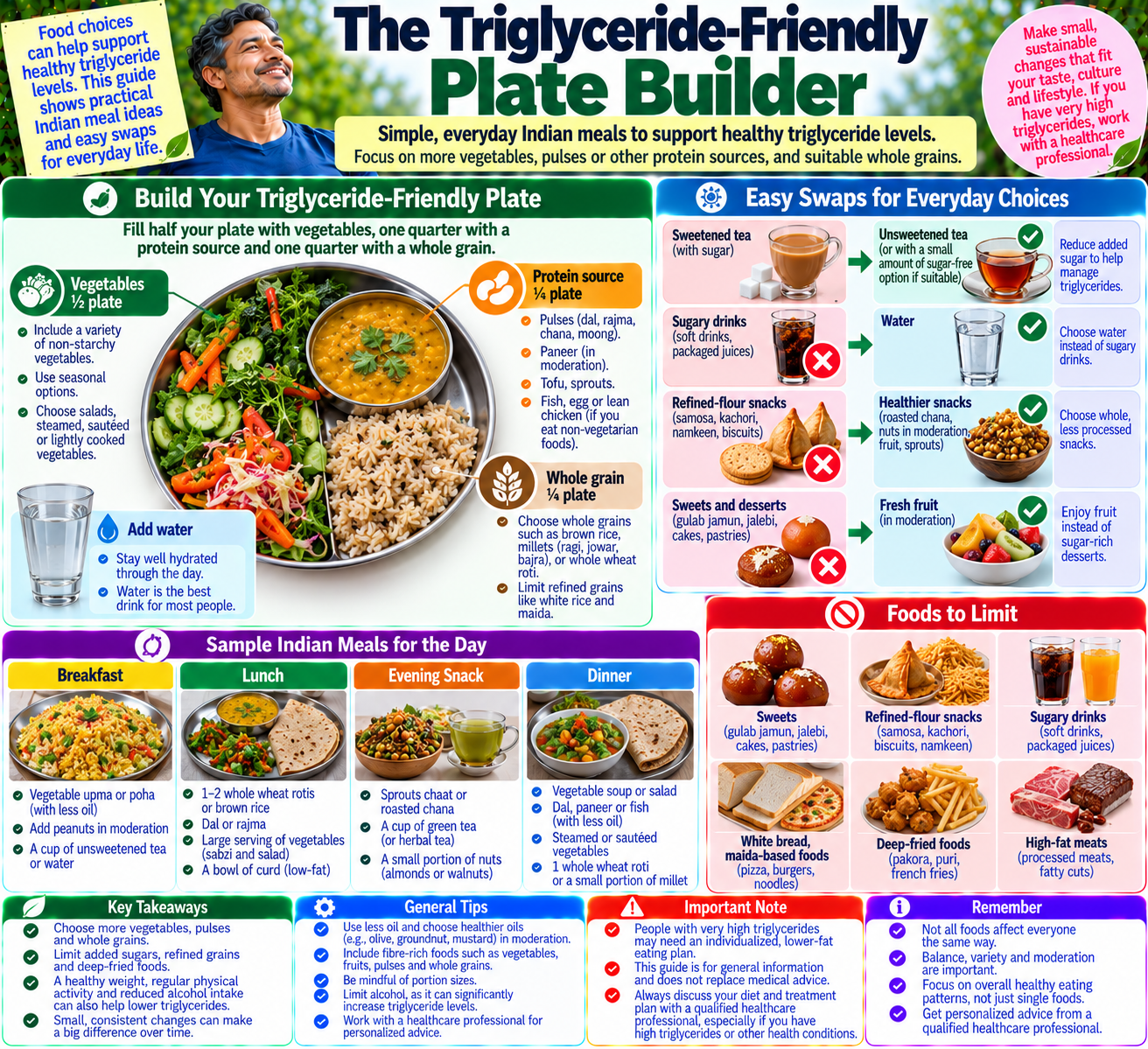
You do not need a costly diet or imported superfoods to make useful changes. Familiar foods can fit into a balanced eating pattern.
| Meal | Practical example | Why it may help |
|---|---|---|
| Breakfast | Oats with unsweetened milk or yogurt, plus a suitable portion of nuts | Provides fiber and can reduce reliance on sugary breakfast foods |
| Mid-morning | Whole fruit | Provides fiber and nutrients |
| Lunch | Dal, vegetables, whole-wheat roti or another suitable grain, and a protein source | Combines fiber, protein, and a varied range of foods |
| Afternoon snack | Roasted chickpeas or a small portion of unsalted nuts | Can replace frequent sweets or highly processed snacks |
| Dinner | Vegetables with beans, lentils, tofu, fish, or another suitable protein and a sensible grain portion | Supports a balanced meal pattern |
| Drinks | Water and unsweetened drinks | Helps reduce added sugar from beverages |
This is a general example, not a prescribed meal plan. Portion sizes and food choices should reflect your energy needs, diabetes status, kidney function, allergies, culture, and medical advice.
If triglycerides are 500 mg/dL or higher, the dietary plan may need to be more restrictive, particularly regarding total fat and alcohol. Follow individualized medical advice rather than using a general online meal plan.
How Quickly Can Triglycerides Decrease Naturally?
Some people see improvement within weeks of making meaningful changes, but there is no guaranteed timeline. The response depends on the starting level, the underlying cause, how consistently changes are followed, and whether medication is needed.
A useful way to approach progress is to focus on actions you can control. For example, replace sugary drinks, plan regular walks, and review your food routine. Then repeat testing at the time recommended by your healthcare professional.
Do not try to force a rapid reduction through crash dieting, extreme exercise, or unverified supplements. If levels are very high, waiting for lifestyle changes alone may be unsafe.
Common Mistakes That Can Keep Triglycerides High
Cutting All Carbohydrates Instead of Improving Their Quality
Not all carbohydrates have the same nutritional value. Reducing added sugars and refined carbohydrates while including appropriate portions of fiber-rich foods is generally more useful than eliminating every carbohydrate without a medical reason.
Replacing Sugar With Too Much Fat
Some people remove sweets but greatly increase high-fat foods. This may not be suitable, especially when triglycerides are very high and a clinician has recommended limiting total fat.
Assuming Fruit Must Be Avoided
Whole fruit provides fiber and nutrients. It is not equivalent to sugary drinks or large amounts of added sugar. Individual dietary advice may differ when triglycerides are severely elevated or other conditions are present.
Taking Fish-Oil Supplements Without Medical Advice
A supplement may not provide the same dose or formulation as prescription omega-3 medicine. High-dose products can have side effects and interactions.
Ignoring Diabetes, Thyroid Problems, or Medicines
A dietary change cannot always correct an underlying medical cause. Persistent elevation deserves a review of possible contributors.
Stopping Medication When Results Improve
Lifestyle changes and medication may work together. Do not stop treatment without speaking to your clinician.
Expecting Every Person to Achieve the Same Percentage Reduction
The response varies from one person to another. Your goal should be a safer, sustainable improvement guided by repeat testing and your overall cardiovascular risk.
When Are Natural Ways to Lower High Triglycerides Not Enough?
Lifestyle changes are important, but they are not always sufficient.
If your triglycerides are 500 mg/dL or higher, contact a healthcare professional promptly. At these levels, the risk of pancreatitis becomes a concern, and an individualized treatment plan may be needed. Levels of 1,000 mg/dL or higher require particularly careful management.
Your clinician may recommend a specific low-fat eating plan, eliminate alcohol, address diabetes or another underlying condition, and use prescribed medication where appropriate. Do not attempt an extreme diet on your own.
If you develop severe, persistent upper abdominal pain, especially with vomiting, seek urgent medical care. These symptoms can have several causes, including pancreatitis, and should not be self-treated.
The American College of Cardiology’s guidance on hypertriglyceridemia explains why severe elevations require more intensive management.
Personal Experience and People-First Insight
A practical lesson for anyone trying to improve triglyceride levels is that a manageable routine is often easier to sustain than a complete lifestyle overhaul.
For example, someone who regularly drinks sweetened tea and soft drinks might begin by reducing added sugar. Another person may focus first on walking after meals or planning more balanced lunches. These are examples of realistic habit changes, not proof that any one change will lower a particular person’s test result.
Personal experience to add before publishing: If you have genuinely managed high triglycerides yourself, describe what your original test showed, which habits you changed, how long you followed them, and what a later test showed. Include the limits of your experience and avoid implying that the same result will happen to every reader.
If you do not have personal experience, leave out first-person health claims. A transparent explanation of evidence and practical examples is more trustworthy than an invented success story.
Frequently Asked Questions
1. What is the fastest natural way to lower high triglycerides?
Reducing added sugars and refined carbohydrates, avoiding alcohol when advised, and addressing excess weight can help. The fastest safe approach depends on your starting level and underlying cause. Very high results may require prompt medical treatment rather than lifestyle changes alone.
2. Which foods should I avoid when triglycerides are high?
Limit sugary drinks, sweets, frequent refined-flour snacks, and alcohol when appropriate. If your levels are very high, your clinician may also recommend specific limits on total dietary fat. Your exact plan depends on your results and health conditions.
3. Can walking lower triglycerides?
Regular walking contributes to physical activity, insulin sensitivity, weight management, and cardiovascular health. It can be an important part of a broader plan, but the result varies, and exercise alone may not be sufficient.
4. Are bananas and other fruits safe with high triglycerides?
Whole fruit can usually fit into a balanced diet because it provides fiber and nutrients. Portion sizes and individual advice may differ, particularly for people with diabetes or very high triglycerides. Do not automatically replace whole fruit with juice, which can deliver sugar more quickly.
5. Does drinking more water lower triglycerides?
Water is important for hydration, but drinking extra water is not an established treatment for elevated triglycerides. Focus on dietary quality, physical activity, alcohol reduction where appropriate, and medical evaluation.
6. Can omega-3 supplements replace triglyceride medication?
No. Over-the-counter fish oil is not equivalent to prescription omega-3 medicine. Ask your clinician whether a prescription product or another treatment is appropriate for your triglyceride level and cardiovascular risk.
7. Can high triglycerides cause symptoms?
High triglycerides usually do not cause noticeable symptoms. A blood test is needed to identify elevated levels. Very high levels can increase pancreatitis risk, so do not wait for symptoms before following up on a concerning result.
8. Should I stop my statin if my triglycerides improve?
No. Do not stop a statin or another prescribed medicine without medical advice. Your treatment may be addressing LDL cholesterol or overall cardiovascular risk as well as triglycerides.
9. Can stress cause high triglycerides?
Stress can influence sleep, appetite, activity, and other health habits. However, it should not be assumed to be the main cause of an elevated result. Diet, alcohol, diabetes, thyroid disease, medicines, and genetic factors may also matter.
10. When should I see a doctor about high triglycerides?
Discuss elevated results with your healthcare professional, especially if they persist or you have diabetes, cardiovascular disease, or other risk factors. Contact a clinician promptly for triglycerides of 500 mg/dL or higher. Seek urgent care for severe persistent abdominal pain, especially with vomiting.
Conclusion: Make Small Changes, but Take High Results Seriously
The most effective natural ways to lower high triglycerides focus on practical, evidence-based habits. Reduce added sugar and refined carbohydrates, choose balanced meals, stay active, manage excess weight when appropriate, and limit or avoid alcohol according to your results and medical advice.
These changes can support heart health, but there is no guaranteed result or single remedy that works for everyone. Underlying medical conditions, medicines, and inherited factors may need attention.
Check your blood results with a qualified healthcare professional and follow up at the recommended time. If triglycerides are very high, do not delay treatment while trying home remedies.
A consistent routine can be valuable, especially when combined with appropriate medical care and realistic expectations.
Author Note
Author: RVLNSV PRASAD
This article provides general, evidence-informed information about triglycerides, nutrition, physical activity, and heart health. It aims to help readers understand practical lifestyle options and when professional care may be necessary.
Medical review: This article has not been independently reviewed by a qualified healthcare professional.
Medical Disclaimer
This article is for general educational purposes only. It does not diagnose, treat, or prevent any medical condition and is not a substitute for individualized medical advice. Triglyceride treatment depends on blood test results, overall cardiovascular risk, medical history, and other factors. Do not stop or change prescribed medication without consulting your healthcare professional. Seek prompt medical advice for triglycerides of 500 mg/dL or higher and urgent care for severe persistent abdominal pain, particularly with vomiting.
Fitness Disclaimer
Choose physical activities appropriate for your current health, mobility, and fitness level. Increase exercise gradually and stop if you experience chest pain, faintness, severe shortness of breath, or other concerning symptoms. If you have heart disease, diabetes complications, significant joint problems, or another condition that affects exercise, consult a qualified healthcare professional before making substantial changes.
Sources
- American College of Cardiology and American Heart Association: 2026 Guideline on the Management of Dyslipidemia
- MedlinePlus: Triglycerides — causes, levels, and treatment
- MedlinePlus: Triglycerides Test—understanding results
- American Heart Association: Triglycerides and Heart Health
- American College of Cardiology: Expert Consensus on Hypertriglyceridemia Management
- American College of Cardiology and American Heart Association: Guideline Evidence on Lifestyle Management and Weight Loss
Related Posts
- 10 Best Natural Remedies for Erectile Dysfunction Best Proven Techniques
- 15 Ways to Improving Prostate Health Naturally: What Every Man Should Know
- 10 Ways to Stop Snoring Tonight Using Easy At-Home Methods
- 5 Simple Home Exercises for Hypothyroidism to Lose Weight
- Gut Health Revolution: How Nutrition Shapes Your Microbiome
- Train Smarter, Not Harder: Optimizing Workouts for Maximum Results
- The American Wellness Revolution: How to Thrive in a Fast-Paced World











[…] 10 Doctor-Recommended Natural Ways to Lower High Triglycerides […]