








































































































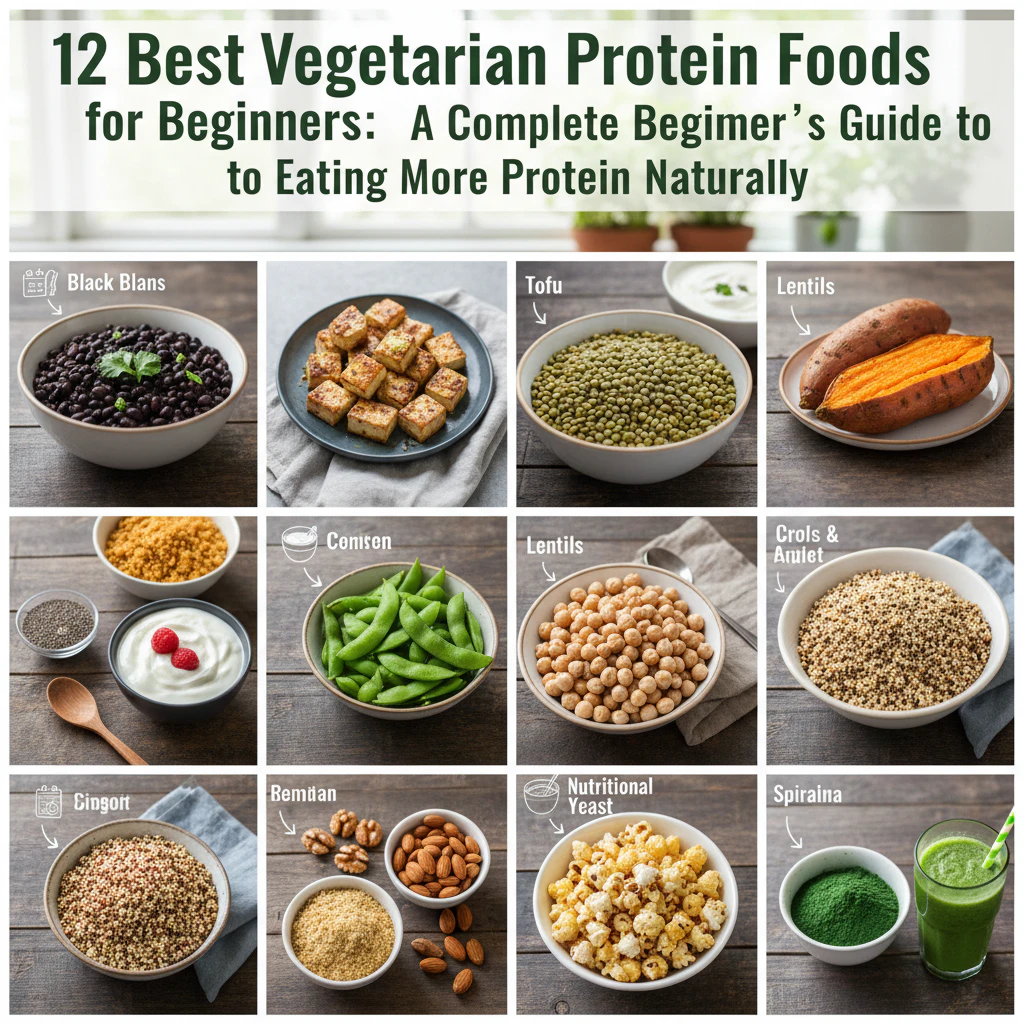
12 Best Vegetarian Protein Foods for Beginners: A Complete Beginner’s Guide to Eating More Protein Naturally
Author: RVLNSV PRASAD
Fact Checked By: Wellness Research Team
Last Updated: August 2026
Sources Reviewed: Harvard, NIH, Mayo Clinic, USDA, WHO
Author Note
RVLNSV PRASAD writes evidence-based wellness and nutrition articles that simplify complex health topics into practical, easy-to-follow habits. This guide combines current nutrition research, reliable public health recommendations, and practical strategies for healthy eating to help readers understand how vegetarian protein foods can contribute to good health and balanced nutrition.
Medical Disclaimer
This text is for educational and informational purposes only and is not medical advice. This information does not diagnose, treat, cure, or prevent any disease. Always consult a skilled healthcare expert, registered dietitian, or medical provider about any major changes to your diet, particularly if you have any medical condition, food allergy, renal illness, or unique nutritional needs.
Quick Answer:
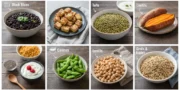
Best Vegetarian Protein Foods for Beginners: Lentils, Chickpeas, Greek Yogurt, Paneer, Tofu, Edamame, Kidney Beans, Soy Milk, Peanuts, Pumpkin Seeds, Quinoa, and Cottage Cheese. These foods provide protein, fiber, vitamins, minerals, and other nutrients that contribute to overall wellness. You need protein to build muscle, to recover, to age well, and to do the activities of daily living.
Most adults need about 0.8 grams of protein per kilogram of body weight daily, although needs may be higher for older adults, athletes, and active individuals.
Introduction
If you are looking for the best vegetarian protein foods for beginners, you are not alone.
Many people desire to eat more protein but think they need fancy supplements, intricate meal planning, or a rigorous diet. When I reviewed the nutrition advice from major health organizations and nutrition experts, the most popular advice was surprisingly simple: start with ordinary protein-rich foods that are already on hand in most kitchens.
Protein is found throughout the body and plays an important role in muscles, bones, skin, enzymes, and many other tissues. It is a crucial nutrient because the body can’t make it itself. The body gets these amino acids from food to help create and maintain important structures and functions. (Harward TH)
The good news is that novices don’t need to use protein supplements to increase their protein intake. Many vegetarian meals are naturally high in protein, and they also offer fiber, vitamins, and minerals that contribute to a balanced eating pattern. (Harward TH)
In this guide you will learn:
- Importance of protein
- Signs You’re Not Getting Enough Protein
- Best plant-based protein snacks for beginners
- Common pitfalls to avoid
- Practical Strategies for Meal Building
- How to naturally and easily eat extra protein
Why Protein Is Important
Proteins do much more than simply build muscle.
Research demonstrates that protein is responsible for several processes throughout the body. It helps to create and repair tissue, supports enzymes and hormones, contributes to immunological function, and helps keep our muscles strong as we age.
Key Benefits of Protein
Muscle Maintenance
Muscle is constantly being repaired and renewed. And protein provides the amino acids for this process. (Nutrition Source)
Recovery
Protein helps maintain proper muscle recovery and maintenance following physical activity. (NIH)
Fullness
High-protein meals could help you feel full for longer than meals with very little protein. (Harward TH)
Healthy Aging
Adequate protein intake becomes increasingly important as people get older because muscle mass naturally changes with age. (NIH)
Overall Wellness
Protein contributes to skin, hair, bones, enzymes, hormones, and numerous body functions necessary for daily health. (MedLine Plus)
How Much Protein Do You Need?
Protein requirements vary based on age, body weight, activity level, and overall health.
| Person | General Protein Needs* |
|---|---|
| Sedentary Adult | 0.8 g per kg body weight |
| Active Adult | 1.0–1.2 g per kg |
| Strength Training | 1.2–2.0 g per kg |
| Older Adults | Often higher than younger adults |
| Athletes | Individual requirements vary. |
*Individual needs may differ. Consult a healthcare professional for personalized recommendations.
Example
A person weighing 70 kg may require approximately:
- 56 g protein daily (minimum recommendation)
- 70–100 g protein daily if physically active
Signs You May Not Be Getting Enough Protein
Protein deficiency is uncommon in many developed countries, but some people may still consume less protein than they need for their lifestyle and goals. (Harward TH)
| Possible Sign | Why It May Matter |
|---|---|
| Frequent hunger | Meals may not feel satisfying. |
| Low energy | Nutrition balance may need improvement. |
| Poor workout recovery | Protein supports tissue maintenance. |
| Reduced strength | Muscle maintenance depends on adequate nutrition. |
| Constant snacking | Low-protein meals may not be filling. |
| Feeling unsatisfied after meals | Meals may lack protein-rich foods. |
These signs can have many causes and do not automatically mean a protein deficiency. Consult a healthcare professional if symptoms persist.
The Beginner Protein Gap
One observation repeatedly appeared during my research.
Many beginners don’t intentionally avoid protein.
Instead, they simply avoid building meals around protein-rich foods.
For example:
Common Breakfast Pattern
- Tea or coffee
- White toast
- Sugary cereal
- Biscuits
While convenient, these meals may contain relatively little protein.
Common Lunch Pattern
- Large rice portion
- Small legumes
- Some protein-rich foods
Typical Snack Pattern
- Chips
- Cookies
- Sugar-sweetened beverages
Again, it’s generally protein-poor.
Over time, these eating patterns can make it harder to reach daily protein goals.
The solution is not perfection.
The solution is making small upgrades.
12 Best Vegetarian Protein Foods for Beginners
1. Lentils
Lentils are one of the most beginner-friendly protein foods available.
According to Harvard Nutrition Source, legumes such as lentils provide protein along with fiber and other valuable nutrients.
Why Beginners Love Them
- Affordable
- Easy to cook
- Versatile
- Rich in fiber
Approximate Protein Content
About 18 grams per cooked cup.
Easy Ways to Use Lentils
- Lentil soup
- Dal
- Lentil curry
- Grain bowls
- Salads
Common Mistake
Using lentils only occasionally.
Consistency matters more than occasional large servings.
Simple Meal Example
- Lentil dal
- Brown rice
- Mixed vegetables
This dish creates a balanced and protein-rich meal.
2. Chickpeas
Another wonderful starter choice is chickpeas.
They are a fantastic source of protein and fiber, and they are flexible in both savory and snack dishes. Chickpeas are legumes and a good plant protein source.
Why beginners adore them
- Simple to prepare
- Cost-effective
- Pleasant texture
- Good for plenty of recipes.
Appropriate Protein Count
About 14–15 grams per cooked cup.
Easy Ways to Use Chickpeas
- Hummus
- Roasted chickpeas
- Salads
- Wraps
- Curries
Common Mistake
Relying solely on bought hummus and disregarding alternative chickpea recipes.
Example of a Simple Meal
- Chickpea salad
- Whole wheat wrap
- Mixed greens
3. Greek Yogurt
Greek yogurt is one of the easiest methods to boost protein without a lot of meal prep.
It is a protein source that can be used for breakfast, snacks, and desserts.
Why Newbies Love It
- Handy
- No cooking necessary
- Protein-rich
- Easy snack choice
Appropriate Protein Count
About 15–20 grams per serving, depending on the brand
Easy Ways to Use Greek Yogurt
- Breakfast bowl
- Smoothies
- Fruit parfait
- Nutritious snacks
Common Mistake
Opting for excessively sweetened variants with lots of added sugar.
Sample Meal Example
- Greek Yogurt
- Berries 1.
- Pumpkin seed
This combo gives some protein, fiber, and texture.
4. Paneer
Paneer is a very popular, protein-rich, vegetarian food and an easy option for novices. It’s a great source of excellent protein and can be simply used in breakfast, lunch, dinner, or snacks.
Dairy foods can be a good source of protein and other vital nutrients for your diet, reports the Harvard T.H. Chan School of Public Health Nutrition Source, as part of a healthy diet.
What Beginners Love It
- Simple to make
- Commonly available
- Multi-purpose
- Filling
Protein Content (Estimated)
Protein—about 18-20 grams per 100 grams.
Simple ways to prepare paneer
- Paneer bhurji
- Paneer salad
- Paneer sandwiches
- Grilled paneer
- Stir-fried paneer
Common Mistake
Deep frying paneer very often leads to unwanted calories and fat.
Example of Simple Meal
- Paneer Tikka
- Mixed veggies
- Whole wheat chapati
Practical Advice
Keep the paneer quantities moderate and add veggies for a balanced dinner.
5. Tofu
Tofu is one of the most adaptable plant-based protein meals out there. It’s made from soybeans and can take on the flavor of just about any dish.
Soy foods are regularly identified as excellent sources of protein in vegetarian eating patterns. The Academy of Nutrition and Dietetics states that well-planned vegetarian diets can offer enough protein from soy products, legumes, nuts, and seeds.
Why Beginners Love It
- High protein content
- Budget-friendly
- Easy to cook
- Suitable for many cuisines
Approximate Protein Content
About 10–15 grams per 100 grams, depending on the variety.
Easy Ways to Use Tofu
- Stir-fries
- Curries
- Sandwiches
- Salads
- Tofu scramble
Common Mistake
Not seasoning tofu properly.
Tofu naturally has a mild flavor and benefits from herbs, spices, and marinades.
Simple Meal Example
- Tofu vegetable stir-fry
- Brown rice
Practical Tip
Start with firm tofu because it is easier for beginners to cook.
6. Edamame
Edamame are young soybeans that are picked before they mature. They are naturally high in protein and fiber.
Protein foods for vegetarians include the handy edamame, which requires little preparation.
Why Beginners Love It
- Ready-to-eat
- Good source of protein.
- Easy snack option
- Naturally filling
Estimated Protein Content
About 18 grams per cup cooked.
Simple Ways to Enjoy Edamame
- Snack bowls
- Salads
- Rice bowl
- Stirfry
- Soups
Common Mistake
Much more salt.
Simple Meal Sample
- Edamame
- Brown rice.
- Mixed vegetables
Practical Tip:
Keep frozen edamame in the freezer for quick meals and snacks.
7. Kidney Beans
Kidney beans are one of the cheapest vegetarian protein foods for beginners.
They are a source of protein and fiber and may be included in many different dishes.
The Mayo Clinic Healthy Lifestyle Resources encourages eating more plant foods, including beans and legumes, as part of healthy eating patterns.
Why Beginners Love Them
- Affordable
- Filling
- Easy meal ingredient
- Long shelf life
Approximate Protein Content
About 15 grams per cooked cup.
Easy Ways to Use Kidney Beans
- Bean curry
- Burrito bowls
- Salads
- Soups
- Chili
Common Mistake
Eating too few legumes during the week.
Simple Meal Example
- Kidney bean curry
- Brown rice
- Steamed vegetables
Practical Tip
Use canned low-sodium beans when short on time.
8. Soy Milk
Many beginners forget that beverages can contribute to protein intake as well.
Soy milk contains more protein than many other plant-based milk alternatives.
Why Beginners Love It
- Convenient
- No cooking needed
- Works in smoothies
- Suitable for breakfast
Approximate Protein Content
About 7–8 grams per cup.
Easy Ways to Use Soy Milk
- Smoothies
- Oatmeal
- Coffee
- Breakfast cereal
- Protein-rich shakes
Common Mistake
This assumption is incorrect, as many alternatives contain much less protein than soy milk.
Many alternatives contain much less protein than soy milk.
Simple Meal Example
- Oatmeal
- Soy milk
- Chopped nuts
- Fruit
Practical Tip
Choose unsweetened varieties whenever possible.
9. Peanuts
Peanuts are one of the simplest and most affordable easy vegetarian protein sources available.
The Harvard T.H. Chan School of Public Health Nutrition Source includes nuts among healthy protein-rich food options that can contribute to a balanced diet.
Why Beginners Love Them
- Affordable
- Portable
- No preparation required
- Widely available
Approximate Protein Content
About 7 grams per ounce (28 grams).
Easy Ways to Use Peanuts
Snack mixes
Peanut butter
Oatmeal toppings
Smoothies
Salads
Common Mistake
Eating large portions without noticing calorie intake.
Simple Meal Example
- Apple slices
- Natural peanut butter
Practical Tip
Choose unsalted or lightly salted options when possible.
My Research Observation So Far
During my review of nutrition guidance from Harvard Nutrition Source, Mayo Clinic resources, and registered dietitian recommendations, one pattern appeared repeatedly.
The foods most often recommended were not specialty products.
Instead, the experts always identified common items such as beans and lentils, soy foods, yogurt, almonds, and seeds.
The most surprising for me is how many people are focusing on protein supplements before they have their meals sorted. For most starters, simply eating better-for-you foods for breakfast, lunch, dinner, and snacks will greatly improve protein intake.
Another lesson I witnessed was that consistency beats perfection. A person who eats protein-rich foods at each meal is likely employing a more sustainable approach than someone who eats big amounts of protein occasionally.
10. Pumpkin Seed
Pumpkin seeds are tiny, but they pack a surprisingly significant amount of protein along with healthy fats, magnesium, and other minerals.
According to the Harvard T.H. Chan School of Public Health Nutrition Source, nuts and seeds can contribute valuable protein and nutrients as part of a healthy dietary pattern.
Why Beginners Love Them
- No cooking required
- Portable snack
- Easy to add to meals
- Long shelf life
Approximate Protein Content
About 7–9 grams per ounce (28 grams).
Easy Ways to Use Pumpkin Seeds
- Oatmeal toppings
- Yogurt bowls
- Smoothies
- Salads
- Homemade trail mix
Common Mistake
Using heavily salted varieties regularly.
Example of a Simple Meal
- Greek yogurt
- Pumpkin seed
- Mixed berries
Practical Tips
Carry a small container of pumpkin seeds to work for a quick, protein-rich snack.
11. Quinoa
Quinoa is frequently viewed as one of the best all-around grains for those seeking to enhance their protein intake.
Unlike many grains, quinoa has all nine necessary amino acids; therefore, it is a good source of protein for vegetarians.
Why Beginners Love It
- Easy to prepare
- Flexible
- Light taste
- Works well in many recipes.
Approximate Protein Content
About 8g per cooked cup.
Healthier Ways to Use Quinoa
- Grain bowl
- Salad
- Side dishes
- Stuffed vegetables
Common Mistake
Quinoa is a good source of protein on its own.
Combine quinoa with lentils for a more protein-rich dish.
Simple Meal Example
- Quinoa
- Chickpeas
- Mixed vegetables
- Olive oil dressing
The Useful Tip
Cook extra quinoa and keep it in the fridge for quick weeknight meals.
12. Low-Fat Cottage Cheese
Cottage cheese is another wonderful choice for beginners. It’s a lot of protein with very little work.
According to Harvard Health Publishing, if you follow a well-rounded eating plan, dairy products can be a wonderful source of protein.
Why Beginners Love It
- Rich in protein
- Convenience
- No cooking required
- Good for snacks and meals
Approximate protein content
About 12-14 grams of protein per half-cup serving.
Easy Ways to Use Cottage Cheese
- Breakfast bowls
- Fruit snacks
- Toast topping
- Smoothies
Common Mistake
Adding excessive sweeteners.
Example of a Simple Meal
- Cottage cheese.
- Sliced fruits
- Pumpkin seeds
Practical Tip
Choose plain variety, then add fresh fruit for flavor.
Vegetarian Protein Foods Comparison Table
| Food | Serving Size | Approximate Protein |
|---|---|---|
| Lentils | 1 cup cooked | 18 g |
| Edamame | 1 cup cooked | 18 g |
| Paneer | 100 g | 18–20 g |
| Greek Yogurt | 1 serving | 15–20 g |
| Kidney Beans | 1 cup cooked | 15 g |
| Chickpeas | 1 cup cooked | 14–15 g |
| Cottage Cheese | ½ cup | 12–14 g |
| Tofu | 100 g | 10–15 g |
| Pumpkin Seeds | 28 g | 7–9 g |
| Soy Milk | 1 cup | 7–8 g |
| Peanuts | 28 g | 7 g |
| Quinoa | 1 cup cooked | 8 g |
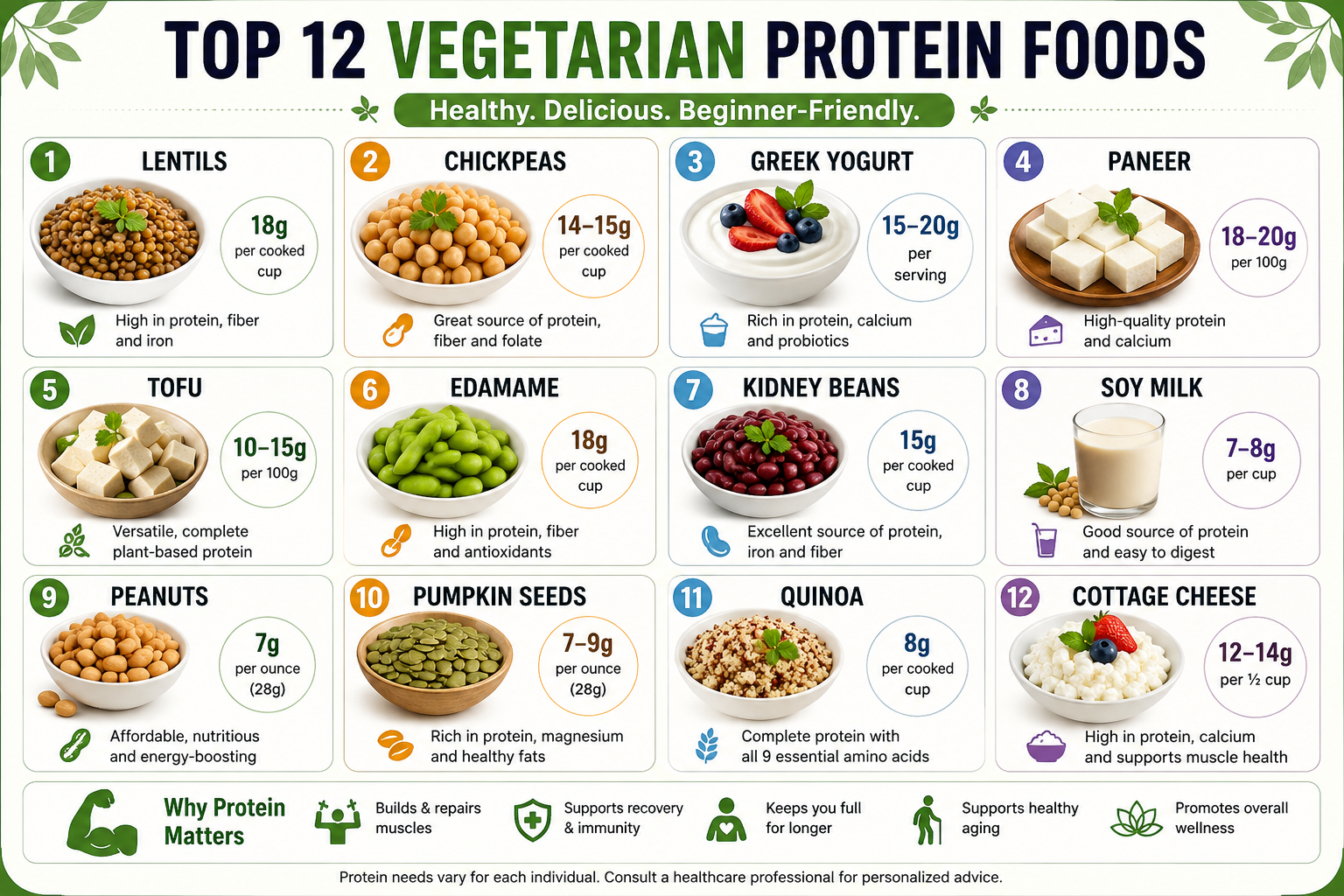
What This Means
Foods such as lentils, edamame, paneer, Greek yogurt, and beans provide some of the highest amounts of protein per serving. Including one or two of these foods at each meal can help beginners reach their daily protein goals more easily.
Complete vs. Incomplete Proteins
Many beginners worry that vegetarian foods do not contain complete protein.
The reality is much simpler.
Complete Protein Sources
These foods contain all nine essential amino acids:
- Soy foods
- Tofu
- Edamame
- Soy milk
- Greek yogurt
- Cottage cheese
- Paneer
- Quinoa
Protein Complementation Examples
Combining different plant foods throughout the day helps provide a variety of amino acids.
| Combination | Benefit |
|---|---|
| Rice + Lentils | Traditional complete protein pairing |
| Whole Wheat Roti + Dal | Balanced amino acid profile |
| Quinoa + Chickpeas | Protein-rich meal |
| Peanut Butter + Whole Grain Bread | Convenient snack |
| Hummus + Whole Wheat Pita | Balanced protein source |
You do not need to combine proteins at every meal. Eating a variety of protein-rich foods throughout the day is usually sufficient.
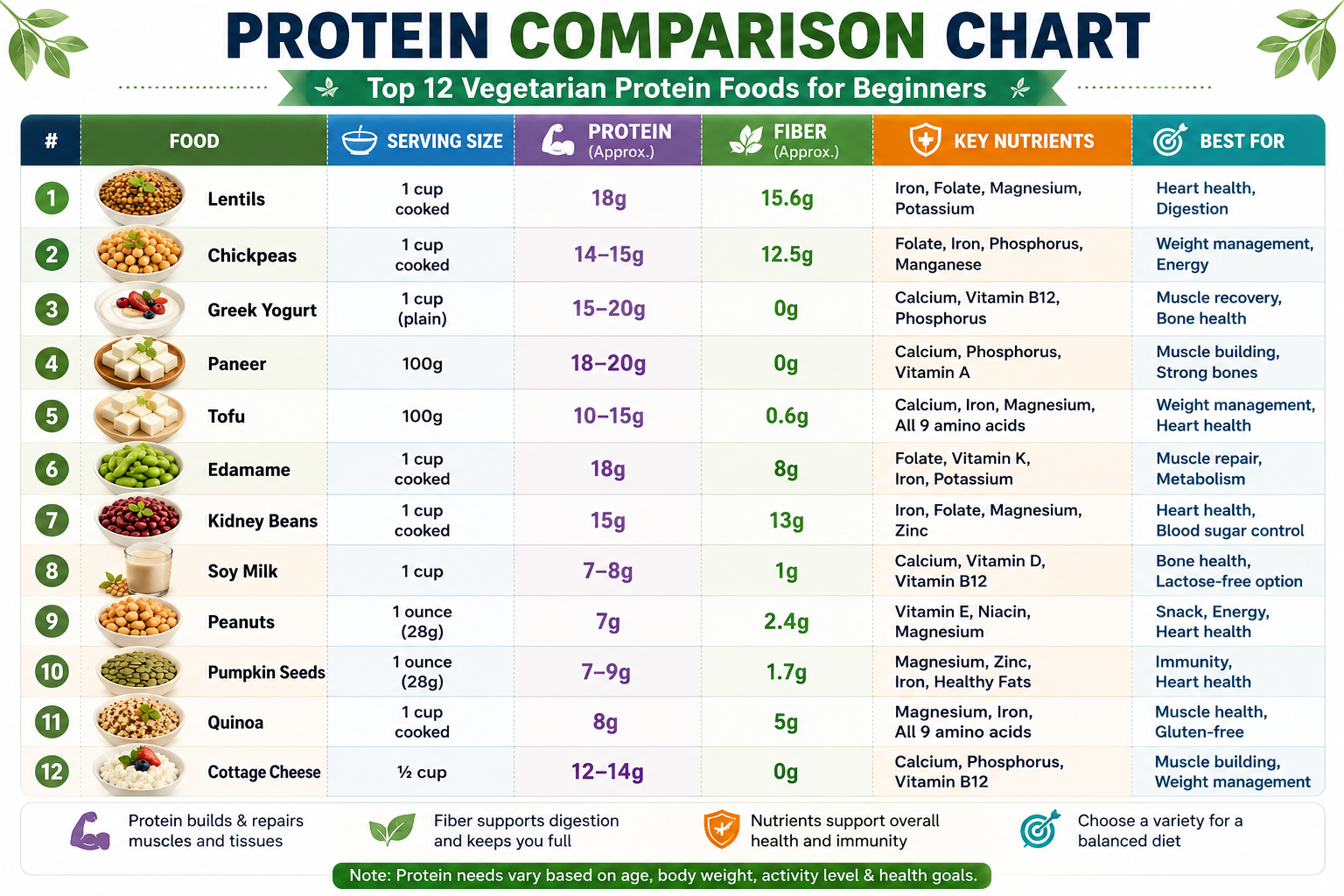
Beginner-Friendly One-Day High-Protein Vegetarian Meal Plan
Morning meal
- Greek yogurt
- Oats
- Pumpkin seeds
- Mixed berries
Approximate protein: 20-25 grams
Morning Snack
- Apple
- Peanut butter
Approximate Protein: 7-10 grams
Lunch
- Curry of lentils
- Brown rice
- Mixed Vegetables
Approximate Protein: 20 grams
Afternoon Snack
Roasted chickpeas
Approximate Protein: 10 grams
Dinner
- Paneer stir fry
- Vegetables
- Whole wheat roti
Estimated Protein: 20-25 grams
Evening Snack
Cottage Cheese
Protein: 12-14 grams estimated
Total protein per day
This means you might aim for about 70-90 grams of protein per day, depending on your serving sizes.
Remember that individual protein demands vary dependent on age, body size, exercise level, and health status. The Academy of Nutrition and Dietetics advises tailored nutrition guidance as needed.
Table
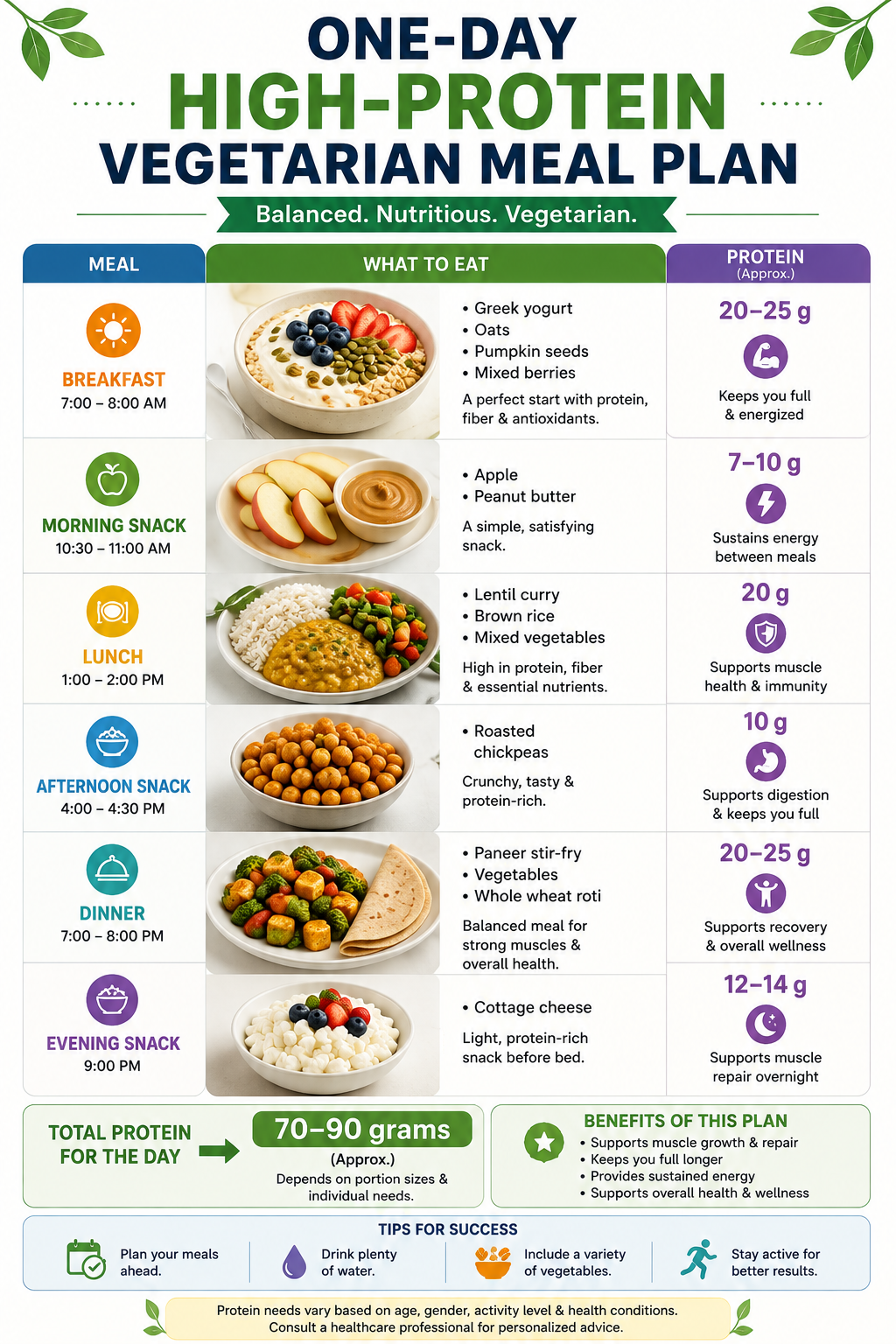
| Meal | Foods | Approximate Protein |
|---|---|---|
| Breakfast | Greek yogurt, oats, pumpkin seeds, berries | 20–25 g |
| Morning Snack | Apple and peanut butter | 7–10 g |
| Lunch | Lentil curry, brown rice, vegetables | 20 g |
| Afternoon Snack | Roasted chickpeas | 10 g |
| Dinner | Paneer stir-fry, vegetables, whole-wheat roti | 20–25 g |
| Evening Snack | Cottage cheese | 12–14 g |
| Daily Total | — | 70–90 g |
Common Vegetarian Protein Mistakes
During my review of nutrition guidance, I noticed that most beginners make similar mistakes.
1. Skipping Protein at Breakfast
Many breakfasts contain mostly refined carbohydrates and very little protein.
2. Living on rice or bread only
Staple foods can be part of a healthy diet, but protein-rich foods make meals more balanced.
3. Overlooking Legumes
Some of the cheapest sources of protein are still beans, lentils, and chickpeas.
4. Relying Solely on Supplements
Whole foods are a source of protein as well as fiber, vitamins, minerals, and other important ingredients.
5. Not Eating Enough Protein-Rich Snacks
Strategic snacking can help you meet your daily protein needs—nuts, seeds, Greek yogurt, roasted chickpeas, and more.
My Research Observations on Vegetarian Protein Foods
While reviewing guidance from the Harvard T.H. Chan School of Public Health Nutrition Source, Harvard Health Publishing, the National Institutes of Health (NIH), and the Academy of Nutrition and Dietetics, one consistent message appeared repeatedly: adequate daily protein intake plays an important role in supporting overall health, muscle maintenance, and healthy aging.
Most experts do not focus on supplements first.
They instead advocate constructing meals around whole-food protein sources such as beans, lentils, soy foods, dairy products, nuts, and seeds. Protein is available in abundance in many common foods; thus, most healthy persons may meet their protein demands with food alone.
I think the biggest surprise for me was how often newcomers underestimate the protein in regular foods. Many people believe that before they can improve their everyday meals, they require expensive protein powders. But you can really ramp up your protein consumption over time if you start adding lentils at lunch, Greek yogurt for breakfast, or roasted chickpeas for a snack.
Another observation was that consistency appears more important than chasing perfect numbers. People who include protein-rich foods at most meals are often following the same practical advice promoted by major nutrition organizations.
Finally, I noticed that successful healthy eating habits are usually simple. The people most likely to maintain a protein-rich eating pattern are not necessarily those following strict diets. Instead, they look for little profits that they can hold on to for months and years.
My Personal Experience
During my research and experience reviewing nutrition guidelines, I found that many beginners focus only on protein quantity. However, combining different protein-rich foods throughout the day often produces better results.
When to Seek Professional Help
Vegetarian protein foods can be a healthy part of your diet, but certain people may need advice that’s specific to them.
Consider consulting a healthcare professional or registered dietitian if you:
- Have renal disease
- Gastrointestinal Disorders
- Pregnant or breastfeeding
- Follow a very tight diet.
- Have unintentional weight loss
- Are worried about getting enough nutrients
- Have questions about specific protein requirements
How much protein you need depends on your age, your body size, your exercise level, your health problems, and your goals. Individual needs can vary widely and may require a specialized assessment, writes the Harvard Nutrition Source.
Key Points
- Protein helps build muscle, tissue, enzymes, hormones, and general well health.
- For many beginners, it is easier to boost protein intake using regular foods rather than supplements.
- Some of the most practical protein sources are lentils, chickpeas, tofu, paneer, Greek yogurt, and beans.
- Small everyday improvements often yield greater long-term results than severe diets.
- Eating protein-rich meals may help you feel more full and support healthy eating.
- Many people can meet their protein needs with well-organized vegetarian eating patterns.
Conclusion
The best vegetarian protein foods for beginners need not be complicated, expensive, or difficult to make.
You may increase your protein intake naturally by eating foods such as lentils, chickpeas, Greek yogurt, paneer, tofu, kidney beans, soy milk, peanuts, pumpkin seeds, quinoa, and cottage cheese. These are also packed with other beneficial elements.
In my research, the most constant message from nutrition experts was simple: put food first. Focus on building meals around good protein-rich foods, and make modest changes over time instead of pursuing the latest nutrition craze.
Healthy eating rarely requires perfection. Small habits, when done consistently, usually yield better long-term effects than drastic short-term improvements. Protein is one piece of a balanced diet, and eating a range of nutritious meals can support you on your entire health and wellness journey.
Frequently Asked Question
1. Do beginners need supplements to gain sufficient protein?
No. Most healthy people can get all the protein they need by eating enough protein-rich foods. These include beans, dairy products, soy foods, nuts, and seeds.
2. What’s the easiest vegetarian protein food to add to breakfast?
Greek yogurt is frequently one of the easiest options because it doesn’t take much time and pairs nicely with fruit, oats, and seeds.
3. Do older people need a different amount of protein?
Yes. Your protein demands will vary based on your age, health status, and activity level. Older people should address their particular nutrition needs with a healthcare expert.
4. Can vegetarian foods help in muscle building?
Combining vegetarian foods that are rich in protein with proper exercise and an overall diet can help maintain muscle and support fitness objectives.
5. How to acquire extra protein on a budget?
Eat cheap foods like lentils, chickpeas, kidney beans, peanuts, soy milk, and other legumes. They are often a reasonably cheap source of protein.
6. What are the best vegetarian protein foods for beginners who don’t want to cook?
Greek yogurt, cottage cheese, roasted chickpeas, soy milk, peanuts, pumpkin seeds, and ready-to-eat edamame are all good options because they require little preparation.
Final Thought
If you are new to high-protein vegetarian eating, begin with small steps.
Add a protein-rich food to each meal. Be consistent and create routines that fit your lifestyle. Over time, these small changes can lead to a noticeable improvement in your nutrition and overall wellness.
Trusted References and Sources
- Harvard T.H. Chan School of Public Health – Protein Guide
- Harvard Health Publishing – The Truth About Fats, Carbs, and Protein
- National Institutes of Health (NIH) – Nutrition Research Overview
- National Institute on Aging – Healthy Eating as You Age
- MedlinePlus – Protein in Diet
- Academy of Nutrition and Dietetics – Protein Foods
- Mayo Clinic – Nutrition and Healthy Eating
- USDA MyPlate – Protein Foods Group
- World Health Organization (WHO) – Healthy Diet
Similar Topics
- Balancing Health: The Key to Sustainable Energy and Health
- Healthy Eating Meal Plan for Wellness
- Best Supplements for Muscle Gain
- Home
- Category Holistic Welness









[…] 12 Best Vegetarian Protein Foods for Beginners: A Complete Beginner’s Guide to Eating More Pro… […]
[…] 12 Best Vegetarian Protein Foods for Beginners: A Complete Beginner’s Guide to Eating More Pro… […]
[…] 12 Best Vegetarian Protein Foods for Beginners: A Complete Beginner’s Guide to Eating More Pro… […]
[…] 12 Best Vegetarian Protein Foods for Beginners: A Complete Beginner’s Guide to Eating More Pro… […]
[…] 12 Best Vegetarian Protein Foods for Beginners: A Complete Beginner’s Guide to Eating More Pro… […]
[…] 12 Best Vegetarian Protein Foods for Beginners: A Complete Beginner’s Guide to Eating More Pro… […]
[…] 12 Best Vegetarian Protein Foods for Beginners: A Complete Beginner’s Guide to Eating More Pro… […]
[…] 12 Best Vegetarian Protein Foods for Beginners: A Complete Beginner’s Guide to Eating More Pro… […]
[…] 12 Best Vegetarian Protein Foods for Beginners: A Complete Beginner’s Guide to Eating More Pro… […]
[…] 12 Best Vegetarian Protein Foods for Beginners: A Complete Beginner’s Guide to Eating More Pro… […]
[…] 12 Best Vegetarian Protein Foods for Beginners: A Complete Beginner’s Guide to Eating More Pro… […]
[…] 12 Best Vegetarian Protein Foods for Beginners: A Complete Beginner’s Guide to Eating More Pro… […]
[…] 12 Best Vegetarian Protein Foods for Beginners: A Complete Beginner’s Guide to Eating More Pro… […]
[…] 12 Best Vegetarian Protein Foods for Beginners: A Complete Beginner’s Guide to Eating More Pro… […]
[…] 12 Best Vegetarian Protein Foods for Beginners: A Complete Beginner’s Guide to Eating More Pro… […]
[…] 12 Best Vegetarian Protein Foods for Beginners: A Complete Beginner’s Guide to Eating More Pro… […]
[…] 12 Best Vegetarian Protein Foods for Beginners: A Complete Beginner’s Guide to Eating More Pro… […]
[…] 12 Best Vegetarian Protein Foods for Beginners: A Complete Beginner’s Guide to Eating More Pro… […]
[…] 12 Best Vegetarian Protein Foods for Beginners: A Complete Beginner’s Guide to Eating More Pro… […]
[…] 12 Best Vegetarian Protein Foods for Beginners: A Complete Beginner’s Guide to Eating More Pro… […]
[…] 12 Best Vegetarian Protein Foods for Beginners: A Complete Beginner’s Guide to Eating More Pro… […]