

















































































































































Table of Contents
ToggleThe Science Behind Weight Loss: What Really Works and Which Myths to Ignore
Author: RVLNSV PRASAD
Updated On: September 2026
About Us
Author Bio
Editorial Policy
Contact Us
Introduction
Losing weight can look simple from the outside.
Eat less. Move more. Watch the scale go down.
But the human body is more complicated than a calorie calculator. Appetite, food quality, activity, sleep, body composition, metabolism, environment, medications, genetics, and long-term habits can all influence what happens to body weight.
That is why two people can follow apparently similar routines and experience different results.
The science behind weight loss is not about finding one magical food, one fat-burning drink, or one perfect workout. It is about understanding how energy balance works while also recognizing that the body actively responds to weight loss.
The World Health Organization describes obesity as a chronic, relapsing disease influenced by genetics, neurobiology, eating behavior, access to healthy food, environmental conditions, and other factors. WHO: Obesity and higher weight
That broader view matters.
It moves weight loss away from blame and toward practical problem-solving.
This guide explains how weight loss works scientifically, what happens to body fat during weight loss, why progress often slows, what metabolism really does, and which popular weight-loss claims do not hold up well under scientific scrutiny.
It also includes practical strategies that ordinary people can use without turning their lives into a full-time diet project.
Quick Answer: What Is the Science Behind Weight Loss?
Weight loss occurs when the body uses more energy than it receives from food and drinks over time.
However, that does not mean weight loss is simply a matter of willpower or following a fixed calorie formula.
As body weight changes, energy requirements can change too. Appetite, activity, metabolism, and food choices may also shift. NIDDK notes that the body needs fewer calories at a lower weight, which can make maintaining weight loss difficult. NIDDK: Eating and Physical Activity to Lose or Maintain Weight
A scientifically sound approach therefore focuses on several connected areas:
- appropriate energy intake
- nutritious and satisfying foods
- adequate protein and fiber
- regular physical activity
- resistance exercise when appropriate
- sufficient sleep
- realistic behavior changes
- long-term weight maintenance
The goal should not be the fastest possible drop on the scale.
The better question is:
How can you reduce excess body fat while protecting health, muscle, nutrition, and long-term sustainability?
Key Takeaways
- Weight loss depends on sustained energy imbalance, but the biology behind it is complex.
- A lower number on the scale does not automatically mean all the loss came from body fat.
- Metabolism matters, but a “slow metabolism” is not usually the main explanation for weight gain.
- Protein and fiber can make meals more satisfying and easier to manage.
- Resistance exercise during dietary weight loss can help preserve fat-free mass.
- Sleep and daily movement are important parts of weight management.
- Carbohydrates are not automatically fattening.
- No tea, lemon water, or supplement can replace an appropriate overall eating pattern.
- Time-restricted eating can help some people, but it is not automatically superior to other approaches.
- Weight-loss plateaus are common and do not necessarily mean that your metabolism is “broken.”
- Sustainable progress usually comes from a system that can survive busy days, social events, and imperfect weeks.
What Does the Science Behind Weight Loss Actually Mean?
At its simplest level, your body needs energy to stay alive and perform everyday activities.
You use energy while:
- breathing
- circulating blood
- maintaining body temperature
- digesting food
- walking
- exercising
- working
- thinking
- repairing tissues
Metabolism refers to the chemical processes through which your body converts food and drinks into energy. Even while resting, the body requires substantial energy for basic functions. Mayo Clinic: Metabolism and weight loss
Your total daily energy expenditure is influenced by several components.
| Component | What it means |
|---|---|
| Resting energy expenditure | Energy used to maintain basic body functions |
| Physical activity | Exercise plus everyday movement |
| Thermic effect of food | Energy required to digest and process food |
| Body size and composition | Larger bodies generally require more energy. |
| Adaptation | Energy expenditure can change during weight loss |
This is why the old idea that everyone has a fixed number of calories they burn every day is misleading.
Your energy needs can change.
Energy Balance Is Real, But It Is Not a Simple Calculator
One common mistake is to treat “calories in versus calories out” as if the body were a machine with a perfectly fixed output.
The principle of energy balance is real.
But the variables are dynamic.
If body weight decreases, the body generally requires less energy to move that smaller body. NIDDK also notes that metabolism slows during weight loss and that hormonal and other changes can make weight maintenance harder.
This explains why a calorie target that initially produces weight loss may produce slower progress later.
It also explains why the same routine can produce different results at different body weights.
A More Useful Way to Think About Calories
Instead of thinking:
“Calories are everything.”
Think:
“Energy balance determines weight change, while food quality, appetite, activity, sleep, body composition, and environment influence how easy that balance is to maintain.”
That is a much more useful interpretation of the science.
Weight Loss Is Not the Same as Fat Loss
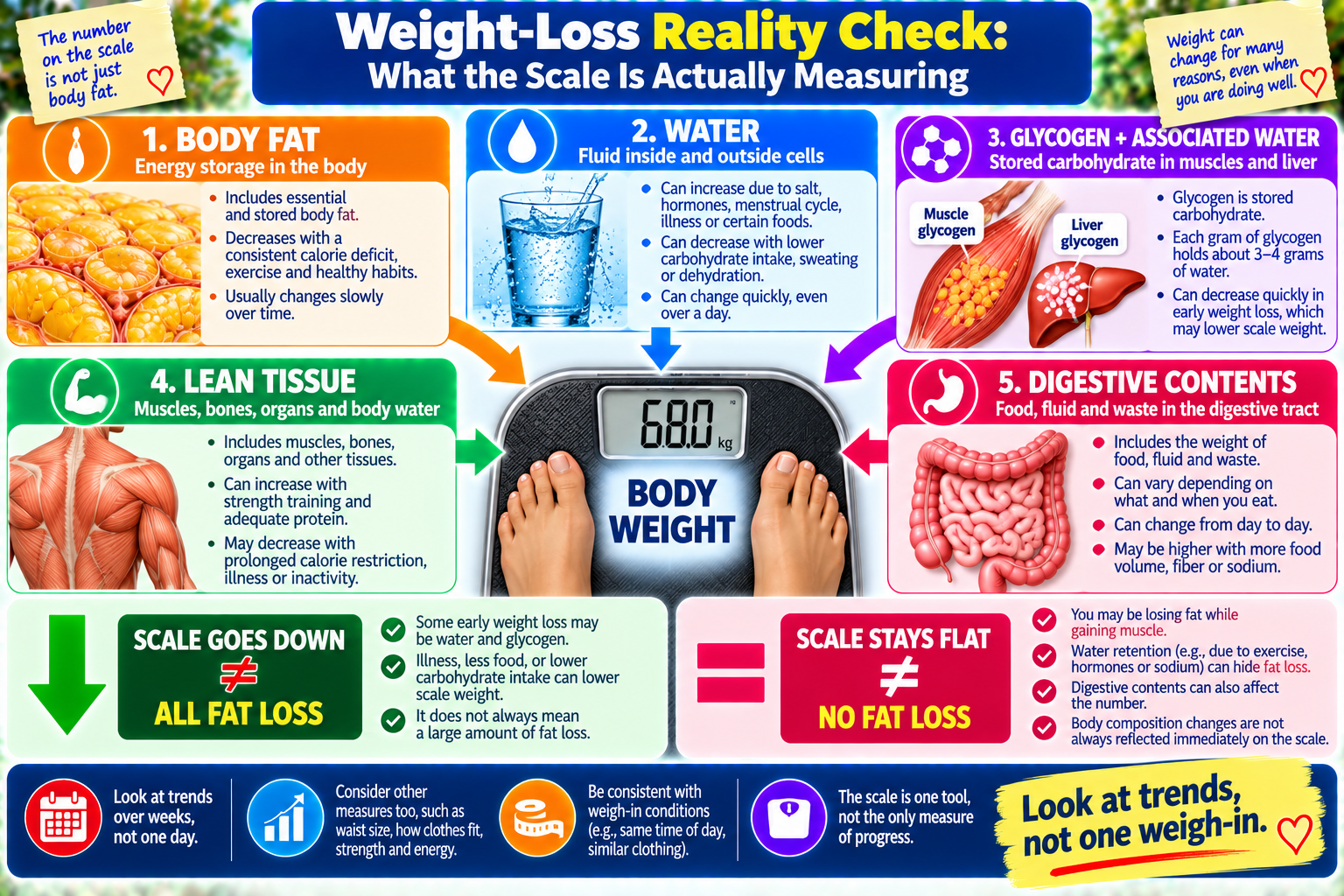
The scale measures total body mass.
It does not directly tell you how much of that change came from:
- body fat
- water
- glycogen
- muscle and other lean tissue
- food and waste in the digestive tract
Early weight changes can therefore be confusing.
Someone may see a noticeable drop on the scale after changing their diet, but that does not mean every kilogram represents body-fat loss.
The reverse can happen too.
A person may lose body fat while the scale changes very little for a period because of changes in water, glycogen, or other components of body weight.
This is one reason why judging progress only by daily scale readings can create unnecessary frustration.
Fat Loss vs. Weight Loss
| What changes | What it means |
|---|---|
| Body fat decreases. | Genuine fat loss |
| Water decreases. | Scale loss but not fat loss |
| Glycogen decreases | Often accompanied by water changes |
| Muscle decreases. | Weight loss, but not the desired form of loss |
| Temporary digestive contents decrease. | Short-term scale change |
A better weight-management strategy aims to reduce excess fat while protecting lean tissue as much as practical.
What Happens to Your Body During Weight Loss?
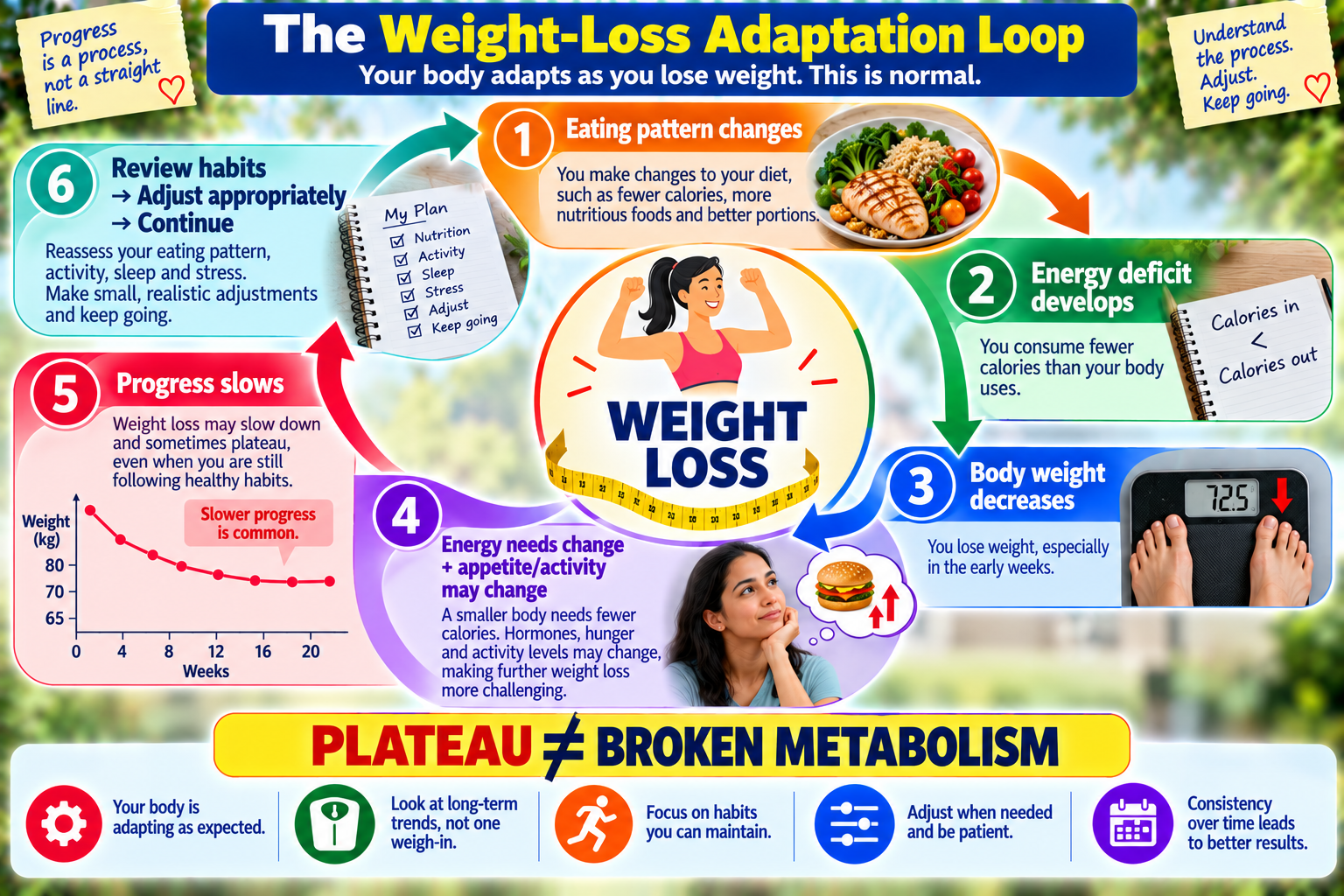
Weight loss is an adaptation process.
At first, reducing food intake or changing food choices can create an energy deficit.
The body then draws on stored energy.
As weight decreases, several things can change:
- The body becomes lighter.
- Moving the body requires less energy.
- Resting energy needs may decrease.
- Appetite may increase for some people.
- Portions that once created a deficit may become closer to maintenance.
- Physical activity may unintentionally decline.
- Maintaining the same rate of weight loss becomes harder.
This is one reason a plateau does not automatically mean that you have “damaged” your metabolism.
Mayo Clinic explains that weight-loss plateaus can occur as the body becomes smaller and energy requirements decline.
The Role of Metabolism in Weight Loss
“Boost your metabolism” is one of the most common phrases in the weight-loss industry.
It is also one of the most misunderstood.
Metabolism is not a single switch that you turn on or off.
Your body uses energy continuously.
Mayo Clinic notes that a slow metabolism is not usually the main cause of weight gain. Weight is affected by food and drink intake together with physical activity, while metabolism determines part of the body’s energy needs.
That makes the following claims misleading:
- “This food will dramatically speed up your metabolism.”
- “This tea will melt belly fat.”
- “One workout will reset your metabolism.”
- “Eating every two hours keeps your metabolism burning all day.”
Small differences in energy expenditure can occur from food, activity, and body composition, but they should not be turned into magical fat-burning promises.
7 Evidence-Based Principles That Actually Matter
1. Create an Eating Pattern That You Can Maintain
You do not need to follow the most restrictive diet available.
WHO’s current healthy-diet guidance emphasizes adequacy, balance, moderation, and diversity. It recommends a varied diet built around foods such as whole grains, vegetables, fruits, legumes, nuts, and appropriate protein sources. WHO: Healthy diet
For an Indian eating pattern, this could include combinations such as
- dal with vegetables and roti
- chickpeas with vegetables
- rice with dal and a large vegetable portion
- curd with a balanced meal
- eggs with vegetables and whole-grain toast
- oats with yogurt and fruit
- beans with vegetables and a suitable grain
The goal is not to remove familiar foods.
It is to improve the overall structure of meals.
2. Build Meals Around Protein and Fiber
Protein and fiber can make meals more satisfying.
Useful protein sources include:
- eggs
- fish
- chicken
- yogurt or curd
- milk
- tofu
- soy foods
- lentils
- chickpeas
- beans
Fiber-rich choices include:
- vegetables
- fruits
- whole grains
- oats
- legumes
- nuts and seeds
WHO recommends diets containing a variety of vegetables, fruits, pulses, and whole grains, with adequate dietary fiber, as part of a healthy dietary pattern.
The practical lesson is simple:
Don’t build your weight-loss diet around restriction alone. Build it around foods that make reasonable portions easier to maintain.
3. Preserve Muscle While Losing Weight
A lower number on the scale is not the only goal.
Preserving muscle and other fat-free mass can be important during weight loss.
A 2025 systematic review and meta-analysis of 25 randomized trials found that adding resistance exercise to dietary weight loss helped protect fat-free mass, increase fat-mass loss, and improve muscle strength compared with diet-only approaches. PubMed: Resistance exercise during dietary weight loss
This does not mean everyone needs a gym membership.
Appropriate resistance exercise can include:
- squats to a chair
- wall push-ups
- resistance bands
- bodyweight exercises
- light dumbbells
- supervised strength training
If you have an injury or significant medical condition or are new to resistance training, professional guidance can help you choose appropriate exercises.
4. Keep Everyday Movement High
Exercise is important, but movement does not have to happen only during a formal workout.
Walking to a nearby shop, taking stairs, doing household tasks, and standing periodically all contribute to daily energy expenditure.
This creates an important people-first principle:
A routine that you can repeat is often more useful than a perfect routine that you abandon.
The CDC continues to recommend regular physical activity as part of healthy weight management and overall health.
For many people, a practical starting point is simply to add more walking to the existing day rather than attempting an extreme exercise program immediately.
5. Protect Your Sleep
Sleep is often treated as a luxury when someone is trying to lose weight.
That is a mistake.
Sleep affects many processes related to health, appetite, energy, and daily functioning.
Poor sleep can also make healthy behavior harder to maintain because tired people may have less energy for cooking, exercise, and planned decision-making.
Rather than trying to “hack” sleep, start with basic habits:
- maintain a reasonably consistent bedtime
- reduce stimulating screen use before bed
- keep the bedroom comfortable
- avoid turning late-night eating into a daily routine
- protect enough time for sleep
Sleep should be part of your weight-management system rather than an afterthought.
6. Manage Stress Without Making Food Your Main Coping Strategy
Stress does not automatically make someone gain body fat.
The relationship is more complicated.
But stress can influence eating behavior, sleep, activity, and routine.
That is where practical stress management becomes useful.
Try a simple replacement when stress triggers unnecessary eating:
Pause → identify the feeling → drink water if thirsty → take a short walk → decide whether you are physically hungry.
This does not mean ignoring genuine hunger.
It simply creates a small space between emotion and automatic behavior.
7. Build a Maintenance System Before You Reach Your Goal
One of the biggest mistakes in weight loss is thinking:
“I will diet until I reach my target, then I can return to normal.”
Your maintenance routine should not be a completely different lifestyle.
If your weight-loss routine requires foods you hate, exercise you cannot tolerate, and rules you cannot maintain, returning to your previous habits can make regaining more likely.
NIDDK specifically notes that maintaining weight loss can be difficult because energy needs decline at a lower body weight. Continued healthy eating and physical activity can help support maintenance.
Think of maintenance as part of the plan from the beginning.
Weight-Loss Myths: What Does the Evidence Really Say?
| Common claim | What the evidence supports |
|---|---|
| Carbohydrates make you fat. | Carbohydrates are an important energy source; food quality and overall intake matter. |
| You need an extreme diet. | Sustainable eating patterns are generally more practical. |
| A slow metabolism is the main cause of weight gain. | Metabolism matters, but slow metabolism is not usually the primary explanation. |
| You must exercise for hours. | Regular activity can be accumulated in manageable amounts. |
| Fat-burning supplements are necessary. | Supplements are not a replacement for evidence-based weight management. |
| Lemon water burns fat. | It can be a low-calorie drink choice, but it is not a fat-burning treatment. |
| Sweating means you burned more fat. | Sweat mainly reflects heat regulation and fluid loss. |
| A plateau means your metabolism is broken. | Weight-loss plateaus can occur as energy requirements change. |
| Intermittent fasting is automatically superior. | It is one possible eating structure, not a universal requirement. |
| Rapid weight loss is always better. | Speed must be considered alongside safety, nutrition, and sustainability. |
The Obesity Medicine Association has specifically discussed numerous obesity myths and oversimplifications, including claims about supplements, exercise, metabolism, calorie calculations, and muscle. Obesity Medicine Association: Obesity myths and oversimplifications
Myth 1: Carbohydrates Are the Enemy
Carbohydrates are not inherently fattening.
WHO’s current guidance states that carbohydrates are the body’s primary energy source and recommends obtaining them mainly from sources such as whole grains, vegetables, fruits, and pulses.
The problem can arise when carbohydrate-rich foods are frequently consumed in highly energy-dense forms, particularly when portions are large and the overall eating pattern is unbalanced.
Compare:
Whole-grain roti + dal + vegetables
with
Large portions of refined snacks + sugary drinks + fried foods
Both contain carbohydrates.
Their nutritional profiles and typical eating patterns are very different.
Myth 2: You Must Exercise for Hours to Lose Weight
More exercise is not automatically better.
Exercise should be appropriate for your fitness level and health status.
Someone who walks consistently for 30 minutes may achieve more long-term benefit from that routine than someone who attempts a two-hour daily workout and stops after one week.
The objective is not maximum exhaustion.
The objective is repeatable movement.
Myth 3: Supplements Automatically Burn Body Fat
Weight-loss supplements are frequently marketed with impressive language.
That does not mean the claims are supported by strong evidence.
Be especially careful with products promising:
- rapid fat burning
- effortless weight loss
- appetite elimination
- “detoxification”
- permanent metabolism acceleration
A supplement should never replace a nutritious diet, physical activity, or appropriate medical treatment.
Myth 4: Lemon Water Burns Belly Fat
Lemon water can be a pleasant way to drink more water.
It does not selectively melt abdominal fat.
The useful part may simply be replacing a higher-calorie drink with a low-calorie beverage.
That is an example of a behavioral substitution rather than a metabolic miracle.
Myth 5: A Weight-Loss Plateau Means You Have Failed
A plateau can be frustrating.
It is also common.
As body weight decreases, the body requires less energy. Your previous eating pattern may therefore create a smaller deficit than it did earlier. NIDDK explains that lower energy needs after weight loss can make maintaining the new weight difficult.
Before making extreme changes, check:
- portion sizes
- liquid calories
- snacks
- weekend eating
- activity levels
- sleep
- consistency
- changes in medication or health
- whether the scale trend has actually plateaued or is simply fluctuating
Do not react to three days of scale changes as if they represent a biological failure.
A People-First Weight-Loss Strategy: The “One Change Before Two” Rule
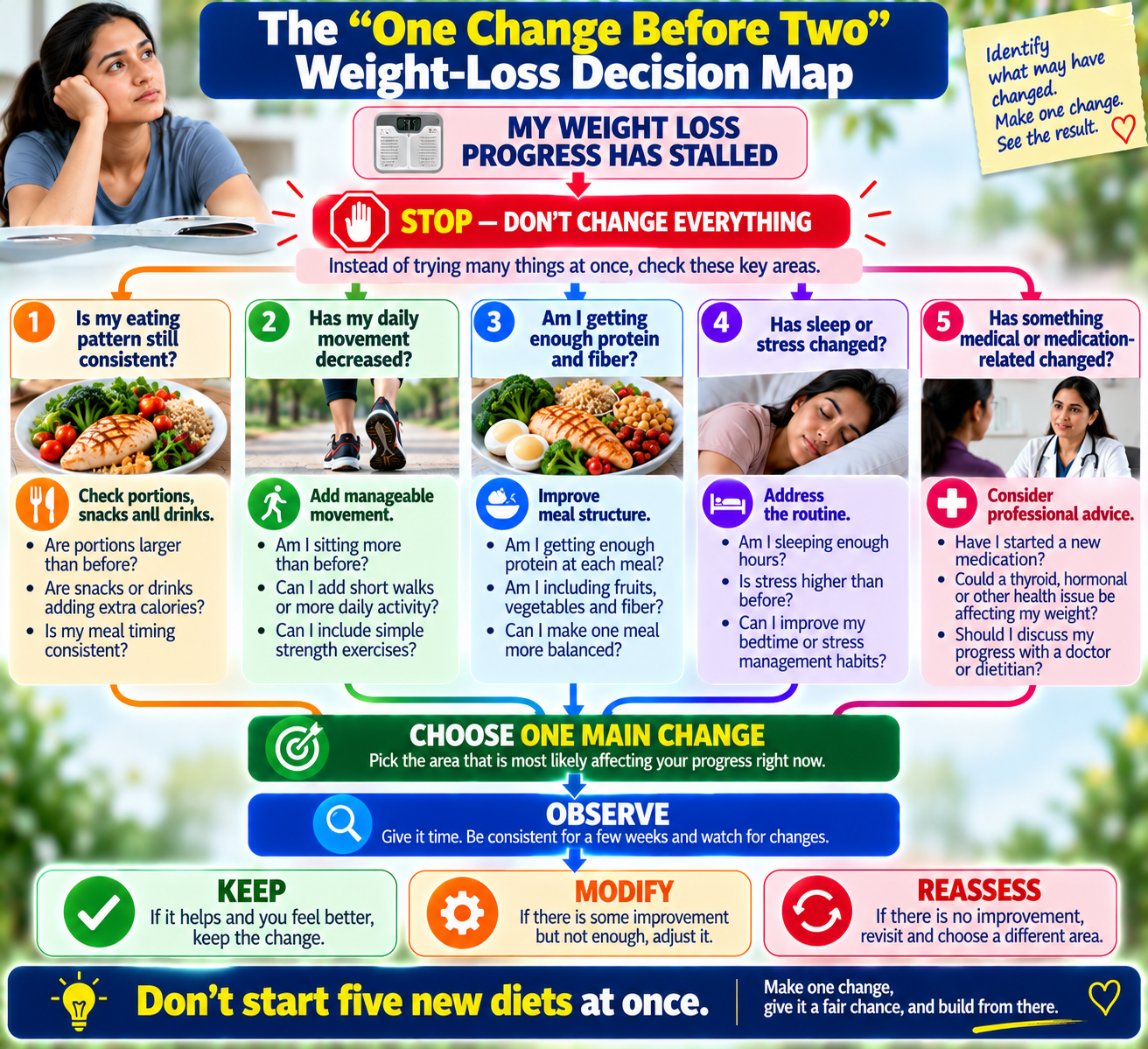
Here is one practical approach that deserves more attention.
When progress stalls, do not immediately change five things.
Change one major variable first.
For example:
Problem: Evening snacking has increased.
First adjustment: Create a planned evening meal or snack with protein and fiber.
Give the change enough time to observe whether it is helping.
If it does not work, adjust another variable.
This makes weight management easier to understand.
This approach also helps avoid starting a new diet, fasting schedule, supplement, workout, and meal plan all at once. When weight changes, it becomes easier to identify which habits may have contributed, and if the plan becomes difficult to maintain, you can decide which changes are worth keeping.
5 Easy Everyday Weight-Loss Strategies Most People Can Actually Use
1. The Liquid-Calorie Swap
Replace one regular sugary drink with:
- water
- sparkling water
- unsweetened tea
- plain coffee, if suitable for you
This is often easier than redesigning an entire diet.
2. The Protein-and-Produce Pair
When preparing a meal, ask:
“Where is my protein, and where are my vegetables or fruit?”
This simple question can improve meal structure without requiring calorie counting.
3. The 10-Minute Movement Rescue
A busy day does not have to become a zero-movement day.
Try:
- a 10-minute walk
- gentle mobility
- a few suitable resistance exercises
- household movement
The purpose is not to “burn off” a meal.
It is to protect the habit of movement.
4. The Second-Serving Pause
Before taking another serving, pause briefly.
Ask:
“Am I still physically hungry, or am I eating because the food is available?”
If you are hungry, eat.
The purpose is awareness rather than restriction.
5. The Default Meal
Create one easy meal that requires very little decision-making.
For example:
Dal + vegetables + roti
or
Curd + oats + fruit + nuts in an appropriate portion
or
Eggs + vegetables + whole-grain toast
A default meal can be particularly useful on busy days.
A Simple Science-Based Weight-Loss Plate
WHO emphasizes dietary diversity and balanced nutrition, while its India guidance recognizes familiar staples such as cereals, legumes, vegetables, fruits, and animal-source foods within a healthy dietary pattern.
A practical plate can therefore look like this:
| Plate area | Examples |
|---|---|
| Vegetables | spinach, cauliflower, beans, carrots, cabbage, mixed vegetables |
| Protein | dal, chickpeas, beans, eggs, curd, tofu, fish, or lean meat |
| Whole or minimally refined carbohydrate | roti, oats, brown rice, whole grains, appropriate rice portions |
| Fruit | apple, guava, orange, papaya, berries, or seasonal fruit |
| Healthy fat | nuts, seeds, or a modest amount of cooking oil |
This is not a rigid prescription.
Portions should vary according to individual needs, activity, health conditions, and dietary preferences.
Does Intermittent Fasting Work?
Time-restricted eating has become extremely popular.
The current evidence is more nuanced than social media often suggests.
A 2026 systematic review and meta-analysis included 30 randomized trials involving 1,341 adults with higher weight or obesity. Time-restricted eating was associated with reductions in body weight and fat mass in both isocaloric and non-isocaloric comparisons, although the effects were not evidence that everyone needs fasting to lose weight. PubMed: 2026 time-restricted eating meta-analysis
Another 2026 systematic review found that evidence about time-restricted eating and overall diet quality remains inconsistent, with many studies being small or short-term.
That leads to a practical conclusion:
Use time-restricted eating if its structure helps you eat appropriately and comfortably. Do not use it simply because you believe fasting has magical fat-burning properties.
People who are pregnant, have certain eating disorders, take glucose-lowering medication, or have other medical conditions may need individualized advice before changing meal timing.
What About Ultra-Processed Foods?
The relationship between food processing and weight is an important area of current research.
A randomized crossover study in adults with higher weight or obesity found that participants consumed substantially more energy and gained more weight during a short ultra-processed-food period than during the minimally processed comparison period. The study was small, with only nine participants, so it should not be treated as the final word on all ultra-processed foods. PubMed: Randomized study of ultra-processed foods and weight change
The practical lesson is not:
“Never eat processed food.”
Instead, pay attention to foods that are:
- easy to overeat
- highly palatable
- low in fiber
- high in added sugar
- high in energy density
- consumed quickly
- easy to eat without noticing portions
A person can enjoy convenient foods while still building most meals around nutritious foods.
Latest Research Developments in Weight Loss
Behavior Change Is Becoming More Important Than “Perfect Diets”
One of the most interesting recent developments is the increasing focus on how people actually maintain behaviors.
A 2026 systematic review and meta-analysis examined 65 studies involving approximately 10,000 participants and 87 behavioral interventions. Behavioral interventions produced additional weight loss compared with controls, while techniques such as goal-setting, feedback, and self-monitoring were among the behavior-change approaches examined. 2026 PubMed: Behavior-change techniques for weight loss and maintenance
This supports a practical idea:
A good weight-loss strategy should be designed around behavior, not just nutrition mathematics.
Resistance Exercise Has a Specific Role
The 2025 systematic review discussed earlier found that resistance exercise during dietary weight loss helped preserve fat-free mass and improve strength.
This matters because successful weight management should not be judged solely by how quickly body weight falls.
Body composition and physical function matter too.
Time-Restricted Eating Is Still Being Studied
The 2026 evidence suggests that time-restricted eating can produce weight and fat mass reductions in some circumstances, but researchers are still investigating how much of the benefit comes from eating-window effects versus changes in energy intake, adherence, and overall dietary behavior.
That makes it a tool, not a requirement.
Weight-Loss Treatment Is Becoming More Comprehensive
The science of obesity treatment is also moving beyond the idea that everyone should simply “eat less and exercise more.”
WHO’s 2025 guideline on GLP-1 therapies recognizes obesity as a chronic disease and places medication within a broader approach that includes healthy eating, physical activity, and professional support. WHO: Global guideline on GLP-1 medicines for obesity
This is important because some people need more than lifestyle advice alone.
If someone has obesity, diabetes, cardiovascular disease, or other health conditions, medical evaluation may be appropriate.
Why Your Weight May Not Change Even When You Are Trying
The scale can be affected by:
- water retention
- sodium intake
- carbohydrate intake
- menstrual-cycle changes
- bowel movements
- exercise-related fluid shifts
- changes in muscle mass
- medication
- illness
- actual changes in energy balance
Therefore, one weigh-in is not a complete picture.
A better approach is to look at a trend over time.
You can also monitor:
- waist measurement
- clothing fit
- strength
- walking ability
- food consistency
- sleep
- energy
- blood pressure or other medical markers when relevant
The scale remains useful.
It simply should not be the only measurement.
Common Mistakes That Can Undermine Weight Loss
Mistake 1: Starting Too Aggressively
A highly restrictive plan can be difficult to sustain.
Mistake 2: Treating Healthy Foods as Unlimited
Nuts, seeds, oils, nut butter, and other nutritious foods can still contribute substantial energy when portions become large.
Mistake 3: Ignoring Drinks
Sugary beverages, sweetened coffee, alcohol, and other calorie-containing drinks can add energy without creating much fullness.
Mistake 4: Focusing Only on Cardio
Resistance exercise can provide an important role in preserving lean mass during dietary weight loss.
Mistake 5: Changing Everything at Once
Too many changes create decision fatigue.
Start with a few behaviors that matter most.
Mistake 6: Expecting the Scale to Fall Every Day
Body weight naturally fluctuates.
Mistake 7: Believing Every “Natural” Remedy Is Safe
Natural does not automatically mean effective or risk-free.
Mistake 8: Ignoring Medical Factors
Certain medications and health conditions can influence weight.
Persistent unexplained weight change deserves medical attention rather than another internet diet.
My Personal Experience With Weight Loss
I have also experienced the frustration of trying different approaches and discovering that strict plans were difficult to maintain.
Some approaches looked impressive at the beginning.
The harder part came later.
Once the focus shifted toward ordinary meals, reasonable portions, regular activity, and consistency, weight management became easier to understand.
The biggest lesson was not that one special food worked.
It was that a routine had to fit normal life.
That is why I prefer practical strategies over complicated weight-loss rules.
Personal experience, however, is not proof that a particular method works for everyone. Individual results can differ, and health conditions or medications may change what is appropriate.
A Simple 7-Day Science-Based Weight-Loss Reset
This is not a crash diet.
It is a way to organize basic habits.
| Day | Main action |
|---|---|
| Day 1 | Replace one sugary drink with a low-calorie alternative. |
| Day 2 | Add vegetables to one main meal. |
| Day 3 | Add a clear protein source to breakfast or lunch. |
| Day 4 | Take a 10–20 minute walk |
| Day 5 | Perform appropriate resistance exercises. |
| Day 6 | Prepare one simple meal at home. |
| Day 7 | Review what was easiest to repeat. |
Do not try to become perfect in seven days.
Instead, identify the two or three habits that fit your life best.
Those are the habits worth carrying forward.
When Weight Loss Is Not Responding
If you have been consistently trying to lose weight and nothing seems to change, do not automatically cut calories further.
Consider discussing the situation with a qualified healthcare professional if you have:
- unexplained weight gain
- rapid unexplained weight loss
- severe fatigue
- menstrual changes
- symptoms suggesting an endocrine disorder
- diabetes or prediabetes
- significant sleep problems
- medication-related concerns
- a history of disordered eating
- obesity requiring medical treatment
Weight management can involve medical, nutritional, psychological, and environmental factors.
There is no shame in asking for help.
Frequently Asked Questions
What is the science behind weight loss?
The science behind weight loss involves energy balance, metabolism, food intake, physical activity, appetite, body composition, and long-term behavior. Sustained weight loss generally requires the body to use more energy than it receives over time.
What is the fastest scientifically supported way to lose weight?
There is no single fastest approach that is appropriate for everyone. A safe strategy should consider nutrition, health status, starting weight, medications, physical activity, and the ability to maintain the changes.
Does a calorie deficit cause weight loss?
A sustained energy deficit generally causes the body to draw on stored energy, resulting in weight loss over time. However, the size and duration of the deficit should not be treated as a rigid formula because energy needs change during weight loss.
Does metabolism control weight?
Metabolism contributes to daily energy expenditure, but weight is influenced by many factors. Mayo Clinic notes that slow metabolism is not usually the main cause of weight gain.
Are carbohydrates bad for weight loss?
No. Carbohydrates can be part of a healthy weight-loss diet. Whole grains, fruits, vegetables, and pulses can provide useful nutrients and fiber.
Can I lose weight without going to a gym?
Yes. Walking and other forms of physical activity can contribute to weight management. Resistance exercises can also be performed at home when appropriate.
Does lemon water burn fat?
No strong evidence shows that lemon water directly burns body fat. Its practical benefit may come from replacing a higher-calorie beverage with a low-calorie drink.
Is intermittent fasting necessary?
No. Time-restricted eating is one possible strategy. Current research suggests it can help some people lose weight, but it is not necessary for everyone.
Why does weight loss slow down?
As body weight decreases, energy requirements generally decrease. Appetite, activity, and adherence can also change. These factors can make continued weight loss slower.
Can supplements replace diet and exercise?
No. Supplements should not be treated as a replacement for an appropriate diet, physical activity, or medical treatment.
A Simple Weight-Loss Checklist
Before starting another diet, ask:
- Can I eat this way for several months?
- Does my diet contain enough nutritious foods?
- Do I have a reliable protein source?
- Am I eating enough vegetables and other fiber-rich foods?
- Am I drinking calories without noticing?
- Am I moving regularly?
- Can I include resistance exercise safely?
- Am I getting enough sleep?
- What happens to my plan on busy days?
- What will I do after I reach my target?
- Do I need professional medical or nutrition support?
If your plan has good answers to these questions, it is more likely to fit real life.
Author Note
This article was written by RVLNSV PRASAD to explain weight loss in simple, practical language while separating established evidence from common internet claims.
The goal is not to promote a particular diet.
It is to help readers understand the basic science so they can make more informed decisions about food, physical activity, and long-term weight management.
Medical Disclaimer
This article is for general educational purposes and is not a substitute for individualized medical advice, diagnosis, or treatment.
Weight loss recommendations can differ according to age, medical conditions, medications, pregnancy status, eating disorder history, body composition, and other individual factors.
If you have obesity, diabetes, heart disease, significant unexplained weight changes, or another medical condition, speak with a qualified healthcare professional before making major dietary or exercise changes.
Fitness Disclaimer
Start physical activity at a level appropriate for your current fitness and health status.
If you have an injury, cardiovascular condition, severe joint pain, dizziness, or another medical concern, obtain appropriate professional guidance before beginning a new exercise program.
Resistance exercise should be performed with appropriate technique and progression.
Research Methodology
This article prioritizes information from major public health and medical organizations and recent peer-reviewed research.
The evidence reviewed includes guidance from the World Health Organization, the National Institute of Diabetes and Digestive and Kidney Diseases, the Mayo Clinic, and peer-reviewed systematic reviews and meta-analyses indexed in PubMed.
Recent evidence was given particular attention for behavioral weight management, resistance exercise, time-restricted eating, dietary patterns, and obesity treatment.
Research findings were interpreted according to study design, population, limitations, and whether the evidence supports a broad recommendation or only a specific research setting.
Sources
- NIDDK — Eating and Physical Activity to Lose or Maintain Weight
- Mayo Clinic — Metabolism and Weight Loss
- WHO—Healthy Diet, updated 2026
- WHO India—Healthy Diet
- PubMed — 2025 Resistance Exercise During Dietary Weight Loss Meta-analysis
- PubMed—2026 Behavior-Change Techniques for Weight Loss and Maintenance
- PubMed — 2026 Time-Restricted Eating Meta-analysis
- Obesity Medicine Association—Obesity Myths, Misunderstandings, and Oversimplifications
- WHO—Global Guideline on GLP-1 Medicines for Obesity
Final Thoughts
The science behind weight loss is more useful when it is understood as a system rather than a collection of tricks.
Energy balance matters.
So do appetite, food quality, physical activity, sleep, body composition, environment, and long-term behavior.
You do not need to eliminate all carbohydrates, rely on a so-called fat-burning drink, or exercise until you are exhausted. A balanced approach that you can maintain consistently is more practical for long-term weight management.
And you do not need to treat every temporary scale increase as failure.
A better approach is to build meals around nutritious foods, create an eating pattern you can maintain, stay physically active, protect muscle, sleep adequately, and adjust your strategy when your circumstances change.
The most useful weight-loss plan is not necessarily the one that looks most impressive on paper.
It is the one that still works when life becomes busy.
That is where scientific understanding becomes practical.
And that is the real value of learning how weight loss works scientifically.
Similar Articles
- Home
- Weight Loss Category
- 4 Week Diet Plan for Weight Loss
- Healthy Daily Habits for Stress Reduction: A Comprehensive Guide
- 6 Ways to Detox Your Body Holistically: A Comprehensive Guide
- Best Weight Loss Nutrition
- 15 Best Ideas Stronger Every Day: The Science-Backed Path to Peak Fitness
Post Views: 1,629