


















































































































































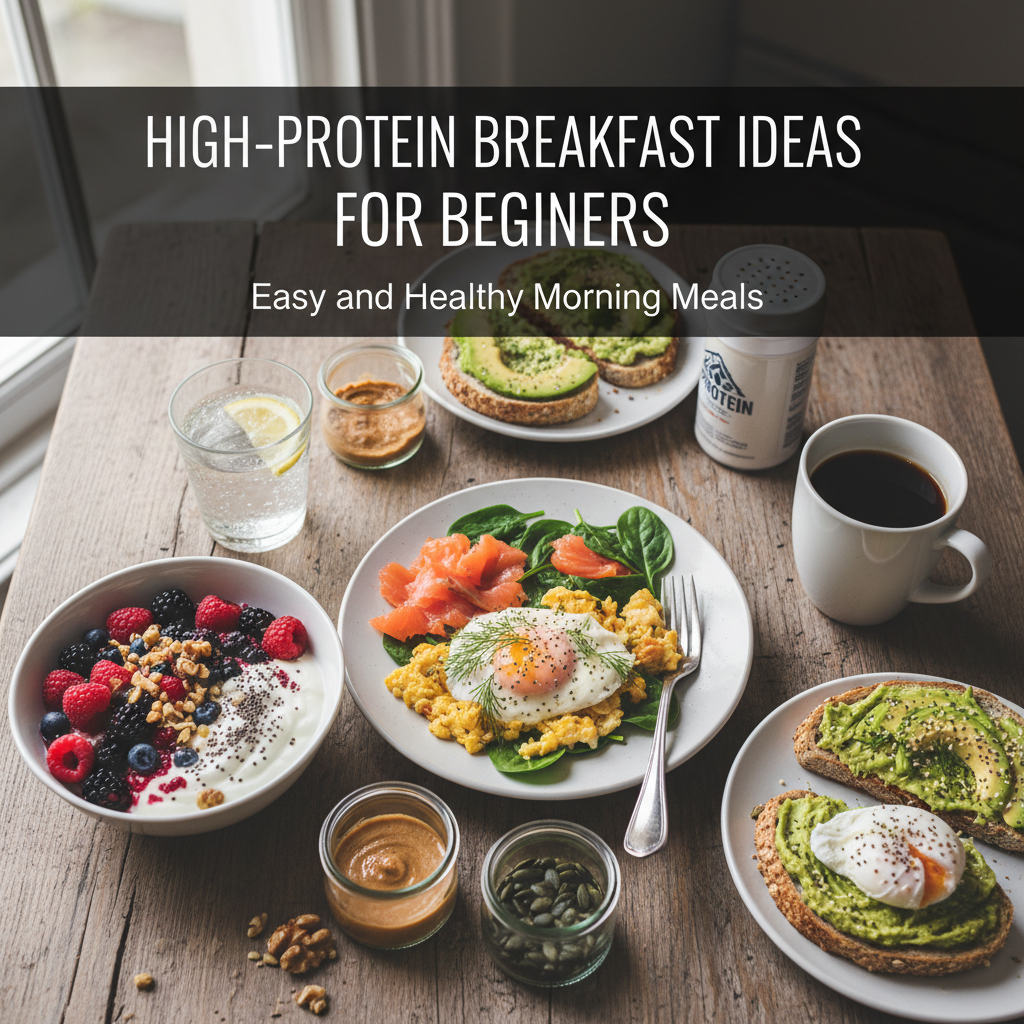
15 High-Protein Breakfast Ideas for Beginners: Easy, Healthy Morning Meals
Author
RVLNSV PRASAD
Fact-Checked By
Wellness Research Team
Last Updated
July 2026
Author’s Note
For many people, breakfast is the most rushed meal of the day. Fast and easy options can satisfy hunger in the short term, but people often feel hungry again after a few hours.
Over the years, I noticed that breakfast quality often influenced the rest of the day. A protein-rich meal in the morning helped keep energy levels more stable and made it easier to maintain healthy eating habits.
This guide shares beginner-friendly breakfast ideas that are simple, affordable, and practical for real life.
Introduction
Finding high-protein breakfast ideas for beginners can feel confusing at first.
There is no shortage of advice online. One person recommends smoothies. Another suggests eggs. Meanwhile, another person says breakfast should be skipped entirely.
Many beginners end up overwhelmed.
As I researched nutrition habits, I saw the pattern again and again. People often got caught up in complicated diet plans, even though the solution was so much simpler.
A balanced breakfast with enough protein can help prevent mid-morning hunger, maintain muscle, and make healthy eating simpler.
The goal is not perfection.
The goal is to find meals that you can realistically prepare and enjoy on a regular basis. Many of the best breakfast options are surprisingly simple.
Instead of heavily processed breakfast foods, experts at Mayo Clinic and Harvard Health Publishing often recommend choosing nutrient-dense options Foods such as fruits, vegetables, whole grains, nuts, seeds, and lean protein sources provide essential nutrients and can support overall health
Key Takeaways
- Protein may help many people feel full for longer than meals that are low in protein.
- A high-protein breakfast may reduce unnecessary snacking.
- Beginners do not need expensive supplements.
- For healthy eating habits, include protein foods in your meals.
- Meal prep is your friend for busy mornings.
- Consistency is more important than perfection.
- Small tweaks to your breakfast might make a difference over time.
What’s Special About a High-Protein Breakfast?
Many traditional breakfasts include high amounts of processed carbs.
Examples include:
- Sugary cereals
- Pastries
- Sweetened coffee drinks
- White toast with jam
These foods may provide quick energy, but they usually do not keep you feeling full for very long
Protein works differently in the body. It generally takes longer to digest and may help promote feelings of fullness after meals.
This effect is why many nutrition experts recommend including a source of protein at breakfast.
Common protein-rich breakfast options include:
- Eggs
- Greek yogurt
- Cottage cheese
- Paneer
- Tofu
- Fish
- Lean poultry
- High-protein dairy products
You do not need to follow a very low-carb diet to enjoy a balanced breakfast.
Instead, many experts recommend mixing protein, combining protein with fiber-rich foods and healthy fats.
Example:
- Kefir topped with berries
- Eggs with vegetables
- Cottage cheese, with fruit
- Tofu scramble with vegetables
These combinations tend to provide more sustained energy through the morning.
The Benefits of High-Protein Breakfasts (Backed by Research)
1. May Help You Feel Fuller for Longer
Hunger control is one reason people look for simple, high-protein breakfast options. Protein tends to promote greater feelings of fullness than many processed carbohydrate-rich foods.
Practice Advantages
You may be less likely to snack between meals.
2. Can Promote Healthy Eating Patterns
When you are not overly hungry, it is often easier to make healthier food choices. Starting the day with protein may help reduce impulsive eating later on.
Practical Benefit
Healthier food decisions throughout the day.
3. Supports Muscle Maintenance
Protein provides the amino acids needed to maintain muscle tissue. This role becomes increasingly important as we age.
Practical Benefit
Promotes active and healthy aging.
4. Can Help Support Steady Morning Energy Levels
After eating high-sugar breakfasts, many people experience energy dips later in the morning.
A protein-rich breakfast may provide longer-lasting energy and help support more stable energy levels throughout the morning.
Practical advantage
Increased productivity during work or study periods.
5. Makes Consistent Meal Planning Easier
Many healthy, high-protein breakfast recipes require only a few ingredients. Simple meals are often easier to prepare and maintain consistently.
Practical Benefit
Reduces decision fatigue during hectic mornings.
6. May Support Weight Loss Goals
Protein may have a role in appetite regulation and feelings of fullness. No single food causes weight loss, but protein-rich meals may support healthy eating habits and overall weight-management efforts.
Practical Benefit
Makes portion control easier for some people.
7. Helps Create More Balanced Meals
Many beginners focus only on calories. Including protein encourages a more balanced approach to nutrition by emphasizing food quality as well as quantity
Functional Advantage
Promotes healthier meals without strict dieting.
15 Easy High-Protein Breakfast Ideas for Beginners
Greek Yogurt Berry Bowl
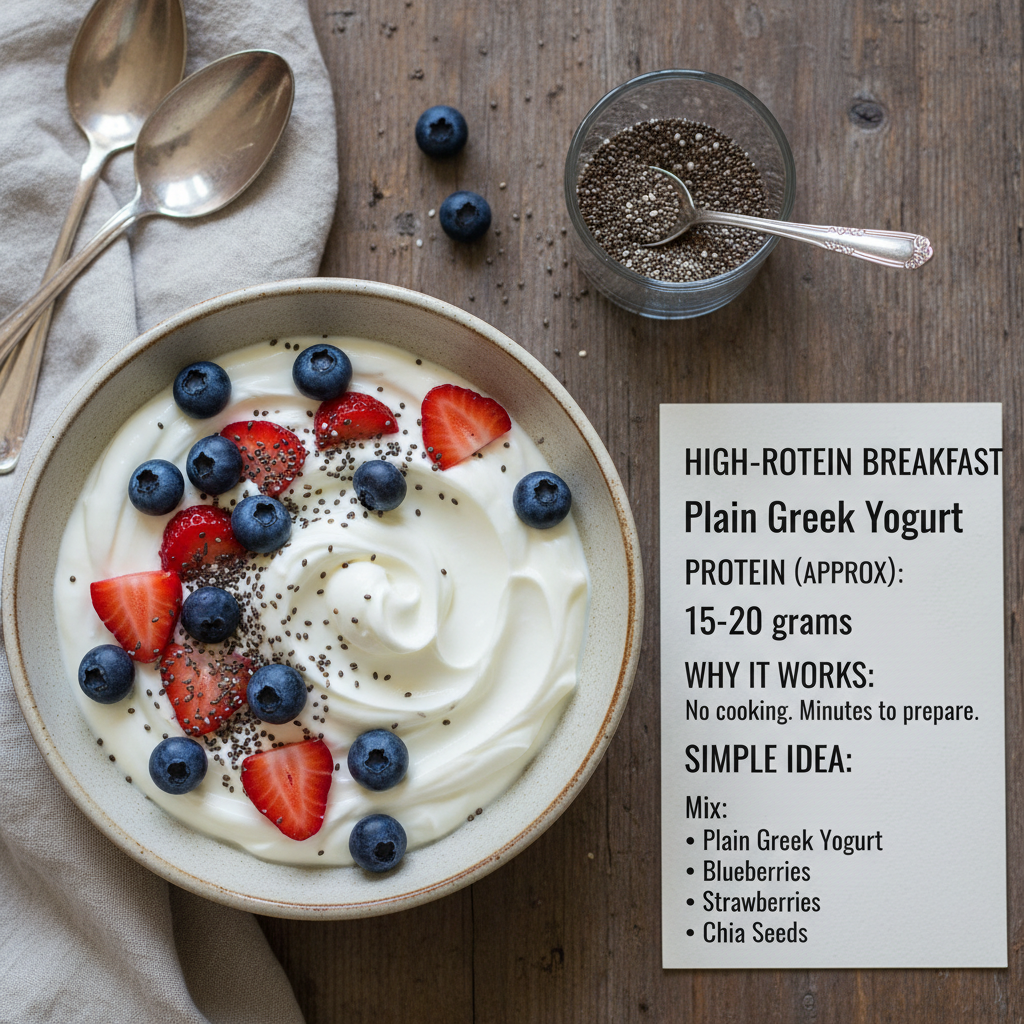
Skyr is one of the simplest high-protein breakfast options for beginners.
Protein (approximate)
15–20 grams
Why It Works
It requires no cooking and takes only a few minutes to prepare.
Simple Idea
Mix
- Plain high-protein cottage cheese
- Blueberries
- Strawberries.
- Chia seeds
Beginner TipF
Choose plain yogurt to cut down on additional sugar.
2. Scrambled Eggs With Vegetables
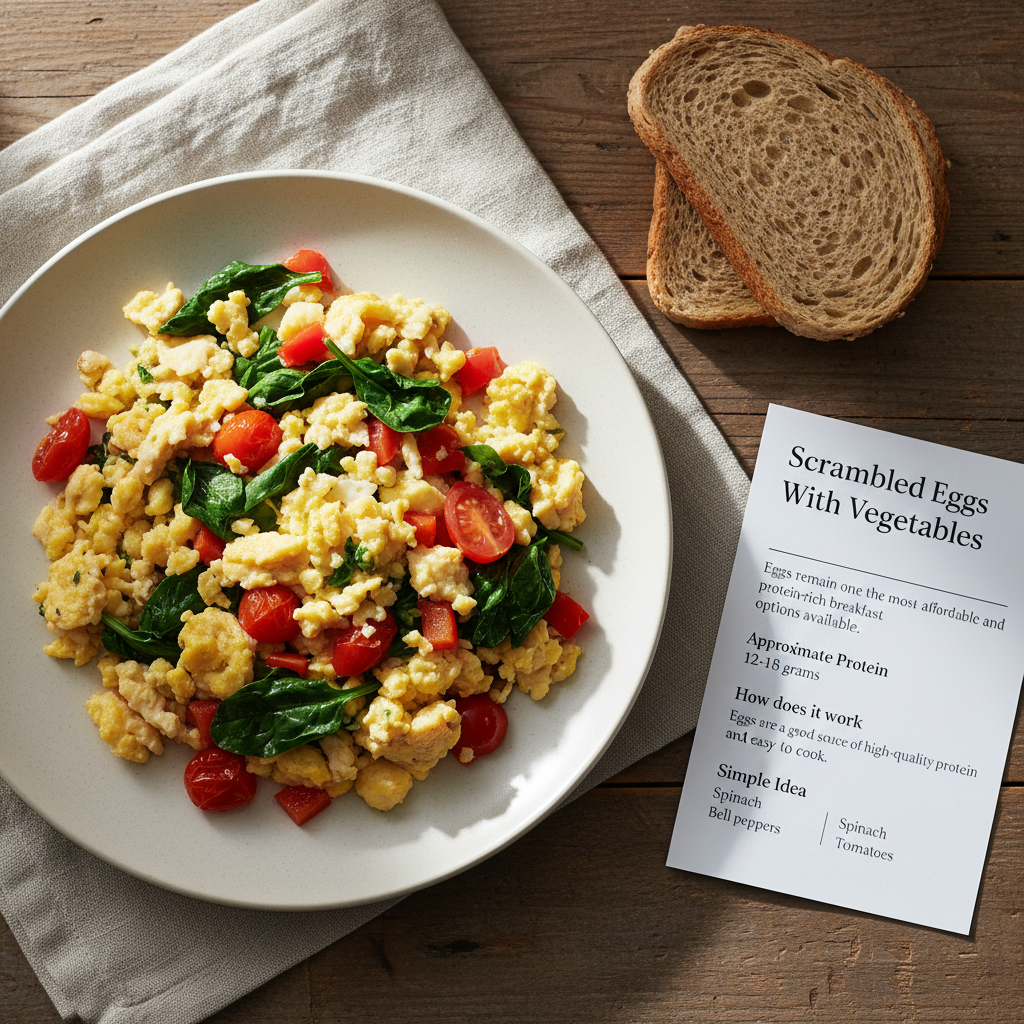
Eggs remain one of the most affordable and protein-rich breakfast options available.
Approximate Protein
12-18 grams
Why It Works
Eggs are a good source of high-quality protein and are easy to cook.
Simple Idea
Cook eggs with:
- Spinach
- Tomatoes
- Bell peppers
Beginner Tip
Prepare chopped vegetables the night before.
3. Cottage Cheese Fruit Bowl
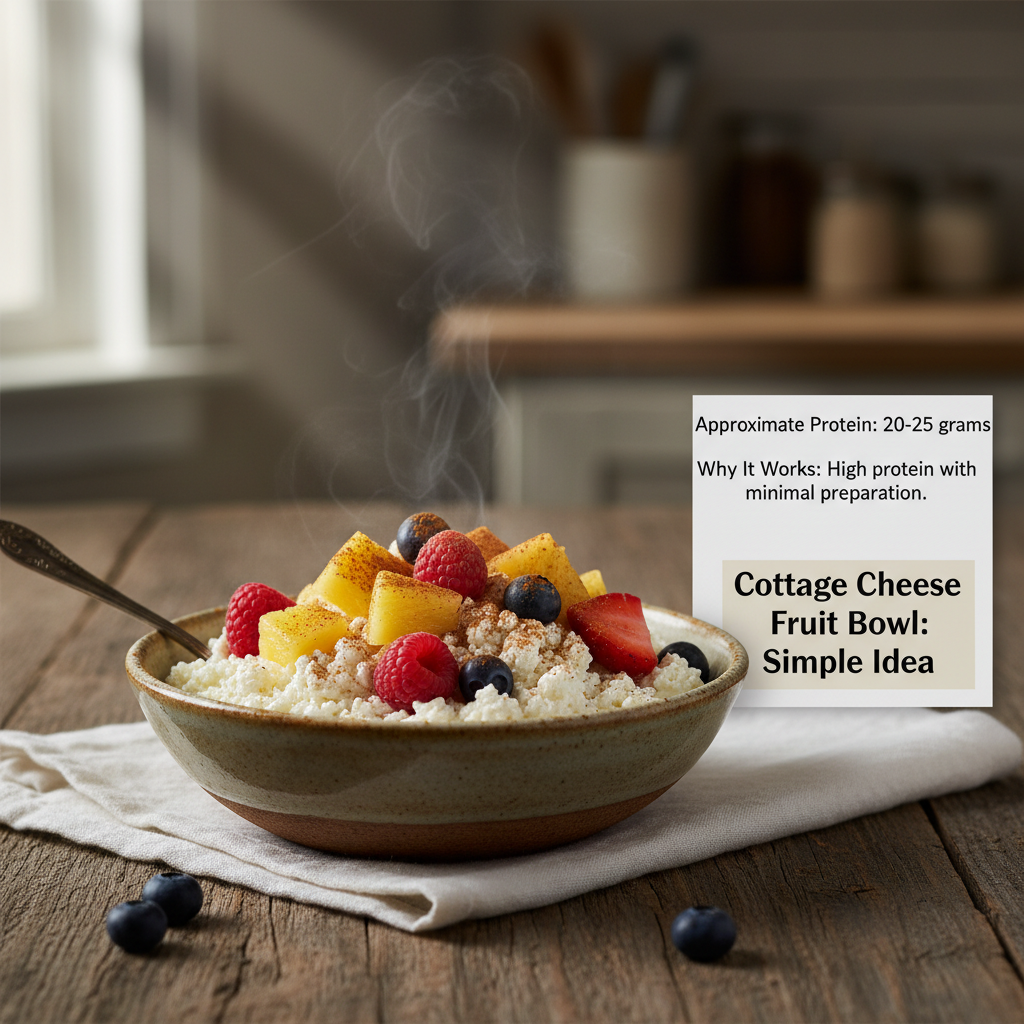
Many people overlook cottage cheese, but it can be surprisingly filling.
Approximate Protein
20–25 grams
Why It Works
High protein with minimal preparation.
Simple Idea
Combine:
- Cottage cheese
- Pineapple
- Berries
- Cinnamon
Beginner Tip
Keep single-serving containers available for busy mornings.
4. Protein Overnight Oats
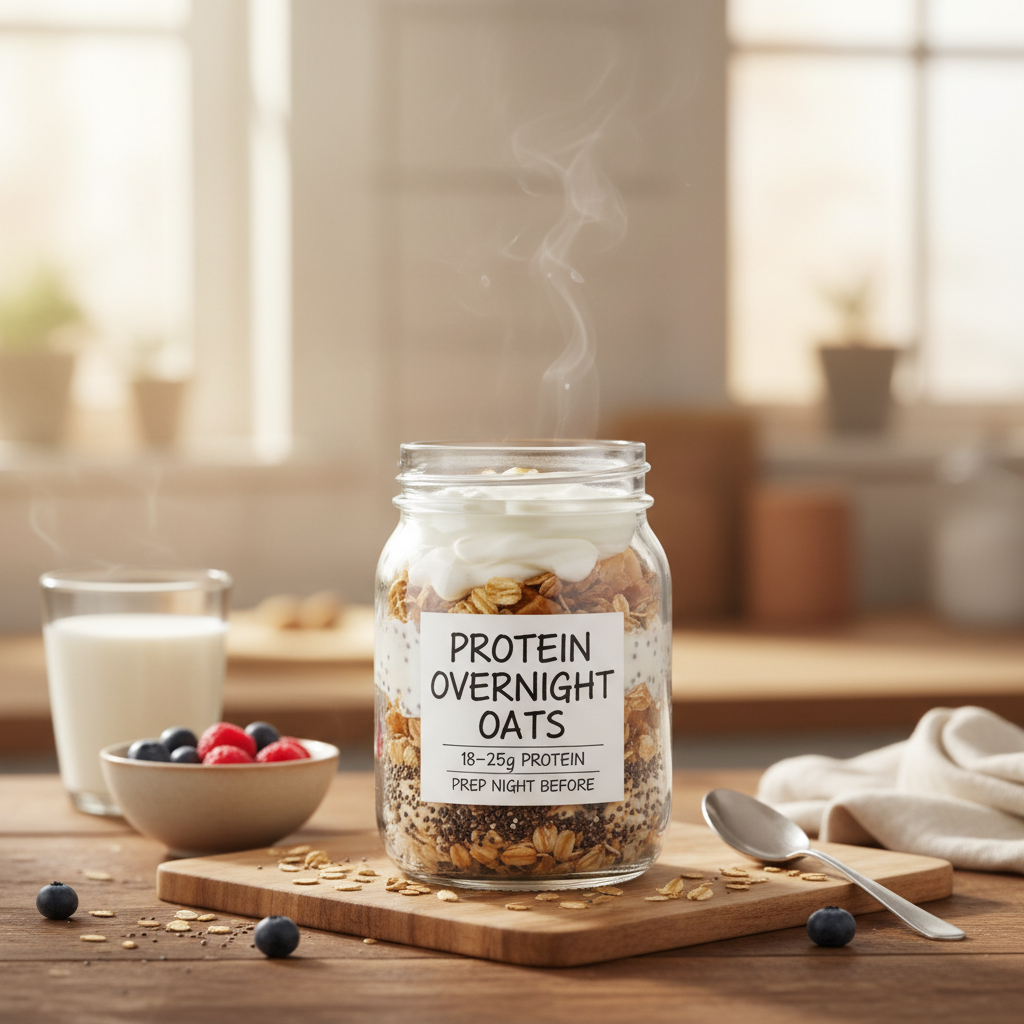
Protein overnight oats are one of the most practical options for breakfast meal prep for beginners.
Approximate Protein
18–25 grams
Why It Works
Preparation is done the night before, making busy mornings easier
Simple Idea
Combine:
- Oats
- Greek yogurt
- Chia seeds
- Milk
Leave overnight.
Beginner Tip
Prepare several jars at once.
5. Greek Yogurt Toast with Peanut Butter
This breakfast combines protein, fiber, and healthy fats in one simple meal.
Approximate Protein
15–20 grams
Why It Works
Quick and satisfying.
Simple Idea
Spread Greek yogurt and natural peanut butter on whole-grain toast.
Beginner Tip
Add sliced banana for extra flavor and natural sweetness.
6. Paneer Breakfast Wrap
Paneer is a popular ingredient in many households and makes a nutritious breakfast option.
Approximate Protein
18–22 grams
Why It Works
It is easy to customize with different vegetables, herbs, and seasonings.
Simple Idea
Wrap paneer and vegetables in a whole-grain tortilla for a quick and satisfying breakfast.
Beginner Tip
Prepare the filling in advance.
7. Tofu Breakfast Scramble
A great option for people looking for high-protein breakfast recipes without eggs.
Approximate Protein
15–20 grams
Why It Works
It is plant-based, versatile, and easy to customize with different vegetables and seasonings.
Simple Idea
Cook tofu with:
- Onions
- Spinach
- Peppers
Beginner Tip
Season generously for better flavor.
8. High-Protein Smoothie
Smoothies are a convenient option when mornings are hectic.
Approximate Protein
20–30 grams
Why It Works
It’s fast to make, portable, and easy to clean up
Simple Idea
Blend:
- Greek yogurt
- Milk
- Berries
- Spinach
Beginner Tip
* Make the ingredients the night before to speed up your morning process.
Practical Benefit
Provides a convenient, portable breakfast for busy mornings.
9. Egg and Avocado Breakfast Plate
Simple meals are often the easiest to maintain.
Approximate Protein
15–18 grams
Why It Works
Combines protein with healthy fats.
Simple Idea
Serve boiled eggs with avocado and vegetable slices.
Beginner Tip
Prepare boiled eggs in batches.
10. Chia Protein Pudding
This breakfast option works well for meal prep.
Approximate Protein
15–20 grams
Why It Works
Requires very little effort.
Simple Idea
Mix:
- Chia seeds
- Milk
- Greek yogurt
Refrigerate overnight.
Beginner Tip
Add berries before serving.
11. Tuna Breakfast Toast
Many people think tuna is only for lunch, but it can work surprisingly well at breakfast.
Approximate Protein
18–25 grams
Why It Works
Very filling and rich in protein.
Simple Idea
Serve tuna on whole-grain toast with cucumber slices.
Beginner Tip
Choose low-sodium varieties when possible.
12. Protein-Rich Breakfast Burrito
A practical choice for busy schedules.
Approximate Protein
20–25 grams
Why It Works
Easy to prepare ahead of time.
Simple Idea
Fill a wrap with:
- Eggs
- Beans
- Vegetables
Beginner Tip
Freeze extras for later.
13. Cottage Cheese Pancakes
A higher protein alternative to traditional pancakes.
Approximate Protein
15–20 grams
Why It Works
Provides a natural source of protein without requiring supplements.
Simple Idea
Use cottage cheese, eggs, and oats to make protein-rich pancakes.
Beginner Tip
Prepare a larger batch to enjoy throughout the week.
14. Greek Yogurt Parfait
One of the easiest healthy high-protein ideas for beginners.
Approximate Protein
15–20 grams
Why It Works
Requires no cooking and can be prepared in minutes.
Simple Idea
Layer:
- Greek yogurt
- Fruit
- Nuts
- Seeds
Beginner Tip
Prepare the ingredients the evening before.
15. Meal-Prep Egg Muffins
Perfect for busy professionals and parents.
Approximate Protein
12–18 grams
Why It Works
Provides grab-and-go convenience.
Simple Idea
Bake eggs with vegetables in muffin tins.
Beginner Tip
Store several servings in the refrigerator for quick breakfasts throughout the week.
A Simple Beginner Breakfast Plan
You do not need fifteen breakfasts every week.
Start with three.
For example:
Monday
Greek Yogurt Berry Bowl
Tuesday
Vegetable Egg Scramble
Wednesday
Protein Overnight Oats
Thursday
Paneer Breakfast Wrap
Friday
High-Protein Smoothie
Repeat your favorites.
Consistency is more important than variety in the beginning.
What Does the Research Say?
Research groups frequently identify protein as a vital aspect of a balanced eating pattern
Studies available through the National Institutes of Health (NIH) suggest that protein may help promote feelings of fullness and support muscle maintenance.
Research published through the National Center for Biotechnology Information (NCBI) suggests that higher-protein meals may help some people better manage hunger and appetite
Instead of heavily processed breakfast foods, experts at Mayo Clinic and Harvard Health Publishing often recommend choosing nutrient-dense foods The message is simple: focus on whole, minimally processed foods that provide protein, fiber, healthy fats, vitamins, and minerals.
Many people find it helpful to start the day with protein-rich foods, along with fruits, vegetables, and other lightly processed foods.
## Sources
NIH / NCBI Research on Protein, Satiety, and Muscle Health
- Effect of Breakfast Protein Intake on Muscle Mass and Strength (PubMed/NIH)
Breakfast Protein and Muscle Health Study
Review suggesting that protein consumed at breakfast may help support muscle mass in certain populations. - The Influence of Higher Protein Intake and Greater Eating Frequency on Appetite and Satiety
NCBI Protein and Satiety Research
Discusses how higher-protein meals may reduce hunger and increase feelings of fullness. - Effect of Increasing the Dietary Protein Content of Breakfast on Appetite
Higher-Protein Breakfast Study
Research suggesting higher-protein breakfasts may improve satiety and reduce short-term food intake. - Dietary Protein and Muscle Mass: Translating Science to Application
Protein and Muscle Mass Review
Reviews the role of dietary protein in supporting muscle maintenance and healthy aging. - Clinical Evidence and Mechanisms of High-Protein Diets
High-Protein Diet Review
Reviews evidence regarding protein intake, body composition, and appetite regulation.
Government Health Organizations
- National Institutes of Health (NIH)
- National Center for Biotechnology Information (NCBI)
- World Health Organization (WHO)
Potential Risks and Limitations
Most healthy people can enjoy a high-protein breakfast without any problem. However, some situations may require additional guidance.
If you have kidney illness, a metabolic disorder, or special dietary requirements, consult a healthcare professional before making major changes to your diet.
Another typical mistake is to focus primarily on protein.
A healthy breakfast should also include:
- Fruits
- Vegetables
- Fiber-rich foods
- Healthy fats
- Adequate fluids or hydration
Protein works best as part of a balanced eating pattern.
How to Get Started
Many beginners think they need a complicated meal plan, but that often creates unnecessary stress. A simpler approach usually works better. Start with one high-protein breakfast and build from there.
Practice it consistently. Then expand gradually.
Beginner’s 4-Week High-Protein Breakfast Plan
| Week | Goal | Action Step | Example |
|---|
| Week 1 | Add Protein | Include one protein source at breakfast | Eggs or Greek yogurt |
| Week 2 | Improve Balance | Add fruit or vegetables | Eggs with spinach |
| Week 3 | Build Consistency | Eat breakfast most mornings | Prepare breakfast the night before |
| Week 4 | Meal Prep | Prepare 2–3 breakfasts ahead | Overnight oats or egg muffins |
Why This Works
Many beginners fail because they try to change everything at once. Small changes are easier to maintain. Consistency builds confidence, and it helps create long-term habits.
Simple Protein Goal Guide for Beginners
| Body Weight | Daily Protein Range* |
| 50 kg | 40–80 g |
| 60 kg | 48–96 g |
| 70 kg | 56–112 g |
| 80 kg | 64–128 g |
| 90 kg | 72–144 g |
Simple Comparison Table
| Breakfast | Protein | Prep Time |
|---|---|---|
| Greek yogurt bowl | 18 g | 5 min |
| Egg scramble | 16 g | 10 min |
| Overnight oats | 20 g | 5 min prep |
These are general educational estimates, and individual needs vary. You do not need to calculate every gram of protein. A simpler approach is to include a source of protein at each meal.
Common Mistakes to Avoid
1. Skipping Breakfast Entirely
Many people become extremely hungry later in the day. Such behavior can make healthy food choices more difficult.
2. Depending Only on Protein Shakes
Protein shakes can be useful, but whole foods should remain the foundation of a healthy diet.
3. Ignoring Fiber
Protein matters, but fiber matters too. Both can help promote feelings of fullness.
4. Choosing Sugary Breakfast Foods
Many breakfast products contain large amounts of added sugar. As a result, hunger may return quickly.
5. Making Breakfast Too Complicated
Complicated plans often fail. Simple meals are easier to prepare and maintain consistently.
6. Not Preparing Ahead
Busy mornings can be disruptive; even the best plans can fall apart, but a small amount of preparation often solves the problem.
7. Expecting Instant Results
Healthy eating habits take time to develop. Think consistency, not perfection.
Insights from the Experts
Nutrition experts constantly recommend focusing on whole-food protein sources.
Many trained dietitians recommend that consumers center their meals around protein, vegetables, fruits, and minimally processed foods.
Protein is vital for satiety and muscular maintenance, according to Harvard Health Publishing.
The Mayo Clinic experts usually advocate eating foods rich in nutrients and giving you longer-lasting energy rather than loading up on refined carbohydrates.
Data from the National Institutes of Health (NIH), as well as studies indexed at the National Center for Biotechnology Information (NCBI), continue to support protein’s importance in a balanced dietary pattern.
The message is similar.
Simple, whole food-based meals are generally simpler to stick to than rigorous dietary regimens.
Personal Experience and Practical Lessons
After years of studying nutrition patterns and reviewing evidence-based dietary recommendations, I noticed a common theme among people who successfully maintained healthy eating habits
Many beginners spent a lot of time searching for the perfect breakfast. They compared recipes, followed nutrition trends, and frequently changed their meal plans. However, the people who achieved the most consistent results often took a simpler approach.
From my experience, people who maintained healthy eating habits often had two or three reliable high-protein breakfasts they could prepare quickly without much effort. Some preferred overnight oats with Greek yogurt, while others relied on eggs, cottage cheese, or simple protein-rich breakfast wraps.
The foods differed from one individual to another, but the underlying behavior was very consistent. They started the day with a balanced meal that included a reliable source of protein.
I also noticed that people who followed this habit consistently often reported feeling fuller throughout the morning. Many found it easier to manage hunger and were less likely to reach for convenient snacks before lunch.
One practical lesson I learned through my research and observations was that consistency mattered more than perfection. The healthiest breakfast was often the simplest one, not the elaborate meals commonly featured on social media or in nutrition magazines.
Instead, the best breakfast is often the one you can prepare easily on busy mornings, enjoy regularly, and maintain as part of a long-term healthy eating routine.
Frequently Asked Questions
1. What are the best high-protein breakfast ideas for beginners?
Some of the easiest options include Greek yogurt bowls, vegetable egg scrambles, cottage cheese bowls, protein overnight oats, and meal-prep egg muffins. These breakfasts are simple, affordable, and require little cooking experience.
2. How much protein should breakfast contain?
Many nutrition experts suggest aiming for a meaningful source of protein at breakfast. Everyone’s different, but adding nutrient-dense protein foods can help with feelings of fullness and balanced eating habits.
3. Are high-protein breakfasts beneficial for weight control?
Many people find that high-protein breakfasts help them feel full for longer. Such meals may support portion control and reduce unnecessary snacking throughout the day.
4. Can vegetarians follow a high-protein breakfast plan?
Yes.
Vegetarians can get enough protein from foods such as tofu, paneer, Greek yogurt, cottage cheese, milk, and lentils. These foods can be combined in a variety of ways to create healthy, high-protein breakfasts
5. Do I have to take a protein powder supplement?
Not necessarily.
Most beginners can meet their protein needs through foods such as eggs, dairy products, fish, poultry, tofu, and lentils.
6. What breakfast keeps you full the longest?
The most satisfying breakfasts are those that include protein, fiber, and healthy fats. Examples include eggs with vegetables, Greek yogurt with berries and almonds, and protein overnight oats.
7. Are overnight oats a good source of protein?
Traditional overnight oats are not very high in protein on their own. However, adding ingredients such as Greek yogurt, milk, chia seeds, or other protein-rich foods can significantly increase their protein content.
8. What are some quick high-protein breakfast ideas?
Greek yogurt bowls, cottage cheese with fruit, protein smoothies, and boiled eggs are popular choices when time is tight.
9. Are quick high-protein breakfasts healthy for older adults?
Many health experts recommend adequate protein intake as people age to help maintain muscle mass and physical function. A protein-rich breakfast can be a convenient way to contribute to your daily protein needs
10. Can these breakfasts be prepped ahead?
Yes. Many high-protein breakfast recipes can be prepared ahead of time. Examples include egg muffins, overnight oats, chia pudding, and Greek yogurt parfaits
Conclusion
These high-protein breakfast ideas for beginners do not require expensive products, extensive cooking skills, or complicated meal plans.
Easy protein-rich breakfasts can help you build healthy eating habits, enjoy your meals more, and reduce morning stress.
Start with one or two options that fit your lifestyle. Enjoy them consistently as part of your routine.
Over time, those little choices might become permanent habits that support your health goals more than any temporary diet.
About the Author
RVLNSV Prasad is a wellness writer and independent health researcher who specializes in nutrition, healthy habits, fitness, weight management, and healthy aging. His work focuses on translating evidence-based health information into practical, accessible-to-understand guidance that helps people make informed lifestyle choices.
He frequently reviews and verifies health information using trusted sources such as the NIH, NCBI, Mayo Clinic, Harvard Health Publishing, Cleveland Clinic, and the World Health Organization (WHO).
His goal is to help readers build healthier lifestyles through simple, evidence-based guidance.
Medical Disclaimer
This article is for educational and informational purposes only. It is not intended to replace professional medical advice, diagnosis, or treatment.
Always consult a qualified healthcare professional before making significant changes to your diet, exercise routine, supplement use, or lifestyle habits.
Individual health needs vary, and results may differ from person to person.
Never discard professional medical advice or delay seeking medical care because of information found in this article.
Similar Articles
- Healthy Eating Meal Plan for Wellness
- Best Supplements for Muscle Gain
- High Protein Vegan Diet for Weight Loss
- 14 Ways to Increase Protein Intake Daily Tips
- Home
- Wholesome Nutrition









[…] 15 High-Protein Breakfast Ideas for Beginners: Easy and Healthy Morning Meals […]
[…] 15 High-Protein Breakfast Ideas for Beginners: Easy and Healthy Morning Meals […]
[…] 15 High-Protein Breakfast Ideas for Beginners: Easy and Healthy Morning Meals […]
[…] 15 High-Protein Breakfast Ideas for Beginners: Easy and Healthy Morning Meals […]
[…] 15 High-Protein Breakfast Ideas for Beginners: Easy and Healthy Morning Meals […]
[…] 15 High-Protein Breakfast Ideas for Beginners: Easy and Healthy Morning Meals […]
[…] 15 High-Protein Breakfast Ideas for Beginners: Easy and Healthy Morning Meals […]
[…] 15 High-Protein Breakfast Ideas for Beginners: Easy and Healthy Morning Meals […]
[…] 15 High-Protein Breakfast Ideas for Beginners: Easy and Healthy Morning Meals […]
[…] 15 High-Protein Breakfast Ideas for Beginners: Easy and Healthy Morning Meals […]
[…] 15 High-Protein Breakfast Ideas for Beginners: Easy and Healthy Morning Meals […]
[…] 15 High-Protein Breakfast Ideas for Beginners: Easy and Healthy Morning Meals […]
[…] 15 High-Protein Breakfast Ideas for Beginners: Easy and Healthy Morning Meals […]
[…] 15 High-Protein Breakfast Ideas for Beginners: Easy and Healthy Morning Meals […]
[…] 15 High-Protein Breakfast Ideas for Beginners: Easy and Healthy Morning Meals […]
[…] 15 High-Protein Breakfast Ideas for Beginners: Easy and Healthy Morning Meals […]
[…] 15 High-Protein Breakfast Ideas for Beginners: Easy and Healthy Morning Meals […]
[…] 15 High-Protein Breakfast Ideas for Beginners: Easy and Healthy Morning Meals […]
[…] 15 High-Protein Breakfast Ideas for Beginners: Easy and Healthy Morning Meals […]
[…] 15 High-Protein Breakfast Ideas for Beginners: Easy and Healthy Morning Meals […]
[…] 15 High-Protein Breakfast Ideas for Beginners: Easy and Healthy Morning Meals […]
[…] 15 High-Protein Breakfast Ideas for Beginners: Easy and Healthy Morning Meals […]
[…] 15 High-Protein Breakfast Ideas for Beginners: Easy and Healthy Morning Meals […]
[…] 15 High-Protein Breakfast Ideas for Beginners: Easy and Healthy Morning Meals […]
[…] 15 High-Protein Breakfast Ideas for Beginners: Easy and Healthy Morning Meals […]