






































































































































































Table of Contents
Toggle7 Hormones That Affect Weight Loss: What the Science Really Says
Author: RVLNSV PRASAD
Updated On: October 2026
About Us
Author Bio
Editorial Policy
Contact Us
Introduction
If you are eating better and exercising but still struggling with your weight, it is natural to wonder whether hormones and weight loss are connected.
They are.
But the internet often explains this connection too simply.
You may have seen claims that high insulin automatically makes you store fat, low leptin causes overeating, cortisol creates belly fat, or that “balancing your hormones” will suddenly accelerate fat loss. These statements take real biology and turn it into a much simpler story than the evidence supports.
Your body is not controlled by one hormone.
Weight regulation involves the brain, digestive system, fat tissue, muscles, endocrine organs, appetite signals, energy expenditure, sleep, medications, genetics, food environment, and physical activity. NIDDK’s current obesity research program specifically investigates appetite, satiety, body composition, energy expenditure, and interactions among signals such as insulin, leptin, glucocorticoids, and ghrelin. NIDDK — Metabolism, Energy Balance & Obesity Research
That distinction matters.
You do not need to “balance your hormones” before your body can lose weight.
Instead, the goal is to understand how hormones influence appetite, metabolism, body composition, and weight regulation—and then use practical habits that support overall metabolic health.
This article explains seven important hormonal connections, what the latest research says, what you can realistically do at home, and when a hormonal problem deserves medical evaluation.
Quick Answer: Do Hormones Affect Weight Loss?
Yes. Hormones influence appetite, fullness, blood glucose regulation, energy expenditure, fat distribution, and other processes related to body weight.
Important hormones and hormonal signals include:
- Insulin
- Leptin
- Ghrelin
- GLP-1
- Cortisol and other glucocorticoids
- Thyroid hormones
- Estrogen and testosterone
However, hormones are one part of weight regulation, not a separate system that overrides energy balance.
NIDDK explains that weight is influenced by lifestyle habits, sleep, medications, health conditions, family history, and genes, as well as energy intake and physical activity. NIDDK — Factors Affecting Weight & Health
So if your weight is not changing, it does not automatically mean that your hormones are “imbalanced.”
- Sometimes the issue is meal structure.
- Sometimes it is low activity.
- Sometimes it is poor sleep.
Sometimes medication or a medical condition contributes.
And sometimes the biology of weight loss itself makes continued progress harder.
Key Takeaways
- Hormones play an important role in appetite and energy regulation.
- Hormonal biology does not mean that weight loss is simply a matter of “balancing hormones.”
- Insulin regulates blood glucose and participates in energy metabolism.
- Leptin communicates information about energy stores and appetite regulation.
- Ghrelin is an important hunger-related signal.
- GLP-1 influences appetite, food intake, and glucose regulation and has become particularly important in modern obesity treatment.
- Thyroid disorders can affect weight, but they are not the explanation for most obesity.
- Menopause can change body-fat distribution and body composition, but “estrogen imbalance” should not be used as a catch-all explanation.
- Sleep and stress can influence eating behavior and metabolic health, although their effects are more complex than simply “raising” or “lowering” one hormone.
- Resistance training can help preserve fat-free mass during dietary weight loss.
- Hormone testing is not automatically necessary for everyone struggling with weight.
- The most useful approach is to identify the individual’s actual barrier instead of assuming a hormone problem.
What Are Hormones, and Why Do They Matter for Weight?
Hormones are chemical messengers that help coordinate processes throughout the body.
They can influence:
- Hunger
- Fullness
- Blood glucose
- Energy use
- Reproduction
- Stress responses
- Growth
- Sleep and circadian processes
- Fat distribution
- Muscle and bone metabolism
Some hormones are produced by endocrine glands. Others are produced by tissues such as the digestive tract and fat tissue.
The important point is that these systems communicate with one another.
For example, after eating, the digestive system produces signals that help regulate digestion and appetite. Insulin responds to changes in blood glucose. Signals from fat tissue communicate information about stored energy. The brain integrates many of these messages.
NIDDK describes this as an interaction between peripheral metabolic signals and the brain’s regulation of feeding behavior, satiety, and energy expenditure. NIDDK — Neurobiology of Obesity
That is why it is misleading to say that one hormone is simply the “fat-burning hormone” or another is the “fat-storage hormone.”
Biology is a network.
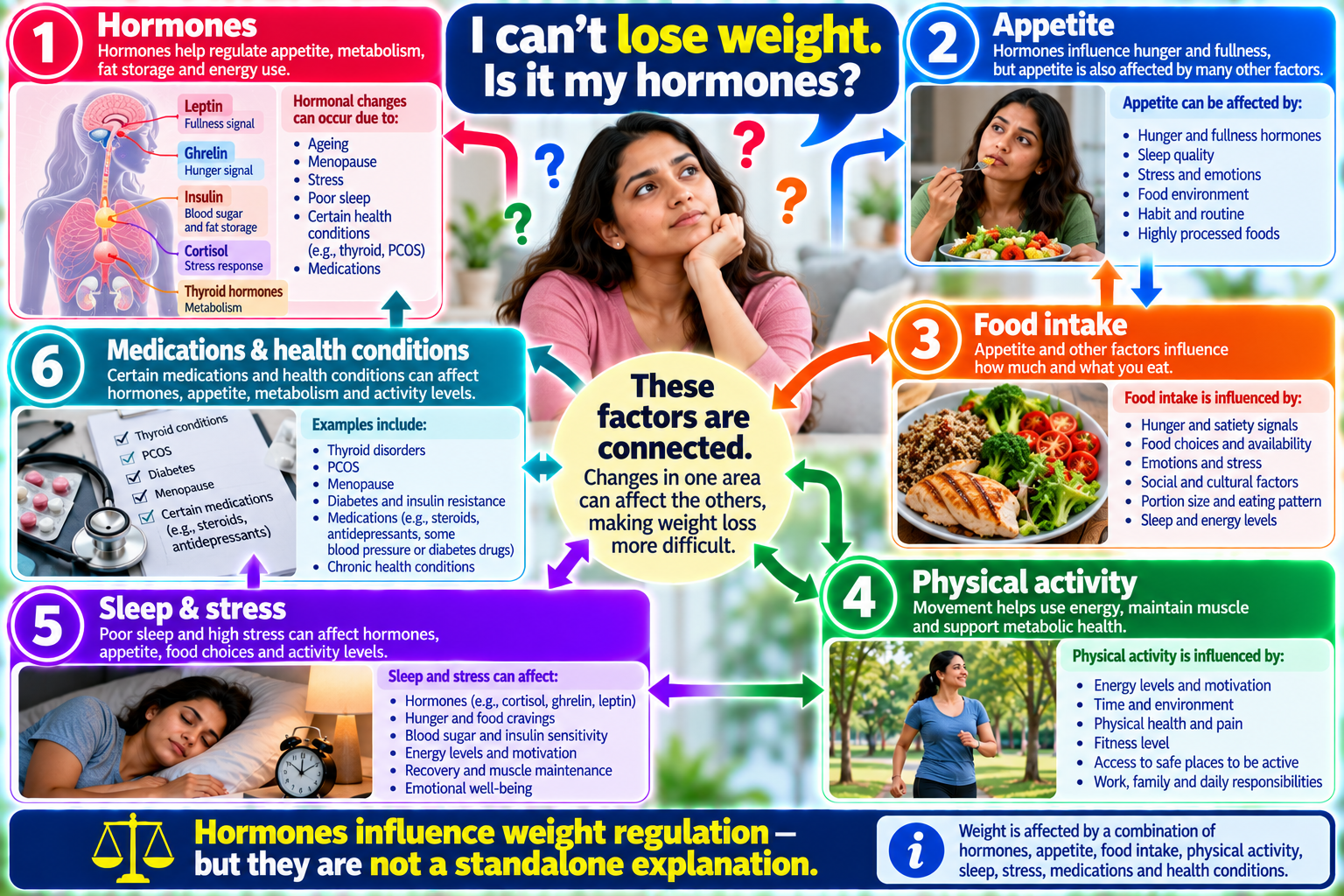
Are Hormones Really the Reason You Cannot Lose Weight?
This is one of the most important questions in this entire article.
For most people, difficulty losing weight should not automatically be interpreted as evidence of a hormone disorder.
Weight is affected by many factors, including:
| Factor | How it may affect weight management |
|---|---|
| Food intake | Determines energy supplied by food and drinks |
| Physical activity | Influences energy expenditure and fitness |
| Sleep | Can influence appetite, behavior, and metabolic health |
| Medications | Some medications can affect appetite or energy balance. |
| Health conditions | Certain conditions can influence weight. |
| Genetics | Can influence appetite, body composition, and weight regulation |
| Environment | Food availability, work patterns, and daily surroundings matter |
| Hormones | Influence appetite, metabolism, glucose regulation, and body composition. |
NIDDK specifically identifies lifestyle habits, sleep, medicines, health problems, family history, and genes among factors affecting weight. NIDDK — Factors Affecting Weight & Health
So there is an important difference between:
“Hormones influence weight.”
and
“I cannot lose weight because my hormones are imbalanced.”
The first is scientifically established.
The second requires evidence.
Hormone 1: Insulin and Weight Regulation
Insulin is one of the most discussed hormones in weight-loss conversations.
It is produced by the pancreas and plays a central role in regulating blood glucose. It also participates in how the body handles nutrients after eating.
That does not mean insulin should be viewed simply as an “off switch” for fat burning.
A common online claim is
High insulin equals fat storage, while low insulin equals fat loss.
Real physiology is more complicated.
Your body is constantly switching between storing and using energy. Insulin is one part of that system.
Insulin resistance can also affect how the body handles glucose and is closely associated with metabolic disease and obesity. However, improving insulin sensitivity should not be confused with a magical hormone-balancing treatment.
What Can You Actually Do?
Instead of trying to manipulate insulin through extreme carbohydrate restriction, focus on an overall eating pattern that supports metabolic health.
Practical choices include:
- Choose more minimally processed foods.
- Include vegetables and whole fruits.
- Add protein to meals.
- Include high-fiber foods.
- Limit frequent intake of sugary drinks.
- Build meals that are satisfying enough to reduce constant grazing.
- Stay physically active.
NIDDK recommends healthy eating patterns containing vegetables, fruits, whole grains, and varied protein foods as part of weight management. NIDDK — Eating & Physical Activity to Lose or Maintain Weight
A Useful Insulin Insight
You do not need to fear insulin.
You need to understand that metabolic health is broader than one hormone measurement.
Hormone 2: Leptin and the Fullness Signal
Leptin is produced primarily by fat tissue and communicates information about energy stores to the brain.
It is often described as a “fullness hormone,” but that description is incomplete.
Leptin participates in a much broader system of energy regulation.
One important feature is what happens during weight loss.
As body fat decreases, leptin levels generally decline. This is one of the biological changes that may contribute to increased appetite after weight loss.
NIDDK’s research program specifically includes leptin among the peripheral signals involved in appetite, satiety, and energy balance. NIDDK — Metabolism, Energy Balance & Obesity Research
This gives us an important explanation for something many people experience:
“I lost weight, but now I feel hungrier than before.”
That experience does not necessarily mean that you have failed.
Your biology can respond to weight loss.
Hormone 3: Ghrelin and Hunger
Ghrelin is commonly described as a hunger-related hormone.
It is produced largely in the stomach and is involved in signaling hunger and energy intake.
This is another reason why weight loss cannot be reduced to willpower.
When someone is genuinely hungry, simply telling them to “have more discipline” ignores the biological signals influencing food intake.
Research into weight-reduced states has shown that appetite can increase after weight loss, creating a biological pressure that can oppose weight maintenance. NIDDK — Weight Loss Leads to Strong Increase in Appetite
A Simple Ghrelin-Friendly Strategy
Rather than trying to suppress hunger with willpower, make meals more satisfying.
Try combining:
Protein + fiber-rich carbohydrate + vegetables/fruit + appropriate fat
For example:
Dal + vegetables + roti + curd
or
Eggs + whole-grain toast + vegetables + fruit
or
Beans + brown rice + vegetables + yogurt
The exact foods can vary.
The principle is to build meals that provide enough volume, protein, and fiber to make the eating pattern practical.
Hormone 4: GLP-1 and the Modern Weight-Loss Revolution
GLP-1 deserves its own section because it has fundamentally changed the modern discussion about hormones and weight loss.
GLP-1 is a hormone produced in the gut after food intake. It contributes to glucose regulation and appetite control.
This natural biological pathway is also targeted by several prescription medications.
NIDDK explains that medications such as liraglutide and semaglutide mimic GLP-1 and act on areas of the brain involved in appetite and food intake. Tirzepatide targets both GIP and GLP-1 pathways. NIDDK — Prescription Medications to Treat higher weight & Obesity
This is a crucial distinction:
GLP-1 medication is not the same thing as “naturally balancing your hormones.”
Prescription treatment involves pharmacology, dosing, medical eligibility, potential side effects, and ongoing clinical monitoring.
Why GLP-1 Matters to Your Appetite
For some people, obesity treatment can reduce appetite and help them feel full sooner.
This has changed how researchers and clinicians think about obesity.
Instead of asking only:
“Why can’t this person control food intake?”
the question becomes:
“What biological and environmental systems are influencing appetite, and what treatments can safely address them?”
That is a more scientifically useful question.
Hormone 5: Cortisol, Stress, and Weight
Cortisol is a glucocorticoid hormone involved in the body’s response to stress.
This does not mean cortisol is simply a “belly-fat hormone.”
The popular internet explanation is
Stress → cortisol → belly fat
The real relationship is more complicated.
Stress can influence sleep, appetite, food choices, physical activity, and emotional eating. These behavioral pathways can affect energy balance.
NIDDK recognizes stress, sleep, lifestyle, and environmental factors as part of the broader set of influences on weight. NIDDK — Factors Affecting Weight & Health
Try a Five-Minute Stress Reset.
Instead of trying to “lower cortisol” directly, try reducing the behavior that stress is causing.
For five minutes:
- Put your phone away.
- Take several slow, comfortable breaths.
- Walk around the room or outside.
- Drink water.
- Ask yourself whether you are hungry, tired, stressed, or simply seeking a break.
The purpose is not to create a magical hormone response; instead, it is to interrupt automatic behavior and encourage more intentional choices.
That is a much more realistic weight-management strategy.
Hormone 6: Thyroid Hormones and Weight
Thyroid hormones are important for regulating metabolism and many body functions.
This is where hormonal evaluation can genuinely matter.
Hypothyroidism can contribute to weight gain, along with symptoms such as fatigue, cold intolerance, and other changes. But thyroid disease is not responsible for most obesity.
That distinction is important.
A person who has unexplained weight gain and symptoms suggestive of thyroid disease should discuss them with a healthcare professional rather than purchasing an online “thyroid detox.”
NIDDK identifies hypothyroidism among health conditions that can affect weight. NIDDK — Factors Affecting Weight & Health
When Should Thyroid Testing Be Considered?
There is no universal rule that everyone trying to lose weight needs a thyroid panel.
Testing is more appropriately considered in the context of symptoms, medical history, physical findings, and clinical judgment.
This is one area where an actual healthcare evaluation is more useful than a generic “hormone balance” supplement.
Hormone 7: Estrogen, Testosterone, and Body Composition
Sex hormones can influence body composition, fat distribution, muscle, and other aspects of metabolic health.
This becomes especially relevant during aging and menopause.
The menopause transition is associated with changes in body-fat distribution, including a tendency toward greater central fat accumulation in some women, although aging and other factors also contribute. Research on menopause and body composition shows that the relationship is not explained by estrogen alone. PubMed — Effects of the Menopause Transition on Body Fatness and Distribution
That means the phrase:
“Menopause causes estrogen imbalance and belly fat.”
is too simplistic.
A better explanation is
Hormonal changes during menopause occur alongside changes in age, muscle mass, activity, sleep, appetite, and body-fat distribution.
What Can Help?
Focus on behaviors that protect health and body composition:
- Resistance training
- Adequate protein
- Regular physical activity
- High-quality meals
- Sufficient sleep
- Stress management
- Medical care when symptoms require it
Resistance exercise is particularly useful because preserving muscle becomes increasingly important with age.
A recent systematic review and meta-analysis found that resistance exercise during dietary weight loss helped preserve fat-free mass and increased fat-mass loss compared with diet alone. PubMed — Resistance Exercise During Dietary Weight Loss
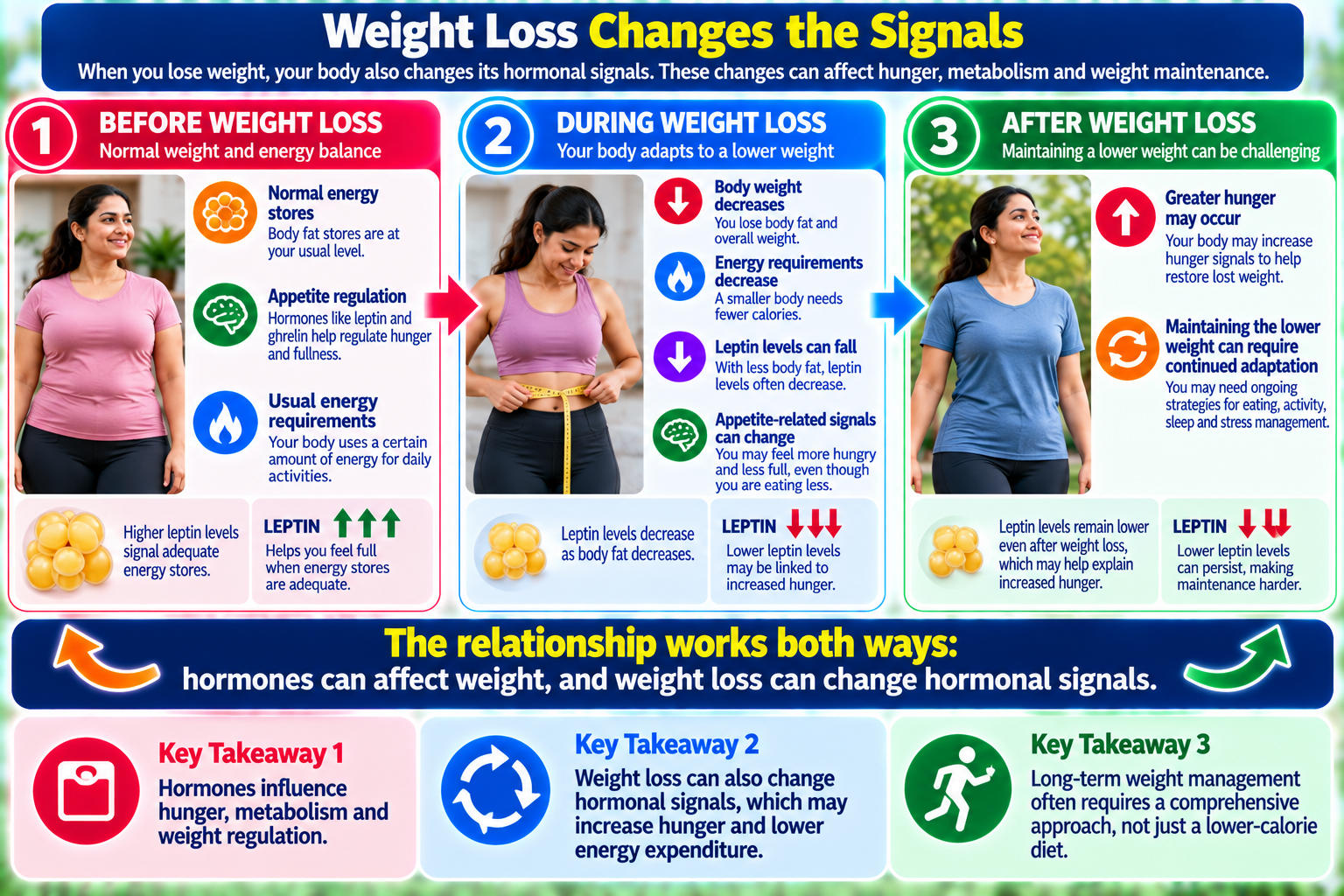
Why Weight Loss Can Change Your Hormones
This is one of the most overlooked parts of the conversation.
People often think:
Hormones → weight loss
But the relationship can also work in the opposite direction:
Weight loss → hormonal and metabolic changes
When body weight falls, the body can respond by changing appetite, energy expenditure, and other signals.
NIDDK explains that metabolism slows during weight loss and that changes in hormones and other factors can make maintaining weight loss difficult. NIDDK — Eating & Physical Activity to Lose or Maintain Weight
This creates a feedback loop:
Weight loss → lower energy requirements → appetite changes → greater effort required for maintenance
Understanding this can remove a lot of unnecessary self-blame.
Metabolic Adaptation: Your Body Is Not “Broken”
The phrase “damaged metabolism” is common online.
It is usually not a useful medical explanation.
During weight loss, total energy expenditure can fall because the body is smaller and because physiological adaptations may occur.
NIDDK’s research program specifically studies metabolic adaptation, appetite regulation, and energy expenditure because these processes influence both weight loss and weight maintenance. NIDDK — Metabolism, Energy Balance & Obesity Research
This does not mean that weight loss becomes impossible.
It means the body is dynamic.
A Better Question
Instead of asking:
“How do I reset my metabolism?”
ask:
“What can I change that makes my current routine easier to maintain?”
That might mean:
- Increasing daily movement
- Improving meal structure
- Adding resistance training
- Reviewing sleep
- Reducing mindless snacking
- Getting medical advice when appropriate
Sleep, Hunger Hormones, and Weight Management
Sleep deserves special attention because it interacts with appetite, eating behavior, and metabolic health.
However, the popular claim that
“Poor sleep lowers leptin and raises ghrelin in everyone”
is too absolute.
Recent research shows that sleep restriction can influence appetite and food intake, but hormonal responses are not always consistent across studies. A 2025 systematic review found that findings concerning sleep restriction and appetite-regulating hormones vary between studies and that clear patterns are not always present. PubMed — Sleep Restriction and Appetite-Regulating Hormones
A 2026 systematic review of sleep interventions also found that improving sleep may help some weight-related outcomes, although the evidence varied by intervention and outcome. PubMed — Behavioral Sleep Interventions and Obesity Outcomes
So rather than saying:
“Sleep balances your hormones.”
a better statement is
“Healthy sleep supports behaviors and physiological processes involved in weight management.”
Exercise Can Support Metabolic Health Without “Balancing Hormones”
Exercise is sometimes marketed as a way to manipulate hormones.
That is unnecessary.
You can explain its benefits without making exaggerated hormonal claims.
Physical activity can:
- Increase energy expenditure
- Improve cardiovascular fitness
- Improve physical function
- Support muscle
- Improve insulin sensitivity
- Help with weight maintenance
- Provide benefits beyond the scale
Resistance training deserves particular attention during weight loss.
A 2025 systematic review of 25 randomized trials found that adding resistance exercise to dietary weight loss protected fat-free mass, increased fat-mass loss, and improved muscular strength. PubMed — Resistance Exercise During Dietary Weight Loss
A 2026 study also found resistance training was associated with favorable changes in fat mass and preservation or increase of fat-free mass during calorie-restricted weight loss, although its observational design means it cannot establish the same level of causal evidence as a randomized trial. PubMed — Resistance Training and High-Quality Weight Loss
A People-First “Hormone Problem” Test
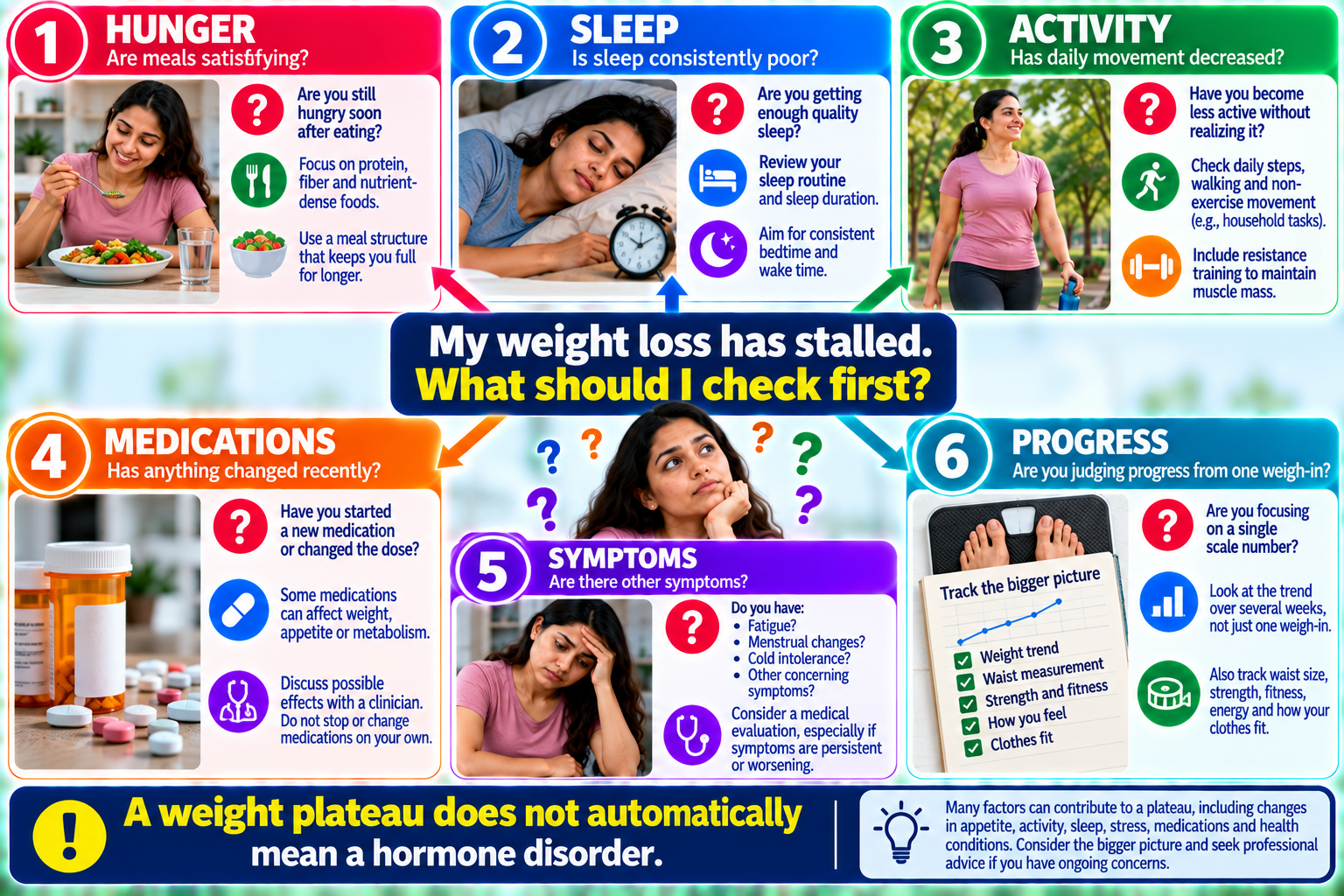
Before buying a hormone supplement or ordering a large hormone panel, ask five questions.
| Question | What to consider |
|---|---|
| Am I genuinely hungry? | Meal structure, protein, fiber, and eating pattern |
| Am I sleeping poorly? | Sleep duration, quality, and schedule |
| Has my activity fallen? | Steps, sedentary time, and exercise |
| Did something medically change? | Medication, symptoms, or diagnosed conditions |
| Am I expecting too much from the scale? | Water, body composition, and normal fluctuations |
This approach is more useful than assuming that every weight plateau is hormonal.
The “Five-Minute Hormone-Friendly” Daily Routine
You do not need a complicated hormone-balancing program.
Try this simple routine.
Morning
Drink water and eat a normal, satisfying breakfast if that fits your routine.
Avoid turning the morning into a battle with hunger.
Midday
Add a short movement break.
Walk for five to ten minutes or perform a few mobility exercises.
Main Meal
Build your plate around:
Protein + vegetables/fruit + high-fiber carbohydrate + appropriate fat
Afternoon
If you are hungry, do not automatically label yourself as lacking willpower.
Ask whether your previous meal was satisfying enough.
Evening
Take a short walk if practical.
Reduce unnecessary screen stimulation.
Prepare for a consistent sleep period.
The goal is not to manipulate seven hormones separately.
It is to create a daily environment that supports healthy appetite, activity, sleep and metabolic function.
A Simple 7-Day Metabolic Health Plan
Day 1: Observe
Write down your meals, hunger, activity, and sleep without judging yourself.
Day 2: Improve One Meal
Add a clear protein source and a fiber-rich food.
Day 3: Walk
Add a 10-minute walk after a meal.
Day 4: Strength
Perform a short beginner resistance session.
Examples:
- Sit-to-stand
- Wall push-ups
- Resistance-band rows
- Supported squats
Day 5: Sleep
Choose one realistic sleep improvement.
Day 6: Hunger Check
Before an unplanned snack, ask:
Hungry, tired, stressed, bored, or simply following a habit?
Day 7: Review
Look at your:
- Hunger
- Energy
- Sleep
- Activity
- Strength
- Food quality
- Weight trend
Then keep the habits that were actually realistic.
Common Hormone and Weight-Loss Mistakes
Mistake 1: Trying to “balance” every hormone
Your endocrine system is not a collection of independent switches.
Trying to manipulate individual hormones without a medical reason can lead to unnecessary supplements, restrictive diets, and confusion.
Mistake 2: Blaming insulin for everything
Insulin is essential for normal physiology.
It should not be turned into a villain.
Mistake 3: Calling every plateau “hormonal”
Weight loss can slow because energy requirements change, adherence changes, water fluctuates, and appetite can increase.
Mistake 4: Taking hormone supplements without medical advice
“Natural hormone support” does not automatically mean safe or effective.
Mistake 5: Ignoring strength training
During weight loss, preserving muscle is important.
Recent evidence supports resistance training as a useful component of dietary weight-loss programs. PubMed — Resistance Exercise During Dietary Weight Loss
Mistake 6: Assuming thyroid disease explains every weight problem
Thyroid disorders can affect weight, but they are not the explanation for most obesity.
Mistake 7: Expecting sleep alone to cause major fat loss
Sleep matters, but it is not a standalone fat-burning treatment.
The latest evidence suggests sleep interventions may help some weight-related outcomes, while results vary across studies. PubMed — Behavioral Sleep Interventions and Obesity Outcomes
When Should You Ask a Doctor About Hormones?
Consider medical evaluation if weight changes are accompanied by symptoms that suggest an underlying condition.
Examples may include:
- Unexplained or substantial weight change
- Persistent fatigue
- Significant cold intolerance
- Menstrual changes
- Symptoms associated with menopause
- Excessive thirst or urination
- New medication associated with weight change
- Symptoms suggesting another endocrine disorder
- Difficulty managing a chronic metabolic condition
NIDDK notes that health problems and medications can affect weight, so a clinical assessment may be more useful than assuming that a generic “hormone imbalance” is responsible. NIDDK — Factors Affecting Weight & Health
Hormone testing should be guided by symptoms, medical history, and clinical judgment.
You do not need every hormone tested simply because your weight has plateaued.
What About Weight-Loss Medications?
This is where hormone science has moved rapidly.
Several modern obesity medications act on hormonal or hormone-related pathways.
NIDDK explains that medications including liraglutide and semaglutide mimic GLP-1, while tirzepatide acts on both GIP and GLP-1 pathways. These medicines can reduce appetite and food intake in appropriate patients. NIDDK — Prescription Medications to Treat higher weight & Obesity
This is very different from buying an over-the-counter “hormone balancing” product.
Prescription treatment involves:
- Medical eligibility
- Appropriate dosing
- Side-effect monitoring
- Assessment of other medications
- Long-term follow-up
- Lifestyle support
For some people with higher weight or weight-related health problems, medication can be an appropriate part of treatment.
For others, it may not be necessary.
The Latest Research Is Changing the Way We Think About Obesity
The biggest development is not the discovery of one “weight-loss hormone.”
It is the growing recognition that obesity is a complex biological disease.
A September 2026 Scientific Statement from the Endocrine Society emphasized that obesity is influenced by biology, genetics, metabolism, the brain and environmental factors. It also emphasized that improving health—not weight loss alone—should guide treatment. Endocrine Society — 2026 Scientific Statement on Obesity
That is an important change in perspective.
Research Development 1: Appetite Is a Biological System
Researchers increasingly study how the brain integrates signals from the gut, fat tissue, and other parts of the body.
NIDDK’s research program includes insulin, leptin, glucocorticoids, ghrelin, and other metabolic signals because appetite is regulated through a complex network. NIDDK — Metabolism, Energy Balance & Obesity Research
Research Development 2: Weight Loss Can Trigger Counter-Reactions
After weight loss, the body can respond with increased appetite and lower energy requirements.
That helps explain why weight maintenance can be difficult.
NIDDK describes the weight-reduced state as involving adaptations in appetite, energy expenditure, and thermogenesis that can oppose maintenance of weight loss. NIDDK—Physiology of the Weight Reduced State
Research Development 3: Muscle Preservation Is Becoming More Important
Recent research is paying greater attention to the quality of weight loss, not just kilograms lost.
Resistance exercise can help preserve fat-free mass during dietary weight loss. PubMed — Resistance Exercise During Dietary Weight Loss
This suggests a better question:
How much fat did I lose, and how well did I preserve muscle and physical function?
Research Development 4: Hormone-Based Obesity Treatment Is Expanding
GLP-1 and GIP/GLP-1 medicines have demonstrated that appetite-regulating pathways can be targeted therapeutically.
NIDDK currently lists semaglutide, liraglutide, and tirzepatide among FDA-approved long-term weight-management medications for appropriate patients. NIDDK — Prescription Medications to Treat higher weight & Obesity
This is a major reason hormone biology has become central to modern obesity treatment.
Personal Experience: What I Have Learned About Health Habits
I have also experienced how confusing health information can become when every problem is given a different explanation.
At one point, it was easy to believe that the answer had to be another diet, another restriction, or another complicated routine.
What became clearer over time was that simple habits were easier to maintain.
A regular routine.
Better food choices.
More movement.
Adequate sleep.
Patience.
That experience is one reason I prefer a people-first approach rather than telling readers that every weight problem comes from a hormone imbalance.
The important question is not
“Which hormone should I fix?”
It is:
“What is actually making healthy weight management difficult for me?”
- For one person, the answer may be appetite.
- For another, it may be sleep.
- For another, medication.
- For another, menopause-related changes.
And for someone else, the main issue may simply be that the current eating pattern is difficult to maintain.
What “Hormone Balance” Should Mean in Real Life
Instead of treating hormone balance as a special diet or supplement program, think of it as supporting the systems that regulate health.
That includes:
Eat adequately: Avoid unnecessary extreme restriction.
Move regularly: Combine everyday activity with appropriate exercise.
Build muscle: Use resistance training when appropriate.
Sleep consistently: Protect sleep quality and recovery.
Manage stress: Reduce behaviors that lead to automatic eating or inactivity.
Treat medical conditions: Do not attempt to self-treat endocrine disorders.
Use medication appropriately: Evidence-based obesity treatment can include prescription therapies when clinically indicated.
This approach is much closer to current obesity science.
Frequently Asked Questions
Can hormones really affect weight loss?
Yes. Hormones influence appetite, glucose regulation, energy balance, body composition, and other processes related to weight. However, weight is influenced by many additional factors. NIDDK — Factors Affecting Weight & Health
What are the main hormones involved in weight regulation?
Important hormones and signals include insulin, leptin, ghrelin, GLP-1, glucocorticoids such as cortisol, thyroid hormones, and sex hormones. They operate as part of a larger regulatory network rather than independently.
Does high insulin automatically prevent fat loss?
No. Insulin participates in glucose and energy metabolism, but weight change cannot be explained by insulin levels alone. Overall energy intake, expenditure, appetite, activity, body composition, and many other factors matter.
Can leptin resistance make weight loss harder?
Leptin signaling is involved in appetite and energy regulation, and obesity can involve altered leptin signaling. However, “leptin resistance” should not be treated as a simple diagnosis that can be fixed with one food or supplement.
Does ghrelin cause hunger?
Ghrelin is an important appetite-related hormone. Hunger, however, is influenced by multiple biological and behavioral signals rather than ghrelin alone.
Does GLP-1 help with weight loss?
GLP-1 is involved in appetite and glucose regulation, and GLP-1-based prescription medications can help appropriate patients lose weight. NIDDK—Prescription Medications to Treat higher weight & Obesity
Can thyroid problems cause weight gain?
Yes. Hypothyroidism can contribute to weight gain, but thyroid disease is not responsible for most cases of obesity. NIDDK — Factors Affecting Weight & Health
Should everyone trying to lose weight get hormone tests?
No. Hormone testing should be based on symptoms, medical history, and clinical judgment. A weight plateau by itself does not automatically indicate an endocrine disorder.
Can menopause affect weight distribution?
Yes. Menopause is associated with changes in body composition and central fat distribution, although aging, activity, muscle mass, and other factors also contribute. PubMed — Effects of the Menopause Transition on Body Fatness and Distribution
Can exercise improve hormone health?
Exercise affects many metabolic processes, but it is better to describe its benefits in terms of fitness, muscle, insulin sensitivity, energy expenditure, and physical function rather than promising that it will “balance hormones.”
Is resistance training useful during weight loss?
Yes. Evidence from randomized trials supports resistance training as a way to help preserve fat-free mass and improve strength during dietary weight loss. PubMed — Resistance Exercise During Dietary Weight Loss
A Practical Hormone-and-Weight Checklist
Before blaming hormones, ask:
Appetite
- Am I constantly hungry?
- Are my meals satisfying?
- Am I skipping meals and overeating later?
Sleep
- Am I sleeping adequately?
- Is poor sleep affecting my food choices?
Movement
- Has my activity decreased?
- Am I doing resistance training?
Medical
- Have I started a medication that can affect weight?
- Do I have symptoms that warrant medical evaluation?
Progress
- Am I looking at a weight trend rather than one measurement?
- Am I tracking waist or clothing changes?
- Am I maintaining strength?
Expectations
- Am I expecting rapid weight loss?
- Have I given the routine enough time to become consistent?
This checklist can be more useful than purchasing a “hormone reset” program.
Author Note
This article was rewritten to explain hormones and weight loss using current evidence rather than the common online idea that everyone with difficulty losing weight simply has “imbalanced hormones.”
The goal is to distinguish normal hormonal regulation from genuine endocrine disorders and from marketing claims about hormone-balancing products.
The article also recognizes that obesity and weight management are complex. A person’s biology, environment, medications, sleep, food access, physical activity, appetite, and health conditions can all contribute.
Medical Disclaimer
This article is for educational purposes only. It does not diagnose, treat, or prevent any disease.
Do not assume that weight gain or difficulty losing weight means you have a hormone disorder.
If you have unexplained weight changes, persistent fatigue, menstrual or reproductive changes, symptoms of thyroid disease, diabetes symptoms, or another concerning health problem, discuss your symptoms with an appropriately qualified healthcare professional.
Do not start hormone therapy, thyroid medication, testosterone, estrogen, GLP-1 medication, or “hormone-balancing” supplements based solely on information from an online article.
Fitness Disclaimer
Exercise should match your current health, fitness and physical abilities.
Start gradually if you are new to exercise. Resistance training should use an appropriate level of difficulty and good technique.
If you have significant pain, chest discomfort, dizziness, unusual shortness of breath, or another concerning symptom during exercise, stop and seek appropriate medical advice.
If you have a medical condition or have been inactive for a long period, discuss vigorous exercise with a qualified healthcare professional before beginning.
Strong EEAT Evidence for This Article
The following authoritative and peer-reviewed resources support the major medical and scientific points discussed throughout the article:
- NIDDK — Metabolism, Energy Balance & Obesity Research
- NIDDK — Neurobiology of Obesity
- NIDDK — Eating & Physical Activity to Lose or Maintain Weight
- NIDDK — Factors Affecting Weight & Health
- NIDDK — Prescription Medications to Treat higher weight & Obesity
- NIDDK — Physiology of the Weight Reduced State
- Endocrine Society — 2026 Scientific Statement on Obesity
- PubMed — Resistance Exercise During Dietary Weight Loss
- PubMed — Resistance Training and High-Quality Weight Loss
- PubMed — Sleep Restriction and Appetite-Regulating Hormones
- PubMed — Behavioral Sleep Interventions and Obesity Outcomes
- PubMed — Effects of the Menopause Transition on Body Fatness and Distribution
Final Thoughts
Hormones Are Part of a Larger System
Hormones are an important part of the science of weight loss, but they are not a secret switch that needs to be “reset.”
Insulin helps regulate glucose and nutrient metabolism. Leptin communicates information about energy stores. Ghrelin contributes to hunger signaling. GLP-1 influences appetite and glucose regulation. Cortisol participates in the stress response. Thyroid hormones influence metabolism. Sex hormones can affect body composition and fat distribution.
But none of these hormones operates alone.
Weight regulation is a network involving the brain, gut, fat tissue, muscle, endocrine system, behavior, environment, sleep, medications, and physical activity. NIDDK — Metabolism, Energy Balance & Obesity Research
Focus on What You Can Actually Change
The most useful shift is therefore to stop asking:
“How can I balance my hormones to burn fat faster?”
Instead, ask:
“What biological, behavioral, medical, or environmental factors are affecting my weight, and what can I safely change?”
For some people, the answer may be better meal structure and more physical activity, while for others, improving sleep or preserving muscle may be more important.
Some people may need evaluation for a medical condition.
And for people with higher weight who meet appropriate criteria, evidence-based medical treatment may include prescription medications or other treatments alongside lifestyle support. NIDDK—Prescription Medications to Treat higher weight & Obesity
Health Is More Important Than the Scale
The newest obesity science increasingly recognizes that health—not simply a lower number on the scale—should be the ultimate goal. The 2026 Endocrine Society scientific statement reinforces this broader approach to obesity treatment. Endocrine Society — 2026 Scientific Statement on Obesity
That is the more accurate—and more useful—way to understand the connection between hormones and weight loss.
- Category Weight Loss
- 4 Week Diet Plan for Weight Loss
- The Science of Shedding Pounds: A Data-Driven Approach to Weight Loss
- Body, Mind, and Soul: A Holistic Approach to Health in the USA
- Balancing Health: The Key to Sustainable Energy and Health
- A Holistic Approach to Breast Cancer
- 12 Best Ways to Work Life Balancing Health : The American Health Challenge
Post Views: 1,725








[…] Best 7 Hormone Connection: How Balancing Your Body Can Accelerate Weight Loss […]
[…] Best 7 Hormone Connection: How Balancing Your Body Can Accelerate Weight Loss […]
[…] Best 7 Hormone Connection: How Balancing Your Body Can Accelerate Weight Loss […]