


















































































































































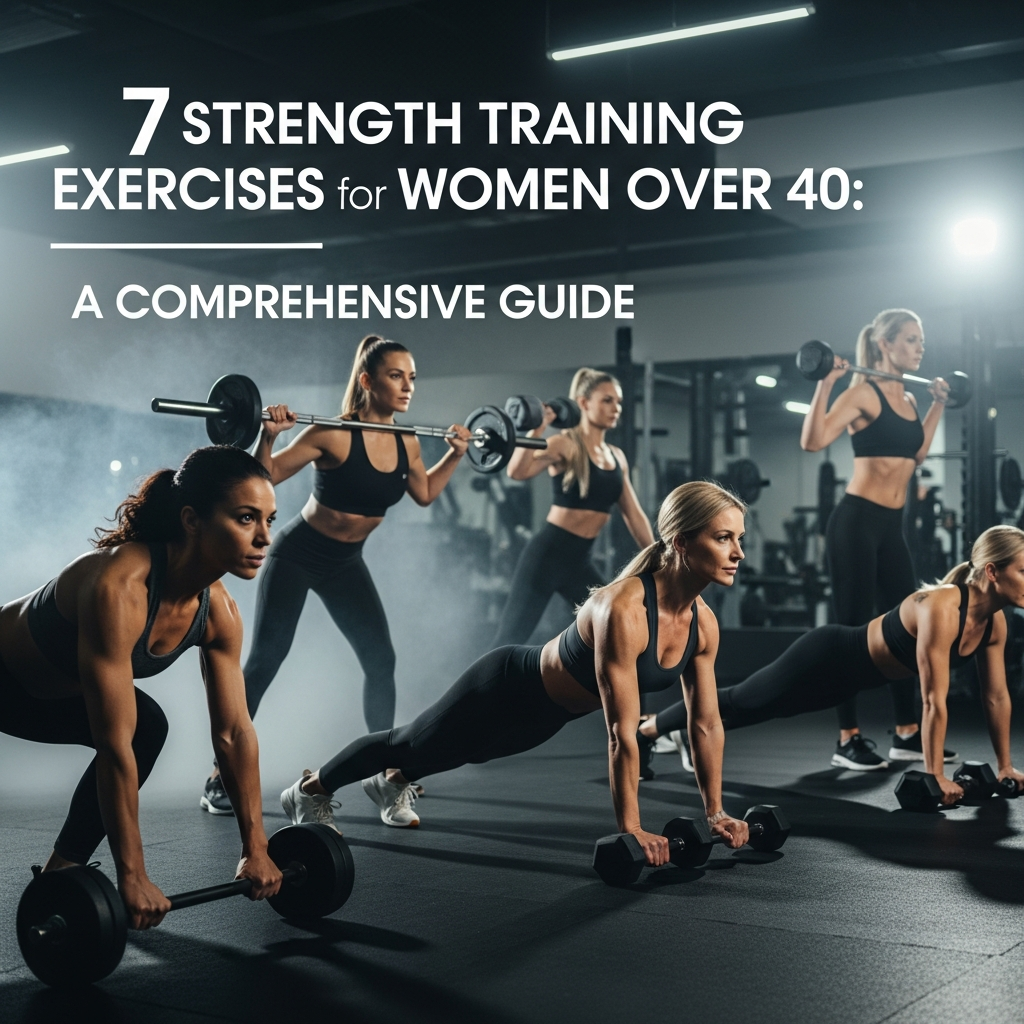
7 Best Strength Training Exercises for Women Over 40: Beginner Workout Plan for Strength and Healthy Aging
Medically Reviewed By: Licensed Physical Therapist
Fact-Checked By: Wellness Research Team
Last Updated: June 2026
Author’s Note
Many women notice physical changes after age 40. Energy levels may feel different. Muscle mass might gradually decrease. Everyday things you do may require more effort than they did previously.
The encouraging news is that strength training can help.
This page gives clear language and provides clear evidence-based information on strength training for beginner middle-aged women. The goal is not perfection. The goal is building strength, confidence, and long-term health.
Introduction
Have you ever stood up from a chair and felt a little stiffer than you once did?
In this blog post, we will discuss beginner strength training for women over 40. Many women notice changes in their bodies. Muscle mass naturally decreases with age. Hormonal changes may affect energy, strength, and recovery.
For years, many women focused mainly on walking or cardio exercise. While cardio is important, muscle-strengthening exercises for women after 40 are equally important.
I became interested in strength training when I saw how quickly fitness levels could change when activity was not constant. The biggest surprise for me was that most of the strength gains came from simple activities, not from rigorous sessions.
The most encouraging part?
You do not need a gym membership or expensive equipment.
A few basic movements performed consistently can make a meaningful difference.
Key Takeaways
- Strength training helps preserve muscle after 40.
- It may support healthy joints and bones.
- Simple workouts can be performed at home.
- Beginners do not need to use heavy weights.
- Consistency over intensity.
- Strength training is best supported by proper nutrition and sleep.
- Most women can begin with two to three sessions per week.
- Even small improvements can have a significant impact.
Strength Training for Beginners After 40:
Beginner strength training for midlife women consists of exercises that help you build and maintain muscle strength.
These exercises may involve the following:
- Body weight
- Resistance bands (also known as exercise bands or strength bands)
- Light weights
- Household items
It is not about building large muscles.
The aim is to improve:
- Mobility
- Strength
- Balance
- Bone health
- Daily Functioning
Strength training can make everyday tasks easier. Walking with groceries, climbing stairs, lifting bags, and getting up from the floor may become easier.
Research-Based Benefits of Strength Training for Women Above 40
1. Aids In Muscle Mass Maintenance
People naturally lose muscle as they age. Resistance training signals the body to preserve and grow muscle mass. This can help support physical independence later in life.
Key Benefit
Daily activities become easier.
2. Helps Maintain Bone Health
Normally, bone density decreases with age. Weight-bearing and resistance activities place healthy stress on bones. These activities help maintain bone health.
Practical advantage
Supports long-term bone health.
3. Improves Balance
Balance often declines with age. Many strength exercises challenge stabilizing muscles. Research suggests these exercises may help reduce fall risk.
Real-life Benefit
Greater confidence during daily movement.
4. Supports Healthy Joint Function
Strong muscles help support joints. This support can decrease unnecessary stress on your knees, hips, and shoulders.
Potential benefits
Movement often feels more fluid and more controlled.
5. Promotes Metabolic Health
Even at rest, muscle tissue requires energy. Maintaining muscle mass helps support a healthy metabolism.
Key Advantage
Long-term support for weight management.
6. Supports Healthy Aging
Researchers are still investigating the role of resistance training in healthy aging. Many studies show benefits for mobility and physical function.
Everyday Benefit
Maintaining independence longer.
7. Can Improve Mood
Exercise releases hormones in the brain that make you feel good. Many women report feeling more confident and energized following strength workouts.
Functional Benefit
Better emotional well-being.
8. Aids Functional Strength for Life
It’s not just about looking good; it’s also about feeling good. It helps with real-life activities.
Why It Matter
Makes lifting, carrying, bending, and reaching easier.
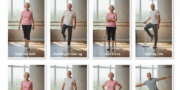
7 Strength Training Exercises for Women Over 40
Here are some beginner-friendly, low-impact strength training routines for ladies after 40.
## 1. Chair Squats
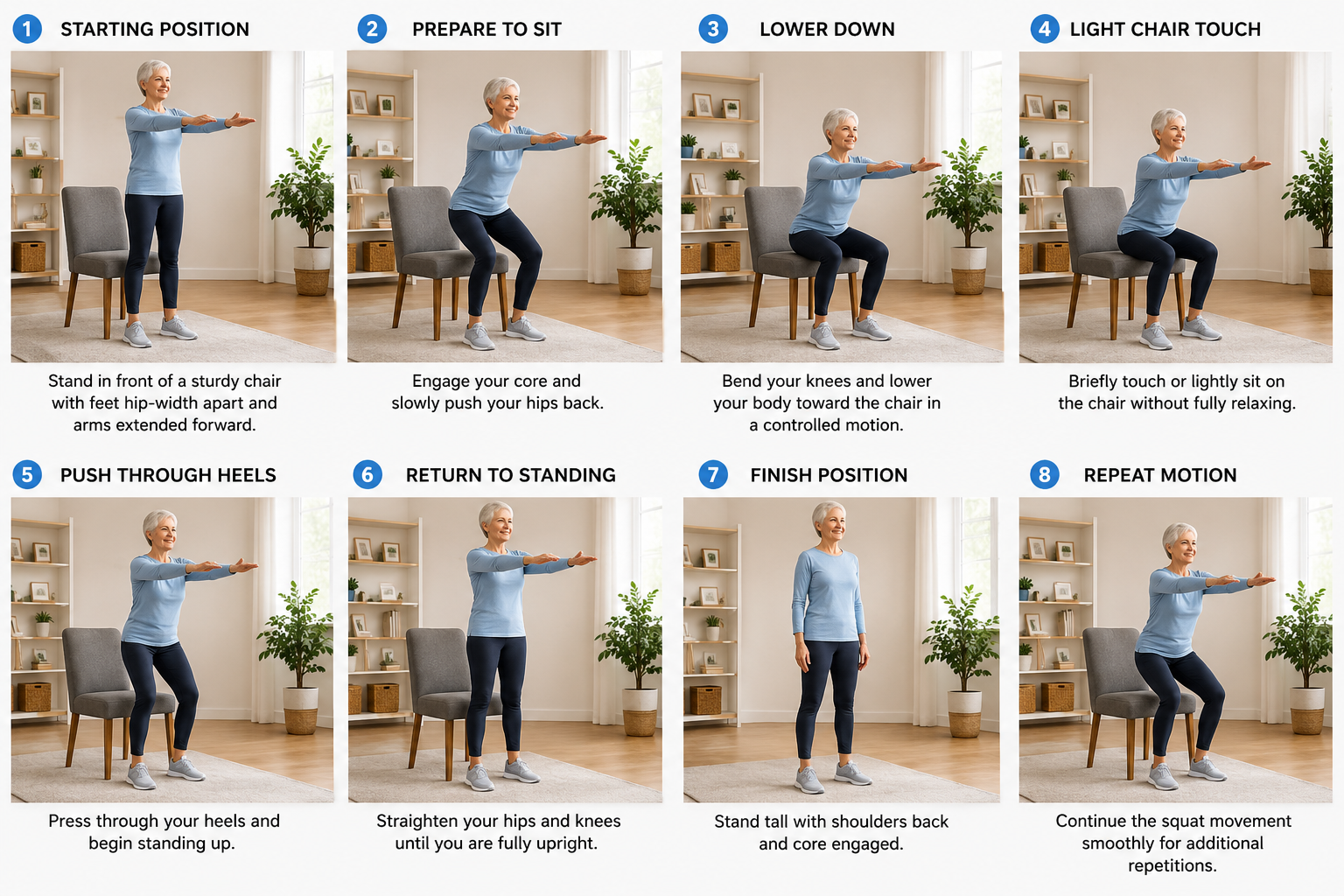
These chair squats are especially effective for strengthening:
- Legs
- Glutes
- Core
How to Do It
- Stand before a chair.
- Slowly lower yourself toward the seat.
- Lightly touch the chair.
- Stand back up.
Repetitions
8-12 repetitions
2-3 times
## 2. Reverse Lunge to Knee Drive
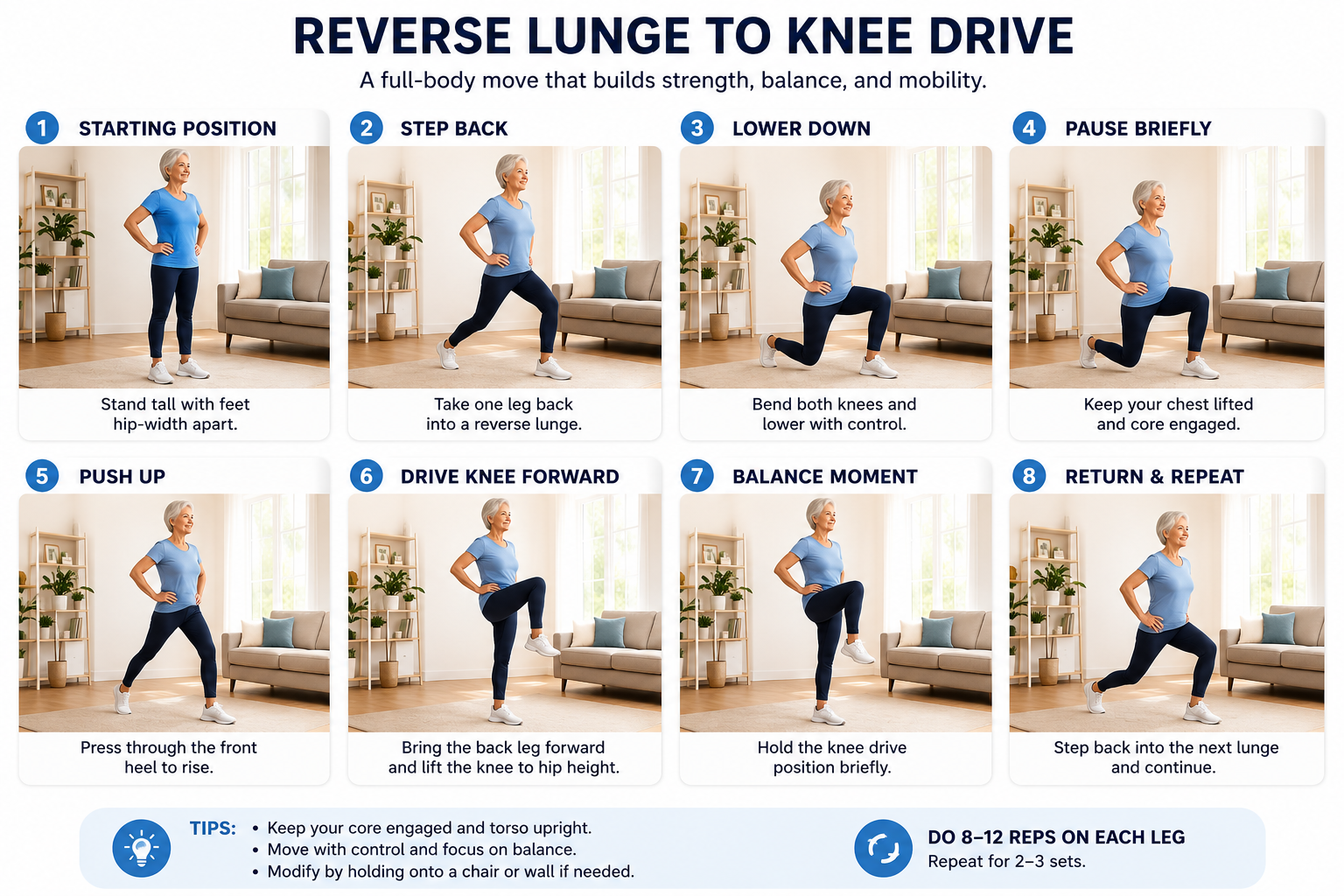
These reverse lunges into knee drives are effective workouts for strengthening the lower body while improving balance and coordination.
They help to strengthen:
- Glutes
- Quadriceps
- Hamstrings
- Core
How to do it.
- Step one leg back in a lunge.
- Lower your body until both knees are slightly bent.
- Push through your front foot to stand up.
- Drive your back knee up toward your chest.
- Repeat from the beginning.
Repetitions
8-12 repetitions on each side
2–3 sets
## 3. Dumbbell Glute Bridge
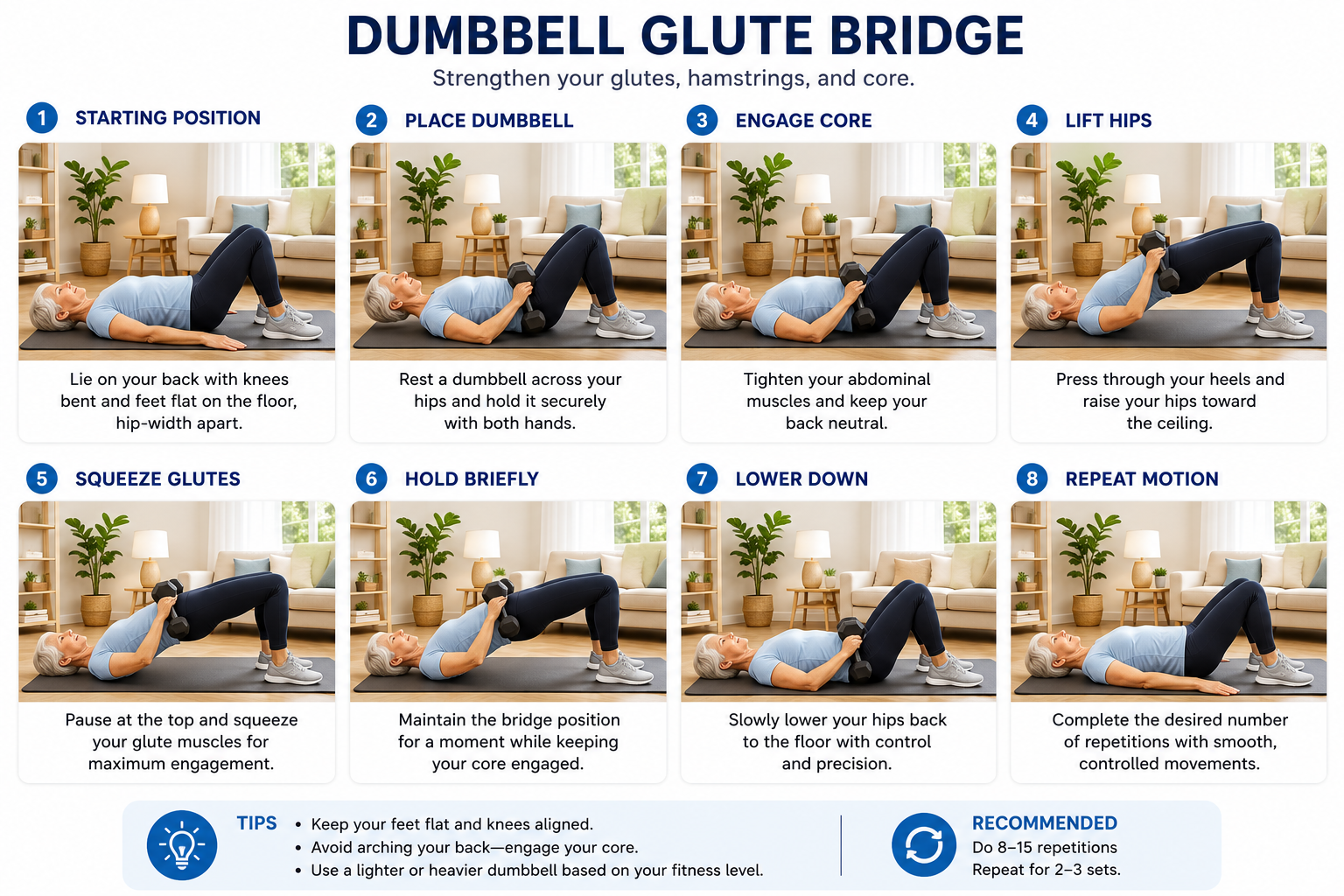
This exercise is highly effective for strengthening your lower body and improving hip stability and core control.
They aid in strengthening:
- Glutes
- Hamstrings
- Core
- Lower back
How to do it:
- Lie on your back with your knees bent and your feet flat on the floor.
- Rest a dumbbell on your hips and grasp it firmly with both hands.
- Push through your heels, lifting your hips toward the ceiling.
- At the top of the exercise, squeeze your glutes.
- Lower your hips back down to the starting position slowly.
- Repeat.
Repetitions
8-12 repetitions
2-3 Sets.
## 4. Dead Bug with Resistance Bands
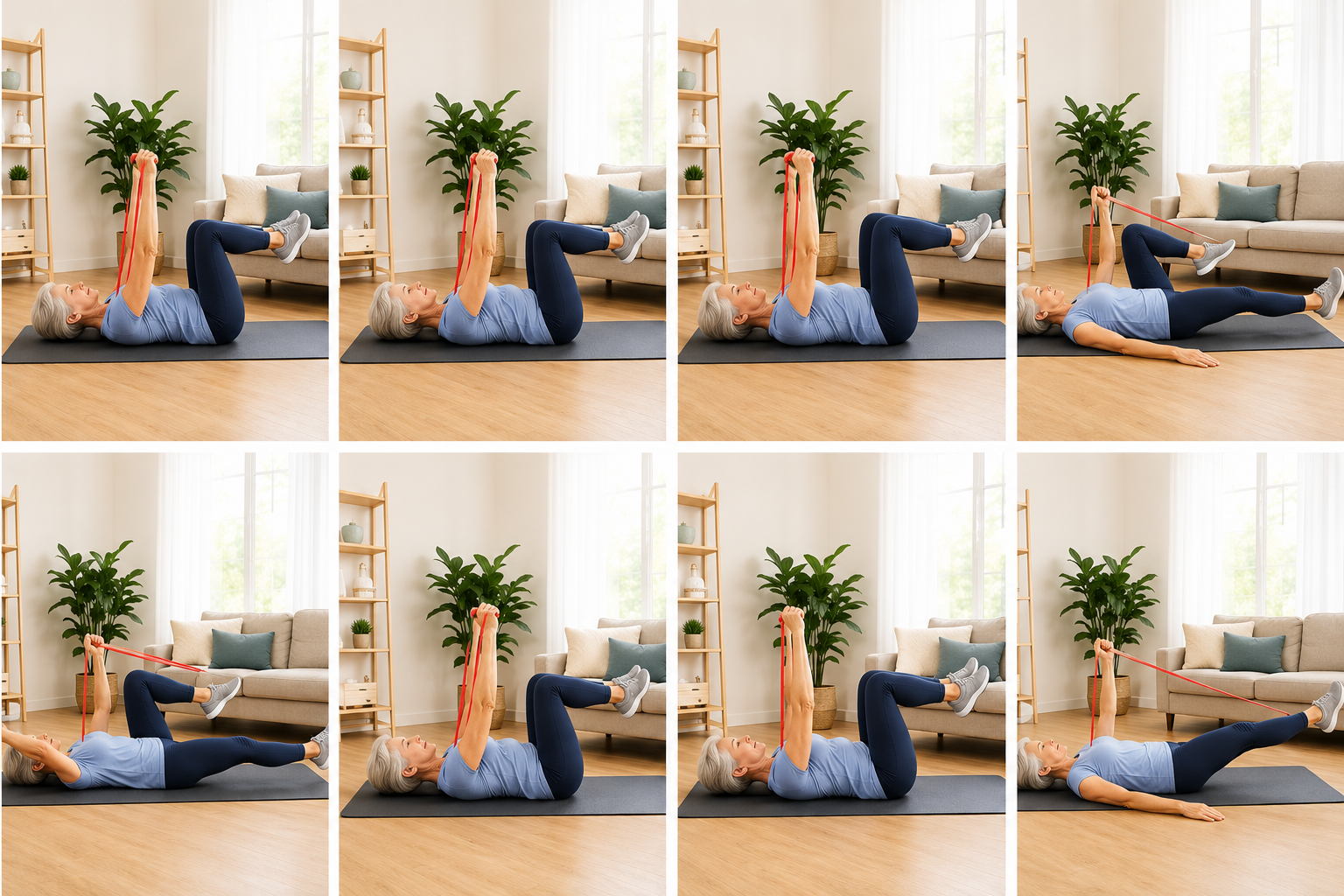
This exercise with a resistance band is a fantastic way to improve stability, coordination, and spinal control while strengthening your core.
They help build:
- Core (abdominals and deep core muscles)
- Hip flexors
- Lower back stabilizers
- Shoulders
How to do it
- Anchor a resistance band securely overhead and hold it with both hands.
- Lie on your back, knees bent at 90 degrees and your arms stretched toward the ceiling.
- Pull the band down to create tension and engage your core
- Slowly lower one leg toward the floor while keeping your lower back pressed firmly into the ground.
- Return to the beginning position and repeat with the opposite leg.
- Continue alternating sides, keeping your core engaged.
Repetitions
8-12 repetitions per side
2-3 sets
## 5. Suitcase Carry
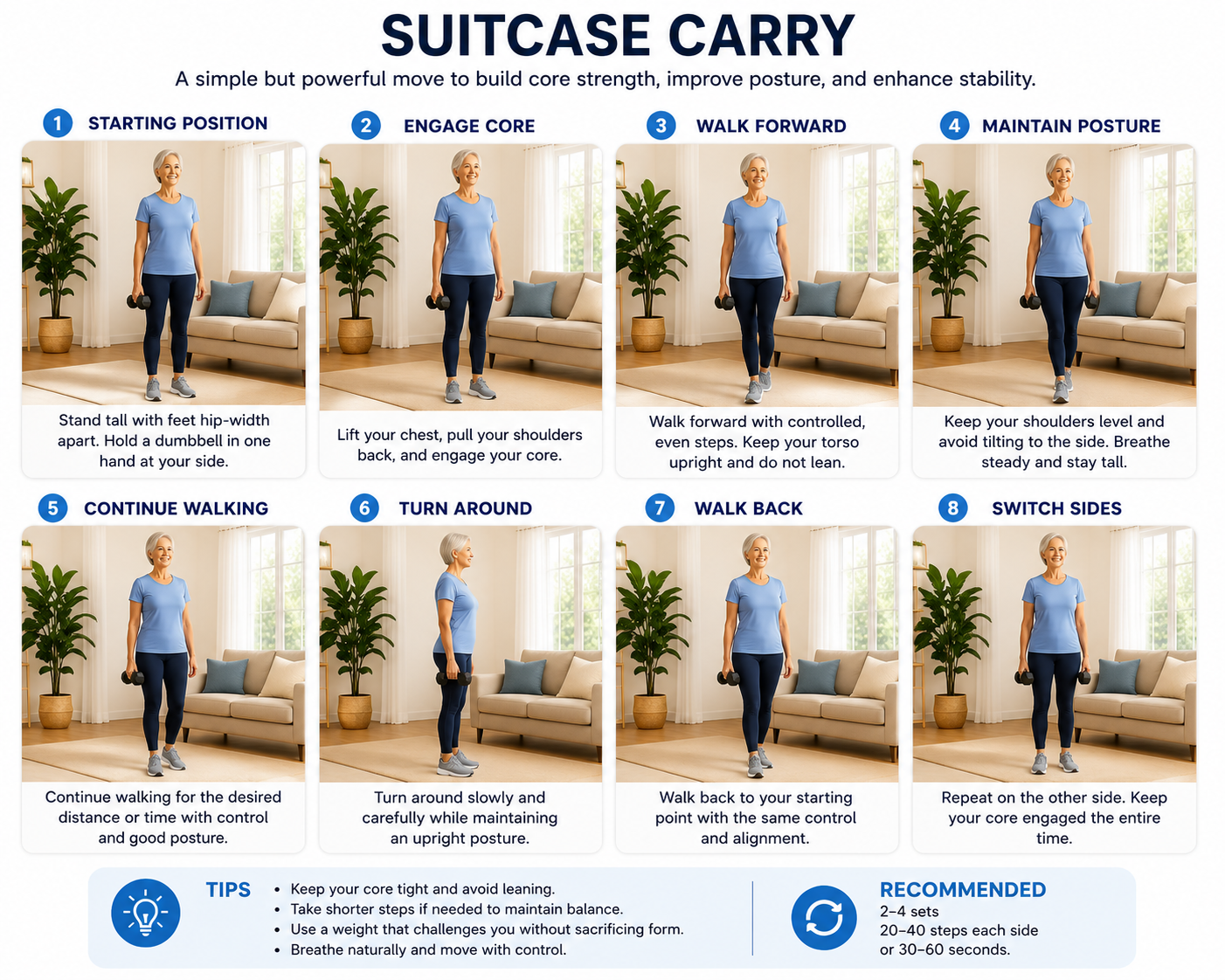
This workout targets the core, grip strength, balance, and overall stability.
Benefits
- Improved core stability
- Better balance and posture
- Increased grip strength
How to Do It
- Hold a kettlebell or dumbbell in one hand at your side.
- Stand tall with your shoulders back. Keep your chest up and your core engaged.
- Walk forward in a straight line, keeping your torso upright.
- Avoid leaning in to the weight.
- Continue with the prescribed distance or time.
- Switch sides and repeat.
20-40 yards each way or 30-60 seconds time
## 6. Bird Dog Exercise
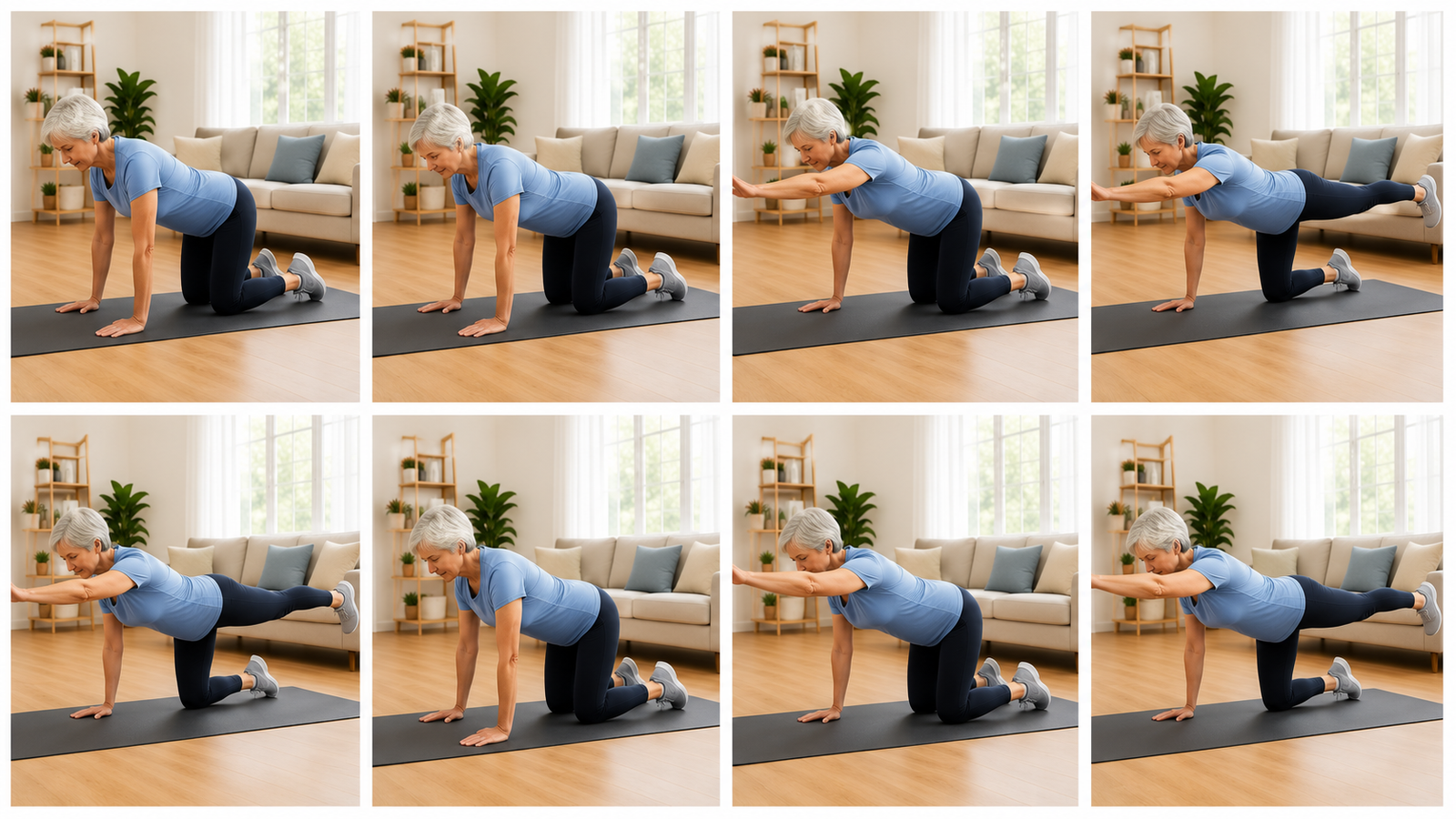
This Bird Dog workout improves balance and core stability.
How to Do It
- Start on hands and knees.
- Extend one arm forward.
- Extend the opposite leg backward.
- Hold briefly.
- Return and switch sides.
Repetitions
8–10 per side
7. Standing Shoulder Press
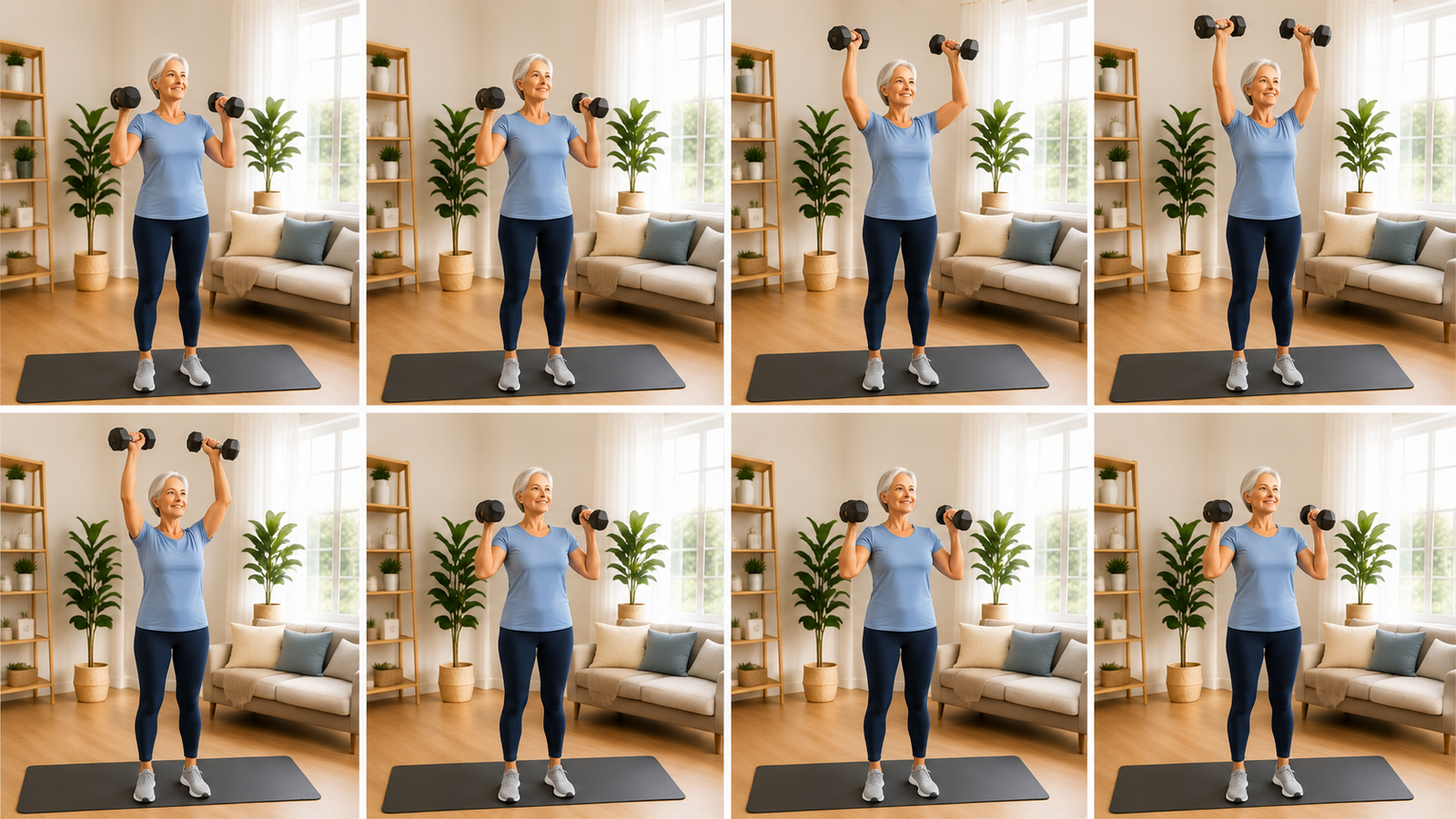
This movement is one of the easiest strength exercises for women over 40.
Muscles Worked
- Shoulders
- Arms
- Upper body
How to Do It
- Hold light dumbbells or weights.
- Press overhead.
- Lower slowly.
Repetitions
8–12 repetitions
Beginner Workout Chart
| Exercise | Sets | Reps/Time | Rest | Beginner Tips |
|---|---|---|---|---|
| 1. Chair Squats | 2 | 10–12 reps | 45 sec | Sit back onto a chair and stand up without using your hands. |
| 2. Reverse Lunge to Knee Drive | 2 | 8 reps per leg | 60 sec | Hold a wall or chair for balance if needed. |
| 3. Dumbbell Glute Bridge | 2 | 12 reps | 45 sec | Start with bodyweight before adding a dumbbell. |
| 4. Dead Bug with Resistance Band | 2 | 8 reps per side | 45 sec | Move slowly and keep your lower back pressed to the floor. |
| 5. Suitcase Carry | 2 | 20–30 seconds per side | 45 sec | Walk tall while holding one dumbbell at your side. |
| 6. Bird Dog Exercise | 2 | 8 reps per side | 30 sec | Focus on balance and keeping your hips level. |
| 7. Standing Shoulder Press | 2 | 10 reps | 60 sec | Use light dumbbells and avoid arching your back. |
Weekly Beginner Schedule
| Day | Activity |
|---|---|
| Monday | Complete All 7 Exercises |
| Tuesday | 20–30 Minute Walk |
| Wednesday | Complete All 7 Exercises |
| Thursday | Stretching or Yoga |
| Friday | Complete All 7 Exercises |
| Saturday | Light Activity (Walking, Cycling) |
| Sunday | Rest & Recovery |
What Does the Research Say?
Research organizations consistently support resistance training as part of healthy aging.
According to the National Institute on Aging (NIA), strength training can help older people in retaining muscle function and mobility.
Research published by the National Center for Biotechnology Information (NCBI) suggests that resistance exercise may improve older adults’ physical function, muscle strength, and general health.
According to the Mayo Clinic, strength training helps enhance bone health, balance, and quality of life.
According to Harvard Health Publishing, resistance exercise helps preserve muscle and supports healthy aging.
The World Health Organization (WHO) recommends that individuals do muscle-strengthening activities at least two days each week.
And strength training also helps maintain mobility and prevent age-related deterioration, says the Cleveland Clinic.
Potential Risks or Limitations
Strength training is safe for most people when done properly. But there are times when extra care should be used.
You should speak with a healthcare provider before starting a new exercise program if you have:
- Heart disease
- Uncontrolled high blood pressure
- Severe arthritis
- Recent surgery
- Osteoporosis with fracture risk
- Chronic pain conditions
Common beginner issues include:
- Using weights that are too heavy
- Poor exercise form
- Skipping warm-ups
- Doing too much too soon
The solution is simple. Start slowly. Focus on proper technique. Increase difficulty gradually.
How to Get Started
Many women think they need a gym to build strength. That is not true. Home strength training for women over 40 can be very effective.
Step 1: Start Small
Begin with two sessions per week.
Allow at least a day between workouts.
Step 2: Learn Basic Movements
Focus on:
- Squatting
- Pushing
- Lifting
- Pulling
- Standing up
First, learn the movement resistance-free.
Step 3. Use Light Resistance
For instance:
- Bodyweight
- Resistance band training
- Water bottle(s)
- Light dumbbells
Step 4: Follow a Simple Routine
Day 1
- Chair Squats
- Reverse Lunge
- Dumbbell Glute Bridge
- Bird Dog
Day 2
- Dead Bug
- Suitcase Carry
- Standing Shoulder Press
- Bird Dog
Weekly Recommendation
Beginners
2 to 3 times each week
20 to 30 minutes per session.
Intermediate Progression
3-4 times a week
30-45 minutes per session
Long-Term Success Tips
- Sleep first
- Consume sufficient protein
- Keep hydrated
- Go for walks regularly
- Monitor your progress monthly
Common Mistakes to Steer Clear Of
Many novices make the same blunders.
1. Trying to Do Too Much
More is not always better.
Start small.
2. Ignoring Recovery
Muscles grow during recovery.
Rest matters.
3. Poor Form
Good technique is more important than heavy weights.
4. Comparing Yourself to Others
Everyone starts somewhere.
Focus on your progress.
5. Bypassing Warm-Ups
A five-minute warm-up will get your body ready.
6. Desiring Instant Results
Strength comes in time.
Consistency wins.
7. Insufficient Protein Intake
Protein helps support muscle maintenance and recovery.
8. Quitting Too Soon
Many people stop before seeing results.
Give yourself time.
Expert Insights
Health organizations consistently recommend strength training as part of healthy aging.
According to the Mayo Clinic Strength Training Guide, adults should train major muscle groups at least twice weekly.
Strength training helps with muscle mass, balance, and bone health, according to experts at the World Health Organization – Physical Activity Guidelines and Harvard Health Publishing.
The National Institute on Aging recommends a resistance training program for older individuals.
A Nutrition Specialist’s Perspective
Many registered dietitians emphasize the close link between nutrition and exercise.
Adequate protein intake, fruits, vegetables, whole grains, and hydration support recovery and muscular health.
Strength training alone is beneficial, but combined with healthy eating, it is often even more effective.
Referring Organizations
Personal Experience and Practical Lessons
One thing I noticed while studying healthy aging is that many women believe strength training must be intense.
That is usually false. The women who often achieve the best long-term results are not always the strongest. They are the most consistent.
I have seen people make progress simply by exercising for 20 minutes two or three times each week.
They focused on habits. Not perfection. Many started with body-weight movements.
Some used light dumbbells. Others used resistance bands. The common factor was consistency.
The most significant lesson is simple:
Small actions repeated for months often produce better results than short periods of extreme effort.
Frequently Asked Questions
1. Is beginner strength training for women after 40 safe?
For most healthy adults, yes.
Strength training is generally considered safe when exercises are performed correctly, and progression is gradual. Women with medical conditions should speak with a healthcare professional before beginning a new exercise program.
2. How Often Should Women above 40 Strength Train?
Most organizations recommend at least two sessions a week.
Beginners are fine with two or three times a week, with time to rest between workouts.
3. Can strength training help with menopause changes?
Strength exercise can help you maintain muscle mass, bone health, and fitness during and after menopause.
It is often advocated as a component of a healthy lifestyle approach.
4. Do I have to get a gym membership?
No.
You can do simple strength workouts for women over 40 at home using bodyweight, resistance bands, or small weights.
5. What if I never exercised before?
It’s okay.
Keep it basic and keep it consistent, not intense. Even a little exercise might help too.
6. Does strength training help with weight management?
Yes. Strength training helps you preserve muscle mass and may contribute to effective weight management.
Used in conjunction with a balanced diet and exercise, it can help you reach your healthy weight-management objectives.
7. Best Women’s Full Body Strength Training Over 40?
You can get a solid full-body workout from squats, push-ups, rows, glute bridges, step-ups, shoulder presses, and core moves.
8. Do I have to use heavy weights?
Not at first.
Beginners should learn proper form before increasing resistance. Light weights often work very well during the early stages.
9. How long before I notice results?
Many women say they feel stronger, more energetic, and more confident within weeks.
Visible changes often take longer. Staying consistent is key.
10. Will strength training help with ordinary activities?
Yes.
As you become stronger, you may observe that activities like climbing stairs, carrying groceries, and lifting things become easier.
Methodology of Research
This material was studied using evidence-based information from credible health organizations and peer-reviewed scientific literature. Sources include the National Institutes of Health (NIH), National Institute on Aging (NIA), National Center for Biotechnology Information (NCBI), Mayo Clinic, Harvard Health Publishing, Cleveland Clinic, World Health Organization (WHO), and published research studies on resistance training and healthy aging.
Information was checked for accuracy, relevance, and conformity to current health recommendations. Personal observations were included only where appropriate and were cross-checked against established scientific evidence.
Sources and References
- National Institute on Aging (NIA)
- National Institutes of Health (NIH)
- National Center for Biotechnology Information (NCBI)
- Mayo Clinic
- Harvard Health Publishing
- Cleveland Clinic
- World Health Organization (WHO)
- Peer-reviewed journals on resistance training and healthy aging
Conclusion
Beginner strength training for women over 40 is one of the most effective ways to support healthy aging.
You do not need expensive equipment. You do not need long workouts.
Simple strength exercises performed consistently can help support muscle mass, balance, mobility, and confidence.
Start where you are. Focus on progress, not on perfection. Small, incremental changes each week might add up to big benefits over time.
Internal Linking Opportunities
- Natural Herbs for Low Energy
- Benefits of Daily Walking
- Fitness Over 40 for Women
- Healthy Protein Sources for Women
- Home Workout Guide for Beginners
- How Sleep Affects Recovery
- Healthy Aging Habits
- Low-Impact Cardio Exercises
- Best Stretching Exercises for Beginners
- Nutrition Tips for Women Over 40
About the Author
RVLNSV Prasad is a wellness writer with 20 years of experience in fitness training research, specializing in healthy habits, nutrition, natural wellness, lifestyle improvement, and evidence-based health education. He translates scientific knowledge into practical information that the average reader can understand and utilize.
Medical Disclaimer
This article is for educational purposes only and does not replace professional medical advice, diagnosis, or treatment. Always consult a qualified healthcare professional regarding personal health concerns before starting a new exercise, nutrition, or wellness program.
Related Posts
- 10 Effective Weight Loss Tips at 40 For Woman
- 12 Best Fat Burning Supplements Women
- 6 Home Exercises for Overall Fitness and Flexibility: A Comprehensive Guide
- Chest Workouts Without Equipment: Best 12 Moves to Build Muscle at Home
- 10 Best Vitamins for Women After 50 to Boost Energy and Health






[…] 7 Best Strength Training Exercises for Women Over 40: Beginner Workout Plan for Strength and Healthy… […]
[…] 7 Best Strength Training Exercises for Women Over 40: Beginner Workout Plan for Strength and Healthy… […]
[…] 7 Best Strength Training Exercises for Women Over 40: Beginner Workout Plan for Strength and Healthy… […]
[…] 7 Best Strength Training Exercises for Women Over 40: Beginner Workout Plan for Strength and Healthy… […]
[…] 7 Best Strength Training Exercises for Women Over 40: Beginner Workout Plan for Strength and Healthy… […]
[…] 7 Best Strength Training Exercises for Women Over 40: Beginner Workout Plan for Strength and Healthy… […]
[…] 7 Best Strength Training Exercises for Women Over 40: Beginner Workout Plan for Strength and Healthy… […]
[…] 7 Best Strength Training Exercises for Women Over 40: Beginner Workout Plan for Strength and Healthy… […]
[…] 7 Best Strength Training Exercises for Women Over 40: Beginner Workout Plan for Strength and Healthy… […]
[…] 7 Best Strength Training Exercises for Women Over 40: Beginner Workout Plan for Strength and Healthy… […]
[…] 7 Best Strength Training Exercises for Women Over 40: Beginner Workout Plan for Strength and Healthy… […]
[…] 7 Best Strength Training Exercises for Women Over 40: Beginner Workout Plan for Strength and Healthy… […]
[…] 7 Best Strength Training Exercises for Women Over 40: Beginner Workout Plan for Strength and Healthy… […]
[…] 7 Best Strength Training Exercises for Women Over 40: Beginner Workout Plan for Strength and Healthy… […]
[…] 7 Best Strength Training Exercises for Women Over 40: Beginner Workout Plan for Strength and Healthy… […]