



















































































































































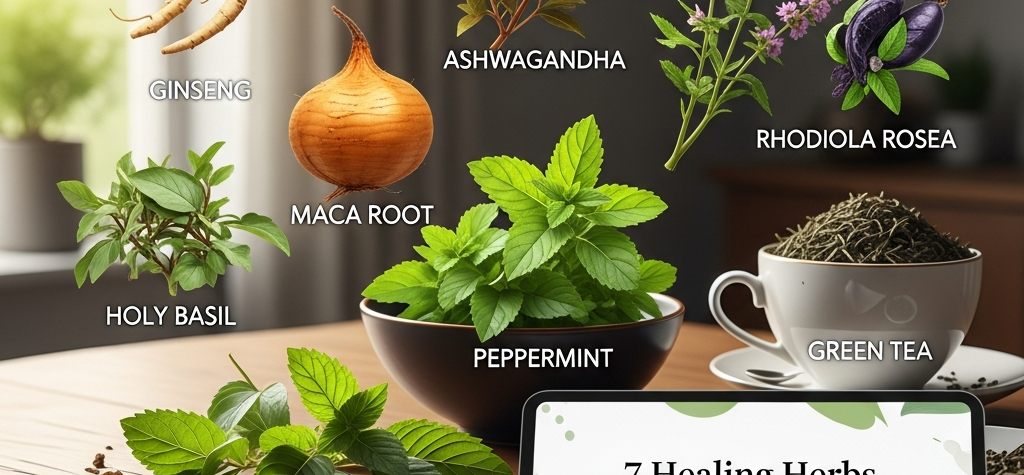
7 Herbs for Stress-Related Fatigue: Benefits, Research and Safety
Author: RVLNSV PRASAD
Updated On: October 2026
About Us
Author Bio
Editorial Policy
Contact Us
Medical Review: This article has not been independently reviewed by a qualified healthcare professional.

Author Note
This article examines seven herbs traditionally used for energy, stress management, and general well-being. It combines practical guidance with published research and information from reputable health organizations. The aim is to help readers understand what the evidence supports, where uncertainty remains, and how to approach herbal supplements safely.
Introduction
Herbs for stress-related fatigue are attracting attention among people who feel tired, mentally drained, or overwhelmed by busy schedules. Many reach for another cup of coffee or an energy drink when their concentration drops. Although caffeine can temporarily increase alertness, it does not correct every cause of tiredness and may interfere with sleep when consumed too late in the day.
Some herbs have been studied for their possible effects on stress, mental fatigue, and physical performance. These include ashwagandha, rhodiola, and Panax ginseng. However, their effects are not identical, and the evidence varies considerably. A supplement that helps one outcome, such as perceived stress, does not necessarily improve daytime energy or treat persistent fatigue.
Research is continuing to explore these differences. For example, a 2024 systematic review and meta-analysis of ashwagandha reported improvements in several measures of stress and anxiety across nine randomized trials involving 558 participants. However, the authors also noted the need for more research, particularly on long-term safety. These findings concern stress-related outcomes, not proof that ashwagandha treats every type of fatigue.
It is also important to look beyond supplements. Poor sleep, emotional stress, inadequate nutrition, some medicines, iron-deficiency anemia, and thyroid problems can all contribute to low energy. The NHS guide to tiredness and fatigue explains when ongoing symptoms deserve medical assessment.
This guide reviews seven commonly discussed herbs, summarizes the available evidence, and shares practical ways to assess your energy habits without relying on unproven remedies.
Quick Answer: Which Herbs May Help With Stress-Related Fatigue?
Ashwagandha, rhodiola, and Panax ginseng are among the herbs studied for stress, fatigue, or mental performance. Some clinical studies report potential benefits, but the findings are mixed, and no herb is a proven solution for unexplained tiredness.
Peppermint may offer a refreshing sensory experience, while tulsi, maca, and ginger have other traditional uses. Evidence that these herbs reliably increase energy in everyday life is limited or indirect.
The most sensible approach is to identify the reason for your fatigue first. Treat herbs as optional supplements to discuss with a healthcare professional, not as replacements for sleep, balanced meals, physical activity, or appropriate medical care.
Key Takeaways
-
Some herbal extracts show promise for particular stress or fatigue outcomes, but results differ by herb and study.
-
Ashwagandha has been studied for stress, although it has important safety limitations.
-
Rhodiola research remains uncertain, and ginseng trials have produced mixed findings.
-
Tulsi, maca, ginger, and peppermint should not automatically be considered proven energy boosters.
-
Herbal supplements can interact with medicines and may vary in quality.
-
Persistent fatigue may signal an underlying health issue that needs assessment.
-
Better sleep, balanced nutrition, manageable activity, and stress support remain essential foundations for everyday energy.
What Is Stress-Related Fatigue?
Stress-related fatigue describes tiredness that occurs alongside ongoing mental or emotional pressure. You might feel exhausted after a demanding workday, struggle to concentrate, or find that ordinary tasks require more effort than usual.
Stress can affect sleep, mood, appetite, and daily routines. These changes may contribute to fatigue, but stress is not the only possible explanation. A person who feels tired every day may also have a sleep disorder, anemia, a thyroid condition, an infection, or a medication-related problem.
The NHS overview of common fatigue causes describes several possibilities, including insufficient sleep, stress, depression, and certain medical conditions. Persistent tiredness should not automatically be attributed to a busy lifestyle.
What Does “Adaptogenic Herb” Mean?
The term adaptogen is often used in supplement marketing for plants believed to help the body respond to stress. Ashwagandha and rhodiola are frequently described this way.
However, the label does not establish that a product works. Researchers need to test specific preparations in well-designed human studies and measure meaningful outcomes. A study showing a change in a stress questionnaire, for instance, does not prove that an herb prevents burnout, improves every type of fatigue, or increases physical stamina.
The National Center for Complementary and Integrative Health (NCCIH) advises consumers to consider the evidence for each supplement separately because research quality and effectiveness vary widely.
1. Ashwagandha: A Research Focus for Stress Management
Ashwagandha (Withania somnifera) is an herb used in Ayurvedic traditions. Modern research has examined certain extracts for their possible effects on perceived stress, anxiety, sleep, and related outcomes.
A 2024 systematic review and meta-analysis included nine randomized controlled trials with 558 participants. The researchers reported improvements in several measures of stress and anxiety compared with placebo. Nevertheless, the trials do not establish that every ashwagandha product improves energy, and further research is needed to clarify long-term safety.
A separate randomized controlled trial published in 2024 examined an ashwagandha extract in chronically stressed adults. Such trials are useful because they test a defined preparation under specific conditions. Their results should not automatically be applied to other extracts, powders, or products.
What Might It Help With?
-
Managing perceived stress in some adults.
-
Supporting certain aspects of sleep, according to limited research.
-
Potentially improving stress-related well-being when a tested preparation is used.
These are possible benefits, not guaranteed outcomes. Evidence for treating unexplained fatigue remains insufficient.
Important Safety Considerations
Ashwagandha can cause stomach upset, diarrhea, vomiting, or drowsiness. Rare cases of liver injury have also been reported. It may affect thyroid function and interact with medicines used for diabetes, blood pressure, seizures, or immune suppression.
The NCCIH ashwagandha safety guidance advises against its use during pregnancy and says it should be avoided during breastfeeding. People with thyroid or autoimmune disorders, those preparing for surgery, and people taking relevant medicines should consult a healthcare professional before considering it.
Practical takeaway: Ashwagandha is better discussed as a possible stress-management supplement than as a guaranteed natural energy booster.
2. Rhodiola Rosea: What the Fatigue Research Shows
Rhodiola (Rhodiola rosea) grows in colder regions of Europe and Asia. It has traditionally been used for fatigue, endurance, and work performance. Today, it is marketed for mental stamina, concentration, and stress support.
The evidence is less convincing than many product descriptions suggest. A systematic review of rhodiola for physical and mental fatigue assessed 11 controlled studies. Some reported potential benefits, but the studies had important methodological limitations, including a high risk of bias or incomplete reporting.
The NCCIH concludes that there is not enough reliable evidence to determine whether rhodiola is useful for a specific health purpose. Its rhodiola safety and evidence summary also notes that research in people has generally been of low to moderate quality.
Who Should Be Cautious?
Rhodiola may cause side effects, and its suitability can depend on a person’s medicines and health history. Anyone taking prescription medicines, particularly for mental health or chronic conditions, should seek professional advice before using it.
Practical takeaway: Rhodiola is a promising research topic, but current evidence does not justify describing it as a proven treatment for mental fatigue or low energy.
3. Panax Ginseng: Evidence for Energy and Fatigue
Panax ginseng, also called Asian ginseng, has a long history of use in traditional medicine. Researchers have investigated it for fatigue, cognition, and metabolic health. It is important to distinguish Panax ginseng from other plants that are sold under the general name “ginseng.”
A 2023 systematic review and meta-analysis evaluated 19 randomized controlled trials involving 2,413 participants. The overall results did not show a statistically significant reduction in fatigue with ginseng compared with control groups. Some subgroup analyses suggested small benefits, including for general fatigue, but the results were not consistent across all analyses.
The NCCIH Asian ginseng review similarly describes the evidence for fatigue as mixed. Most trials have been relatively small and short, so larger and longer studies are needed.
Potential Benefits and Limitations
-
Some research suggests a small effect on general fatigue.
-
Results for athletic performance are largely unconvincing.
-
Evidence for cognitive benefits varies by population and outcome.
Asian ginseng may cause insomnia. It can also affect blood sugar, interfere with blood clotting, worsen some autoimmune conditions, or interact with medicines. People with diabetes or those taking regular medication should consult a healthcare professional before use.
Practical takeaway: Ginseng may warrant further study, but it should not be promoted as a dependable way to increase daily energy.
4. Tulsi: A Traditional Herb for Stress Support
Tulsi, also known as holy basil (Ocimum tenuiflorum), is widely used in Indian wellness traditions. It is consumed in different forms, including as a culinary herb and herbal tea. Researchers have explored its possible effects on stress and other health outcomes.
A systematic review of human studies on tulsi identified 24 studies reporting clinical outcomes. The authors described promising findings across several areas but emphasized that additional research was needed to clarify effective preparations, doses, and the people most likely to benefit.
This distinction matters because traditional use does not automatically prove that tulsi treats stress-related fatigue. Research on stress outcomes is not the same as research showing a reliable increase in energy.
A Practical, Food-Based Option
For someone who enjoys its flavor, tulsi leaves can be used in a simple tea as part of a relaxing daily routine. A pleasant tea ritual may provide a moment to pause, but it should not be presented as a clinically proven fatigue treatment.
Concentrated extracts are different from ordinary culinary use. Ask a healthcare professional or pharmacist about supplement safety if you take medication, have a medical condition, or are pregnant or breastfeeding.
Practical takeaway: Tulsi can be a culturally familiar wellness option, but stronger clinical research is needed before making firm claims about its effects on energy.
5. Maca Root: Traditional Food Use and Modern Claims
Maca (Lepidium meyenii) is a plant native to the Andes of Peru. Its root has traditionally been consumed as food and is also sold as a powder or dietary supplement.
Maca is marketed for vitality, stamina, and general well-being. However, evidence that it reliably improves everyday energy or treats stress-related fatigue is limited. Findings from small studies of particular outcomes cannot establish a general energy-boosting effect.
How to Approach Maca
Maca powder may be used as a food ingredient in a smoothie, porridge, or other meal if it suits your dietary preferences. This is different from taking a concentrated extract for a medical purpose.
If you consider a supplement, look for clear ingredient information and avoid products that promise rapid or dramatic results. Discuss its use with a healthcare professional if you take medication, have a health condition, or are pregnant or breastfeeding.
Practical takeaway: Maca may be of interest as a food or supplement, but claims that it reliably fights fatigue need better evidence from well-designed human trials.
6. Ginger: Useful for Food, Not a Proven Energy Remedy
Ginger (Zingiber officinale) is a common kitchen ingredient with a long history of culinary and traditional use. It has been studied for several purposes, including nausea and certain digestive symptoms.
However, ginger is not a stimulant, and there is insufficient evidence to recommend it as a direct treatment for low energy. If ginger tea or ginger in meals helps you enjoy a balanced routine, it can be a reasonable food choice for many people. That does not mean it will correct fatigue caused by poor sleep, anemia, thyroid disease, or another medical condition.
Simple Ways to Use Ginger
-
Add fresh ginger to soup or cooked vegetables.
-
Make a mild ginger infusion if you enjoy the taste.
-
Use it as a flavoring in a balanced meal.
Large supplemental amounts may not be suitable for everyone and can cause digestive discomfort. People taking medicines that affect blood clotting or who have relevant medical conditions should ask a healthcare professional about concentrated ginger products.
Practical takeaway: Ginger can add flavor and variety to meals, but it should not be described as a proven energy supplement.
7. Peppermint: A Refreshing Option for Alertness
Peppermint (Mentha piperita) is known for its cooling taste and fresh aroma. It is often consumed as tea, while peppermint essential oil is used in other products. These forms should not be treated as interchangeable.
A randomized, placebo-controlled study published in 2025 investigated the short-term cognitive effects of peppermint tea in 25 adults. The researchers reported differences in some cognitive and brain blood-flow measures between the peppermint and control groups. The study was small, so the findings need replication before strong conclusions can be drawn.
Earlier research on peppermint aroma also reported changes in subjective alertness and aspects of cognitive performance in healthy volunteers (study details on PubMed). Aroma research does not prove that drinking peppermint tea treats ongoing fatigue.
How to Use Peppermint Sensibly
A cup of peppermint tea may be an enjoyable alternative to another caffeinated drink for someone who prefers a caffeine-free beverage. The benefit may be the pleasant routine and the choice to avoid additional caffeine, rather than a guaranteed increase in energy.
Peppermint can worsen reflux symptoms in some people. Do not swallow essential oils or use concentrated products internally unless a qualified professional has specifically advised you on a safe product and use.
Practical takeaway: Peppermint may offer a refreshing sensory experience, but evidence that peppermint tea reliably treats fatigue is limited.
Comparing Seven Herbs: What Does the Evidence Suggest?
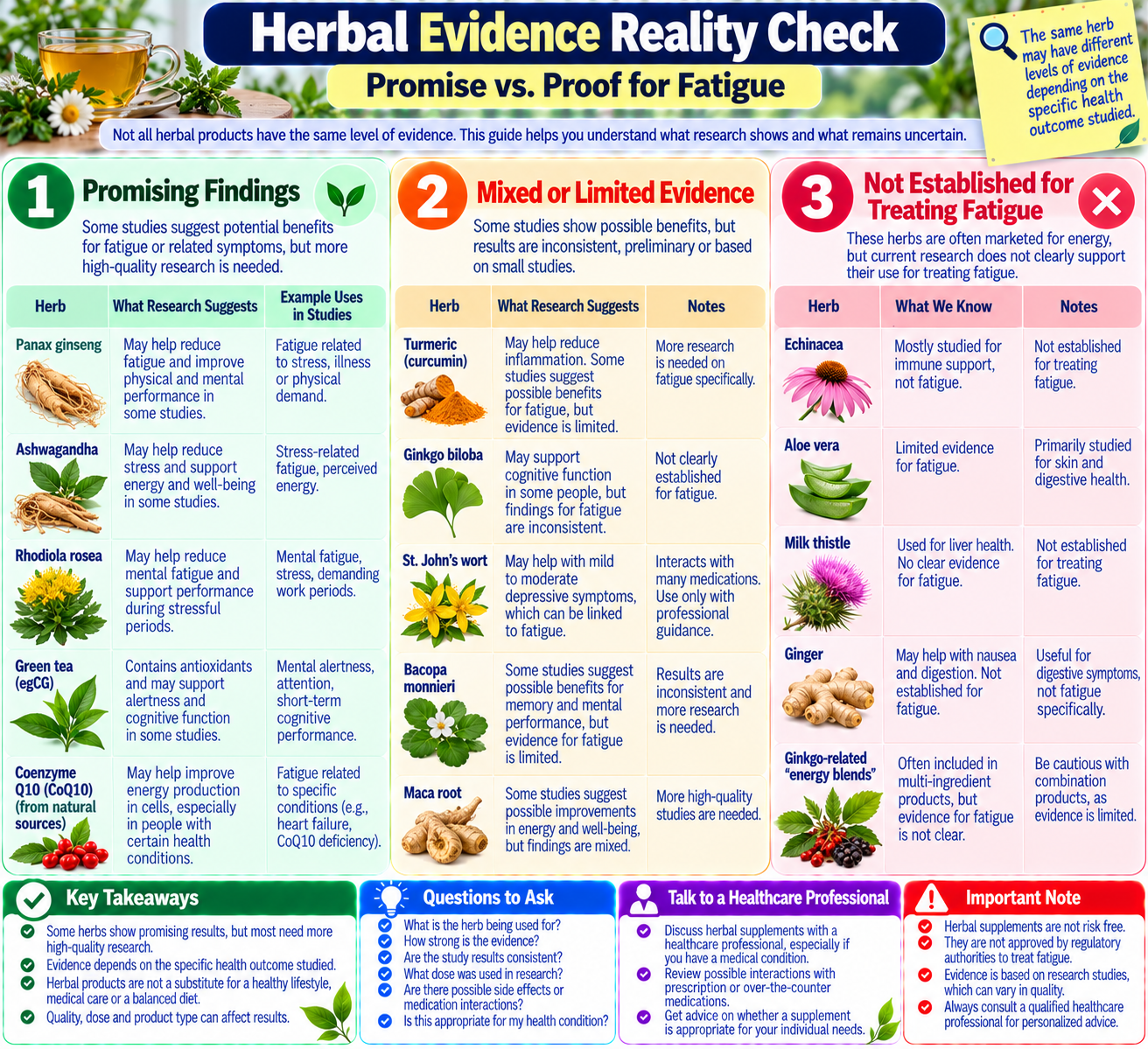
The table below summarizes the evidence cautiously. It is not a ranking of which herb works best, and it should not be used to choose a supplement without considering safety.
| Herb | Main area studied | What the evidence suggests |
|---|---|---|
| Ashwagandha | Stress and anxiety | Promising results for some stress outcomes; safety limitations remain |
| Rhodiola | Physical and mental fatigue | Findings are mixed; study quality limits confidence |
| Panax ginseng | General fatigue and cognition | Some small benefits in selected analyses, but overall findings are inconsistent |
| Tulsi | Stress and general wellness | Early human research is promising but needs stronger confirmation |
| Maca | Vitality and selected wellness outcomes | Evidence for everyday energy remains limited |
| Ginger | Digestive symptoms and other outcomes | Useful as a food ingredient; not established as an energy treatment |
| Peppermint | Aroma, alertness, and short-term cognition | Small studies suggest possible effects, but fatigue-treatment evidence is limited |
The important difference is between a traditional use, an early research signal, and a benefit established through consistent, high-quality clinical evidence. These categories should not be presented as equivalent.
What Recent Research Means for Readers
Research on herbal supplements continues to develop, but newer studies do not automatically establish that a product works. The preparation, participant group, comparison treatment, length of the trial, and measured outcome all matter.
Three useful examples illustrate why readers should look beyond marketing claims:
-
Ashwagandha: A 2024 meta-analysis found improvements in some stress and anxiety measures, but the results do not prove that it treats every cause of fatigue (read the review).
-
Ginseng: A 2023 meta-analysis found no statistically significant benefit for fatigue across all included ginseng trials, although selected subgroup analyses were more encouraging (read the review).
-
Peppermint tea: A small 2025 controlled study examined short-term cognition rather than long-term fatigue, and its findings require confirmation in larger studies (read the study).
These findings show why it is more useful to ask, “What outcome was measured, and how reliable was the evidence?” than to ask only whether an herb is described as an energy booster.
A More Useful Approach: Find Your Personal Energy Pattern
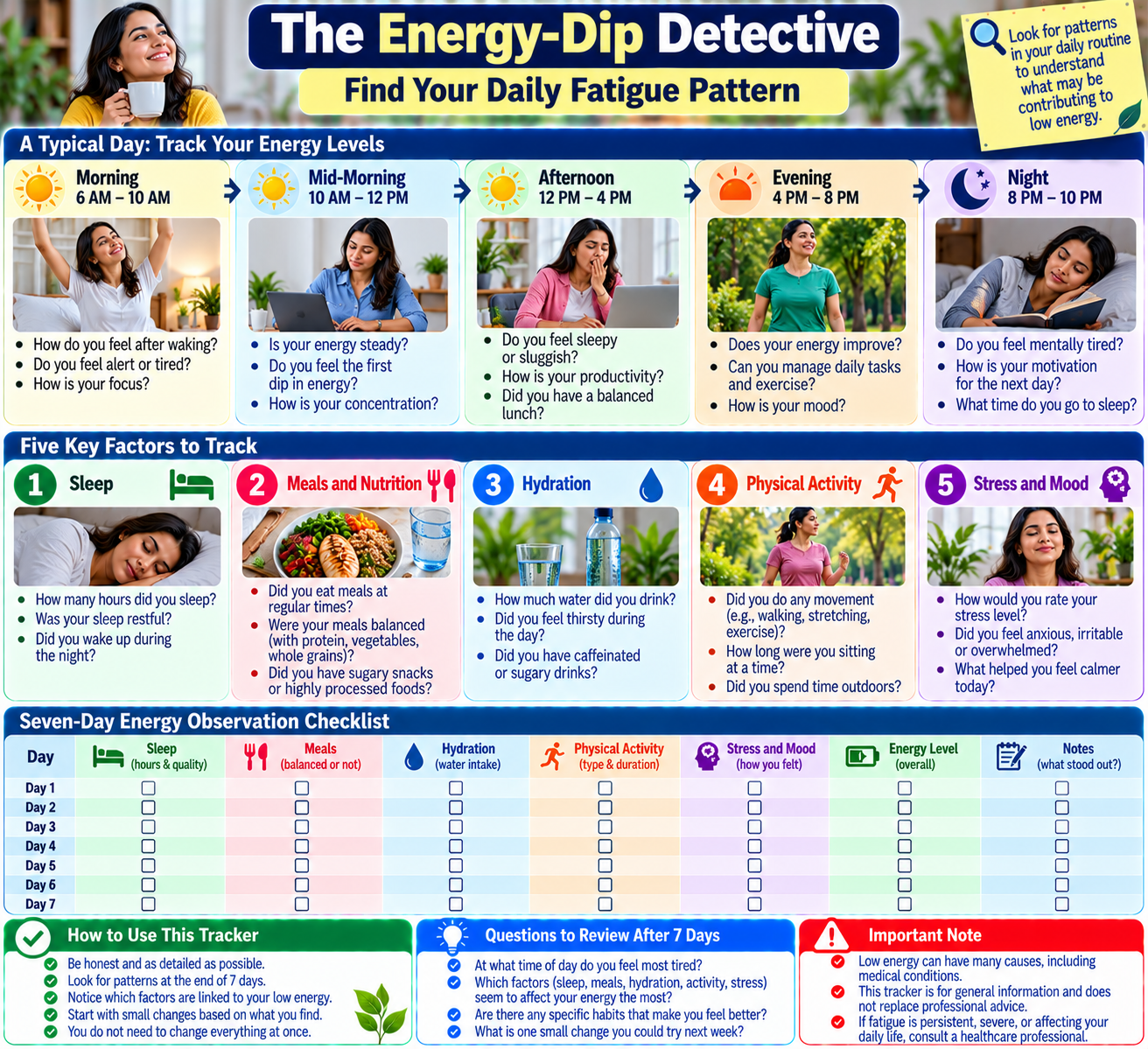
One practical step that is often overlooked is tracking when your energy falls before buying a supplement. This simple exercise does not diagnose a medical problem. It can help you notice patterns and decide what to discuss with a healthcare professional.
Try a Seven-Day Energy and Routine Log
For one week, write down the following once or twice a day:
-
Sleep: When did you go to bed and wake up? Did you wake frequently?
-
Meals: Did you eat regular, balanced meals, or skip food during a busy day?
-
Caffeine: What did you drink, how much, and at what time?
-
Stress: Was your workload or emotional pressure unusually high?
-
Movement: Did you take walking breaks, or sit for most of the day?
-
Energy: When did you feel most tired, and how much did it affect your daily tasks?
Look for a pattern rather than judging a single day. For example, you may notice that late caffeine coincides with poor sleep, or that skipping lunch is followed by an afternoon slump. These observations do not prove causation, but they can guide practical changes.
If fatigue continues for several weeks, affects your everyday life, or occurs with other symptoms, arrange a medical assessment rather than relying on a supplement. The NHS fatigue guidance explains when to seek care and why testing may sometimes be needed.
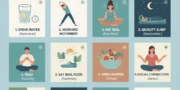
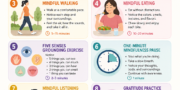
Daily Habits That Support Energy Without Relying on Herbs
Herbs receive much attention, but everyday habits can have a clearer role in supporting normal energy. They are not guaranteed to eliminate fatigue, particularly when an underlying health problem is present.
1. Protect Your Sleep Routine
Keep a consistent sleep and wake time when possible. Create a comfortable, quiet sleeping environment and reduce stimulating activities close to bedtime. The NHS advice on tiredness includes maintaining regular sleep habits and aiming for adequate rest.
2. Eat Regular, Balanced Meals
Meals that include a source of protein, fiber-rich carbohydrates, and fruit or vegetables can help you meet everyday nutritional needs. If you often miss meals, consider preparing a simple lunch or keeping a convenient snack available.
Do not assume that fatigue means you need an energy supplement. In some cases, a clinician may investigate anemia, thyroid problems, diabetes, or other causes.
3. Take Brief Movement Breaks
If you spend much of the day sitting, stand up and move regularly. A short walk or gentle stretch can be a manageable way to break up long periods of inactivity. Build activity gradually according to your fitness and health.
4. Review Your Caffeine Timing
Caffeine may increase alertness temporarily, but late-day use can make it harder for some people to sleep. If you depend on caffeine throughout the day, consider tracking the timing and discussing persistent tiredness with a healthcare professional.
5. Create a Short Stress Reset
Try a few minutes of slow breathing, a quiet walk, or a brief break away from screens. These habits do not treat every cause of stress or fatigue, but they may make a demanding day easier to manage.
How to Choose a Herbal Supplement More Safely
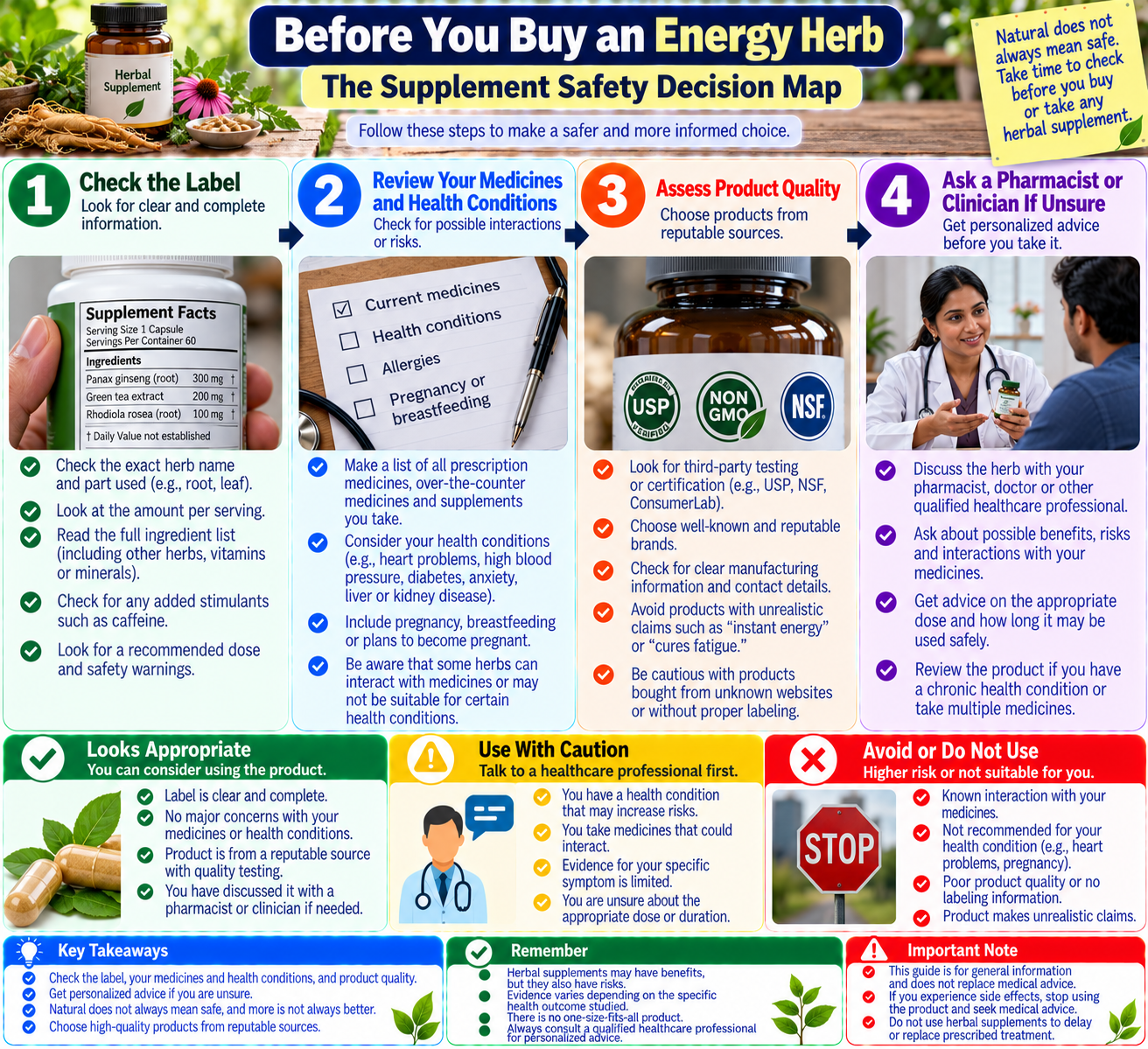
If you and a healthcare professional decide that a supplement is appropriate, do not choose it solely because the label says “natural,” “adaptogenic,” or “clinically tested.”
Use this checklist before purchasing:
-
Check the exact ingredient: Common names can refer to different species or preparations.
-
Read the complete label: Look for ingredient amounts, other active ingredients, warnings, and manufacturer details.
-
Avoid exaggerated promises: Be cautious of claims that a product cures fatigue, replaces sleep, or delivers instant results.
-
Consider independent quality testing: Seals from organizations such as USP or NSF can provide information about product quality, but they do not prove that a supplement works or is suitable for you.
-
Review medicines and health conditions: Ask a pharmacist or healthcare professional about possible interactions.
-
Avoid starting several products together: If a problem develops, it may be difficult to identify the cause.
The NIH Office of Dietary Supplements’ consumer guide explains supplement quality, independent testing, and safety considerations. The NCCIH guide to using supplements wisely also explains why products sold online may differ from those tested in research.
Common Mistakes to Avoid
Expecting an Immediate Energy Boost
Many supplements have not been shown to produce a reliable or immediate increase in energy. A lack of quick results is not a reason to increase the dose.
Assuming Every Herb Is Safe
Herbal products contain biologically active substances. Some can cause side effects or interact with medicines. The NCCIH guide to herb–medicine interactions explains why a medication review matters.
Treating All Fatigue as Stress
Stress can contribute to tiredness, but it is not the only cause. Persistent fatigue deserves attention, especially when accompanied by shortness of breath, palpitations, unexplained weight changes, mood changes, or sleep-related breathing problems.
Combining Multiple Supplements
Taking several products at once can make side effects and interactions harder to identify. A complex blend also makes it more difficult to determine which ingredient, if any, is responsible for a change.
Ignoring the Quality of Evidence
A study involving a specific extract does not prove that every product containing the same herb has the same effect. Research findings also need to be considered alongside study size, design, limitations, and independent replication.
When Should You See a Healthcare Professional?
Seek medical advice if your fatigue lasts for several weeks, has no clear explanation, or interferes with work, daily activities, or relationships. A clinician may ask about sleep, diet, stress, medicines, and other symptoms, and may recommend tests based on your history.
The NHS guide to tiredness and fatigue lists possible causes such as anemia, diabetes, thyroid problems, and sleep apnea. These conditions need appropriate assessment and treatment rather than self-treatment with herbs.
Seek urgent medical care if fatigue occurs with severe or sudden symptoms, such as chest pain, severe difficulty breathing, fainting, or new confusion.
Personal Experience and Practical Lessons
In my own experience, I tried peppermint tea in the afternoon instead of having a second coffee for several months. I found that changing the routine helped me reconsider how much I relied on caffeine. However, this personal experience does not prove that peppermint treats fatigue or improves sleep for everyone.
The broader lesson was that sustainable energy depends on several habits working together. Sleep, regular movement, balanced meals, and manageable stress deserve attention before adding another supplement to the routine.
For readers, a useful first step is to make one small change and observe how it fits into daily life. If you decide to try an herbal product, consider its specific evidence and safety profile rather than expecting it to solve every energy problem.
Frequently Asked Questions
1. What are the best herbs for stress-related fatigue?
Ashwagandha, rhodiola, and Panax ginseng are among the herbs studied for stress or fatigue. However, evidence differs by herb, and none is a proven treatment for every cause of tiredness. Review the NCCIH information on ashwagandha, rhodiola, and Asian ginseng before considering supplements.
2. Can herbs replace sleep when I feel tired?
No. Herbs cannot replace adequate sleep. If tiredness continues despite enough rest, consider speaking with a healthcare professional. The NHS fatigue guide explains why ongoing tiredness may need investigation.
3. How long do herbal supplements take to work?
There is no single timeline. Studies use different products, doses, and treatment periods, and some herbs have limited evidence of benefit. Do not increase a dose or continue taking a product indefinitely because you have not noticed a change.
4. Are herbal supplements safe to take every day?
Safety depends on the herb, the preparation, the dose, your medical history, and any medicines you take. Some products have important warnings, and long-term safety information may be limited. Review the NCCIH supplement safety guidance and ask a qualified professional before regular use.
5. Can I take two or more herbs together?
Do not assume that combining herbs is safe. Interactions between supplements and medicines may occur, and evidence on many combinations is limited. Ask a pharmacist or healthcare professional to review the full ingredient list before combining products.
6. Is peppermint tea better than coffee for energy?
They serve different purposes. Caffeine in coffee can temporarily increase alertness, while peppermint tea is generally caffeine-free and may be an enjoyable alternative. There is not enough evidence to claim that peppermint tea reliably treats fatigue or is universally better for energy.
Research Method
This article was prepared using published clinical research, systematic reviews, and health information from established medical organizations. Priority was given to human studies and evidence summaries that directly address stress, fatigue, supplement safety, or the limitations of current research.
Sources include the National Center for Complementary and Integrative Health, the NIH Office of Dietary Supplements, PubMed-indexed research, and the NHS. The article has not been independently reviewed by a qualified healthcare professional. The cited research does not establish that all herbal products are effective or safe, and the evidence may change as better studies become available.
Sources and References
-
Arumugam et al. — 2024 systematic review and meta-analysis of ashwagandha for stress and anxiety
-
Li et al. — 2023 systematic review and meta-analysis of ginseng for fatigue
-
Systematic review — Rhodiola rosea for physical and mental fatigue
-
NIH Office of Dietary Supplements — Dietary Supplements: What You Need to Know
-
PubMed — 2025 controlled study of peppermint tea and short-term cognition
Conclusion
Herbs for stress-related fatigue may interest people looking for additional ways to support their well-being, but the evidence does not support treating every herb as a reliable energy booster. Ashwagandha has shown promising results for certain stress measures, while research on rhodiola, ginseng, tulsi, maca, ginger, and peppermint has important limitations or addresses outcomes other than fatigue itself.
A more useful strategy begins by understanding your own energy pattern. Protect your sleep, eat balanced meals, move regularly, and find practical ways to manage stress. If you are considering an herbal supplement, check its evidence, review potential interactions, and discuss its suitability with a qualified healthcare professional.
Most importantly, do not ignore ongoing tiredness. Finding and addressing its cause is more useful than masking symptoms with supplements. Small, consistent habits can support general well-being, while appropriate medical care helps identify problems that lifestyle changes alone cannot resolve.
Medical Disclaimer
This article is for educational purposes only and does not replace professional medical advice, diagnosis, or treatment. Herbal supplements may cause side effects, interact with medicines, or be unsuitable for certain health conditions. Speak with a qualified healthcare professional before starting a supplement, especially if you take medication, are pregnant or breastfeeding, or have a chronic medical condition. Seek medical evaluation for persistent or unexplained fatigue rather than relying on herbs alone.
Fitness and Wellness Disclaimer
The lifestyle suggestions in this article are general wellness information, not a personalized fitness or treatment plan. Choose physical activity that matches your health and ability, and increase it gradually. If you have symptoms or a medical condition that affects exercise, seek individualized guidance from a healthcare professional.
About the Author
RVLNSV PRASAD writes about healthy habits, nutrition, natural wellness, and evidence-based lifestyle education. His goal is to help readers understand health information and turn practical, research-informed ideas into manageable everyday habits.
Click here for author bio and image
Related Content:
- 8 Rapid Hair Growth Herbals You Should Try
- 15 Ayurvedic Remedies for High Blood Pressure
- Aromatherapy for Stress Relief and Relaxation: A Comprehensive Guide
- Natural Remedies for Boosting Immunity with Plants: A Comprehensive Guide
- How Nature Walks Can Improve Physical Health: A Comprehensive Guide
- 7 Healing Herbs for Boosting Energy Naturally: A Comprehensive Guide
- Benefits of Outdoor Activities for Mental Health: A Comprehensive Guide
- Best Superfoods Revealed: Truth Behind Nutrient Powerhouses
- Check our Blog and Category page (Nature’s & Healing)
- 22 Natural Remedies for Anxiety: What Really Works?
- 10 Best Herbal Teas for Calming the Mind:A Comprehensive Guide Natural Stress Relief
- 10 Best Herbal Remedies to Control Diabetes








[…] 7 Best Herbs for Natural Energy Support: Science-Backed Ways to Fight Fatigue […]
[…] 7 Best Herbs for Natural Energy Support: Science-Backed Ways to Fight Fatigue […]
[…] 7 Best Herbs for Natural Energy Support: Science-Backed Ways to Fight Fatigue […]
[…] 7 Best Herbs for Natural Energy Support: Science-Backed Ways to Fight Fatigue […]
[…] 7 Best Herbs for Natural Energy Support: Science-Backed Ways to Fight Fatigue […]
[…] 7 Best Herbs for Natural Energy Support: Science-Backed Ways to Fight Fatigue […]
[…] 7 Best Herbs for Natural Energy Support: Science-Backed Ways to Fight Fatigue […]
[…] 7 Best Herbs for Natural Energy Support: Science-Backed Ways to Fight Fatigue […]
[…] 7 Best Herbs for Natural Energy Support: Science-Backed Ways to Fight Fatigue […]
[…] 7 Best Herbs for Natural Energy Support: Science-Backed Ways to Fight Fatigue […]
[…] 7 Best Herbs for Natural Energy Support: Science-Backed Ways to Fight Fatigue […]
[…] 7 Best Herbs for Natural Energy Support: Science-Backed Ways to Fight Fatigue […]
[…] 7 Best Herbs for Natural Energy Support: Science-Backed Ways to Fight Fatigue […]
[…] 7 Best Herbs for Natural Energy Support: Science-Backed Ways to Fight Fatigue […]
[…] 7 Best Herbs for Natural Energy Support: Science-Backed Ways to Fight Fatigue […]
[…] 7 Best Herbs for Natural Energy Support: Science-Backed Ways to Fight Fatigue […]
[…] 7 Best Herbs for Natural Energy Support: Science-Backed Ways to Fight Fatigue […]
[…] 7 Best Herbs for Natural Energy Support: Science-Backed Ways to Fight Fatigue […]
[…] 7 Best Herbs for Natural Energy Support: Science-Backed Ways to Fight Fatigue […]
[…] 7 Best Herbs for Natural Energy Support: Science-Backed Ways to Fight Fatigue […]
[…] 7 Best Herbs for Natural Energy Support: Science-Backed Ways to Fight Fatigue […]
[…] 7 Best Herbs for Natural Energy Support: Science-Backed Ways to Fight Fatigue […]
[…] 7 Best Herbs for Natural Energy Support: Science-Backed Ways to Fight Fatigue […]
[…] 7 Best Herbs for Natural Energy Support: Science-Backed Ways to Fight Fatigue […]