
































































































































































10 Best Foods to Lower Blood Sugar Naturally: A Science-Backed Guide to Healthy Blood Sugar
Author: RVLNSV PRASAD
Updated On: October 2026
About Us
Author Bio
Editorial Policy
Contact Us
Medical Review: This article has not been independently reviewed by a qualified healthcare professional.
Author’s Note
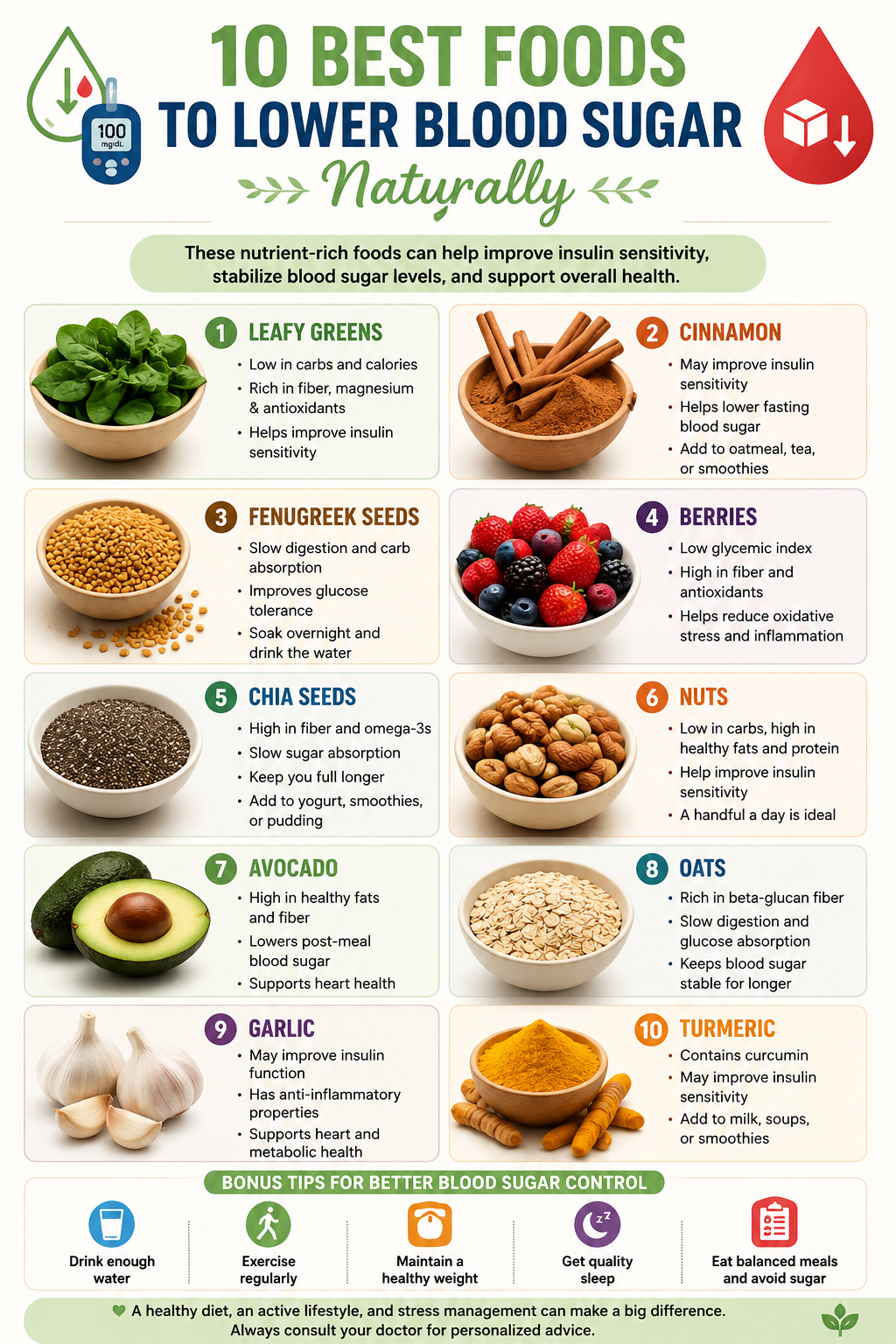
Healthy blood sugar management is not about finding one miracle food or relying on expensive supplements. It starts with understanding how everyday food choices fit into an overall eating pattern.
For this guide, the focus is on practical, affordable food choices and nutrition guidance supported by reputable health sources. The American Diabetes Association’s 2026 Standards of Care emphasizes a balanced eating pattern that includes non-starchy vegetables, whole fruits, legumes, whole grains, nuts, seeds, and suitable protein sources. It also recommends limiting sugar-sweetened beverages and highly processed foods.
My aim with this article is to help readers understand which foods can fit into balanced meals, how to make realistic changes, and why no single food can reliably control blood sugar on its own. Small, manageable adjustments may support healthier eating habits over time, although individual needs and results vary.
This article is intended for general education and has not been independently reviewed by a qualified healthcare professional. People living with diabetes or taking glucose-lowering medication should consult their healthcare team before making significant dietary changes.
Introduction
The best foods to lower blood sugar naturally are not miracle foods. However, choosing nutrient-rich foods such as oats, leafy green vegetables, beans, lentils, nuts, whole fruits, and unsweetened yogurt can help you build an eating pattern that supports healthy blood sugar management.
Your overall diet matters more than any single ingredient. The American Diabetes Association’s 2026 Standards of Care recommend eating patterns that emphasize non-starchy vegetables, whole fruits, legumes, whole grains, nuts, seeds, lean protein, and suitable dairy or fortified alternatives. They also recommend limiting sugar-sweetened beverages, sweets, refined grains, and highly processed foods.
Blood sugar, also called blood glucose, is the main sugar circulating in your bloodstream. Your body uses glucose for energy, while the hormone insulin helps glucose move from the blood into cells. When blood glucose remains above the healthy range, it may indicate a problem that needs medical assessment. You can learn more about diabetes and blood glucose management from the National Institute of Diabetes and Digestive and Kidney Diseases (NIDDK).
The good news is that healthy eating does not have to mean eliminating all carbohydrates, buying expensive supplements, or following a restrictive diet. Everyday foods such as lentils, beans, oats, vegetables, and whole fruit can be part of a balanced meal plan. The right portions and food choices depend on your health, preferences, medicines, and individual glucose targets.
In this guide, you will discover 10 nutritious foods, practical serving ideas, and simple meal-planning strategies. You will also learn which common claims deserve caution, including the idea that cinnamon or any other single food can reliably lower blood sugar.
Important: No individual food cures diabetes or replaces prescribed treatment. If you have diabetes or take glucose-lowering medication, discuss major dietary changes with your healthcare professional to help avoid problems such as low blood sugar.
Why Is Blood Sugar Important?
Blood sugar, also called blood glucose, is an important source of energy for your body. Your body needs glucose to function, while the hormone insulin helps glucose move from your bloodstream into your cells. When blood glucose remains too high over time, it can damage blood vessels and increase the risk of complications affecting the eyes, kidneys, nerves, and heart. The National Institute of Diabetes and Digestive and Kidney Diseases (NIDDK) explains how diabetes affects the body’s ability to regulate blood glucose.
High blood sugar does not always cause noticeable symptoms. When symptoms do occur, they may include increased thirst, frequent urination, fatigue, and blurred vision. These symptoms can have other causes, so they should not be used to diagnose a blood sugar problem. If you experience them persistently, seek advice from a qualified healthcare professional. A blood test can help determine whether your glucose levels are within the expected range.
How Everyday Habits Can Support Healthy Blood Sugar
Food choices are one part of blood sugar management, alongside physical activity, adequate sleep, and appropriate medical care. A balanced eating pattern that includes vegetables, legumes, whole grains, whole fruit, and suitable protein sources can support overall health. The American Diabetes Association’s Standards of Care provides evidence-based guidance on nutrition and diabetes management.
You do not need an extreme diet or expensive supplements to begin making healthier food choices. Practical steps include
- Choose more whole foods: Include vegetables, beans, lentils, whole grains, nuts, and whole fruit in balanced meals.
- Limit added sugars: Replace sugar-sweetened drinks with water or unsweetened alternatives more often.
- Move regularly: Choose activities that suit your abilities, such as walking, cycling, or swimming.
- Support healthy sleep: Aim for a regular sleep schedule and enough rest for your needs.
- Follow individualized medical advice: If you have diabetes or take glucose-lowering medication, follow your healthcare professional’s recommendations for food, activity, and glucose monitoring.
These habits can contribute to a healthier overall routine, but their effects vary. No single food can reliably control blood sugar on its own, and lifestyle changes should not replace prescribed diabetes treatment.
In the sections below, you will learn about 10 nutritious foods that can fit into a balanced eating pattern, the nutrients they provide, and practical ways to include them in everyday meals.
Key Takeaways
- The best foods to lower blood sugar naturally include oats, leafy greens, beans, lentils, plain Greek yogurt, nuts, avocados, fatty fish, eggs, and apples.
- Build balanced meals with vegetables, lean protein, unsaturated fats, and whole grains.
- Choose high-fiber, low-glycemic foods and limit sugary drinks and processed snacks.
- Support healthy blood sugar with regular exercise, quality sleep, stress management, hydration, and consistent meals.
- No single food can cure diabetes. Healthy eating works best alongside medical care and a healthy lifestyle.
- Small, consistent habits lead to lasting improvements in overall health.
What Is Blood Sugar?
Blood sugar, also called blood glucose, is the sugar circulating in your bloodstream that your body uses as a source of energy. Glucose comes mainly from carbohydrates in foods such as grains, fruits, vegetables, and milk. Your body can also produce glucose when needed. The National Institute of Diabetes and Digestive and Kidney Diseases (NIDDK) explains how the body normally regulates blood glucose and what happens when this process is disrupted.
After you eat carbohydrate-containing foods, your digestive system breaks down many of those carbohydrates into glucose, which enters your bloodstream. Your pancreas releases insulin, a hormone that helps glucose move from the blood into cells for energy or storage. This process helps keep blood glucose within a healthy range.
When the body does not produce enough insulin or cannot use it effectively, blood glucose can rise. Persistently high blood glucose is a defining feature of diabetes. Insulin resistance is one factor involved in the development of type 2 diabetes, although genetics, body composition, physical activity, medications, and other factors can also influence a person’s risk. The Centers for Disease Control and Prevention (CDC) provides further information about type 2 diabetes and its risk factors.
How Food Choices Affect Blood Sugar
Different carbohydrate-containing foods can affect blood glucose differently. Sugary drinks and refined carbohydrate foods may raise glucose quickly, while foods containing fiber—such as beans, lentils, oats, vegetables, and whole fruit—can help moderate the rise.
How Food Affects Blood Sugar
Food affects how quickly and how much blood sugar rises after a meal. Carbohydrate type, portion size, fiber content, and combinations of foods all influence this response. The CDC’s diabetes meal-planning guide explains how food choices can support blood sugar management.
Fiber
Fiber-rich foods such as oats, vegetables, beans, lentils, nuts, and whole fruits can help moderate blood sugar responses. Soluble fiber may slow glucose absorption and also supports digestive health.
Easy choices: Eat whole fruit instead of juice, add beans to meals, and choose whole grains more often. See the CDC’s guidance on fiber and diabetes.
Protein
Eggs, fish, chicken, plain Greek yogurt, tofu, and legumes provide protein. Eating protein with carbohydrates may influence the post-meal glucose response, although the effect varies by meal and individual.
For practical guidance, see the American Diabetes Association’s protein guide.
Healthy Fats
Avocados, nuts, seeds, olive oil, and oily fish provide unsaturated fats that support heart health. Fat may delay stomach emptying and the rise in blood glucose, but it does not always reduce the overall glucose response.
Include moderate portions as part of a balanced diet. See the ADA’s healthy eating guidance.
Glycemic Index
The glycemic index (GI) ranks carbohydrate-containing foods according to their blood glucose response under standardized conditions.
| GI value | Category |
|---|---|
| 55 or below | Low |
| 56–69 | Medium |
| 70 or above | High |
GI is only one consideration. Portion size, preparation, and the other foods in a meal also affect blood sugar.
Choose fiber-rich carbohydrates such as beans, lentils, whole grains, and whole fruit rather than eliminating carbohydrates altogether. The CDC’s guide to healthy carbohydrates offers additional advice.
Remember: No single nutrient or food guarantees stable blood sugar. If you have diabetes, follow the dietary and treatment advice provided by your healthcare professional.
Generally:
| Glycemic Index | Effect |
|---|---|
| Low (55 or below) | Slower rise in blood sugar |
| Medium (56–69) | Moderate rise |
| High (70+) | Faster rise |
The glycemic index is a good start, but it doesn’t reveal the complete picture. Your body’s response also depends on how much you eat, how it is cooked, and what you eat it with.
For example, eating brown rice with grilled chicken and vegetables will usually have a different effect than eating brown rice alone because the protein and fiber slow digestion.
Healthy Plate Method
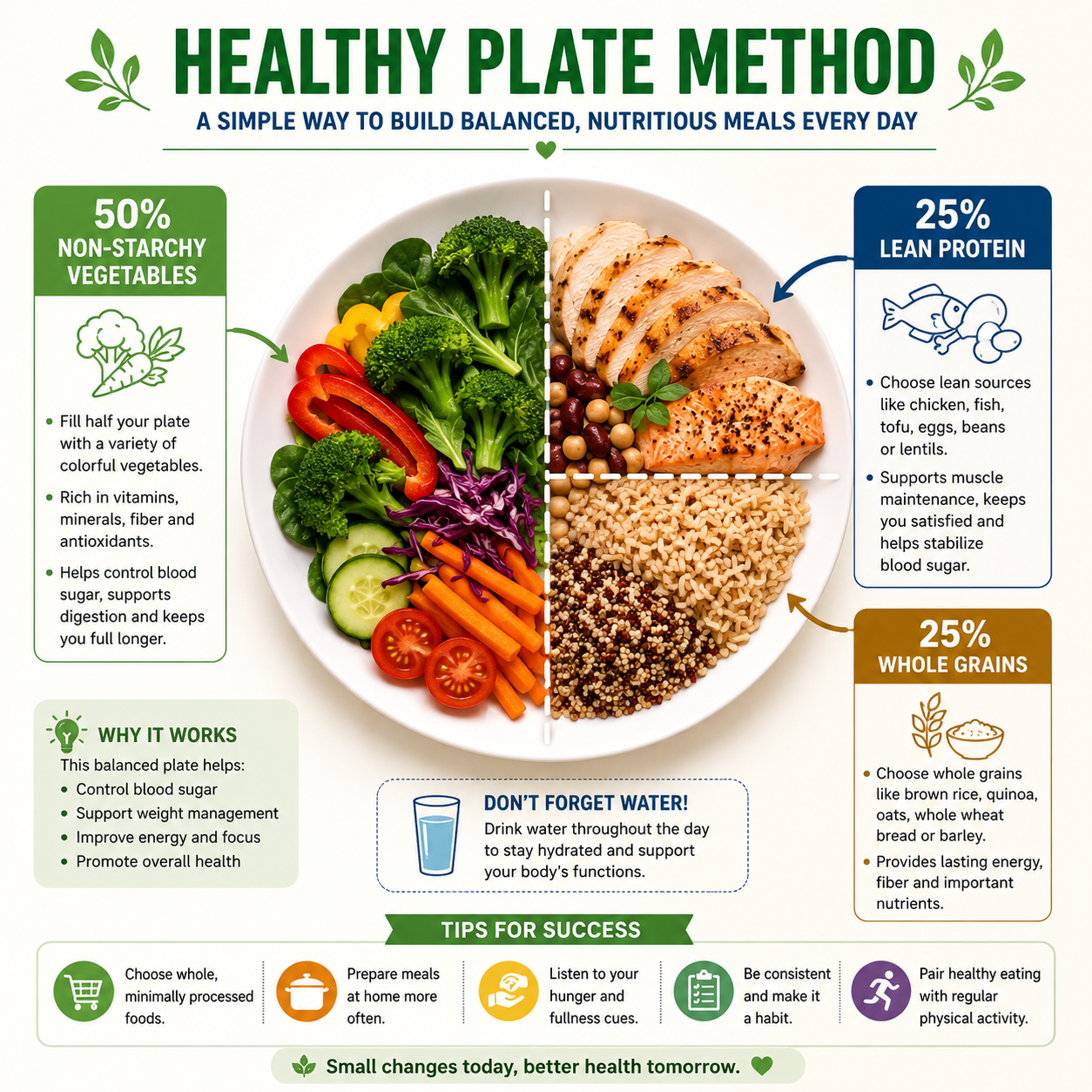
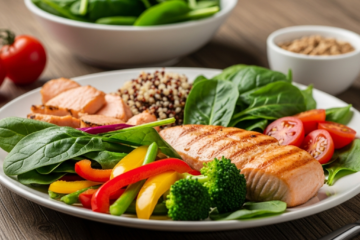
One of the simplest ways to build balanced meals is the healthy plate method. According to the American Diabetes Association, filling your plate with vegetables, lean protein, and high-fiber carbohydrates is a practical way to support healthy blood sugar management.
| Portion | Food Group |
|---|---|
| 50% | Non-starchy vegetables |
| 25% | Lean protein |
| 25% | Whole grains or other high-fiber carbohydrates |
This approach naturally increases fiber and protein while helping control portion sizes.
1. Oats
Oats contain beta-glucan, a soluble fiber that forms a gel during digestion and may help moderate post-meal blood sugar responses. Plain oats can be a nutritious alternative to breakfast cereals with added sugars. American Heart Association
Why Are Oats a Smart Choice?
- Provide soluble beta-glucan fiber
- Support fullness
- Fit into a heart-healthy eating pattern
- Offer a versatile whole-grain option
Easy Serving Ideas
- Cook plain rolled oats with milk or water.
- Add fresh berries.
- Sprinkle with cinnamon for flavor.
- Top with chopped walnuts or almonds.
Tip: Compare nutrition labels when buying instant oats, as some flavored varieties contain added sugars.
2. Eggs
Eggs provide high-quality protein and contain very little carbohydrate. They can fit into balanced meals, although their effect on fullness and overall blood sugar management depends on the rest of your diet.
Why Choose Eggs?
- Provide high-quality protein
- May help you feel satisfied after meals
- Are widely available
- Are easy to prepare in different ways
Healthy serving ideas:
- Boiled eggs
- Vegetable omelets
- Scrambled eggs with spinach
- Eggs with whole-grain toast
Adding vegetables provides extra nutrients and fiber. For more protein-rich food options, see the American Diabetes Association’s protein guide.
3. Leafy Greens
Spinach, kale, fenugreek leaves, and Swiss chard provide vitamins, minerals, and other beneficial plant compounds. Most leafy greens are low in digestible carbohydrates, making them useful additions to balanced meals.
Benefits
- Provide essential nutrients and fiber
- Add volume to meals
- Contain relatively few calories
- Fit easily into blood sugar-friendly eating patterns
Simple Ways to Eat More Greens
- Add spinach to soups.
- Include leafy greens in salads.
- Blend greens into smoothies.
- Stir leafy vegetables into cooked dishes.
A practical approach is to fill about half your plate with non-starchy vegetables, following the American Diabetes Association’s nutrition guidance.
4. Nuts
Almonds, walnuts, pistachios, and peanuts provide unsaturated fats, protein, and varying amounts of fiber. Including nuts in a balanced diet can support heart health, which is particularly important for people with diabetes because their risk of cardiovascular disease is elevated. American Diabetes Association
Good Choices
- Almonds
- Walnuts
- Pistachios
- Unsalted peanuts
Portion Guide
A small handful, around 28 grams (1 ounce), is a convenient serving. Nuts are energy-dense, so choose portions that fit your nutritional needs.
Healthy Snack Ideas
- Apple slices with almonds
- Plain Greek yogurt with walnuts
- Mixed nuts with fresh berries
- Homemade trail mix without added sugar
5. Plain Greek Yogurt
Plain Greek yogurt provides protein and may contain live bacterial cultures, depending on the product. Choosing an unsweetened variety can help reduce added sugar compared with many flavored yogurts.
Research into the gut microbiome and blood sugar regulation is ongoing, so yogurt should not be treated as a proven treatment for high blood sugar.
How It Helps
- Provides protein
- Can be lower in added sugar than sweetened varieties
- May contain live cultures
- Can be part of a balanced snack or meal
Healthy Serving Ideas
- Plain Greek yogurt with blueberries
- Yogurt with chia or flax seeds
- Yogurt sprinkled with cinnamon
- Yogurt topped with chopped almonds or walnuts
Tip: Check the nutrition label and add fresh fruit for natural sweetness rather than flavored syrups.
6. Lentils and Beans
Lentils and beans are affordable sources of plant protein, fiber, and carbohydrates. Their fiber can help moderate blood sugar responses and support digestive health. CDC guidance on fiber and diabetes explains these benefits.
Healthy Choices
- Lentils
- Chickpeas
- Black beans
- Kidney beans
- Red beans
How They Help
- Provide dietary fiber
- Supply plant-based protein
- Help promote fullness
- Support digestive health
Simple Meal Ideas
- Lentil soup
- Chickpea salad
- Bean curry
- Mixed-bean chili
- Brown rice with lentils
Practical tip: Cook a batch of beans or lentils ahead of time to make balanced weekday meals easier.
7. Cinnamon
Cinnamon adds flavor without added sugar, but evidence that it reliably improves blood sugar control remains insufficient. The American Diabetes Association notes that supplements have not been established as effective treatments for lowering blood glucose.
Use cinnamon as a seasoning, not as a substitute for diabetes treatment.
Easy Ways to Use Cinnamon
- Stir into oatmeal.
- Add to plain yogurt.
- Sprinkle over sliced apples.
- Mix into smoothies.
A small amount can add flavor without needing extra sugar.
8. Avocados
Avocados provide fiber and monounsaturated fats. They contain relatively little carbohydrate and can fit into a balanced eating pattern that supports heart health. Fiber-rich foods also help support blood sugar management. CDC guidance on fiber.
Advantages
- Provide unsaturated fats
- Contain dietary fiber
- Support heart-healthy eating
- Add texture and fullness to meals
Healthy Serving Ideas
- Whole-grain avocado toast
- Avocado in salads
- Blended into smoothies
- Added to wraps
- Served with grilled chicken
Avocados are energy-dense, so choose a portion that fits your meal and nutritional needs.
9. Fatty Fish
Salmon, sardines, trout, and mackerel provide protein and omega-3 fatty acids. These fats support heart health, which is particularly important for people with diabetes because their risk of cardiovascular disease is higher. However, fatty fish should not be presented as a direct blood-sugar-lowering treatment. American Heart Association: Fish and Omega-3 Fatty Acids.
Healthy Options
- Salmon
- Sardines
- Trout
- Mackerel
Benefits
- Provides high-quality protein
- Supplies omega-3 fatty acids
- Supports heart-healthy eating
- Adds variety to balanced meals
Meal Ideas
- Grilled salmon with vegetables
- Baked trout
- Sardine salad
- Fish tacos with whole-wheat tortillas
Bake, grill, steam, or air-fry fish instead of deep-frying it.
10. Apples
Apples provide fiber, vitamins, and natural sweetness. Eating whole fruit generally provides more fiber and fullness than drinking juice, which often contains little fiber. Whole fruit can fit into a balanced eating pattern, including for many people managing blood sugar. CDC guidance on fruits and vegetables.
How Apples Help
- Provide dietary fiber
- Offer natural sweetness
- Make a convenient snack
- Pair easily with protein-rich foods
Healthy Snack Ideas
- Apple slices with peanut butter
- Apple with almonds
- Apple with plain yogurt
- Cottage cheese with apple
Pairing apple slices with nuts or plain yogurt can make a satisfying snack, although the best portion depends on your individual needs.
Comparison Table: Best Foods to Lower Blood Sugar Naturally
| Food | Key Nutrient | Main Benefit | Easy Serving Idea |
|---|---|---|---|
| Oats | Beta-glucan fiber | Slows digestion | Oatmeal with berries |
| Eggs | Protein | Promotes fullness | Vegetable omelet |
| Leafy Greens | Fiber, magnesium | Low in carbohydrates | Spinach salad |
| Nuts | Healthy fats, protein | Reduces hunger | Handful of almonds |
| Greek Yogurt | Protein, probiotics | Supports fullness | Yogurt with berries |
| Beans & Lentils | Fiber, plant protein | Steady energy | Lentil soup |
| Cinnamon | Plant compounds | Adds flavor without sugar | Sprinkle on oats |
| Avocados | Healthy fats | Supports heart health | Avocado toast |
| Fatty Fish | Omega-3 fats | Heart-friendly protein | Grilled salmon |
| Apples | Fiber | Balanced snack | Apple with peanut butter |
Foods That Can Raise Blood Sugar Quickly
Some carbohydrate-rich foods and drinks, particularly those high in added sugars or made with refined grains, can raise blood sugar quickly. The effect depends on portion size, preparation, and what else you eat with them.
You do not necessarily need to eliminate these foods completely. Choosing them less often and replacing them with more fiber-rich options can support a balanced eating pattern. The CDC’s guide to choosing healthy carbohydrates provides practical advice.
Examples to Limit
- Sugar-sweetened beverages
- Candy
- Pastries and cakes
- White bread
- Large portions of white rice
- Sugary breakfast cereals
- Fruit drinks with added sugar
- Packaged desserts
- Potato chips
- Highly processed snack foods
Practical tip: Choose water instead of sugary drinks, whole grains instead of refined grains more often, and whole fruit instead of fruit drinks. These swaps can improve the overall nutritional quality of your diet.
Foods to Choose vs. Foods to Limit
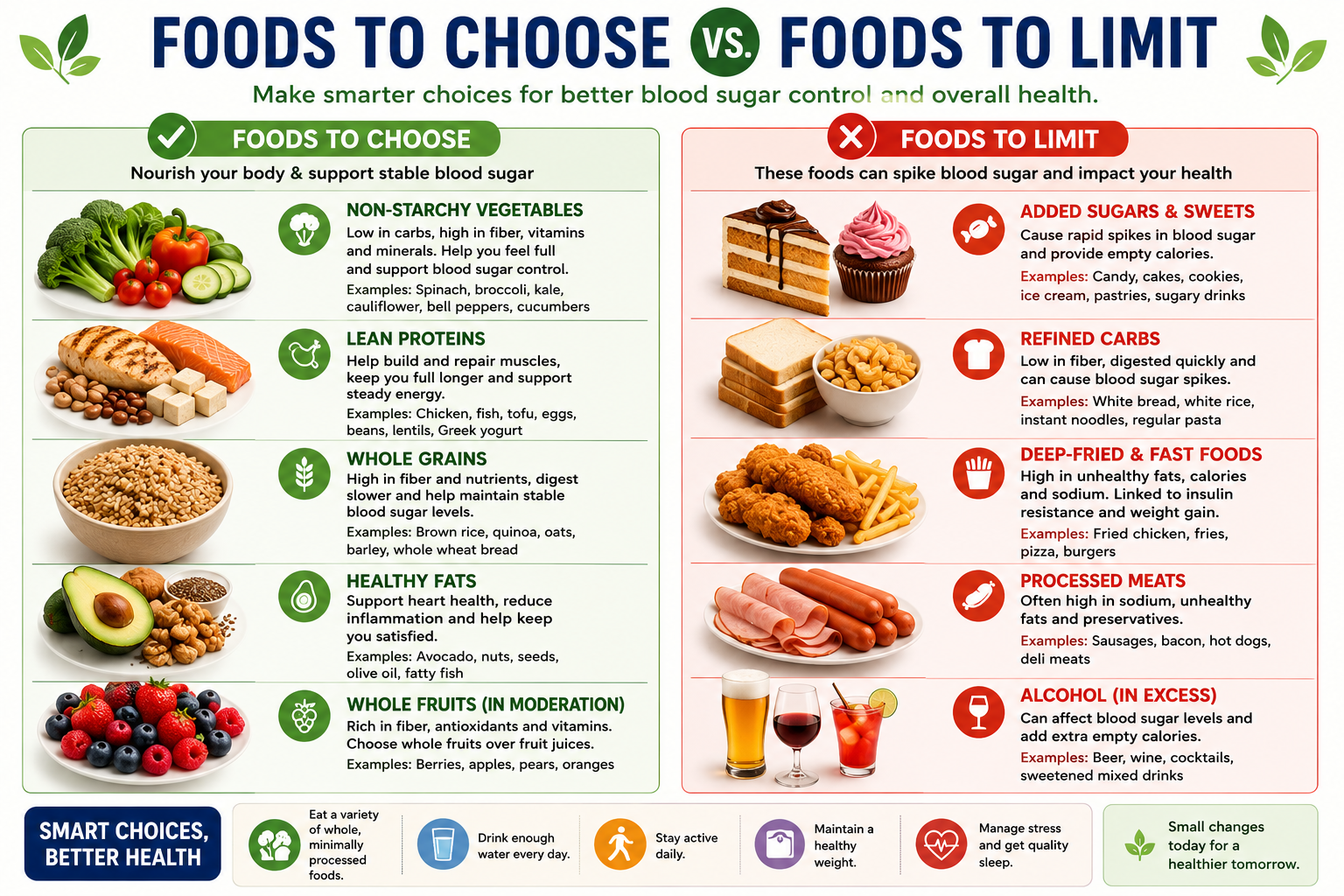
| Choose More Often | Limit More Often |
|---|---|
| Vegetables | Sugary drinks |
| Whole grains | White bread |
| Beans | Candy |
| Lentils | Cakes |
| Oats | Sweet cereals |
| Nuts | Cookies |
| Plain yogurt | Flavored yogurt with added sugar |
| Fresh fruit | Fruit juice |
| Fish | Fried fast food |
| Healthy fats | Processed snacks |
One-Day Blood Sugar-Friendly Meal Plan
| Meal | Example |
|---|---|
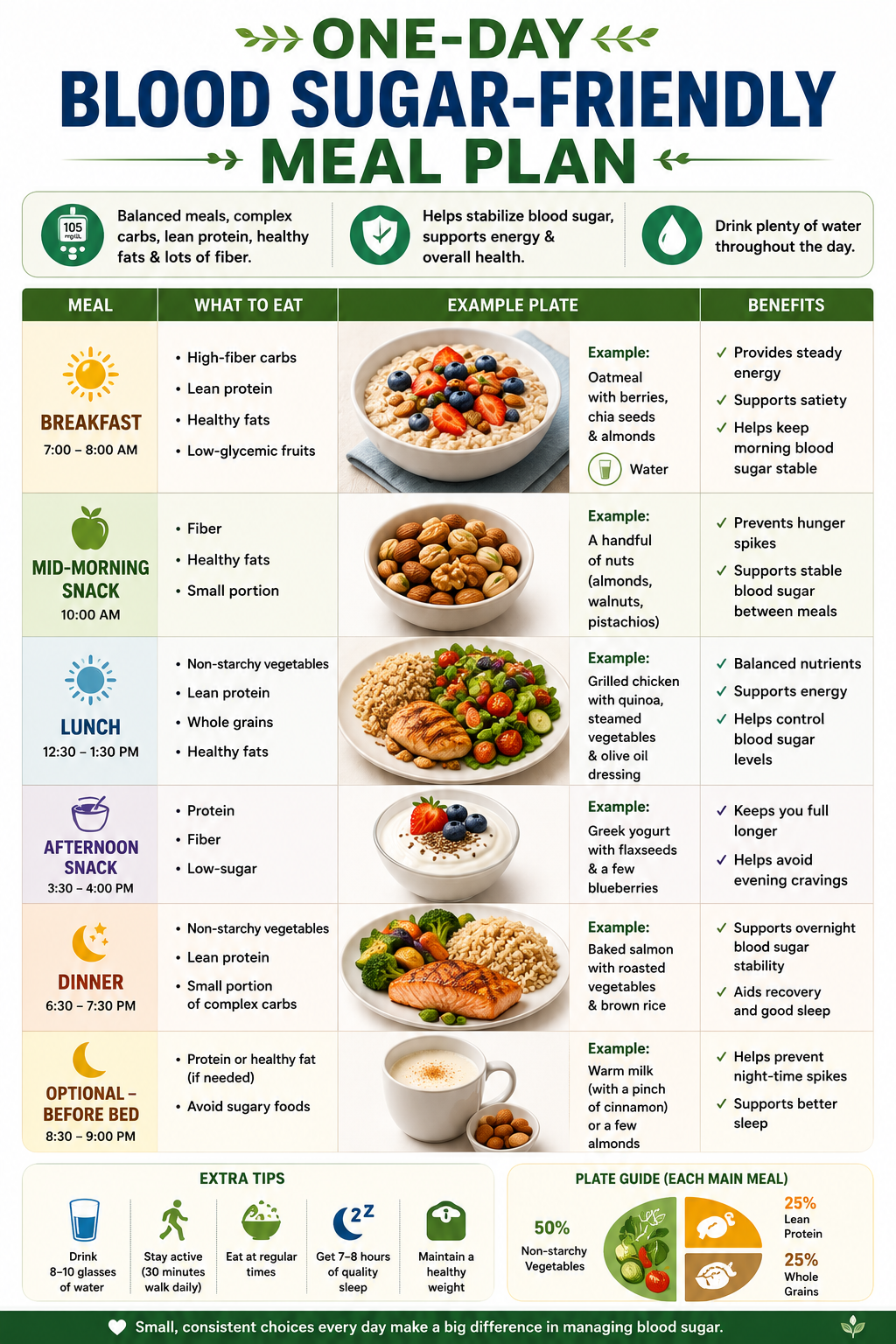
| Breakfast | Oatmeal with blueberries and walnuts |
| Morning Snack | Apple with almonds |
| Lunch | Grilled chicken, brown rice, and mixed vegetables |
| Afternoon Snack | Plain Greek yogurt with chia seeds |
| Dinner | Baked salmon with broccoli and quinoa |
| Evening Snack | Small handful of pistachios |
This meal pattern combines fiber, lean protein, and healthy fats to help create balanced meals throughout the day.
Healthy Lifestyle Tips to Support Blood Sugar Management
Food choices are important, but physical activity, sleep, stress management, and hydration also contribute to overall health. These habits can complement a balanced diet, although they do not replace diabetes treatment.
Stay Physically Active
Regular physical activity helps muscles use glucose for energy and supports insulin sensitivity. Walking, cycling, swimming, strength training, and gardening are practical options. See these easy home exercises.
The CDC recommends at least 150 minutes of moderate-intensity aerobic activity per week for most adults, with activities adapted to individual abilities and health needs.
Prioritize Quality Sleep
Insufficient sleep can affect insulin sensitivity and glucose regulation. Most adults generally need at least seven hours of sleep per night, although individual needs vary. Try maintaining a regular bedtime, limiting caffeine later in the day, and reducing stimulating screen use before bed. Read more about simple habits for better sleep.
Manage Stress
Ongoing stress can affect sleep, eating habits, and blood glucose regulation. Relaxation techniques may help you cope with everyday pressures, although their effects vary.
Consider slow breathing, meditation, yoga, spending time outdoors, or talking with supportive friends and family. Explore these stress-management strategies.
Drink Enough Water
Water supports normal bodily functions, and replacing sugar-sweetened drinks with water can reduce added sugar intake. The CDC explains the benefits of choosing water and healthier drinks.
Build Balanced Meals
Focus on the overall meal rather than relying on one supposedly beneficial food. The American Diabetes Association’s healthy eating guidance supports flexible eating patterns that include vegetables, protein sources, healthy fats, and nutrient-rich carbohydrates.
A simple plate guide is
- Half the plate: non-starchy vegetables
- One-quarter: protein, such as fish, eggs, tofu, or chicken
- One-quarter: whole grains or other suitable carbohydrate foods
Adjust portions to your nutritional needs and any advice from your healthcare professional.
Smart Grocery Shopping Tips
Planning your purchases can make balanced eating more convenient and affordable.
Prepare a Shopping List
Plan meals ahead and list the ingredients you need. This can help reduce impulse purchases and make it easier to keep nutritious staples at home.
Check Nutrition Labels
Compare similar products and review:
- Added sugars
- Fiber
- Protein
- Sodium
- Serving size
A product labelled “healthy” may still contain substantial added sugar. See this guide to smart nutrition choices.
Shop for a Variety of Foods
Fresh produce, frozen vegetables, beans, lentils, whole grains, eggs, nuts, and plain yogurt can all contribute to balanced meals. You do not need to buy every food fresh; frozen vegetables and other minimally processed staples can be convenient options.
Choose Seasonal Produce
Seasonal fruits and vegetables may be more affordable and readily available in your area. Fresh, frozen, and appropriately stored produce can all contribute valuable nutrients.
Keep Healthy Staples at Home
Useful options include:
- Rolled oats and brown rice
- Beans and lentils
- Eggs and plain yogurt
- Frozen vegetables
- Nuts and seeds
- Olive oil
- Fresh or frozen fruit
Common Mistakes That Can Affect Blood Sugar Management
1. Assuming Everyone Needs Breakfast
Skipping breakfast does not affect everyone in the same way. Pay attention to your hunger, energy, medication schedule, and individual glucose-management needs. If you use insulin or medication that can cause low blood sugar, discuss meal timing with your healthcare professional.
2. Drinking Sugary Beverages Frequently
Soft drinks, sweetened coffee, energy drinks, and drinks with added sugar can contribute substantial amounts of sugar. Water and unsweetened beverages are useful everyday alternatives.
3. Eating Too Few Vegetables
Vegetables provide fiber, vitamins, and minerals. Add them to meals in ways that suit your preferences, such as including leafy greens in soups or serving vegetables alongside beans, grains, or protein.
4. Overlooking Portion Sizes
The amount you eat can affect your glucose response and overall energy intake. Consider suitable portions rather than assuming that unlimited quantities of a nutritious food are always beneficial.
5. Relying Heavily on Less Nutritious Processed Foods
Some packaged foods contain substantial added sugars, sodium, or refined grains. Compare labels and choose options with more fiber and less added sugar when practical. Not all processed foods are unhealthy; frozen vegetables and canned beans can be convenient, nutritious choices.
6. Neglecting Sleep
Regularly getting insufficient sleep may affect insulin sensitivity and glucose regulation. Aim for a consistent sleep schedule and enough rest for your needs.
7. Sitting for Long Periods
Long periods of sitting reduce opportunities for movement. Take regular movement breaks and include activities such as walking or strength training as your health and abilities allow.
8. Expecting Immediate Results
Blood sugar management depends on several factors, including food choices, activity, sleep, medication, and individual health. Focus on sustainable habits rather than expecting one food or one meal to transform your glucose levels.
Remember: If you have diabetes, monitor your blood glucose as advised and continue prescribed treatment. Consult your healthcare professional before making significant dietary or exercise changes, particularly if you use medication that can cause low blood sugar.
Myth vs. Fact
| Myth | Fact |
|---|---|
| One food can cure diabetes. | No single food can cure diabetes. Healthy eating supports overall blood sugar management but does not replace medical care. |
| Fruit should always be avoided. | Whole fruits can be part of a balanced eating plan because they provide fiber, vitamins, and antioxidants. |
| Carbohydrates are bad. | The type and amount of carbohydrate matter more than eliminating them completely. |
| Healthy eating has to be expensive. | Many affordable foods, such as oats, beans, lentils, eggs, and frozen vegetables, are nutritious choices. |
| People with healthy blood sugar never need to think about nutrition. | Nutritious eating habits support health at every stage of life. |
Small Everyday Habits Can Make a Big Difference.
It’s frequently the choices you make consistently, not dramatic changes, that improve blood sugar.
Start with simply one or two habits:
- Eat one additional serving of vegetables each day.
- Replace one sugary drink with water.
- Include a source of protein with breakfast.
- Choose whole grains more often than refined grains.
- Take a 20–30 minute walk most days of the week.
- Aim for a regular sleep schedule.
These little activities can become sustainable habits over time.
Frequently Asked Questions
1. What are the best foods to lower blood sugar naturally?
Oats, leafy greens, beans, lentils, nuts, whole fruits, plain Greek yogurt, eggs, and fatty fish can fit into a balanced eating pattern that supports blood sugar management. No single food reliably controls blood sugar on its own. See the American Diabetes Association’s healthy eating guidance.
2. Can you manage blood sugar through diet alone?
Not always. Food choices are important, but physical activity, sleep, medication when prescribed, and individualized medical care may also be necessary. Do not stop or change diabetes medication without consulting your healthcare professional. Learn more from the National Institute of Diabetes and Digestive and Kidney Diseases.
3. Do all carbohydrates raise blood sugar?
Most digestible carbohydrates raise blood glucose, but the amount and speed of the rise vary. Whole grains, beans, vegetables, and whole fruits provide useful nutrients and fiber. Choosing less-refined carbohydrates and suitable portions is generally more useful than eliminating all carbohydrates. See the CDC’s guide to healthy carbohydrates.
4. How much fiber do adults need?
Needs vary by age, sex, and energy requirements. A commonly used guideline for adults is approximately 22–34 grams daily, although some recommendations use different ranges. Good sources include vegetables, fruits, whole grains, legumes, nuts, and seeds. See the National Academies’ dietary reference intake information.
5. Should people managing blood sugar eat fruit?
Yes. Whole fruits provide fiber, vitamins, and other nutrients and can fit into a balanced eating plan. Whole fruit is generally preferable to juice because it retains more fiber. Portion size and individual glucose responses still matter. See the CDC’s guidance on healthy carbohydrates.
6. What is the best drink for healthy blood sugar?
Water is an excellent everyday choice because it hydrates without added sugar. Unsweetened tea and coffee may also fit into a balanced diet. Replacing sugary drinks with water can help reduce added sugar intake. See the CDC’s guidance on water and healthier drinks.
7. Does eating late at night affect blood sugar?
It can, depending on the meal, portion size, timing, and individual health. Large meals or carbohydrate-rich snacks late at night may affect glucose levels, but the response varies. Choose balanced meals and follow any meal-timing advice provided by your healthcare professional.
8. When should I talk to a healthcare provider?
Seek medical advice if you experience persistent thirst, frequent urination, unexplained fatigue, blurred vision, or other concerns about your blood sugar. These symptoms can have several causes, so testing is needed to assess glucose levels. Learn about symptoms and diagnosis from the CDC’s diabetes information.
Author Authority
This article was written based on a review of recommendations from reputable health organizations, including the American Diabetes Association, Harvard T.H. Chan School of Public Health, Mayo Clinic, Cleveland Clinic, and peer-reviewed research in the area of nutrition. It also takes advantage of practical observations of creating healthy eating habits through realistic and sustained lifestyle adjustments.
Fitness and Health Disclaimer
The information in this article is intended for educational purposes only and should not be considered medical advice. Foods and lifestyle habits may support healthy blood sugar levels, but individual needs vary. This article does not replace professional medical advice, diagnosis, or treatment. If you have diabetes, prediabetes, or another medical condition, consult a qualified healthcare professional or registered dietitian before making significant dietary changes. Do not stop or change prescribed medication without medical guidance.
Sources
- Harvard T.H. Chan School of Public Health – The Nutrition Source
- Mayo Clinic – Diabetes Diet: Create Your Healthy-Eating Plan
- Cleveland Clinic – Diabetes Diet: Healthy Foods for Diabetes
- Centers for Disease Control and Prevention (CDC)—Diabetes Nutrition
- National Institute of Diabetes and Digestive and Kidney Diseases (NIDDK) – Diabetes Diet, Eating, & Physical Activity
- National Institutes of Health (NIH) – Office of Dietary Supplements
- PubMed – National Library of Medicine
- World Health Organization (WHO) – Healthy Diet
- Academy of Nutrition and Dietetics – Eat Right
- American Diabetes Association – Nutrition and Healthy Eating
Suggested Scientific Studies (Peer-Reviewed)
These are excellent for supporting statements about fiber, low-glycemic foods, and blood sugar management.
- PubMed: Dietary Fiber and Glycemic Control Research
- PubMed: Oats (Beta-Glucan) and Blood Glucose Studies
- PubMed: Cinnamon and Blood Glucose Research
- PubMed: Mediterranean Diet and Type 2 Diabetes
- PubMed: Low Glycemic Index Diet and Diabetes
Conclusion
You don’t need to deprive yourself of foods or search for a “superfood” to find the best foods to lower blood sugar naturally. This approach is consistent with recommendations from organizations such as the American Diabetes Association, which emphasize balanced eating patterns rather than strict or restrictive diets. Small, consistent choices Often have a greater long-term impact than short-term dietary changes.
Often, small behaviors such as cooking more food at home, being active, drinking enough water, sleeping enough, and managing stress might be more helpful than doing extreme diets or quick fixes.
If you have diabetes or another medical condition, consult your healthcare provider or a certified dietitian to design a dietary plan that suits your unique needs. naturally.
Small, regular adjustments today can lead to better health in the future.
Medical Disclaimer
This text is solely for educational purposes and is not a substitute for medical advice, diagnosis, or treatment. If you have diabetes, pre-diabetes, or any other medical condition, please consult a certified healthcare practitioner before making any significant changes to your diet, exercise regimen, or medications.
Latest Research Updates on Blood Sugar Management
The American Diabetes Association’s 2026 Standards of Care emphasize balanced meals containing vegetables, whole fruits, legumes, whole grains, nuts, and other nutritious foods. A 2025 clinical trial published in Nature Medicine found that a DASH-style diet adapted for people with type 2 diabetes improved glucose control compared with a typical American diet. Another 2025 research review examined different dietary approaches and found that some, including lower-glycemic-index diets, may benefit blood sugar measures. Fiber-rich foods such as oats, beans, lentils, vegetables, and whole fruits can support a balanced eating pattern. Although cinnamon is often promoted as a natural remedy, evidence is insufficient to recommend it as a blood sugar treatment. No single food can control diabetes on its own, and dietary changes should not replace prescribed medication. People with diabetes or prediabetes should seek individualized advice from a qualified healthcare professional.
Similar topics
10 Best Ways to Remove Warts Permanently
10 Best Herbal Remedies to Control Diabetes
10 Best Workouts To Get Six Pack Abs at Home(Opens in a new browser tab)
Related Posts
- 7 Simple Health Changes to Reduce The Risk of Chronic Disease
- 5 Simple Home Exercises for Hypothyroidism to Lose Weight
- Train Smarter, Not Harder: Optimizing Workouts for Maximum Results
- Home
- Category









[…] 10 Best Foods to Lower Blood Sugar Naturally: A Science-Backed Guide to Healthy Blood Sugar […]
[…] 10 Best Foods to Lower Blood Sugar Naturally: A Science-Backed Guide to Healthy Blood Sugar […]
[…] 10 Best Foods to Lower Blood Sugar Naturally: A Science-Backed Guide to Healthy Blood Sugar […]
[…] 10 Best Foods to Lower Blood Sugar Naturally: A Science-Backed Guide to Healthy Blood Sugar […]
[…] 10 Best Foods to Lower Blood Sugar Naturally: A Science-Backed Guide to Healthy Blood Sugar […]
[…] 10 Best Foods to Lower Blood Sugar Naturally: A Science-Backed Guide to Healthy Blood Sugar […]