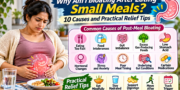



















































































































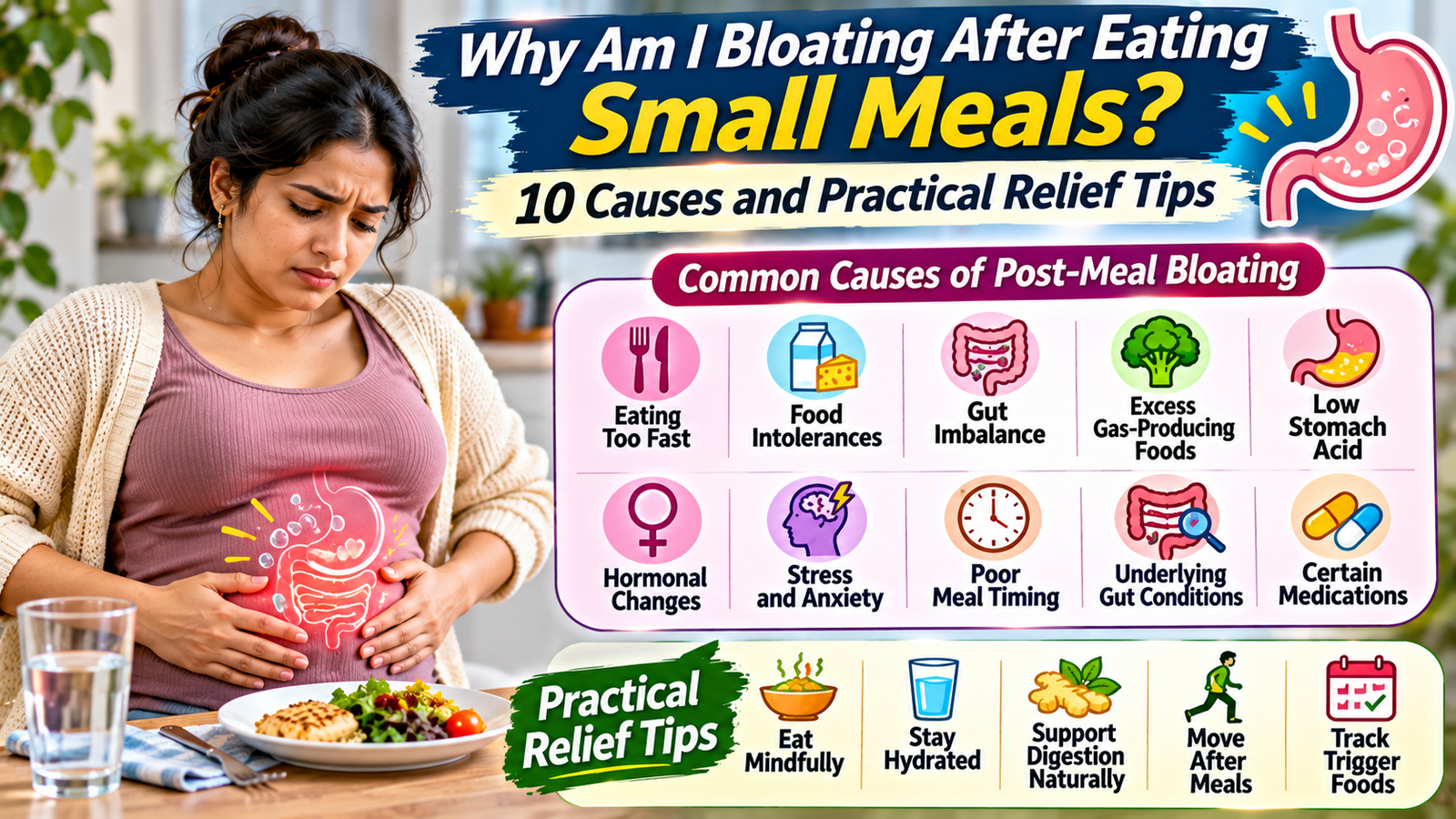
Why Am I Bloating After Eating Small Meals? 10 Causes and Practical Relief Tips
Author: RVLNSV PRASAD
Updated On: November 2026
About Us
Author Bio
Editorial Policy
Contact Us
Introduction
Have you ever eaten just a small portion of food and still felt as though your stomach was completely full? Perhaps you finish a light breakfast, but your abdomen feels swollen before lunchtime. Even a modest serving of rice, vegetables, or fruit may leave you uncomfortable.
If this happens regularly, you may wonder why you experience bloating after eating small meals, even when you do not overeat.
Bloating is a common digestive complaint, but it does not always mean that you have too much gas. Some people experience pressure or tightness without visible swelling, while others notice that their abdomen becomes larger as the day progresses. A third group feels full after only a few bites. These experiences can look similar but may have different explanations.
For example, constipation can make a small meal feel uncomfortable because stool and gas remain in the digestive tract. Food intolerances may trigger fermentation and gas production. In other cases, the stomach may not accommodate a meal comfortably, or the digestive system may be unusually sensitive to normal amounts of food and gas.
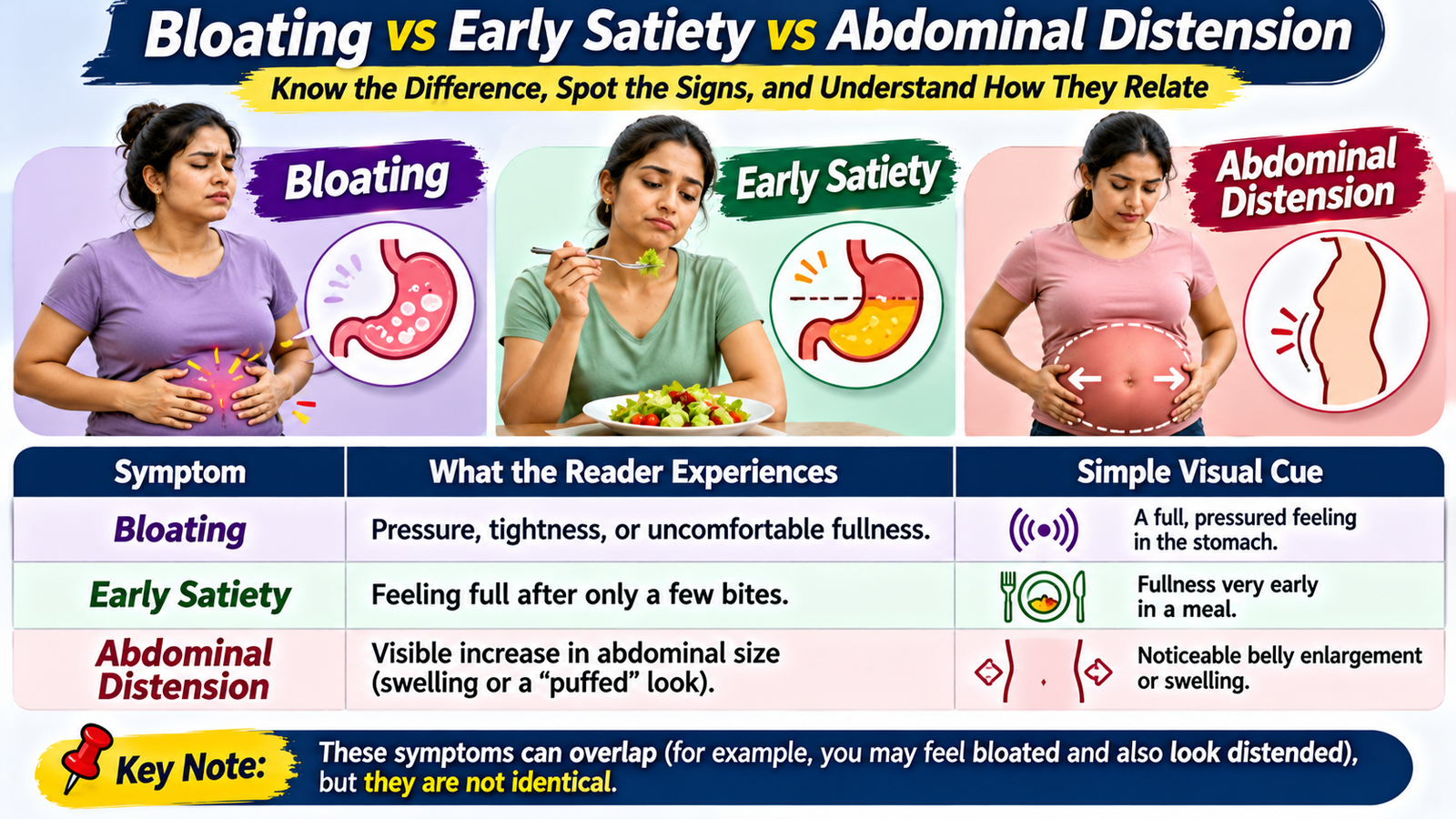
An important distinction is bloating versus early satiety. Bloating usually describes a feeling of fullness, pressure, or swelling. Early satiety means becoming full sooner than expected while eating. When early satiety happens repeatedly, it deserves attention rather than being treated as ordinary gas.
This guide explains 10 possible causes, common food triggers, practical relief strategies, and warning signs that should not be ignored. It also includes Indian food examples and a simple seven-day investigation method to help you identify patterns without unnecessarily eliminating nutritious foods.
Quick Answer: Why Am I Bloating After Eating Small Meals?
Bloating after eating small meals can result from constipation, food intolerance, irritable bowel syndrome (IBS), functional dyspepsia, swallowing excess air, or sensitivity to certain fermentable carbohydrates. Some people also experience early satiety, which means feeling full after eating only a small amount.
The cause is not always excessive gas. Changes in gut movement, abdominal muscle coordination, and the way the digestive system senses pressure can also contribute.
Start with these practical steps:
- Eat slowly and chew food thoroughly.
- Notice whether particular foods repeatedly trigger symptoms.
- Avoid carbonated drinks if they make you uncomfortable.
- Maintain regular bowel habits.
- Walk gently after meals if you feel comfortable.
- Record whether you experience swelling, gas, pain, or early fullness.
If you regularly feel full after only a few bites, or have persistent bloating, unexplained weight loss, vomiting, or worsening abdominal pain, arrange a medical assessment.
Key Takeaways
- Small meals can still cause bloating when digestion, bowel movements, or food tolerance are affected.
- Bloating and early satiety are different symptoms and should not be confused.
- Constipation is an overlooked contributor to abdominal fullness.
- Certain carbohydrates can produce gas when intestinal bacteria ferment them.
- IBS and functional dyspepsia may cause symptoms even without an obvious food trigger.
- Eating slowly and identifying personal triggers may help.
- Restrictive diets and random supplements are not suitable solutions for everyone.
- Persistent symptoms and warning signs require medical attention.
1. Constipation May Cause Bloating Even After Small Meals
Constipation is one of the most easily overlooked reasons for feeling bloated after eating very little.
When bowel movements become less frequent or stools are difficult to pass, stool can accumulate in the large intestine. This may contribute to abdominal pressure, discomfort, and a feeling of fullness. Gas may also become harder to pass comfortably.
You might notice that your stomach feels relatively comfortable in the morning but becomes increasingly swollen as the day progresses. Even a small lunch may seem to make the problem worse.
However, the meal may not be the original cause. The discomfort could be related to constipation that was already present.
Common signs of constipation include:
- Passing stools fewer than usual.
- Hard or dry stools.
- Straining during bowel movements.
- Feeling that your bowel has not emptied completely.
- Abdominal pressure or discomfort.
- Excessive bloating later in the day.
What may help?
Include fiber-rich foods gradually, drink adequate fluids, and maintain regular movement. Options include oats, vegetables, papaya, beans, and whole grains, depending on your tolerance.
If you suddenly increase fiber intake, you may temporarily experience more gas. Therefore, increase portions gradually rather than adding several high-fiber foods at once.
The NIDDK guide to constipation explains symptoms, causes, and treatment approaches.
2. Food Intolerance Can Trigger Bloating After Small Meals
Sometimes, the problem is not how much you eat but how your digestive system handles particular ingredients.
Food intolerance occurs when your body has difficulty digesting or processing a certain food component. Undigested carbohydrates can reach the large intestine, where bacteria ferment them and produce gas.
This can happen even when you eat a small quantity.
Lactose intolerance
Lactose is the natural sugar in milk and some dairy products. People who produce insufficient lactase, the enzyme needed to digest lactose, may experience:
- Bloating.
- Gas.
- Abdominal cramps.
- Diarrhoea.
- Stomach rumbling.
Symptoms may develop after drinking milk, eating ice cream, or consuming other lactose-containing products.
Fructose-related symptoms
Fructose is a sugar found naturally in fruits, honey, and some sweetened products. Some people absorb certain amounts of fructose poorly, which may lead to digestive symptoms.
Other possible food triggers
Certain foods contain fermentable carbohydrates that may produce gas in sensitive individuals.
| Food or ingredient | Possible reason for symptoms |
|---|---|
| Milk | Lactose intolerance |
| Ice cream | Lactose and sometimes high fat |
| Onion | Fructans |
| Garlic | Fructans |
| Apples | Fructose and polyols |
| Pears | Fructose and polyols |
| Beans | Fermentable carbohydrates |
| Some sugar-free sweets | Sugar alcohols such as sorbitol |
These foods are not unhealthy, and most people tolerate them normally. The aim is to identify your own triggers rather than remove every food on the list.
The NIDDK guide to lactose intolerance explains why lactose can cause gas, bloating, and diarrhea.
3. Irritable Bowel Syndrome (IBS) Can Make Small Meals Uncomfortable
Irritable bowel syndrome is a disorder of gut-brain interaction that affects bowel function and digestive comfort.
People with IBS may experience abdominal pain, bloating, constipation, diarrhea, or alternating bowel habits. Symptoms can vary considerably between individuals.
One person may become bloated after eating onions, while another notices symptoms after beans or certain fruits. Some people experience discomfort even when their meals appear small and healthy.
IBS is not simply a condition caused by excess gas. Changes in gut movement and increased sensitivity to normal digestive sensations may contribute.
For example, an amount of gas that causes little discomfort in one person may produce considerable pressure in someone with visceral hypersensitivity.
Practical ways to manage possible IBS-related bloating:
- Record foods and symptoms rather than guessing.
- Maintain regular meal times.
- Avoid eating very quickly.
- Identify constipation or diarrhea patterns.
- Discuss persistent symptoms with a healthcare professional.
- Consider a dietitian-guided dietary trial if recommended.
The NHS guide to irritable bowel syndrome provides information about symptoms and treatment.
4. Functional Dyspepsia May Cause Fullness After Only a Few Bites
Functional dyspepsia is an important condition to consider when a person repeatedly feels uncomfortable after eating.
It can cause upper abdominal discomfort, post-meal fullness, early satiety, nausea, and bloating. The stomach may not relax or accommodate a meal comfortably, and sensitivity to normal digestive activity may contribute.
Unlike ordinary gas-related bloating, functional dyspepsia often involves symptoms around the upper abdomen.
Common symptoms
- Feeling full soon after starting a meal.
- Uncomfortable fullness after eating.
- Upper abdominal pressure.
- Mild nausea.
- Burping.
- Discomfort that returns after meals.
The condition is sometimes called a disorder of gut-brain interaction. This does not mean that the symptoms are imaginary. It means that communication between the digestive system and nervous system can influence how the stomach functions and how sensations are experienced.
A major development is the January 2026 review in the New England Journal of Medicine. It discusses the different mechanisms involved in functional dyspepsia, including impaired stomach accommodation, altered sensation, and possible inflammatory pathways. The authors also describe how treatment needs to be tailored to the person’s symptoms. Read the 2026 NEJM review on functional dyspepsia.
If you regularly feel full after a few bites, do not assume that you simply have a small appetite. Discuss the symptom with a doctor, particularly if it is new or worsening.
5. Eating Too Quickly Can Increase Swallowed Air
A small meal can still cause bloating if you swallow a considerable amount of air while eating.
This may happen when you:
- Eat very quickly.
- Talk continuously while chewing.
- Drink through a straw.
- Chew gum frequently.
- Drink carbonated beverages.
- Eat while rushing between activities.
Swallowed air may be released through burping or move further through the digestive tract.
You may notice upper abdominal pressure shortly after eating, repeated burping, or a feeling that air is trapped in your stomach.
An easy experiment: For several days, sit down for meals and slow your eating pace. Put your spoon down between bites, chew comfortably, and avoid rushing through lunch.
You do not need to count every bite. The purpose is to reduce unnecessary air swallowing and give yourself enough time to notice when you feel satisfied.
The NIDDK explanation of gas in the digestive tract describes how swallowed air and bacterial fermentation contribute to digestive gas.
6. Fatty Meals May Delay Stomach Emptying and Increase Fullness
Fat is an essential nutrient, but meals containing a high amount of fat may make some people feel uncomfortably full for longer.
Fat can influence stomach emptying and digestive signalling. A person who already experiences functional dyspepsia may notice more fullness, nausea, or discomfort after a rich meal.
Examples include
- Deep-fried snacks.
- Large servings of oily curries.
- Heavy cream-based dishes.
- Very rich desserts.
- Meals containing large amounts of added oil or butter.
The issue is not that all dietary fat causes bloating. Healthy fats from nuts, seeds, and other foods can be part of a balanced diet.
Instead, observe whether particularly rich meals repeatedly make your symptoms worse.
A practical adjustment: Try a moderate portion of your usual meal with less added oil. Keep the rest of the meal reasonably similar and observe your symptoms. This gives you a more useful comparison than changing several foods simultaneously.
7. Certain High-FODMAP Foods May Produce More Gas
FODMAPs are fermentable carbohydrates that are not completely absorbed in the small intestine in some people.
They can draw water into the digestive tract and undergo fermentation by gut bacteria. For people with IBS or particular digestive sensitivities, this may contribute to bloating, gas, and abdominal discomfort.
FODMAP stands for:
- Fermentable.
- Oligosaccharides.
- Disaccharides.
- Monosaccharides.
- And polyols.
Common examples include certain onions, garlic, legumes, wheat-based foods, some fruits, milk, and sugar alcohols.
Indian food examples
| Food | Possible FODMAP-related issue |
|---|---|
| Onion-heavy curry | Fructans |
| Garlic paste | Fructans |
| Rajma | Galacto-oligosaccharides |
| Chana | Galacto-oligosaccharides |
| Milk | Lactose |
| Apple | Fructose and polyols |
| Sugar-free sweets | Certain sugar alcohols |
Importantly, a low-FODMAP diet is not meant to become a permanent restrictive eating pattern for everyone.
A typical structured approach involves a short restriction phase, followed by systematic reintroduction to identify personal tolerance. A qualified dietitian can help prevent unnecessary nutritional restrictions.
The American Gastroenterological Association’s clinical practice update recommends appropriate dietary guidance and highlights the importance of individual assessment.
8. Gastroparesis Can Cause Early Fullness and Bloating
Gastroparesis is a condition in which the stomach empties food more slowly than normal, without a mechanical blockage.
When stomach emptying is delayed, food may remain in the stomach longer. This can cause:
- Feeling full after a small meal.
- Nausea.
- Vomiting.
- Upper abdominal bloating.
- Poor appetite.
- Unintended weight loss.
Diabetes is one possible cause, although gastroparesis can also occur for other reasons. Certain medicines may affect stomach movement as well.
A person with persistent early fullness and nausea should not automatically start a restrictive diet. A doctor needs to assess the symptoms and decide whether testing is appropriate.
The NIDDK information on gastroparesis explains its symptoms, causes, diagnosis, and treatment.
9. Stress and the Gut-Brain Connection May Affect Digestive Comfort
Your digestive system communicates continuously with your nervous system. This is commonly described as the gut–brain connection.
Stress can influence digestive movement, sensitivity, appetite, and the way you experience abdominal discomfort. Some people notice that bloating becomes worse during busy workdays, periods of anxiety, or after eating in a hurry.
This does not mean that bloating is imaginary or that stress is always the cause. It means that emotional and physical factors can interact.
A simple habit to try:
Before eating, sit comfortably for a moment and allow yourself to slow down. Breathe gently, put away distracting devices if possible, and avoid rushing through the meal.
If stress is persistent, relaxation techniques, counselling, or other appropriate support may help. The American Gastroenterological Association also discusses gut-directed behavioral approaches for selected patients with bloating. Read the AGA clinical practice update.
10. Other Medical Conditions May Cause Persistent Bloating
Not every case of bloating after small meals is caused by ordinary digestion.
Several medical conditions can produce similar symptoms, and some require specific investigation.
| Possible condition | Symptoms that may accompany bloating |
|---|---|
| Coeliac disease | Diarrhea, weight loss, anemia, abdominal discomfort |
| Hypothyroidism | Constipation, tiredness, weight changes |
| Small intestinal bacterial overgrowth (SIBO) | Bloating, gas, and diarrhea in some people |
| Gastroparesis | Early fullness, nausea, vomiting |
| Functional dyspepsia | Upper abdominal fullness, early satiety |
| Ovarian conditions | Persistent abdominal swelling, pelvic discomfort, early fullness |
| Gastrointestinal obstruction | Severe pain, vomiting, inability to pass stool or gas |
These conditions cannot be diagnosed from bloating alone.
The NHS bloating guidance advises medical assessment when bloating is frequent, persistent, or accompanied by other concerning symptoms.
If symptoms are new, progressive, or unexplained, a doctor can decide whether blood tests, coeliac screening, imaging, endoscopy, or other investigations are appropriate.
Latest Research Developments: What New Evidence Tells Us
Research published in 2025 and 2026 is improving the understanding of why some people experience bloating even after small meals.
1. European consensus on functional bloating (2025)
A major European consensus published in August 2025 brought together recommendations on the diagnosis and management of functional bloating and abdominal distension.
One important distinction is that bloating is a subjective feeling of pressure or fullness, while distension is a visible increase in abdominal size. The two can occur together, but they are not identical.
The recommendations also discuss gut sensitivity, digestive function, and behavioral and dietary approaches. This supports a more individualized approach instead of assuming that every case is caused by excess gas. Read the 2025 European consensus.
2. Updated Asian consensus on functional dyspepsia (2026)
The Second Asian Consensus Report on Functional Dyspepsia was published in 2026. It discusses the relationship between food, gut microbiota, digestive symptoms, and treatment choices in Asian populations.
The report recognizes that food-related symptoms differ between individuals. It also discusses the potential role of dietary approaches, including low-FODMAP interventions in selected patients, while acknowledging that more evidence is needed.
This is particularly relevant to readers who eat traditional Asian diets because common ingredients and meal patterns can influence symptoms differently. Read the 2026 Asian consensus report.
3. New research on diet and functional dyspepsia (July 2026)
A review published in Digestive and Liver Disease in July 2026 examined dietary and nutraceutical approaches to functional dyspepsia.
It discussed evidence for smaller, regular meals, adjusting meal fat content, and selected dietary interventions. It also examined supplements and plant-based ingredients, although findings vary and safety depends on the product and individual.
These findings do not mean that everyone with bloating should take digestive supplements or follow a strict diet. They support selecting dietary changes according to the person’s symptoms and tolerance. Read the 2026 dietary and nutraceutical review.
What this research means for readers
The latest evidence supports a useful principle: identify the digestive pattern before choosing a remedy. A person with constipation may need a different approach from someone with lactose intolerance or early satiety.
Food Triggers: Which Foods Should You Observe?
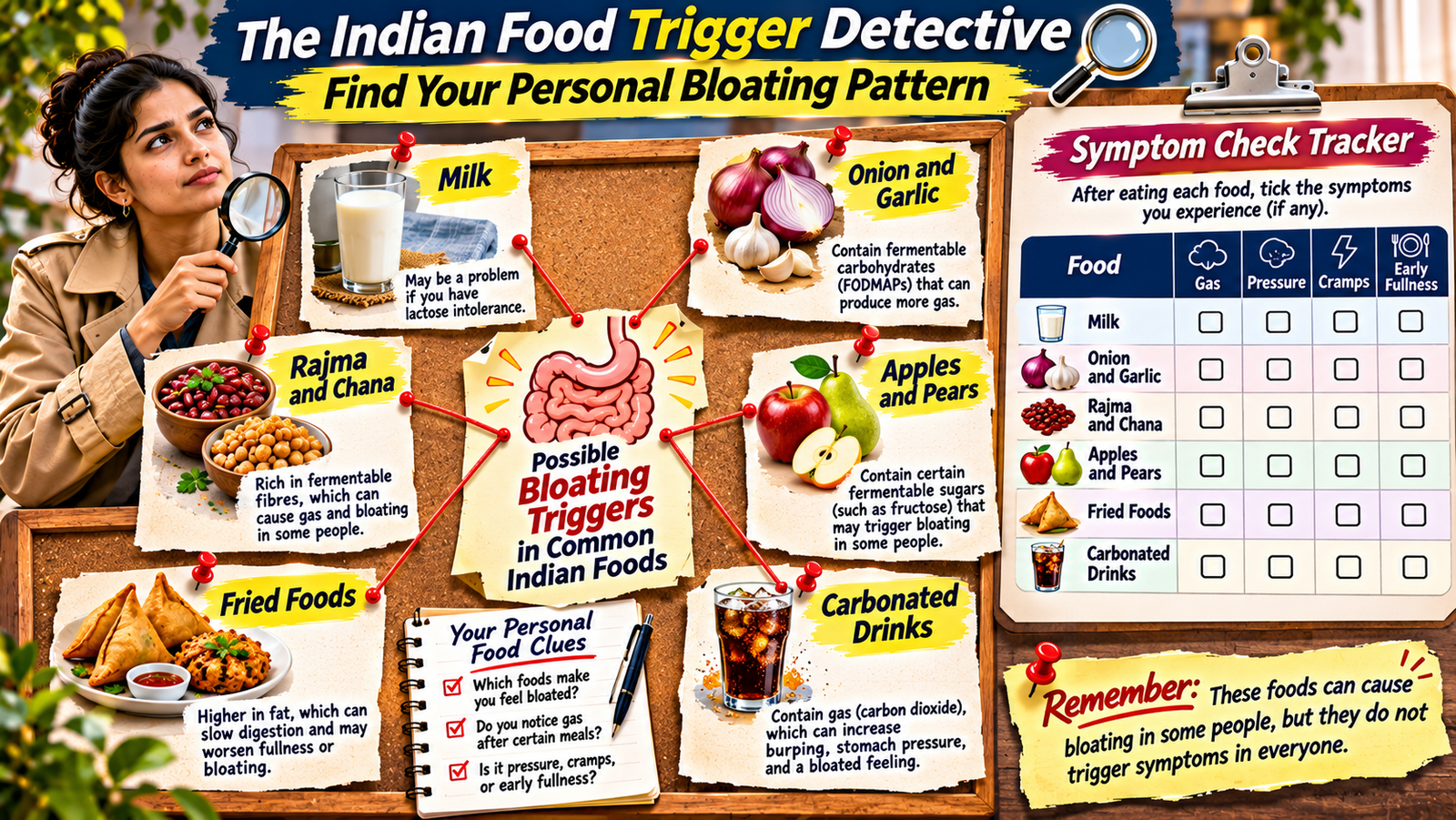
Instead of avoiding many foods immediately, start by identifying those that repeatedly cause symptoms.
| Food group | Examples | What to observe |
|---|---|---|
| Dairy | Milk, ice cream | Gas, cramps, loose stools |
| Legumes | Rajma, chana, beans | Gas and abdominal pressure |
| Alliums | Onion, garlic | Bloating after meals |
| Certain fruits | Apples, pears | Gas or discomfort |
| Fried foods | Pakora, puri, chips | Prolonged fullness |
| Carbonated drinks | Soda, fizzy beverages | Burping and pressure |
| Sugar-free products | Some sweets and gums | Gas from sugar alcohols |
| Large wheat portions | Some breads and wheat-based meals | Individual digestive response |
Important: A food that causes symptoms in one person may be perfectly suitable for another. Do not remove gluten before discussing celiac testing with a healthcare professional, because avoiding gluten can affect the accuracy of diagnostic tests.
10 Practical Ways to Reduce Bloating After Eating Small Meals
You do not need to follow an expensive diet or buy multiple digestive supplements. Start with small, manageable changes.
1. Eat slowly and comfortably.
Give yourself enough time to finish meals. Chew food thoroughly and avoid rushing, particularly when eating at work.
2. Maintain regular meal timings
Some people find that consistent meal timing makes their digestive routine easier to manage. Avoid forcing yourself to eat when you are uncomfortably full.
3. Review your dairy intake.
If milk consistently triggers symptoms, discuss lactose intolerance with a healthcare professional. Lactose-free milk may be suitable for some people, but it is not a universal solution.
4. Adjust portions of gas-producing foods.
You may tolerate a small serving of beans better than a large serving. Try adjusting portion size rather than removing pulses completely.
5. Drink water regularly.
Adequate hydration supports normal bowel function. People with prescribed fluid restrictions should follow their medical advice.
6. Walk gently after meals.
A comfortable 5–10-minute walk may support normal movement and help some people feel less sluggish. Avoid intense exercise immediately after eating, particularly if it increases discomfort.
7. Address constipation early.
If stools are hard or bowel movements are infrequent, focus on regular toilet habits, suitable fiber intake, hydration, and activity. Persistent constipation may need medical treatment.
8. Limit carbonated drinks if they trigger symptoms.
Fizzy drinks can increase burping and abdominal pressure in some people. Replace them with plain water if you notice a clear connection.
9. Avoid unnecessary food restrictions.
Do not eliminate dairy, wheat, fruits, and pulses all at once. This makes it difficult to identify the actual trigger and may reduce dietary variety.
10. Discuss persistent symptoms with a doctor.
If simple adjustments do not help, a healthcare professional can assess whether the problem involves constipation, IBS, food intolerance, dyspepsia, or another condition.
An Easy 7-Day Bloating Investigation Plan
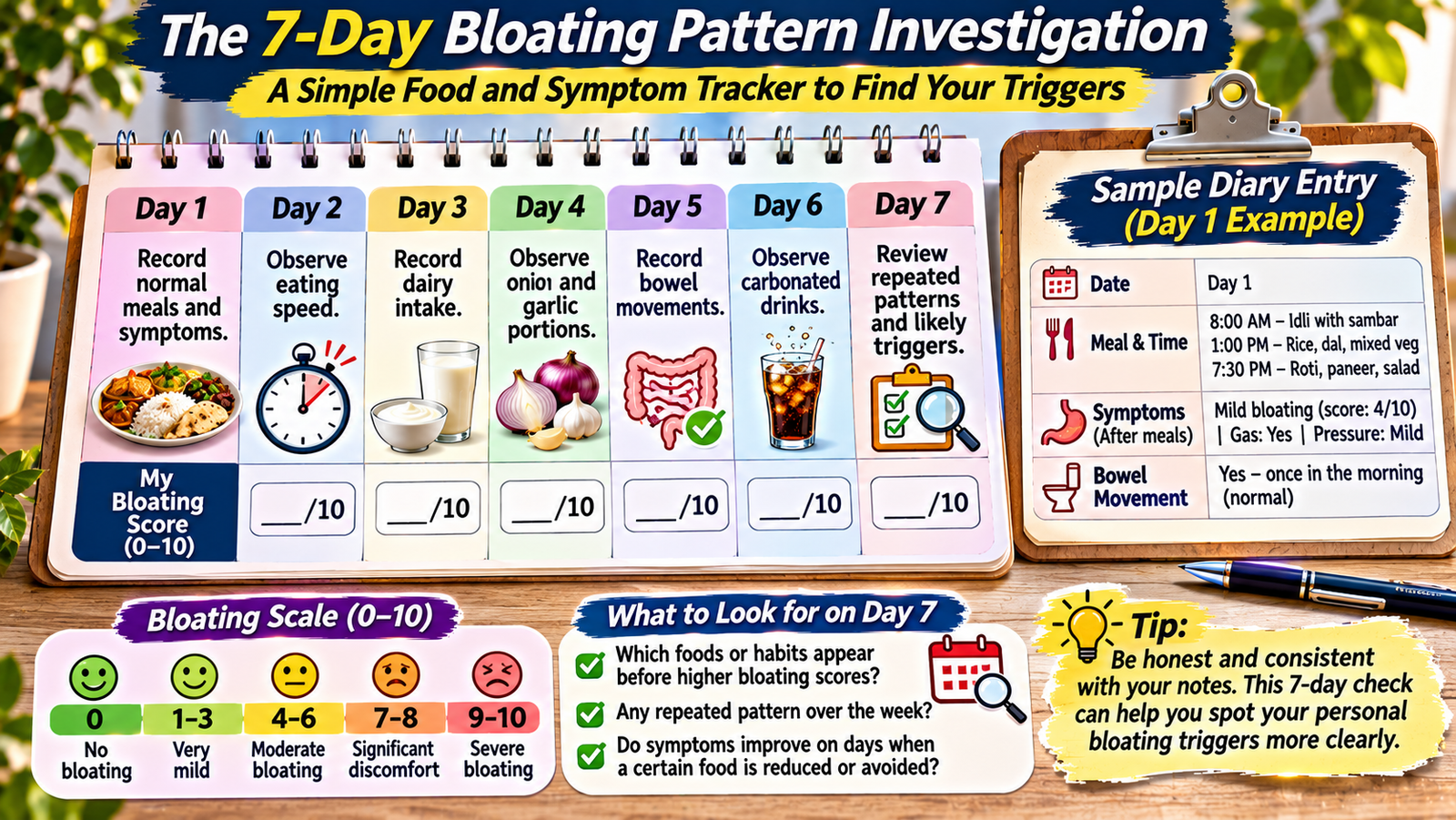
One useful approach is to observe your symptoms systematically instead of changing your entire diet at once.
This simple seven-day method can help you identify patterns to discuss with a doctor or dietitian.
| Day | What to observe | Practical action |
|---|---|---|
| Day 1 | Usual meal pattern | Record foods and symptoms. |
| Day 2 | Eating speed | Eat slowly and comfortably. |
| Day 3 | Dairy intake | Record milk and dairy consumption. |
| Day 4 | Onion and garlic | Observe your usual portions. |
| Day 5 | Bowel habits | Record stool frequency and consistency. |
| Day 6 | Carbonated drinks | Note whether fizzy drinks trigger symptoms. |
| Day 7 | Overall pattern | Review repeated symptoms and possible triggers. |
Use a symptom score.
Rate your bloating from 0 to 10:
- 0: No bloating.
- 2: Slight fullness.
- 4: Noticeable discomfort.
- 6: Uncomfortable abdominal pressure.
- 8: Severe discomfort affecting activities.
- 10: Extremely severe symptoms.
Also record:
- Time of the meal.
- Food and approximate portion.
- Whether you passed stool.
- Whether you experienced gas or burping.
- Whether your abdomen visibly expanded.
- Whether you became full after only a few bites.
This is an observation method, not a diagnostic test. Do not deliberately eat a food that previously caused a serious allergic reaction or severe symptoms just to test your tolerance.
A Practical Indian Meal Plan for People Who Experience Bloating
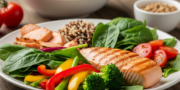
Traditional Indian foods can provide a varied and nutritious diet. The important step is to choose foods and portions that suit your digestive tolerance.
| Meal | Example | Practical note |
|---|---|---|
| Breakfast | Idli with a suitable portion of sambar | Observe onion and pulse tolerance. |
| Breakfast | Vegetable oats | Adjust vegetables according to tolerance. |
| Mid-morning | Papaya or another tolerated fruit | Start with a comfortable portion. |
| Lunch | Rice, dal, cooked vegetables | Adjust dal and vegetable portions |
| Lunch | Roti with a suitable vegetable curry | Observe wheat tolerance. |
| Evening | Plain yogurt if tolerated | Consider lactose-free alternatives if needed. |
| Dinner | Vegetable khichdi | Keep added oil moderate. |
This is an example rather than a medical diet. People with diabetes, kidney disease, celiac disease, food allergies, or other medical conditions may need individual dietary advice.
Common Mistakes That Can Make Bloating Worse
Mistake 1: Assuming every bloated stomach contains excess gas
Bloating can occur without a large increase in intestinal gas. Gut sensitivity and abdominal muscle coordination can also contribute.
Mistake 2: Eating less and less
If you feel bloated after small meals, reducing food intake further may lead to inadequate nutrition. Persistent early fullness needs proper assessment.
Mistake 3: Removing all pulses and vegetables
Beans, lentils, and vegetables provide valuable nutrients. Instead of removing them all, adjust portions and identify which foods you tolerate.
Mistake 4: Following a strict low-FODMAP diet without guidance
A restrictive diet can reduce nutritional variety if followed unnecessarily or for too long. A structured reintroduction phase is important.
Mistake 5: Taking probiotics randomly
Probiotics are not a universal treatment for bloating. The American Gastroenterological Association advises against using probiotics specifically to treat abdominal bloating and distension in its clinical practice update. Read the AGA recommendations.
Mistake 6: Using digestive supplements without checking their ingredients
Products marketed as natural digestive remedies may have variable ingredients, interactions, or side effects. Natural does not automatically mean safe.
Mistake 7: Ignoring early satiety
Feeling full after only a few bites is not the same as ordinary gas. If it happens repeatedly, especially with weight loss or nausea, arrange a medical assessment.
When Should You See a Doctor?
Occasional mild bloating is common. However, frequent bloating after small meals deserves attention if it affects your appetite, nutrition, or everyday activities.
Arrange a medical appointment if you experience:
- Persistent or worsening abdominal bloating.
- Repeated early fullness after a few bites.
- Unexplained weight loss.
- Frequent nausea or vomiting.
- Ongoing constipation or diarrhea.
- Blood in your stool.
- Persistent abdominal or pelvic discomfort.
- A noticeable change in your usual bowel habits.
- Loss of appetite or difficulty maintaining adequate food intake.
Seek urgent medical attention if you develop severe or sudden abdominal pain, repeated vomiting, a swollen abdomen with inability to pass stool or gas, fainting, or other severe symptoms.
What tests might a doctor recommend?
The appropriate tests depend on your symptoms, age, medical history, and examination.
A doctor may consider:
- Blood tests to look for anemia or other abnormalities.
- Coeliac disease screening.
- Tests for diabetes or thyroid problems when indicated.
- Assessment for constipation.
- Lactose intolerance testing in selected cases.
- Upper gastrointestinal endoscopy when appropriate.
- Imaging if warning signs or examination findings justify it.
- Gastric emptying testing if gastroparesis is suspected.
The American Gastroenterological Association advises that imaging and upper endoscopy are not routinely necessary for every person with bloating. They are considered when warning signs, recent worsening, or abnormal examination findings make them appropriate. Read the AGA clinical guidance.
Frequently Asked Questions
1. Why do I feel bloated after eating small meals?
Possible reasons include constipation, food intolerance, IBS, functional dyspepsia, swallowing air, or sensitivity to certain carbohydrates. The cause depends on your symptoms and digestive history.
2. Why does my stomach swell after eating a little?
Visible abdominal swelling is called distension. It can occur with gas, constipation, digestive disorders, or changes in abdominal muscle coordination. Persistent or worsening swelling needs medical assessment.
3. Why do I feel full after eating only a few bites?
This symptom is called early satiety. It may occur with functional dyspepsia, delayed stomach emptying, or other digestive conditions. If it happens repeatedly, consult a doctor.
4. Can constipation cause bloating after small meals?
Yes. Constipation can contribute to stool accumulation, gas retention, and abdominal pressure. Improving bowel habits may help, although persistent constipation should be assessed.
5. Which foods commonly cause bloating?
Common triggers include milk in people with lactose intolerance, beans, certain fruits, onions, garlic, some wheat-based foods, carbonated drinks, and sugar alcohols. Individual tolerance varies.
6. Can drinking water reduce bloating?
Adequate hydration supports normal bowel movements, particularly when constipation is involved. However, water does not treat every cause of bloating, and excessive intake is unnecessary.
7. Is walking after eating good for bloating?
A gentle walk may help some people feel more comfortable and maintain regular movement. Start with a short, comfortable walk and stop if you feel unwell.
8. Can stress cause stomach bloating?
Stress can influence digestive movement and gut sensitivity. It may worsen symptoms in some people, particularly those with IBS or functional digestive disorders.
9. Should I avoid rice if I experience bloating?
Not necessarily. Rice is generally well tolerated by many people. The overall meal, portion size, accompanying ingredients, and individual digestive conditions may matter more.
10. When is bloating after small meals serious?
Persistent early satiety, unexplained weight loss, repeated vomiting, blood in stool, worsening abdominal swelling, or severe pain should not be ignored. Seek medical advice promptly.
Conclusion
Bloating after eating small meals can be frustrating, especially when you are already eating modest portions and trying to make healthy food choices. However, the amount of food you eat is only one part of the explanation.
Constipation, food intolerance, IBS, functional dyspepsia, fermentable carbohydrates, and changes in stomach emptying can all contribute. In some people, the main issue is not excess gas but increased sensitivity to normal digestive activity or becoming full too quickly.
Start by observing your symptoms rather than removing several foods at once. Eat slowly, maintain regular bowel habits, adjust foods that repeatedly trigger discomfort, and include gentle movement if it suits your health.
Most importantly, recognize the difference between ordinary bloating and persistent early satiety. If you repeatedly become full after a few bites, experience unexplained weight loss, or develop worsening digestive symptoms, seek medical assessment. Understanding the underlying cause is more useful than relying on random remedies.
Author Note
Author: RVLNSV PRASAD
Website: HealthTipsToYou.com
This article is intended to help readers understand possible causes of bloating after small meals and make informed everyday food and lifestyle choices. It uses published medical guidance and research to explain digestive symptoms in accessible language.
Medical Disclaimer
This article is for general educational purposes only. It is not intended to diagnose, treat, or prevent any disease. Persistent bloating, early satiety, abdominal pain, vomiting, or unexplained weight loss requires appropriate medical assessment. Do not start restrictive diets, stop prescribed medicines, or take supplements as a substitute for professional care.
Fitness Disclaimer
Gentle walking may help some people maintain digestive comfort and general activity. However, exercise should match your health, fitness, and mobility. Avoid strenuous activity when you have severe abdominal discomfort, dizziness, or vomiting. Seek medical advice if you have a digestive condition or symptoms that worsen with physical activity.
Evidence-Based Sources and Further Reading
International Clinical Guidelines and Medical Research
- European Society of Neurogastroenterology and Motility / United European Gastroenterology — European Consensus on Functional Bloating and Abdominal Distension (2025). Explains the difference between bloating and visible distension and provides recommendations for assessment and management. Read the 2025 consensus.
- American Gastroenterological Association — Evaluation and Management of Belching, Abdominal Bloating, and Distention (2023). Provides expert recommendations on dietary approaches, diagnostic testing, gut-directed therapies, and constipation-related bloating. Read the AGA clinical practice update.
- Pasricha PJ and Talley NJ — Functional Dyspepsia, New England Journal of Medicine (2026). Reviews early satiety, post-meal fullness, mechanisms, and treatment approaches. Read the 2026 review.
- Second Asian Consensus Report on Functional Dyspepsia (2026). Updated recommendations on diagnosis, food-related symptoms, gut microbiota, and management in Asian populations. Read the full consensus.
- Dietary and Nutraceutical Interventions for Functional Dyspepsia (2026). Reviews dietary patterns, meal size, fat content, and selected nutraceutical approaches. Read the 2026 review.
Government and Medical Guidance on Digestive Conditions
- National Institute of Diabetes and Digestive and Kidney Diseases (NIDDK) — Gas in the Digestive Tract. Explains gas production, swallowed air, bloating, and digestive conditions that can contribute to symptoms. Read NIDDK guidance.
- NIDDK — Constipation. Explains symptoms, causes, diagnosis, and treatment approaches for constipation. Read the NIDDK guide.
- NIDDK — Lactose Intolerance. Explains how lactose malabsorption can cause bloating, gas, abdominal pain, and diarrhea. Read the NIDDK guide.
- NIDDK — Gastroparesis. Provides information about delayed stomach emptying, early fullness, nausea, and related symptoms. Read the NIDDK guide.
- NHS — Bloating. Explains common causes, practical measures, and symptoms that require medical attention. Read NHS guidance.
Related Articles
- The Power of Movement: How Functional Fitness Training Boosts Strength and Longevity
- 10 Best Standing Exercises to Lose Belly Fat at Home (Beginner-Friendly Guide)(Opens in a new browser tab)
- Home Remedies for Gastric Problems: 10 Natural Ways to Relieve Gas, Bloating, and Indigestion
- 14 Effective Strategies To Avoid IBS Symptoms
- 6 Natural Foods to Improve Gut Health: A Comprehensive Guide