


























































































































































7 Weight Loss Mistakes That Prevent Results (And What Actually Works)
Author: RVLNSV PRASAD
Fact Checked By: Wellness Research Team
Last Updated: August 2026
Quick Answer
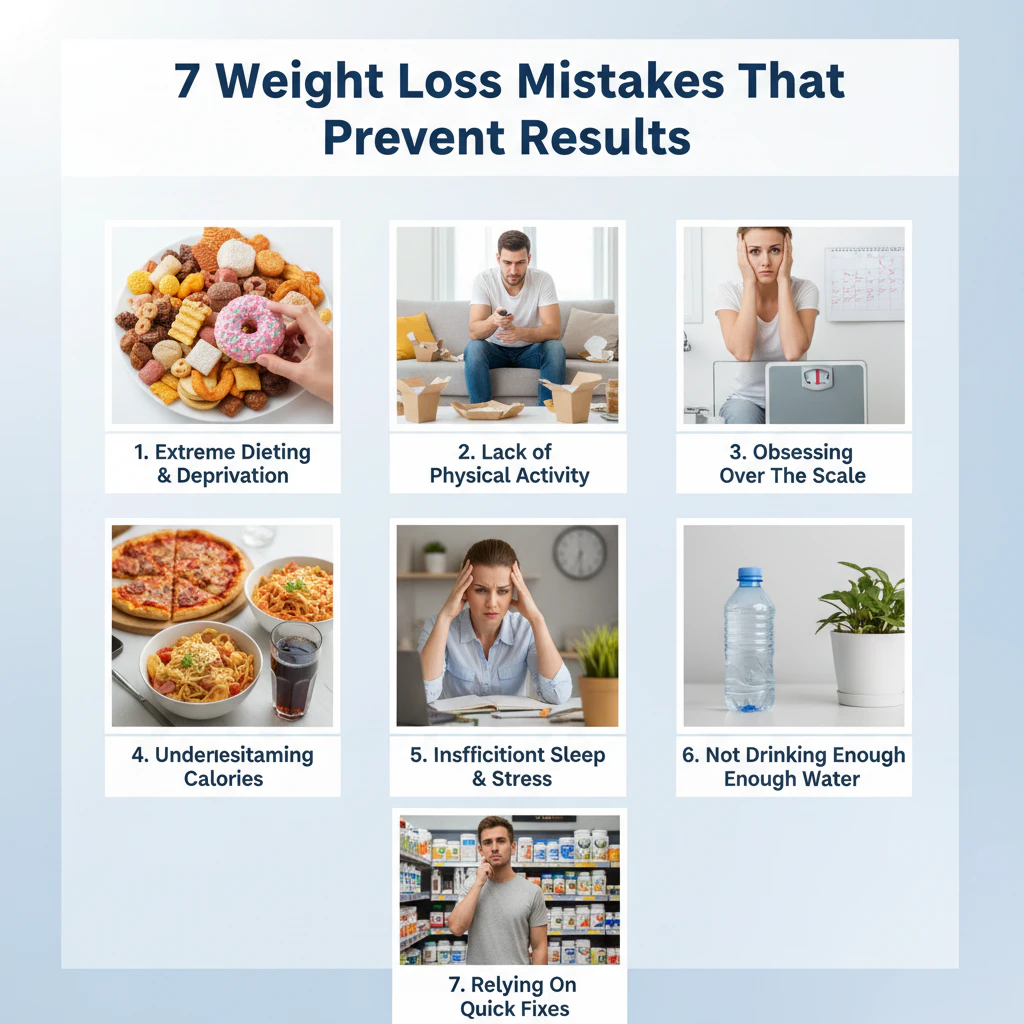
Weight Loss Mistakes That Prevent Results: Eating too little, skipping meals, relying on supplements, skipping strength training, and expecting quick results. Consistent habits, a realistic calorie deficit, regular physical activity, enough protein intake, decent sleep, and patience typically contribute to sustainable weight loss. Studies reveal that severe diets don’t work as well as lifestyle adjustments over an extended time.
Introduction
Weight Loss Mistakes That Prevent Results are more common than many people realize.
If you have ever followed a diet, exercised regularly, and still felt frustrated by slow progress, you are not alone.
Many people work hard to lose weight. They reduce their calorie intake and give up favorite foods. Some spend hours exercising, yet the scale barely changes.
I understand this struggle.
Years ago, I believed that losing weight was simply about eating less and exercising more. I followed strict diets, skipped meals, and constantly chased quick results. Although I occasionally lost weight for a few weeks, the results never lasted, and the weight eventually returned. (MedLinePlus)
The problem was not a lack of effort.
The problem was following advice that sounded logical but was difficult to sustain.
Many of the most popular weight-loss strategies fail because they ignore how real people live. They are all about short-term outcomes, not long-term habits.
My investigation revealed a consistent pattern among specialists from organizations like NIH, Mayo Clinic, and MedlinePlus. Successful weight management is usually founded on basic, persistent behaviors, not drastic measures.
According to the CDC, more than 40% of U.S. adults live with obesity, highlighting the importance of sustainable weight-management habits.
In this guide, you will learn:
- The most prevalent blunders that slow down progress
- Why some diets fail
- What the research says today
- Practical solutions that work
- Easy practices to enhance long-term success
Many people blame themselves when weight loss stalls, but common mistakes often play a bigger role than lack of motivation.
What Are the Biggest Weight Loss Mistakes?
The most common weight loss mistakes include:
- Eating too little
- Skipping meals
- Ignoring protein intake
- Avoiding strength training
- Relying on supplements
- Poor sleep habits
- Expecting rapid results
Why it is so hard to lose weight
Weight loss is often portrayed as a straightforward equation.
Eat less.
Move more.
Lose weight.
While energy balance matters, real life is far more complicated.
Your eating habits, sleep, stress levels, activity patterns, environment, and mindset all influence your results.
All of these affect your results.
Many people are disappointed because they think progress should be a steady thing each week.
But weight changes normally due to water retention, hormones, digestion, and other things. You might not see it on the scale right away, even if the body fat is dropping. (Healthline)
My Personal Experience
One of the greatest lessons I learned was that the scale does not tell the complete story.
There were weeks when my weight barely changed.
Yet my clothes fit better.
My energy improved.
My workouts became easier.
In retrospect, I was improving even if the scale told me I wasn’t.
This discovery changed my mindset.
I stopped searching for immediate wins and started focusing on regular behaviors.
That shift made a significant difference.
Common Weight Loss Mistakes That Prevent Results
1. Eating Too Little
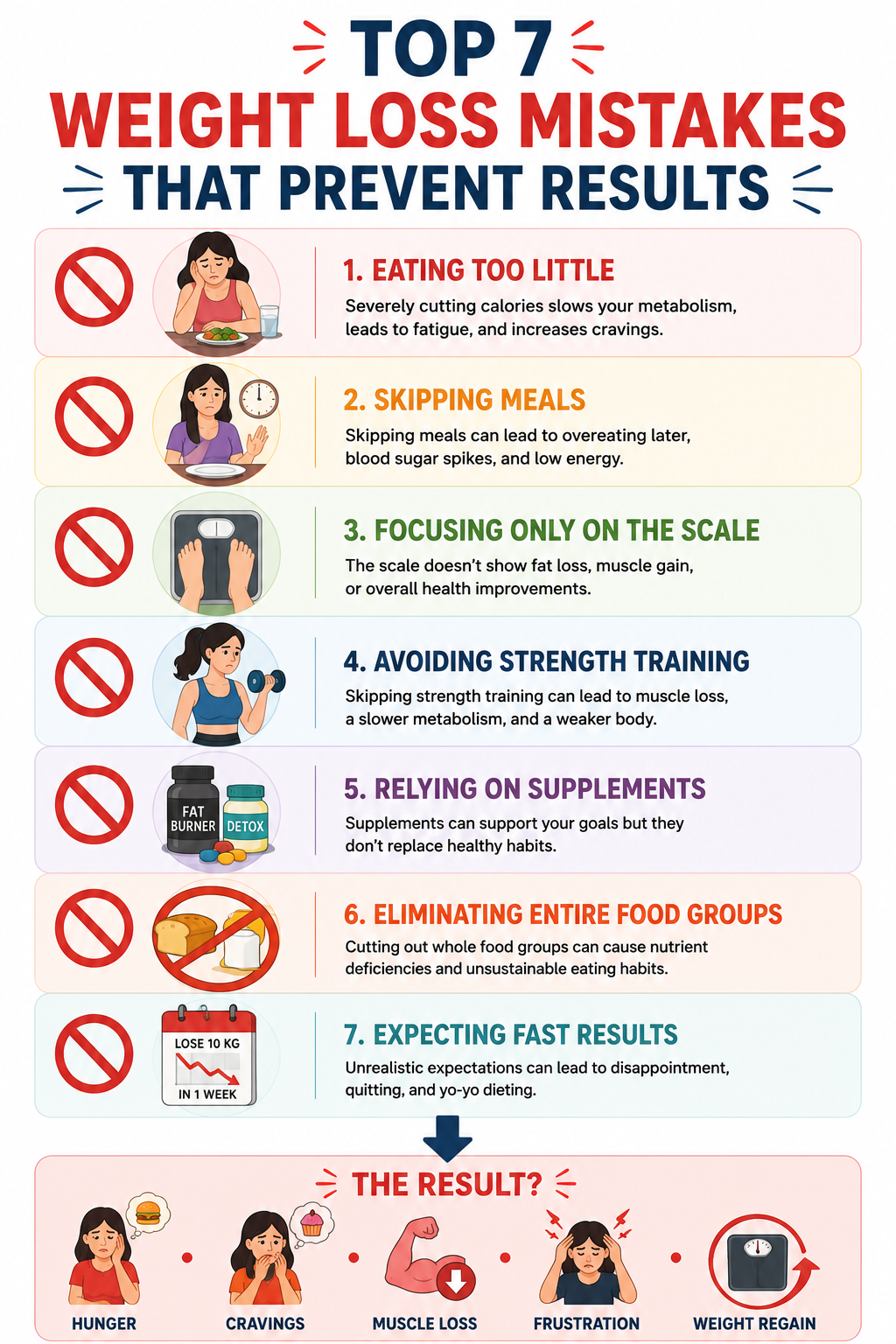
This is one of the most common and most damaging weight loss mistakes to avoid.
Many people believe that the fewer calories they eat, the faster they will lose weight.
At first, this approach may appear to work.
The scale drops quickly.
Motivation increases.
Then issues start.
Hunger grows.
It lowers energy.
The cravings get stronger.
Very low-calorie diets can cause weight loss resistance through increased hunger and decreased metabolic efficiency over time, as indicated by studies.
Why It Happens
People desire instant results.
Social media loves a good change.
Crash diets offer fast results.
The temptation is understandable.
Unfortunately, most people cannot maintain severe restriction for long.
What Works Better?
Instead of starving yourself:
- Create a moderate calorie deficit.
- Eat hearty meals.
- Eat protein with every meal
- Focus on consistency.
Practical Example
Instead of eating:
- Coffee at breakfast
- Lunch salad
- Small dinner
Try:
- Greek yogurt and fruit
- Balanced lunch with protein
- Healthy dinner with vegetables
This strategy is generally easier to maintain.
Extreme Dieting vs. Sustainable Weight Loss
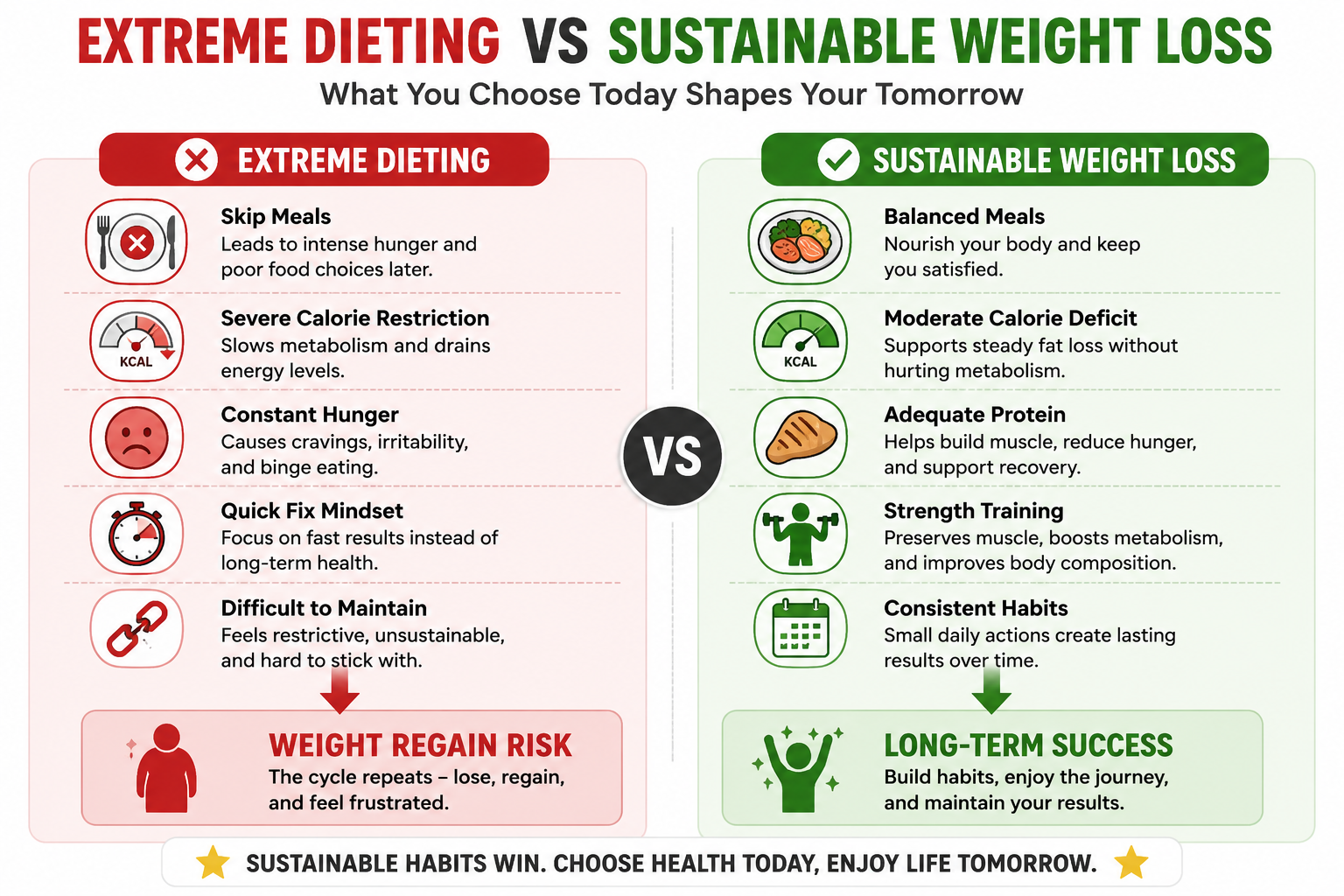
Extreme Dieting vs. Sustainable Weight Loss
| Extreme Approach | Sustainable Approach |
|---|---|
| Skip meals. | Eat balanced meals |
| Severe calorie restriction | Moderate calorie deficit |
| Fast results | Steady progress |
| Constant hunger | Better satisfaction |
| Difficult to maintain | Easier long-term adherence |
2. Focusing Only on the Scale
Another major mistake is treating the scale as the only measure of success.
Weight fluctuates naturally.
Water retention.
Sodium intake.
Hormonal changes.
Digestion.
Muscle gain.
All of these can affect scale weight. (Healthline)
Why This Mistake Is Harmful
Many people become discouraged when they do not see immediate changes.
They assume their plan is failing.
Then they quit.
The reality is often different.
Fat loss may still be happening.
Better Ways to Track Progress
Consider tracking:
- Waist measurement
- Progress photos
- Energy levels
- Workout performance
- Clothing fit
- Daily routines
Often these indications will provide a better picture of development than the scale itself.
My Observation
Many successful people stop obsessing over daily weigh-ins.
They focus on behaviors.
They focus on habits.
Eventually, the results follow.
What Research Shows
Experts consistently note that body weight is only one measure of progress. Changes in fitness, energy, and overall health rather than just changes on the scale are often the most sustainable weight management. (EatingWell)
3. Not Doing Strength Training
One of the biggest beginner weight loss mistakes is believing that cardio is the only exercise needed for weight loss.
Some people will walk, jog, or use cardio machines for hours and never do any resistance exercises.
This can slow down progress.
Why This Happens
Many people believe:
- Weights are for bodybuilders only.
- Everyone becomes big with weight training.
- Cardio burns more calories.
Such beliefs are often false.
What Research Shows
All the research points to resistance exercise being helpful in maintaining muscle mass after weight loss. Muscle maintenance is crucial, as muscle contributes to total energy expenditure and physical function. (Healthline)
Why Muscle Matters
Muscles help:
- Improve your body composition.
- Support metabolism.
- Increase strength
- Enhance everyday function.
- Maintain weight loss results.
My Observation
Many people are just looking at the number on the scale.
But successful long-term weight loss is frequently more about improving body composition than just reducing body weight.
Better Approach
Aim for:
- 2-3 strength training sessions weekly
- Walk daily most days.
- Constant movement
Here are some simple exercises:
- Squats
- Wall push-up
- Resistance band rows
- Lunges
- Dumbbell Press
4. Relying on Supplements Instead of Habits
Another huge reason that weight loss fails is the expectation of supplements doing the work.
The weight-loss industry is filled with:
- Fat burners
- Detox teas
- Metabolism boosters
- Appetite suppressants
Most promise rapid results.
Few deliver meaningful long-term success.
My Experience
Years ago, I bought supplements hoping they would speed up progress.
The advertisements looked convincing.
The results were disappointing.
The only thing that became lighter was my wallet.
What Research Suggests
Most sustainable weight-loss success comes from nutrition, activity, sleep, and behavior change rather than supplements alone. Experts always talk about habits, not quick fixes. (NASM)
When You Might Need Supplements
Supplements may be helpful in some circumstances when:
- A nutrient deficiency exists
- A doctor has recommended them
- Meeting nutritional needs through food is difficult
Supplements do not replace healthy actions but should complement such behaviors.
What Works Better?
Focus on:
- Whole foods
- Eating on a regular basis
- Regular physical activity
- Adequate sleep
- Stress management
These regimens deliver results that are far above the promises of ordinary supplement marketing.
5. Eliminating Entire Food Groups
Many people believe they must completely eliminate certain foods to lose weight.
Common targets include:
- Bread
- Rice
- Fruit
- Potatoes
- Dairy
This is one of the most common mistakes that stop fat loss.
Why This Approach Often Fails
Strict restrictions can create:
- Strong cravings
- Frustration
- Social difficulties
- Poor long-term adherence
Eventually, many people return to old habits.
The Real Issue
Usually, the problem is not one food.
The problem is
- Portion sizes
- Overall calorie intake
- Food quality
- Consistency
My Observation
I have seen many people remove entire food groups only to regain weight later.
The individuals who succeed long-term usually learn balance rather than restriction.
What Current Evidence Suggests
Research indicates that multiple dietary approaches can support weight loss when they create a sustainable calorie deficit. The secret is not to choose one particular diet type but to stick with a long-term plan.
Better Strategy
Rather than removing foods:
- Eat approximately sized portions.
- Focus on whole foods.
- Eat vegetables regularly.
- Pair meals with protein and fiber.
This strategy is easier to keep up with for years than weeks.
6. Ignoring Protein Intake
One of the healthiest weight loss habits out there is prioritizing your protein intake.
But it is often overlooked.
Why Protein Matters
Protein can help:
- Support fullness
- Maintain muscle mass
- Improve body composition
- Reduce hunger between meals
Research shows that protein-rich eating patterns may support weight management by increasing satiety and helping preserve lean mass during weight loss. ((ClevelandClinic))
| Protein Food | | Approximate Protein |
|---|
| Eggs | | 6 g |
| Greek Yogurt | | 15–20 g |
| Chicken Breast | | 25–30 g |
| Lentils | | 18 g per cooked cup |
| Tofu | | 10–15 g |
Signs You May Not Be Eating Enough Protein
| Possible Sign | Potential Impact |
|---|---|
| Constant hunger | More snacking |
| Poor recovery | Slower workout recovery |
| Low energy | Reduced performance |
| Muscle loss | Lower strength |
| Difficulty staying full | Increased calorie intake |
Good Protein Sources
- Eggs
- Greek yogurt
- Fish
- Chicken
- Lentils
- Beans
- Tofu
- Cottage cheese
- Edamame
- Nuts
My Observation
Many people who ask, “Why am I not losing weight despite dieting?” are unknowingly eating very little protein.
They focus entirely on reducing calories.
They forget that food quality matters too.
Practical Tips
Try adding protein at each meal:
Breakfast: Lunch:
- Greek yogurt
- Eggs
- Cottage cheese
Lunch:
- Chicken
- Lentils
- Tofu
Dinner:
- Fish
- Beans
- Lean meats
This frequently leads to increased satisfaction and makes it simpler to stick with a good diet.
What Experts Recommend
Most experts recommend spreading your protein consumption throughout the day rather than consuming most of it in one sitting. Protein-rich foods can help you control your hunger and maintain your muscle when you’re trying to lose weight. (ClevelandClinic)
What Current Research Says
Consulting the advice of major health organizations and nutrition specialists, several themes emerge again and again.
1. Consistency, not perfection
People who maintain realistic routines tend to do better long-term than people who follow extreme approaches for short periods of time. (NASM)
2. Protein helps you control your weight
Higher protein consumption may assist with satiety, lean mass, and body composition during weight loss. (Healthline)
3. Why you should strength train
Resistance exercise helps maintain lean mass while decreasing fat and improving long-term body composition. (Harvard Health Publishing)
4. We often neglect lifestyle factors.
People often underestimate how much sleep, stress, physical activity, and eating practices affect results. New research reveals lifestyle behaviors could be more important than fears about a “slow metabolism.” (Prevention)
5. Long-Term Habits Win
The most successful weight-management regimens are usually the ones that people can sustain for months and years, not days and weeks. (NASM)
7. The Race for Fast Weight Loss
One of the biggest dangers in weight loss that stops you from getting results is anticipating a quick transformation.
Many commercials say:
- Lose 10 lbs in a week.
- Quick belly-fat burning
- Beach Body in 30 Days
These claims are attractive to everyone since they seek faster results.
The problem is that fast weight loss often comes with consequences.
What Usually Happens
A person starts a strict diet.
Motivation is high.
Weight drops quickly.
The hunger grows.
Energy goes down.
The diet is tough to sustain.
Eventually, old eating habits return.
The lost weight often comes back.
Sometimes even more.
My Personal Experience
I used to believe faster was better.
When I lost weight quickly, I felt successful.
But the results rarely lasted.
The most effective time of my health journey was when I concentrated on small gains rather than major transformations.
Progress was less rapid.
But it was sustainable, too.
What the Research Reveals
Health professionals typically encourage slow weight loss, as it is normally more sustainable in the long term. Aggressive dieting is often less effective in the long term than sustainable lifestyle improvements.
Better Alternative
Target:
- Better habits.
- Healthy eating
- Improved sleep
- Improved consistency
Instead of telling:
“How much can I lose in a month?”
Ask:
“What habits can I maintain next year?”
That question often leads to better results.
What Most Articles Miss
Many articles discuss food and exercise.
Few discuss the hidden factors that quietly influence weight management.
These overlooked factors can explain why some people struggle despite trying hard.
Sleep May Matter More Than You Think
One of the most overlooked healthy ways to lose weight and keep it off is improving sleep quality.
Many people focus entirely on food.
They ignore sleep.
Why Sleep Matters
Poor sleep may:
- Increase hunger
- Increase cravings
- Reduce energy
- Affect food choices
- Reduce workout performance
Real-Life Example
Think about the last time you slept poorly.
The next day:
- Junk food looked more appealing.
- Energy felt lower.
- Motivation decreased.
This is extremely common.
My Observation
Many people try to fix weight problems with stricter diets.
Sometimes the bigger issue is simply poor sleep habits.
Improving sleep may help improve eating behaviors naturally.
Simple Sleep Habits
- Consistent bedtime
- Reduced screen time before bed
- Cooler bedroom
- Regular sleep schedule
- Limited caffeine late in the day
Stress Can Quietly Slow Progress
Another overlooked factor is stress management.
People often focus on calories.
They forget mental health.
How Stress Impacts Habits
Stress can lead to:
- Eating for emotions
- Increased hunger
- Sleep problems
- Decreased activity
- No motivation
My Experience
I noticed that during stressful times it was tougher to stick to healthy behaviors.
The problem was not knowledge.
The problem was stress.
Once stress improved, healthy choices became easier.
How to Reduce Stress in Practical Ways
- Walking outside
- Deep breathing
- Meditation
- Writing in a journal
- Spending time with family
- Limit needless screen time
Small actions can bring you significant rewards.
Emotional eating is often overlooked.
Many people feel that weight loss is purely physical.
In truth, emotions play a major role in what people decide to eat.
Shared Emotional Triggers
- Tension
- Boredom
- Separation
- Anxiety
- Frustration
Food can be a short-term consolation.
The relief is often short-lived.
What Helped Me
I started asking myself a simple question:
“Am I physically hungry or emotionally hungry?”
That pause helped me make better decisions.
Not every time.
But often enough to matter.
Practical Strategy
Before eating:
- Drink water.
- Wait 10 minutes.
- Check your hunger level.
This simple habit can improve awareness.
The Hidden Problem With Perfection
One issue rarely discussed is perfectionism.
Many people believe they must follow a diet perfectly.
One bad meal feels like failure.
One missed workout feels like failure.
This mindset can destroy progress.
What Successful People Do Differently
Successful people understand:
- Progress is not perfect.
- Mistakes happen.
- Consistency matters more than perfection.
Example
1. Person
- Eats perfectly for 10 days.
- Gives up after one mistake.
2. Person
- Sometimes makes mistakes.
- Immediately returns to healthy habits.
Person B generally has superior results in the long run.
My observations on research
While we sifted through data from major health organizations, nutritionists, and long-term weight-management research, a few patterns began to emerge.
Observation 1: The Most Successful People Keep It Simple
People who maintain results for years often have simple habits:
- Take frequent walks
- Eat more vegetables
- protein-rich foods
- Get enough sleep
They don’t use sophisticated systems very often.
Observation 2: Extreme Plans Rarely Last
Many people can follow strict diets for a few weeks.
Very few can follow them for years.
The most effective plan is usually the one you can maintain.
Observation 3: Environment Matters More Than Motivation
People often think they need more motivation.
In reality, environment frequently matters more.
Examples:
- Healthy foods visible
- Unhealthy foods less accessible
- Walking shoes near the door
- Meal planning completed in advance
Good environments make good decisions easier.
Observation 4: Small Habits Create Big Results
One healthy meal will not change your life.
One workout will not transform your body.
However:
- Hundreds of healthy meals
- Hundreds of workouts
- Hundreds of healthy choices
can create dramatic changes over time.
Small Habits vs. Common Mistakes
| Small Habit | Long-Term Benefit |
|————-|——————-|
| Eating protein at meals | Better fullness |
| Walking daily | Increased activity |
| Sleeping 7–9 hours | Better recovery |
| Drinking water regularly | Improved hydration |
| Strength training | Muscle preservation |
| Managing stress | Better eating habits |
| Tracking progress monthly | Reduced frustration |
7-Day Weight Loss Habit Challenge
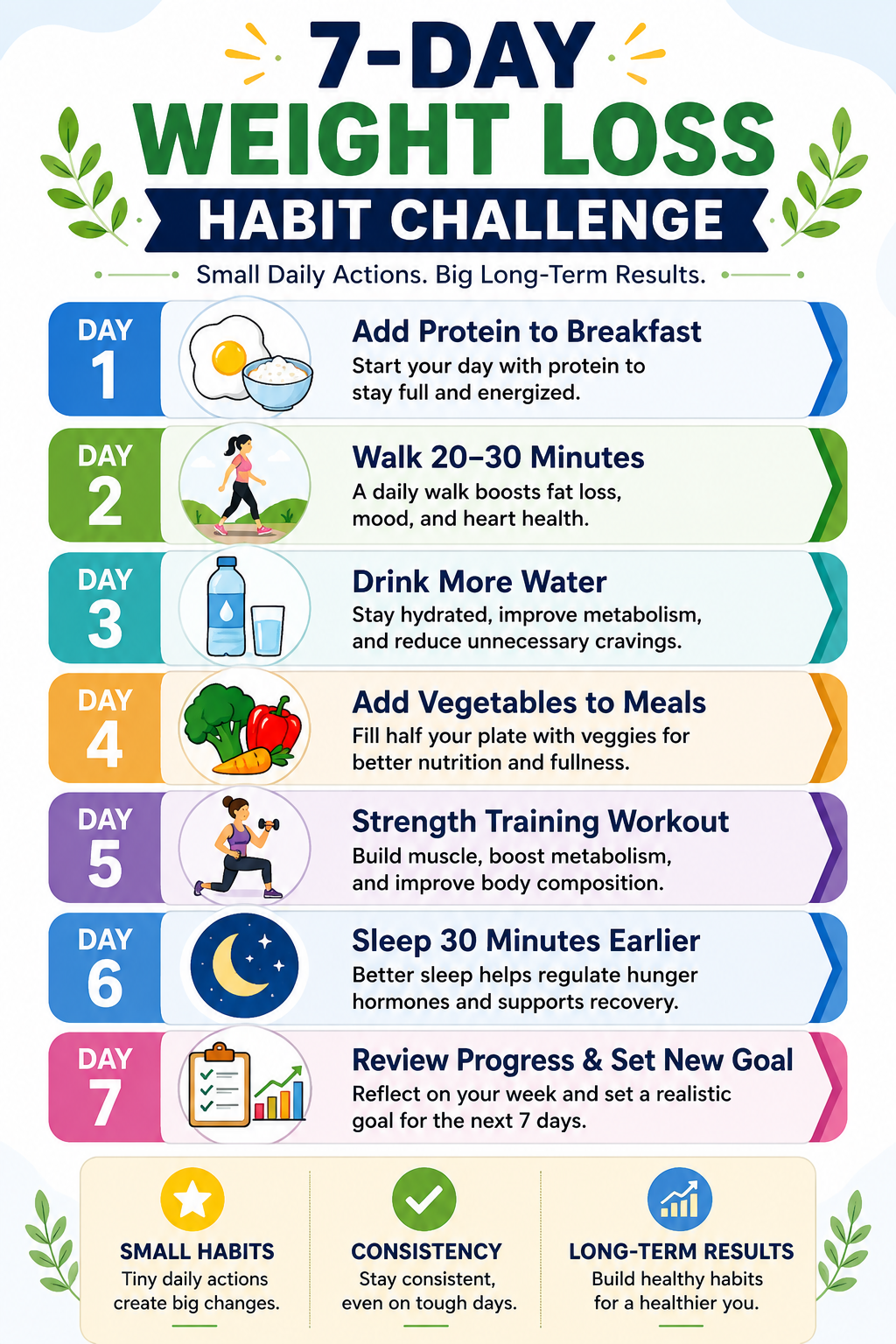
This plan focuses on sustainable habits rather than extreme dieting.
| Day | Action Step |
|---|---|
| Day 1 | Add protein to breakfast. |
| Day 2 | Walk for 20–30 minutes. |
| Day 3 | Drink more water throughout the day. |
| Day 4 | Include vegetables with lunch and dinner. |
| Day 5 | Perform a basic strength workout. |
| Day 6 | Go to bed 30 minutes earlier. |
| Day 7 | Review progress and set next week’s goal. |
A Different Way to Think About Weight Loss
Many people ask:
“How can I lose weight quickly?”
A better question may be:
“How can I create habits that support my health for years?”
The second question changes everything.
- It refocuses attention from short-term results to long-term success.
- It cuts down on frustration.
- It builds confidence.
And most significantly, it builds a healthier connection with food and exercise.
The Most Valuable Lesson
If there is one thing I would say based on my own experience and studies, it is this:
- Your diet doesn’t need to be perfect.
- You do not need expensive supplements.
- You do not need to suffer.
- You need a realistic plan.
- A plan you can follow when life gets busy.
- A plan you can follow during holidays.
- A plan you can follow next month and next year.
That is what creates lasting results.
When to Seek Professional Help
Speak with a healthcare professional if:
- Weight changes unexpectedly
- You suspect a medical condition
- You struggle with emotional eating
- Weight affects daily activities
- Previous weight-loss attempts have repeatedly failed
Frequently Asked Questions
1. What are the most common mistakes that prevent weight loss results?
Some of the biggest mistakes are eating too little, skipping meals, ignoring protein, relying on supplements, neglecting strength exercise, having terrible sleep, and expecting fast results.
2. Why am I not losing weight even though I’m on a diet?
There are several reasons. Common reasons include eating fewer calories than you think, exercising more than you think, not sleeping enough, being stressed, not eating enough protein, and not having a routine.
3. Would it be possible to reduce weight without any exercise?
Yes. Weight loss is all about nutrition and calories. But exercise can have many benefits for health, as well as helping with long-term weight management.
4. Do weight loss supplements actually work?
Most supplements are not worth it when compared to healthy eating, exercise, decent sleep, and making lasting improvements to your lifestyle.
5. Does skipping meals aid in weight loss?
Many people find that missing meals leads to more hunger and cravings later in the day. Balanced meals are usually easier to stick with over time.
6. How much protein should I consume to lose weight?
How much protein you need depends on things like your age, size, activity level, and health. A skilled dietitian or other health care expert can help you determine your needs.
7. How soon will I lose weight?
Weight loss is often slow and healthy. Slow and steady weight loss often works better than rapid weight loss in the long run.
8. Best diet for losing weight in the long run?
The best diet is the one you can stick to consistently. A healthy diet with nutritious meals, enough protein, veggies, fruits, and whole grains is typically simpler to maintain.
About Author
R.V.L.N.S.V. PRASAD
RVLNSV PRASAD is a health and wellness writer, dedicated to producing well-researched and accessible-to-understand health information. His research interests include nutrition, fitness, healthy aging, lifestyle medicine, and illness prevention. He constantly updates himself with the guidelines provided by trusted institutions, including NIH, WHO, CDC, Harvard Health, Mayo Clinic, and Cleveland Clinic, to assist readers in making the right health decisions. He aims to demystify complex health issues and offer practical guidance for long-term health.
Medical Disclaimer
This page is for educational and informational purposes only. It is not intended to be a substitute for professional medical advice, diagnosis, or treatment. Always check with your doctor before changing your diet, exercise, or healthcare regimen. Never ignore competent medical advice because of something you have seen on the internet.
Key Takeaways
- Weight loss success is often about regular behaviors over short treatments.
- Eating below your maintenance calorie level might cause increased hunger and make long-term compliance harder.
- Protein intake assists with satiety and muscle maintenance.
- Strength training is an essential element of healthy weight control.
- Poor sleep and chronic stress can impact eating behaviors and progress.
- Supplements aren’t a substitute for healthy living behaviors.
- Sustainable weight loss is frequently slow, not fast.
- Realistic habits you can do consistently will bring long-term success.
What Most Successful People Do Differently
| Habit | Why It Helps |
|---|---|
| Eat protein at most meals. | Improves fullness |
| Walk daily. | Supports activity levels |
| Strength train regularly. | Preserves muscle |
| Sleep 7–9 hours. | Supports recovery |
| Manage stress. | Reduces emotional eating |
| Track progress monthly. | Maintains motivation |
Conclusion
Weight Loss Mistakes That Prevent Results can happen to just about anyone during their health journey.
It’s not that individuals aren’t motivated; it’s that they listen to advice that is hard to stick with. Extreme diets, high expectations, lack of sleep, inadequate protein intake, and dependence on quick remedies can result in dissatisfaction rather than success.
The good news is, you don’t have to be flawless to lose weight and keep it off.
Small, regular practices tend to give the best long-term outcomes.
Eat healthy foods with a focus on protein. Move your body. Sleep better. Manage your stress. Create habits you can stick with for years, not weeks.
The most important lesson I learned from personal experience and study is simple:
You don’t need a perfect plan.
You need a realistic one.
When healthy habits become part of daily life, weight management often feels less stressful and far more sustainable.
Trusted References
- National Institutes of Health (NIH)
- Centers for Disease Control and Prevention (CDC)
- World Health Organization (WHO)
- Harvard Health Publishing
- Harvard Nutrition Source
- Mayo Clinic
- Cleveland Clinic
- MedlinePlus
- NIDDK
- NHS Weight Loss Guide
Related Content
- Weight loss category
- The Science Behind Weight Loss: Debunking Myths
- The Science of Shedding Pounds: A Data-Driven Approach to Weight Loss
- 12 Best Diets to Lose 100 Pounds
- 4 Week Diet Plan for Weight Loss
- Best Weight Loss Nutrition








[…] 7 Weight Loss Mistakes That Prevent Results (And What Actually Works) […]
[…] 7 Weight Loss Mistakes That Prevent Results (And What Actually Works) […]
[…] 7 Weight Loss Mistakes That Prevent Results (And What Actually Works) […]
[…] 7 Weight Loss Mistakes That Prevent Results (And What Actually Works) […]
[…] 7 Weight Loss Mistakes That Prevent Results (And What Actually Works) […]
[…] 7 Weight Loss Mistakes That Prevent Results (And What Actually Works) […]
[…] 7 Weight Loss Mistakes That Prevent Results (And What Actually Works) […]
[…] 7 Weight Loss Mistakes That Prevent Results (And What Actually Works) […]
[…] 7 Weight Loss Mistakes That Prevent Results (And What Actually Works) […]
[…] 7 Weight Loss Mistakes That Prevent Results (And What Actually Works) […]
[…] 7 Weight Loss Mistakes That Prevent Results (And What Actually Works) […]
[…] 7 Weight Loss Mistakes That Prevent Results (And What Actually Works) […]
[…] 7 Weight Loss Mistakes That Prevent Results (And What Actually Works) […]
[…] 7 Weight Loss Mistakes That Prevent Results (And What Actually Works) […]
[…] 7 Weight Loss Mistakes That Prevent Results (And What Actually Works) […]
[…] 7 Weight Loss Mistakes That Prevent Results (And What Actually Works) […]
[…] 7 Weight Loss Mistakes That Prevent Results (And What Actually Works) […]
[…] 7 Weight Loss Mistakes That Prevent Results (And What Actually Works) […]
[…] 7 Weight Loss Mistakes That Prevent Results (And What Actually Works) […]