





































































































































































Simple Mindfulness Exercises for Beginners: 10 Easy Daily Practices to Reduce Stress Naturally
Author
RVLNSV PRASAD
Fact-Checked By
Wellness Research Team
Last Updated
July 2026
Author Note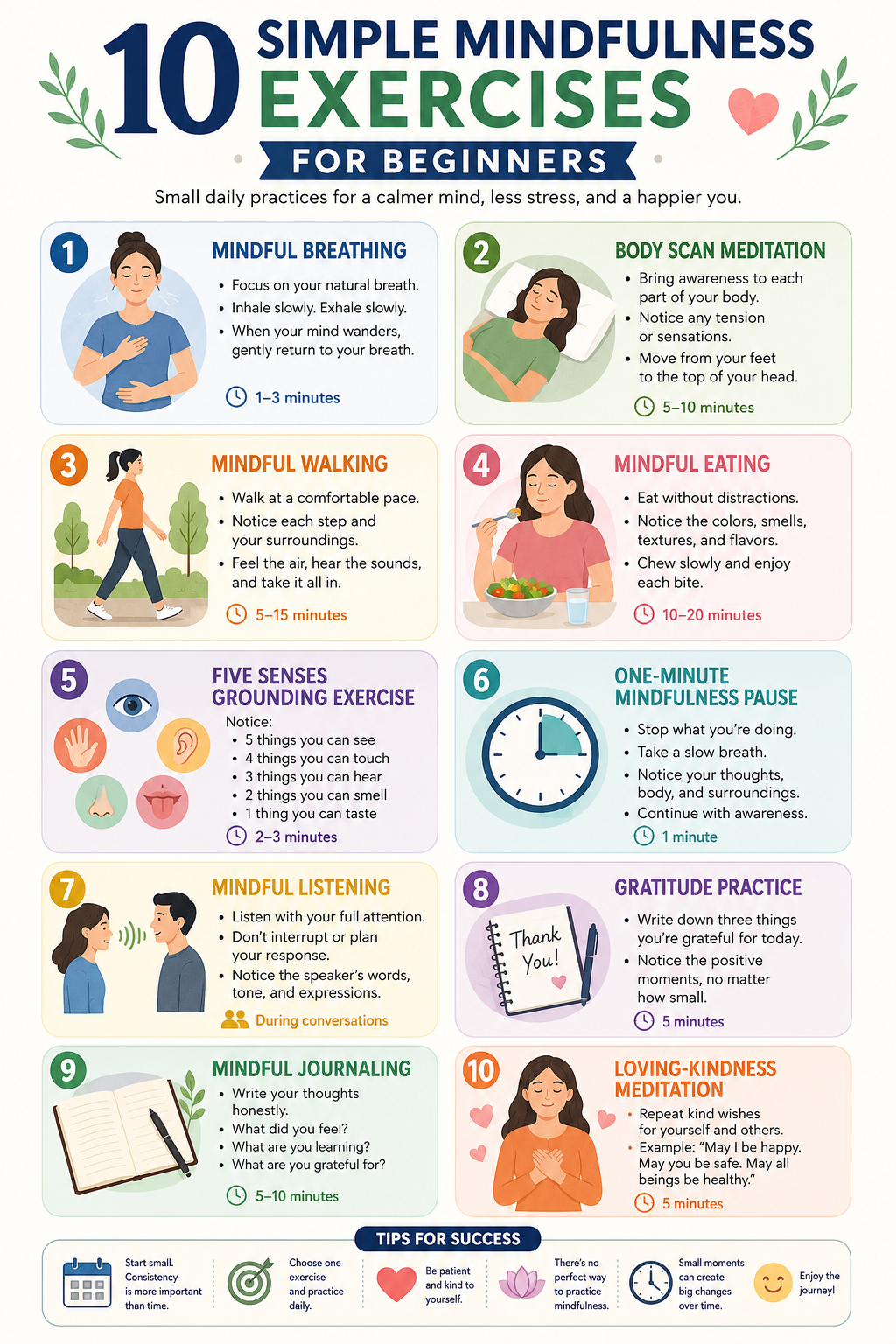
Author Note
Several years ago, I believed mindfulness required sitting quietly for long meditation sessions. Whenever I became distracted, I assumed I was doing it incorrectly. Over time, after reading scientific research and experimenting with simple daily habits, I realized that mindfulness doesn’t have to be complicated. Small practices, such as taking a few slow breaths before beginning work, eating meals without distraction, or noticing the sounds during a short walk, often seemed more real and easier to sustain.
This handbook combines the views of respected organizations with recent scientific findings. I want to assist newcomers in creating sustainable habits that support mental wellness, stress management, and overall well-being without adding to the pressure of their everyday lives.
Introduction
Looking for simple mindfulness exercises for beginners? These 10 easy practices can help reduce stress, improve concentration, and build healthier daily habits in just a few minutes each day. There is no requirement for special equipment or extensive meditation sessions. It takes just a few minutes a day, and it can naturally reduce stress, increase your attention, and promote your mental well-being.
Many people believe mindfulness is challenging, but you can practice it while breathing, walking, eating, or having a short break. The idea is not to silence your thoughts, but to gently draw your awareness to the present moment.
Personally, I thought starting with only a few minutes every morning was straightforward and achievable. Over time, that little habit helped me feel calmer and more mindful.
In this guide, you will find 10 mindfulness exercises for beginners, along with practical tips on how to practice mindfulness each day in your daily life.
Simple Mindfulness Exercises for Beginners
If you’re looking for easy mindfulness techniques, good news: you can get started without hours of meditation or special equipment. A few minutes of being aware of your breathing, environment, or day-to-day activities can increase your concentration, help you in reducing stress naturally, and create healthy everyday habits.
Most people think that mindfulness is just for individuals who meditate every day. In fact, anyone can practice it, whether walking, healthy eating, working, or even standing in line. It’s not about stopping your thoughts. Instead, it’s to notice them without immediately reacting.
A close friend once told me they couldn’t practice mindfulness because their minds never stayed quiet. They practiced a one-minute breathing exercise throughout a busy workday, and they discovered that mindfulness wasn’t about having a perfectly tranquil mind. It was simply about bringing attention back to the present when it wandered. That tiny difference made the practice feel possible instead of overwhelming.
In this guide, you’ll explore beginner-friendly techniques, how they could enhance emotional well-being, and practical strategies to include a daily mindfulness practice in your routine.
Key Takeaways
- A beginner mindfulness routine can be done almost anywhere.
- It’s easier to maintain small habits each day than to sit down for extensive meditation periods.
- Mindfulness activities may be helpful in reducing stress and controlling your emotions.
- Steady progress is better than perfection.
- Even just 5 minutes of focused attention each day can be part of a healthy practice.
- Mindfulness is most effective when combined with other healthy lifestyle habits, such as regular exercise, healthy sleep, a balanced diet, and connection with others.
- For beginners, the goal should be to improve, not to eliminate every distracting thought.
What Is Mindfulness?
Mindfulness is the discipline of paying attention to the present moment with kindness, without criticizing your thoughts or feelings. You don’t dwell on the past or the future but gently guide your clear mind back to what’s happening right now.
This sounds deceptively simple, yet in the current world, other things always tug at our attention. Phones, emails, social media, and busy schedules can make it difficult to be present.
Practicing mindfulness for beginners can still be effective even if you don’t stay perfectly focused. In fact, noticing that your attention has wandered and gently bringing it back is an important part of the process.
One of the most significant lessons I learned while building my own routine was that distractions never completely disappear. Some days, my mind would drift every few seconds. I have found it more useful to not get irritated but to identify the distraction and then calmly refocus. That simple habit became easier with time.
Studies have shown that mindfulness-based techniques can promote positive mental health and increase concentration and help people respond more calmly to daily stress. Mindfulness is not a treatment for medical or mental health problems and is not a replacement for professional care when it is needed. Source: National Center for Complementary and Integrative Health (NCCIH): Meditation and Mindfulness: Effectiveness and Safety
How Can Mindfulness Be Good for Your Mind and Body?
There are many advantages to practicing regular mindfulness exercises as part of a healthy lifestyle.
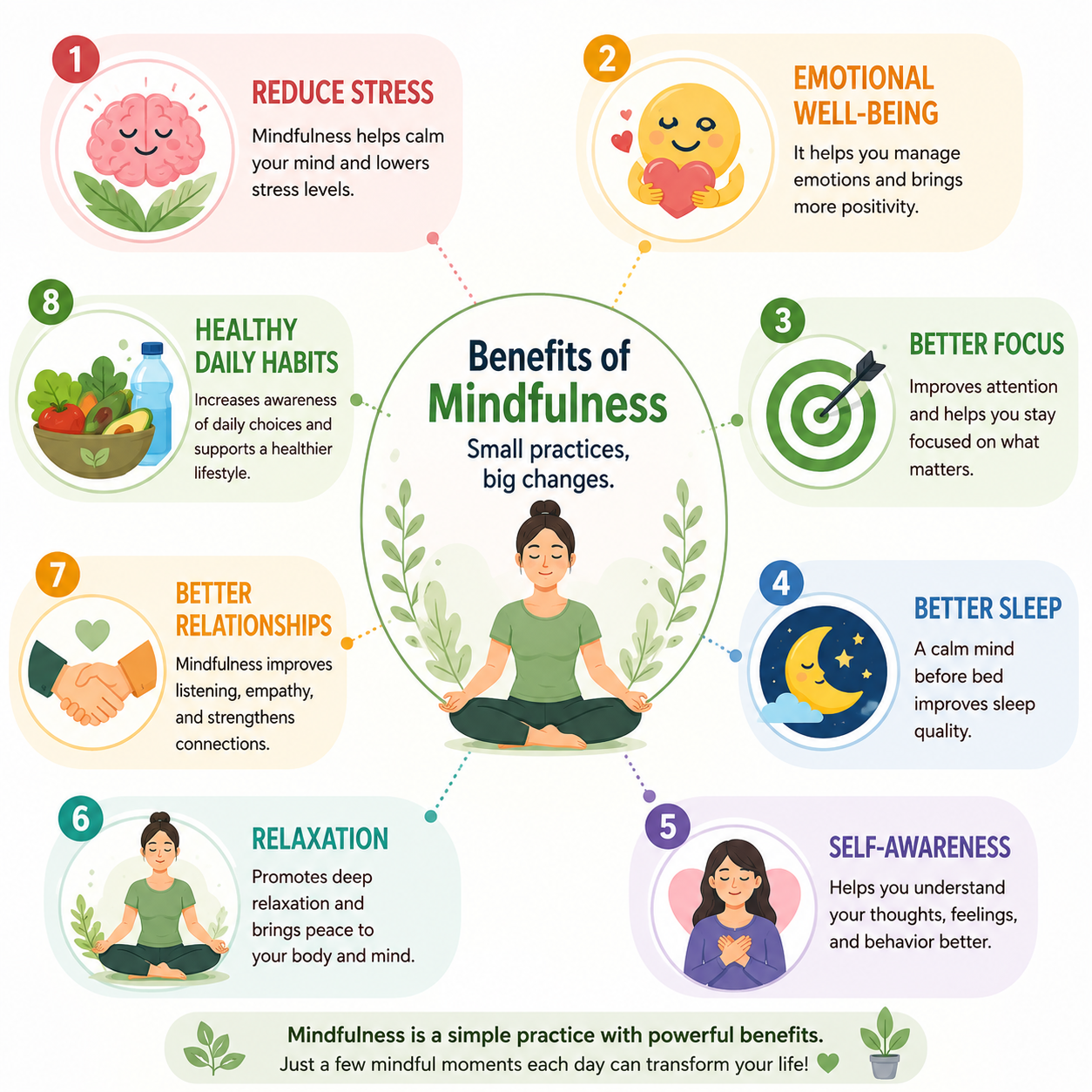
May Help Support Stress Relief
Many people find that they are able to feel calmer before responding if they take a moment to breathe slowly and deliberately in a stressful situation. Stressful situations won’t go away, but if you change the way you respond to stress, everyday obstacles can seem easier to handle.
Source: Mayo Clinic – Meditation: A Simple, Fast Way to Reduce Stress
May Help You Stay Attentive Naturally
Modern distractions make it difficult to awareness for long stretches.
Mindfulness techniques help you bring your attention back to one task at a time. Over weeks or months, many people experience it easier to concentrate during work, study, or daily responsibilities.
One simple habit that worked for me was to take three calm breaths before checking my email each morning. This takes about thirty seconds, but it allows me to begin work with a clearer mind rather than feeling pressured immediately.
Supports Emotional Well-Being
Mindfulness helps you become more self-aware.
Instead of just reacting blindly to difficult feelings, you learn to notice them before reacting. That pause often creates the space for you to make better choices.
Promotes Healthy Daily Habits
People who practice mindfulness often become more aware of everyday choices.
For example, you might see:
- Eating fast.
- Going to bed too late
- Spending too much time on your phone.
- Inadequate water intake.
- Not taking breaks at work can also be a problem.
Recognizing these tendencies is frequently the first step toward creating healthy daily habits today.
It may help you sleep better
Many beginners find that a bit of gentle breathing or silent contemplation before bed helps them wind down after a busy day. Mindfulness isn’t a cure for sleep difficulties, but some people may find that calming nighttime practices may encourage a better quality sleep.
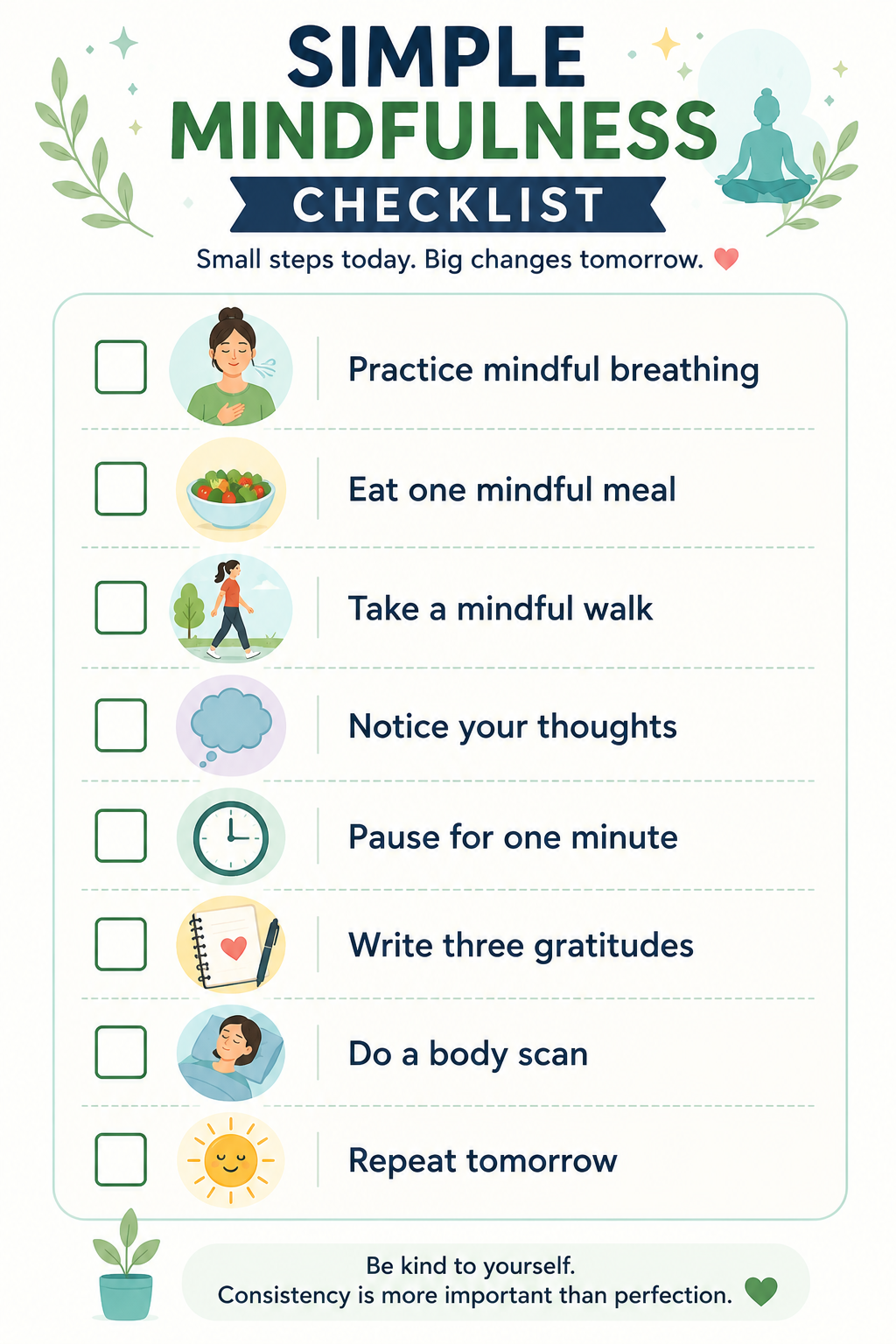
1. Mindful Breathing
Mindful breathing is one of the easiest places to start among all the mindfulness practices.
What Is It?
Mindful breathing is when you pay close attention to each inhalation and exhalation without trying to radically change them.
Why It Helps
Concentrating on your breath gently redirects your attention away from racing thoughts and toward the present moment. Many beginners find this simple exercise calming because breathing is something you can return to anytime during the day.
How to Practice
- Sit comfortably.
- Relax your shoulders.
- Inhale slowly through your nose.
- Exhale slowly.
- Feel each breath as it enters and leaves your body.
- If you lose your mental clarity, simply return it to the breath.
Start with just one to three minutes of this practice.
Beginner Tip
Don’t worry about breathing perfectly.
Simply notice your natural breathing pattern.
Common Mistake
Many beginners believe they’ve failed when distracting thoughts appear.
They haven’t.
The real practice is gently returning your attention each time your mind wanders.
2. Meditation on a Body Scan
A good mindfulness exercise for beginners is body scan meditation. It makes you more aware of physical sensations rather than getting caught up in stressful thoughts.
What Is It?
A body scan is where you slowly bring attention to different parts of your body. You start at your feet and slowly move up to your head.
How It Helps
This practice helps you notice areas of tension you may not have known were there.
Many newcomers discover that on busy days, they are involuntarily clenching their shoulders, jaw, or neck. Simply noticing this tension often makes it easier to relax those muscles.
How to Practice
- Sit or lie down comfortably.
- If you are comfortable, close your eyes.
- Mindful attention on your feet.
- Slowly move your attention to your legs.
- Continue through your hips, stomach, chest, shoulders, arms, neck, and face.
- Notice sensations without trying to change them.
Practice for 5–10 minutes.
Beginner Tip
There is no “right” feeling.
Some body parts may feel relaxed while others feel tense.
Simply observe.
Common Mistake
You are trying to force a relaxation.
Mindfulness is noticing, not controlling.
3. Mindful Walking
You don’t have to sit still to practice mindfulness.
If you find it difficult to sit still for meditation, mindful walking is a wonderful alternative.
What Is It?
Walk slowly, paying attention to each step, to your breath, and to the surroundings.
How it helps
Walking provides gentle movement and mindfulness techniques, and many novice practitioners find it easier to remain clear-minded.
One successful habit that I adopted was to put my phone away on a short walk after lunch. I didn’t look at notifications. I felt the breeze, birds, and trees around me. Those ten minutes became one of the calmest parts of my day without requiring extra time in my schedule.
How to Practice
- Walk at a comfortable pace.
- Notice how your feet touch the ground.
- Pay attention to your breathing.
- Hear sounds nearby.
- Notice colors, trees, buildings, or clouds.
- If your thoughts wander, gently return your attention to your surroundings.
Beginner Tip
You don’t have to walk slowly.
Simply walk with awareness.
Common Mistake
Treat it as exercise only.
It’s not speed and distance; it’s attentiveness.
4. Mindful Eating
Many people eat while watching television, scrolling through social media, or working.
Mindful eating means eating more slowly and paying more attention to what you eat.
What Is It?
Eating more slowly and mindfully, instead of hurrying through a meal.
How It Helps
Mindful eating can help improve your connection with food by helping you become aware of hunger, fullness, taste, and eating patterns.
One modest change I noticed after practicing this behavior for several weeks was that it helped me become more aware of when I was pleasantly full, rather than continuing to eat out of habit. Eating slower made my meals more satisfying, and I was more aware of when I was pleasantly full, rather than continuing to eat out of habit.
How to Practice
- Remove distractions.
- Take smaller bites.
- Chew slowly.
- Look for flavors, textures, and smells.
- Pause between mouthfuls.
- Pay attention to hunger and fullness.
Beginner Tip
Start with just one meal each day.
Even practicing for ten minutes can help build a habit.
Common Mistake
Trying to eat perfectly.
Mindfulness isn’t about following strict food rules.
You just need to pay a bit more attention.
5. Five Senses Grounding Exercise
One of the quickest grounding techniques is the Five Senses Exercise.
What Is It?
This practice brings your mind from racing thoughts to your immediate surroundings.
How It Works
If your mind feels overloaded, centering yourself in the present by noticing your senses can help.
How to Practice
Notice:
- 5 things you can see.
- 4 things you can touch.
- 3 things you can hear.
- 2 things you can smell.
- 1 thing you can taste.
Beginner Tip
There’s no need to rush.
Take your time with each observation.
Common Mistake
Trying to find “special” things.
Ordinary objects work perfectly.
6. One-Minute Mindfulness Pause
Many beginners believe mindfulness requires long meditation sessions.
In reality, even one minute can be valuable.
What Is It?
A short break, where you stop what you are doing and just observe your breath and surroundings.
Why It Helps
When you take a short break during the day, it breaks the automatic stress response and allows you to respond in a healthier way.
How to Practice
- Stop for one minute.
- Take several slow breaths.
- Relax your shoulders.
- Notice your thoughts.
- Continue your day.
Beginner Tip
Attach this habit to something you already do, such as:
- Before checking email.
- Before meals.
- Before meetings.
- Before driving.
Habit stacking often makes new routines easier to remember.
Common Mistake
Thinking one minute isn’t enough.
Regular, small actions often become long-term routines.
7. Mindful Listening
Listening is one of the easiest forms of mindfulness practice that we can integrate into our daily lives, and yet most of us rarely give it our full attention.
What is it?
Pay attention only on what the other person is saying or the sounds around you, not on your response.
How it works
Mindful listening can increase stay attention, reduce misunderstandings, and improve relationships.
How to Practice
- Put your phone away.
- Maintain eye contact.
- Listen without interrupting.
- Notice tone of voice and facial expressions.
- Respond thoughtfully.
Beginner Tip
Practice during one conversation each day.
Common Mistake
Thinking about your reply before the other person finishes speaking.
8. Gratitude Practice
A simple gratitude practice shifts your attention to pleasant experiences without denying the hardships of life.
What Is It?
Taking a few moments to notice things you appreciate.
How it helps
Regularly practicing appreciation can help balance your outlook and improve emotional health.
How to Practice
Each evening, write down:
- Three positive things that happened today.
- One person you appreciate.
- One thing you’re excited for tomorrow.
Beginner Tip
Keep your list simple.
Small moments often matter most.
Common Mistake
Feeling that every day must be extraordinary.
Even enjoying a peaceful morning or a meaningful discussion counts.
9. Mindfulness Journaling
Another wonderful mindfulness practice for beginners is journaling.
What Is It?
Write down your thoughts without criticizing or revising them.
Why It Helps
Journaling will help you increase your self-awareness and identify emotional patterns over time.
How to Practice
Ask yourself questions like:
- How do I feel today?
- What made today stressful?
- What kept me cool?
- What can I improve tomorrow?
Beginner Tip
Write honestly rather than trying to sound positive.
Common Mistake
Worrying about grammar or perfect writing is not necessary.
No one else needs to read it.
10. Loving Kindness Meditation
A soft mindfulness meditation for beginners. The awareness is on developing kindness toward yourself and others.
What Is It?
Softly, reiterating kind wishes for yourself and for those around you.
Why It Helps
This can help to develop compassion, patience, and emotional equilibrium.
How to Practice It.
Sit comfortably.
Repeat phrases, like, slowly:
- May I be healthy.
- May I be peaceful.
- May I be safe.
- May others be joyful.
- May others be healthy.
Beginner Tip
Start with yourself before extending kind wishes to others.
Common Mistake
Trying to put a positive spin on things.
Just keep repeating the lines gently without judging how you feel.
Daily Mindfulness Routine for Beginners
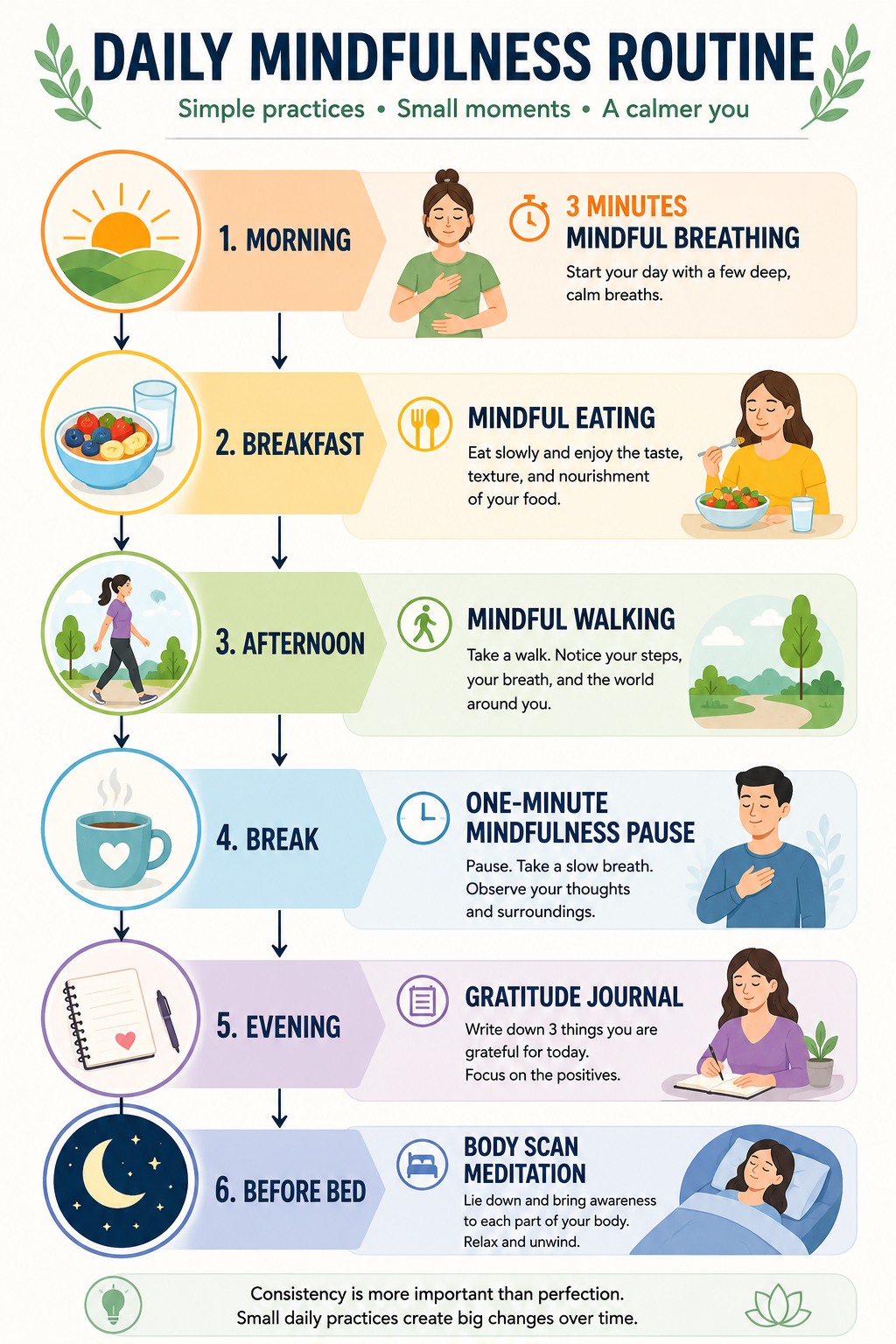
| Time | Practice | Time Needed |
|---|---|---|
| Morning | Mindful breathing | 3–5 minutes |
| Breakfast | Mindful eating | 10 minutes |
| Lunch Break | Mindful walking | 10–15 minutes |
| Afternoon | One-minute mindfulness pause | 1 minute |
| Evening | Gratitude practice | 5 minutes |
| Before Bed | Body scan meditation | 5–10 minutes |
One of the main lessons I learned was that regular practice was far more important than the length of each session. There were days when I only practiced for a few minutes, but those minutes added up and became part of my habit. I was not trying to be great; I was simply trying to show up regularly, and that felt much more sustainable.
How to Know If Your Mindfulness Practice Is Working?
Many beginners want to see dramatic changes after a few days of practice. That’s not exactly how it works. Daily mindfulness practice tends to create incremental changes that show up over the course of weeks, not immediately.
Here are some positive signs your routine is becoming a healthy habit:
- You recognize tense circumstances before you respond.
- You recover more quickly during challenging times.
- You are more present in your conversations.
- You are more aware of your thoughts and feelings.
- It’s easier for you to concentrate on one task.
- You think before you act
- You enjoy everyday things more.
- You start to do the mindfulness exercises without reminding yourself.
One of the first changes I noticed was not being entirely calm all the time. Or maybe I was just less reactive to the annoyances of ordinary life. That tiny change made stressful situations far more manageable over time.
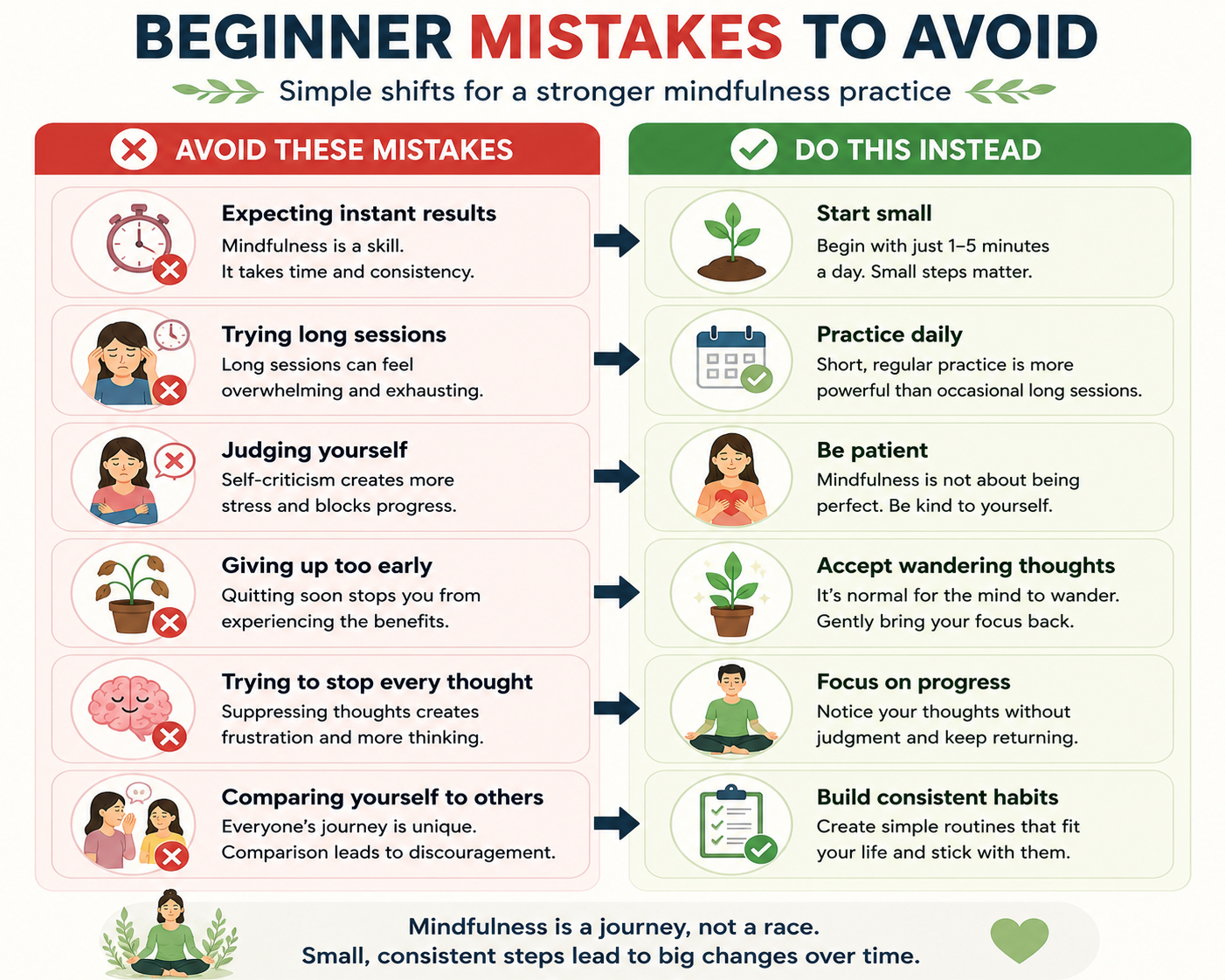
Beginners’ Most Common Mistakes to Avoid
Learning beginner mindfulness exercises doesn’t have to be perfect. These common mistakes will make your practice more enjoyable.
1. Expecting Instant Results
Mindfulness is a skill developed over time.
Be kind to yourself.
2. Trying Long Meditation Sessions
Starting with 30 minutes often feels overwhelming.
Begin with 3–5 minutes and gradually increase your practice.
3. Judging Yourself
There is no perfect mindfulness session.
Some days your mind will wander more than others.
4. Giving Up Too Soon
Many people stop after only a few days.
Small daily habits usually create better long-term results than occasional long sessions.
5. Trying to Stop Every Thought
The goal isn’t to eliminate thinking.
The goal is noticing thoughts and gently returning to the present moment.
6. Practice Every Day
The more you practice mindfulness, the more powerful it becomes—and not just in difficult times.
7. Are You Comparing Yourself to Others?
Mindfulness is different for each person.
Stay present with your progress.
Ways to Practice Mindfulness Without Meditation
Many people think mindfulness only happens while sitting quietly.
In reality, you can practice mindfulness at home almost anywhere.
When to try being fully present:
- Preparing dinner
- Having coffee or tea
- Doing the dishes.
- Gardening.
- Folding laundry
- Standing in line
- Driving (keeping your eyes on the road)
- Walking your dog
- Time with your children
- Watching the sunset
These little moments are opportunities to build present-moment awareness without adding any more to your day.
Benefits of Simple Mindfulness Exercises
| Exercise | Time Needed | Main Benefit |
|---|---|---|
| Mindful breathing | 3–5 minutes | Encourages calmness |
| Body scan meditation | 5–10 minutes | Increases body awareness |
| Mindful walking | 10 minutes | Combines movement with mindfulness |
| Mindful eating | During meals | Encourages healthier eating habits |
| Five senses exercise | 2–3 minutes | Grounding during stressful moments |
| One-minute pause | 1 minute | Easy daily reset |
| Mindful listening | Daily conversations | Improves communication |
| Gratitude practice | 5 minutes | Supports positive thinking |
| Mindful journaling | 5–10 minutes | Builds self-awareness |
| Loving-kindness meditation | 5 minutes | Encourages compassion |
Myth vs. Fact
| Myth | Fact |
|---|---|
| Mindfulness means emptying your mind. | Mindfulness means noticing thoughts without judging them. |
| Only experienced meditators can practice mindfulness. | Anyone can begin with simple daily exercises. |
| Mindfulness requires hours every day. | Even a few minutes can become a valuable habit. |
| Mindfulness is a quick cure for stress. | It supports healthy coping skills but is not a cure for medical conditions. |
| You must sit cross-legged to practice mindfulness. | Mindfulness can be practiced while walking, eating, working, or doing everyday activities. |
One-Day Beginner Mindfulness Plan
| Time | Activity |
|---|---|
| Morning | Mindful breathing before checking your phone |
| Breakfast | Practice mindful eating |
| Mid-Morning | One-minute breathing pause |
| Lunch | Mindful walking for 10 minutes |
| Afternoon | Five senses grounding exercise |
| Evening | Gratitude practice |
| Before Bed | Body scan meditation |
This routine takes less than 30 minutes in total and can easily fit into most schedules.
Who Can Benefit from Mindfulness?
Almost anyone can benefit from the practice of mindfulness as a part of a healthy lifestyle.
It can be particularly useful for:
- Students
- Office personnel
- Parents
- Caregivers
- Older adults
- Working professionals
- Those who are new to mental wellness
- Anyone seeking to reduce stress naturally
Mindfulness is flexible, so you can fit it into your lifestyle instead of having to follow a routine.
When should you get professional help?
Mindfulness activities may help emotional well-being but are not a substitute for expert medical or mental health care.
If you have any of the following, consult a skilled healthcare professional:
- Persistent sadness
- Intense anxiety
- Attacks of panic
- Thoughts of self-harm
- Trauma symptoms
- Difficulty performing everyday activities
- Persistent sleep issues
- Emotional challenges that don’t disappear with self-care
Mindfulness can be a supplement to professional treatment, but it should not replace it.
Frequently Asked Questions
1. What are the best Simple Mindfulness Exercises for Beginners?
Good for beginners are mindful breathing, body scan meditation, mindful walking, mindful eating, gratitude journaling, or the five senses grounding practice. It is typically more sustainable to begin with one easy activity a day rather than trying to do many different things at once.
2. How long should a beginner practice mindfulness?
Experts usually recommend starting with just 3-5 minutes a day. As the habit becomes more comfortable, lengthen the duration of time gradually.
3. Does mindfulness help naturally reduce stress?
Studies indicate that consistent mindfulness practice might allow many people to respond more calmly in ordinary stressful situations. However, we should see it as one part of a healthy lifestyle, rather than a quick fix.
4. What if I keep losing my clear mind?
This is entirely normal.
The point of mindfulness isn’t to stop thinking; it’s to notice when your mind has wandered and gently bring it back.
5. Is mindfulness the same as meditation?
Not quite.
Mindfulness can be practiced in meditation, but it can also be practiced in normal activities like eating, walking, or listening.
6. Is mindfulness something kids can do?
Yes. Many basic breathing exercises, mindful listening activities, and gratitude practices can be modified for children with adult direction.
7. Is mindfulness safe for everybody?
Most people will consider mindfulness to be a safe practice. However, for those with serious mental health issues, it is important to consult a qualified healthcare provider, as some practices may need to be modified for their situation.
8. What are ways I can be consistent with mindfulness?
Tie mindfulness into practices you already do. For instance, you may try some concentrated breathing before breakfast, a reflective walk after lunch, or a short exercise in gratitude to close your day. Big aspirations are often more difficult to maintain than little habits.
Conclusion
Simple mindfulness exercises for beginners do not require you to be flawless, buy an expensive course, or meditate for hours. The key is to find a routine that works for you and fits easily into your normal life. Just a few minutes each day can help reduce stress naturally, improve staying attentive, and support your emotional well-being.
In my experience, the most significant improvements didn’t come from practicing longer. They came from practicing consistently. Little by little, a few minutes of conscious breathing, more attention when eating, or a walk in silence without interruptions became daily healthy routines that helped improve concentration and face daily obstacles with a calmer attitude.
Whether it’s a minute of mindful breathing to start or a brief mindful walk, remember that all the little steps count. As you continue practicing, together with a balanced diet, regular exercise, adequate sleep, and meaningful social interactions, you can contribute to long-term mental well-being and general well-being.
In this guide, you’ll learn 10 beginner-friendly mindfulness exercises and practical ways to make daily mindfulness practice part of your everyday life.
Start with just one exercise today. Small, consistent steps often lead to lasting mindfulness habits.
Authoritative References
Support your article with guidance from these trusted organizations:
1. National Institutes of Health (NIH) What Is Mindfulness?
2. National Center for Complementary and Integrative Health (NCCIH) Stress Relief
3. American Psychological Association (APA) Better Focus
4. Harvard Health Publishing Better Focus
These sources provide evidence-based information on mindfulness, stress management, sleep, and mental well-being. They should be used to support claims while keeping the article in your own original words.
Medical Disclaimer
This content is based on current evidence and credible health sources but is not a substitute for personalized medical advice. If you have ongoing symptoms or worries about your mental health, speak to a skilled healthcare expert.
Related Articles
- 11 Interesting Facts About Walking
- A Holistic Guide to Healthy Weight Loss Eating
- 5 Meditation Techniques for Emotional Balance: A Path to Inner Peace
- 7 Natural Ways to Reduce Anxiety and Stress Daily: A Comprehensive Guide
- 22 Natural Remedies for Anxiety: What Really Works?
- Category Mind & Mood Care
- Home










[…] 6 Mindfulness Practices for Mental Health: A Path to Inner Peace and Emotional Resilience […]
[…] 6 Mindfulness Practices for Mental Health: A Path to Inner Peace and Emotional Resilience […]
[…] 6 Mindfulness Practices for Mental Health: A Path to Inner Peace and Emotional Resilience […]
[…] 6 Mindfulness Practices for Mental Health: A Path to Inner Peace and Emotional Resilience […]
[…] 6 Mindfulness Practices for Mental Health: A Path to Inner Peace and Emotional Resilience […]
[…] 6 Mindfulness Practices for Mental Health: A Path to Inner Peace and Emotional Resilience […]
[…] 6 Mindfulness Practices for Mental Health: A Path to Inner Peace and Emotional Resilience […]
[…] 6 Mindfulness Practices for Mental Health: A Path to Inner Peace and Emotional Resilience […]
[…] 6 Mindfulness Practices for Mental Health: A Path to Inner Peace and Emotional Resilience […]