






































































































































































Best Superfoods for a Balanced Diet: Benefits, Nutrition, and How to Eat Them
Author: RVLNSV PRASAD
Updated On: October 2026
About Us
Author Bio
Editorial Policy
Contact Us
Introduction
The best superfoods for a balanced diet are not necessarily expensive berries, imported powders, or ingredients promoted as the next big health discovery. Some of the most useful choices are already available in ordinary kitchens: beans, lentils, oats, leafy vegetables, seasonal fruits, nuts, seeds, and other minimally processed foods.
These foods supply different combinations of fiber, protein, vitamins, minerals, and beneficial plant compounds. Eating them regularly can help you build a more nutritious dietary pattern without depending on one special ingredient.
The word “superfood,” however, can create unrealistic expectations. There is no scientifically established or regulated definition that makes a food a superfood. Harvard’s Nutrition Source explains the difference between superfood marketing and nutritional evidence. A food may be nutritious without preventing every disease, boosting immunity overnight, or replacing medical treatment.
A more useful question is not which food has the most impressive reputation. It is which foods provide valuable nutrients, fit your budget, suit your health needs, and are realistic to eat regularly.
This guide explores the nutritional benefits of popular superfoods, how to combine them into balanced meals, affordable alternatives, common mistakes, and what current research actually supports.
Quick Answer: What Are the Best Superfoods for a Balanced Diet?
Useful choices include berries and other fruits, leafy green vegetables, beans and lentils, oats and other whole grains, nuts, seeds, suitable fermented foods, and sources of unsaturated fats such as olive oil, nuts, and certain fish.
No single food provides everything your body needs. The strongest approach is to combine different food groups, eat a variety of plant foods, choose appropriate protein sources, and limit foods that frequently displace more nutritious options.
For most people, ordinary foods can provide a strong nutritional foundation without expensive superfood powders or supplements.
Key Takeaways
- Choose variety over hype. Different foods provide different nutrients and plant compounds.
- Think in meals, not isolated ingredients. A balanced meal can be more useful than adding one fashionable food to an otherwise unbalanced diet.
- Affordable foods count. Lentils, chickpeas, seasonal vegetables, oats, peanuts, and local fruits can all contribute valuable nutrients.
- Whole foods are not miracle cures. Their benefits depend on the overall dietary pattern, portion sizes, and individual health needs.
- Supplements are not automatically better. High-dose antioxidant supplements, for example, cannot be assumed to provide the same effects as antioxidant-rich foods.
- Consistency matters. Small changes that fit your routine are often more sustainable than strict diets.
What Are Superfoods? Understanding the Science Behind the Name
Superfoods are generally foods promoted for their nutritional value or possible health benefits. They may contain fiber, protein, unsaturated fats, vitamins, minerals, or plant compounds such as polyphenols.
But the term is primarily a popular and marketing label rather than a scientific classification. Blueberries, spinach, chia seeds, quinoa, turmeric, and salmon may all be described as superfoods, yet they provide different nutrients and have different levels of research supporting particular health claims.
Harvard’s Superfoods or Superhype? highlights an important distinction: promoting a food as exceptionally healthy can distract consumers from the broader eating pattern that matters most.
For example, adding chia seeds to a diet that otherwise lacks vegetables, whole grains, and protein will not automatically correct every nutritional gap. Likewise, eating a small serving of berries does not cancel out an overall dietary pattern high in excess sodium, added sugar, or other foods consumed in large amounts.
A practical definition: For this article, superfoods are ordinary foods that provide useful nutrients and can contribute to a balanced dietary pattern. The goal is to understand their strengths and limitations rather than rank them as magical ingredients.
The Best Superfoods for a Balanced Diet at a Glance
| Food group | Main nutritional contributions | Practical way to use it |
|---|---|---|
| Berries and other fruits | Fiber, vitamins, and varied plant compounds | Add fruit to breakfast or have it as a snack. |
| Leafy green vegetables | Folate, vitamin K, carotenoids, and other nutrients | Include greens in dal, soups, salads, or cooked meals. |
| Nuts and seeds | Unsaturated fats, minerals, and some protein | Use a small handful or sprinkle seeds over meals. |
| Whole grains | Carbohydrates, fiber, and varying amounts of vitamins and minerals | Replace some refined grains with whole-grain choices. |
| Beans and lentils | Plant protein, fiber, iron, and other minerals | Add pulses to curries, soups, salads, or grain bowls. |
| Fermented foods | Varying nutrients and, in some products, live microorganisms | Choose suitable yogurt or other fermented foods. |
| Healthy fat sources | Unsaturated fats and, depending on the food, essential fatty acids | Use nuts, seeds, plant oils, or suitable fish. |
| Vegetables of different colors | Different vitamins, minerals, fiber, and plant compounds | Rotate vegetables throughout the week. |
The benefits in this table are general nutritional contributions, not guarantees that a particular food will prevent or treat a disease.
1. Berries and Other Fruits: More Than Their Antioxidant Reputation
Blueberries, strawberries, blackberries, oranges, guavas, apples, and other fruits can contribute fiber, vitamins, and a range of plant compounds to the diet. Their nutritional profiles differ, so there is no need to focus exclusively on imported berries.
Berries are well known for their polyphenols, including anthocyanins in many dark-colored varieties. Researchers have investigated how these compounds relate to cardiovascular and other health outcomes, but findings about a food’s potential benefit should not be interpreted as proof that it prevents a specific disease.
The National Center for Complementary and Integrative Health’s antioxidant supplement guide explains that evidence supporting antioxidant-rich foods should not be confused with evidence supporting high-dose antioxidant supplements.
How to include fruit in your diet
- Add berries or another fruit to oats or plain yogurt.
- Choose guava, oranges, papaya, or other seasonal fruits when they are affordable.
- Eat whole fruit more often than relying on fruit juice.
- Combine fruit with nuts or yogurt when you want a more substantial snack.
Practical insight: A seasonal fruit that you can afford every week is often a more sustainable choice than an expensive fruit you purchase only occasionally. Variety over time matters more than buying the most fashionable option.
2. Leafy Green Vegetables: A Simple Way to Add Nutrients
Spinach, amaranth leaves, kale, fenugreek leaves, and other leafy greens supply different combinations of folate, vitamin K, carotenoids, and other nutrients. They can also add fiber and volume to meals without contributing large amounts of energy.
Vitamin K contributes to normal blood clotting and bone-related processes, while folate is needed for DNA synthesis and normal cell division. The amounts of individual nutrients vary by vegetable and serving.
Greens are not a complete source of every nutrient, and eating them does not automatically prevent anemia or strengthen bones. Their value comes from the nutrients they contribute as part of a wider dietary pattern.
Raw or cooked: Which is better?
Both can fit a healthy diet. Cooking changes the texture and availability of certain nutrients, and the effect varies by food and cooking method. A lightly cooked vegetable may be easier to eat in a larger amount, while raw vegetables can offer convenience and variety.
Try adding leafy greens to dal, vegetable curries, soups, omelets, or other familiar dishes. If you use smoothies, remember that blending greens does not make the rest of your diet less important.
3. Nuts and Seeds: Small Portions With Valuable Nutrients
Almonds, walnuts, peanuts, chia seeds, flaxseeds, sesame seeds, and pumpkin seeds can provide unsaturated fats, minerals, fiber, and varying amounts of protein.
Walnuts and flaxseeds contain alpha-linolenic acid, a plant-based omega-3 fatty acid. Chia and flaxseeds also provide fiber, while pumpkin seeds contribute minerals such as magnesium and zinc. The exact amounts depend on the food and portion.
Research on dietary patterns supports including nuts as one component of a balanced eating pattern. A USDA systematic review of dietary patterns and cardiovascular disease found that patterns higher in foods such as nuts, legumes, whole grains, fruits, and vegetables were associated with lower cardiovascular disease risk in adults.
Easy ways to use nuts and seeds
- Sprinkle ground flaxseed over oats or yogurt.
- Add sesame seeds to suitable vegetable dishes.
- Use unsalted nuts as a snack.
- Add peanuts or other nuts to meals where they fit.
- Combine seeds with oats or other grains.
Nuts and seeds are nutrient-rich but energy-dense. A modest portion is usually more practical than eating large amounts because a product is marketed as healthy.
Safety note: Avoid foods that trigger an allergy. Whole nuts may also pose a choking risk for young children; use age-appropriate forms and follow pediatric feeding guidance.
4. Whole Grains: Everyday Foods That Provide Fiber
Whole grains retain the bran, germ, and endosperm, although processing methods differ. Examples include oats, brown rice, whole-wheat products, barley, and other whole-grain foods.
They provide carbohydrates for energy, fiber, and varying amounts of vitamins and minerals. Some whole grains also contain compounds that researchers continue to investigate for their roles in health.
The USDA’s systematic review of dietary patterns and cardiovascular disease found that dietary patterns higher in whole grains, fruits, vegetables, nuts, and legumes were associated with a lower risk of cardiovascular disease in adults.
Are whole grains always better for everyone?
Whole grains are useful choices for many people, but individual needs differ. People with celiac disease need to avoid gluten-containing grains such as wheat and barley, while some people with gastrointestinal conditions may need personalized advice about fiber intake.
You can start by replacing some refined-grain portions with oats, whole-wheat roti, brown rice, or another whole-grain food you enjoy. You do not have to eliminate every refined grain to improve your overall diet.
5. Beans, Lentils, and Chickpeas: Affordable Nutritional Powerhouses
Beans, lentils, chickpeas, peas, and other pulses can supply plant protein, fiber, iron, folate, and other nutrients. They are also versatile, widely available, and often less expensive than many specialty health foods.
For readers who eat Indian meals, dal, chana, rajma, and other pulses can be practical staples. They can contribute protein and fiber without requiring imported ingredients or costly supplements.
Fiber supports bowel regularity, while a meal containing pulses, vegetables, and a suitable grain can provide a range of nutrients. The Harvard Nutrition Source microbiome guide explains how fiber-rich foods contribute to the diet of gut microorganisms.
How to make pulses easier to eat
If beans or lentils cause gas, try smaller portions and increase them gradually. Soaking certain dried pulses and cooking them thoroughly may improve texture and help make them easier to tolerate.
Pair pulses with vegetables and a grain to create a more complete meal. The goal is not to eat an enormous serving at once; it is to find a portion and preparation method that work for you.
6. Fermented Foods: Useful Options, Not Mandatory Remedies
Fermented foods include yogurt, kefir, kimchi, sauerkraut, and various traditional foods prepared through microbial fermentation. Their nutritional composition and live-microorganism content vary.
Some fermented foods contain live microorganisms, but fermentation alone does not guarantee that the finished product contains live cultures. Processing and heat treatment can change the final product.
A 2025 systematic review and meta-analysis examined fermented foods and gastrointestinal outcomes in healthy adults. It reported possible improvements in some measures, including bowel movement frequency and stool consistency, but the certainty of evidence varied and was often low. Read the review in Frontiers in Nutrition.
How to include fermented foods
- Choose plain yogurt with live cultures if it suits your diet.
- Consider other fermented foods that fit your preferences.
- Check product labels for added sugar and sodium.
- Start with a small serving if you are unfamiliar with a particular food.
Fermented foods are optional. They should not be presented as a guaranteed way to boost immunity, cure digestive disorders, or restore the microbiome after antibiotics.
For more on digestive wellness, see The Best 5 Foods to Eat for a Healthy Gut and 6 Natural Foods to Improve Digestion and Gut Health.
7. Spices and Herbs: Flavor, Tradition, and Scientific Limits
Turmeric, ginger, garlic, cinnamon, cumin, coriander, and other spices add flavor to everyday meals. They also contain various plant compounds that have attracted scientific interest.
However, results from laboratory experiments or studies using concentrated extracts do not automatically demonstrate that ordinary culinary amounts will treat a medical condition.
For example, turmeric contains curcumin, which researchers have investigated for several biological effects. That does not mean adding turmeric to food can replace prescribed treatment for inflammation or joint disease. Similarly, cinnamon should not be described as a guaranteed way to control blood sugar.
A more practical way to use spices
Use spices to make nutritious meals enjoyable. Ginger can add flavor to soups and curries, while turmeric, cumin, garlic, and coriander can help create satisfying dishes with vegetables, pulses, or whole grains.
This approach offers a benefit that does not require a medical claim: flavorful meals may make a balanced eating pattern easier to maintain.
Be cautious with concentrated herbal extracts and supplements. They can differ substantially from normal culinary use and may interact with medicines.
8. Healthy Fats: Choose the Source, Not Just the Label
Fat is an essential part of a balanced diet. It supplies energy, helps the body absorb fat-soluble vitamins, and contributes essential fatty acids.
Olive oil, nuts, seeds, and certain fish provide unsaturated fats. Avocados also contain predominantly monounsaturated fat, while other foods provide different mixtures of fats and nutrients.
The USDA evidence review on dietary patterns and cardiovascular disease supports eating patterns that emphasize unsaturated fats and include foods such as fruits, vegetables, whole grains, legumes, and nuts.
How to make better fat choices
Use oils in reasonable amounts, include nuts or seeds where suitable, and choose fish if it fits your dietary preferences and budget. You do not need to eliminate all saturated fat, but replacing some sources of saturated fat with unsaturated-fat sources can be a useful part of an overall heart-conscious eating pattern.
Be aware that a food can contain healthy fats and still be energy-dense. Portion size and the overall meal matter.
9. Colorful Vegetables: Why Variety Beats One “Perfect” Food
Carrots, tomatoes, bell peppers, pumpkin, broccoli, eggplant, and other vegetables provide different combinations of fiber, vitamins, minerals, and plant compounds.
The color of a vegetable can sometimes offer clues about its plant compounds, but color is not a complete measure of nutritional quality. White, green, orange, red, and purple vegetables can all contribute useful nutrients.
Instead of eating only spinach because it has a strong health reputation, rotate several vegetables through the week. Frozen and canned vegetables can also be practical options; check labels when sodium or added ingredients are a concern.
The current Dietary Guidelines for Americans, 2025–2030, emphasize dietary patterns built around nutrient-dense foods, including vegetables, fruits, protein sources, healthy fats, and whole grains.
The principle is simple: variety helps broaden the nutrients your meals provide without forcing you to search for one perfect ingredient.
10. How to Build a Balanced Superfood Plate
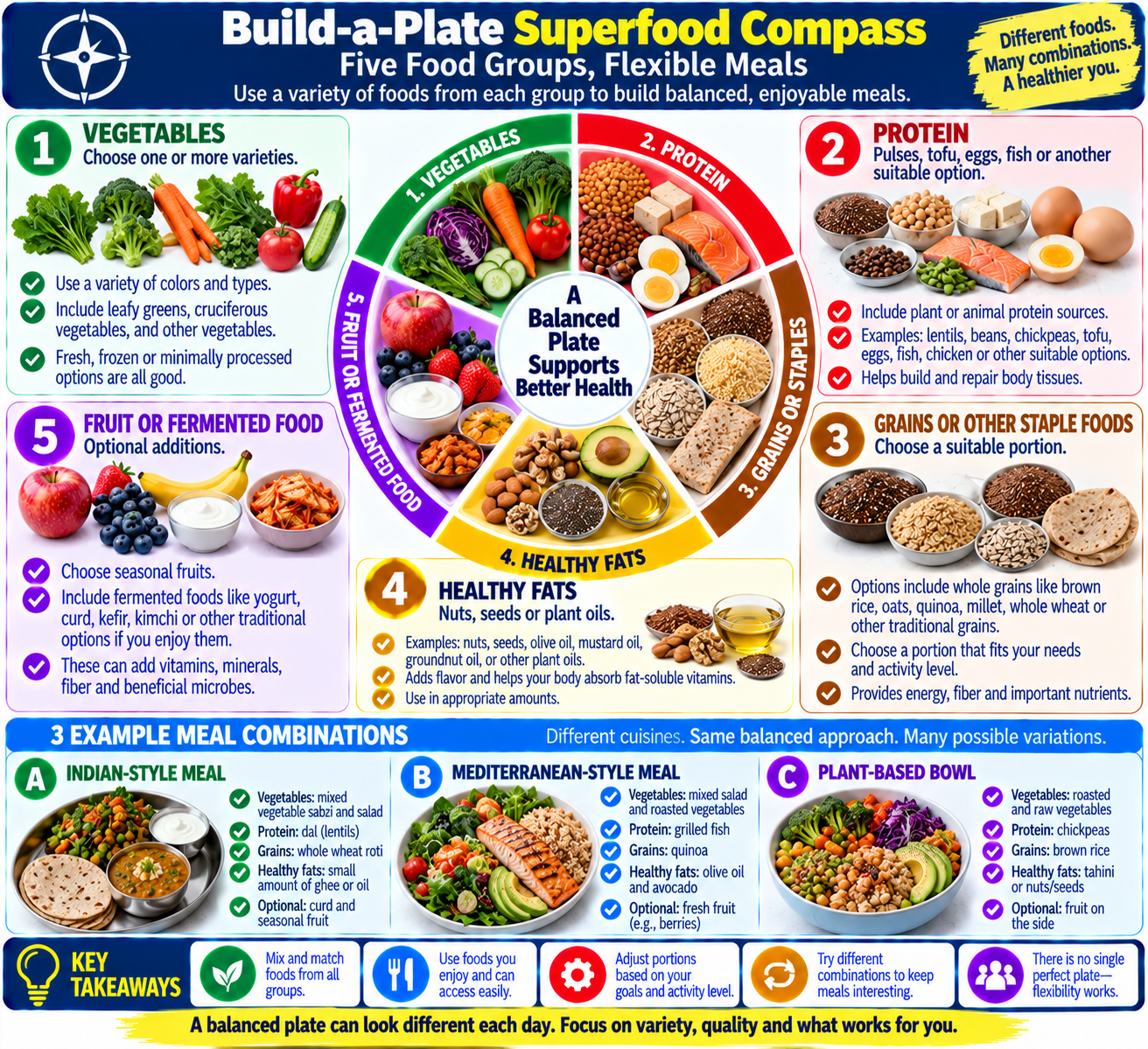
Choosing individual foods is useful, but combining them into meals makes the advice easier to apply.
| Meal component | Examples | Purpose |
|---|---|---|
| Vegetables | Spinach, carrots, tomatoes, gourds, beans | Add fiber and varied micronutrients |
| Protein source | Dal, chickpeas, beans, tofu, eggs, fish, or other suitable options | Supports tissue maintenance and other body functions |
| Grain or starchy food | Whole-wheat roti, oats, brown rice, or other grains | Supplies energy and varying amounts of fiber |
| Healthy fat source | Nuts, seeds, or a suitable plant oil | Supplies fats and can improve meal satisfaction |
| Fruit or suitable fermented food | Seasonal fruit or plain yogurt with live cultures | Adds variety and useful nutrients |
This is a flexible framework, not a rigid prescription. The best portions depend on your age, appetite, activity, medical needs, and total dietary pattern.
A simple one-day example
Breakfast: Oats with seasonal fruit and a small amount of nuts or seeds.
Lunch: Dal or chickpeas with vegetables and rice or roti.
Snack: Fruit, yogurt if suitable, or another snack that fits your needs.
Dinner: A vegetable-rich meal with beans, tofu, eggs, fish, or another suitable protein source.
You can adapt the foods to your preferences. If you are vegetarian, pulses, soy foods, dairy, eggs, where they are eaten, and other appropriate protein sources can help build balanced meals.
For additional meal-planning ideas, see Healthy Eating Meal Plan for Wellness and Best Weight Loss Nutrition.
11. Affordable Superfoods: Nutrition Without Expensive Shopping
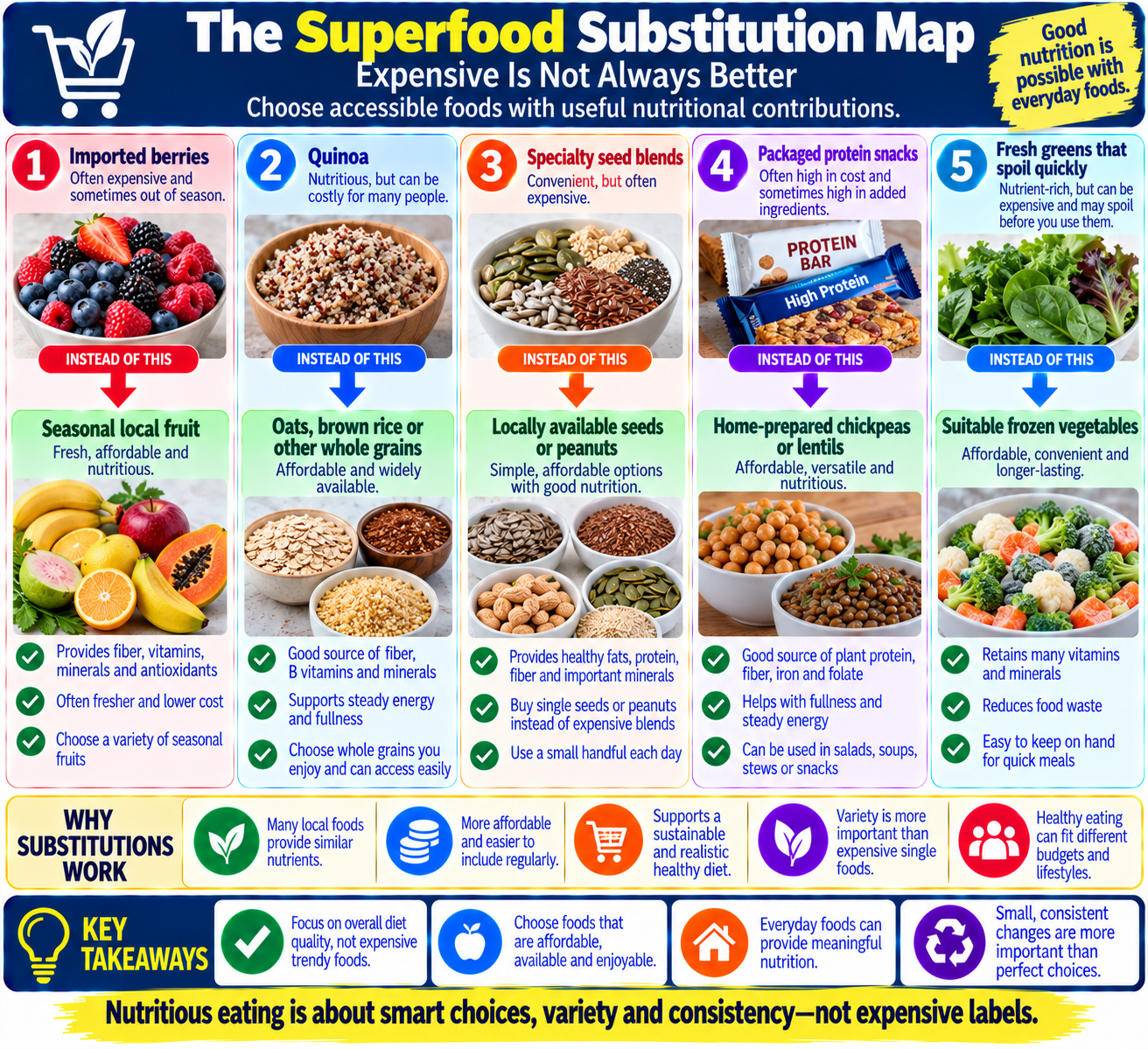
A major misconception is that a nutritious diet requires imported berries, specialty powders, or premium supplements. Many useful foods are inexpensive and readily available.
| Budget-friendly food | Nutritional value | Simple use |
|---|---|---|
| Lentils and dal | Plant protein, fiber, and minerals | Add to lunch or dinner. |
| Chickpeas and beans | Protein, fiber, and folate | Use in curries, salads, or soups. |
| Oats | Fiber and carbohydrates | Prepare breakfast or use it in suitable recipes. |
| Peanuts | Unsaturated fats, protein, and other nutrients | Eat a modest portion or add to meals. |
| Seasonal fruits | Varying vitamins, fiber, and plant compounds | Eat as a snack or with breakfast |
| Local leafy greens | Varying vitamins, minerals, and fiber | Add to cooked meals. |
| Eggs, which are eaten | Protein and several micronutrients | Include in suitable meals. |
| Frozen vegetables | Varying fiber, vitamins, and minerals | Use when fresh produce is inconvenient. |
A simple shopping strategy
Choose two or three vegetables, a few fruits, one or two pulses, and a grain you enjoy. Add nuts, seeds, dairy, eggs, fish, tofu, or other foods according to your preferences and budget.
Frozen produce can reduce waste, and dried pulses can be economical when stored and prepared safely. You do not need to buy every food item in this article every week.
People-first insight: A nutritious food is only useful if you can obtain, prepare, and eat it consistently. Convenience, culture, taste, affordability, and medical needs all influence whether a dietary habit will last.
12. What Current Research Says About Superfoods
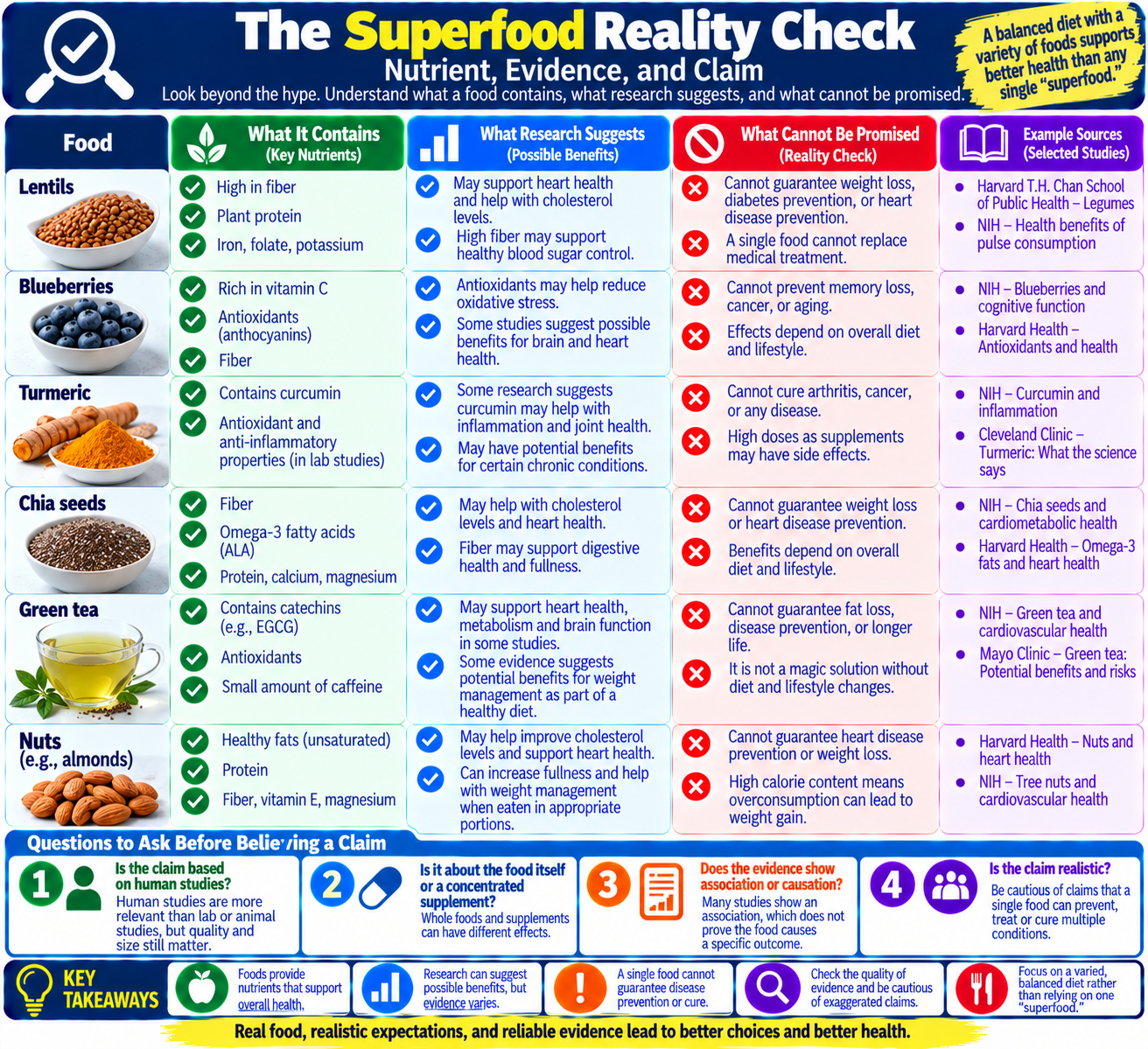
Nutrition science increasingly emphasizes overall dietary patterns rather than treating individual foods as isolated solutions.
A 2024 systematic review and meta-analysis of dietary patterns and cardiovascular disease in Asian populations examined patterns characterized by higher intakes of foods such as fruits, vegetables, whole grains, nuts, legumes, fish or seafood, and unsaturated oils. The review adds evidence relevant to Asian dietary contexts, although observational evidence cannot prove that a particular food caused an outcome.
A separate USDA systematic review of dietary patterns and cardiovascular disease concluded that dietary patterns higher in fruits, vegetables, whole grains, legumes, nuts, and unsaturated fats were associated with lower cardiovascular risk in adults. The evidence supports a pattern of eating, not a guarantee from any single ingredient.
Research on antioxidants offers another important lesson. Foods naturally rich in antioxidants can be part of a nutritious diet, but concentrated supplements are not interchangeable with whole foods. The NCCIH review of antioxidant supplements notes that evidence does not generally show antioxidant supplements provide the hoped-for protection against major diseases.
What this means for readers
The research does not establish that a person must eat blueberries, chia seeds, turmeric, or any other particular food every day. Instead, it supports building a varied dietary pattern and being cautious about claims that one ingredient can deliver multiple medical benefits.
Current evidence also has limitations. Studies differ in the foods they examine, portion sizes, populations, duration, and health outcomes. Some findings come from observational research, which can identify associations but cannot always separate food effects from other lifestyle factors.
A responsible superfood guide should explain these limitations rather than turning promising research into a guaranteed result.
13. Common Superfood Mistakes to Avoid
Believing one food can compensate for an unbalanced diet
A smoothie with berries does not automatically make the rest of the day’s meals nutritious. Build a balanced pattern instead of relying on one ingredient.
Buying supplements because of impressive marketing
A product may contain a nutrient that is useful in certain circumstances, but that does not prove its supplement form will prevent disease or improve health for everyone. Consult a healthcare professional when considering supplements for a medical reason.
Assuming expensive foods are more nutritious
Cost is not a reliable measure of nutritional quality. Lentils, oats, seasonal fruit, peanuts, and local vegetables can contribute valuable nutrients.
Treating antioxidants as a disease shield
Antioxidants have important biological roles, but eating a food with a high antioxidant content does not guarantee protection against cancer, heart disease, or aging. Avoid turning laboratory findings into promises about human health.
Ignoring allergies and individual tolerance
Nuts, dairy products, seeds, and other nutritious foods are not appropriate for everyone. Choose alternatives that fit your health needs, and seek professional advice if symptoms suggest an allergy or intolerance.
Following strict diets unnecessarily
Removing multiple food groups without a medical reason can make a diet harder to maintain and may reduce nutritional variety. If a health condition requires dietary restrictions, seek individualized advice from a qualified professional.
14. How to Start Eating More Superfoods Without Overhauling Your Life
A useful nutrition plan should be realistic enough to follow on busy days. Rather than changing everything at once, choose a few actions that fit your existing routine.
- Add a fruit or vegetable to a meal that currently lacks one.
- Replace some refined grains with whole-grain alternatives if suitable.
- Include pulses more often.
- Keep affordable nuts or seeds available for suitable snacks.
- Use herbs and spices to make balanced meals more enjoyable.
- Plan meals around foods you already know how to cook.
- Review your progress based on consistency, variety, and how manageable the routine feels.
A simple weekly food check
At the end of the week, ask yourself three questions:
- Did I eat a reasonable variety of fruits and vegetables?
- Did I include suitable sources of protein, fiber, and healthy fats?
- Were my food choices affordable and realistic enough to repeat?
This approach is more useful than judging your diet by how many foods you can label as superfoods. It also avoids turning eating into a complicated tracking exercise.
15. Superfoods for Children, Adults, and Older People
Nutritional needs change across life stages. Children need foods that support growth and development, adults need a balanced pattern that meets their individual energy and nutrient needs, and older adults may need particular attention to protein, vitamin B12, vitamin D, calcium, or other nutrients depending on their circumstances.
No single superfood provides every nutrient needed at every age. A variety of foods is generally more useful than focusing on one ingredient.
Children may need age-appropriate textures and portions to reduce choking risks. Older adults with poor appetite, swallowing difficulties, or chronic illnesses may benefit from advice from a healthcare professional or registered dietitian.
People who are pregnant, have kidney disease, take medicines that interact with foods, or follow medically prescribed diets should not assume that every popular superfood is suitable for them. For example, leafy greens rich in vitamin K can affect warfarin management, so people taking warfarin should seek consistent, individualized dietary guidance rather than suddenly changing their intake.
Frequently Asked Questions
What are the best superfoods to eat every day?
There is no mandatory daily superfood list. Useful choices include fruits, vegetables, whole grains, pulses, nuts, and seeds. Choose a variety that suits your budget, dietary needs, and preferences.
Are superfoods scientifically proven?
Individual foods have different levels of evidence supporting particular nutritional benefits. However, “superfood” itself is not a scientific classification. Research more consistently supports balanced dietary patterns than claims that one special food can prevent or treat multiple diseases.
Are superfoods better than ordinary healthy foods?
Not necessarily. Ordinary foods such as lentils, oats, carrots, seasonal fruit, and leafy greens can provide valuable nutrients. The term “superfood” does not automatically make a food healthier than other nutritious choices.
Can superfoods boost immunity?
Adequate nutrition supports normal immune function, but no individual food guarantees stronger immunity or prevents infections. A varied diet is more useful than relying on a single ingredient or supplement.
Do I need superfood powders?
Most people do not need a superfood powder simply because it is marketed as healthy. Whole foods provide different combinations of nutrients, and supplements may be appropriate only for particular needs. Ask a qualified healthcare professional if you suspect a deficiency or need a supplement for a medical reason.
Are frozen fruits and vegetables healthy?
Frozen produce can be a convenient way to include fruits and vegetables in your diet. Nutritional content varies by food and processing, so check labels for added sugar, sauces, or excess sodium where relevant.
Which superfoods are best for heart health?
A dietary pattern that includes fruits, vegetables, whole grains, legumes, nuts, and unsaturated fats is supported by evidence for cardiovascular health. No single food guarantees protection. See the USDA evidence review on dietary patterns and cardiovascular disease.
How long does it take to notice benefits from eating healthier foods?
There is no universal timeline. Some changes, such as improved meal regularity or bowel habits, may be noticeable sooner than others, while long-term health outcomes depend on many factors. Avoid judging a dietary pattern by a few days of eating differently.
Conclusion: Focus on a Balanced Plate, Not a Superfood Trend
The best superfoods for a balanced diet are the foods that help you meet your nutritional needs consistently. Fruits, leafy greens, whole grains, pulses, nuts, seeds, suitable fermented foods, and sources of unsaturated fats can all contribute something useful.
You do not need every food on this list, and you do not need to purchase expensive products to improve your eating pattern. Choose a few realistic changes, build variety over time, and consider your budget, preferences, and medical needs.
Most importantly, remember that a food’s reputation is not the same as scientific evidence. Superfoods can be nutritious, but they are not miracle cures. A balanced dietary pattern, sustainable habits, and appropriate healthcare are more useful foundations for long-term well-being than any single ingredient.
Author Note
Author: RVLNSV PRASAD
This article is intended to help readers make practical, evidence-informed food choices. Nutritional needs differ between individuals, and research on particular foods may not apply equally to every person.
Personal-experience note: If you have personally improved your eating habits, add a genuine example describing the change you made and what you actually noticed. Do not claim that a particular food cured a condition or caused a health improvement unless reliable evidence supports that conclusion.
Medical Disclaimer
This article is for general educational purposes only. It does not provide individualized medical advice, diagnosis, or treatment. Foods described as nutritious may not be suitable for everyone, especially people with food allergies, chronic illnesses, medication-related dietary restrictions, or medically prescribed diets. Consult a qualified healthcare professional or registered dietitian when you need individualized nutrition advice. Do not replace prescribed treatment with foods, supplements, or home remedies.
Fitness Disclaimer
Physical activity can complement a balanced eating pattern, but exercise needs vary according to age, fitness, medical conditions, and ability. Start gradually if you are inactive, and seek professional guidance if you have a chronic condition, injury, or concern about exercising safely.
References and Further Reading
- Harvard T.H. Chan School of Public Health — Superfoods or Superhype?
- USDA Nutrition Evidence Systematic Review — Dietary Patterns and Risk of Cardiovascular Disease
- National Center for Complementary and Integrative Health — Antioxidant Supplements: What You Need to Know
- Harvard T.H. Chan School of Public Health — The Microbiome
- Harvard T.H. Chan School of Public Health — Probiotics for Gut Health
- 2025 Systematic Review — Fermented Foods and Gastrointestinal Well-Being
- 2024 Systematic Review and Meta-Analysis — Dietary Patterns and Cardiovascular Diseases in Asia
- NIH Bookshelf — Systematic Review of Dietary Patterns and Cardiovascular Disease
- Dietary Guidelines for Americans, 2025–2030 — Official Guidance
Related Topics
- 10 Super Seeds You Should Eat for lose weight
- Home
- 8 Metabolic Mastery: Unlocking the Secrets to Sustainable Weight Loss
- 8 Top Superfoods for a Balanced and Healthy Diet
- Best Superfoods Uncovered the Truth Behind Nutrient Packed Powerhouses
- Category
- Breaking Bad Habits: How Americans Are Redefining Health and Wellness










[…] Nutritional Secrets of Superfoods […]
[…] Nutritional Secrets of Superfoods […]
[…] Nutritional Secrets of Superfoods […]
[…] Nutritional Secrets of Superfoods […]
[…] Nutritional Secrets of Superfoods […]
[…] Nutritional Secrets of Superfoods […]
[…] Nutritional Secrets of Superfoods […]
[…] Nutritional Secrets of Superfoods […]
[…] Nutritional Secrets of Superfoods […]
[…] Nutritional Secrets of Superfoods […]
[…] Nutritional Secrets of Superfoods […]
[…] Nutritional Secrets of Superfoods […]
[…] Nutritional Secrets of Superfoods […]
[…] Nutritional Secrets of Superfoods […]
[…] Nutritional Secrets of Superfoods […]
[…] Nutritional Secrets of Superfoods […]