






































































































































































Table of Contents
Toggle6 Natural Foods to Improve Gut Health: A Comprehensive Guide
Author: RVLNSV PRASAD
Updated On: September 2026
About Us
Author Bio
Editorial Policy
Contact Us
Introduction
Quick Answer
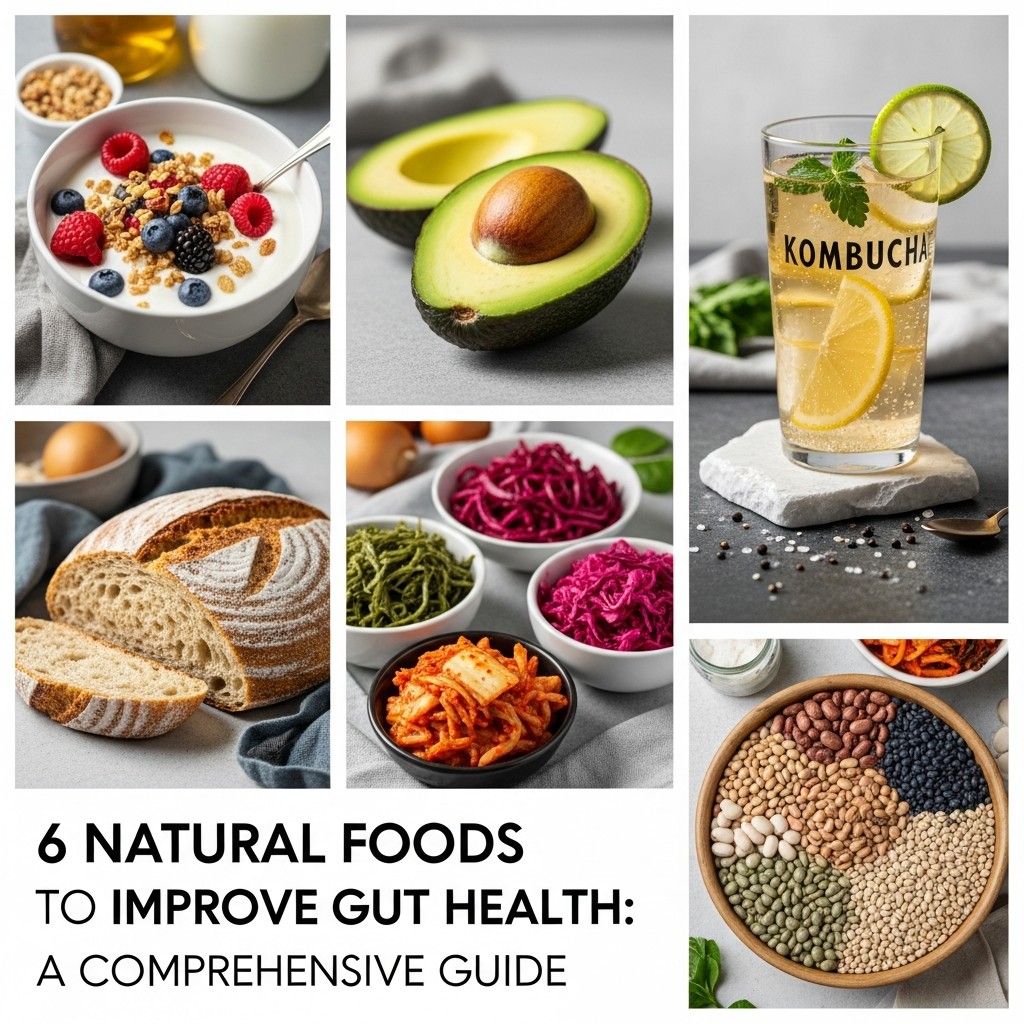
The best natural foods for gut health are not necessarily unfemiler or expensive. A practical gut-friendly eating pattern can include yogurt with live cultures, oats and other whole grains, lentils and chickpeas, bananas, vegetables, nuts and seeds, and selected fermented foods.
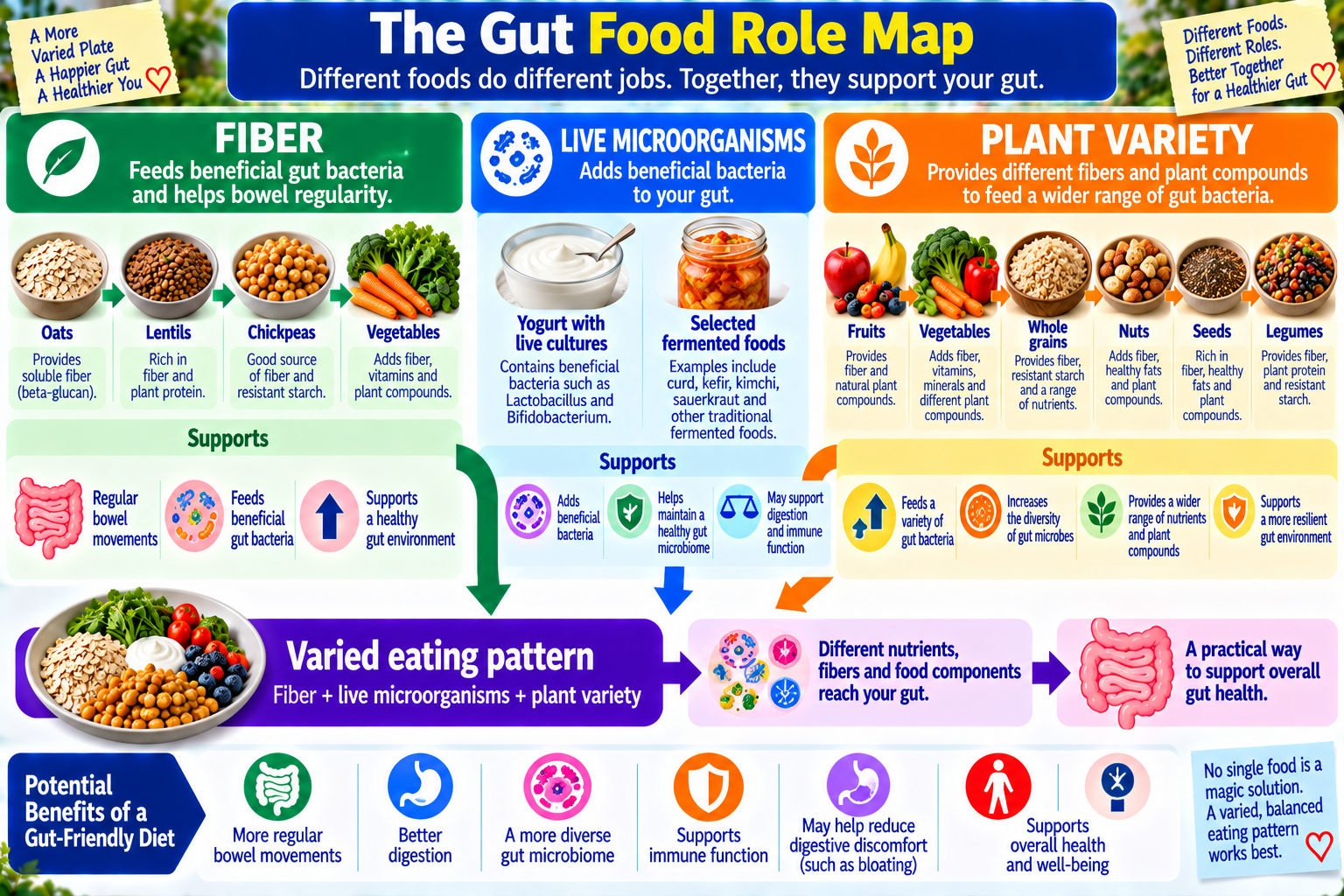
The reason these foods are useful is not that they “heal” the gut overnight. Different foods provide different things, including dietary fiber, resistant starch, live microorganisms, plant compounds, vitamins, minerals, and unsaturated fats.
Current research increasingly looks at the interaction between food, the gut microbiome, and the rest of the body rather than treating one food as a cure-all. A 2025 review describes the gut microbiome as an important link between nutrition and human health while also highlighting substantial gaps in the evidence and differences in how individuals respond to dietary changes. PubMed—The gut microbiome connects nutrition and human health
For most people, the practical goal is simple: eat a wider variety of minimally processed plant foods, increase fiber gradually, include suitable fermented foods if tolerated, and pay attention to your own digestive response.
Key Takeaways
- Fiber-rich foods provide fuel and substrates that gut microorganisms can use.
- Lentils, chickpeas, and other legumes are particularly useful because they combine fiber with plant protein.
- Oats provide soluble fiber and can be an easy everyday breakfast option.
- Yogurt with live cultures can provide live microorganisms, but probiotic effects depend on the specific product and strain.
- Fermented foods are interesting, but they should not automatically be called “probiotics” or assumed to provide the same benefit.
- A sudden increase in fiber can cause gas and bloating, so increase it gradually.
- There is no single food that can guarantee a healthy microbiome.
- People with IBS or other digestive conditions may tolerate certain foods differently.
- Persistent or concerning digestive symptoms deserve medical evaluation rather than a food-only approach.
What Does “Gut Health” Actually Mean?
Gut health is more than simply having regular bowel movements.
Your digestive system breaks food into nutrients that your body can absorb and use. The gastrointestinal tract also contains a large community of microorganisms known collectively as the gut microbiome. These microorganisms interact with food components and with the body in complex ways. NIDDK — Your Digestive System & How It Works
Researchers are particularly interested in how dietary components such as fiber interact with gut microorganisms and produce metabolites, including short-chain fatty acids.
But this field is still developing.
That distinction matters because online gut-health advice sometimes turns an interesting research finding into a simple promise such as “this food heals your gut.” Human research does not support that kind of universal conclusion.
A 2025 review of dietary fiber and the gut microbiome found that the response can vary according to the type of fiber, dose, population, and study design. Changes in gut microbial composition are also not always consistent between studies. PubMed—Dietary Fibre and the Gut Microbiome
So the better question is not
“Which one food fixes my gut?”
A better question is
“Which foods can help me build a varied, fiber-rich eating pattern that I can tolerate and maintain?”
What Makes a Food Gut-Friendly?
A food can support gut health in several different ways.
1. It provides dietary fiber.
Fiber reaches parts of the digestive tract without being fully digested in the small intestine. Some types can be fermented by gut microorganisms.
Good sources include:
- Oats
- Barley
- Lentils
- Chickpeas
- Beans
- Fruits
- Vegetables
- Nuts
- Seeds
- Whole grains
The relationship between fiber and the microbiome is one of the major areas of current nutrition research. A 2025 review describes dietary fiber as an important factor capable of influencing microbial ecology and metabolism, although individual responses vary. PubMed—The Gut Microbiome and Dietary Fibres
2. It provides resistant starch or other fermentable carbohydrates.
Some carbohydrates resist digestion in the small intestine and can reach the colon, where microorganisms can use them.
Foods such as legumes and less-ripe bananas can contribute resistant starch, although the amount varies with food type, ripeness, and preparation.
3. It provides live microorganisms.
Some fermented foods contain live microorganisms.
However, fermented food does not automatically equal probiotic food.
NCCIH defines probiotics as live microorganisms that provide a health benefit when administered in adequate amounts. The effects can depend on the microorganism, strain, amount, and health outcome. NCCIH — Probiotics: Usefulness and Safety
4. It contributes to an overall healthy dietary pattern.
This may be more important than obsessing over individual foods.
WHO recommends varied diets containing foods such as vegetables, fruits, legumes, nuts, and whole grains, while noting that healthy diets need to fit individual needs, local foods, and cultural practices. WHO — Healthy Diet
That is particularly relevant for an Indian audience because gut-friendly eating does not require imported “superfoods.”
Dal, chickpeas, oats, vegetables, fruits, curd, and whole grains can all fit into a practical diet.
6 Natural Foods for Better Gut Health
1. Yogurt With Live Cultures
Plain yogurt can be a convenient food to include in a gut-friendly eating pattern.
It provides protein and nutrients, and some yogurts contain live microorganisms from fermentation.
However, it is important not to oversimplify the science.
Not every yogurt contains the same microorganisms, and not every probiotic organism produces the same effect. NCCIH notes that researchers still do not know which probiotics are useful for every condition or which people are most likely to benefit. NCCIH — Probiotics: Usefulness and Safety
Recent research is also becoming more cautious.
A 2026 systematic review and meta-analysis of 33 randomized trials found some changes in certain biomarkers with probiotic yogurt, but the researchers concluded that evidence was still very limited regarding whether probiotic yogurt is superior to conventional yogurt. PubMed—2026 Probiotic Yogurt Systematic Review and Meta-analysis
How to use it:
- Choose plain yogurt when possible.
- Add fruit for natural sweetness.
- Combine it with oats and nuts.
- Use it as a side with a meal.
- If dairy causes symptoms, consider a suitable alternative rather than forcing it.
People-first tip:
You do not need an expensive probiotic yogurt simply because the package uses the word “probiotic.” Look at the ingredients, added sugar and your own tolerance.
2. Oats and Other Whole Grains
Oats are one of the easiest foods to add to a daily routine.
They provide dietary fiber and can be used in breakfast, savory dishes, or homemade snacks.
Whole grains more broadly can contribute fiber to the diet. WHO lists oats, wheat, and other whole grains among foods that can form part of a healthy dietary pattern. WHO—Healthy Diet Guidance
The interesting part is not simply that oats contain fiber.
The type and amount of fiber matter.
Research into fiber and the gut microbiome shows that different fibers can produce different microbial responses. That means “more fiber” is useful advice, but it is not the same as saying that every fiber affects every person in exactly the same way. PubMed—Dietary Fiber and the Gut Microbiome
Easy ways to eat oats:
- Oatmeal with banana
- Oats with plain yogurt
- Savory oats with vegetables
- Overnight oats
- Oats mixed with nuts and seeds
If you currently eat very little fiber, begin with a manageable portion rather than suddenly eating large bowls of oats every day.
3. Lentils and Chickpeas
This is one of the most useful categories for an Indian diet.
Lentils and chickpeas provide fiber and plant protein, making them practical additions to meals that need to be filling as well as nutritious.
NIDDK lists lentils, beans, and chickpeas among good sources of dietary fiber. NIDDK—Eating, Diet & Nutrition for Constipation
Recent research is also exploring the relationship between legumes, the gut microbiome, and metabolic health.
In a 2025 randomized controlled trial involving 127 adults with prediabetes, a legume-enriched dietary intervention produced greater reductions in LDL cholesterol, total cholesterol, and HbA1c than the calorie-restricted control diet, alongside changes in fiber-degrading microbial species. The study involved a specific population and a multicomponent dietary intervention, so it should not be interpreted as proof that eating one type of legume prevents disease. PubMed — Legume-Enriched Diet Randomized Controlled Trial
Simple ways to use them:
- Dal with rice
- Dal with roti
- Chickpea salad
- Chana curry
- Lentil soup
- Khichdi with vegetables
- Chickpeas added to a grain bowl
People-first tip:
If beans or chickpeas make you unusually gassy, do not assume they are “bad for your gut.” Your portion size, preparation method, and individual tolerance can matter.
4. Bananas
Bananas are inexpensive, convenient, and easy to combine with other foods.
They also contain carbohydrates and fiber, while less-ripe bananas contain more resistant starch than very ripe bananas.
That does not mean green bananas are automatically better for everyone.
Some people may find ripe bananas easier to tolerate, while others prefer a firmer banana.
Try them with:
- Oats
- Plain yogurt
- Peanut butter
- A small handful of nuts
- A breakfast bowl
The practical lesson is that gut-friendly eating does not need to involve unusual ingredients.
A banana can be useful simply because it is affordable, available, and easy to include regularly.
5. Vegetables, Especially a Variety of Plant Foods
Vegetables provide fiber and a broad range of plant compounds.
Rather than searching for one “best vegetable for gut health,” variety is a more useful approach.
Consider rotating:
- Spinach
- Carrots
- Cabbage
- Cauliflower
- Green beans
- Peas
- Pumpkin
- Tomatoes
- Bottle gourd
- Seasonal leafy vegetables
WHO emphasizes variety across vegetables, fruits, legumes, nuts, and whole grains as part of a healthy dietary pattern. WHO—Healthy Diet
A Useful Cooking Trick
If raw salads make you uncomfortable, try lightly cooked vegetables.
Steaming, sautéing, or cooking vegetables into dal or other dishes may make meals easier to eat for some people.
This is not a universal rule.
People with digestive conditions can have different tolerances, and some may need individualized dietary advice.
For example, NIDDK notes that people with IBS may respond differently to dietary changes and may sometimes be advised to work with a dietitian. NIDDK—Eating, Diet & Nutrition for IBS
6. Fermented Foods
Fermented foods have received considerable attention in gut-health research.
Examples include:
- Yogurt
- Kefir
- Sauerkraut
- Kimchi
- Miso
- Tempeh
- Some traditionally fermented vegetable foods
But there is an important distinction.
Fermented does not automatically mean probiotic.
A food may contain microorganisms, but whether it qualifies as a probiotic depends on specific scientific criteria and demonstrated health benefits.
NCCIH explains that probiotic effects are not universal and can differ according to the microorganism and health outcome. NCCIH — Probiotics: Usefulness and Safety
Recent research also shows why caution is useful.
A 2026 randomized crossover trial involving 87 healthy adults found that four weeks of daily sauerkraut consumption produced some modest changes in selected markers, but there was no change in gut-barrier integrity and no appreciable overall systemic health benefit in healthy participants. PubMed — 2026 Sauerkraut Randomized Crossover Trial
That is a valuable lesson.
Fermented foods may be worth including, but they should not be presented as guaranteed gut-healing foods.
Prebiotics vs. Probiotics: What’s the Difference?
These terms are often mixed together online.
Prebiotics
Prebiotics are substances that can be utilized by microorganisms and contribute to health.
Many prebiotic substances occur naturally in plant foods.
Probiotics
Probiotics are live microorganisms that provide a health benefit when consumed or administered in adequate amounts.
The distinction is important because not every fermented food is a probiotic, and not every probiotic supplement has the same effects.
NCCIH emphasizes that probiotic products can contain different microorganisms and that their effects can vary from person to person. NCCIH — Probiotics: Usefulness and Safety
This is one reason I would not recommend buying a supplement simply because it promises to “reset” or “restore” your microbiome.
Which Food Supports Which Gut Goal?
| Food | Main nutritional feature | Simple use |
|---|---|---|
| Yogurt with live cultures | Protein + live microorganisms in suitable products | Breakfast or snack |
| Oats | Soluble and other dietary fiber | Breakfast |
| Lentils | Fiber + plant protein | Dal or soup |
| Chickpeas | Fiber + plant protein | Curry or salad |
| Banana | Fiber + resistant starch when less ripe | Snack or breakfast |
| Vegetables | Fiber + diverse plant compounds | Lunch and dinner |
| Nuts and seeds | Fiber + unsaturated fats | Topping or snack |
| Fermented vegetables | Fermentation-derived compounds and, depending on the product, live microorganisms | Small side portion |
The goal is not to eat every food every day.
The goal is to create variety across the week.
The Gut-Friendly Indian Food Strategy
One of the easiest ways to make gut-health advice practical is to stop treating it as a Western “superfood” problem.
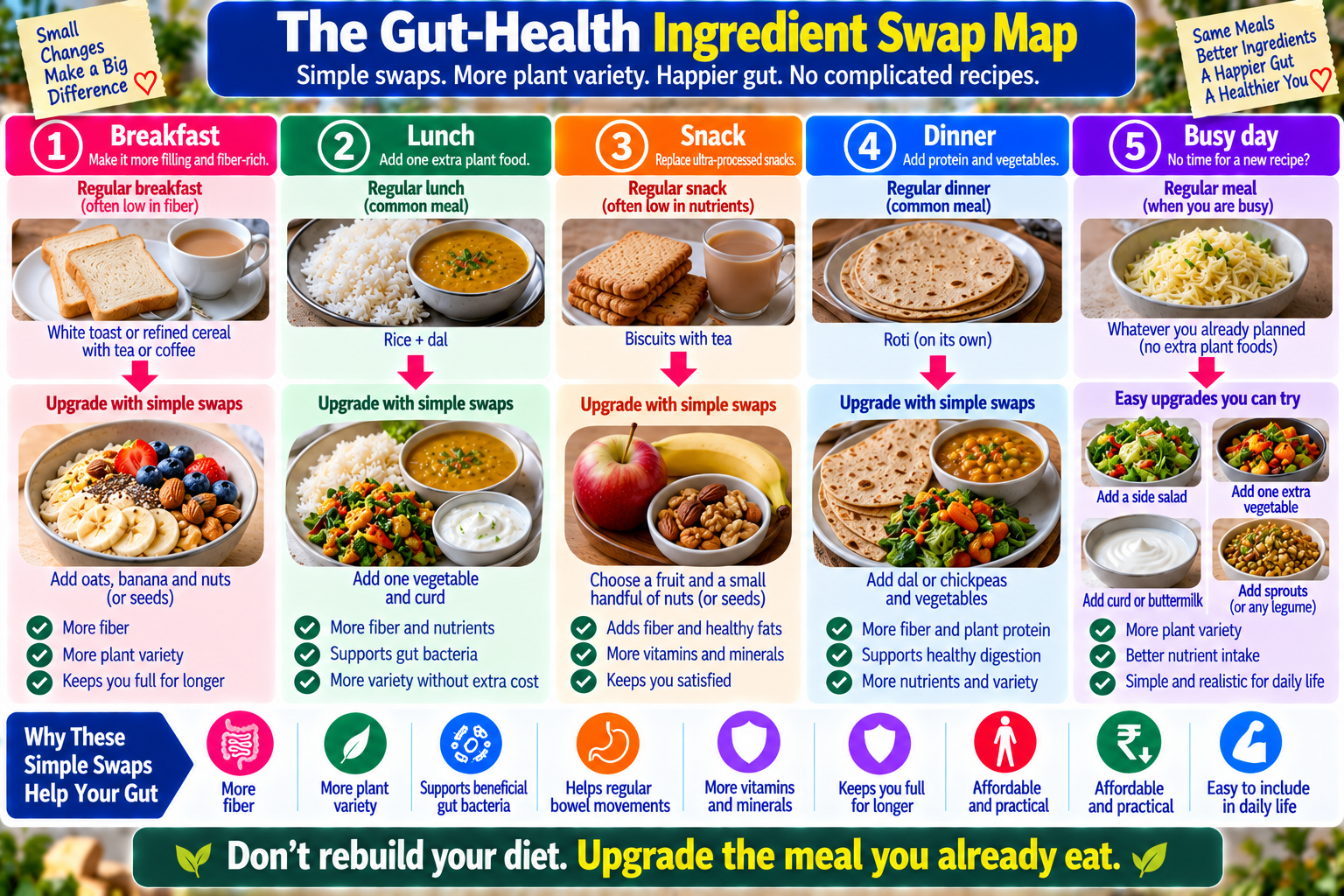
You can build many meals from foods already common in Indian kitchens.
Breakfast
Oats + banana + plain yogurt + a few nuts
Lunch
Dal + rice or roti + cooked vegetables + curd
Evening
Fruit + a small portion of nuts
Dinner
Chickpeas or another legume + vegetables + roti or rice
This type of pattern combines several food groups rather than depending on a single ingredient.
WHO India specifically notes that healthy diets can include staple foods such as rice and wheat, legumes, vegetables, fruit, and animal-source foods such as eggs and milk, with the exact combination depending on individual needs and local food availability. WHO India—Healthy Diet
How to Increase Fiber Without Making Bloating Worse
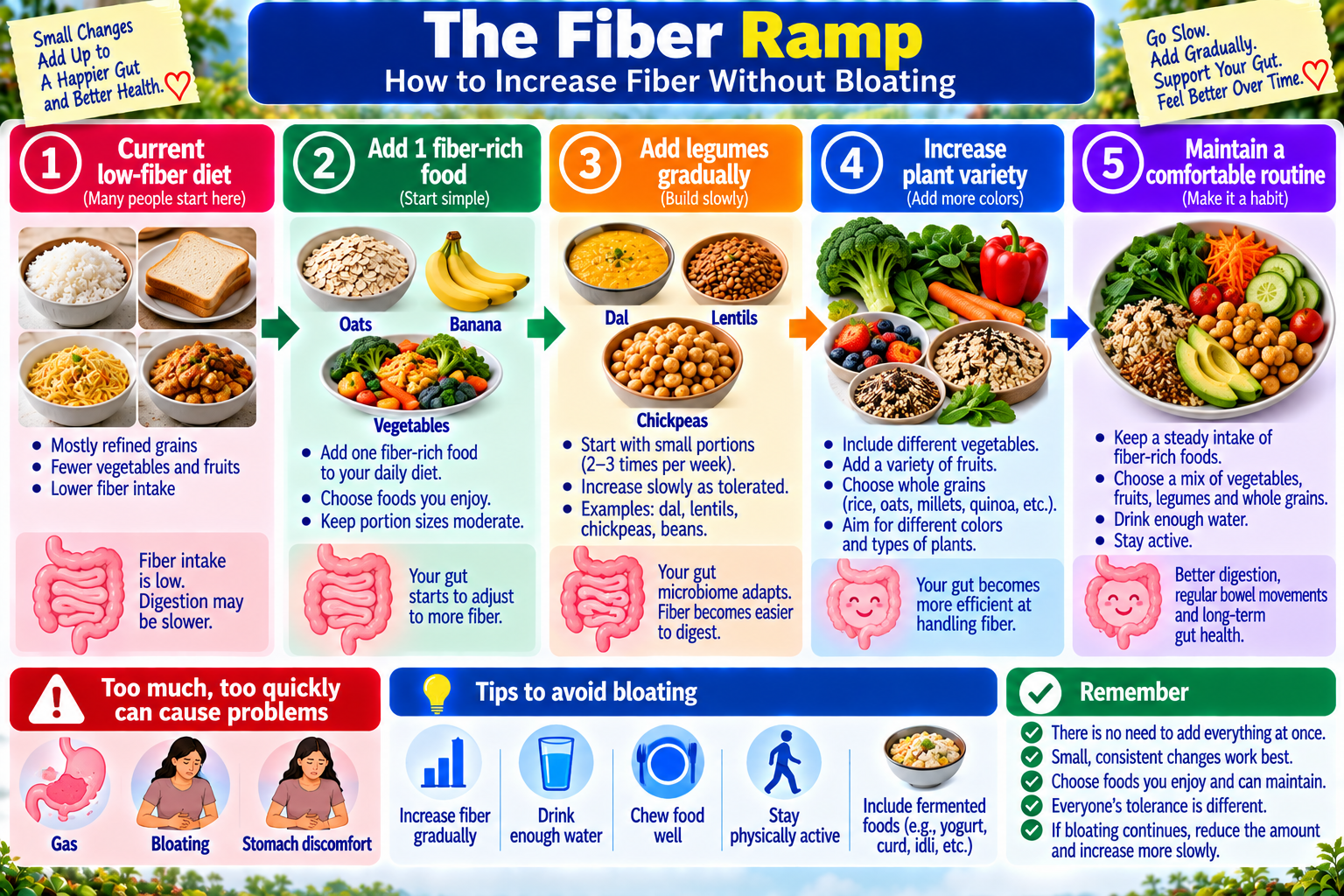
This is one of the most important practical points missing from many gut-health articles.
If your current diet contains little fiber, suddenly adding large amounts of beans, oats, vegetables, and seeds can make you feel worse.
NIDDK recommends increasing fiber gradually so the body can adjust. For adults, its constipation guidance gives a general range of 22–34 grams of fiber per day, depending on age and sex, while emphasizing that individual needs can differ. NIDDK—Fiber, Fluids, and Constipation
A Simple Progression
- Week 1:
Add one fiber-rich food each day. - Week 2:
Include a vegetable with another meal. - Week 3:
Add a serving of legumes several times during the week. - Week 4:
Increase variety rather than simply increasing portion size.
If you have IBS, NIDDK notes that increasing fiber gradually may help reduce gas and bloating, and soluble fiber may be better tolerated for some people. NIDDK — IBS and Nutrition
The “Fiber Pairing” Trick
Here is a simple approach that can make a high-fiber meal easier to manage.
Instead of creating one huge fiber-heavy meal, spread fiber-rich foods across the day.
For example:
Breakfast: oats + banana
Lunch: dal + vegetables
Snack: fruit + nuts
Dinner: chickpeas + vegetables
This gives you several opportunities to consume plant foods without making one meal unnecessarily large.
It also makes your eating pattern easier to maintain.
A Simple One-Day Gut-Friendly Meal Plan
| Meal | Example |
|---|---|
| Breakfast | Oats with banana and plain yogurt |
| Mid-morning | Seasonal fruit |
| Lunch | Dal, rice or roti, and cooked vegetables |
| Evening | Small handful of nuts |
| Dinner | Chickpea vegetable bowl with roti |
| Optional | Plain yogurt if tolerated |
This is only an example.
People with diabetes, kidney disease, food allergies, IBS, inflammatory bowel disease, or other medical conditions may need different choices.
Foods That May Cause Digestive Problems for Some People
There is no universal list of foods that are “bad for the gut.”
Individual tolerance matters.
Some people may experience symptoms after consuming:
- Very large amounts of legumes
- Certain dairy products
- Large amounts of artificial sweeteners
- Very fatty meals
- Alcohol
- Certain high-FODMAP foods
- Very spicy meals
- Large amounts of fiber introduced suddenly
Johns Hopkins notes that digestive symptoms can be influenced by diet, stress, medications, and digestive conditions, and that highly processed foods, alcohol, and some other foods can aggravate symptoms in some people. Johns Hopkins Medicine — 5 Ways to Support Gut Health
The key phrase is “for some people.”
Do not eliminate an entire food group simply because someone on social media says it is harmful.
My Personal Gut-Health Approach
I have learned that gut health is easier to manage when I pay attention to patterns rather than individual foods.
- If I eat a very large meal, I notice how my digestion responds.
- If I suddenly increase fiber, I pay attention to bloating.
- If a particular food repeatedly causes discomfort, I do not automatically assume the food is unhealthy. I look at the portion, preparation, and overall meal.
This is a more useful approach than labeling foods as simply “good” or “bad.”
Personal experience can help you identify patterns, but it cannot diagnose a digestive condition.
That distinction is important.
People-First Gut Health: Don’t Chase Perfection
A practical diet should fit real life.
- You may not have access to expensive fermented foods.
- You may not enjoy kale.
- You may not want to drink a green smoothie every morning.
- That is fine.
- You can still build a nutritious diet using foods available in your local market.
- For example:
Oats instead of a specialty cereal.
Dal instead of an expensive plant-protein product.
Seasonal vegetables instead of imported vegetables.
Banana instead of an expensive “gut-health” fruit.
Curd instead of an expensive probiotic drink, when appropriate.
The goal is not to make your diet impressive.
The goal is to make it sustainable.
Three Easy Gut-Health Habits That Cost Almost Nothing
Eat one extra plant food.
Add one fruit, vegetable, legume, or whole grain that you were not already eating.
Reuse cooked ingredients.
Cook a batch of dal or chickpeas and use them across two meals.
Change gradually.
If your diet is low in fiber, do not try to transform it overnight.
These small changes can be easier to maintain than a complete dietary overhaul.
Common Gut-Health Mistakes
Mistake 1: Treating one food as a cure
No individual food can guarantee a healthy microbiome.
Mistake 2: Increasing fiber too quickly
This can increase gas and bloating.
Gradual changes are usually more practical. NIDDK — Fiber and Digestive Health
Mistake 3: Assuming all fermented foods are probiotics
Fermentation and probiotics are related but not identical concepts.
Mistake 4: Buying expensive supplements first
A varied diet may be a more useful starting point for many healthy people.
Mistake 5: Copying another person’s elimination diet
Your digestive response may not be the same as someone else’s.
Mistake 6: Ignoring persistent symptoms
Food changes should not replace appropriate medical assessment.
Mistake 7: Believing “natural” means “risk-free”
Natural foods are generally part of healthy eating, but supplements and concentrated products can have risks.
NCCIH specifically cautions that probiotic supplements may carry greater risks for people with severe illness or compromised immune systems. NCCIH — Probiotics: Usefulness and Safety
Latest Research Developments in Gut Health
The most interesting change in gut-health research is that scientists are moving away from simplistic ideas about “good bacteria versus bad bacteria.”
The microbiome is much more complicated.
Researchers are examining how dietary patterns affect microbial composition, microbial metabolites, immune responses, and metabolic processes.
A 2025 review described diet–microbiome interactions as an important area for understanding how nutrition may influence immune, nervous-system, and cardiometabolic pathways, while also emphasizing the need for better human research and more precise dietary recommendations. PubMed — The Gut Microbiome Connects Nutrition and Human Health
Fiber research is becoming more precise.
Researchers are no longer asking only whether “fiber is good.”
They are asking:
- Which type of fiber?
- At what dose?
- For which person?
- For which outcome?
- How does the existing microbiome affect the response?
A 2025 review of nine recent randomized trials found that dietary fiber sometimes improved glycemic outcomes, while microbial responses were inconsistent. The researchers also observed improvements in some markers of gut-barrier integrity and systemic inflammation in studies that measured them. PubMed—Dietary Fibre and the Gut Microbiome: 2025 Review
This is why I would avoid writing that one food “repairs your gut.”
The science is more interesting than that.
Legumes are receiving more attention.
A 2025 randomized controlled trial involving adults with prediabetes found that a legume-enriched dietary intervention was associated with metabolic improvements and changes in fiber-degrading microbial species. The intervention was complex and involved calorie restriction, so the result should not be interpreted as proof that eating lentils alone produces the same effects. PubMed — Legume-Enriched Diet and Gut Microbiome Trial
For everyday readers, however, the message is practical:
Legumes deserve a place in a varied diet.
Fermented-food research is becoming more nuanced.
Earlier gut-health discussions sometimes portrayed fermented foods as universally beneficial.
Newer research is more careful.
The 2026 sauerkraut crossover trial found modest changes in selected markers but did not find a change in gut-barrier integrity or an appreciable overall systemic health benefit after four weeks in healthy adults. PubMed — 2026 Sauerkraut Trial
That does not mean fermented foods are useless.
It means the evidence should be described honestly.
A Simple “Gut Variety” Challenge
Instead of following a complicated microbiome diet, try this practical experiment.
Over one week, aim to include different plant foods from several categories.
Grains
Oats, whole wheat, brown rice, or other whole grains
Legumes
Dal, chickpeas, beans, or peas
Vegetables
Choose several colors across the week.
Fruits
Use seasonal options.
Nuts and seeds
Peanuts, almonds, walnuts, chia, or flax are suitable.
Fermented foods
Yogurt or another suitable fermented food if tolerated
The goal is variety, not perfection.
When Gut Symptoms Need Medical Attention
Food can support general digestive health, but it should not be used to self-treat persistent or potentially serious symptoms.
Speak with a healthcare professional if you have:
- Blood in your stool
- Unexplained weight loss
- Severe or persistent abdominal pain
- Ongoing diarrhea
- Ongoing constipation
- Difficulty swallowing
- Digestive symptoms that interfere with daily life
Johns Hopkins specifically identifies these as reasons to seek medical attention rather than relying only on dietary changes. Johns Hopkins Medicine — When to See a Doctor for Digestive Symptoms
If constipation does not improve with self-care or occurs with bleeding or persistent abdominal pain, NIDDK also recommends medical evaluation. NIDDK — Constipation Symptoms and Causes
FAQ
What are the best natural foods for gut health?
Useful choices include yogurt with live cultures, oats, lentils, chickpeas, vegetables, fruits, nuts, seeds, and suitable fermented foods. The best combination depends on your overall diet and individual tolerance.
How quickly can foods improve gut health?
There is no reliable universal timeline.
Digestive symptoms can change relatively quickly in some situations, while longer-term effects of dietary patterns are more complex. Avoid articles that promise that a particular food will “heal your gut” within a fixed number of days.
Is yogurt good for gut health?
Yogurt can be a useful food, particularly when it contains live cultures and fits your diet. However, products differ, and research does not show that every probiotic yogurt is automatically superior to conventional yogurt. PubMed — Probiotic Yogurt Evidence Review
Are bananas good for the gut?
Bananas can contribute carbohydrates and fiber, and less-ripe bananas contain more resistant starch. Whether a particular stage of ripeness feels best depends on the individual.
Are fermented foods the same as probiotics?
No.
Some fermented foods may contain live microorganisms, but the term “probiotic” has a more specific scientific meaning. NCCIH — Probiotics Explained
Can I eat gut-friendly foods if I have IBS?
Possibly, but IBS is highly individual.
NIDDK notes that different dietary changes may help different people with IBS and that fiber should generally be increased gradually. A healthcare professional or dietitian can help when symptoms are persistent or complicated. NIDDK—IBS, Eating and Nutrition
Can I improve gut health without supplements?
For many people, a varied diet containing fiber-rich plant foods can be an excellent starting point. Supplements are not automatically necessary, and probiotic products can have different effects depending on the strain and health goal. NCCIH — Probiotics: Usefulness and Safety
What is the biggest mistake people make?
Trying to change everything at once.
A gradual increase in fiber, more variety, and attention to personal tolerance are generally more practical than suddenly adopting an extreme gut-health diet.
Simple Gut-Health Shopping List
You do not need a long list of expensive products.
Affordable basics
- Oats
- Lentils
- Chickpeas
- Beans
- Brown or whole-grain options
- Bananas
- Seasonal fruits
- Seasonal vegetables
- Plain yogurt or curd
- Peanuts
- Other nuts and seeds that fit your budget
WHO’s healthy-diet guidance supports varied eating patterns built around foods such as whole grains, vegetables, fruits, legumes, and nuts. WHO—Healthy Diet Recommendations
Author Note
I believe gut-health advice should be practical enough to use in an ordinary kitchen.
You do not need expensive powders, imported foods, or complicated “microbiome reset” programs to start eating better.
My approach is to focus on foods that are affordable, familiar, and easy to repeat. Personal experience can help us notice patterns, but it should not replace scientific evidence or medical evaluation.
This article therefore separates what research suggests from what an individual person may experience.
Medical Disclaimer
This article is for general educational purposes and is not a substitute for medical diagnosis, treatment, or individualized nutritional advice.
Gut symptoms can have many causes, including IBS, infections, food intolerances, inflammatory bowel disease, medication effects, and other medical conditions. Do not use dietary changes to delay medical evaluation of persistent or concerning symptoms.
If you have a diagnosed digestive condition, food allergy, significant dietary restriction, or another medical condition, discuss major dietary changes with your healthcare professional.
Fitness Disclaimer
Dietary needs vary according to activity level, age, health status, and individual goals.
If you exercise regularly, make sure your diet provides enough energy, protein, fluids, and micronutrients for your needs. Increasing fiber without considering your total diet and hydration may cause digestive discomfort.
Research Methodology
This article prioritizes information from NIH/NIDDK, NCCIH, WHO, Johns Hopkins Medicine, and recent peer-reviewed research indexed in PubMed.
Recent research was used particularly for sections discussing dietary fiber, gut-microbiome interactions, legumes, yogurt, and fermented foods.
The evidence was interpreted conservatively. Association was not presented as proof of causation, and findings from specific populations were not presented as universal results.
Strong Evidence for Readers
For readers who want to investigate the science directly, these are the major evidence resources used throughout the article:
- WHO—Healthy Diet
- WHO India — Healthy Diet
- NIDDK—Eating, Diet and Nutrition for Constipation
- NIDDK—Eating, Diet and Nutrition for IBS
- NIDDK — Your Digestive System and How It Works
- NCCIH — Probiotics: Usefulness and Safety
- Johns Hopkins Medicine — 5 Ways to Support Gut Health
- PubMed — The Gut Microbiome Connects Nutrition and Human Health
- PubMed—The Gut Microbiome and Dietary Fibers
- PubMed—Dietary Fibre and the Gut Microbiome
- PubMed — 2025 Legume-Enriched Diet Randomized Controlled Trial
- PubMed—2026 Probiotic Yogurt Systematic Review
- PubMed — 2026 Sauerkraut Randomized Crossover Trial
Final Thoughts
Build Gut Health Around Everyday Foods
The most useful natural foods for better gut health are not necessarily the foods with the most impressive marketing claims.
A better approach is to build a varied diet around foods that provide fiber, plant nutrients, protein, and, where appropriate, fermented foods.
Oats can become breakfast.
Lentils can become dal.
Chickpeas can become a curry or salad.
Vegetables can be added to almost any main meal.
Bananas can provide an inexpensive snack.
Plain yogurt can be paired with fruit, oats, or a meal.
The bigger picture matters more than any single ingredient.
Current nutrition research increasingly examines the relationship between dietary patterns, fiber, gut microorganisms, and human health. At the same time, researchers continue to identify important differences between individuals and limitations in the evidence. PubMed — The Gut Microbiome Connects Nutrition and Human Health
Make Small Changes You Can Maintain
So you do not need to “reset” your gut.
You do not need to buy every product labeled as a probiotic.
And you do not need to completely change your diet overnight.
Start with one or two realistic changes.
Add a fiber-rich food.
Include more plant variety.
Try a suitable fermented food if you tolerate it.
Increase fiber gradually.
Pay attention to how your body responds.
And if digestive symptoms persist, investigate the cause rather than trying another internet food remedy.
That is a more realistic and evidence-based way to support better gut health through everyday food.
Similar Content: 14 Effective Strategies To Avoid IBS Symptoms
- Nutrient-8 Dense Foods for Immune System Support: A Comprehensive Guide to Boosting Your Immunity Naturally
- 15 Effective Ways To Lower Your Cancer Risk
- The Best 5 Foods to Eat for a Healthy Gut
- Gut Health Revolution: How Nutrition Shapes Your Microbiome
- Category Wholesome Nutrition
- Home
Post Views: 1,745











[…] 6 Natural Foods to Improve Gut Health: A Comprehensive Guide […]