












































































































































Simple Healthy Eating Plan for Beginners: A Science-Backed Guide
Author
RVLNSV PRASAD
Fact-Checked By
Wellness Research Team
Last Updated
July 2026
Author’s Notes
Starting to eat healthy can be confusing. From my studies on nutrition and long-term wellness, I have noticed that many beginners give up because they try to change everything at once, or they go on restricted diets that are difficult to sustain. This guide takes a different approach. It’s not about perfection, but rather about attainable, science-based practices that are easy to work into everyday life. Little changes, done consistently, can make healthy eating easier, more fun, and sustainable for years to come.
Key Takeaways
- A basic healthy eating plan is about balance, not perfection.
- For long-term health, most of the time, choose whole, minimally processed foods.
- Protein, fiber, healthy fats, and whole grains help make meals more satisfying.
- Small consistent changes are typically easier to maintain than rigorous diets.
- Healthy choices are easier with meal planning and attentive eating.
- Healthy eating is not a short-term task but a long-term way of life.
Introduction
If you are looking for a simple healthy eating plan for beginners, you are already making an important choice to improve your health. Many individuals think eating well means expensive foods, difficult recipes, or rigorous dietary regulations. In fact, it is far easier to develop healthy eating habits.
Healthy eating doesn’t mean you have to give up your favorite foods or go on the latest fad diet. Instead, it’s about making balanced choices that provide your body with the nutrition it needs while giving you enough flexibility so that you can enjoy eating. Sustainable approaches are generally more manageable than extremely tight schedules that are difficult to continue.
Eating a range of nutrient-rich meals can help promote heart health, digestive health, healthy weight management, stable energy levels, and general well-being, research suggests. Something as simple as eating more vegetables or drinking water instead of sugary drinks can make a huge difference over time.
This simple guide takes you through the foundations of healthy eating, provides helpful suggestions you can apply on a daily basis, and demonstrates how little habits can help you build a healthier relationship with food without feeling overwhelmed.
Why This Basic Healthy Eating Plan for Beginners Works
Many popular diets promise fast results but involve extreme lifestyle changes that are difficult to maintain. A basic eating plan works differently, because it focuses on realistic habits that fit into your day-to-day routine.
A balanced approach encourages eating a range of nutritious foods while still allowing for the occasional, moderate enjoyment of less nutritious choices, rather than classifying items as “healthy” or “bad.”
This method can assist you:
- Improve your eating habits
- Get a boost of energy all day long.
- Support healthy weight maintenance.
- Reduce ultra-processed food consumption.
- Make meal planning less stressful.
- Build long-term consistency, not short-term motivation.
Healthy eating doesn’t mean perfection at every meal. It’s about choosing better options more often while allowing for flexibility.
Basic Healthy Diet Plan for Beginners
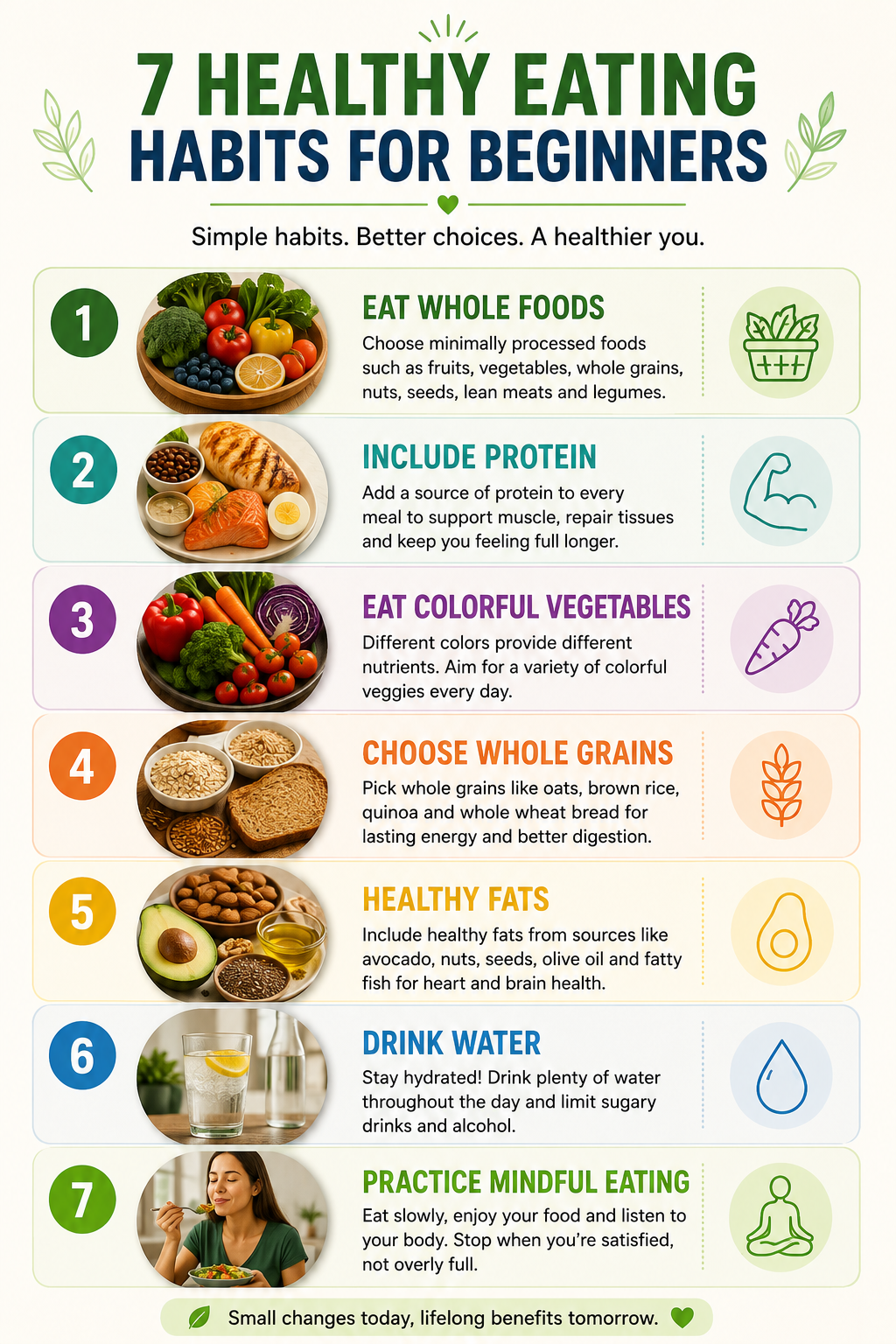
1. Base All Foods on Whole Foods
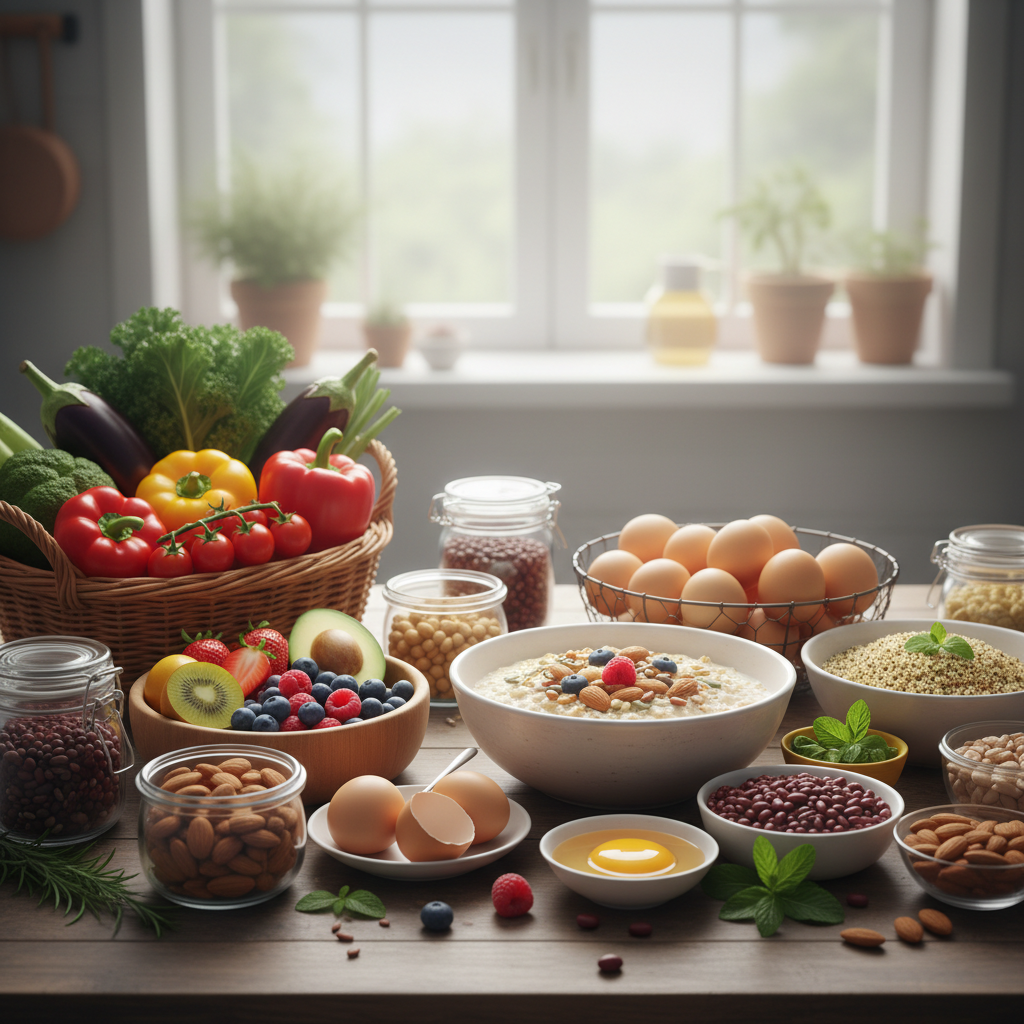
Whole foods are those that have not been heavily processed and are naturally rich in nutrients. They have vitamins, minerals, fiber, and other beneficial substances that contribute to general wellness.
For example:
- Leafy green vegetables and other colorful vegetables
- Fresh fruits
- Whole grains (wheat, oats, quinoa, brown rice)
- Wheat bread
- Eggs
- Fish
- Skinless chicken
- Nuts (unsalted)
- Seeds (flaxseeds, chia seeds, sunflower seeds, and pumpkin seeds)
Choosing whole foods more regularly doesn’t mean you have to completely forgo processed meals. Instead, work to make whole foods the basis of most meals.
Beginner tip
Try to fill at least half your plate with veggies at lunch and dinner.
Common mistake
Instead of trying to eliminate all processed foods at once, focus on making small changes.
2. Consume Protein With Each Main Meal
Protein builds and maintains muscle, stimulates tissue repair, and promotes feeling full after eating.
Good sources of protein include
- Eggs
- Greek yogurt
- Fish.
- Chicken.
- Turkey
- Tofu
- Beans
- Cottage cheese
- Lentils
Eating protein at breakfast may also help to minimize hunger later on.
Tip for beginners
Start your day with a protein-heavy breakfast — not just simple carbs.
Common mistake
Primarily consuming highly processed snack items that are high-calorie but low-nutrition.
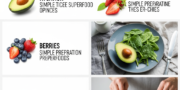
3. Add More Color to Your Plate
Different colored fruits and vegetables contain different vitamins, minerals, and plant compounds that are beneficial to our general health.
Instead of focusing on one “superfood,” look for variety over the week.
Some examples are
- Spinach
- Broccoli
- Tomato
- Carrots
- Bell pepper
- Blueberries
- Strawberries
- Oranges
- Purple cabbage
A vivid diversity also makes meals more pleasurable and helps you eat more dietary fiber.
Beginner tip
Challenge yourself to include at least three different colors on your plate during one meal each day.
Common mistake
Eating the same vegetables every day means you may not get the nutritional benefits of variety.
Healthy Eating Myths Beginners Often Believe
Starting a healthier eating pattern can be confusing because of conflicting advice online. Here are a few common myths worth clearing up.
Myth: Healthy food is always expensive.
Reality: Many nutritious foods are inexpensive, such as oats, beans, lentils, frozen vegetables, eggs, and seasonal fruit.
Myth: Carbohydrates are the devil.
Reality: Whole grain carbs, fruits, vegetables, and beans provide vital minerals and fiber. The goal should be to choose better quality carbohydrate sources, not to eliminate them altogether.
Myth: Skipping meals leads to lower calorie intake.
Reality: If you skip meals, some people end up really hungry later and likely to overeat. Regular balanced meals can help maintain consistent eating habits.
Small Changes To Make Healthy Eating Easier
Healthy habits that are simple to repeat are easier to stick with.
Try one or two tweaks, for example:
- Drink water instead of sugary drinks.
- Choose fruit for a snack.
- Prepare one extra meal at home each week.
- Look at the nutrition label before buying packaged goods.
- Prepare tomorrow’s meals today.
These small changes can lead to a healthy eating pattern over time without feeling restrictive.
4. Go for Smart Carbohydrates
Carbohydrates are your body’s main energy source, but not all carbohydrate foods are made equal. High-quality carbs might help you stay energized and feel satisfied between meals.
Focus on foods such as:
- Oats (Avena sativa)
- Brown rice
- Wheat Bread
- Quinoa
- Sweet potatoes
- Beans
- Lentils
- Fresh fruits
These foods are high in fiber, vitamins, and minerals that processed carbs lack.
Limit items that have a lot of added sugars and refined grains, such as sugary cereals, pastries, candies, and drinks with added sugar.
Beginner tip
Choose a whole grain instead of a refined grain one day.
Common mistake
Opting for no carbs instead of better, more nutritious ones.
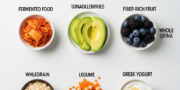
5. Consume Healthy Fats Daily
Healthy fats help your body absorb essential vitamins and promote brain, heart, and overall wellness. They also make meals more satisfying.
Nutritious sources include:
- Avocados
- Olive oil
- Almonds
- Walnuts
- Pistachios
- Chia seeds
- Flaxseeds
- Fatty fish such as salmon
Because healthy fats are calorie-dense, moderate portions are usually enough.
Beginner tip
Add a small handful of unsalted nuts or seeds to snacks instead of highly processed chips.
Common mistake
Thinking all fats should be avoided.
6. Drink Plenty of Water
Water is necessary for digesting, transporting nutrients, and many other vital activities in the body. Drinking water can also help you tell the difference between thirst and hunger.
Here are some easy ways to increase your water intake:
- Carry a refillable water bottle.
- Drink water with your meals.
- For a natural flavor, add lemon or cucumber to water.
- Drink water more often in place of sugary drinks.
Tip for beginners
When working or studying, have a bottle of water handy.
Common mistake
Instead of water, mostly drink sugary drinks.
7. Practice Mindful Eating
Mindful eating means paying attention to your food rather than eating while distracted.
Eat more slowly. This lets you appreciate your food and better identify fullness signals.
The simple behaviors are:
- Eat at the table.
- Chew food well.
- Put your fork down between bites.
- Turn off distractions like television and cell phones.
- Stop eating when comfortably satisfied rather than overly full.
Beginner tip
Choose one meal each day to eat without screens.
Common mistake
Eating quickly without noticing portion sizes.
Healthy Plate Method
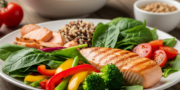
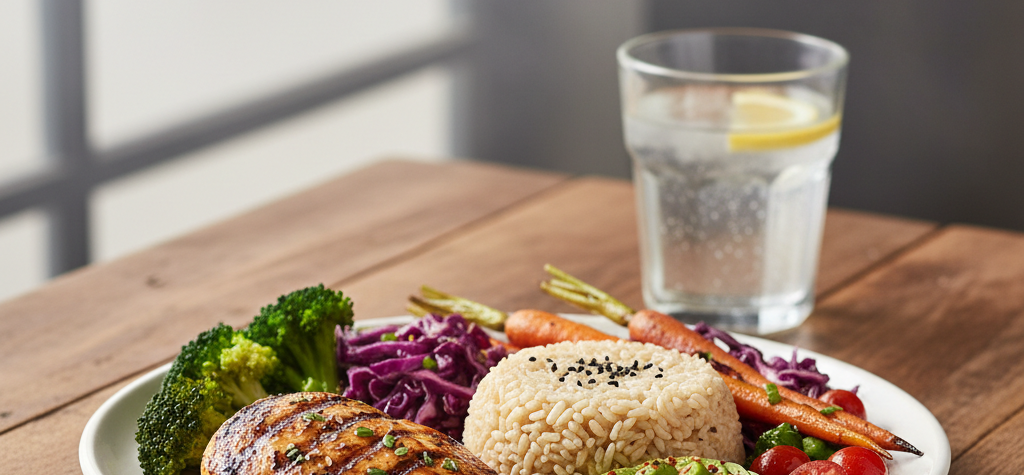
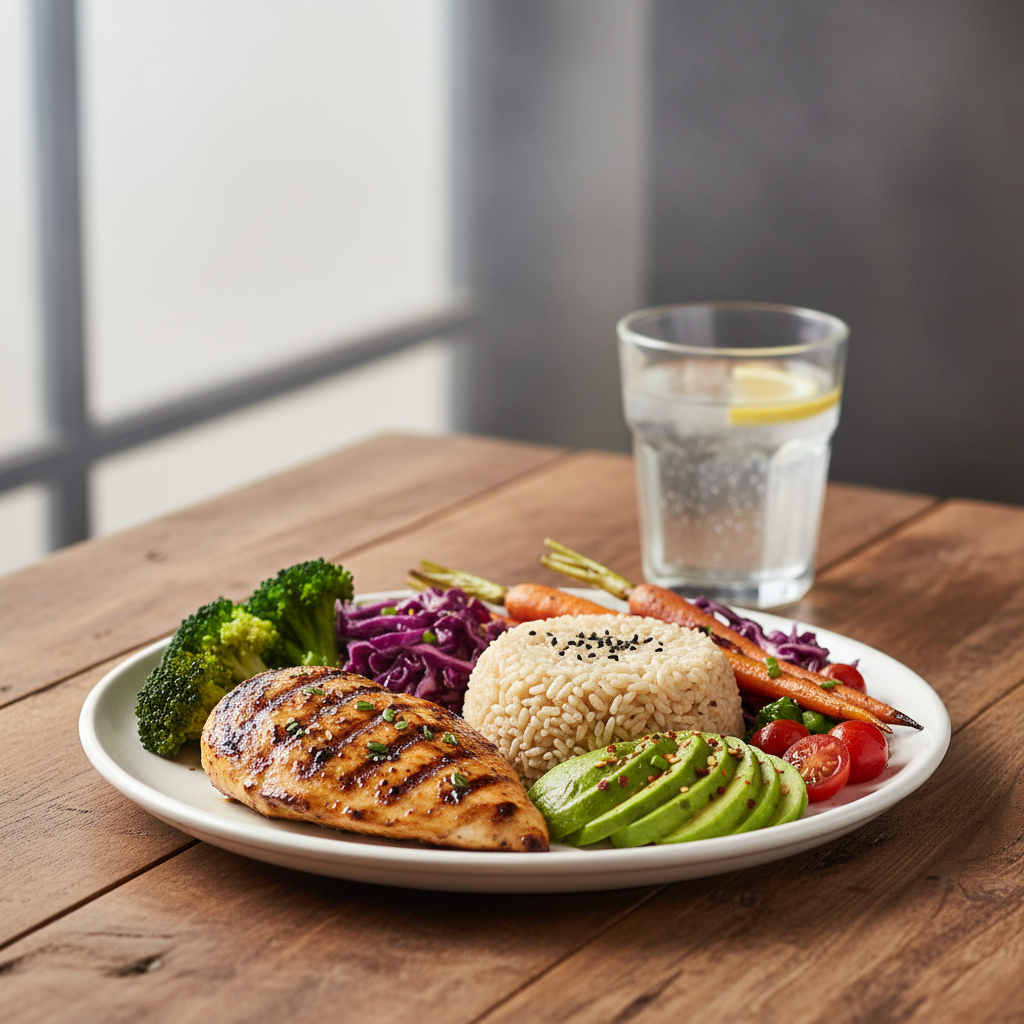
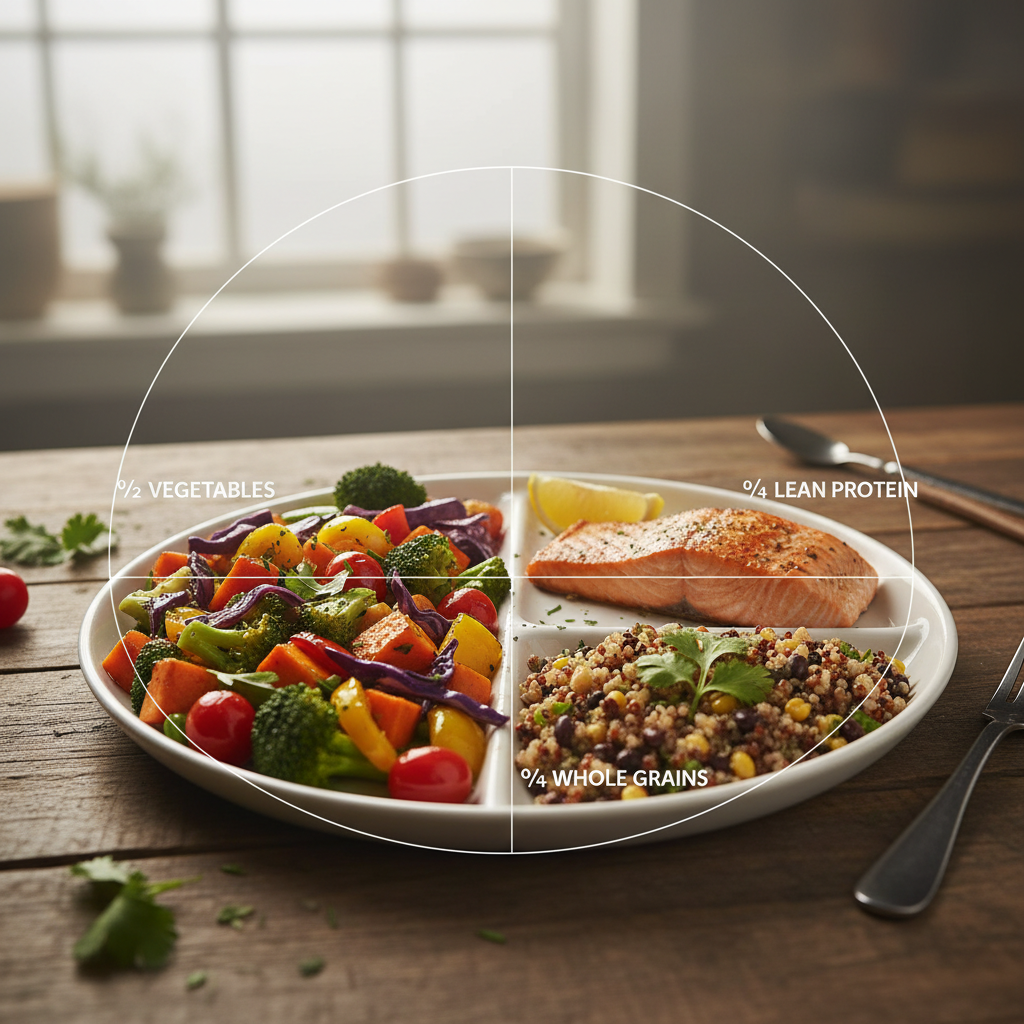
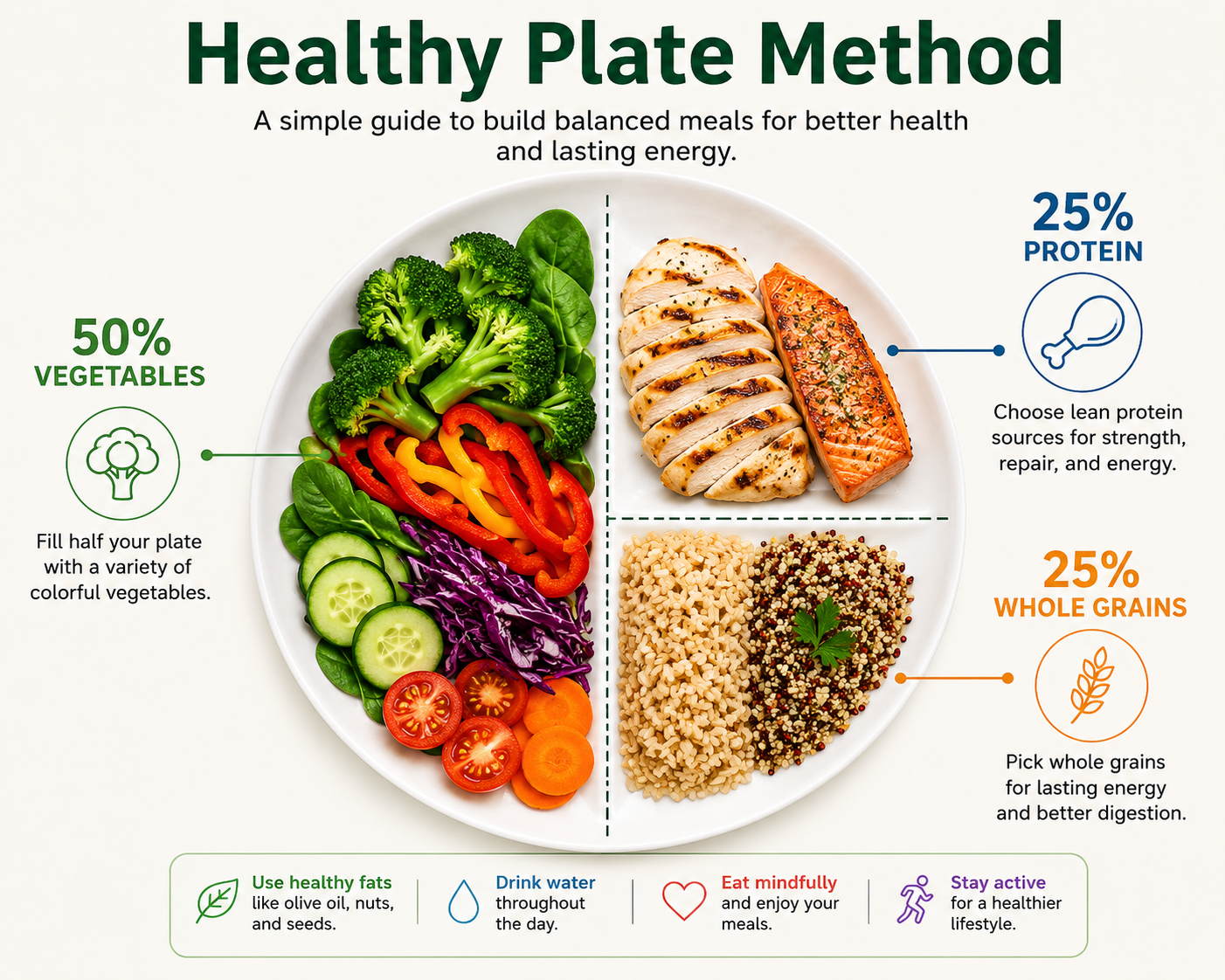
A simple way to build balanced meals is to use the healthy plate method. Fill half your plate with vegetables, one-quarter with lean protein, and one-quarter with whole grains.
This placement improves readability, keeps users engaged, and supports SEO by breaking up text with a relevant visual.
Beginner Grocery Shopping List
Having healthy foods at home makes it easy to make healthy choices.
- Vegetables.
- Spinach.
- Tomatoes
- Broccoli
- Carrots
- Cucumber
- Bell pepper
Fruits
- Apples
- Banana
- Oranges
- Berries
- Pears
Whole grains
Oats.
Brown rice
Whole wheat bread
Quinoa
Protein Foods
- Eggs
- Greek yogurt
- Skinless chicken
- Beans
- Fish
- Lentils
- Tofu
Good Fats
- Olive oil
- Almonds.
- Walnuts
- Chia seeds
- Flaxseeds
Meal Prep Tips for Busy People
Preparing a few things in advance will save you time and make it easier to eat healthy throughout the week.
Here are some easy suggestions:
- Wash and chop vegetables after supermarket shopping.
- Cook an extra batch of brown rice or quinoa.
- Grill larger amounts of chicken or beans.
- Portion out healthful snacks into small containers.
- Freeze leftovers for busy days.
Meal preparation doesn’t need to take hours. Even 30–60 minutes once a week can make healthy eating easier.
Portion Guide
You don’t have to count every calorie to build balanced meals.
A simple plate approach is often helpful for many beginners:
- ½ plate: Vegetables
- ¼ plate: Lean protein
- ¼ plate: High-fiber carbs such as whole grains
Add a small portion of healthy fats such as olive oil, avocado, or nuts if suitable.
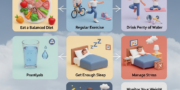
Good Habits Outside of Food
A healthy lifestyle is more than just nutrition.
Also try these:
- Get enough sleep most nights.
- Keep physically active.
- Manage your daily stress.
- Don’t smoke.
- Use alcohol in moderation.
- Make sure to have frequent health check-ups.
These behaviors and proper nutrition can help you stay healthy for a long time.
Pro Tips To Help Make Healthy Eating Easier
Eating healthy is more sustainable when it fits into your daily life. These practical tips will help you stay consistent without feeling confined.
Plan your meals for the coming week.
A basic meal plan removes the uncertainty of last-minute choices and helps you find healthy foods.
Start planning:
- Breakfast
- Lunchtime
- Dinner
- Healthy snacks
A basic grocery list can also help you avoid buying unneeded items, too.
Read the nutrition labels.
Nutrition labels can assist in comparing packaged foods.
Note:
- Added sugars
- Salt
- Fiber
- Saturated fat
- Protein
- Serving sizes
Choosing items with less added sugar and sodium can lead to a better eating pattern.
Eat More Meals at Home
You have more control over ingredients and portions when you make your own food at home.
Simple meals are often enough.
Examples include:
- Grilled chicken with vegetables
- Lentil soup
- Vegetable omelet
- Brown rice with beans
- Baked fish with steamed broccoli
Don’t Aim for Perfection
No one eats perfectly every day.
One not-so-healthy lunch won’t break your progress. Don’t give up; just get back to your healthy practices at your next meal.
Perfection isn’t as important as being consistent.
Change One Thing at a Time
Trying to adjust everything all at once might be stressful.
Instead, pick one habit a week to work on.
Examples are:
- Drink more water.
- Eating vegetables with dinner.
- Choosing whole grains.
- Eating breakfast regularly.
Small changes often become lasting habits.
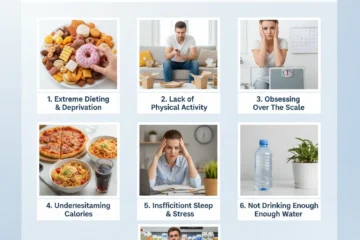
Common mistakes beginners make
Many newcomers unwittingly make healthy eating more difficult than it needs to be.
Avoid these errors:
Not eating
If you skip a meal, you might be ravenous when it comes time to eat again, which increases the chances of overindulging.
Following Restrictive Diets
Removing entire food groups without medical advice can make healthy eating harder to sustain and may decrease nutritional intake.
Relying on Processed “Health Foods”
Not everything that has a “healthy” label is healthy.
As always, check ingredient lists and nutrition labels instead of relying on marketing claims alone.
Drinking Too Many Calories
Fruit-flavored drinks, sweetened coffees, and soft drinks may add many calories, but they won’t satisfy your hunger for long.
Water is usually the best everyday choice.
Ignoring Portion Sizes
Even nutritious foods can contribute to excess calorie intake when eaten in huge portions.
Using smaller plates and eating slowly may help.
Expecting Instant Results
Healthy eating is an investment in your future health
Build habits rather than try to chase all the rapid changes.
Who Should Try This Way of Eating?
This simple, beginner eating plan can be beneficial for many healthy individuals who want to:
- Improve their overall diet
- Create healthy eating habits.
- Promote healthy weight maintenance.
- Boost energy levels.
- Learn how to plan meals in a balanced way.
- Cut down on highly processed foods.
Individuals with diabetes, kidney diseases, food allergies, digestive issues, pregnancy, or other medical concerns should consult a skilled health care provider or registered dietitian for tailored guidance before making major changes to their diet.
Sample Healthy Eating Meal Plan for Beginners
This sample meal plan is for general educational purposes and may be adjusted to suit individual dietary needs and preferences.
| Day | Breakfast | Morning Snack | Lunch | Afternoon Snack | Dinner |
|---|---|---|---|---|---|
| Monday | Oatmeal with banana and a handful of almonds | Apple | Brown rice, grilled chicken, mixed vegetables | Plain Greek yogurt | Baked fish, steamed broccoli, and sweet potato |
| Tuesday | Whole wheat toast with boiled eggs | Orange | Lentil curry with brown rice and cucumber salad | Unsalted nuts | Vegetable stir-fry with tofu and quinoa |
| Wednesday | Greek yogurt with berries and chia seeds | Pear | Whole wheat chapati, grilled chicken, and spinach | Carrot sticks | Baked salmon with roasted vegetables |
| Thursday | Vegetable omelet with whole wheat toast | Banana | Chickpea salad with mixed vegetables | Apple with peanut butter | Brown rice with beans and mixed vegetables |
| Friday | Overnight oats with berries | Handful of walnuts | Grilled fish with quinoa and broccoli | Plain yogurt | Skinless chicken with sweet potato and green beans |
| Saturday | Whole grain cereal with low-fat milk and fruit | Orange | Vegetable soup with whole wheat bread | Mixed nuts | Lentil stew with brown rice and salad |
| Sunday | Scrambled eggs with whole wheat toast and tomato | Apple | Grilled chicken with quinoa and vegetables | Fresh fruit | Baked fish with spinach and roasted sweet potato |
How to Begin This Plan Right Now
For instance:
Choose one healthy breakfast option.
Replace one sugary drink for water.
Add one extra serving of vegetables to your meals.
Cook one dinner at home.
Repeat these habits every day for one week.
What Helped Me Stay Consistent
When I started learning about nutrition, I realized that trying to change everything at once wasn’t realistic. Focusing on one habit—such as eating a protein-rich breakfast or replacing sugary drinks with water—made healthy eating easier to maintain. Over time, these small changes became part of my daily routine.
Frequently Asked Questions
1. What is a basic healthy diet plan for beginners?
A simple healthy eating plan for beginners consists of balanced meals that include vegetables, fruits, whole grains, lean protein, and healthy fats. It’s not a limited diet; it’s about sustainable practices.
2. Should I stay away from carbohydrates?
No. Whole-food forms of carbohydrates, including oats, brown rice, fruits, legumes, and sweet potatoes, all provide significant minerals and fiber. The aim is to make better carbohydrate choices more often.
3. How much water should I drink in a day?
Fluid needs vary with age, climate, intensity of activity, and health problems. Good general habits include drinking water regularly throughout the day and responding to your thirst. Your healthcare provider may suggest different dosages if you have certain medical issues.
4. Is healthy eating expensive?
That’s not always the case. Foods such as oats, beans, lentils, eggs, frozen veggies, seasonal fruit, and brown rice are healthful and often affordable.
5. Will I still be able to eat the foods I love?
Yes. A healthy eating routine leaves room for the occasional pleasure. The aim is to make nutritious choices most of the time, not perfect choices all of the time.
6. How long does it take to develop healthy eating habits?
It’s different for everyone, but making little consistent changes over a period of weeks can help you make healthy behaviors part of your normal routine.
Conclusion
You don’t need pricey items or tight diet restrictions to create a simple healthy eating plan for beginners. Eating whole foods, choosing balanced meals, drinking enough water, and planning ahead are just some of the realistic, little changes that can help make healthy eating simpler to adopt and maintain.
Long-term success comes from consistency, not from perfection. Keep that in mind. Focus on one habit at a time. Enjoy a range of healthy foods. Allow some flexibility along the way. These simple behaviors can help you improve your health, enhance your energy, and establish a healthy lifestyle that lasts—with patience and consistent improvement.
Research Method
This article was assembled using current dietary guidelines, public health policy guidance, and peer-reviewed scientific studies on balanced nutrition, healthy eating patterns, meal planning, and long-term lifestyle behaviors. We aimed to translate evidence-based nutrition concepts into practical advice for beginners to use in their everyday lives.
- Dietary Guidelines for Americans
- Harvard Healthy Eating Plate
- WHO Healthy Diet
- CDC Healthy Eating
- Harvard Protein
- Harvard Whole Grains
- Harvard Healthy Fats
- FDA Nutrition Facts Label
- CDC Water and Healthy Drinks
- Academy of Nutrition and Dietetics
Medical Disclaimer
This article is for educational purposes only and is not a substitute for professional medical advice, diagnosis, or treatment. Always consult your physician or other healthcare professional before making any changes in your diet, especially if you have a medical condition or specific nutritional needs.
Related Content
- 14 Ways to Increase Protein Intake Daily Tips
- Fuel Your Body Right: 6 Best Ultimate Guide to Smart Nutrition
- 6 Tips To How To Maintain A Healthy Weight ?
- Best Weight Loss Nutrition
- 4 Week Diet Plan for Weight Loss










[…] Simple Healthy Eating Plan for Beginners: A Science-Backed Guide […]
[…] Simple Healthy Eating Plan for Beginners: A Science-Backed Guide […]
[…] Simple Healthy Eating Plan for Beginners: A Science-Backed Guide […]
[…] Simple Healthy Eating Plan for Beginners: A Science-Backed Guide […]
[…] Simple Healthy Eating Plan for Beginners: A Science-Backed Guide […]
[…] Simple Healthy Eating Plan for Beginners: A Science-Backed Guide […]
[…] Simple Healthy Eating Plan for Beginners: A Science-Backed Guide […]
[…] Simple Healthy Eating Plan for Beginners: A Science-Backed Guide […]
[…] Simple Healthy Eating Plan for Beginners: A Science-Backed Guide […]
[…] Simple Healthy Eating Plan for Beginners: A Science-Backed Guide […]
[…] Simple Healthy Eating Plan for Beginners: A Science-Backed Guide […]
[…] Simple Healthy Eating Plan for Beginners: A Science-Backed Guide […]
[…] Simple Healthy Eating Plan for Beginners: A Science-Backed Guide […]
[…] Simple Healthy Eating Plan for Beginners: A Science-Backed Guide […]
[…] Simple Healthy Eating Plan for Beginners: A Science-Backed Guide […]