








































































































































Weight Management Supplements for Women Over 40: Evidence and Safety Guide
Author: RVLNSV PRASAD
Updated: September 2026
About Us | Author Bio | Editorial Policy | Contact Us
Quick Answer
The best weight management supplements for women over 40 are not necessarily products advertised as “fat burners.”
Some supplements can be useful when they fill a nutritional gap or make a healthy eating pattern easier to follow. Protein supplements can help increase protein intake, while certain viscous fiber supplements may provide a modest benefit for body weight when combined with an appropriate diet. However, evidence for many commercial weight-loss supplements remains weak.
The National Institutes of Health Office of Dietary Supplements notes that there is little scientific evidence that most dietary supplements marketed specifically for weight loss produce meaningful results, and some can interact with medicines or cause harm.
For women over 40, the more useful question is therefore not “Which supplement burns the most fat?”
It is:
“Which supplement, if any, solves a specific nutritional or lifestyle problem without creating unnecessary risk?”
That distinction can save money, reduce disappointment, and make weight management more realistic.
Introduction
Finding effective weight management supplements for women over 40 can be surprisingly confusing.
Walk into a health store or browse an online marketplace and you may see capsules promising appetite control, powders claiming to increase metabolism, herbal blends marketed as fat burners, and gummies advertised as natural weight-loss solutions.
The marketing can make weight management appear much easier than it really is.
But the human body does not work like an advertisement.
After 40, many women also find that the strategies they used in their 20s and 30s no longer feel as effective. Changes in daily activity, muscle mass, sleep, stress, eating patterns, and, for some women, the menopausal transition can all influence weight management.
That does not mean weight gain is inevitable.
It means the strategy may need to become more practical and individualized.
I have seen this repeatedly while learning about nutrition and healthy lifestyle habits. People often begin by looking for a capsule. Later, they discover that the bigger opportunity was improving breakfast, protein intake, daily movement, sleep, or portion awareness.
That experience changed the way I look at supplements.
A supplement can sometimes be useful.
It should not become the foundation of a weight-management plan.
The NIH Office of Dietary Supplements explains that weight-loss supplements contain many different ingredients and combinations, while evidence for effectiveness is often limited. Manufacturers also rarely conduct large, long-term human studies that can establish whether a complete supplement is both effective and safe.
This article takes a different approach.
Instead of presenting a long list of “miracle” products, it examines ingredients according to what they may actually contribute, where the evidence is stronger or weaker, and how women over 40 can make safer decisions.
Why Weight Management Can Feel Different After 40
Age itself is not a reason to take a supplement.
However, several changes that commonly occur during midlife can make weight management more complicated.
Muscle mass can decline with age, particularly when resistance training and adequate protein intake are lacking. Daily routines can also become less active because of work, family responsibilities, or other lifestyle changes.
Sleep may become less consistent.
Stress may increase.
For some women, the menopausal transition can also bring changes in body composition and fat distribution.
These factors can interact rather than occur separately.
For example, poor sleep may make healthy eating more difficult the following day. Less resistance training may reduce the stimulus needed to preserve muscle. A lower-protein breakfast may leave someone hungry again soon after eating.
This is why simply adding a “fat burner” may miss the real problem.
A better strategy is to identify the bottleneck first.
A useful midlife checklist
Before buying a supplement, ask:
- Am I eating enough protein?
- Am I regularly eating fiber-rich foods?
- Do I perform resistance training?
- Do I walk or otherwise move most days?
- Is my sleep reasonably consistent?
- Am I drinking enough fluids?
- Am I relying heavily on ultra-processed snack foods?
- Am I taking medications that could interact with supplements?
- Do I actually have a nutritional deficiency?
- Am I expecting a supplement to do a job that requires dietary or behavioral changes?
Those questions can be more valuable than comparing dozens of supplement bottles.
What Makes a Weight Management Supplement Worth Considering?
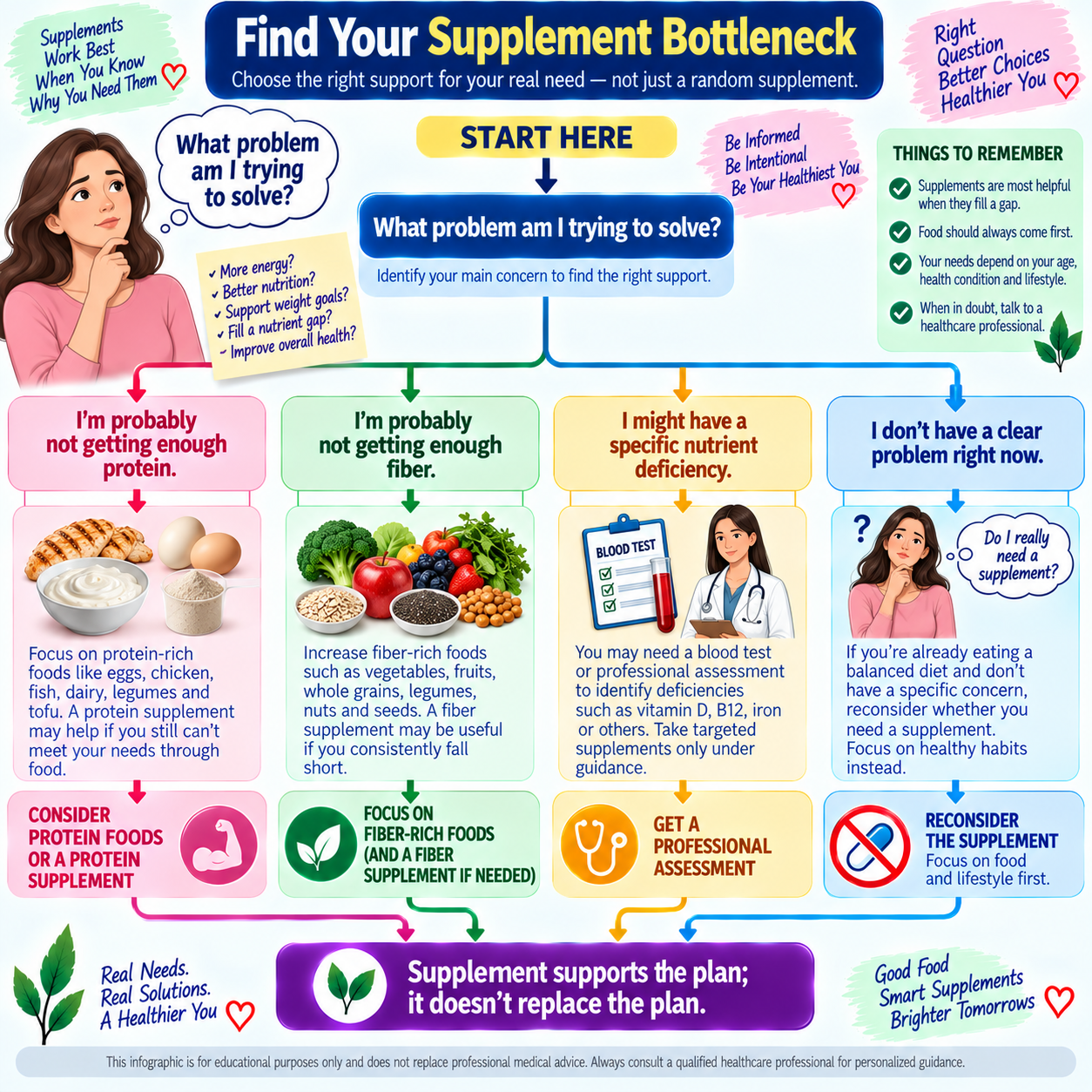
A sensible supplement should have a specific purpose.
For example, protein powder may be useful for someone who struggles to obtain enough protein from food.
- A fiber supplement may be practical for someone whose diet remains low in fiber despite reasonable food choices.
- A vitamin or mineral supplement may be appropriate when a deficiency or increased requirement has been identified.
That is very different from taking a multi-ingredient “fat burner” simply because the label promises rapid weight loss.
The National Center for Complementary and Integrative Health specifically warns that many supplements marketed for rapid weight loss have not been proven safe or effective and that exaggerated claims and testimonials should not be treated as evidence.
The five-question supplement test
Before taking a product, ask:
| Question | Why it matters |
|---|---|
| What problem am I trying to solve? | Prevents unnecessary supplementation |
| Is there human research on the ingredient? | Laboratory evidence is not enough. |
| Is the expected benefit meaningful? | A statistically significant effect may still be tiny. |
| Could it interact with my medicines? | Supplements can affect medication safety. |
| Can food or lifestyle solve the same problem? | Food may provide additional nutrients and benefits. |
This approach is especially useful after 40 because the goal should be sustainable health rather than rapid scale changes.
Protein Supplements: One of the More Practical Options
Protein powder is not a fat burner.
That is important.
Its potential value comes from helping someone reach an adequate protein intake conveniently.
Protein can contribute to fullness and can support maintenance of lean body mass when combined with an appropriate diet and physical activity.
A systematic review and meta-analysis of randomized trials found that higher-protein dietary interventions produced a modest improvement in body weight compared with control diets.
Another meta-analysis found that higher protein intake can increase feelings of fullness under controlled conditions.
Protein also becomes particularly relevant when weight management includes resistance training.
A systematic review of 65 randomized studies involving 2,907 adults found that protein supplementation improved lean body mass in adults and older adults, although effects on strength were less consistent.
Who might benefit from protein powder?
A protein supplement may be practical if you:
- regularly skip protein-rich foods at breakfast
- have difficulty preparing meals
- prefer a convenient post-exercise option
- follow a vegetarian or vegan diet and struggle to reach protein targets
- have increased protein needs discussed with a healthcare professional
Simple food-first examples
Instead of automatically buying a powder, consider:
- Eggs with vegetables
- Greek yogurt with fruit
- Dal with vegetables
- Beans with whole grains
- Paneer with vegetables
- Tofu with a mixed vegetable meal
- Fish or lean poultry where appropriate
A powder is a convenience tool.
It is not nutritionally superior simply because it comes in a container.
Fiber Supplements for Weight Management
Fiber is another ingredient worth discussing because the evidence is more specific than the marketing surrounding many “fat-burning” ingredients.
Certain types of viscous fiber can absorb water and increase viscosity in the digestive tract.
That may influence fullness and digestion.
A systematic review and meta-analysis of 62 randomized trials found that viscous fiber produced modest reductions in body weight, BMI, and waist circumference even without deliberate calorie restriction. The researchers also noted differences in certainty across outcomes.
Another meta-analysis involving calorie-restricted diets found a modest reduction in body weight, BMI, and body fat with viscous fiber supplementation.
The word “modest” matters.
Fiber is not a magic fat burner.
Food first
Before buying fiber capsules or powders, look at your meals.
Useful sources include:
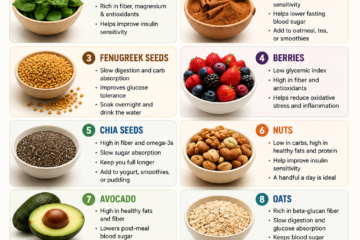
- Oats
- Beans
- Lentils
- Chickpeas
- Vegetables
- Fruit
- Chia seeds
- Flaxseeds
- Whole grains
One practical approach is to gradually increase fiber-containing foods rather than making a sudden dramatic change.
Drinking adequate fluids is also important when increasing fiber intake.
A simple fiber habit
Try adding one fiber-rich food to a meal that currently contains very little fiber.
For example:
Breakfast: oats + fruit
Lunch: dal + vegetables
Snack: fruit + yogurt
Dinner: beans or vegetables + whole grains
This can be more sustainable than relying entirely on a fiber supplement.
Green Tea Extract: Popular but Not a Miracle
Green tea extract appears in many weight management products.
It contains catechins and may also provide caffeine.
That sounds promising.
The actual weight-loss evidence is much less impressive.
NCCIH notes that research has not shown green tea supplements to produce meaningful weight loss. A review discussed by NCCIH found the effect from green tea preparations to be very small and unlikely to be clinically important.
This distinction is important for readers.
An ingredient can influence metabolism in a laboratory setting without producing a meaningful change in body weight in everyday life.
Why caution is important
Green tea extract is also not identical to drinking a cup of green tea.
Concentrated extracts can provide much larger quantities of compounds than ordinary beverages.
Some products also combine green tea extract with substantial amounts of caffeine or other stimulants.
Women who are sensitive to caffeine may experience:
If sleep is already a problem, taking a stimulant-heavy weight-loss supplement may be particularly counterproductive.
Probiotics and Weight Management
The relationship between the gut microbiome and body weight is an active research area.
That does not mean every probiotic supplement causes weight loss.
Evidence remains mixed.
An earlier systematic review and meta-analysis of probiotic studies found no significant effect on body weight or BMI, while also noting that the number and quality of randomized trials were limited.
This is an important example of why “gut health” should not automatically be translated into “weight loss.”
Probiotics may have specific uses depending on the strain and health situation.
But buying a probiotic simply because the label says weight management is not the same as having evidence that the particular product produces meaningful fat loss.
Vitamins and Minerals: Useful When There Is a Reason
Women over 40 may pay particular attention to vitamin D, iron, vitamin B12, magnesium, and other nutrients.
These nutrients are important for health.
But that does not mean taking more automatically causes weight loss.
A vitamin or mineral supplement should generally have a clear purpose.
That purpose could include correcting a documented deficiency, meeting a specific nutritional requirement, or addressing a dietary limitation.
Taking a large dose simply because it is marketed for metabolism is a different matter.
The NIH Office of Dietary Supplements provides individual fact sheets for vitamins, minerals, and other ingredients, which can help consumers examine evidence and safety rather than relying on advertising claims.
A practical rule
Correct a nutritional problem; do not manufacture one.
If you suspect iron, vitamin B12, vitamin D, or another deficiency, discuss appropriate testing with a healthcare professional rather than guessing from symptoms alone.
What About “Natural” Fat Burners?
This is where women should become particularly cautious.
“Natural” does not mean harmless.
NCCIH specifically notes that some dietary supplements can interact with medications or pose risks for people with particular medical conditions. It also warns that products marketed for weight loss may contain undeclared ingredients.
Ingredients commonly promoted in aggressive weight-loss products include stimulant herbs, concentrated caffeine sources, and combinations of multiple botanicals.
The problem is not simply whether one ingredient sounds natural.
The bigger question is
What exactly is in the finished product, at what dose, and what evidence supports that combination?
Ingredients and Products I Would Be Especially Cautious About
Bitter orange
Bitter orange is often marketed as a stimulant or metabolism booster.
NCCIH reports that research has not established meaningful weight-loss benefits and that safety concerns exist.
Acai
Acai is frequently promoted as a slimming ingredient.
There is not convincing evidence that acai alone produces rapid or meaningful weight loss.
Hoodia
Hoodia has historically been marketed as an appetite suppressant.
Evidence does not support the type of dramatic weight-loss claims frequently associated with it.
Ephedra
Ephedra is an especially important historical warning.
The FDA banned dietary supplements containing ephedra in the United States because of serious health risks, including cardiovascular complications.
The lesson is broader than one ingredient.
A product can be popular and heavily marketed without being safe.
A Major Problem: Hidden Ingredients
This deserves its own section because it can be overlooked when people compare supplement labels.
The FDA continues to identify weight-loss products containing hidden drug ingredients.
Its current weight-loss product notification page lists multiple recent products that contained undeclared substances. In September 2026, for example, the FDA warned consumers about a product called ZUBB after laboratory testing found undeclared sildenafil.
The FDA also issued a September 15, 2026, warning concerning LUZE Fit Intensity after laboratory analysis found undeclared sibutramine.
These examples do not mean every weight-management supplement is contaminated.
They demonstrate why consumers should be cautious about products making extraordinary promises.
Red flags on a product page
Be skeptical when you see:
- “Lose weight without diet or exercise”
- “Guaranteed fat loss”
- “Lose 10 pounds in one week”
- “Doctor-approved” without identifiable evidence
- “Secret formula”
- “Proprietary fat-burning matrix” with no meaningful dose information
- Before-and-after photos presented as proof
- Numerous testimonials but no human clinical evidence
- Pressure to purchase immediately
- Claims that the product is completely risk-free
NCCIH specifically advises consumers to be cautious about exaggerated claims and testimonials.
A Better Way to Choose Supplements
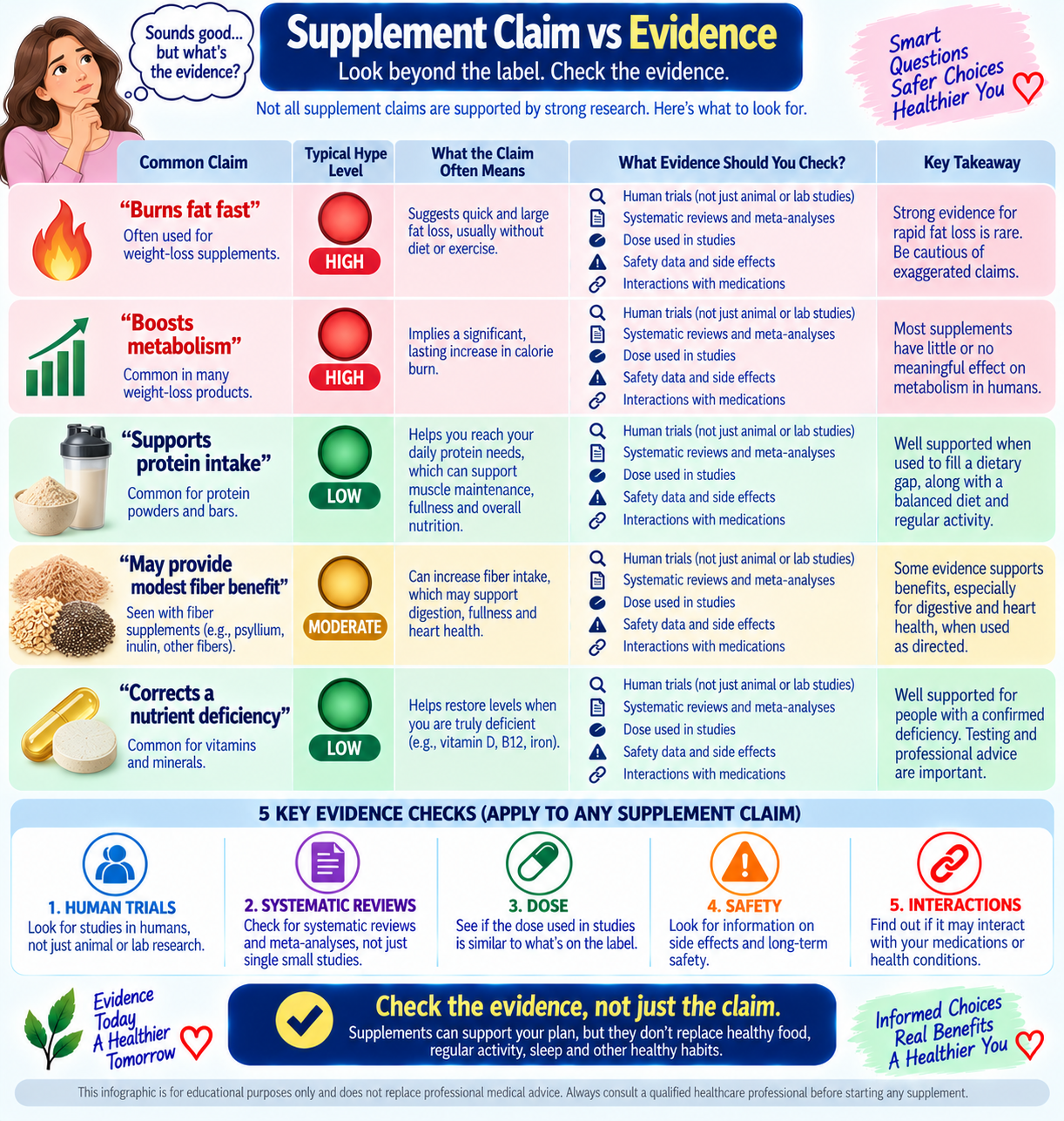
Instead of asking which supplement is “best,” use a decision process.
Step 1: Identify the problem.
Are you hungry between meals?
Are you struggling to obtain enough protein?
Is your diet low in fiber?
Are you trying to correct a nutrient deficiency?
Different problems require different solutions.
Step 2: Look at the ingredient, not the marketing name
“Metabolism booster” is a marketing category.
Protein isolate, psyllium, or vitamin D are specific ingredients.
Specific ingredients are easier to research.
Step 3: Check human evidence.
Prefer:
- Randomized controlled trials
- Systematic reviews
- Meta-analyses
- Government health resources
- Professional medical organizations
Be cautious about relying on:
- Influencer testimonials
- Animal studies
- Laboratory experiments
- Company-funded claims without independent evidence
- Before-and-after photographs
Step 4: Check the dose.
An ingredient may have research behind it, but the product may contain a completely different amount.
This is one reason the NIH notes that products purchased by consumers may differ from those used in research studies.
Step 5: Check medication interactions
This is particularly important if you take prescription or over-the-counter medicines.
NCCIH recommends telling healthcare professionals about supplements because interactions can occur.
Comparison Table: Ingredients Worth Understanding
| Ingredient | Potential role | Evidence for weight management | Main consideration |
|---|---|---|---|
| Protein powder | Helps increase protein intake | Moderate for protein-rich diets; supplement benefit depends on context | Choose according to dietary needs. |
| Viscous fiber | Fullness and digestive effects | Modest evidence | Increase gradually and drink fluids. |
| Green tea extract | Catechins/caffeine | Small or clinically limited effect | Concentrated extracts and caffeine require caution. |
| Probiotics | Gut-related effects | Mixed/inconclusive | Strain-specific evidence matters. |
| Vitamin D | Corrects deficiency | Not a standalone weight-loss supplement | Use for an identified need. |
| Iron | Corrects iron deficiency | Not a fat burner | Excess iron can be harmful. |
| Magnesium | Supports normal body functions | Not established as a weight-loss treatment | Avoid unnecessary high doses. |
| Bitter orange | Stimulant-style marketing | Poor evidence | Potential safety concerns |
| Acai | Antioxidant food ingredient | No convincing meaningful weight-loss evidence | Marketing often exceeds evidence. |
| “Fat burner blends” | Multiple ingredients | Often unclear | Difficult to establish safety/effectiveness |
The overall picture matches the NIH and NCCIH assessments: evidence for most products marketed specifically for weight loss remains limited or unconvincing.
A People-First Approach: Fix the Bottleneck
One of the most useful lessons I have learned is that people often do not need more supplements.
They need to solve the problem that keeps disrupting their routine.
If hunger is the problem
Try building meals around protein, vegetables, fruit, legumes, and whole grains before buying an appetite suppressant.
Higher protein intake can increase fullness in controlled studies, although individual responses vary.
If low fiber is the problem
Start with beans, lentils, vegetables, oats, fruit, seeds, and whole grains.
A fiber supplement can be considered when dietary intake remains inadequate.
If lack of time is the problem
A simple protein shake may be more practical than skipping breakfast and becoming extremely hungry later.
If late-night eating is the problem
Look at your daytime meals and sleep routine before purchasing a nighttime appetite-control supplement.
If muscle loss is the concern
Resistance training and adequate protein deserve attention.
Protein supplementation has evidence for supporting lean body mass in adults, particularly when it helps increase total protein intake.
These approaches are less exciting than a “7-day fat burner.”
They are also much closer to how sustainable weight management actually works.
My Personal Experience With the Supplement Mindset
- I have made the same mistake many people make.
- I once expected a simple health product to create a noticeable change quickly.
- That expectation was the problem.
- Over time, I learned that the more useful changes were ordinary ones.
- I paid more attention to meals.
- I included more protein.
- I tried to move more during the day.
- I became more consistent with sleep.
- I stopped treating every appetite signal as a problem that needed a product.
The lesson was not that supplements are useless.
It was that they should have a supporting role.
That distinction has stayed with me while researching nutrition and weight management.
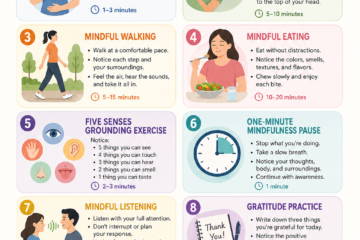
Five Easy Habits That Can Matter More Than a Supplement
1. Upgrade breakfast protein
Instead of starting the day with a highly refined breakfast, consider eggs, Greek yogurt, tofu, paneer, dal-based foods, or another protein-rich option that fits your diet.
2. Add one high-fiber food to lunch.
A serving of beans, lentils, vegetables, or whole grains can improve the nutritional quality of the meal without requiring a complicated diet.
3. Take a short walk after a meal.
A short walk can be easier to maintain than an intense exercise plan that lasts two weeks and disappears.
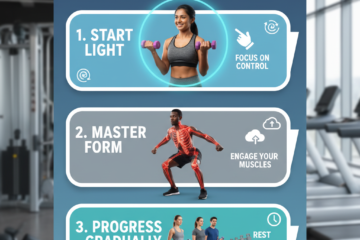
4. Build two weekly resistance-training sessions.
Muscle is valuable for physical function and body composition.
The goal does not have to be bodybuilding.
Simple resistance exercises can be adapted to fitness level.
5. Create a “pause before snacking” habit
When you want an unplanned snack, pause briefly and ask:
Am I physically hungry, or am I tired, stressed, bored, or simply near food?
This is not about denying yourself food.
It is about understanding the trigger.
Common Mistakes Women Make With Weight Management Supplements
Mistake 1: Taking several products at once
Combining multiple supplements makes it difficult to know what is helping or causing side effects.
It may also increase exposure to overlapping ingredients.
Mistake 2: Assuming natural means safe
It does not.
NCCIH explicitly warns that “natural” does not automatically mean safe.
Mistake 3: Ignoring the serving size
A bottle may look inexpensive until you discover that the recommended serving contains several capsules per day.
Mistake 4: Treating testimonials as clinical evidence
A person saying “this worked for me” can be interesting.
It cannot establish that the product works for most people.
Mistake 5: Expecting supplements to overcome an unhealthy routine
A supplement cannot reliably compensate for consistently poor sleep, very low activity, overeating, or an unbalanced diet.
Mistake 6: Buying because of urgency
“Only today.”
“Limited stock.”
“Last chance.”
Those are sales techniques, not evidence.
What Women Over 40 Should Discuss With a Healthcare Professional
Talk with a healthcare professional before starting a weight-management supplement if you:
- take prescription medicines
- have diabetes
- have high blood pressure
- have heart disease
- have liver disease
- have kidney disease
- are pregnant or breastfeeding
- are preparing for surgery
- have a history of an eating disorder
- have unexplained weight changes
- are considering multiple supplements
The NIH specifically recommends extra caution for people with conditions such as hypertension, diabetes, heart disease and liver disease.
Women taking several medications should be particularly careful because supplement-drug interactions can be difficult to predict.
Supplements vs. Prescription Weight-Management Medicines
These categories should not be confused.
Dietary supplements are not the same as prescription anti-obesity medicines.
Prescription treatments are evaluated as medicines and may be appropriate for some people after a clinical assessment.
For example, updated Indian obesity-management guidance discusses pharmacotherapy for selected people with higher BMI and associated health risks, alongside lifestyle intervention and individualized medical counseling.
That does not mean everyone should take medication.
It means persistent obesity with health complications deserves proper medical assessment rather than an endless search for over-the-counter “fat burners.”
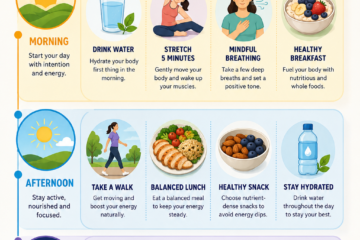
A Simple Daily Framework for Women Over 40
| Time | Practical habit |
|---|---|
| Morning | Protein-rich breakfast |
| Mid-morning | Water and movement break |
| Lunch | Protein + vegetables + fiber-rich carbohydrate |
| Afternoon | Planned snack if genuinely hungry |
| Evening | Walking or resistance exercise according to your routine |
| Dinner | Balanced meal with appropriate portions |
| Night | Reduce unnecessary screen stimulation and protect sleep. |
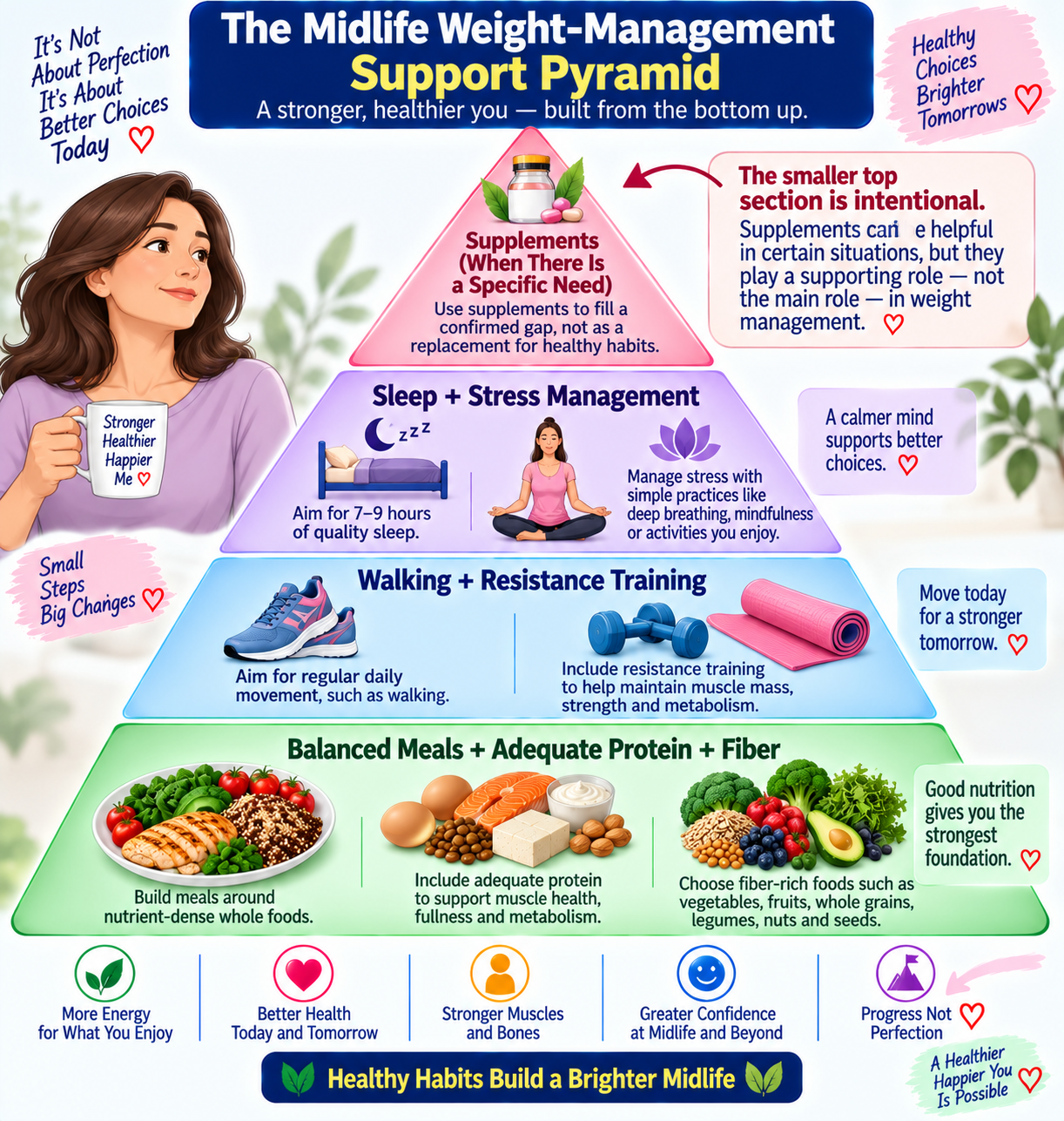
A supplement, if needed, should fit into this framework rather than replace it.
What the Latest Evidence Really Says
The most important recent development is not the discovery of a magical new supplement.
It is the growing emphasis on distinguishing evidence-backed treatment from supplement marketing.
The NIH continues to describe the evidence supporting dietary supplements for weight loss as limited, while NCCIH warns that many products marketed for rapid weight loss have not demonstrated adequate effectiveness or safety.
At the same time, research continues to support practical nutritional strategies.
Higher-protein dietary patterns show modest benefits for body weight and fat mass in randomized research, while viscous fiber has demonstrated modest effects on weight-related outcomes.
This leads to a useful conclusion:
The most promising “supplement strategy” may often be using a supplement to support a better diet rather than using a supplement as a substitute for one.
That is a much more realistic way to approach weight management.
Quick Supplement Checklist
Before purchasing a product, check all eight:
- ☐ Does it have a clearly identified ingredient?
- ☐ Is there human research?
- ☐ Is the research relevant to the actual dose?
- ☐ Does the expected benefit appear meaningful?
- ☐ Could it interact with medication?
- ☐ Is the company transparent about ingredients?
- ☐ Does the product make exaggerated promises?
- ☐ Could food or lifestyle solve the same problem?
If several answers concern you, step away from the product.
Key Takeaways
- Weight management supplements for women over 40 should support a specific need rather than promise instant fat loss.
- Protein supplements can be useful when they help meet protein needs.
- Viscous fiber has evidence for modest improvements in weight-related outcomes.
- Green tea extract is not a reliable rapid weight-loss solution.
- Probiotic evidence for weight loss remains mixed.
- Vitamins and minerals should generally be used for nutritional needs rather than as fat burners.
- “Natural” does not automatically mean safe.
- Multi-ingredient fat burners deserve particular caution.
- Some weight-loss products have been found to contain hidden drug ingredients.
- Sleep, nutrition, physical activity, and resistance training remain central to sustainable weight management.
- Women taking medications or living with chronic conditions should discuss supplements with a healthcare professional.
Frequently Asked Questions
What are the best weight management supplements for women over 40?
There is no single best supplement for every woman.
Protein supplements may be useful when dietary protein is difficult to obtain. Certain viscous fibers may provide modest weight-related benefits. Other products marketed specifically for rapid weight loss have much weaker evidence.
Is protein powder good for weight management after 40?
It can be useful when it helps increase protein intake without adding excessive calories. Protein-rich diets may improve fullness and can support lean body mass, particularly when combined with resistance exercise.
Do fiber supplements help women lose weight?
Certain viscous fibers have shown modest effects on body weight and other measures in randomized trials. However, the effect should not be exaggerated, and increasing fiber-rich foods is an important first step.
Are green tea supplements good fat burners?
The evidence does not support treating green tea supplements as powerful fat burners. NCCIH reports that research has not demonstrated meaningful weight loss from green tea supplements.
Are probiotics effective for weight loss?
Evidence is mixed. Some research has investigated probiotics and body weight, but an earlier meta-analysis found no significant effect on body weight or BMI and noted limitations in the available trials.
Should women over 40 take a multivitamin for weight loss?
A multivitamin should not be viewed as a weight-loss treatment.
It may have a role when dietary intake is inadequate or a healthcare professional identifies a nutritional need.
Are natural weight-loss supplements safe?
Not automatically.
Some supplements can interact with medicines, and some products marketed for weight loss have been found to contain hidden ingredients.
Can supplements replace exercise?
No.
A supplement cannot reproduce the broad health benefits of regular physical activity.
What should I avoid in a weight-loss supplement?
Be especially cautious with products making guaranteed or extremely rapid weight-loss claims, proprietary blends without meaningful dose information, stimulant-heavy combinations, and products sold through questionable channels.
When should I see a doctor about weight gain?
Unexplained or rapid weight changes deserve medical attention.
You should also consider professional guidance when weight is accompanied by symptoms, when you have chronic health conditions, or when lifestyle efforts have not produced the expected results.
Conclusion
Choosing weight management supplements for women over 40 does not have to mean choosing the product with the most impressive label.
The stronger approach is to start with the problem.
- If protein intake is low, a protein supplement may be useful.
- If dietary fiber remains inadequate, a suitable fiber supplement may help.
- If a nutrient deficiency exists, correcting that deficiency may be worthwhile.
But a product that promises to “melt fat,” “boost metabolism overnight,” or produce dramatic results without diet or exercise deserves skepticism.
The scientific evidence is much less exciting than the marketing.
That is actually good news.
You do not need a perfect supplement routine to improve your health; instead, focus on building a sustainable routine that includes nutritious foods, adequate protein and fiber, regular movement, resistance exercise, sufficient sleep, and realistic expectations.
Supplements can sometimes make that routine easier.
They should not replace it.
The most useful question is therefore not
“Which supplement will make me lose weight fastest?”
Instead, ask:
“What is one genuine nutritional or lifestyle gap I can safely improve?”
That question puts your health ahead of the marketing.
Author Note
I am RVLNSV PRASAD, a wellness writer focused on practical nutrition, healthy habits, and evidence-informed lifestyle content.
My goal with this article is not to promote a particular supplement or brand. It is to help readers understand the difference between a nutritional tool and an exaggerated weight-loss promise.
Personal experience can provide useful context, but it is not a substitute for clinical evidence. The scientific references linked throughout this article are therefore given particular importance when evaluating supplement claims.
Medical Disclaimer
This article is provided for general educational purposes and does not replace individualized medical advice, diagnosis, or treatment.
Dietary supplements can interact with prescription medicines and may not be appropriate for everyone. Speak with a qualified healthcare professional before starting a new supplement, particularly if you have a medical condition, take medication, are pregnant or breastfeeding, or are preparing for surgery.
Never use a supplement to delay appropriate medical evaluation of unexplained weight gain or other concerning symptoms.
Fitness Disclaimer
Physical activity should match your age, fitness level, abilities, and medical situation.
Start gradually if you have been inactive. Stop exercise and seek appropriate medical advice if you experience concerning symptoms such as chest pain, severe shortness of breath, fainting, or unusual dizziness.
Resistance training can be valuable for maintaining muscle and function, but exercises should be adapted to individual ability and performed with appropriate technique.
Sources
These are the same evidence links already distributed naturally throughout the article, so you can also keep this list for your editorial records:
- NIH Office of Dietary Supplements — Dietary Supplements for Weight Loss
- NIH Office of Dietary Supplements — Health Professional Fact Sheet
- NCCIH — Supplements Marketed for Weight Loss
- NCCIH — Weight Control
- NCCIH — Using Dietary Supplements Wisely
- FDA — Weight Loss Product Notifications
- FDA — ZUBB Weight-Loss Product Warning
- FDA — LUZE Fit Intensity Warning
- PubMed — Protein and Body-Weight Management Meta-analysis
- PubMed — Protein and Appetite Meta-analysis
- PubMed — Protein Supplementation and Lean Body Mass Meta-analysis
- PubMed — Viscous Fiber and Body Weight Meta-analysis
- PubMed — Viscous Fiber During Calorie Restriction Meta-analysis
- PubMed — Probiotics and Weight Loss Meta-analysis
- 2025 Indian Clinical Practice Guidelines for Obesity Management
Related Articles