















































































































































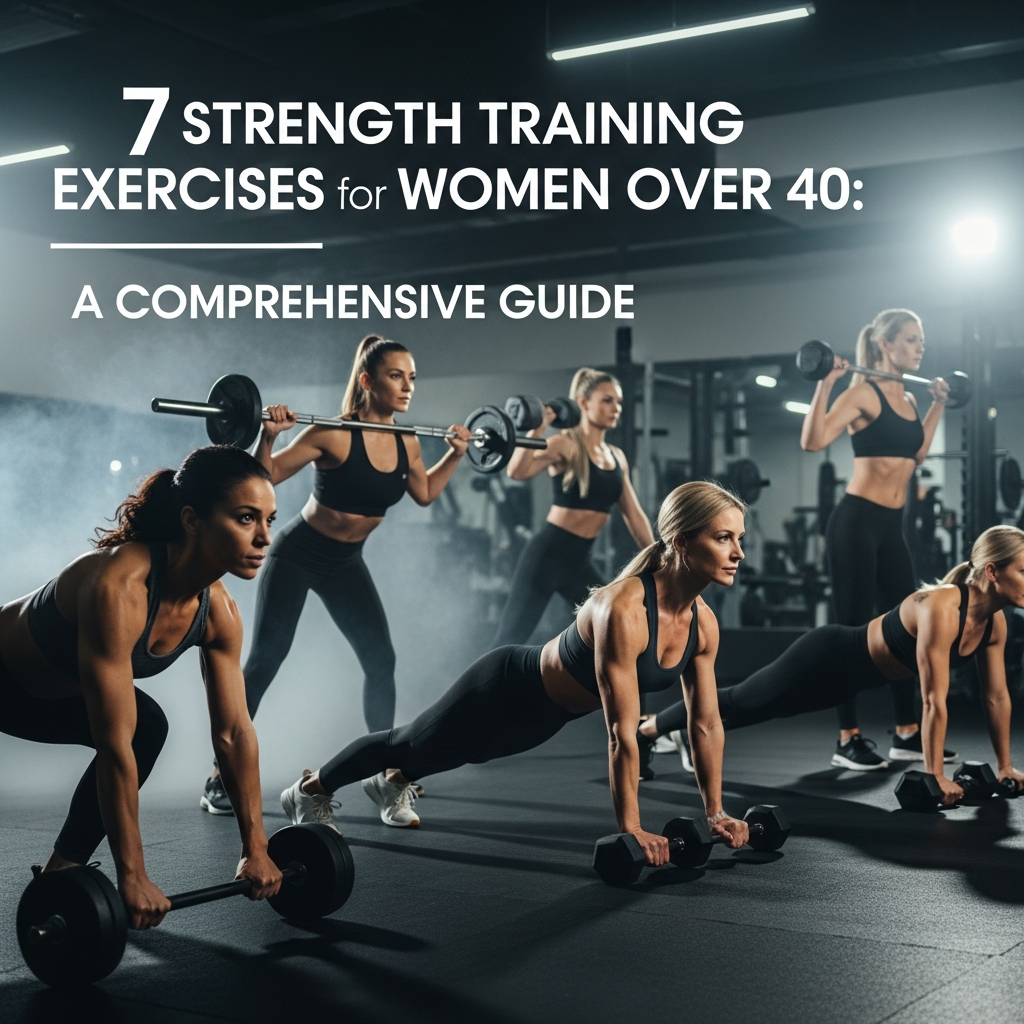
7 Best Strength Training Exercises for Women Over 40: Beginner Workout Plan for Strength and Healthy Aging
Author: RVLNSV PRASAD
Updated On: October 2026
About Us
Author Bio
Editorial Policy
Contact Us
Medical Review: This article has not been independently reviewed by a qualified healthcare professional.
Author’s Note
Many women notice physical changes after age 40. Everyday tasks may feel more demanding, and maintaining strength can become increasingly important as the years pass. Muscle strength and physical function can change with age, although the rate of change varies from person to person.
The encouraging news is that regular strength training can help maintain muscle strength and support everyday movement. The National Institute on Aging (NIA) explains that strength exercises are an important part of a balanced exercise routine for maintaining physical ability as people age.
This guide explains beginner-friendly strength training exercises for women over 40. The goal is not perfection or lifting the heaviest weights. Instead, the focus is on building strength, improving confidence, and supporting long-term health through a routine that fits everyday life.
Introduction
Have you ever stood up from a chair and noticed that you feel stiffer than you once did? Changes in activity levels, recovery, joint comfort, and muscle strength can influence how movement feels as you get older.
Strength training offers one practical way to address some of these changes. It uses resistance—such as body weight, resistance bands, or dumbbells—to challenge the muscles and gradually improve their ability to produce force.
Many women already include walking or other cardio activities in their routines. These activities support cardiovascular health, but muscle-strengthening exercise provides additional benefits. The World Health Organization’s physical activity guidelines recommend muscle-strengthening activities involving all major muscle groups on at least two days each week for adults.
You do not need a gym membership or expensive equipment to get started. Simple movements performed with proper technique and gradually increased resistance can form the foundation of a useful home routine.
The most important principle is consistency. A manageable program that you can follow regularly is generally more useful than an intense routine that leaves you too tired or uncomfortable to continue.
Quick Answer: What Are the Best Strength Training Exercises for Women Over 40?
The best beginner strength training exercises for women over 40 include chair squats, supported reverse lunges, glute bridges, dead bugs, suitcase carries, bird dogs, and standing shoulder presses. These exercises target major muscle groups and help support strength, balance, and everyday physical function.
Beginners can start with two full-body strength-training sessions per week, using bodyweight movements or light resistance. Focus on proper technique, choose exercises that suit your fitness level, and increase resistance gradually as the movements become easier.
The World Health Organization recommends muscle-strengthening activities involving all major muscle groups on at least two days per week. Women with osteoporosis, significant joint pain, recent surgery, or other medical concerns should seek professional advice before starting a new routine.
Key Takeaways
-
Strength training can help maintain muscle strength and physical function as you age.
-
Resistance and weight-bearing activities can support bone health, although individual results vary.
-
Beginners can start at home with bodyweight exercises, a stable chair, and light weights.
-
Two full-body strength sessions per week are a practical starting point for many beginners.
-
Good technique, appropriate resistance, and recovery time matter more than lifting heavy weights immediately.
-
Balanced nutrition, sufficient protein, sleep, and regular physical activity can support training progress.
-
People with osteoporosis, recent surgery, significant joint pain, or certain medical conditions may need an individually adapted routine.
What Is Strength Training for Women Over 40?
Strength training involves exercises that make muscles work against resistance. That resistance can come from your own body weight, exercise bands, dumbbells, or other suitable equipment.
A beginner routine can help develop several useful movement patterns, including:
-
Squatting and standing up
-
Pushing and pulling
-
Lifting and carrying
-
Stabilizing the trunk
-
Maintaining balance and coordination
These movements relate directly to everyday tasks such as carrying shopping bags, climbing stairs, getting out of a chair, and lifting manageable household items.
The National Institute on Aging recommends combining strength exercises with other forms of physical activity, including balance, endurance, and flexibility activities. A well-rounded routine can therefore include resistance training alongside walking and suitable mobility exercises.
Research-Based Benefits of Strength Training for Women Above 40
1. Helps Maintain Muscle Strength
Muscle strength and muscle mass can change with age, inactivity, illness, and other factors. Resistance training challenges muscles in a way that can help improve or maintain strength.
The Mayo Clinic’s strength-training guide explains that strength training can improve muscular fitness and help people perform everyday activities more easily.
Practical benefit: Building leg and hip strength may make tasks such as rising from a chair or climbing stairs easier over time.
2. Supports Bone Health
Bones respond to mechanical loading, and suitable weight-bearing activity and resistance exercise can help support bone health. However, the benefits depend on the exercise, its intensity, a person’s health, and their existing bone condition.
The National Institute of Arthritis and Musculoskeletal and Skin Diseases (NIAMS) explains the role of exercise in maintaining healthy bones. Strength training is one part of a broader approach that may also include weight-bearing activity, adequate nutrition, and appropriate medical care.
Practical benefit: A suitable strength routine can contribute to a long-term bone-health plan, but it should not be presented as a guaranteed way to prevent osteoporosis.
Women who have osteoporosis, a history of fragility fractures, or a high risk of fracture should ask a qualified healthcare professional or physiotherapist which movements are appropriate.
3. May Improve Balance and Physical Function
Strength exercises can challenge the muscles used to control movement and maintain posture. When combined with balance training, they may help older adults improve aspects of physical function.
The National Institute on Aging identifies balance exercise as an important component of physical activity for older adults. Strength work alone should not be treated as a complete fall-prevention program.
Practical benefit: Supported squats, controlled carries, and bird dog exercises can help beginners practise stability and coordinated movement.
4. Supports Joint Function
Muscles help control movement around the joints. Improving strength may help people manage everyday tasks and some forms of physical activity more comfortably. However, the right exercises and resistance depend on the person’s symptoms and health history.
The Mayo Clinic’s strength-training guidance recommends using controlled movements and appropriate resistance rather than sacrificing technique to lift heavier weights.
Practical benefit: A chair squat can be adjusted to a comfortable depth, making it easier for beginners to practise standing up and sitting down with control.
If an exercise causes sharp pain, increasing joint pain, or unusual symptoms, stop and seek appropriate advice instead of pushing through it.
5. Contributes to Metabolic Health
Muscle tissue uses energy, and resistance training can help improve muscular fitness. Depending on the program and individual circumstances, it may also contribute to improvements in body composition and some measures of metabolic health.
The Centers for Disease Control and Prevention’s physical activity guidance describes the broader health benefits of regular physical activity. Strength training is best viewed as one part of an overall approach that also considers diet, aerobic activity, sleep, and other health factors.
Practical benefit: A consistent routine may support weight-management goals, but strength training does not guarantee weight loss on its own.
6. Supports Healthy Aging and Independence
Maintaining strength can help people continue doing everyday activities independently. Exercises that develop the legs, hips, trunk, and upper body can contribute to the physical abilities needed for lifting, carrying, reaching, and moving around.
The National Institute on Aging also discusses how physical activity may need to be adapted for people living with chronic conditions.
Practical benefit: A simple, sustainable program can help you practise movements that are useful in daily life.
7. May Support Mood and Well-Being
Regular physical activity can support mental well-being, although individual responses differ. Strength training may also provide a sense of progress as exercises become easier or movements feel more controlled.
The CDC’s overview of physical activity benefits describes mental and physical health benefits associated with regular activity.
Practical benefit: Tracking a small improvement, such as completing another controlled repetition, may help you stay motivated.
8. Develops Functional Strength
Functional strength refers to the ability to use your muscles for practical activities. Squatting, carrying, pushing, and stabilizing your trunk all have everyday applications.
The Mayo Clinic recommends working major muscle groups with suitable resistance and technique. Exercises do not have to be complicated to provide a useful training challenge.
Practical benefit: Choose movements that reflect your needs, comfort, and current ability rather than copying an advanced workout.
7 Strength Training Exercises for Women Over 40
The following exercises cover the lower body, hips, trunk, carrying ability, and shoulders. Start with the easiest variation that allows you to move smoothly and maintain control.
Beginners can start with one set of each suitable exercise, then gradually work toward two sets as their technique and tolerance improve. A repetition range is a guide, not a target you must reach at the expense of good form.
## 1. Chair Squats
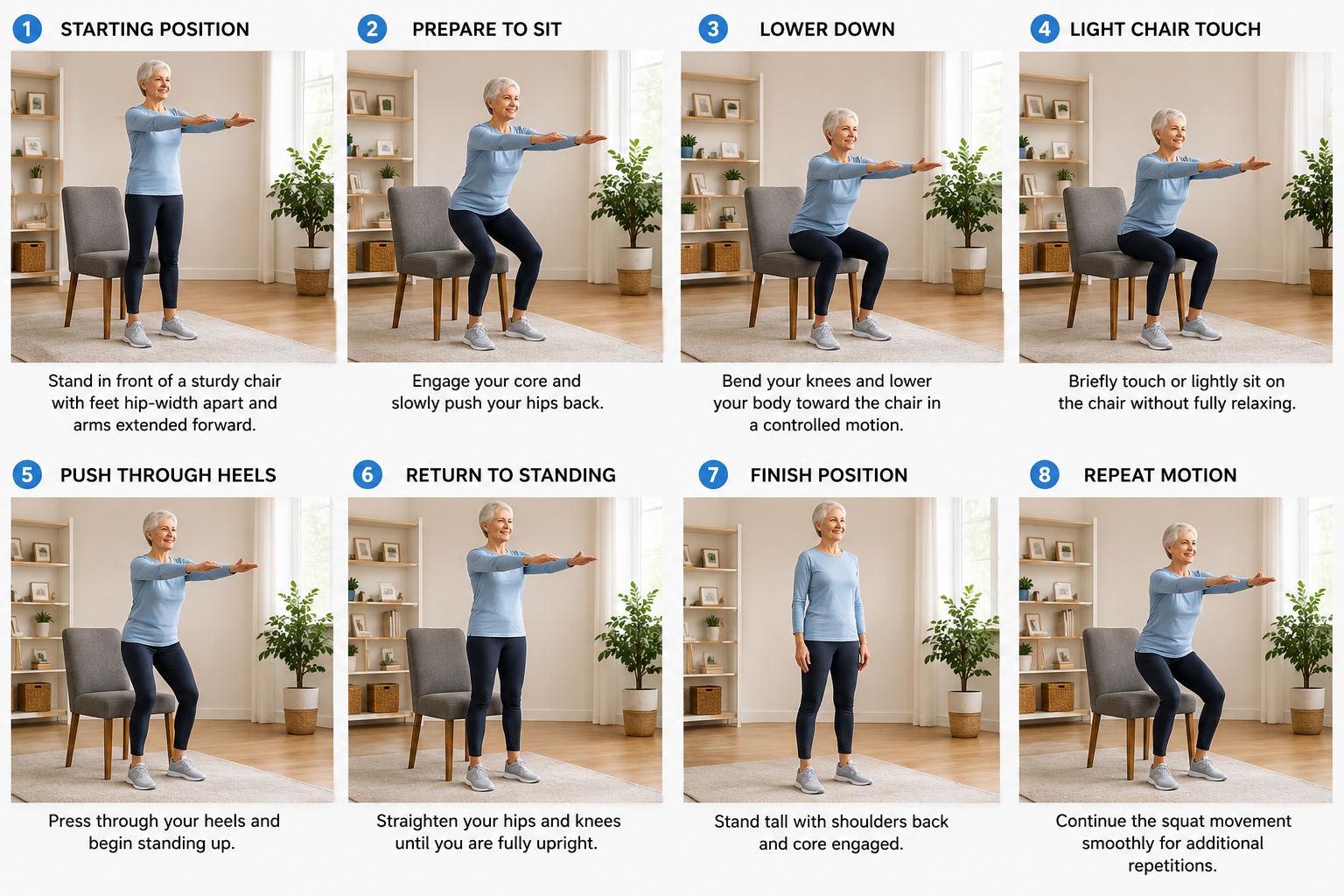
Main muscles: Thighs, glutes, and trunk muscles.
Chair squats help you practise sitting down and standing up. A stable chair also gives beginners a clear target and can make the movement feel less intimidating.
How to do it
-
Place a sturdy chair against a wall so it cannot slide.
-
Stand in front of it with your feet approximately shoulder-width apart.
-
Bend your knees and hips, moving backward as though you are about to sit.
-
Touch the seat lightly, or sit down fully if needed.
-
Press through your feet and stand up with control.
Suggested starting point: 6–10 repetitions for one or two sets.
Beginner tip: Use your hands on the chair arms or another stable support if you need help standing. Reduce the depth if a deeper squat is uncomfortable.
Research connection: The Mayo Clinic’s strength-training guide emphasizes appropriate technique and resistance. Practising a controlled sit-to-stand movement is a practical way to begin strengthening the lower body.
##2. Supported Reverse Lunge
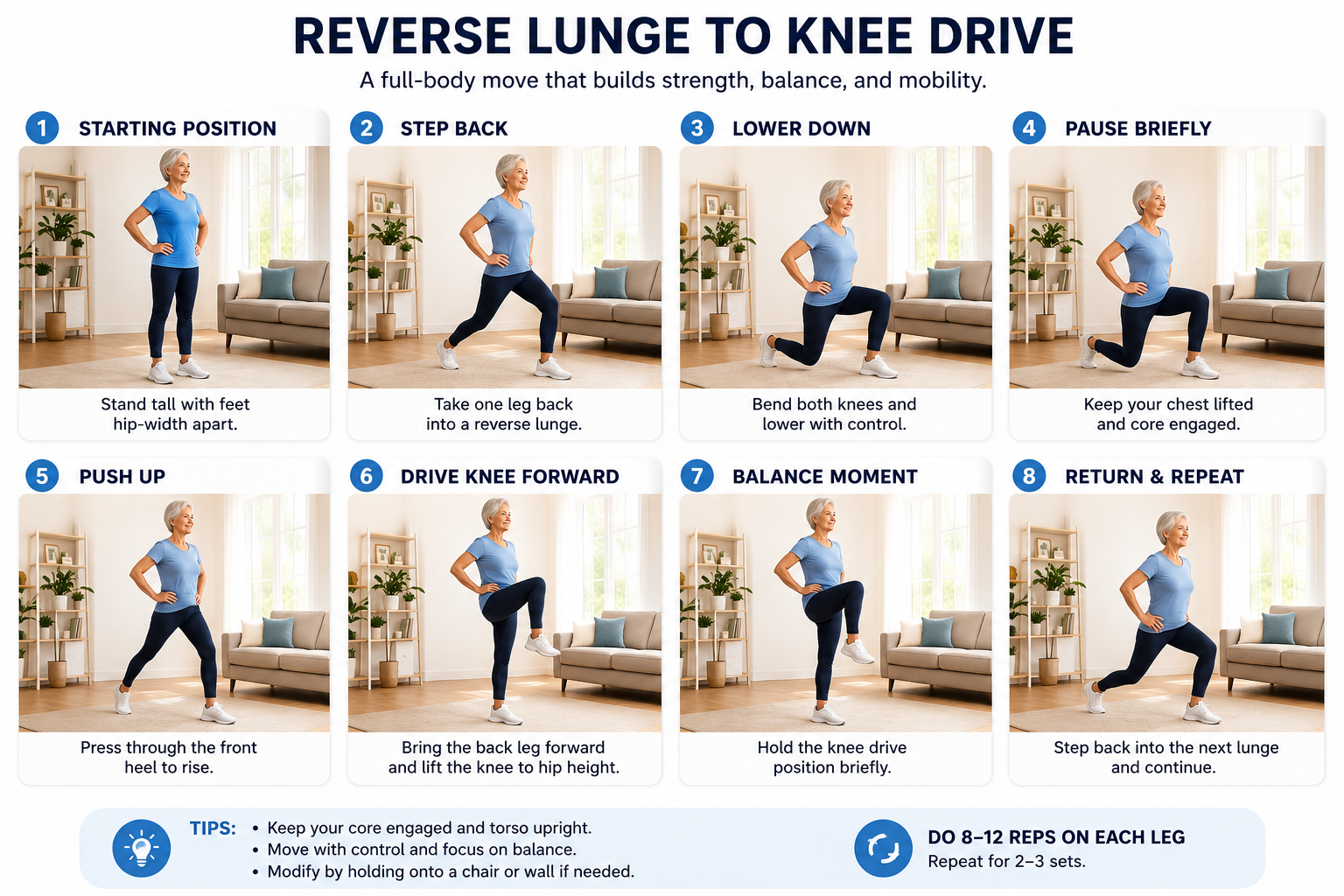
Main muscles: Glutes, thighs, and trunk muscles.
A reverse lunge challenges each leg separately, but it can be difficult for someone who is new to strength training. Start with a supported version, and use a chair sit-to-stand exercise instead if the lunge causes discomfort or feels unstable.
How to do it
-
Stand beside a sturdy chair or near a wall for support.
-
Keep your feet about hip-width apart.
-
Step one foot backward a short distance.
-
Bend both knees only as far as feels comfortable while keeping your torso controlled.
-
Push through the front foot to return to the starting position.
-
Complete the repetitions on one side, then switch legs.
Suggested starting point: 5–8 repetitions per side for one or two sets.
Beginner tip: You do not need to lower your body deeply. Hold the support lightly and focus on control rather than speed.
Safety note: If balance is a concern, begin with chair squats or supported weight shifts instead. People with significant knee, hip, or balance problems may need a modified exercise plan.
## 3. Dumbbell Glute Bridge
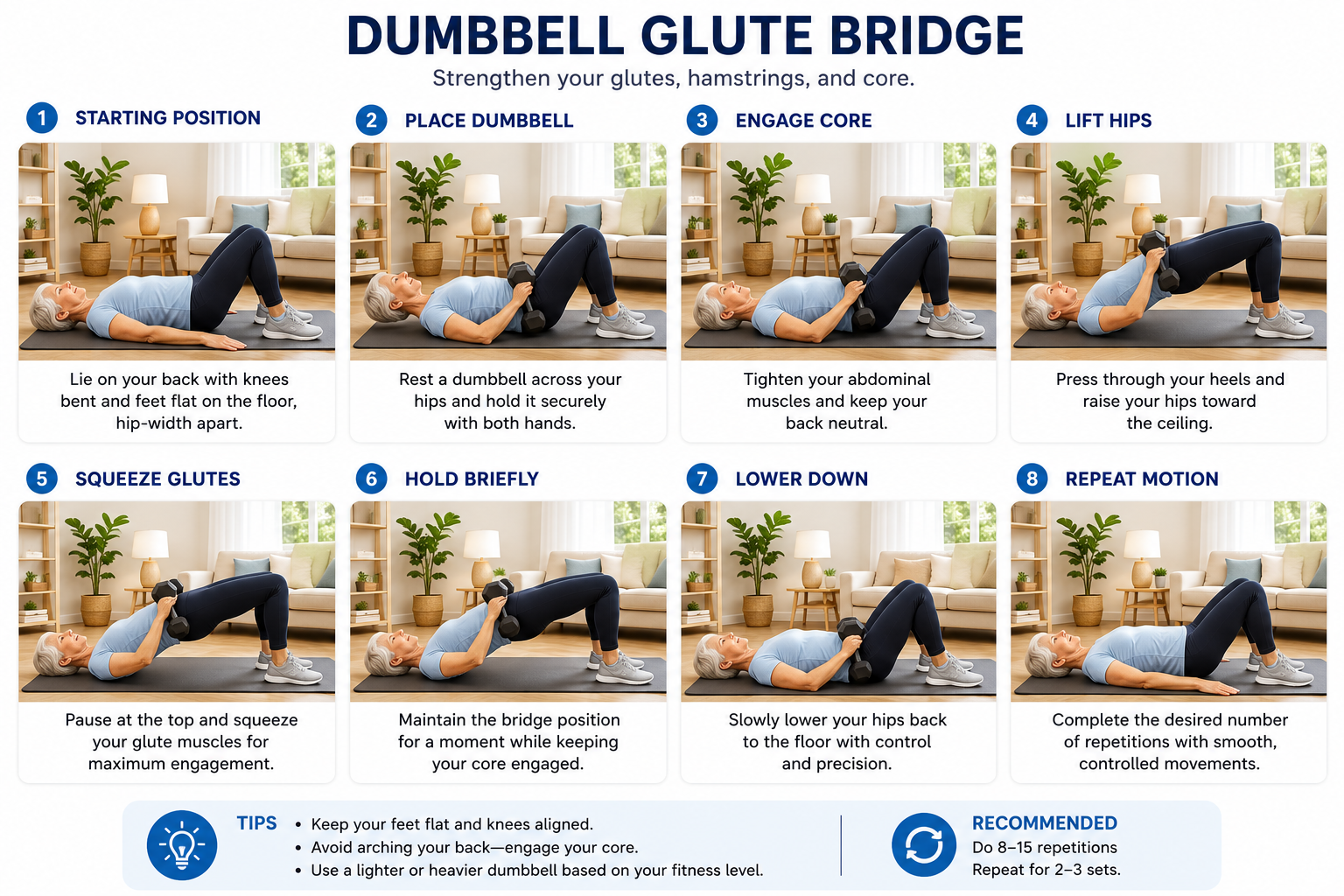
Main muscles: Glutes, hamstrings, and trunk muscles.
A glute bridge trains the muscles around the hips while you lie on your back. Beginners should first learn the movement without a dumbbell.
How to do it
-
Lie on your back on a comfortable exercise mat.
-
Bend your knees and place your feet flat on the floor, approximately hip-width apart.
-
Rest your arms beside your body.
-
Tighten your abdominal muscles gently and press through your feet.
-
Raise your hips until your shoulders, hips, and knees form a comfortable line.
-
Pause briefly without arching your lower back.
-
Lower your hips slowly.
Suggested starting point: 8–12 repetitions for one or two sets.
Beginner tip: Lift your hips only as high as you can without pain or excessive arching. Add resistance only after the bodyweight version feels controlled.
Research connection: The Mayo Clinic’s strength-training guidance supports gradual progression and appropriate resistance. You do not need to add a dumbbell immediately to make this exercise part of a beginner routine.
4. Dead Bug
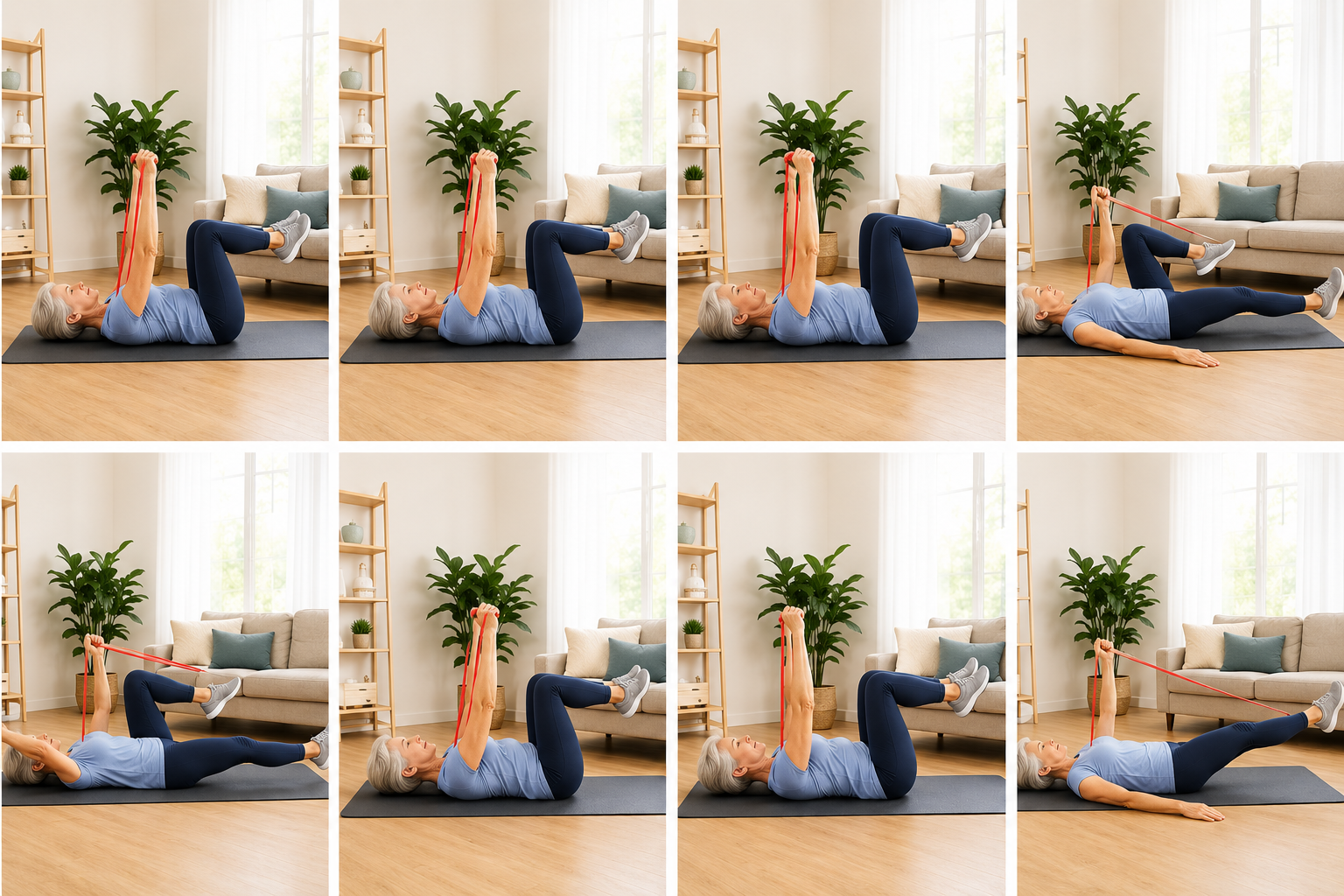
Main muscles: Abdominal and other trunk-stabilizing muscles.
The dead bug is a floor exercise that teaches you to coordinate your arms and legs while keeping your trunk steady. A resistance band is optional and is not necessary for beginners.
How to do it
Lie on your back with your arms pointing toward the ceiling.
Lift your legs and bend your knees to approximately 90 degrees, if comfortable.
Gently tighten your abdominal muscles.
Slowly lower one heel toward the floor while keeping your trunk stable.
Return to the starting position.
Repeat with the other leg.
Suggested starting point: 5–8 repetitions per side for one or two sets.
Beginner tip: Keep one foot on the floor and move only the other leg if the full position is too challenging. Avoid forcing your lower back into an uncomfortable position.
Safety note: If lying on the floor or getting up is difficult, ask a physiotherapist or qualified exercise professional for a suitable alternative.
5. Suitcase Carry
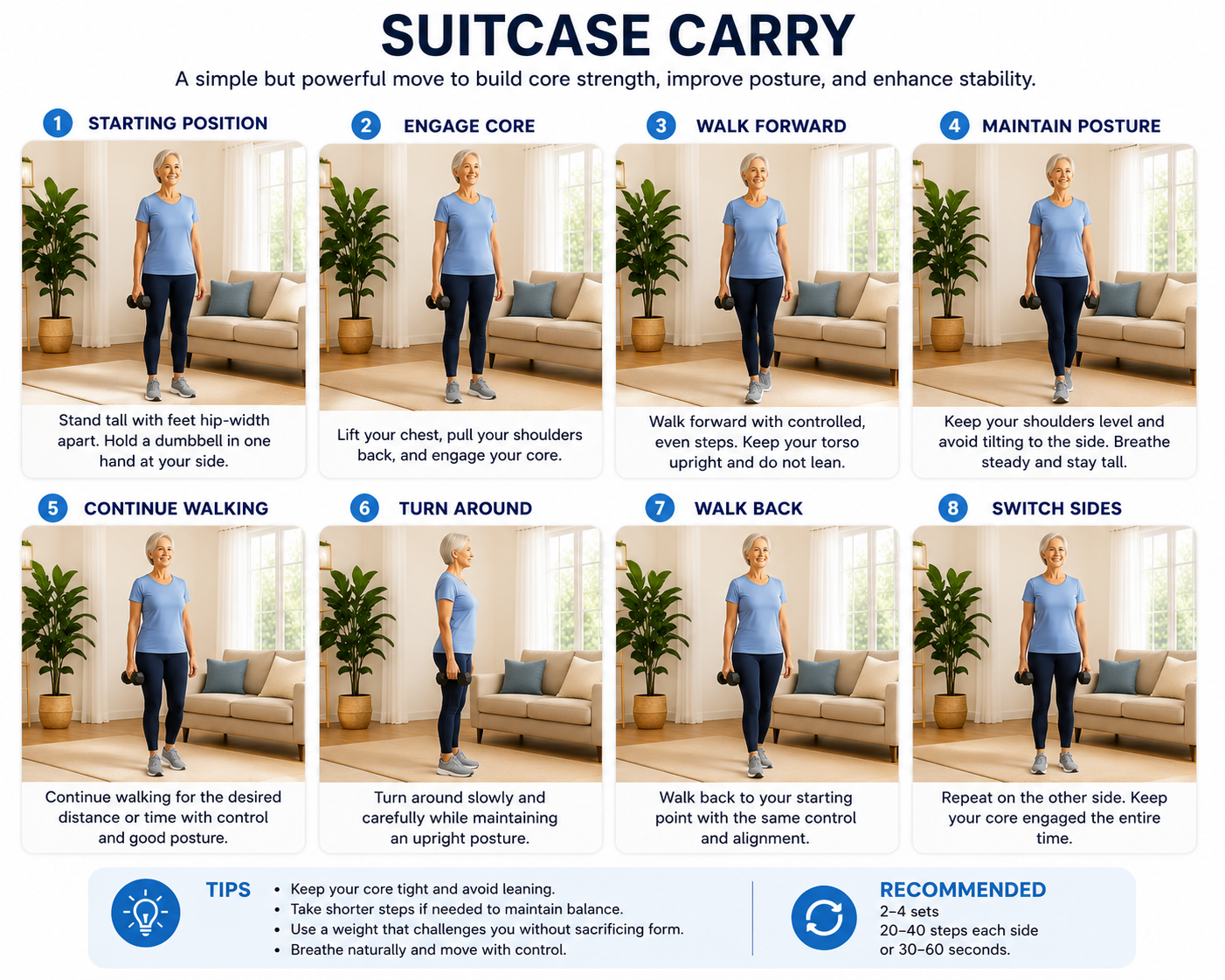
Main muscles: Grip, trunk, shoulders, and muscles involved in walking and posture.
A suitcase carry involves walking while holding a manageable weight in one hand. It challenges you to maintain a steady posture without leaning toward the weight.
How to do it
-
Choose a light dumbbell or another secure weight that you can hold comfortably.
-
Stand upright with the weight beside one thigh.
-
Keep your shoulders relaxed and your torso facing forward.
-
Walk slowly along a clear, level path.
-
Avoid leaning sideways or rushing.
-
Put the weight down safely, then switch hands.
Suggested starting point: 15–30 seconds per side for one or two sets.
Beginner tip: Practise standing still with the weight before walking. Use a lighter load or skip the exercise if you have difficulty gripping the weight or maintaining balance.
Research connection: The National Institute on Aging recommends combining different exercise types to support physical ability. A controlled carry can complement a broader routine, but it should not replace dedicated balance training when that is needed.
6. Bird Dog
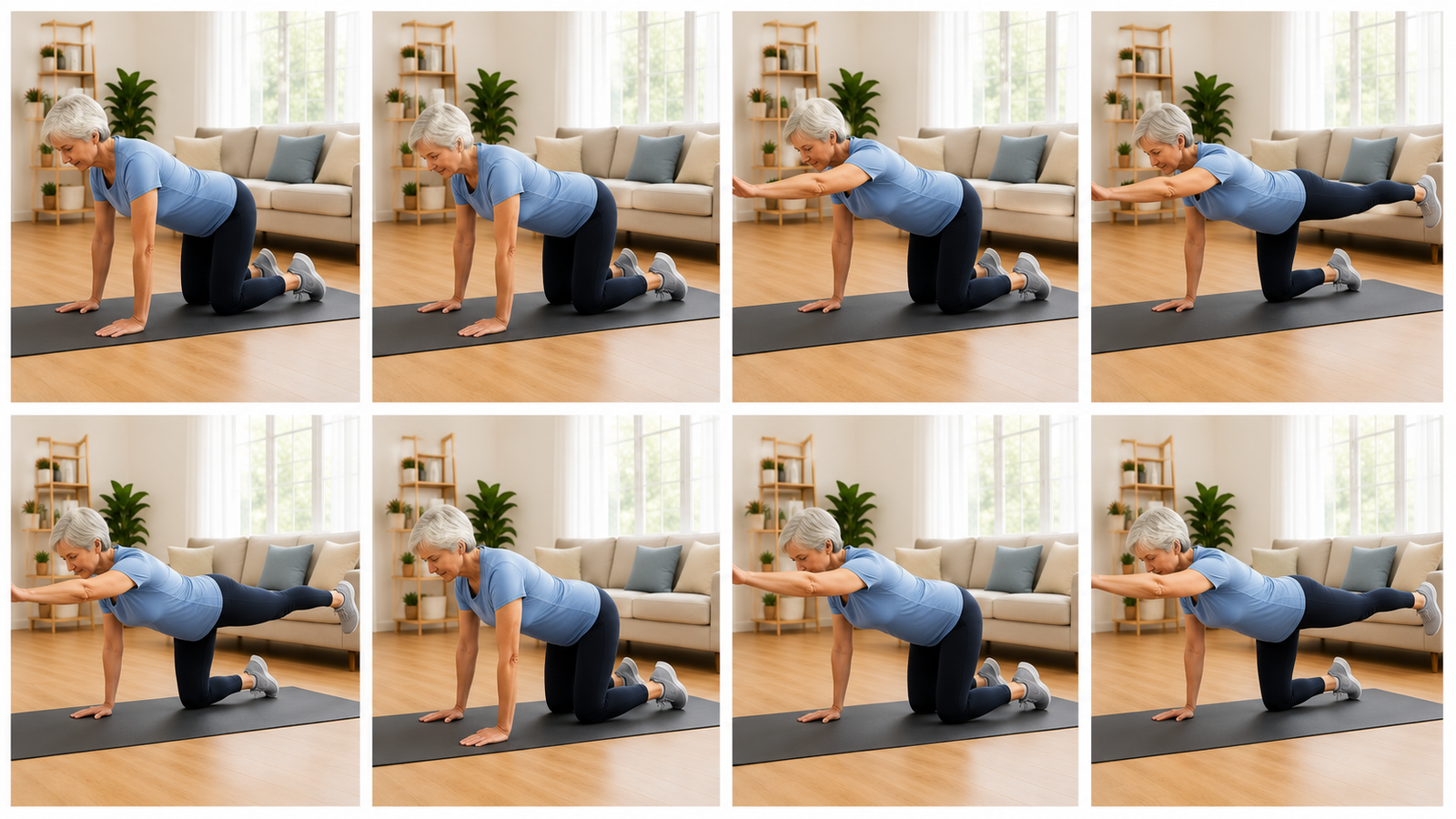
Main muscles: Trunk, glutes, and muscles that help stabilize the hips and shoulders.
The bird dog encourages controlled movement while you maintain a steady position on your hands and knees.
How to do it
-
Start on your hands and knees, with your hands under your shoulders and knees under your hips.
-
Tighten your abdominal muscles gently.
-
Extend one arm forward if you can maintain a steady trunk.
-
Return the arm, then extend the opposite leg backward.
-
Once comfortable, try extending the opposite arm and leg together.
-
Return slowly and repeat on the other side.
Suggested starting point: 5–8 controlled repetitions per side for one or two sets.
Beginner tip: Keep your hips level and avoid lifting your leg higher than you can control. You can move only one limb at a time to make the exercise easier.
Safety note: Place a folded mat under your knees if kneeling is uncomfortable. Choose another exercise if this position causes pain.
7. Standing Shoulder Press
Main muscles: Shoulders and upper-arm muscles, with the trunk helping stabilize the body.
A shoulder press trains the upper body. Beginners can use very light dumbbells or practise the movement without weights before progressing.
How to do it
-
Stand with your feet comfortably apart, or sit in a stable chair if standing is difficult.
-
Hold light dumbbells near shoulder height, with your wrists comfortable.
-
Tighten your abdominal muscles gently.
-
Press the weights upward only through a pain-free range of motion.
-
Lower them slowly to the starting position.
-
Keep your ribs down and avoid arching your lower back.
Suggested starting point: 6–10 repetitions for one or two sets.
Beginner tip: If overhead movement causes shoulder pain, do not force it. Ask a qualified professional about an appropriate alternative, such as a lighter range of motion or another upper-body exercise.
Research connection: The Mayo Clinic strength-training guide recommends choosing resistance and movements that suit your ability. Lighter weights and controlled repetitions are suitable starting points for many beginners.
Beginner Strength Training Workout Chart
Use this chart as a guide, not as a requirement to complete every exercise on your first day.
| Exercise | Sets | Repetitions or time | Rest | Beginner adjustment |
|---|---|---|---|---|
| Chair squats | 1–2 | 6–10 reps | 60–90 sec | Use the chair for support |
| Supported reverse lunge | 1–2 | 5–8 per side | 60–90 sec | Use a shallow step; substitute chair squats if needed |
| Glute bridge | 1–2 | 8–12 reps | 45–90 sec | Start without a weight |
| Dead bug | 1–2 | 5–8 per side | 45–60 sec | Move one leg at a time |
| Suitcase carry | 1–2 | 15–30 sec per side | 45–60 sec | Start with a light weight |
| Bird dog | 1–2 | 5–8 per side | 30–60 sec | Move one limb at a time |
| Standing shoulder press | 1–2 | 6–10 reps | 60–90 sec | Use very light weights or no weight |
Rest longer if you need it. You should be able to finish each set with controlled technique. If your form deteriorates, stop the set rather than trying to complete the planned repetitions.
Weekly Beginner Strength Training Schedule
Many beginners can start with two non-consecutive strength sessions per week. This allows time to practise the exercises and recover between workouts.
| Day | Activity |
|---|---|
| Monday | Beginner full-body strength workout |
| Tuesday | Comfortable 20–30-minute walk, if suitable |
| Wednesday | Gentle mobility or stretching |
| Thursday | Beginner full-body strength workout |
| Friday | Walking or another comfortable aerobic activity |
| Saturday | Optional light activity, such as walking or cycling |
| Sunday | Rest or gentle movement |
The World Health Organization’s physical activity recommendations advise adults to perform muscle-strengthening activities involving all major muscle groups on at least two days per week. Your starting schedule can be adjusted to your current fitness, recovery, and medical needs.
If you later recover comfortably and can maintain good technique, you may consider adding another session. More frequent training is not necessary at the beginning.
How to Get Started Safely
Step 1: Start With Two Sessions a Week
Choose two days that leave time between workouts. Begin with one set of each exercise you can perform comfortably, and increase the number of sets gradually.
Step 2: Learn the Movement Before Adding Resistance
Practise chair squats, glute bridges, bird dogs, and other suitable movements without weights first. Add resistance only when you can complete the exercise with control.
The Mayo Clinic recommends using proper technique and increasing resistance progressively rather than lifting more than you can safely control.
Step 3: Choose Suitable Equipment
You may need only a sturdy chair, a mat, and light dumbbells. Resistance bands are another option, but use them according to the manufacturer’s instructions and inspect them for damage.
Avoid using unstable furniture or heavy household objects that are difficult to grip securely.
Step 4: Warm Up
Spend about five minutes preparing for exercise. Comfortable walking, gentle marching in place, and easy shoulder or hip movements can help you transition into the workout.
Choose a warm-up that suits your mobility. Do not force stretches or perform movements that cause pain.
Step 5: Progress Gradually
When you can complete all repetitions with steady technique and without unusual symptoms, consider adding a few repetitions or a small amount of resistance. Change one variable at a time rather than increasing everything at once.
Progress will vary. It is more useful to track how comfortably and consistently you exercise than to compare your results with someone else’s.
Nutrition, Sleep, and Recovery
Strength training is only one part of maintaining physical function. Eating enough food, getting suitable amounts of protein, staying hydrated, and sleeping well can help support general health and exercise recovery.
Protein needs differ according to body size, overall diet, activity level, and health status. People with kidney disease or other conditions that affect dietary requirements should discuss protein intake with a qualified healthcare professional or registered dietitian.
Include a variety of foods, such as beans, lentils, dairy products or suitable alternatives, eggs, fish, tofu, nuts, vegetables, fruit, and whole grains according to your dietary preferences and health needs.
Allow recovery time between strength sessions. Mild muscle soreness can occur after unfamiliar activity, but sharp pain, substantial swelling, chest discomfort, faintness, or unusual shortness of breath should not be ignored.
Common Strength Training Mistakes to Avoid
1. Trying to Do Too Much Too Soon
Beginning with too many sets, heavy weights, or difficult exercises can make a routine harder to sustain. Start with manageable movements and build up gradually.
2. Ignoring Recovery
Your body needs time to adapt to exercise. Avoid training the same muscles hard on consecutive days when you are just starting.
3. Sacrificing Technique for More Weight
A heavier dumbbell is not automatically better. Reduce the load if you cannot control the movement or maintain a comfortable position.
4. Comparing Yourself With Others
Your starting strength, health history, and schedule may differ from those of other people. Track your own progress rather than aiming to match someone else’s routine.
5. Skipping the Warm-Up
Begin with a few minutes of easy movement and gradually increase your effort. A warm-up should prepare you for exercise without tiring you out.
6. Expecting Instant Results
Progress depends on consistency, exercise selection, recovery, nutrition, and individual factors. Give yourself time to learn the movements and build a sustainable habit.
7. Overlooking Nutrition
A balanced diet supports overall health and recovery. If you have specific nutrition needs, seek advice from a registered dietitian or another qualified professional.
8. Stopping Because Progress Seems Slow
You do not have to increase the weight every week. Improved technique, greater confidence, and completing everyday tasks more comfortably can also be useful signs of progress.
Potential Risks and When to Seek Advice
Strength training is appropriate for many adults, but the routine may need to be modified for people with certain health conditions or physical limitations.
Speak with a healthcare professional before beginning or substantially changing your exercise program if you have heart disease, uncontrolled high blood pressure, recent surgery, significant joint problems, a history of fragility fractures, severe osteoporosis, or a condition that affects balance.
The National Institute on Aging’s guidance on exercise with chronic conditions explains that activity can often be adapted to a person’s health needs. A clinician or physiotherapist can help you identify safe exercises and appropriate limits.
People with osteoporosis or previous spinal fractures may need particular care with certain bending, twisting, or loaded movements. The National Institute of Arthritis and Musculoskeletal and Skin Diseases provides further information on exercise and bone health; individual advice is important when fracture risk is high.
Stop exercising and seek urgent medical care for concerning symptoms such as chest pain, fainting, or severe or unusual shortness of breath. Do not assume these symptoms are a normal part of training.
What Does the Research Say?
Evidence from major health organizations supports including muscle-strengthening activities in a well-rounded exercise routine.
-
The National Institute on Aging describes strength, endurance, balance, and flexibility as important forms of exercise for maintaining physical ability.
-
The Mayo Clinic’s strength-training guide discusses the benefits of resistance exercise and the importance of proper technique and suitable progression.
-
The World Health Organization recommends muscle-strengthening activities involving all major muscle groups on at least two days per week for adults.
-
The NIAMS guidance on exercise and bone health explains how exercise fits into maintaining bone health.
These sources support the general recommendations in this article. They do not establish that every exercise listed is suitable for every woman over 40. Exercise choice, intensity, and progression should reflect a person’s abilities, symptoms, and medical history.
Frequently Asked Questions
1. Is beginner strength training safe for women over 40?
For many healthy adults, strength training can be performed safely when the exercises match their abilities and are progressed gradually. People with medical conditions, significant pain, recent surgery, or a high risk of fracture may need individualized guidance.
The Mayo Clinic strength-training guide provides general guidance on safe technique and resistance.
2. How often should women over 40 strength train?
Two sessions per week is a practical starting point for many beginners. The World Health Organization’s physical activity guidelines recommend muscle-strengthening activity involving all major muscle groups on at least two days per week.
Allow recovery time between sessions and adjust the schedule to your needs.
3. Can strength training help during menopause?
Strength training can help maintain muscle strength and support physical function during midlife and beyond. Suitable weight-bearing and resistance activities may also form part of a broader bone-health plan.
However, strength training does not treat every menopause-related symptom, and the best exercise program varies according to a woman’s health and fitness. For additional background, see the NIAMS guidance on exercise and bone health.
4. Do I need a gym membership?
No. Many beginners can start at home with bodyweight exercises, a sturdy chair, and light weights. You can add resistance bands or dumbbells later if they suit your goals and ability.
5. What if I have never exercised before?
Start with simple movements, such as supported chair squats and bodyweight glute bridges. Begin with one set, rest when needed, and increase the challenge gradually. A qualified exercise professional or physiotherapist can help if you are unsure which movements are suitable.
6. Can strength training help with weight management?
Strength training can support muscular fitness and may contribute to changes in body composition. Weight management also depends on eating patterns, overall activity, sleep, medications, and other individual factors. It is best to combine strength work with a sustainable overall health plan.
See the CDC’s physical activity benefits for more information about regular physical activity.
7. What is a good full-body strength workout for women over 40?
A beginner program can include a squat variation, a hip exercise, an upper-body movement, and suitable trunk-stability work. The seven exercises in this guide provide a starting point, but you do not need to complete all of them in every session. Select movements that you can perform safely and consistently.
8. Do I need heavy weights to build strength?
No. Beginners can start with bodyweight movements or light resistance. As the exercises become easier and technique remains controlled, gradually increasing resistance may help provide a greater training challenge.
9. How long does it take to notice results?
Progress varies. You may notice that movements feel more controlled or that you can complete an exercise more comfortably before you see visible changes in muscle size. Consistent practice and gradual progression are more useful than expecting a particular result by a fixed date.
10. Can strength training make everyday activities easier?
Improving strength can support activities such as standing up, carrying manageable items, and climbing stairs. The degree of improvement depends on your starting fitness, health, and training routine. The National Institute on Aging explains how strength training fits into maintaining physical ability as people age.
Research Methodology
This article was prepared using public guidance from established health organizations, including the National Institute on Aging, Mayo Clinic, World Health Organization, Centers for Disease Control and Prevention, and National Institute of Arthritis and Musculoskeletal and Skin Diseases.
Sources were selected to support general guidance on resistance training, physical activity, bone health, exercise technique, and safety. The cited resources support the overall recommendations; they do not individually validate every exercise variation or guarantee a particular result.
This article has not been independently reviewed by a qualified healthcare professional. Readers with medical conditions or concerns should obtain individualized advice before starting a new exercise program.
Conclusion
Strength training exercises for women over 40 can be a practical way to support muscle strength, physical function, and healthy aging. You do not need expensive equipment or long gym sessions to begin.
Start with movements you can perform comfortably, practise good technique, and allow time for recovery. Two manageable strength sessions each week can provide a useful foundation, with progression as your confidence and ability improve.
Focus on steady progress rather than perfection. The best routine is one that fits your needs and that you can continue safely over time.
About the Author
RVLNSV Prasad writes about wellness, nutrition, healthy habits, and evidence-based lifestyle education. His goal is to explain health information in practical language that readers can understand and apply to everyday life.
Include claims about professional qualifications or years of experience only if they accurately reflect the author’s background.
Medical Disclaimer
This article is for educational purposes only. It does not replace professional medical advice, diagnosis, or treatment. Consult a qualified healthcare professional about personal health concerns or before beginning a new exercise program if you have a medical condition, pain, a history of fractures, or other relevant limitations.
Fitness Disclaimer
Exercise techniques and suggested repetitions are general examples, not individualized prescriptions. Stop if an exercise causes pain, dizziness, chest discomfort, or unusual shortness of breath. Seek appropriate medical advice when symptoms are concerning.
Sources
1. https://www.nia.nih.gov/news/how-can-strength-training-build-healthier-bodies-we-age
2. https://www.mayoclinic.org/healthy-lifestyle/fitness/in-depth/strength-training/art-20046670
3. https://www.who.int/news-room/fact-sheets/detail/physical-activity
4. https://www.niams.nih.gov/health-topics/exercise-your-bone-health
5. https://www.cdc.gov/physical-activity-basics/guidelines/older-adults.html
6. https://www.mayoclinic.org/diseases-conditions/osteoporosis/in-depth/osteoporosis/art-20044989
Related Posts
- 10 Effective Weight Loss Tips at 40 For Woman
- 12 Best Fat Burning Supplements Women
- 6 Home Exercises for Overall Fitness and Flexibility: A Comprehensive Guide
- Chest Workouts Without Equipment: Best 12 Moves to Build Muscle at Home
- 10 Best Vitamins for Women After 50 to Boost Energy and Health







[…] 7 Best Strength Training Exercises for Women Over 40: Beginner Workout Plan for Strength and Healthy… […]
[…] 7 Best Strength Training Exercises for Women Over 40: Beginner Workout Plan for Strength and Healthy… […]
[…] 7 Best Strength Training Exercises for Women Over 40: Beginner Workout Plan for Strength and Healthy… […]
[…] 7 Best Strength Training Exercises for Women Over 40: Beginner Workout Plan for Strength and Healthy… […]
[…] 7 Best Strength Training Exercises for Women Over 40: Beginner Workout Plan for Strength and Healthy… […]
[…] 7 Best Strength Training Exercises for Women Over 40: Beginner Workout Plan for Strength and Healthy… […]
[…] 7 Best Strength Training Exercises for Women Over 40: Beginner Workout Plan for Strength and Healthy… […]
[…] 7 Best Strength Training Exercises for Women Over 40: Beginner Workout Plan for Strength and Healthy… […]
[…] 7 Best Strength Training Exercises for Women Over 40: Beginner Workout Plan for Strength and Healthy… […]
[…] 7 Best Strength Training Exercises for Women Over 40: Beginner Workout Plan for Strength and Healthy… […]
[…] 7 Best Strength Training Exercises for Women Over 40: Beginner Workout Plan for Strength and Healthy… […]
[…] 7 Best Strength Training Exercises for Women Over 40: Beginner Workout Plan for Strength and Healthy… […]
[…] 7 Best Strength Training Exercises for Women Over 40: Beginner Workout Plan for Strength and Healthy… […]
[…] 7 Best Strength Training Exercises for Women Over 40: Beginner Workout Plan for Strength and Healthy… […]
[…] 7 Best Strength Training Exercises for Women Over 40: Beginner Workout Plan for Strength and Healthy… […]
[…] 7 Best Strength Training Exercises for Women Over 40: Beginner Workout Plan for Strength and Healthy… […]
[…] 7 Best Strength Training Exercises for Women Over 40: Beginner Workout Plan for Strength and Healthy… […]
[…] 7 Best Strength Training Exercises for Women Over 40: Beginner Workout Plan for Strength and Healthy… […]
[…] 7 Best Strength Training Exercises for Women Over 40: Beginner Workout Plan for Strength and Healthy… […]
[…] 7 Best Strength Training Exercises for Women Over 40: Beginner Workout Plan for Strength and Healthy… […]
[…] 7 Best Strength Training Exercises for Women Over 40: Beginner Workout Plan for Strength and Healthy… […]
[…] 7 Best Strength Training Exercises for Women Over 40: Beginner Workout Plan for Strength and Healthy… […]