




















































































































































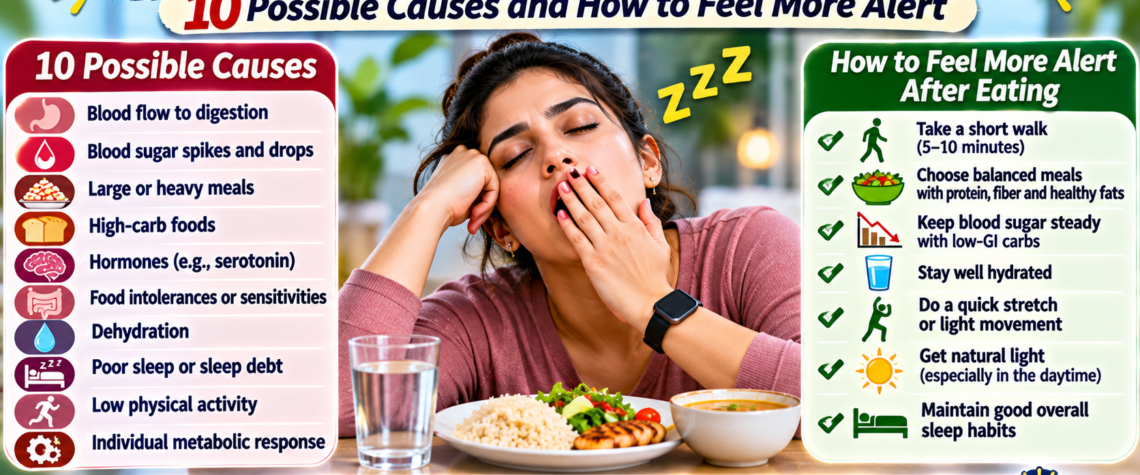
Why Do I Feel Sleepy After Eating? 10 Possible Causes and How to Feel More Alert
Author: RVLNSV PRASAD
Updated On: November 2026
About Us
Author Bio
Editorial Policy
Contact Us
Introduction
Have you ever finished lunch, returned to your desk, and suddenly struggled to keep your eyes open? Perhaps you feel comfortable and relaxed after eating, but your concentration disappears. Even simple tasks may seem harder, and you may start looking for a place to rest.
This experience is commonly called a food coma. The medical term for sleepiness after a meal is postprandial somnolence. It describes the drowsiness some people experience after eating. It can happen after breakfast, lunch, or dinner, although many people notice it more strongly in the afternoon.
Feeling slightly sleepy after a large meal does not automatically mean something is wrong. Digestion, meal composition, sleep quality, daily body-clock rhythms, and individual health factors can all influence alertness. However, repeated or severe tiredness deserves attention, particularly when it comes with dizziness, sweating, shakiness, faintness, or unusual weakness.
The important question is not simply whether food makes you sleepy. It is what happens before, during, and after your tiredness begins. The timing, meal ingredients, portion size, and accompanying symptoms can offer useful clues.
In this guide, you will learn 10 possible reasons you feel sleepy after eating, practical ways to reduce post-meal tiredness, common mistakes to avoid, and warning signs that may require medical attention. You will also find simple Indian meal examples and a practical method for identifying your personal food-and-energy patterns.
Quick Answer: Why Do I Feel Sleepy After Eating?
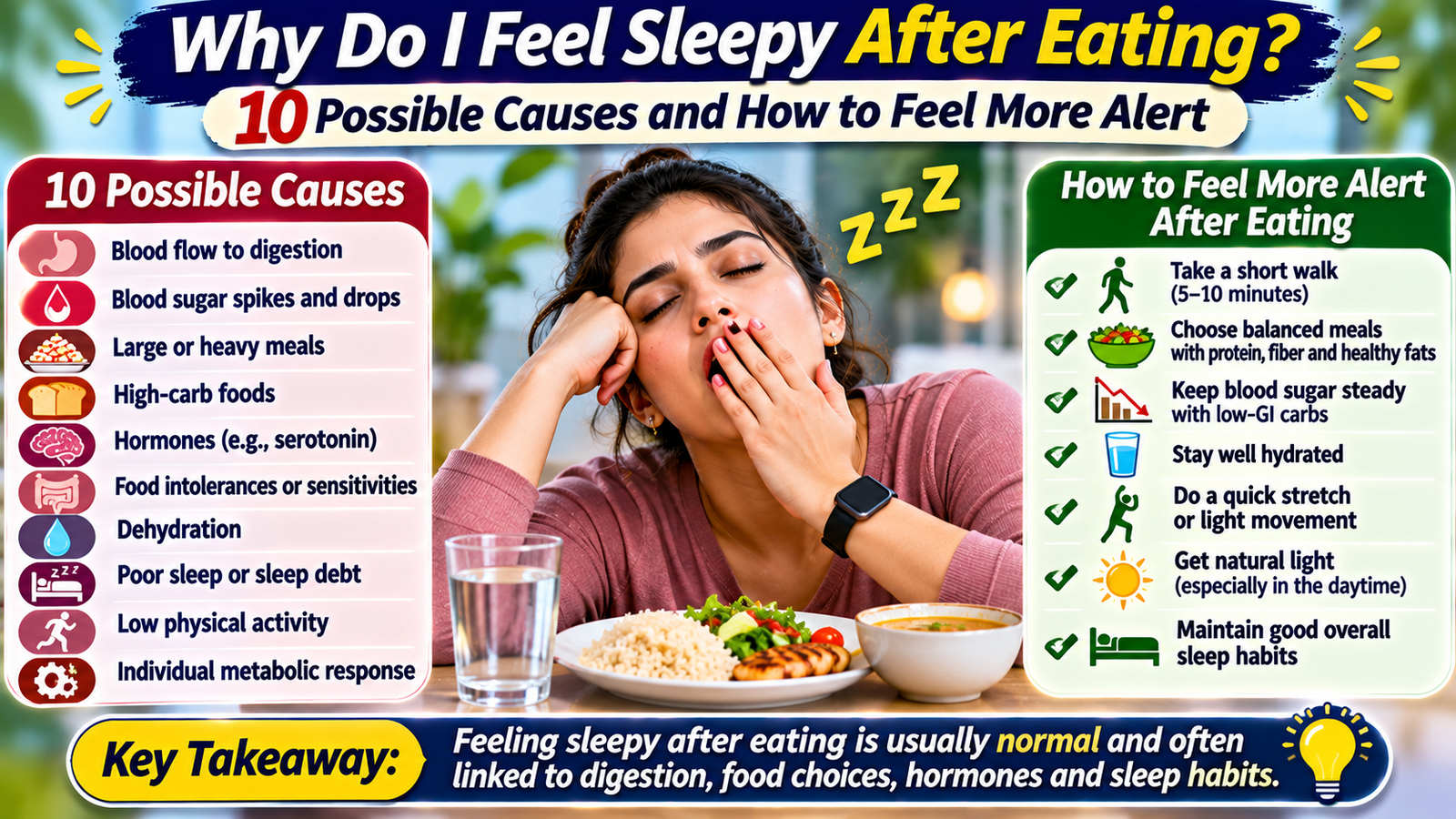
You may feel sleepy after eating because of a combination of your body’s natural afternoon energy dip, meal size, food composition, sleep quality, and individual metabolic responses. Large meals, particularly those rich in refined carbohydrates, may contribute to post-meal drowsiness in some people.
Other possible explanations include medication effects, dehydration, post-meal blood pressure changes, and blood glucose problems. Occasional mild sleepiness is common, but persistent or severe symptoms should not automatically be blamed on digestion.
Try this first: Eat a balanced meal with vegetables, protein, and a suitable portion of high-fiber carbohydrates. Avoid oversized meals, drink water regularly, and take a gentle walk after eating if you feel well enough.
Key Takeaways
- Mild sleepiness after a large meal can be a normal experience.
- Your body clock may make afternoon tiredness more noticeable.
- Large portions and meals dominated by refined carbohydrates may contribute to drowsiness.
- Poor sleep, dehydration, alcohol, and some medicines can make the problem worse.
- Low blood glucose and post-meal low blood pressure are different conditions that may cause weakness or dizziness.
- A balanced plate and gentle post-meal movement may help some people.
- Frequent, severe, or unexplained symptoms deserve medical assessment.
1. Your Natural Body Clock May Cause Afternoon Sleepiness
One reason you feel sleepy after eating lunch may have little to do with digestion itself. Your body follows an internal timing system called the circadian rhythm, which helps regulate sleep, alertness, hormone release, and other daily functions.
Many people experience a natural reduction in alertness during the early afternoon. This can happen even when they eat a light meal. When lunch coincides with this normal dip, the combined effect may make tiredness more noticeable.
For example, imagine eating lunch at 1 p.m. after sleeping only six hours the previous night. You may feel much sleepier than someone who slept well and ate a similar meal. The difference may not be the food alone.
What may help?
- Maintain a reasonably consistent sleep and wake-up schedule.
- Get natural daylight during the morning.
- Avoid using a very heavy lunch as your main meal of the day.
- Take a short movement break when afternoon alertness drops.
- If possible, schedule demanding tasks during the hours when you feel naturally more alert.
The key point is that afternoon sleepiness does not always mean your meal is unhealthy. Your daily body-clock pattern can be an important part of the explanation.
2. Large Meals May Make You Feel Tired
Eating a very large meal can contribute to post-meal discomfort and drowsiness. A large portion may also make you feel physically heavy, particularly if you eat quickly or continue eating after you are comfortably full.
After eating, your digestive system becomes active. Blood flow and nervous-system activity adjust to support digestion and nutrient absorption. However, it is misleading to say that all the blood simply moves away from your brain and makes you sleepy. The body normally maintains blood supply to vital organs through several regulatory mechanisms.
The size of a meal may matter more when it is combined with a natural afternoon energy dip, poor sleep, or a carbohydrate-heavy food pattern.
A practical portion adjustment
Instead of eating a very large lunch and feeling uncomfortable afterwards, try a moderate meal. If you become hungry later, have a planned snack rather than forcing yourself to eat an oversized portion at once.
For example, a meal containing rice, dal, vegetables, and curd can be adjusted to your appetite without removing rice completely. The aim is to create a balanced plate, not to follow an unnecessarily restrictive diet.
3. Refined Carbohydrates May Contribute to Post-Meal Drowsiness
Foods rich in refined carbohydrates can produce a different blood glucose response from meals containing fiber, protein, and healthy fats.
Examples include
- White bread
- Sugary breakfast cereals
- Sweet biscuits
- Cakes and pastries
- Sugary drinks
- Large portions of refined rice or other starches without enough accompanying protein or vegetables
Carbohydrates are not unhealthy by themselves. Rice, wheat, fruit, and other carbohydrate-containing foods can be part of a balanced diet. The issue is often the overall meal pattern, portion size, and degree of processing.
A meal dominated by quickly digested carbohydrates may produce a different glucose response from a meal that also contains lentils, vegetables, nuts, eggs, or other protein sources.
Try a more balanced combination.
| Instead of relying mainly on | Try combining it with |
|---|---|
| A large serving of plain white rice | Dal, vegetables, and curd |
| White bread alone | Whole-grain bread with egg or paneer |
| Sweet biscuits | Unsweetened yogurt and fruit |
| Sugary breakfast cereal | Oats, nuts, and plain yogurt |
| A large serving of plain dosa | Sambar and a protein-rich side |
| Sweetened tea and snacks | Unsweetened tea with roasted chana |
You do not need to eliminate carbohydrates to improve your energy. Combining them with fiber and protein may help create a more satisfying meal and support steadier eating habits.
4. Poor Sleep Can Make Food-Related Tiredness Worse
If you regularly sleep too little, your body may struggle to maintain alertness throughout the day. A meal can become the moment when you notice that tiredness most clearly.
Consider two situations. In the first, you sleep seven to nine hours, wake up refreshed, and eat a moderate lunch. In the second, you stay awake late, wake up repeatedly, and eat a large lunch. The second situation is more likely to leave you struggling with afternoon sleepiness.
Poor sleep can also affect appetite regulation and food choices. When you are tired, you may find it harder to plan meals and may rely more often on convenient, highly processed foods.
Ways to improve your sleep routine
- Keep a regular bedtime and wake-up time.
- Reduce bright-screen use close to bedtime if it interferes with your sleep.
- Avoid heavy meals immediately before going to bed.
- Keep your bedroom quiet, comfortable, and dark.
- Limit late-day caffeine if it affects your sleep.
- Seek medical advice if loud snoring, gasping, or persistent daytime sleepiness suggests a sleep disorder.
If you feel sleepy after almost every meal, do not investigate food alone. Your sleep habits may be an equally important part of the picture.
5. Blood Glucose Changes May Be Involved
Your blood glucose naturally changes after eating. The digestive system breaks down carbohydrate-containing foods, and glucose enters the bloodstream. Insulin helps move glucose into cells for energy or storage.
Some people experience symptoms associated with low blood glucose after a meal. This is sometimes called reactive hypoglycemia or post-meal hypoglycemia. It usually occurs within a few hours after eating, rather than immediately after the first bite.
Possible symptoms include:
- Shakiness
- Sweating
- Sudden hunger
- Dizziness
- Weakness
- A fast heartbeat
- Irritability
- Confusion
Sleepiness alone does not prove that your blood glucose is low. A person may feel tired after eating without having hypoglycemia.
The Mayo Clinic explanation of reactive hypoglycemia describes its symptoms and possible dietary adjustments. People with diabetes who use glucose-lowering medicines should also understand the signs of low blood glucose and follow their individual treatment plan.
The American Diabetes Association’s 2026 Standards of Care identifies a glucose reading below 70 mg/dL (3.9 mmol/L) as an important hypoglycemia alert level for people with diabetes. The correct response depends on the person’s treatment plan and clinical circumstances.
What should you do?
If you repeatedly experience sweating, shaking, or weakness after meals, speak with a healthcare professional. They can decide whether blood glucose testing is appropriate and when it should be performed. Do not diagnose yourself from sleepiness alone or start taking sugar supplements without understanding the cause.
6. Post-Meal Low Blood Pressure Can Cause Weakness and Drowsiness
Another possible reason for feeling tired after eating is postprandial hypotension, which means a drop in blood pressure following a meal.
After eating, circulation changes to support digestion. In some people, particularly older adults and those with certain health conditions, the body may not adjust blood pressure effectively. This can cause symptoms such as dizziness, weakness, lightheadedness, or fainting.
Risk may be higher in people who are older, have autonomic nervous-system problems, have Parkinson’s disease, or take medicines that affect blood pressure.
The Cleveland Clinic guide to postprandial hypotension explains common symptoms and risk factors. A 2026 review also discusses how meal size, carbohydrate content, hydration, and timing may influence post-meal blood pressure changes. Read the 2026 review on postprandial hypotension.
Practical steps
- Avoid unusually large meals if they trigger symptoms.
- Drink adequate water, unless a healthcare professional has restricted your fluid intake.
- Sit down if you become dizzy after eating.
- Rise slowly from a chair.
- Ask your clinician whether your medicines or blood pressure need reviewing.
Do not change the timing or dose of blood pressure medicines yourself. If you faint, experience chest pain, or develop severe breathlessness, seek urgent medical attention.
7. Dehydration May Add to Your Tiredness
Not drinking enough fluid can contribute to fatigue, headaches, and difficulty concentrating. If you are already dehydrated, you may notice these symptoms more clearly after a meal.
This is especially relevant in hot weather, during physical work, or when you spend long periods outdoors. People who drink several cups of tea or coffee but very little water may also overlook their overall fluid intake.
However, drinking large amounts of water is not a guaranteed treatment for post-meal sleepiness. Your fluid needs depend on your body, activity, climate, and health conditions.
An easy hydration habit
Keep a water bottle where you work or study. Drink at regular intervals rather than waiting until you feel extremely thirsty. Include water-rich foods such as cucumber, watermelon, and other fruits as part of your usual diet.
If you have kidney disease, heart failure, or a prescribed fluid restriction, follow your clinician’s advice instead of increasing water intake independently.
8. Some Medicines Can Cause Drowsiness After Meals
Medication-related sleepiness is easy to overlook. A medicine may cause tiredness throughout the day, but you might notice it more after lunch when your natural alertness is already lower.
Medicines that can cause drowsiness in some people include certain
- Allergy medicines, especially sedating antihistamines
- Anxiety medicines
- Sleep medicines
- Pain medicines
- Muscle relaxants
- Some medicines used for nerve pain
- Certain psychiatric medicines
The timing of a dose can also influence when you notice the effect. If you take a medicine with food, you may mistakenly assume the meal itself is responsible.
What to do
Check the patient information leaflet for drowsiness warnings. If the tiredness began after starting a new medicine or changing a dose, discuss it with your doctor or pharmacist.
Never stop a prescribed medicine or change its timing without professional advice. This is particularly important for medicines used to control seizures, blood pressure, diabetes, or mental health conditions.
9. Alcohol Can Increase Post-Meal Sleepiness
Alcohol can make you feel relaxed or drowsy, particularly when consumed with a large meal. It can also interfere with sleep quality, even if it initially makes you feel sleepy.
For some people, drinking alcohol with food may make afternoon or evening tiredness more noticeable. Alcohol can also interact with medicines, increasing sedation or other side effects.
The safest option is to avoid alcohol if it makes you unusually sleepy, affects your medicines, or creates problems with your health. Do not drive, operate machinery, or perform risky tasks when you feel drowsy.
10. An Underlying Health Condition May Be Contributing
Occasional sleepiness after eating is different from persistent fatigue that affects your daily routine. If tiredness happens frequently, lasts for hours, or occurs alongside other symptoms, a healthcare professional may need to investigate further.
Possible contributing conditions include:
Diabetes or glucose regulation problems: Changes in blood glucose can cause tiredness, thirst, frequent urination, or other symptoms. Sleepiness alone is not enough to diagnose diabetes.
Anemia: Low hemoglobin can reduce the blood’s ability to carry oxygen effectively. Some people experience fatigue, weakness, breathlessness, or dizziness.
Thyroid disorders: An underactive thyroid can cause persistent tiredness, cold sensitivity, constipation, and other changes.
Sleep disorders: Sleep apnea and other sleep problems may cause excessive daytime sleepiness even when a person spends enough time in bed.
Digestive or metabolic conditions: Certain conditions, including those affecting stomach emptying or nutrient absorption, may contribute to weakness or discomfort after eating.
The right investigation depends on your symptoms and medical history. A clinician may consider blood glucose, a blood count, thyroid testing, medication review, blood pressure measurements, or sleep assessment when appropriate. Not everyone needs every test.
Latest Research Developments: What New Studies Tell Us
Research into post-meal sleepiness is developing, but there is no single proven explanation that applies to everyone.
A 2025 scoping review published in the journal Nutrients examined the relationship between food intake, blood glucose, post-meal sleepiness, and work productivity. It highlighted that food-related sleepiness is a relevant workplace issue while also noting that the relationship between glucose changes and sleepiness is not yet fully established. This is important because it cautions against assuming that every person who feels sleepy after lunch has a blood sugar problem. Read the 2025 review in Nutrients.
A separate 2024 pilot study explored whether a whole-food plant-based eating pattern could reduce post-meal sleepiness. Ten participants followed the dietary pattern for 21 days, and the researchers reported improvements in sleepiness scores. However, the study was small and short. It cannot establish that this diet will reduce sleepiness in everyone or prove which food changes produced the results. Read the 2024 pilot study.
A further development is the growing clinical discussion of postprandial hypotension. A 2026 review examines how blood pressure can change after meals, especially in older adults, and discusses practical management approaches. This supports an important point: post-meal dizziness and weakness should not automatically be treated as a food-composition problem. Blood pressure may also need assessment. Read the 2026 review.
What readers should take from this research: Balanced meals, attention to sleep, and symptom tracking are reasonable starting points. However, the evidence does not support one universal anti-sleepiness diet, supplement, or home remedy.
11. How to Stop Feeling Sleepy After Eating: 10 Practical Tips
You do not need to change your entire diet overnight. Start with a few realistic habits and observe whether your energy improves.
1. Build a balanced plate.
Include a source of protein, vegetables, and a suitable carbohydrate portion. For example, combine rice with dal, vegetables, and curd rather than eating a very large serving of plain rice by itself.
2. Adjust meal size.
If you feel uncomfortable or sleepy after heavy meals, try slightly smaller portions. Eat slowly and stop when comfortably satisfied.
3. Include protein in your meals.
Protein-rich foods can make meals more satisfying. Options include eggs, dal, chickpeas, beans, fish, paneer, tofu, milk, and plain yogurt.
4. Choose fiber-rich foods.
Vegetables, pulses, whole grains, nuts, and fruit provide fiber. Add them gradually if your usual diet is low in fiber, and drink enough fluid unless you have a medical restriction.
5. Avoid making lunch mostly sugary foods.
Sweet drinks, desserts, and biscuits may add a lot of sugar without providing a balanced meal. Keep them occasional rather than using them as your main source of energy.
6. Take a gentle walk after eating.
If you feel well, try walking comfortably for 5–10 minutes after a meal. You can walk around your home, garden, or workplace. The goal is gentle movement, not an intense workout.
Stop if you feel dizzy, faint, unusually breathless, or unwell. People with balance problems or post-meal blood pressure symptoms should ask a clinician what activity is safe.
7. Drink water regularly.
Make hydration part of your daily routine. Do not force excessive water intake, especially if you have been advised to limit fluids.
8. Improve your sleep schedule
A consistent sleep routine may reduce the background tiredness that makes post-meal drowsiness worse. If you regularly feel sleepy despite adequate sleep, discuss it with a healthcare professional.
9. Notice whether caffeine is helping or making things worse.
Tea and coffee may temporarily improve alertness, but using caffeine repeatedly to cover up persistent fatigue is not a solution. Too much caffeine, particularly later in the day, can interfere with sleep.
10. Review your medicines and symptoms.
If the problem began after a medicine change, discuss it with your prescriber. Record when the tiredness occurs and whether it comes with other symptoms.
12. Indian Meal Ideas That May Support Steadier Energy
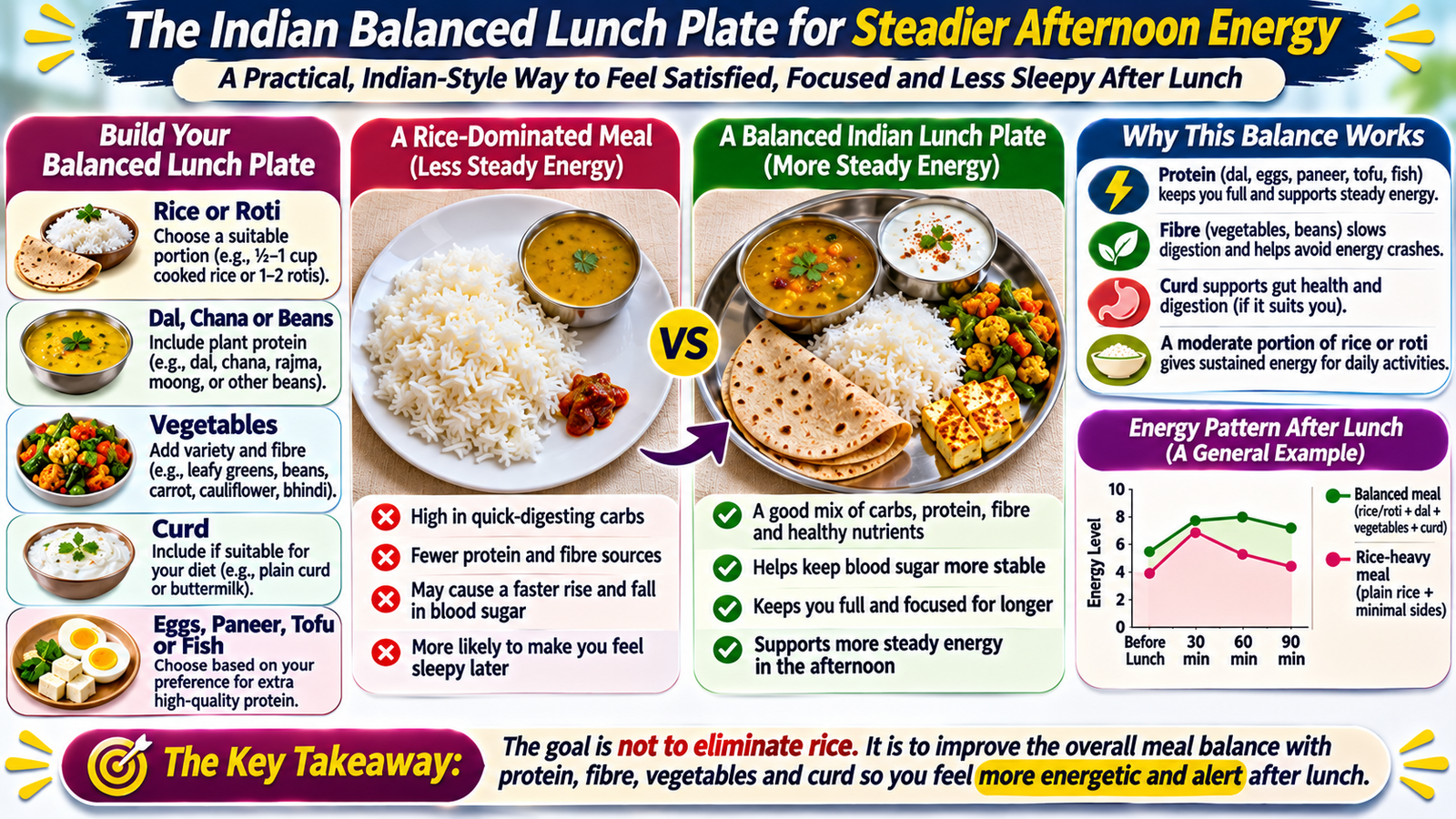
You do not need expensive health foods or imported ingredients to create a balanced meal. Common Indian foods can provide carbohydrates, protein, fiber, and other nutrients.
| Meal | Practical combination | Why it may help |
|---|---|---|
| Breakfast | Idli with sambar | Combines a carbohydrate food with lentils |
| Breakfast | Vegetable oats with plain curd | Adds fiber and protein |
| Lunch | Rice, dal, vegetable curry, and curd | Offers a mix of carbohydrates, protein, and fiber |
| Lunch | Roti, chana, and vegetable sabzi | Combines pulses, vegetables, and grains |
| Snack | Roasted chana and fruit | Provides fiber and some protein |
| Snack | Plain yogurt with nuts | Adds protein and unsaturated fats |
| Dinner | Vegetable khichdi with curd | Offers a simple mixed meal |
These are examples, not a prescribed diet. Adjust portions to your appetite, activity, cultural preferences, and medical needs. People with diabetes, kidney disease, food allergies, or other dietary restrictions may need individual guidance.
13. A Simple 7-Day Food and Energy Tracking Method
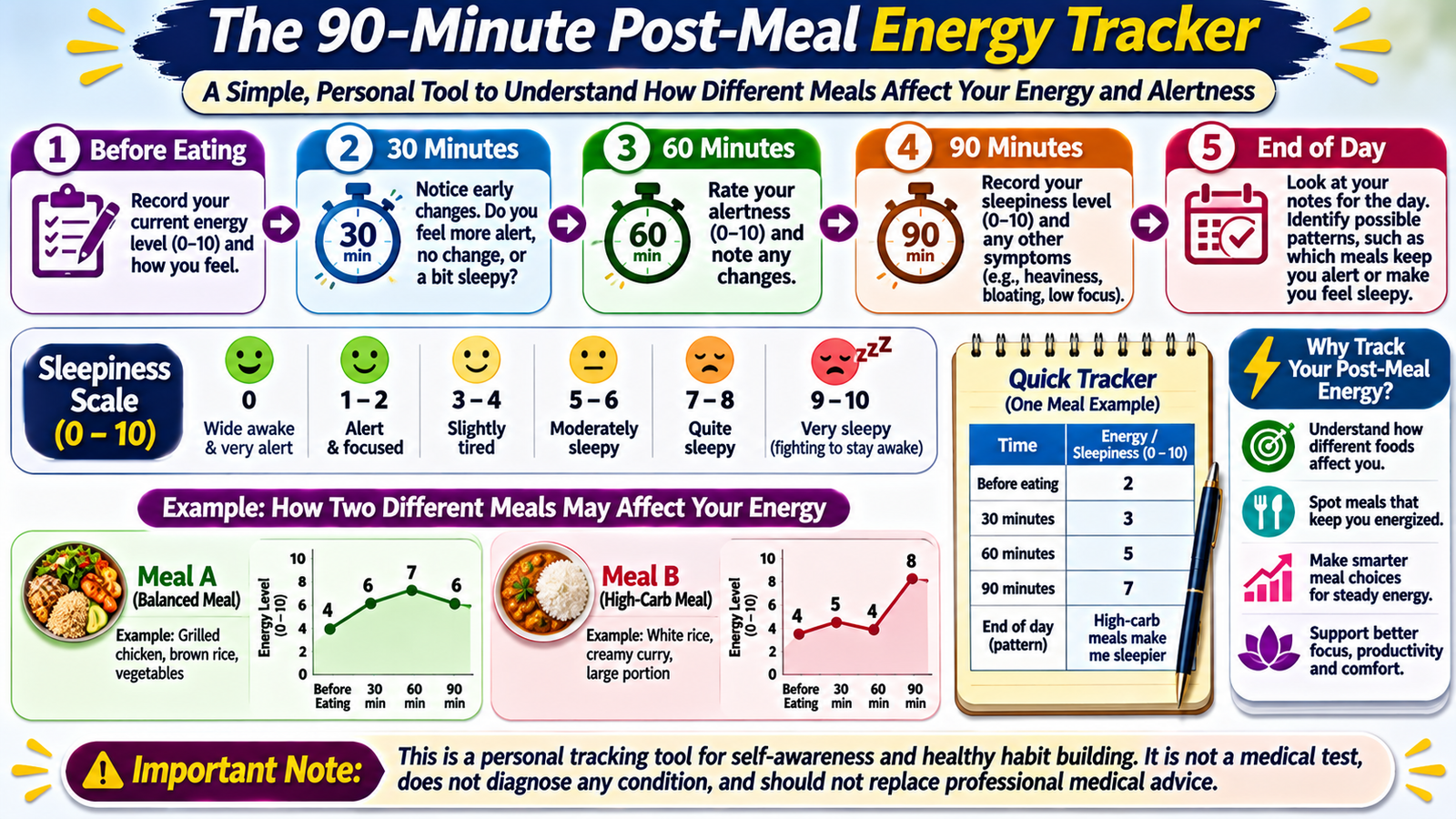
One useful step that is often overlooked is recording what happens before the tiredness begins. Instead of removing several foods at once, track your normal routine for seven days.
Use this simple table:
| What to record | Example |
|---|---|
| Meal time | 1:00 p.m. |
| Meal | Rice, dal, vegetable curry, curd |
| Portion | Usual lunch portion |
| Sleep the previous night. | 6.5 hours |
| Sleepiness before eating | 2 out of 10 |
| Sleepiness 30 minutes later | 4 out of 10 |
| Sleepiness 90 minutes later | 7 out of 10 |
| Other symptoms | None |
| Activity after eating | Sat at desk |
Rate your sleepiness from 0 to 10, where 0 means fully alert and 10 means struggling to stay awake.
At the end of the week, look for patterns:
- Does sleepiness occur after every meal or mainly after lunch?
- Is it worse after larger portions?
- Does it happen after meals that contain mostly refined carbohydrates?
- Is it more noticeable after a poor night’s sleep?
- Does it occur with dizziness, sweating, or shakiness?
- Does it happen after taking a particular medicine?
This is not a diagnostic test. It is a practical record that may help you explain your symptoms more clearly during a medical appointment.
A useful insight: Compare similar meals rather than changing everything at once. For example, you might compare your usual lunch with a slightly smaller portion that includes more vegetables and dal. Keeping other habits reasonably similar makes the observation more useful.
14. Common Mistakes People Make When They Feel Sleepy After Eating
Mistake 1: Blaming rice or carbohydrates completely
Rice and other carbohydrate foods are not automatically responsible for sleepiness. Portion size, meal balance, sleep, and individual health factors also matter.
Mistake 2: Skipping lunch to avoid tiredness
Skipping meals may leave you excessively hungry later and encourage overeating. It is usually more practical to adjust meal composition and portion size.
Mistake 3: Drinking several cups of coffee
Caffeine may temporarily mask tiredness, but it does not identify the cause. Too much caffeine can also affect nighttime sleep.
Mistake 4: Taking supplements without testing
Iron, vitamin B12, and other supplements should not be used as a general cure for post-meal sleepiness. Supplementation is most useful when a deficiency or specific need has been identified.
Mistake 5: Assuming sleepiness means diabetes
Feeling tired after eating does not automatically indicate diabetes or low blood sugar. Diagnosis requires appropriate clinical assessment and testing.
Mistake 6: Doing intense exercise immediately after a meal
A hard workout is unnecessary for reducing ordinary post-meal drowsiness. A comfortable walk is a more practical starting point for many people.
Mistake 7: Ignoring repeated dizziness or faintness
If sleepiness comes with dizziness, blurred vision, sweating, or fainting, do not treat it as an ordinary food coma. Seek medical assessment.
15. When Should You See a Doctor?
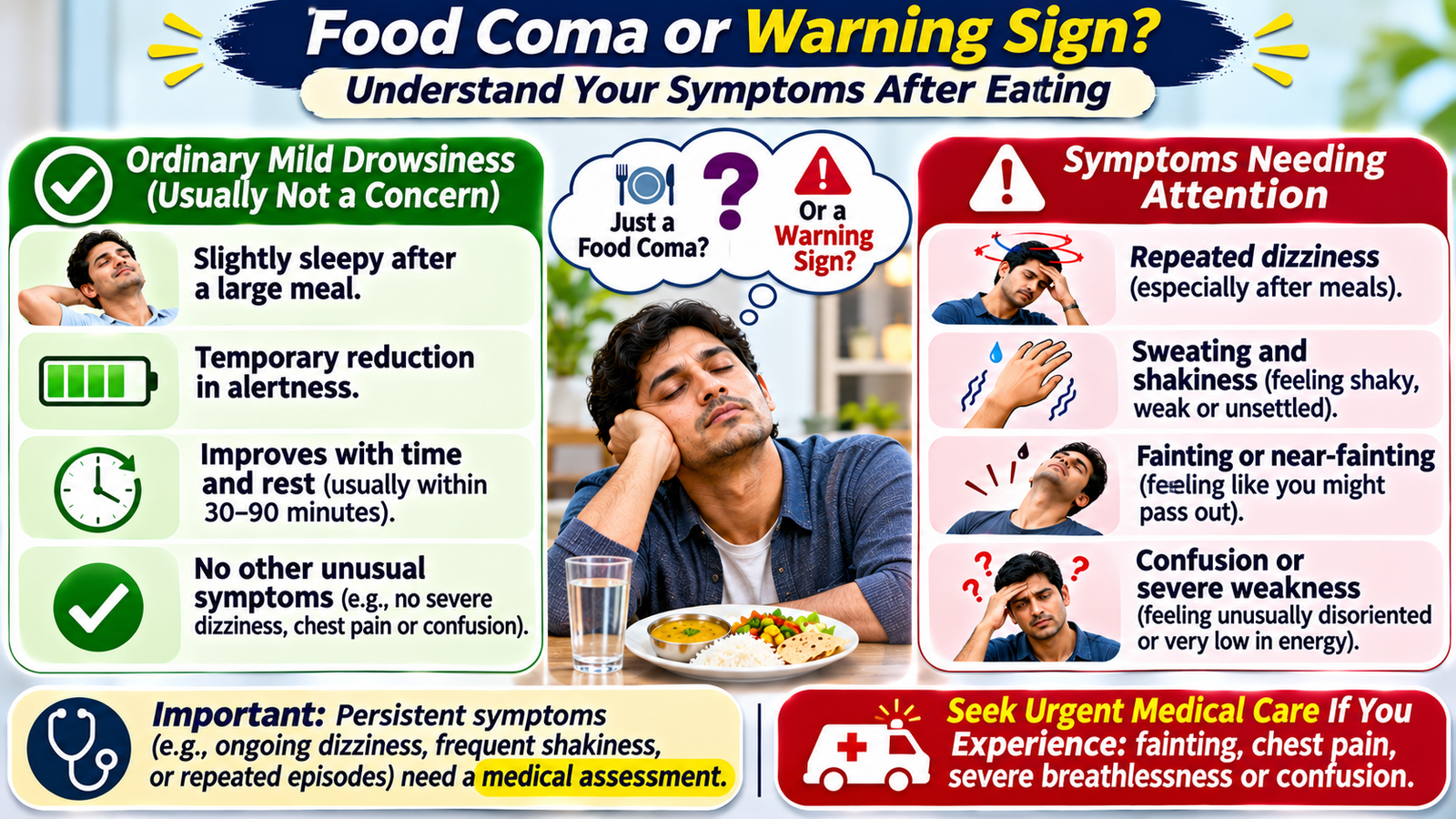
Occasional mild sleepiness after a heavy meal may not be a cause for concern. However, arrange a medical appointment if:
- You feel excessively sleepy after most meals.
- Tiredness interferes with work, driving, or daily activities.
- You experience repeated dizziness or lightheadedness after eating.
- You develop shakiness, sweating, sudden hunger, or palpitations.
- You have unexplained weight changes, excessive thirst, or frequent urination.
- You feel tired even after getting adequate sleep.
- You recently started a medicine and noticed a change in alertness.
Seek urgent medical care if you faint, develop chest pain, experience severe breathlessness, become confused, or cannot stay awake normally. If someone with suspected low blood glucose is unconscious or unable to swallow safely, do not give food or drink by mouth; seek emergency help.
A clinician may review your symptoms, medicines, blood pressure, sleep habits, and relevant blood tests. The aim is to identify the cause rather than simply suppress the sleepiness.
Frequently Asked Questions
1. Is it normal to feel sleepy after eating?
Mild sleepiness after a large meal can happen to healthy people. The natural afternoon dip in alertness, meal size, sleep quality, and food composition may all contribute. Frequent or severe drowsiness should be assessed.
2. Why do I feel sleepy immediately after eating?
Sleepiness immediately after a meal may be related to an existing lack of sleep, a natural reduction in alertness, meal size, or other individual factors. It does not automatically mean your blood sugar has dropped. Notice whether the feeling occurs after every meal and whether other symptoms appear.
3. Why do I feel sleepy after eating rice?
Rice is a carbohydrate-rich food, but eating rice does not automatically cause sleepiness. A very large serving with few vegetables or protein sources may create a less balanced meal. Try adjusting the portion and combining rice with dal, vegetables, curd, or another suitable protein source.
4. Why do I feel sleepy after lunch every day?
The early afternoon is a common time for reduced alertness. A large lunch, inadequate sleep, and a sedentary routine may make the feeling stronger. If the sleepiness is excessive or affects your daily activities, discuss it with a healthcare professional.
5. Can high blood sugar make you feel tired after eating?
High blood glucose can be associated with fatigue, particularly in people with diabetes. However, sleepiness after a meal alone cannot confirm high blood sugar. Testing and clinical assessment are needed to understand the cause.
6. Does feeling sleepy after eating mean I have diabetes?
No. Many factors can cause post-meal drowsiness. Diabetes may cause fatigue, but it cannot be diagnosed from this symptom alone. A healthcare professional can recommend appropriate testing if you have risk factors or other symptoms.
7. Should I walk after eating?
A gentle walk for 5–10 minutes may be a practical habit if you feel comfortable. Avoid strenuous exercise immediately after a large meal, and stop if you become dizzy or unwell.
8. Which foods can help reduce sleepiness after meals?
No single food guarantees that you will remain alert. Balanced meals containing vegetables, pulses, whole grains, and protein-rich foods may be more useful than meals dominated by sugary or highly refined foods.
9. Can dehydration make me sleepy after eating?
Yes. Dehydration can contribute to tiredness and difficulty concentrating. Drink fluids regularly according to your needs and any medical advice you have received.
10. How long does post-meal sleepiness last?
There is no fixed duration for everyone. Mild drowsiness may pass as the afternoon progresses. If it lasts for hours, happens repeatedly, or comes with other symptoms, seek medical advice rather than assuming it is normal digestion.
Conclusion
Feeling sleepy after eating can result from several overlapping factors, including meal size, food composition, your natural body clock, poor sleep, dehydration, and individual health conditions. A large meal or carbohydrate-heavy lunch may contribute, but food is not always the only explanation.
Start with simple changes. Build balanced meals, adjust portions, drink enough water, maintain a consistent sleep schedule, and try gentle movement after eating if it is comfortable for you. Record when the sleepiness occurs and whether other symptoms appear. This can help you identify patterns without unnecessarily eliminating foods.
Most importantly, do not ignore persistent or severe post-meal tiredness. Dizziness, fainting, sweating, shakiness, or unusual weakness may require medical assessment. The most useful approach is to understand the cause and choose changes that support your overall health rather than relying on quick fixes.
Author Note
Author: RVLNSV PRASAD
Website: HealthTipsToYou.com
This article is intended to help readers understand common reasons for sleepiness after eating and make informed everyday lifestyle choices. It draws on published medical and scientific resources and focuses on practical food, sleep, hydration, and activity habits. It is educational content, not a substitute for an individual medical assessment.
Fact-checking and medical review: Add the name and qualifications of a qualified healthcare professional only after that person has genuinely reviewed the article. Do not describe the article as medically reviewed until that review has taken place.
Medical Disclaimer
This article is for general educational purposes only. It does not provide a diagnosis or replace advice from a qualified doctor. Persistent tiredness, suspected blood glucose problems, dizziness, fainting, or other concerning symptoms require appropriate medical assessment. Do not stop prescribed medicines or begin supplements based only on this article.
Fitness Disclaimer
Gentle walking after meals may suit many adults, but physical activity should match your health, fitness, and mobility. Stop exercising if you experience dizziness, chest pain, severe breathlessness, or unusual weakness. People with medical conditions or balance problems should ask a healthcare professional about safe activity.
Evidence-Based Sources and Further Reading
-
- Kaneda H, et al.—The Influence of Food Intake and Blood Glucose on Postprandial Sleepiness and Work Productivity: A Scoping Review. Nutrients, 2025. Reviews research on food intake, glucose, sleepiness, and work productivity. Read the research review.
- Polianovskaia A, et al.—Effect of a Whole-Food Plant-Based Diet on Postprandial Sleepiness: A Pilot Study. American Journal of Lifestyle Medicine, 2024. A small pilot study examining changes in sleepiness following a whole-food plant-based dietary pattern. Read the study.
- Mayo Clinic — Reactive Hypoglycemia: What Can I Do? Explains symptoms, possible causes, and dietary approaches for suspected reactive hypoglycemia. Read the Mayo Clinic guidance.
- American Diabetes Association — Standards of Care in Diabetes, 2026. Provides current guidance on blood glucose targets, hypoglycemia levels, and management in diabetes care. Read the 2026 standards.
- National Institute of Diabetes and Digestive and Kidney Diseases (NIDDK) — Low Blood Glucose (Hypoglycemia). Explains symptoms and immediate management of low blood glucose, especially for people with diabetes. Read the NIDDK guidance.
- Cleveland Clinic — Postprandial Hypotension: Blood Pressure Drops After Eating. Explains symptoms, causes, risk factors, and management options. Read the Cleveland Clinic guide.
- Postprandial Hypotension—Methods for the Evaluation and Management. Geriatrics & Gerontology International, 2026. Reviews assessment and management approaches for blood pressure changes after meals. Read the 2026 review.
- NHS inform—Low Blood Pressure (Hypotension). Describes low blood pressure symptoms, including symptoms that may occur after eating, and practical management advice. Read NHS guidance.
You also read this content
- 10 Best Foods To Control Blood Sugar Levels
- Simple Healthy Eating Plan for Beginners: A Science-Backed Guide
- 7 Simple Health Changes to Reduce The Risk of Chronic Disease
- 10 Best Foods to Lower Blood Sugar Naturally: A Science-Backed Guide to Healthy Blood Sugar
- Depression and Weight Loss Treatment: Natural Remedies, Therapies, and Lifestyle Tips