






































































































































































Table of Contents
ToggleThe Science of Weight Loss: How Fat Loss Really Works
Author: RVLNSV PRASAD
Updated On: October 2026
About Us
Author Bio
Editorial Policy
Contact Us
Introduction
Losing weight is often presented as a simple equation: eat less, move more, and watch the scale fall. The biology is more complicated.
Your body constantly adjusts energy use, appetite, movement, digestion, and stored energy. As body weight changes, the amount of energy your body needs can change too. Hunger can increase. Everyday movement may decrease without you noticing. The same eating pattern that produced weight loss at one stage may eventually maintain your new weight instead.
That does not mean weight loss is impossible. It means the science of weight loss is better understood as a moving system rather than a single calorie calculation.
Current evidence also shows why muscle preservation, physical activity, eating quality, sleep, behavioral support, and long-term maintenance deserve attention alongside the number on the scale. The National Institute of Diabetes and Digestive and Kidney Diseases (NIDDK) explains that a sustainable eating plan and regular physical activity are central to losing and maintaining weight, while also noting that metabolism and other changes can make maintaining weight loss difficult. NIDDK — Eating & Physical Activity to Lose or Maintain Weight
This guide explains how weight loss works, what happens during a calorie deficit, why plateaus occur, why hunger may increase, how exercise changes body composition, and what newer research is teaching us about maintaining weight loss.
Quick Answer: What Is the Science of Weight Loss?
The science of weight loss begins with energy balance. Over time, body weight tends to change when the energy supplied by food and drinks differs from the energy the body uses.
However, energy balance is not static.
When someone loses weight, their body becomes smaller and generally requires less energy. Metabolic adaptation and changes in appetite can also make continued weight loss more difficult. This is one reason weight loss commonly slows after an initial period of faster change. Mayo Clinic explains that weight-loss plateaus can occur partly because the body requires fewer calories at a lower body weight. Mayo Clinic — Getting Past a Weight-Loss Plateau
A sustainable approach therefore usually combines:
- A nutritionally adequate eating pattern
- An appropriate energy deficit when weight loss is medically appropriate
- Regular physical activity
- Resistance exercise to help preserve muscle
- Adequate sleep
- Practical appetite-management strategies
- Behavioral support
- A maintenance plan
For people with higher weight or obesity, lifestyle treatment is important, but it is not the only possible treatment. Depending on health status and individual circumstances, healthcare professionals may also consider prescription medications or metabolic and bariatric procedures. NIDDK — Prescription Medications to Treat higher weight & Obesity
Key Takeaways
- The science of weight loss is more than “calories in versus calories out.”
- A calorie deficit is necessary for sustained loss of stored body energy, but the size of that deficit can change as the body adapts.
- Early scale loss may include water and glycogen, not only body fat.
- Weight-loss plateaus are common and do not automatically mean that someone has failed.
- Appetite can increase after weight loss, making maintenance biologically challenging.
- Resistance exercise can help protect fat-free mass during dietary weight loss.
- Physical activity remains valuable even when the scale changes slowly because its benefits extend beyond body weight.
- Weight regain is common, which makes maintenance part of treatment rather than an afterthought.
- There is no single diet, exercise routine, or weight-loss speed that works for everyone.
What Actually Happens When You Lose Weight?
When you consistently consume less energy than your body uses, the body has to draw on stored energy.
Some of that stored energy comes from body fat. However, weight change is not exclusively fat loss.
During the early stages of dietary restriction, glycogen stores can decline. Because glycogen is associated with water, some of the initial reduction on the scale can represent water rather than a comparable amount of body fat. Mayo Clinic discusses this early change when explaining why weight loss often appears faster at the beginning and then slows. Mayo Clinic — Getting Past a Weight-Loss Plateau
Over time, changes can occur in:
| What changes | Why it matters |
|---|---|
| Body fat | Stored energy can be mobilized when energy intake is below expenditure. |
| Glycogen | Stored carbohydrate and associated water can change rapidly |
| Body weight | A smaller body generally requires less energy. |
| Muscle mass | Can decline during weight loss without appropriate nutrition and training |
| Appetite | Hunger and food motivation may increase. |
| Energy expenditure | Total daily energy needs can decline. |
| Physical activity | Unplanned movement may change. |
| Food behavior | Portions, snacking, and food choices may shift. |
This is why the scale should be viewed as one measurement rather than the complete definition of progress.
Energy Balance Is Real—But It Is Not Simple
Energy balance remains fundamental to weight change.
Your body uses energy for several purposes, including basic physiological functions, digestion, and physical activity. Metabolism is the process by which the body converts food and drinks into energy and uses that energy to support life. Mayo Clinic explains that metabolism influences calorie requirements, but it is only one part of the overall weight-management picture. Mayo Clinic — Metabolism and Weight Loss
But saying “weight loss is only calories” leaves out an important point: calorie requirements change as the body changes.
Imagine two people who eat the same number of calories and perform similar workouts. Their weight responses may still differ because energy requirements, body composition, appetite, medications, sleep, genetics, and other factors are not identical.
NIDDK’s current obesity research program reflects this broader understanding, with research examining metabolism, energy balance, appetite, body composition, physical activity, and other biological mechanisms involved in obesity and weight regulation. NIDDK — Metabolism, Energy Balance & Obesity Research
So the better question is not
“How many calories should everyone eat?”
It is:
“What eating and activity pattern can create an appropriate energy balance while providing adequate nutrition and remaining sustainable for this individual?”
That is a much more useful weight-management question.
Why Does Weight Loss Slow Down?
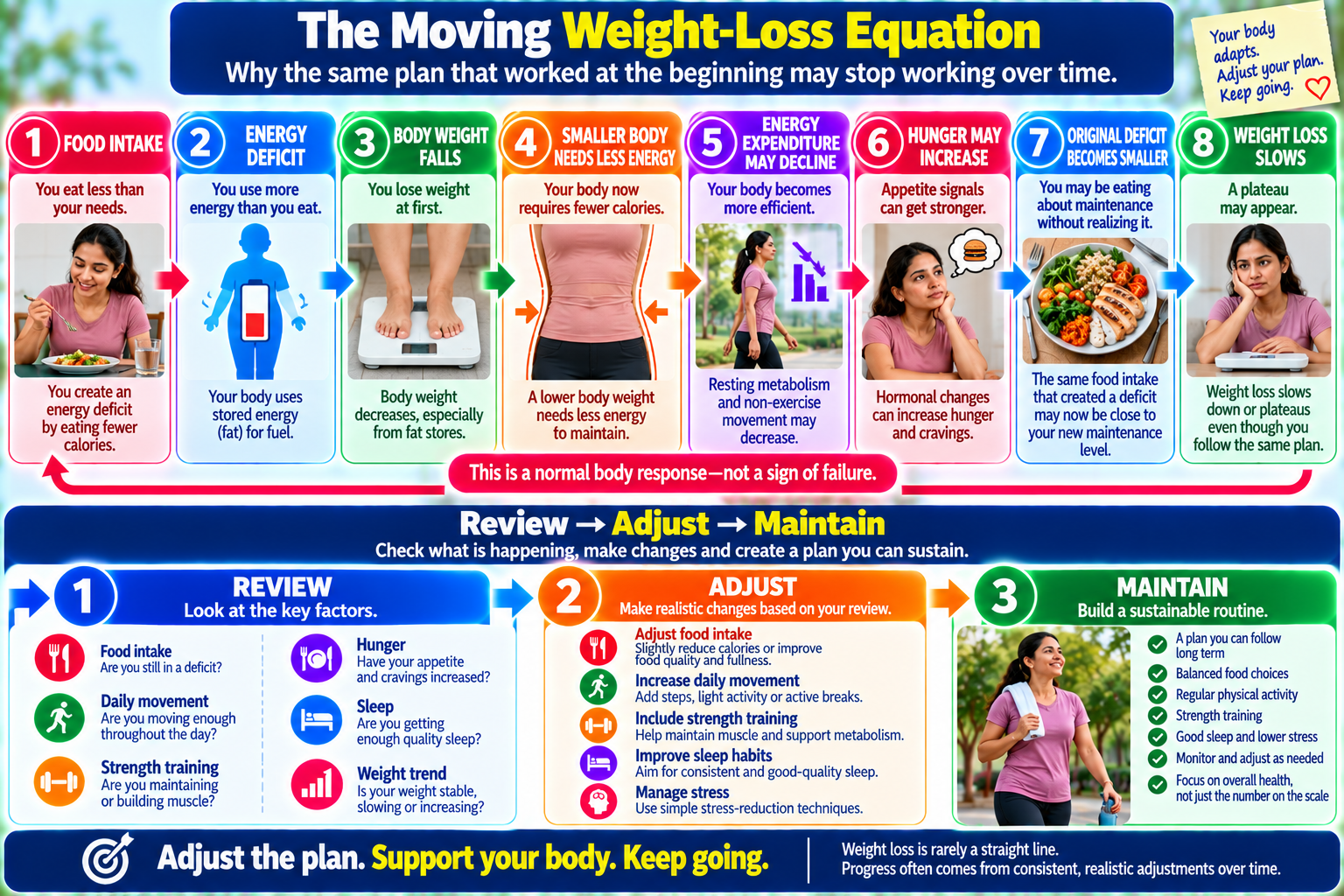
A weight-loss plateau can be frustrating because the person may feel that they are doing exactly what worked before.
The biology explains part of the problem.
As body weight decreases, the body generally needs fewer calories to maintain that lower weight. If the previous calorie intake now matches the body’s lower energy requirements, weight loss can slow or stop. Mayo Clinic — Getting Past a Weight-Loss Plateau
NIDDK similarly explains that metabolism slows during weight loss and that the body needs fewer calories at a lower weight. It also notes that hormonal and other changes may make keeping weight off difficult. NIDDK — Eating & Physical Activity to Lose or Maintain Weight
The Moving Weight-Loss Equation
A useful way to think about the process is
Food intake → energy availability → body weight → energy requirements → appetite → activity → new energy balance
The arrows continue moving.
That is why a diet should not be judged only by its first few weeks.
A plan that produces rapid early loss but becomes impossible to maintain may be less useful over the long term than a slower approach that a person can realistically continue.
Metabolic Adaptation: Is Your Metabolism “Broken”?
No.
The phrase “damaged metabolism” is frequently used online, but it can oversimplify a complicated physiological response.
During weight loss, energy expenditure can decrease because the body is smaller and because physiological adaptations may occur.
Research has also found an association between greater metabolic adaptation during weight loss and a greater increase in appetite. In one longitudinal study of adults with obesity undergoing an eight-week low-energy diet, greater metabolic adaptation was associated with greater hunger and appetite scores. PubMed — Metabolic Adaptation and Appetite After Weight Loss
This does not mean your metabolism has stopped working.
It means the body is responding to a sustained change in energy availability and body size.
This distinction matters because “my metabolism is broken” can make people believe that further healthy behavior is pointless. The evidence does not support that conclusion.
Why Hunger Can Increase After Weight Loss
One of the most important parts of the science of weight loss is appetite.
After weight loss, the body may produce biological signals that encourage eating. A recent systematic review and meta-analysis examining appetite-related gut hormones found that weight loss was associated with an increase in total ghrelin, while changes in other hormones varied according to the hormone and study design. The researchers also found that greater weight loss was associated with a greater increase in total ghrelin. PubMed — Appetite-Related Gut Hormones After Weight Loss: Meta-Analysis
This helps explain why maintaining weight loss can be difficult even when someone is highly motivated.
It is not always simply a matter of willpower.
A People-First Insight
Consider two people.
Person A says, “I am hungry all day, so I keep overeating.”
Person B says, “I am not very hungry, but I snack whenever I work late.”
They both gain weight, but their practical solutions may be completely different.
Person A may benefit from reviewing meal structure, protein and fiber intake, and sleep and appetite patterns.
Person B may need an evening routine that reduces automatic snacking and makes the desired choice easier.
This is why effective weight management should start with the person and the problem, rather than forcing everyone into the same diet.
The Role of Protein in Weight Loss
Protein deserves attention during weight loss because preserving lean tissue matters.
Protein-rich foods can contribute to satiety, while adequate protein combined with resistance exercise can help support muscle preservation.
However, “eat as much protein as possible” is not an evidence-based universal rule. Protein requirements depend on factors such as body size, age, health status, total diet, and activity.
People with kidney disease or other medical conditions may need individualized nutrition advice.
The bigger principle is simple:
A weight-loss diet should reduce excess energy without unnecessarily sacrificing nutritional adequacy.
Why Resistance Training Matters During Weight Loss
The goal of weight loss is not necessarily to make every component of the body smaller.
Preserving muscle can be especially important for strength, physical function, and body composition.
A 2025 systematic review and meta-analysis of 25 randomized trials found that adding resistance exercise during dietary weight loss helped protect fat-free mass, increase fat-mass loss, and improve muscular strength compared with diet-only interventions. PubMed — Resistance Exercise During Dietary Weight Loss
Another recent review examined exercise during calorie restriction and found evidence supporting exercise as a strategy for reducing loss of fat-free mass during weight reduction. PubMed — Exercise and Preservation of Fat-Free Mass During Calorie Restriction
This leads to a practical strategy:
Do not judge your exercise routine only by how many calories it burns.
A strength session can be valuable even if the calorie number displayed on a fitness watch looks modest.
Weight Loss Exercise: Cardio or Strength Training?
Both can have a place.
Aerobic activity such as brisk walking, cycling, swimming, or jogging can increase energy expenditure and improve cardiovascular fitness.
Resistance training can improve strength and help preserve lean mass during weight loss.
The CDC explains that physical activity can support weight management while also providing health benefits beyond changes in body weight. CDC—Physical Activity and Your Weight and Health
A practical weekly structure might look like this:
| Activity | Practical role |
|---|---|
| Walking | Increase daily movement. |
| Brisk walking/cardio | Improve aerobic fitness and energy expenditure. |
| Resistance training | Support strength and muscle preservation. |
| Mobility work | Maintain comfortable movement. |
| Everyday activity | Reduce prolonged sitting and increase total movement. |
You do not need to perform every activity every day.
Consistency matters more than designing the most exhausting workout possible.
A Simple “Movement Upgrade” Anyone Can Try
Instead of asking:
“How can I burn 500 extra calories today?”
Ask:
“Where can I add 5–10 minutes of movement that I can repeat tomorrow?”
Examples include:
- Walking while taking a phone call
- Taking the stairs when appropriate
- Walking for 5–10 minutes after a meal
- Standing and moving during long work sessions
- Parking slightly farther away
- Performing a short resistance routine at home
- Taking a brief evening walk instead of automatically reaching for a snack
These small changes are not magic fat-burning tricks.
Their value comes from making physical activity easier to repeat.
The Relationship Between Sleep and Weight Management
Sleep is often treated as a secondary issue when discussing weight loss.
That is a mistake.
Sleep can affect appetite, energy, mood, food choices, and the ability to maintain regular physical activity. NIDDK includes adequate sleep and stress management among lifestyle factors that can support healthy weight management. NIDDK — Healthy Eating & Physical Activity for Life
If someone is sleeping poorly, constantly tired, and relying on highly palatable foods for quick energy, simply adding another restrictive diet may not address the underlying problem.
A useful question is
“What is making healthy behavior difficult right now?”
Sometimes the answer is not a lack of nutritional knowledge. It may be sleep deprivation, work schedules, stress, medication, pain, or an environment filled with convenient high-calorie foods.
The “Three-Number” Progress Check
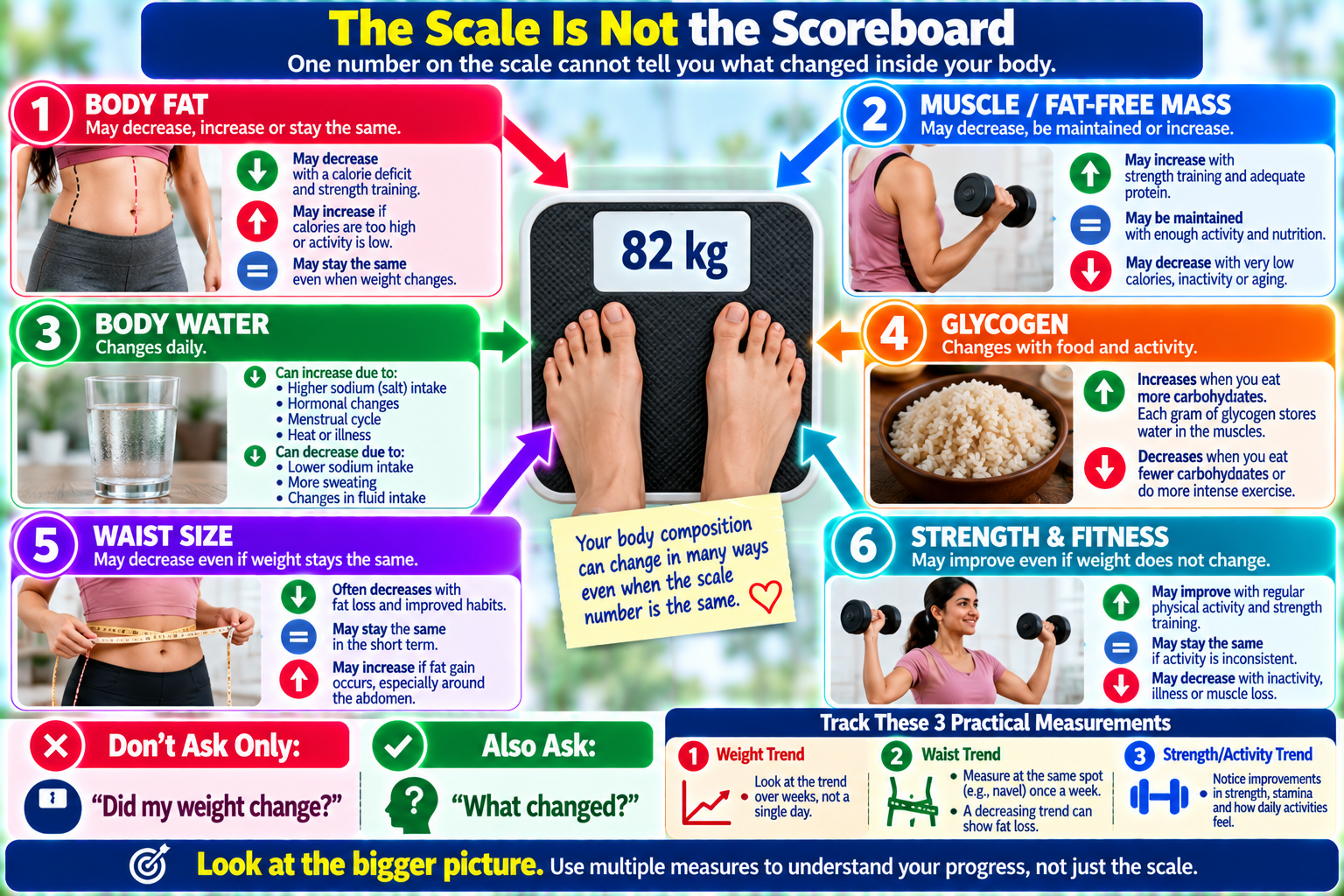
The bathroom scale is useful, but it should not be the only measure.
Try tracking three broader indicators:
| Measure | What it tells you |
|---|---|
| Weight trend | Direction of body weight over time |
| Waist or clothing fit | Another indicator of body-size change |
| Strength/activity | Whether physical function is being maintained or improved |
You can also monitor hunger, sleep, energy, and adherence.
For example, someone whose scale has barely changed but whose waist measurement has declined and whose strength has improved may be experiencing meaningful body-composition changes.
The exact measures should be appropriate for the individual and their goals.
Why Daily Weighing Can Be Misleading
Body weight naturally fluctuates.
Water retention, sodium intake, carbohydrate intake, bowel contents, menstrual-cycle changes, exercise, and other factors can temporarily move the scale.
A single measurement therefore tells you very little.
A better approach is to look at a trend.
For example:
Monday: 82.4 kg
Tuesday: 82.9 kg
Wednesday: 82.2 kg
Thursday: 81.9 kg
Friday: 82.1 kg
The Tuesday increase does not automatically mean fat gain.
The body is not a spreadsheet that reports fat change every morning.
What Does Sustainable Weight Loss Actually Mean?
Sustainable weight loss means more than losing weight slowly.
It means developing an approach that can support health, adequate nutrition, physical activity, and long-term maintenance.
The CDC recommends focusing on achievable lifestyle changes and recognizes that healthy weight management involves both eating patterns and physical activity. CDC — Tips for Maintaining a Healthy Weight
The CDC also emphasizes gradual, sustainable approaches rather than relying on short-term extreme strategies. CDC—Steps for Losing Weight
NIDDK similarly emphasizes continuing healthy eating patterns and physical activity after weight loss rather than treating maintenance as a separate, temporary phase. NIDDK — Eating & Physical Activity to Lose or Maintain Weight
This changes the goal from
“How quickly can I lose 10 kg?”
to:
“What system can help me lose an appropriate amount of weight and continue living this way afterward?”
That is a much stronger question.
The Maintenance Phase Should Start Before You Reach Your Goal
Many people think about maintenance only after losing weight.
A better strategy is to practice maintenance behaviors during the weight-loss phase.
For example:
- Eat foods you can continue eating later.
- Build an exercise routine you actually enjoy.
- Learn how to manage restaurant meals.
- Practice handling holidays and celebrations.
- Develop strategies for stressful days.
- Keep some form of progress monitoring.
- Learn what triggers overeating.
- Avoid extreme rules that cannot survive normal life.
This matters because weight regain is a major challenge.
A recent systematic review examining recurrent weight gain after lifestyle interventions, bariatric surgery, and semaglutide treatment highlights how maintaining weight loss remains an important challenge across different approaches. PubMed—Recurrent Weight Gain After Lifestyle, Surgery, or Semaglutide Treatment
What About Intermittent Fasting and Time-Restricted Eating?
Time-restricted eating has become popular because it can simplify eating schedules for some people.
But it should not automatically be described as superior to every other method.
The important question is whether the approach helps an individual maintain an appropriate eating pattern, obtain adequate nutrition, and manage hunger without creating an unsustainable routine.
The broader obesity research field is increasingly examining how metabolism, appetite, behavior, and biological regulation interact rather than assuming that one eating schedule will work for everyone. NIDDK — Metabolism, Energy Balance & Obesity Research
The practical question is therefore:
Does this eating schedule help you maintain an appropriate food intake without causing excessive hunger, poor nutrition, or an unhealthy relationship with food?
If yes, it may be useful.
If not, another structure may work better.
Common Weight-Loss Mistakes
Mistake 1: Cutting calories too aggressively
Extreme restriction may make hunger, fatigue, and adherence problems more difficult.
A weight-loss plan should still provide adequate nutrients.
Mistake 2: Measuring success only by the scale
Body composition, strength, fitness, waist measurements, and health markers can also matter.
Mistake 3: Believing a plateau means failure
Plateaus are a normal part of weight management. Mayo Clinic — Getting Past a Weight-Loss Plateau
Mistake 4: Eliminating entire food groups unnecessarily
A sustainable eating pattern does not necessarily require eliminating carbohydrates or every favorite food. NIDDK’s nutrition guidance emphasizes healthy overall eating patterns rather than extreme elimination. NIDDK — Eating & Physical Activity to Lose or Maintain Weight
Mistake 5: Doing only cardio
Cardio has important benefits, but resistance exercise can be particularly useful for preserving fat-free mass during weight loss. PubMed — Resistance Exercise During Dietary Weight Loss
Mistake 6: Ignoring medications and medical conditions
Some medications and health conditions can influence weight management. Weight is affected by multiple biological and environmental factors, not simply personal food choices. NIDDK — Metabolism, Energy Balance & Obesity Research
Mistake 7: Treating weight regain as a character flaw
Weight regulation involves biology as well as behavior.
Appetite-related changes and metabolic adaptations can occur after weight loss. PubMed — Metabolic Adaptation and Appetite After Weight Loss
A Simple 7-Day Science-Based Weight-Loss Reset
This is not a crash diet. It is a behavioral reset.
Day 1: Measure your starting point.
Record your current weight if appropriate, waist measurement, average daily activity, and sleep pattern.
Day 2: Upgrade one meal
Build one meal around vegetables or fruit, a protein source, a high-fiber carbohydrate, and a modest amount of healthy fat.
Day 3: Add movement
Take a 10-minute walk after one meal or add another manageable movement session.
Day 4: Add resistance training
Perform a beginner routine involving movements such as
- Sit-to-stand
- Wall push-ups
- Resistance-band rows
- Supported squats
- Light hip-hinge movements
Day 5: Fix one sleep barrier
Choose one practical change, such as reducing late-night screen use or maintaining a more consistent bedtime.
Day 6: Identify your hunger trigger
Ask:
Am I physically hungry, emotionally stressed, bored, tired, or simply following a routine?
You do not need to judge the answer. You only need to understand it.
Day 7: Review the system
Look at:
- Food quality
- Hunger
- Activity
- Sleep
- Energy
- Strength
- Weight trend
Then decide what is worth repeating.
A Better “Weight-Loss Rescue Plan” for Difficult Days
One of the most useful strategies is to stop expecting every day to be perfect.
Create a minimum healthy day.
On a busy day, your minimum might be
- One balanced meal
- A short walk
- Adequate water
- A reasonable bedtime
- Five minutes of movement
- No unnecessary extreme restriction
This is not a replacement for a complete lifestyle.
It is a way to prevent one difficult day from becoming a difficult month.
NIDDK also emphasizes that physical activity can be accumulated in manageable amounts and that even smaller amounts of activity can provide benefits, particularly for people who are starting from a low activity level. NIDDK — Keep Active & Eat Healthy
What the Latest Research Is Changing About Weight Loss
The newest research is moving the conversation away from simple calorie counting toward a more complete understanding of obesity and weight regulation.
It is no longer enough to ask how many calories a person consumes.
Researchers are examining appetite regulation, metabolic adaptation, body composition, muscle preservation, behavioral treatment, medication, environmental factors, and long-term maintenance as interconnected parts of weight management. NIDDK’s obesity research program specifically includes metabolism, energy balance, and the biological mechanisms involved in weight regulation. NIDDK — Metabolism, Energy Balance & Obesity Research
1. Appetite biology matters.
Research increasingly recognizes appetite as an important biological component of weight maintenance.
A meta-analysis of 127 studies found that weight loss induced by calorie restriction, exercise, or their combination was associated with an increase in total ghrelin, while changes in other appetite-related hormones varied. PubMed — Appetite-Related Gut Hormones After Weight Loss: Meta-Analysis
2. Metabolic adaptation may interact with hunger.
Research has also found an association between metabolic adaptation and increased appetite following weight loss. PubMed — Metabolic Adaptation and Appetite After Weight Loss
This helps explain why maintaining weight loss can be biologically challenging.
3. Muscle preservation matters.
Recent evidence supports resistance exercise during dietary weight loss because it can reduce loss of fat-free mass and improve strength. PubMed — Resistance Exercise During Dietary Weight Loss
Another recent review also supports exercise as an important tool for preserving fat-free mass during calorie restriction. PubMed — Exercise and Preservation of Fat-Free Mass During Calorie Restriction
4. Weight management is becoming more personalized.
NIDDK’s current research agenda includes appetite, satiety, body composition, physical activity, sedentary behavior, hormones, and gut-brain signaling. NIDDK — Metabolism, Energy Balance & Obesity Research
This supports a more individualized understanding of obesity rather than assuming that one diet should work equally well for everyone.
5. Medication is becoming part of evidence-based obesity treatment.
Prescription medications are now an established treatment option for some people with higher weight or obesity when clinically appropriate.
NIDDK explains that weight-management medications may be used when lifestyle changes alone are not enough and should generally be combined with healthy eating and physical activity. NIDDK—Prescription Medications to Treat higher weight & Obesity
A recent network meta-analysis also illustrates how rapidly the evidence base for pharmacological obesity treatment is expanding, with multiple medication classes and treatment approaches being compared across clinical trials. 2026 Network Meta-Analysis of Obesity Treatments
6. Weight-loss treatment does not end when the scale drops.
The recent evidence on recurrent weight gain reinforces the importance of long-term maintenance. PubMed—Recurrent Weight Gain After Lifestyle, Surgery or Semaglutide Treatment
This is perhaps one of the most important developments in modern weight-management thinking:
The goal is not simply to produce weight loss. The goal is to support health and maintain beneficial changes over time.
When Lifestyle Changes May Not Be Enough
Lifestyle changes are important, but they are not always sufficient by themselves.
A person may follow healthy habits and still struggle with obesity because of biological, medical, environmental, or medication-related factors.
For some adults, healthcare professionals may consider prescription weight-management medications when BMI and health circumstances meet appropriate criteria. NIDDK explains that these medications may be considered when lifestyle changes have not been enough and should be used alongside healthy eating and physical activity. NIDDK — Prescription Medications to Treat
Metabolic and bariatric procedures may also be considered for some people with higher weight.
This does not mean lifestyle habits become irrelevant.
Instead, modern obesity care increasingly recognizes that different people may need different combinations of nutrition, physical activity, behavioral treatment, medication, and procedures.
Personal Experience: What I Would Change in a Real-World Weight-Loss Plan
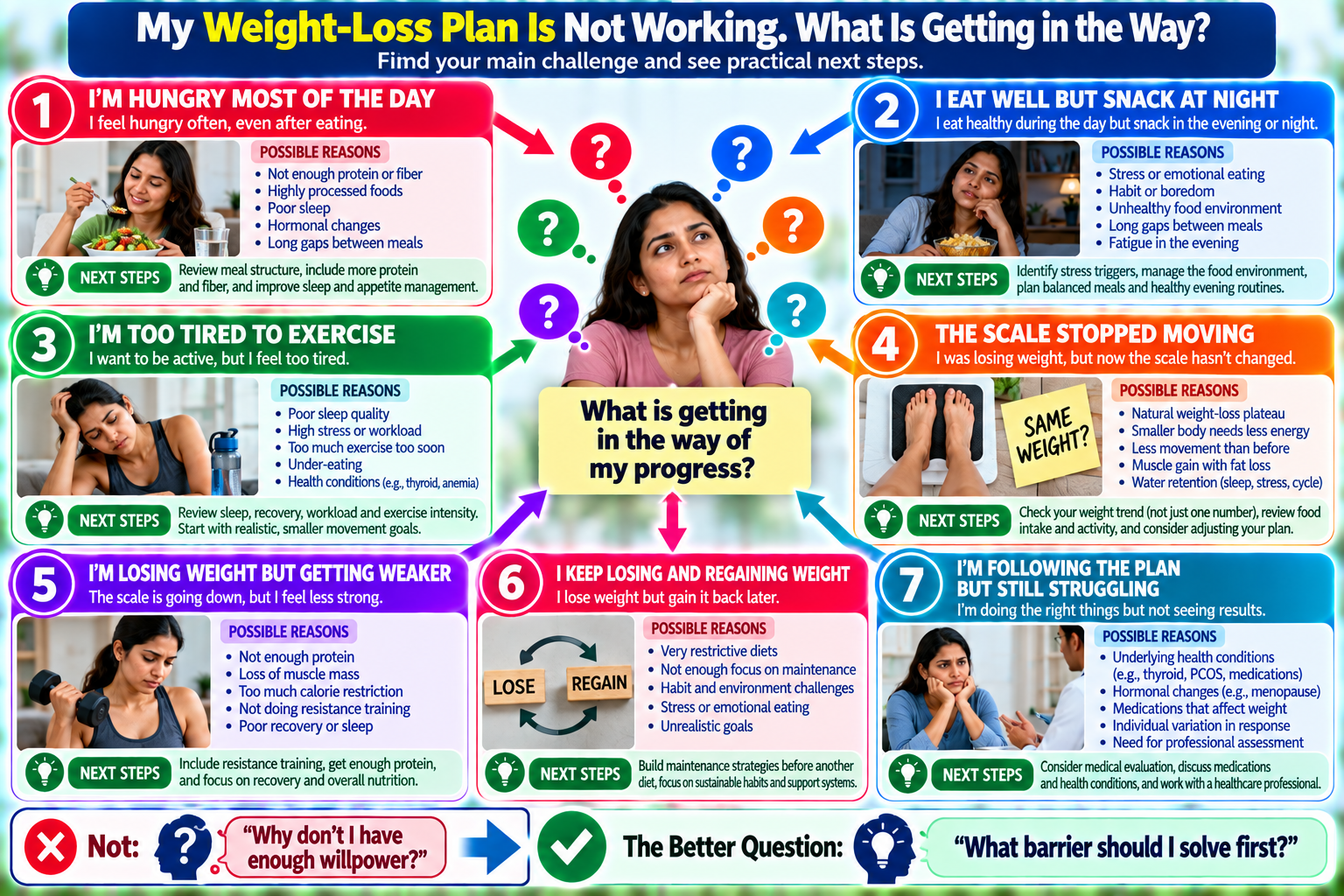
A useful lesson from working through health information and real-world lifestyle questions is that people rarely struggle because they do not know that vegetables, exercise, and sleep are healthy.
The harder question is
How do you make those behaviors fit your actual life?
Someone working long hours may need a five-minute movement strategy rather than an elaborate gym program.
A person who regularly becomes hungry at night may need to examine daytime meal structure rather than simply banning evening food.
Someone who repeatedly loses and regains weight may need to focus more on maintenance, appetite management, and professional support than on another short-term diet.
That is why a people-first weight-loss plan begins with the person’s barrier, not with a generic list of foods.
What the Science of Weight Loss Does Not Say
The evidence does not support several popular internet claims:
- One food cannot magically melt body fat.
- Detox drinks do not override energy balance.
- Sweating is not the same thing as losing body fat.
- A supplement cannot replace an appropriate eating pattern.
- Faster weight loss is not automatically better.
- A plateau does not mean your metabolism is permanently damaged.
- Carbohydrates do not automatically prevent weight loss.
- Exercise does not give everyone permission to eat unlimited calories.
- A single number on the scale does not describe your complete health.
The science is more nuanced than most social media weight-loss advice.
Frequently Asked Questions
What is the science of weight loss?
The science of weight loss involves energy balance, body composition, appetite regulation, metabolism, physical activity, eating behavior, and long-term maintenance. Sustained weight loss generally requires an energy deficit, but the body’s energy needs and appetite can change during the process.
How does a calorie deficit cause weight loss?
When energy intake remains below energy expenditure over time, the body must draw on stored energy. However, the size of the deficit can change as body weight, activity, and energy requirements change.
Why has my weight stopped going down?
Weight loss can slow because the body becomes smaller and requires less energy. Metabolic adaptation, appetite changes, water fluctuations, and changes in food intake or activity can also contribute. Mayo Clinic — Getting Past a Weight-Loss Plateau
Is metabolism responsible for weight gain?
Metabolism influences how much energy the body requires, but it is only one factor affecting weight. Food intake, physical activity, body composition, medications, genetics, and other factors can also matter. Mayo Clinic — Metabolism and Weight Loss
Is strength training good for weight loss?
Yes. Resistance training can support strength and help preserve fat-free mass during dietary weight loss. PubMed — Resistance Exercise During Dietary Weight Loss
Is walking enough for weight loss?
Walking can contribute to energy expenditure and physical activity. It may be an excellent starting point, especially for people who are currently inactive. The amount needed for weight management varies between individuals. CDC—Physical Activity and Your Weight and Health
Does sleep affect weight management?
Sleep is one of the lifestyle factors associated with healthy weight management. Poor sleep can also make healthy eating and regular activity more difficult. NIDDK — Healthy Eating & Physical Activity for Life
Can weight-loss medication replace diet and exercise?
No. NIDDK states that weight-management medications do not replace healthy eating and physical activity and are generally used as part of a broader treatment approach. NIDDK — Prescription Medications to Treat
Why do people regain weight after losing it?
Weight regain can occur for many reasons, including biological adaptations, appetite changes, reduced energy requirements, environmental factors, and difficulty maintaining the behaviors that produced the initial loss. Recent evidence shows that recurrent weight gain remains an important challenge across weight-loss treatments. PubMed—Recurrent Weight Gain After Lifestyle, Surgery or Semaglutide Treatment
A Practical Science-Based Weight-Loss Checklist
Before starting another diet, ask:
Food
- Am I eating enough nutritious food to make the plan sustainable?
- Are meals built around foods that keep me satisfied?
- Am I unnecessarily eliminating entire food groups?
Movement
- Am I moving regularly?
- Can I add more everyday activity?
- Am I performing resistance exercise when appropriate?
Recovery
- Am I getting adequate sleep?
- Is stress affecting my eating or activity?
Progress
- Am I looking at trends rather than single weigh-ins?
- Am I monitoring strength or physical function?
- Am I judging progress only by the scale?
Medical factors
- Could a medication or medical condition be affecting my weight?
- Would professional support make the process safer or more effective?
Author Note
This article was written to explain the science of weight loss in practical language while separating established principles from popular weight-loss claims.
The goal is not to promote a particular diet, supplement, or rapid-loss method. Weight management is individual, and strategies that work for one person may not be appropriate for another.
The research discussed here includes current information from NIDDK, CDC, and Mayo Clinic and recent peer-reviewed systematic reviews and clinical studies.
Medical Disclaimer
This article is for educational purposes only and does not diagnose, treat, or prevent any medical condition.
If you have obesity, diabetes, kidney disease, heart disease, or an eating disorder; are pregnant or breastfeeding; take prescription medication; or have another medical condition, speak with an appropriately qualified healthcare professional before making major changes to your diet, exercise routine, or weight-management treatment.
Do not start prescription weight-loss medication based solely on information in an online article.
Fitness Disclaimer
Exercise is not appropriate in exactly the same form for everyone.
Start at a level that matches your current fitness, health, and physical abilities. If you have significant pain, dizziness, chest symptoms, severe shortness of breath, or another concerning symptom during exercise, stop and seek appropriate medical advice.
If you have been inactive for a long period or have a medical condition, consider discussing your exercise plan with a qualified healthcare professional before beginning vigorous training.
Sources
- NIDDK — Metabolism, Energy Balance & Obesity Research
- CDC — Tips for Maintaining a Healthy Weight
- CDC — Steps for Losing Weight
- CDC — Physical Activity and Your Weight and Health
- Mayo Clinic — Metabolism and Weight Loss
- Mayo Clinic — Getting Past a Weight-Loss Plateau
- PubMed — Metabolic Adaptation and Appetite After Weight Loss
- PubMed — Appetite-Related Gut Hormones After Weight Loss: Meta-Analysis
- PubMed — Resistance Exercise During Dietary Weight Loss
- PubMed — Exercise and Preservation of Fat-Free Mass During Calorie Restriction
- NIDDK — Prescription Medications to Treat higher weight & Obesity
- PubMed — Recurrent Weight Gain After Lifestyle, Surgery or Semaglutide Treatment
- 2026 Network Meta-Analysis of Obesity
Final Thoughts
The science of weight loss is not a battle between willpower and calories.
It is a dynamic interaction between energy intake, energy expenditure, body composition, appetite, metabolism, movement, sleep, environment, behavior, and health.
A calorie deficit still matters. But understanding only that one principle can leave people confused when weight loss slows, hunger increases, or the scale stops moving.
The better approach is to build a system that can adapt.
Eat nutritious foods that you can realistically continue eating. Stay physically active. Include resistance training when appropriate. Protect sleep. Pay attention to hunger rather than ignoring it. Track trends instead of reacting to individual scale readings. And when lifestyle changes are not enough, recognize that evidence-based medical treatment may also have a legitimate place in weight management.
Most importantly, treat the person—not simply the number on the scale.
That is where the science of weight loss becomes useful in real life.
Related articles
Post Views: 1,699










[…] The Science of Shedding Pounds: A Data-Driven Approach to Weight Loss […]
[…] The Science of Shedding Pounds: A Data-Driven Approach to Weight Loss […]
[…] The Science of Shedding Pounds: A Data-Driven Approach to Weight Loss […]
[…] The Science of Shedding Pounds: A Data-Driven Approach to Weight Loss […]