























































































































































10 Hyperthyroidism Symptoms in Older Adults: Early Signs You Should Not Ignore
Medically Reviewed By: RVLNSV PRASAD
Fact-Checked By : Wellness Research Team
Last Updated: June 2026
Author’s Note
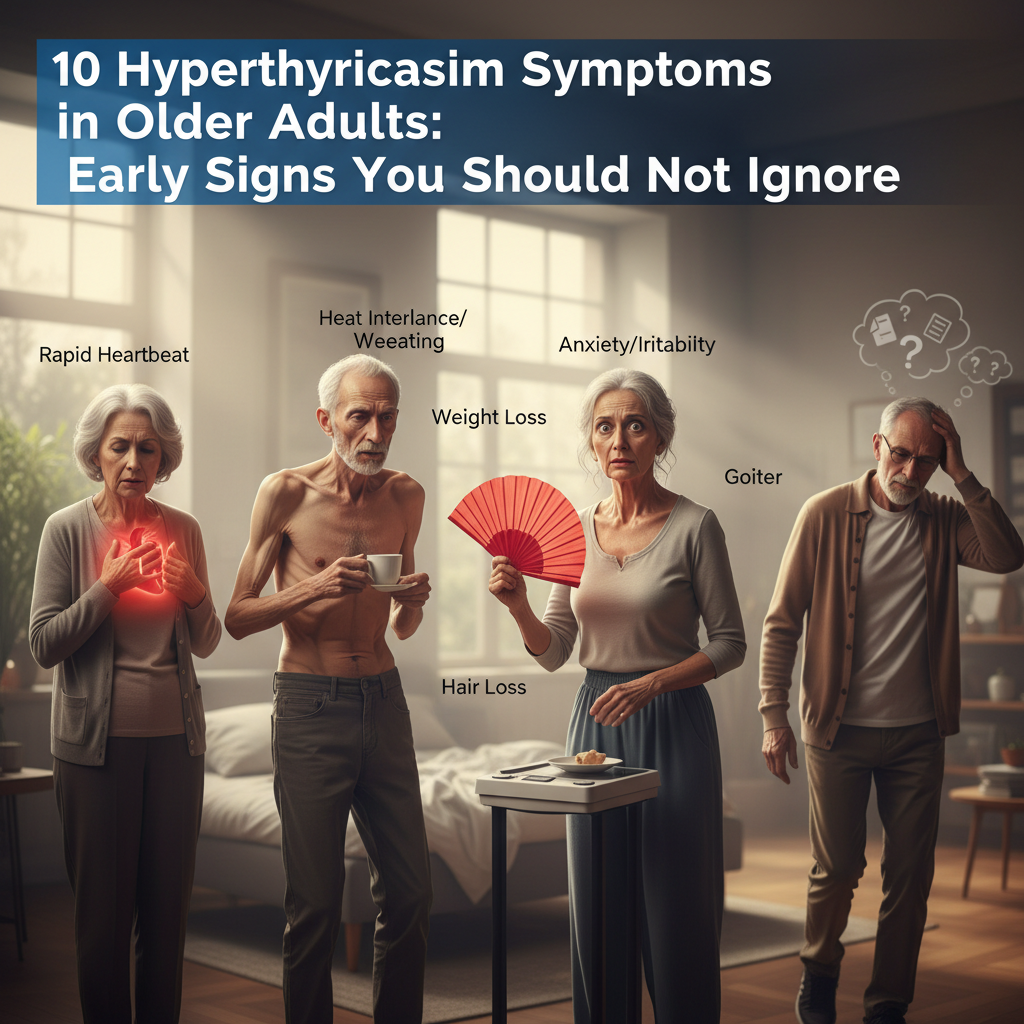
Symptoms of hyperthyroidism may include weight loss and feeling extremely heated.
However, while I was looking into thyroid issues, I learned that it doesn’t necessarily present the same way in older folks.
Many trusted medical organizations explain that symptoms may be milder or resemble other common health conditions.
That can make early recognition more difficult.
This article summarizes current evidence from leading medical organizations while explaining the information in simple language.
The purpose is to assist readers in recognizing potential warning signals and knowing when it is appropriate to seek medical treatment.
Introduction
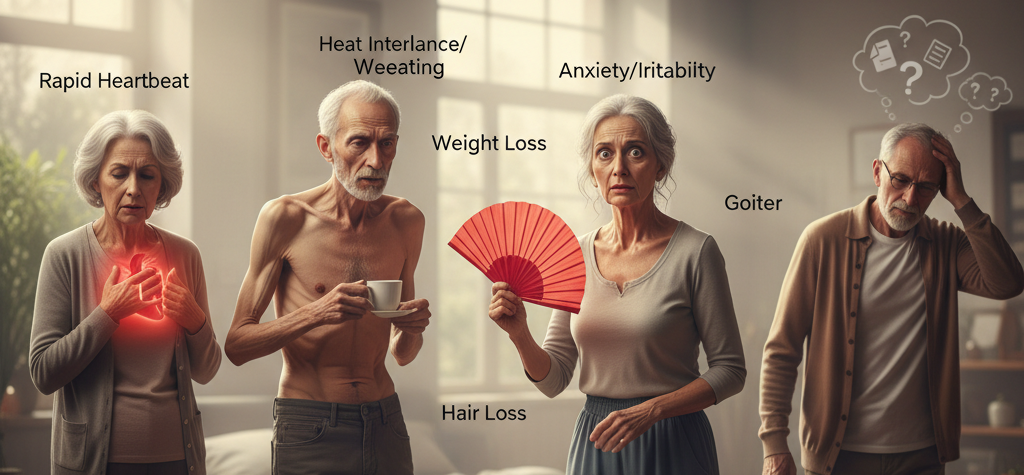
In hyperthyroidism, older adults may experience symptoms that develop slowly and can be mistaken for normal aging or other health problems.
Instead of one clear symptom, a person may observe minor changes over a period of several months.
For instance, someone who used to walk every day may suddenly find themselves feeling unusually tired. Another person may lose weight without changing eating habits.
These changes may seem unrelated at first. While reviewing guidance from endocrinology organizations, one thing became clear.
Many older adults delay discussing these symptoms because they assume they are simply getting older. Family members may miss these changes as well.
Early recognition of the pattern may allow healthcare providers to assess potential thyroid problems earlier.
This page discusses common thyroid symptoms in older adults, why they occur, and when you should seek medical attention.
Key Takeaways
- Hyperthyroidism means the thyroid gland makes too much thyroid hormone.
- Older individuals may experience different symptoms than younger people.
- Common warning symptoms include unexplained weight loss and fast heartbeat.
- Some symptoms may be similar to natural aging.
- Family members may notice changes before the individual who is impacted.
- Often a diagnosis is confirmed by blood tests.
- Getting medical attention early can prevent complications.
- Don’t overlook symptoms that linger or can’t be explained.
What Is Hyperthyroidism?
Hyperthyroidism is a disorder in which your thyroid gland generates too much thyroid hormone. The thyroid is a tiny gland on the front of the neck shaped like a butterfly.
An overactive thyroid in older adults may affect the heart, muscles, digestive system, sleep, and overall energy levels.
It is little, but it affects many functions throughout the body.
These hormones help to regulate:
- Heart rate
- Body temperature
- Energy use
- Digestion
- Muscle function
- Metabolism
When thyroid hormone levels are too high, many body systems work faster than normal.
This might result in symptoms affecting the heart, muscles, digestive system, sleep, and emotional health.
According to the National Institute of Diabetes and Digestive and Kidney Diseases (NIDDK), hyperthyroidism can be caused by numerous illnesses, including autoimmune disorders, thyroid nodules, and inflammation of the thyroid gland.
Why Hyperthyroidism Can Be Harder to Recognize in Older Adults
One of the most important lessons from my review of medical research is that symptoms are usually not dramatic.
Because hyperthyroidism often develops gradually, many symptoms are mistaken for normal aging or other common medical conditions.
Many people expect obvious signs. Instead, symptoms may appear slowly.
Some health professionals refer to the condition as apathetic hyperthyroidism and note that older adults may not show typical symptoms but instead experience fatigue, weakness, weight loss, or cardiac difficulties.
For this reason, symptoms are sometimes confused with the following:
- Normal aging
- Depression
- Heart disease
- Side effects of medication
- Poor diet
Respected groups like the American Thyroid Association and the Mayo Clinic say that chronic unexplained symptoms should be evaluated by a doctor, not ignored as a sign of aging.
What Does the Research Say?
Researchers have studied hyperthyroidism for decades.
According to the National Institutes of Health (NIH), the National Center for Biotechnology Information (NCBI) and the American Thyroid Association, excess thyroid hormone impacts practically every organ system.
Medical professionals also note that older adults may present differently than younger patients.
Instead of visible anxiousness or profuse sweating, people can develop the following:
- Unexpected weight loss
- Fatigue
- Irregular heartbeat.
- Muscle weakness
- Reduced exercise tolerance
The problem is that these symptoms coincide with many other disorders. For this reason, healthcare providers often recommend blood testing instead of relying on symptoms alone.
10 Signs of Hyperthyroidism in Older Adults
The following signs of overactive thyroid may develop slowly and are sometimes overlooked in older adults.
1. Unexplained Weight Loss
One of the most common hyperthyroidism symptoms in older adults is losing weight without trying.
Some people continue eating normally. Others may even eat more than usual. Despite this, they continue losing weight.
Why It Happens
Excess thyroid hormone increases how quickly the body uses energy.
This accelerates metabolism.
Example of Day to Day
Someone realizes that the garments are getting looser and the eating habits have not changed.
Practical Significance
Unexpected weight loss should always prompt a discussion with a healthcare professional, as many conditions—not just thyroid disease—can cause it.
2. Rapid or Irregular Heartbeat
The heart is particularly sensitive to thyroid hormones.
Too much thyroid hormone can make the heart beat faster than normal.
Some people notice:
- A racing heartbeat
- Palpitations
- Feeling that the heart skips beats
Daily Life Example
Walking up a short flight of stairs suddenly feels much harder than it used to.
Practical Significance
Persistent heart rhythm changes should never be ignored. Medical evaluation is important because several heart conditions can cause similar symptoms.
3. Muscle Weakness
Muscle weakness often develops gradually. It usually starts in the upper arms and thighs. It may be difficult for people to do things they used to do effortlessly.
Daily Life Example
Simple chores are not so simple, for example:
- Climbing stairs
- Standing up from a chair
- Carrying grocery bags
- Putting objects on a shelf
Why This Happens
Over time, excess thyroid hormone can contribute to muscle breakdown and weakness.
Practical Importance
A medical evaluation is advised for persistent weakness, especially if it occurs for no apparent reason.
4. Feeling Tired Despite High Thyroid Activity
Many people expect hyperthyroidism to cause endless energy. That is not always true. Older adults may actually feel unusually fatigued.
Why It Happens
The body works harder than normal. Over time, that extra demand can lead to fatigue.
Daily Life Example
A short shopping trip now requires frequent rest breaks.
Practical Significance
Persistent tiredness should not automatically be blamed on aging.
5. Trembling Hands
A slight tremor is another possible symptom. It may be so mild that other people notice it first.
Why It Happens
Extra thyroid hormone can overstimulate the nervous system.
Daily Life Example
You notice your hands shaking while
- Holding a cup
- Writing
- Using a smartphone
- Buttoning a shirt
Practical Significance
A tremor has many possible causes. A healthcare professional can determine the reason.
6. Feeling Too Warm
Some people become unusually sensitive to heat. They may feel uncomfortable when others feel fine.
Why It Happens
A faster metabolism causes the body to produce more heat.
Daily Life Example
You prefer cooler rooms or remove extra clothing while others remain comfortable.
Practical Significance
Heat intolerance becomes more meaningful when it occurs with other symptoms.
7. Difficulty Sleeping
Many adults with hyperthyroidism report poor sleep. Some have trouble falling asleep. Others wake frequently during the night.
Why It Happens
The nervous system remains more active than usual.
Daily Life Example
You wake feeling tired despite spending enough hours in bed.
Practical Significance
Poor sleep has many causes. Persistent sleep problems deserve medical discussion.
8. Frequent Bowel Movements
Changes in digestion sometimes occur. Some may notice they are having more frequent bowel movements.
Why It Happens
Thyroid hormones help control the rate at which food travels through the digestive tract.
Daily Life Example
Your normal routine changes without changes in diet.
Practical Significance
Ongoing digestive changes should be evaluated, especially when combined with weight loss.
9. Mood or Personality Changes
Some adults experience emotional changes.
These may include:
- Nervousness
- Irritability
- Anxiety
- Restlessness
In older adults, these changes may be less obvious than in younger people.
Daily Life Example
Family members notice you seem less patient or become frustrated more easily.
Practical Significance
Mood changes may have many causes. Healthcare professionals evaluate them together with other symptoms.
10. Shortness of Breath During Normal Activity
Some people get out of breath more quickly. You become short of breath while doing previously easy activities.
Daily Life Examples
You feel unusually winded while
- Walking uphill
- Gardening
- Climbing stairs
- Carrying groceries
Why It Happens
The heart and lungs work harder when thyroid hormone levels are elevated.
Practical Significance
Persistent shortness of breath always deserves medical evaluation.
Daily Life Situations Where Symptoms First Become Noticeable
One observation stood out while reviewing medical guidance. Many people do not recognize symptoms while resting. Instead, they see changes during normal activity.
Examples include:
A Walk Around the Neighborhood
You need more breaks than you used to.
Grocery Shopping
Carrying shopping bags suddenly feels exhausting.
Cooking
Standing in the kitchen while cooking becomes unusually tiring.
Gardening:
Tasks that once felt simple now require frequent breaks.
Household Cleaning
Vacuuming or mopping becomes more difficult.
Climbing Stairs
You become breathless sooner than expected. Small changes like these often develop gradually. That is why they can be overlooked.
What Family Members or Caregivers May Notice First
Sometimes relatives notice changes before the person experiencing them does.
Examples include:
- Clothes becoming noticeably looser
- Eating well but continuing to lose weight
- Increased tiredness
- Restlessness
- Faster speech
- Reduced ability to complete daily tasks
- Less interest in hobbies
- Frequent complaints about feeling hot
One practical lesson became clear during my research. Family members can provide valuable observations during a medical appointment.
Similar Symptom Conditions
Many symptoms of an overactive thyroid in older individuals are similar to other health issues.
Examples include:
- Heart disease
- Anxiety disorders
- Depression
- Medication side effects
- Vitamin deficiencies
- Diabetes
- Normal aging changes
This phenomenon is one reason healthcare professionals do not diagnose hyperthyroidism based on symptoms alone. Laboratory testing is usually required.
What to Expect During a Medical Evaluation
Many people worry about medical checkups. In most cases, the evaluation begins with a conversation.
Your health care provider may ask you about your symptoms and any medications you are currently taking.
- Your symptoms
- Current medications
- Family history
- Weight changes
- Heart problems
A physical exam may involve checking the following:
- Heartbeat
- Blood pressure
- The neck for thyroid enlargement
- Hand tremors
- Reflexes
Blood tests generally measure the following:
- Thyroid-stimulating hormone (TSH)
- Free T4
- Sometimes free T3
Further testing may be advised depending on the findings.
Thyroid function blood tests are the primary means of diagnosing hyperthyroidism, says the American Thyroid Association and the National Institute of Diabetes and Digestive and Kidney Diseases (NIDDK).
Symptom Comparison Table
| Symptom | Everyday Example | Why Medical Evaluation Matters |
|---|---|---|
| Weight loss | Clothes become loose | May indicate several medical conditions |
| Rapid heartbeat | Heart races while walking | Requires prompt evaluation |
| Muscle weakness | Difficulty climbing stairs | May affect independence |
| Fatigue | Tires easily during shopping | Often mistaken for aging |
| Tremor | Hands shake while writing | Can have several causes |
| Heat intolerance | Feels hot when others do not | More meaningful with other symptoms |
| Poor sleep | Wakes frequently | May affect daily functioning |
| Frequent bowel movements | Routine changes unexpectedly | May accompany other symptoms |
| Mood changes | Increased irritability | Should be evaluated with other signs |
| Shortness of breath | Winded during simple tasks | Needs prompt medical attention |
A Practical Observation
One finding appeared repeatedly while reviewing guidance from endocrinology experts. People usually do not seek medical care for just one symptom. Instead, people often experience several small changes at the same time.
Perhaps they lose weight.
Sleep becomes worse.
Walking feels harder.
Sometimes their hearts beat quickly.
Each symptom seems minor by itself.
Together, they create a pattern.
Recognizing that pattern—and discussing it with a healthcare professional—is often more helpful than focusing on a single symptom.
Common Mistakes to Avoid
Many people unintentionally delay the diagnosis of thyroid conditions. These common mistakes may make it harder to recognize a potential problem.
1. Assuming Every Symptom Is Part of Aging
It’s normal to feel exhausted occasionally.
But unexpected weight loss, a rapid heartbeat, or increased frailty shouldn’t necessarily be considered typical aging.
Better Approach
Consult a healthcare provider about any persistent or unusual symptoms.
2. Ignoring Mild Symptoms
One symptom alone may not appear to be important. Several symptoms occurring together deserve attention.
A Smarter Strategy
Track changes over time.
3. Waiting Until Symptoms Are Severe
Some patients delay seeing the doctor because the symptoms are gradual.
A Smarter Way
An earlier assessment could help find the reason sooner.
4. Diagnose on the Internet
Many medical disorders have similar symptoms. Reading online information cannot replace professional medical assessment.
Better Approach
Use reliable health information to prepare questions for your healthcare provider—not to diagnose yourself.
5. Not Telling Your Doctor You Stopped Taking Medication
Do not stop any prescription treatment for a thyroid issue without first talking to your healthcare professional.
The Better Way
Continue following your treatment plan and ensure you have regular follow-up appointments.
Can Hyperthyroidism Be Mistaken for Dementia?
Instead, briefly explain that thyroid disorders can sometimes cause symptoms such as confusion or memory problems that resemble dementia, but they are different conditions and require medical evaluation.
Expert Insights
Respected medical organizations emphasize that doctors should consider thyroid symptoms in the context of the entire clinical picture.
Accurate diagnosis is vital since hyperthyroidism can damage nearly every organ system, the American Thyroid Association (ATA) says.
A blood test evaluating the level of thyroid hormone is the standard diagnostic test for hyperthyroidism, says the National Institute of Diabetes and Digestive and Kidney Diseases (NIDDK).
Symptoms typically develop slowly and might be misinterpreted for other medical issues, Mayo Clinic experts say.
Older people can have less typical symptoms than younger ones, so rigorous medical assessment is especially necessary, the Cleveland Clinic notes.
One message is consistent among these organizations. Do not depend on symptoms alone.
Professional evaluation and suitable testing are important for an accurate diagnosis.
Personal Experience and Practical Lessons
While researching thyroid disorders, one observation stood out more than any other.
Most people expect hyperthyroidism to cause dramatic symptoms. The research shows a different picture.
Many trusted medical organizations describe symptoms that are subtle at first. A person may simply feel more tired.
Another may notice that climbing stairs has become harder. Someone else may lose weight without trying.
Individually, these changes seem easy to dismiss. Together, they may form an important pattern.
Another lesson I noticed while comparing guidance from the ATA, NIDDK, Mayo Clinic, and Cleveland Clinic was that family members often recognize changes before the person experiencing them.
Comments such as “You’ve lost weight” or “You seem more tired lately” can sometimes become valuable clues.
One practical habit that may help before a medical appointment is keeping a simple symptom diary.
Write down:
- When symptoms started
- Changes in weight
- Heart-related symptoms
- Sleep changes
- Heat intolerance
- New medications
- Questions for your healthcare provider
This information may help make conversations with your healthcare professional more productive.
The biggest lesson I learned from reviewing the evidence is simple.
Do not ignore gradual changes.
Small symptoms repeated over time often deserve more attention than one isolated symptom.
Frequently Asked Questions
1. What are the most common hyperthyroidism symptoms in older adults?
The most common thyroid symptoms in older adults include unexplained weight loss, rapid or irregular heartbeat, muscle weakness, fatigue, tremor, heat intolerance, sleep problems, mood changes, frequent bowel movements, and shortness of breath.
2. Why is hyperthyroid in older adults often missed?
Symptoms may occur slowly and resemble the changes of natural aging or other prevalent medical problems. There is some overlap; therefore, blood tests are usually needed to confirm the diagnosis.
3. Does hyperthyroidism harm the heart?
Yes.
Too much thyroid hormone can speed up your heartbeat or cause an irregular heartbeat. You should always discuss these symptoms with your health care provider.
4. Is weight loss a sign of hyperthyroidism?
Not necessarily.
There are several reasons for unexplained weight loss. A healthcare provider can evaluate if thyroid disease or another issue is to blame.
5. How do you diagnose an overactive thyroid?
Healthcare providers normally start with a medical history, physical examination, and blood tests that evaluate thyroid hormone levels and thyroid-stimulating hormone (TSH).
6. When should you see a doctor?
If you continue to have symptoms such as unexplained weight loss, rapid heartbeat, increased weakness, or symptoms that interfere with your everyday life, you should get a medical checkup.
7. Is there any way to prevent hyperthyroidism?
Some things are unavoidable. But diagnosis and appropriate treatment may help reduce the risk of complications.
8. Do older and younger people have distinct symptoms?
Yes.
Older individuals may have fewer of the basic symptoms and sometimes are more likely to develop fatigue, weakness, weight loss, or heart problems.
9. What questions do I need to ask at my appointment?
Ask about possible causes, recommended blood tests, treatments, follow-up care, side effects of drugs, and whether you should visit an endocrinologist.
10. Should caretakers watch for small changes?
Yes.
Family members may notice a progressive decrease in weight, growing exhaustion, or a change in attitude or physical activity before the person with the disease realizes it.
Possible Causes of Hyperthyroidism in Older Adults
Hyperthyroidism in older adults can have several causes. Graves’ disease is the most common autoimmune cause. Other causes include toxic multinodular goiter, overactive thyroid nodules, and thyroiditis, which is inflammation of the thyroid gland. Healthcare providers use a medical history, physical examination, blood tests, and, in some cases, thyroid imaging to determine the underlying cause.
Research Methodology
This material was studied with evidence-based information from credible medical organizations and peer-reviewed scientific literature.
It lists the National Institute of Diabetes and Digestive and Kidney Diseases (NIDDK), the American Thyroid Association (ATA), the National Institutes of Health (NIH), the National Center for Biotechnology Information (NCBI), the Mayo Clinic, the Cleveland Clinic, the NHS, and MedlinePlus as sources.
Information was assessed for correctness, clinical relevance, and conformity with current medical recommendations for hyperthyroidism.
The views expressed here are personal and based on an examination of the published data and a comparison of advice from trusted medical organizations. They are intended to help explain the research in plain language and should not be interpreted as personal medical advice.
Sources and References
- National Institute of Diabetes and Digestive and Kidney Diseases (NIDDK)
- American Thyroid Association (ATA)
- National Institutes of Health (NIH)
- National Center for Biotechnology Information (NCBI)
- Mayo Clinic
- Cleveland Clinic
- NHS
- MedlinePlus
When to Seek Emergency Medical Care
Most people with hyperthyroidism do not need emergency treatment. However, some symptoms may indicate a serious medical problem that requires immediate attention.
If you have any of the following symptoms, please seek emergency medical care or call your local emergency services immediately:
- Chest pain or pressure that does not go away
- Fainting or loss of consciousness
- Severe shortness of breath or difficulty breathing
- A very rapid or irregular heartbeat, especially if it is accompanied by dizziness or chest pain
- New confusion, severe agitation, or difficulty staying awake
- A high fever along with a rapid heartbeat, severe weakness, confusion, or excessive sweating, as these may be signs of thyroid storm, a rare but life-threatening complication of untreated hyperthyroidism
Do not try to diagnose the cause of these symptoms on your own. Although they can occur with severe hyperthyroidism, other serious medical conditions that require urgent evaluation can also cause them.
Seek immediate medical attention if you have hyperthyroidism and your symptoms suddenly worsen.
Conclusion
Recognizing hyperthyroidism symptoms in older adults and other signs of an overactive thyroid is not always straightforward.
Many of the symptoms appear slowly and may seem like healthy aging or another health problem.
When these symptoms persist, do not ignore unexplained weight loss, muscle weakness, changes in heart rhythm, increasing fatigue, or heat intolerance.
The most important step is not trying to diagnose yourself.
Instead, search for patterns, share concerns with a qualified healthcare professional, and follow recommended testing when needed.
Early evaluation can assist in determining what’s causing the symptoms and guide the next stages in care.
About The Author
RVLNSV Prasad is a wellness writer and an independent health researcher with a special interest in healthy aging, nutrition, lifestyle medicine, and evidence-based health education.
He frequently reviews scientific literature and recommendations from credible institutions such as the NIH, NIDDK, ATA, Mayo Clinic, Cleveland Clinic, and other respected medical sources.
His goal is to translate complex medical research into clear, practical information that readers can understand and discuss with their healthcare professionals.
Medical Disclaimer
This article is provided for educational and informational purposes only.
This information is not meant to diagnose, treat, cure, or prevent any medical problem.
Always seek the counsel of your physician or other qualified health provider with any questions you may have regarding a medical condition, symptoms, diagnosis, testing, treatment, or changes to your medications.
Do not ignore professional medical advice or delay seeking care because of information presented in this article.
Related Articles









[…] 10 Hyperthyroidism Symptoms in Older Adults: Early Signs You Should Not Ignore […]
[…] 10 Hyperthyroidism Symptoms in Older Adults: Early Signs You Should Not Ignore […]
[…] 10 Hyperthyroidism Symptoms in Older Adults: Early Signs You Should Not Ignore […]
[…] 10 Hyperthyroidism Symptoms in Older Adults: Early Signs You Should Not Ignore […]