


































































































































15 Natural Hiccup Remedies for Adults: Fast Relief Methods That May Help
Author: RVLNSV PRASAD
Updated On: September 2026
About Us
Author Bio
Editorial Policy
Contact Us
Author’s Note
Most people have experienced hiccups at some point. They often appear unexpectedly. Sometimes they last a few minutes.
Other times they seem determined to stay much longer. While researching common everyday health concerns, I noticed something particularly striking.
Many people know dozens of home remedies for hiccups. Few understand why hiccups happen in the first place. Understanding the cause can sometimes make finding relief easier.
This article explores practical, evidence-based approaches that adults commonly use to manage occasional hiccups naturally.
Introduction
Natural hiccup remedies for adults are often the first thing people search for when hiccups refuse to go away.
Hiccups can interrupt conversations, meals, work meetings, and even sleep. Most episodes are temporary and harmless.
Yet they can still be frustrating.
I first became interested in this topic after noticing how many different remedies people recommended.
Some suggested drinking water. Others recommended holding their breath.
A few claimed unusual tricks worked every time.
The fascinating thing was that different approaches seemed to work for different people.
That makes sense because hiccups involve a complex interaction of nerves, muscles, and reflexes
The encouraging news is that most infrequent hiccups resolve themselves.
However, several strategies may help shorten an episode or make it less bothersome.
Key Takeaways
- Most hiccups are harmless and short-lived.
- Hiccups are caused by involuntary contractions of the diaphragm.
- One common trigger is eating too quickly.
- Carbonated drinks may contribute to hiccups.
- Several breathing techniques may help provide relief.
- Slowly sipping water remains one of the most commonly used approaches.
- Hiccups that last a long time may require medical attention.
- Knowing triggers can help avoid future occurrences.
What Are Hiccups and Why Do They Happen?
Hiccups are caused by the involuntary contraction of the diaphragm, which is a large muscle located underneath the lungs.
It plays a crucial part in breathing.
The diaphragm snaps into contraction; the vocal cords snap shut.
This creates the familiar “hic” sound.
Most hiccups last only a short time. Many episodes disappear within minutes. Others may continue for several hours.
While hiccups are generally harmless, repeated hiccups can sometimes be a sign of an underlying medical problem.
What Causes Hiccups in Adults?
Several factors may trigger hiccups. Sometimes the cause is obvious. Other times it is difficult to identify.
Common triggers include:
Eating Too Quickly
Fast eating can increase swallowed air. This behavior can trigger the nerves involved in the hiccup reflex.
Large Meals
A very full stomach may place pressure on the diaphragm. Some get hiccups after eating at a restaurant or at a holiday get-together.
Sugary drinks
Carbonated drinks can increase gas in the digestive system. This may contribute to some people’s hiccup occurrences.
Alcohol Consumption
Alcohol can irritate the digestive tract and may cause hiccups in certain people.
Spicy foods
Spicy foods may sometimes stimulate the nerves involved in the hiccup reflex.
Psychological stress
If stress is a frequent trigger, you may also benefit from learning effective anxiety management techniques that support emotional well-being.
Sudden Temperature Changes
Sometimes, hiccups are caused by alternating between very hot and freezing foods or beverages.
What Does Research Say About Natural Hiccup Remedies?
Information in this article was reviewed against guidance from NIH MedlinePlus, Mayo Clinic, Cleveland Clinic, NHS, and peer-reviewed literature discussing hiccup physiology, diaphragm contractions, vagus nerve stimulation, and respiratory reflexes.
National Institutes of Health (NIH)
NIH MedlinePlus – Hiccups
https://medlineplus.gov/ency/article/003068.htm
National Center for Biotechnology Information (NCBI)
Singultus (Hiccups) – NCBI Bookshelf Review
https://www.ncbi.nlm.nih.gov/books/NBK538225/
Mayo Clinic
Hiccups: Symptoms and Causes
https://www.mayoclinic.org/diseases-conditions/hiccups/symptoms-causes/syc-20352613
Cleveland Clinic
Hiccups: Causes and Treatment
https://my.clevelandclinic.org/health/symptoms/17654-hiccups
Additional Research
Chang FY, Lu CL. Hiccup: Mystery, Nature, and Treatment. Journal of Neurogastroenterology and Motility.
https://www.jnmjournal.org/
These sources discuss the causes of hiccups, diaphragm contractions, vagus nerve involvement, common triggers, and when medical evaluation may be necessary.
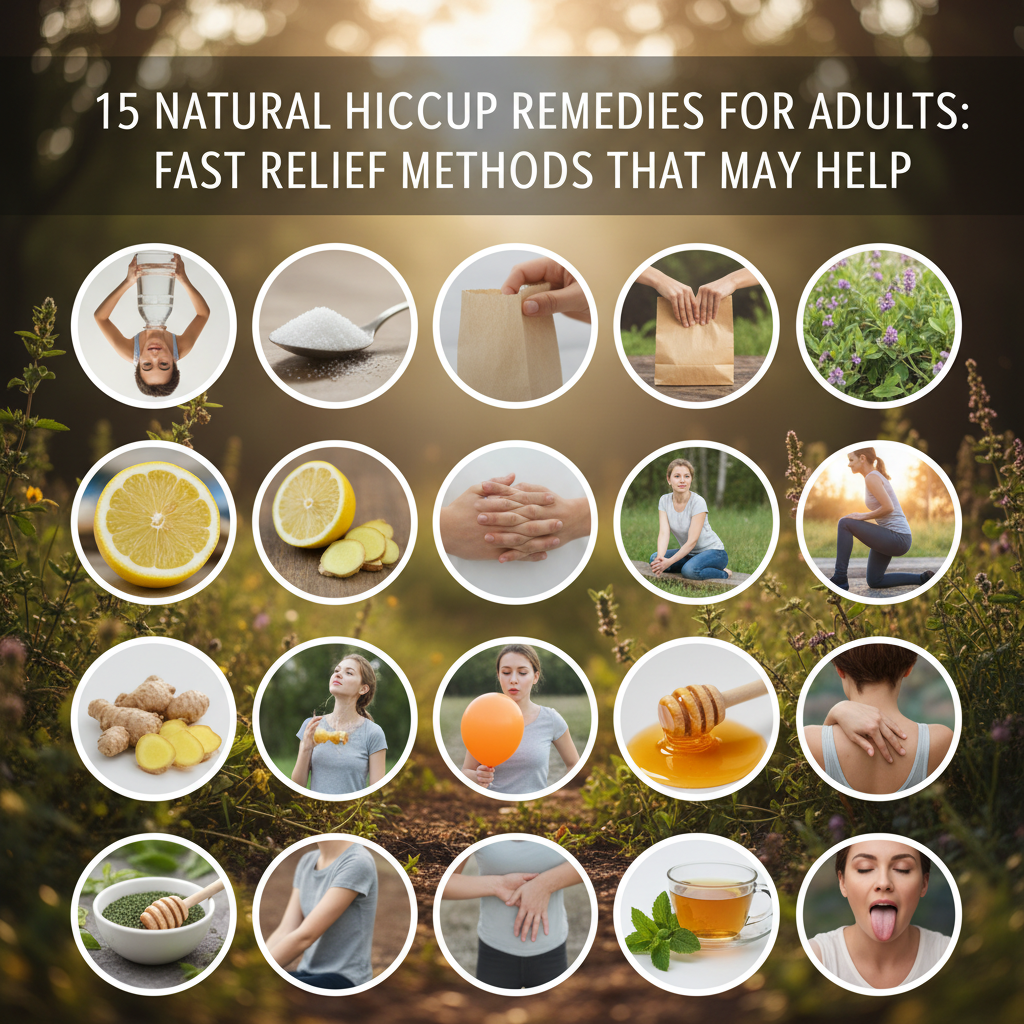
15 Natural Hiccup Remedies for Adults: How to Stop Hiccups Naturally
1. Slow Water Sipping
How to Do It
Take small, slow sips of water. Avoid gulping.
Why It May Help
Slow swallowing may interrupt the hiccup reflex.
Practical Benefit
Simple and available almost anywhere.
2. Controlled Breath Holding
Many people try this instinctively.
How to Do It
Take a deep breath.
Hold it briefly.
Release slowly.
Why It May Help
Changes in carbon dioxide levels may affect the hiccup reflex.
Practical Benefit
Requires no equipment.
3. Pursed-Lip Breathing
Often used in breathing exercises.
How to Do It
Inhale slowly through the nose. Exhale through gently pursed lips.
Why It May Help
Promotes controlled breathing patterns.
Practical Benefit
May also encourage relaxation.
4. Gentle Gargling
A simple remedy that many adults try at home.
How to Do It
Gargle with cool water for 20–30 seconds.
Why It May Help
Gargling may stimulate nerves involved in swallowing and breathing.
Practical Benefit
Quick and simple to try.
5. Mindful Eating Pause
Sometimes hiccups appear because a meal was eaten too quickly.
How to Do It
Pause eating for a few minutes.
Take slow breaths.
Resume eating slowly.
Why It May Help
Reduces swallowed air and allows the digestive system to settle.
Functional Advantage
Great when you get the hiccups suddenly after eating.
6. The Art of the Little Swallow
The approach uses repeated swallowing.
How to Do It
Take several small swallows of water in succession.
Why It May Help
Swallowing may interrupt the hiccup cycle.
Practical Benefit
This method requires nothing more than a glass of water.
7. Slow Nasal Breathing
Many people breathe rapidly when hiccups start.
How to Do It
Breathe slowly through your nose. Focus on steady breathing.
Why It May Help
Promotes a calmer breathing pattern.
Practical Benefit
It can be used almost anywhere.
8. Relaxation Technique
Stress can sometimes contribute to hiccups.
How to Do It
Sit comfortably. Relax your shoulders. Take slow breaths for one minute.
Why it may help
It may help release tension and encourage calmer breathing.
Practical Benefit
May help with hiccups related to stress.
9. Change Your Sitting Position
Posture sometimes affects diaphragm movement.
How to Do It
Sit upright. Avoid slouching.
Why It May Help
May reduce pressure around the stomach and diaphragm.
Practical Benefit
Easy to try immediately.
10. Gentle Walking
A short walk may help some people.
How to Do It
Walk slowly for a few minutes.
Why It May Help
Changes breathing rhythm and body position.
Practical Benefit
Particularly useful after large meals.
11. Avoid Additional Carbonated Drinks
Many adults continue drinking soda while experiencing hiccups.
How to Do It
Choose water instead.
Why It May Help
Reduces additional gas buildup.
Practical Benefit
May prevent the episode from continuing.
12. Temperature Reset Method
Some people find relief by slowly drinking cool water.
How to Do It
Sip cool water slowly. Avoid drinking too quickly.
Why It May Help
Temperature changes may influence swallowing reflexes.
Practical Benefit
Simple and inexpensive.
13. Controlled Breathing Count
This combines breathing and concentration.
How to Do It
Inhale for four seconds.
Hold briefly.
Exhale for six seconds. Repeat several times.
Why It May Help
Encourages a slower breathing rhythm.
Practical Benefit
May help reduce stress-related hiccups.
14. Reduce Distractions While Eating
Many people eat while watching television or working.
How to Do It
Focus on eating slowly. Chew thoroughly.
Why It May Help
Reduces swallowed air.
Practical Benefit
May help prevent future hiccup episodes.
15. Identify Personal Triggers
One of the most overlooked natural treatments for hiccups is understanding what causes them.
How to Do It
Pay attention to patterns. Notice what happened before the hiccups started.
Why It May Help
Prevention is often easier than treatment.
Practical Benefit
Raises long-term awareness.
Unexpected Causes of Hiccups in Adults
Many articles discuss only food and drinks. However, other triggers may surprise people.
Excitement
Laughing hard or becoming overly excited may trigger hiccups.
Rapid Temperature Changes
Moving between very hot and cold foods can sometimes contribute.
Eating While Talking
Such actions may increase swallowed air.
Tight Clothing
Very tight waistbands may place pressure on the abdomen.
Stressful Workdays
Stressful workdays may contribute to hiccups in some individuals. Managing daily stress levels may support overall well-being and reduce common stress-related triggers.
Daily Habits That May Trigger Hiccups
Certain habits quietly increase the chances of hiccups.
Examples include:
- Eating meals too quickly
- Drinking carbonated beverages regularly
- Consuming very large portions
- Skipping meals and then overeating
- Eating while distracted
- Drinking alcohol excessively
- Talking while chewing food
Most people don’t notice that these patterns are connected. Digestive health habits such as slower eating and mindful meal timing may also help reduce common hiccup triggers.
Situations Where Hiccups Commonly Occur
Many adults report hiccups during similar situations.
Examples include:
Restaurant Dinners
Large portions are often accompanied by hurried eating.
Holiday Parties
People may eat larger, richer meals more quickly.
Work Lunches
Stress and rushed eating can contribute.
After Carbonated Drinks
This type of behavior is a common trigger for many adults.
Late-Night Snacking
Large evening meals sometimes increase hiccup frequency.
Fast Hiccup Relief Comparison Table
| Method | Time Required | Difficulty | When to Try |
|---|---|---|---|
| Slow Water Sipping | 1–2 min | Easy | First option |
| Breath Holding | 30 sec | Easy | Early episode |
| Pursed-Lip Breathing | 2 min | Easy | Stress-related hiccups |
| Gargling | 1 min | Easy | At home |
| Gentle Walking | 5 min | Easy | After meals |
| Relaxation Technique | 2–5 min | Easy | Anxiety-related episodes |
| Posture Adjustment | Immediate | Easy | While sitting |
| Trigger Identification | Ongoing | Moderate | Frequent hiccups |
| Remedy | May Help By |
|---|---|
| Water Sipping | Swallowing reflex |
| Breath Holding | Breathing pattern changes |
| Gargling | Nerve stimulation |
| Walking | Posture and breathing changes |
Which Remedies Have Some Scientific Support?
There is limited research on treatments for hiccups.
However, there are various generally advised ways that seek to affect the following:
- Breathing rhythms
- Swallowing reflexes
- Stimulation of the vagus nerve
- Diaphragm activity
Breath-holding, controlled breathing, and sipping water slowly—these approaches are often mentioned by professionals from the Mayo Clinic and Cleveland Clinic, as they might break the cycle of the hiccup reflex.
No single remedy works for everyone.
That is why people often consider different techniques helpful.
How Some Hiccup Remedies Work Differently
Not all hiccups happen in the same way. Some are triggered by eating too quickly, large meals, stress, or carbonated drinks.
Hiccups have to do with the diaphragm, the nerves, and reflexes that control breathing, and people may respond differently.
Some people may find breathing exercises helpful, while others may benefit from swallowing techniques such as slowly sipping water.
This is why there is no single remedy that works for everyone. Identifying your personal understanding of what works best for you is often an effective approach.
How to Prevent Hiccups From Returning
Include:
- Eat slowly
- Avoid overeating
- Limit carbonated drinks
- Identify trigger foods
- Manage stress
A Practical Observation
One pattern appeared repeatedly while researching adult hiccups. The remedy itself was not always the deciding factor.
Timing mattered. Those that responded early tended to have shorter episodes.
Those who kept eating quickly, drinking soda, or disregarding signals often experienced longer-lasting hiccups.
A few small changes early on were often more helpful than trying multiple remedies later.
When Hiccups Require Medical Attention
Most hiccups are benign and will resolve in a short amount of time. But there are some times when you need to see a doctor.
You may want to consult a healthcare professional if your hiccups
- Last longer than 48 hours
- Disturb sleep
- Make it difficult to eat
- Cause vomiting
- Keep returning without an obvious cause
- Interferes with daily activities
If you get hiccups that last a long time, it may be a sign of a medical illness.
A health care professional may assist in identifying plausible reasons.
Common Mistakes to Avoid
1. Eating Too Fast When Hiccups Start
However, many people continue eating at the same pace.
Better Approach
Take a little time and eat more slowly.
2. Using Too Many Remedies at the Same Time
It’s confusing to jump from one method to another.
Better Approach
Try one strategy for a few minutes, then try another.
3. Ignoring Obvious Triggers
Some people repeatedly experience hiccups after the same foods or drinks. Keeping a simple food and symptom journal may help identify digestive patterns that contribute to recurring hiccups.
Better Approach
Search for patterns.
4. Drinking Carbonated Drinks During an Episode
Such drinks may worsen symptoms for some individuals.
Better Approach
Choose water instead.
5. Overeating
Large meals are often a common trigger.
Better Way
Eat until you feel comfortably full, not stuffed.
6. Panicking Over a Few Hiccups
Most hiccups go away by themselves.
A Better Approach
Stay calm and try a simple treatment.
Expert Opinion
Healthcare organizations generally agree that occasional hiccups are common and usually harmless.
According to the Mayo Clinic – Hiccups: Symptoms and Causes, factors such as eating too quickly, overeating, drinking carbonated beverages, emotional stress, and swallowing excess air are among the most common triggers of hiccups.
Experts at the Cleveland Clinic – Hiccups: Causes and Treatment—explain that simple techniques involving breathing patterns, breath-holding, and swallowing may help interrupt the hiccup reflex in some individuals.
Research reviewed through the NIH MedlinePlus – Hiccups and the NCBI Bookshelf – Singultus (Hiccups) Review continues to explore how the diaphragm, nervous system, and respiratory reflex pathways contribute to hiccups.
One message remains consistent.
Most hiccups are temporary.
Persistent hiccups deserve medical evaluation.
Personal Experience and Practical Lessons
While researching common health concerns, I noticed that many adults focus on stopping hiccups quickly but pay less attention to what may be causing them.
A common pattern appeared. Hiccups often followed eating too quickly, large meals, or drinking carbonated beverages.
One practical lesson became clear.
People who identified their triggers often experienced fewer hiccup episodes over time. Many also reported that better stress management and improved sleep habits helped them feel more aware of potential triggers.
Another observation was that simple approaches usually worked best. Slow water sipping, controlled breathing, and slowing down during meals were mentioned far more often than unusual home remedies.
The goal is not to identify a miracle cure. The goal is to understand what may be triggering the hiccups and respond appropriately.
Frequently Asked Questions
1. What are the best home remedies for hiccups in adults?
Common strategies include slowly sipping water, controlled breathing, holding your breath, relaxing techniques, and finding your own triggers. Some ways will work better for some people, and methods vary.
2. What are the most common causes of hiccups in adults?
Hiccups in adults can be caused by eating too fast, drinking fizzy drinks, large meals, stress, and swallowing too much air.
3. Does drinking water cure hiccups?
Slowly sipping water is one of the most popular hiccup remedies that may help interrupt the hiccup reflex. This method is one of the most popular home remedies for the hiccups. For some, it helps block the reflex that causes hiccups.
4. Can hiccups be dangerous?
Occasional hiccups are usually not hazardous. But if the hiccups last longer than 48 hours, a healthcare professional should check them.
5. Do hiccups come from stress?
In certain people, stress or emotional excitement can trigger bouts of hiccups, because it changes breathing patterns and the way the nervous system responds.
6. Can fizzy drinks cause you hiccups?
They can.
Cobonated beverages can increase gas in the digestive system, which can cause hiccups in certain individuals.
7. Can hiccups be cured naturally?
Many people discover they can cut down on episodes by eating more slowly, not overeating, avoiding fizzy drinks, and knowing what their unique triggers are.
They use simple techniques such as controlled breathing, slow water sipping, and mindful eating when trying to learn how to stop hiccups naturally.
Research Methodology
The material on this page is based on evidence-based research from credible healthcare institutions and peer-reviewed scientific publications.
Sources: National Institutes of Health (NIH), National Center for Biotechnology Information (NCBI), Mayo Clinic, Cleveland Clinic, NHS, and published research connected to hiccups, respiratory reflexes, diaphragm function, and digestive health.
Information was reviewed for accuracy, relevancy, and conformity with current health recommendations.
Personal observations were added when appropriate and compared with verified scientific facts.
Sources and References:
- National Center for Biotechnology Information (NCBI)
- National Institutes of Health (NIH)
- Mayo Clinic
- Cleveland Clinic,
- NHS
Summary
These natural hiccup cures for adults are straightforward, practical, and easy to use at home.
Most hiccup attacks are short and usually go away on their own without therapy.
Methods such as careful sipping of water, controlled breathing, postural changes, and identifying personal triggers are among the most common hiccup remedies that may help provide fast hiccup relief.
Understanding the cause of hiccups in adults can be just as important as finding effective hiccup relief when an episode occurs.
If persistent, disruptive to your routine, or prolonged, seek advice from a skilled healthcare expert.
About the Author
RVLNSV Prasad is a wellness writer and independent health researcher specialized in nutrition, healthy habits, fitness, healthy aging, and evidence-based lifestyle changes.
He frequently checks material provided by trusted organizations, including NIH, NCBI, Mayo Clinic, Cleveland Clinic, and WHO.
His goal is to provide practical, research-supported information that helps readers make informed health decisions.
Medical Disclaimer:
This text is for educational and informational purposes only and is not intended to substitute for professional medical advice, diagnosis, or treatment.
If you have health concerns or chronic symptoms or medical disorders, please visit a skilled healthcare provider.
Never disregard professional medical advice or delay in obtaining medical treatment because of something you read on this page.
You also like
- 13 Effective Tips on How to Get Sleep Quickly
- 6 Mindfulness Practices for Mental Health: A Path to Inner Peace and Emotional Resilience
- 5 Meditation Techniques for Emotional Balance: A Path to Inner Peace
- 22 Natural Remedies for Anxiety: What Really Works?