





























































































































10 Simple Ab Exercises at Home to Build Stronger, More Defined Abs
Author: RVLNSV PRASAD
Updated On: September 2026
About Us
Author Bio
Editorial Policy
Contact Us

Introduction
Simple ab exercises at home can help you build stronger abdominal and core muscles without needing a gym or expensive equipment. The important point is to combine effective exercises with gradual progression, regular physical activity, sensible nutrition, and enough recovery. In this guide, you’ll learn 10 simple movements you can perform at home, how to progress safely, and what it really takes to make your abs more visible.
Quick Answer
Yes, you can strengthen your abdominal muscles at home without a gym or expensive equipment.
The important point is that stronger abs and visible abs are related but different goals. Home exercises can challenge your abdominal muscles, improve trunk control, and build strength. However, how visible your abdominal muscles become also depends on overall body composition, genetics, nutrition, training consistency, and time.
Your core includes several muscles, not just the rectus abdominis associated with the traditional “six-pack” appearance. The abdominal muscles contribute to trunk stability, posture, and movement. Cleveland Clinic explains the abdominal muscles and their role in movement and stability
This guide focuses on simple, equipment-free exercises, practical progression, and realistic expectations rather than promising a six-pack in a few days.
Key Takeaways
- You can train your abs effectively at home without equipment.
- Different exercises challenge the core in different ways.
- Controlled repetitions are more useful than simply chasing a huge number.
- Beginners should start with manageable variations.
- Gradually increasing difficulty is essential for continued progress.
- Ab exercises strengthen abdominal muscles but cannot guarantee selective belly-fat loss.
- Overall physical activity and nutrition influence body composition.
- Recovery is part of a successful training routine.
- Your abdominal definition will not necessarily look like someone else’s.
- Consistency matters more than extreme short-term challenges.
What Does “Abs” Actually Mean?
When people talk about getting a six-pack, they are usually referring to the rectus abdominis, the long abdominal muscle running along the front of the torso.
When you perform simple ab exercises at home, you are training more than just the muscles that create the familiar “six-pack” appearance. Your core includes several muscles that help stabilize your trunk, control movement, and transfer force between your upper and lower body.
But the abdominal region contains more than one muscle.
The abdominal wall includes the:
- Rectus abdominis
- External obliques
- Internal obliques
- Transversus abdominis
These muscles work together with other muscles around the trunk to help stabilize and move the body. Cleveland Clinic’s abdominal anatomy guide
That is why a useful home routine should not depend entirely on crunches.
A systematic review examining core exercises found that muscle activation differs between exercises and movement types. In other words, there is no single exercise that can reasonably be called the universal “best” core exercise for everybody. PubMed: Systematic Review of Core Muscle Activity During Physical Fitness Exercises
The practical lesson is simple:
Use several movements that challenge your core in different ways, then progressively improve them.
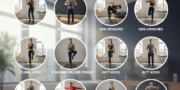
10 Simple Ab Exercises You Can Do at Home
You do not need to perform all 10 during one workout.
Choose several exercises appropriate to your current ability and gradually progress.
The simple ab exercises at home below are designed to give you a practical mix of abdominal and core movements. You do not need to perform all 10 in one workout; choose exercises that match your current ability and focus on controlled technique.
1. Heel-Tap Crunch
The simple ab exercises at home in this guide target different parts of your core, giving you a balanced mix of movements for abdominal strength and control.
How to do it
- Lie comfortably on your back.
- Bend your knees and place your feet on the floor.
- Keep your arms beside your body.
- Gently brace your abdomen.
- Raise your head and upper shoulders slightly.
- Reach your right hand toward your right heel.
- Return to the middle.
- Reach toward the opposite heel.
- Continue slowly.
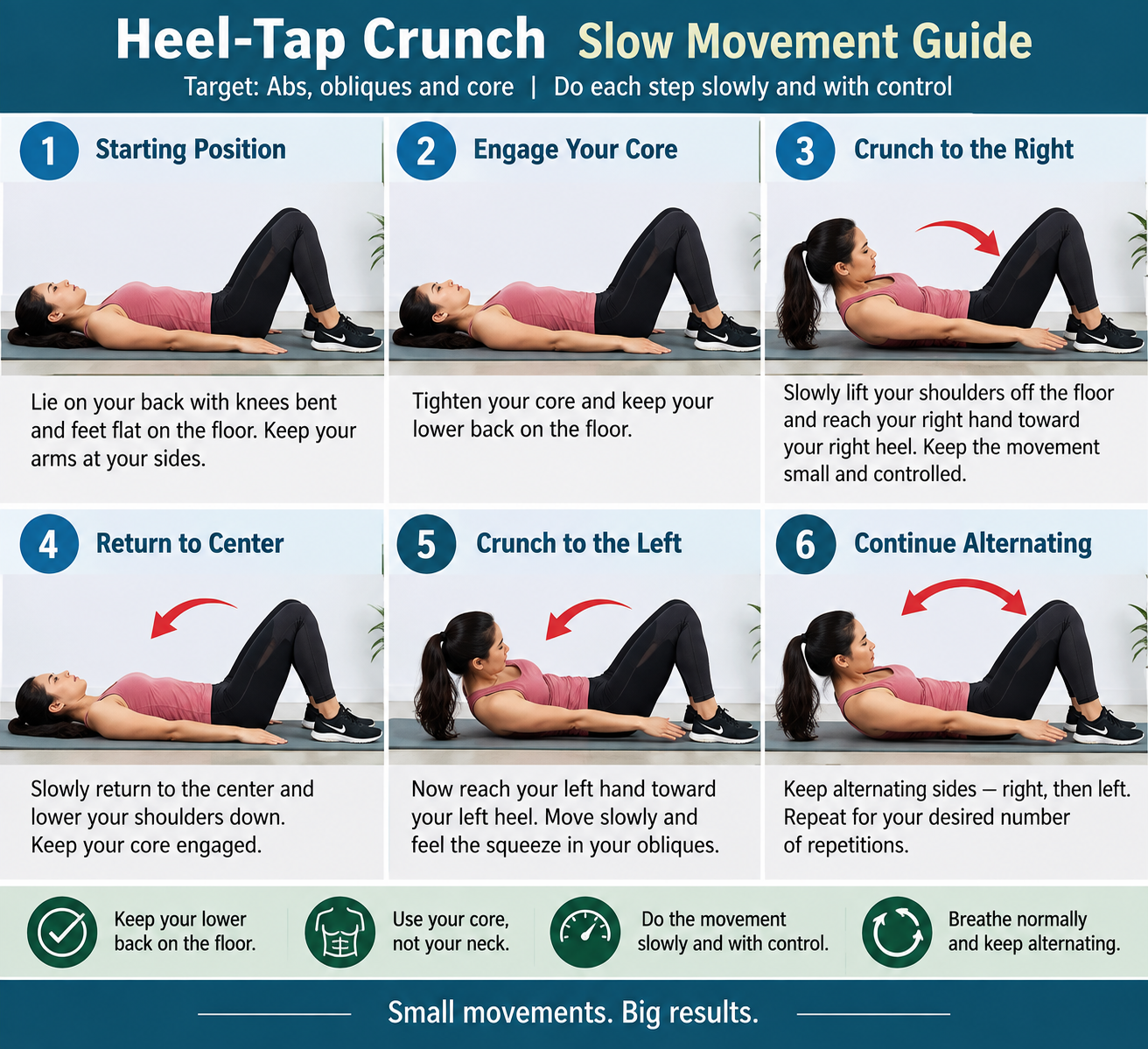
Start with
8–10 repetitions per side
Make it more effective.
Do not rush from one side to the other.
A slower movement can make it easier to maintain control and recognize when your abdominal muscles are working.
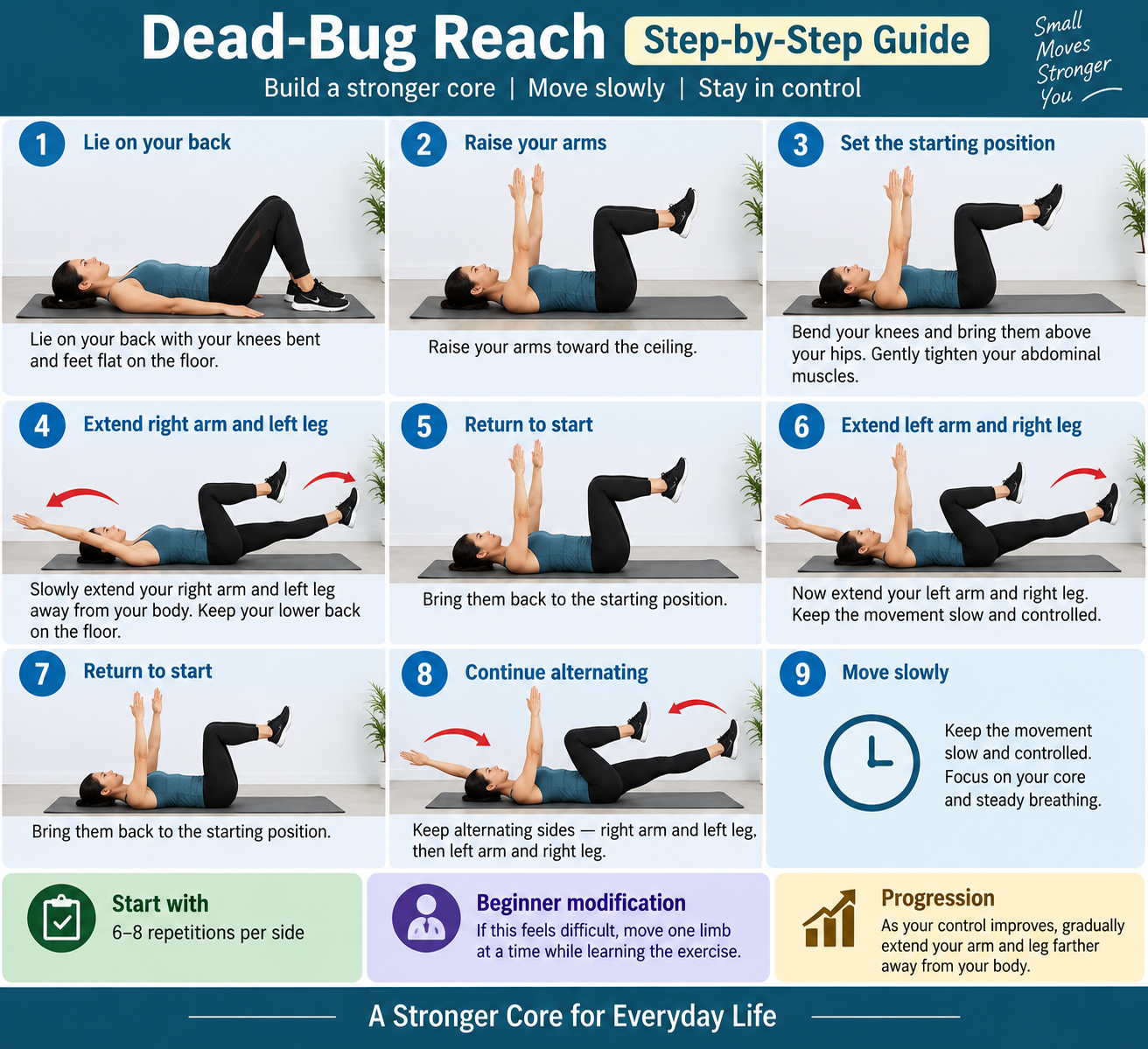
2. Dead-Bug Reach
The simple ab exercises at home in this guide include the dead bug, a beginner-friendly movement that trains abdominal bracing while you coordinate your arms and legs. It is also easy to modify if the full movement feels difficult.
How to do it
- Lie on your back.
- Raise your arms toward the ceiling.
- Bend your knees and bring them above your hips.
- Gently tighten your abdominal muscles.
- Slowly extend your right arm and left leg away from your body.
- Bring them back to the starting position.
- Now extend your left arm and right leg.
- Continue alternating sides.
- Keep the movement slow and controlled.
Start with
6–8 repetitions per side
Beginner modification
If moving an arm and opposite leg together feels difficult, move one limb at a time while learning the exercise.
Progression
As you become more comfortable with simple ab exercises at home, gradually increase the challenge instead of simply doing more repetitions.
Key technique tip
Try to keep your lower back from excessively arching as your arms and legs move. The goal is controlled abdominal bracing, not simply moving your limbs as far as possible.
Research examining core exercises shows that different movements can produce different patterns of abdominal and trunk-muscle activation, which supports using a variety of exercises rather than relying on one movement alone. PubMed — Core Muscle Activity During Physical Fitness Exercises
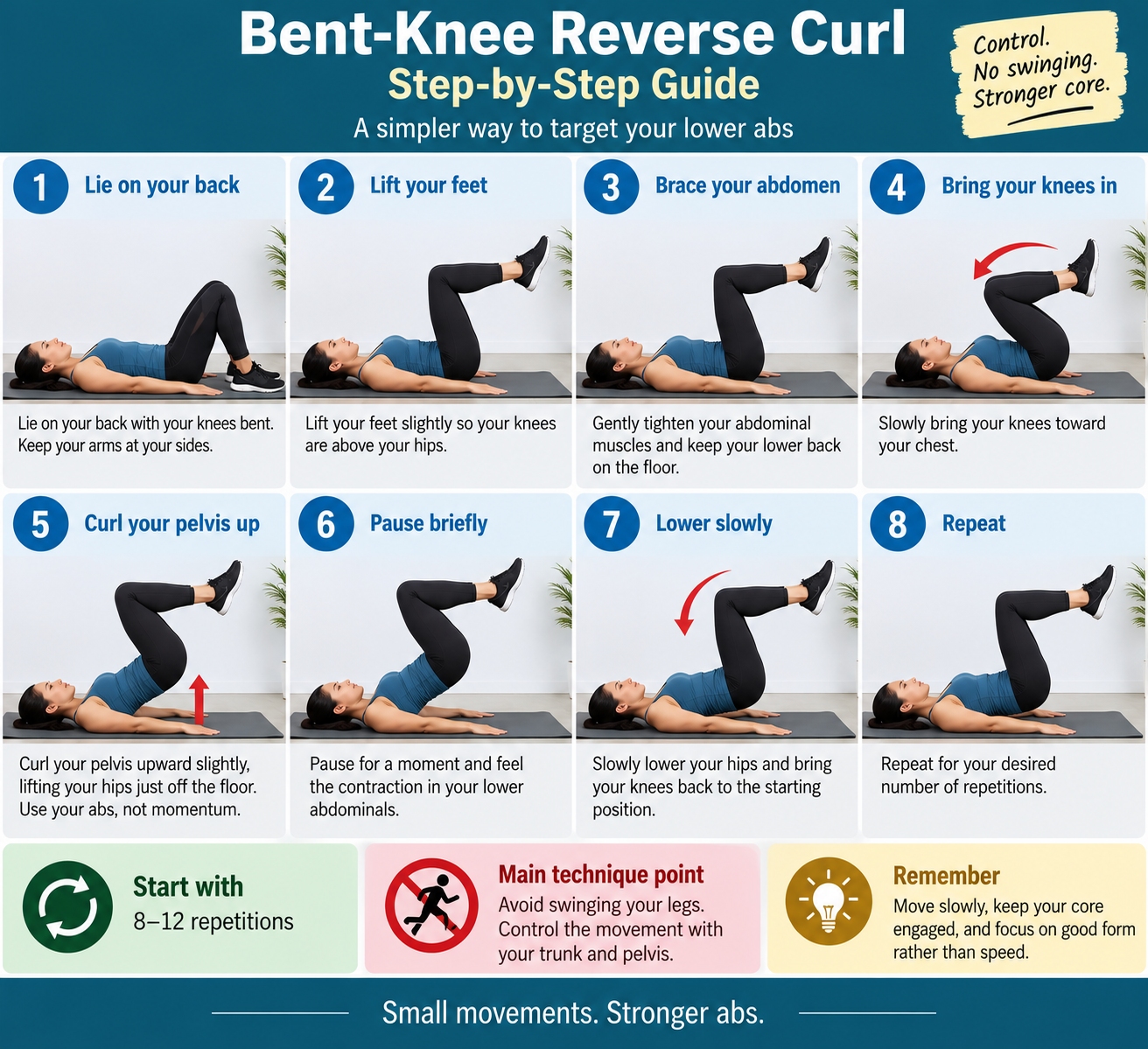
3. Bent-Knee Reverse Curl
With these simple ab exercises at home, you do not need straight-leg raises immediately to challenge your lower abdominal region.
The bent-knee reverse curl is a simpler starting point.
How to do it
- Lie on your back.
- Bend your knees.
- Lift your feet slightly.
- Brace your abdomen.
- Bring your knees gently toward your chest.
- Curl your pelvis upward slightly.
- Lower slowly.
- Repeat.
Start with
8–12 repetitions
Main technique point
Avoid swinging your legs.
Think about controlling the movement with your trunk and pelvis.
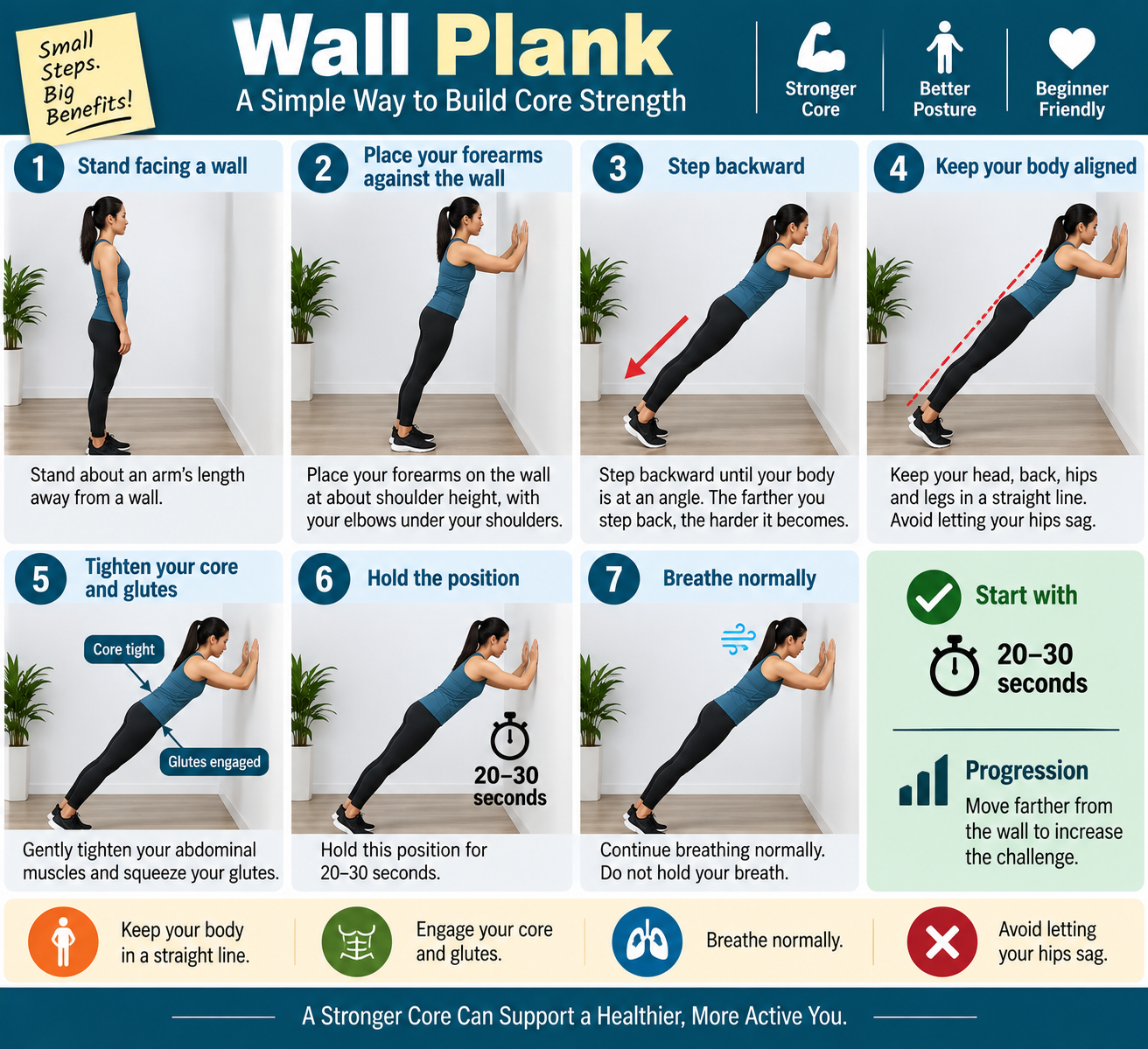
4. Wall Plank
A floor plank can be difficult for beginners.
A wall plank gives you a simple way to learn bracing before progressing to harder versions.
How to do it
- Stand facing a wall.
- Place your forearms against the wall.
- Step backward.
- Keep your body aligned.
- Tighten your abdomen and glutes.
- Hold the position.
- Continue breathing normally.
Start with
20–30 seconds
Progression
Move farther from the wall.
Then progress to an elevated plank using a stable surface before attempting a floor plank.
Plank exercises can train the core through sustained stabilization rather than repeated trunk movement. Cleveland Clinic: Plank Exercise Benefits
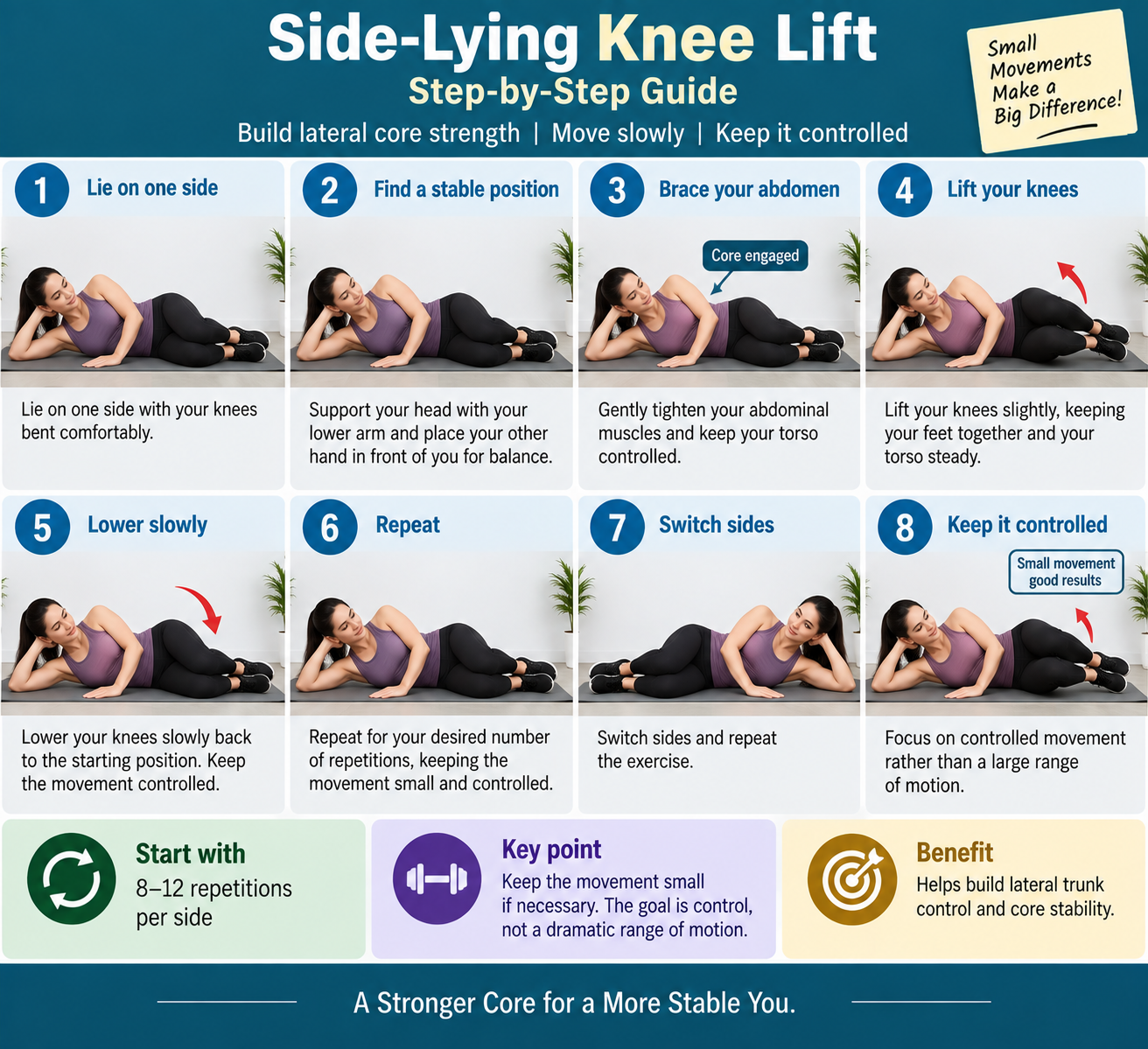
5. Side-Lying Knee Lift
This is a less familiar variation that can add lateral trunk control to your routine.
How to do it
- Lie on one side.
- Bend your knees comfortably.
- Support yourself in a stable position.
- Brace your abdomen.
- Lift your knees slightly while keeping your torso controlled.
- Lower them slowly.
- Repeat.
- Switch sides.
Start with
8–12 repetitions per side
Keep the movement small if necessary.
The purpose is controlled movement rather than achieving a dramatic range of motion.
6. Bear Hover Shoulder Tap
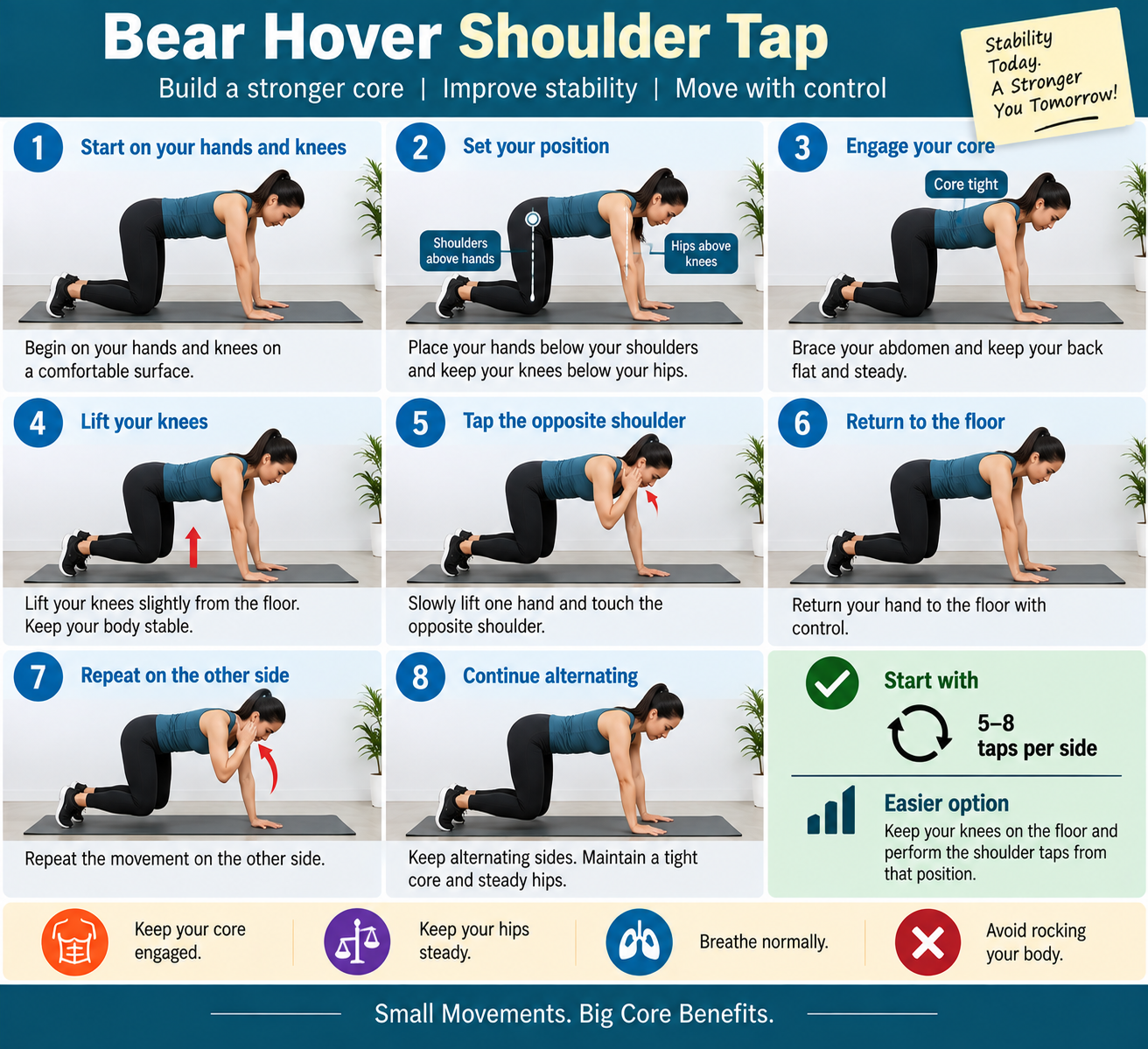
This exercise combines bracing with controlled movement of the upper body.
How to do it
- Begin on your hands and knees.
- Place your hands below your shoulders.
- Keep your knees below your hips.
- Brace your abdomen.
- Lift your knees slightly from the floor.
- Slowly lift one hand.
- Touch the opposite shoulder.
- Return your hand to the floor.
- Repeat on the other side.
Start with
5–8 taps per side
Easier option
Keep your knees on the floor and perform the shoulder taps from that position.
Do not sacrifice trunk control just to keep the knees elevated.
7. Standing Knee-to-Elbow Crunch
Not everyone enjoys floor simple ab exercises at home.
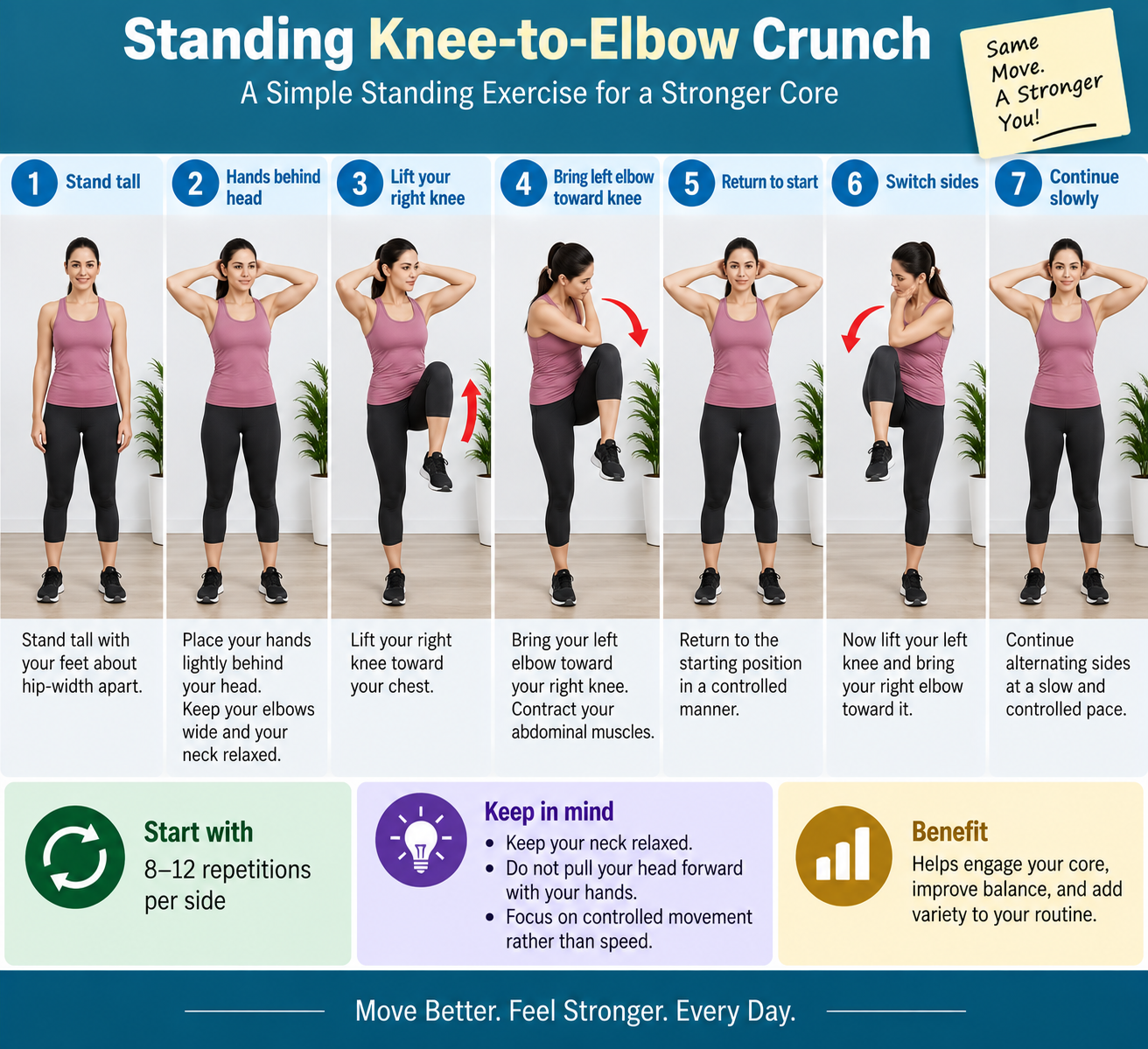
These simple ab exercises at home include standing movements that can be a convenient alternative for people who want to include core work without getting on the floor.
How to do it
- Stand tall.
- Place your hands lightly behind your head.
- Lift your right knee.
- Bring your left elbow toward it.
- Return to the starting position.
- Switch sides.
- Continue slowly.
Start with
8–12 repetitions per side
Keep your neck relaxed.
Your hands should not pull your head forward.
8. Slow Mountain Climber
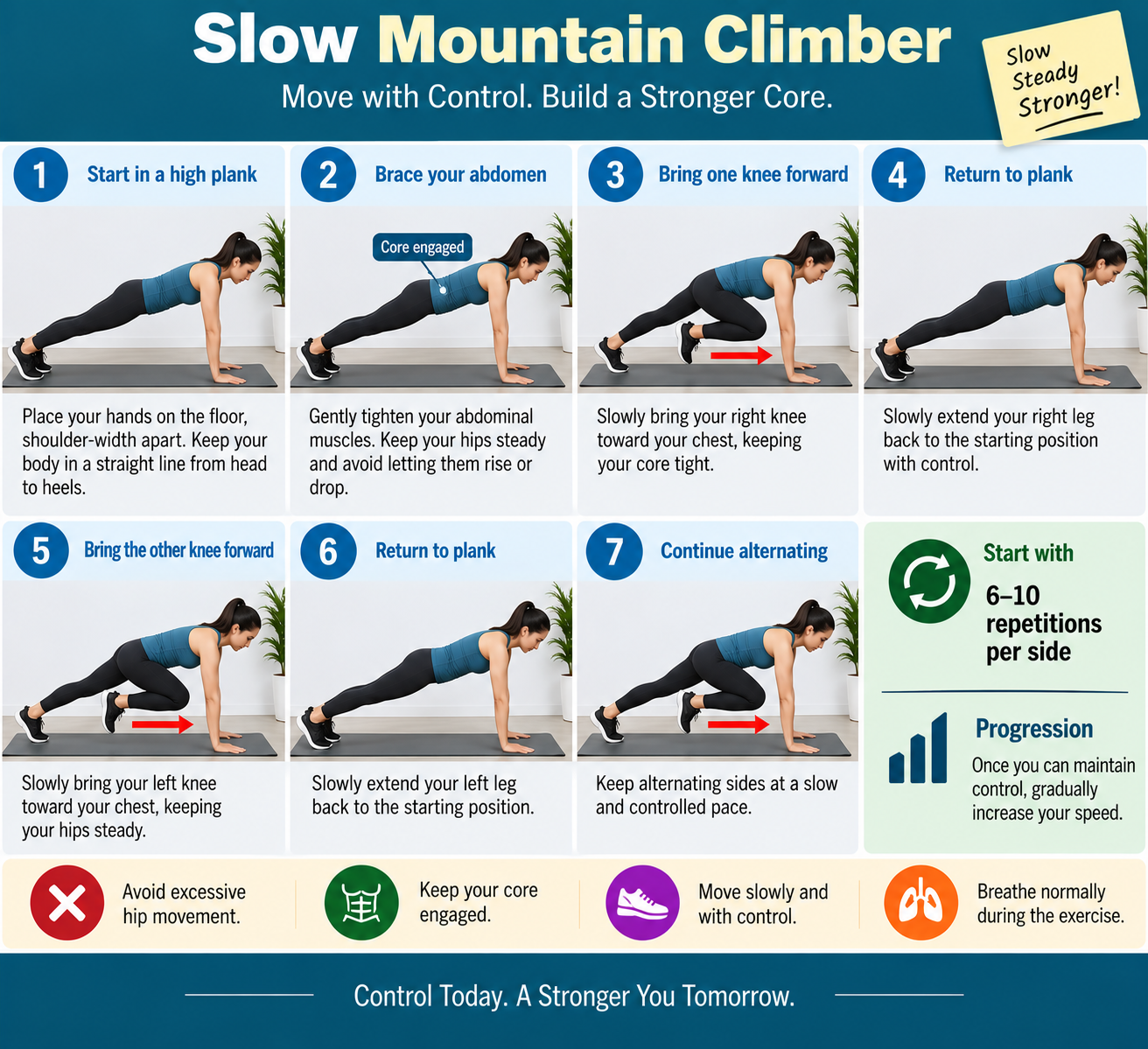
This simple ab exercise at home is the slow mountain climber, a controlled variation that focuses on core stability rather than speed.
For beginners, slowing them down can be more useful because it gives you greater opportunity to control your trunk.
How to do it
- Start in a high-plank position.
- Brace your abdomen.
- Bring one knee toward your chest.
- Return it.
- Bring the other knee forward.
- Continue alternating.
Start with
6–10 repetitions per side
Progression
Once you can maintain control, gradually increase your speed.
The objective is to avoid excessive movement through your hips while your legs alternate.
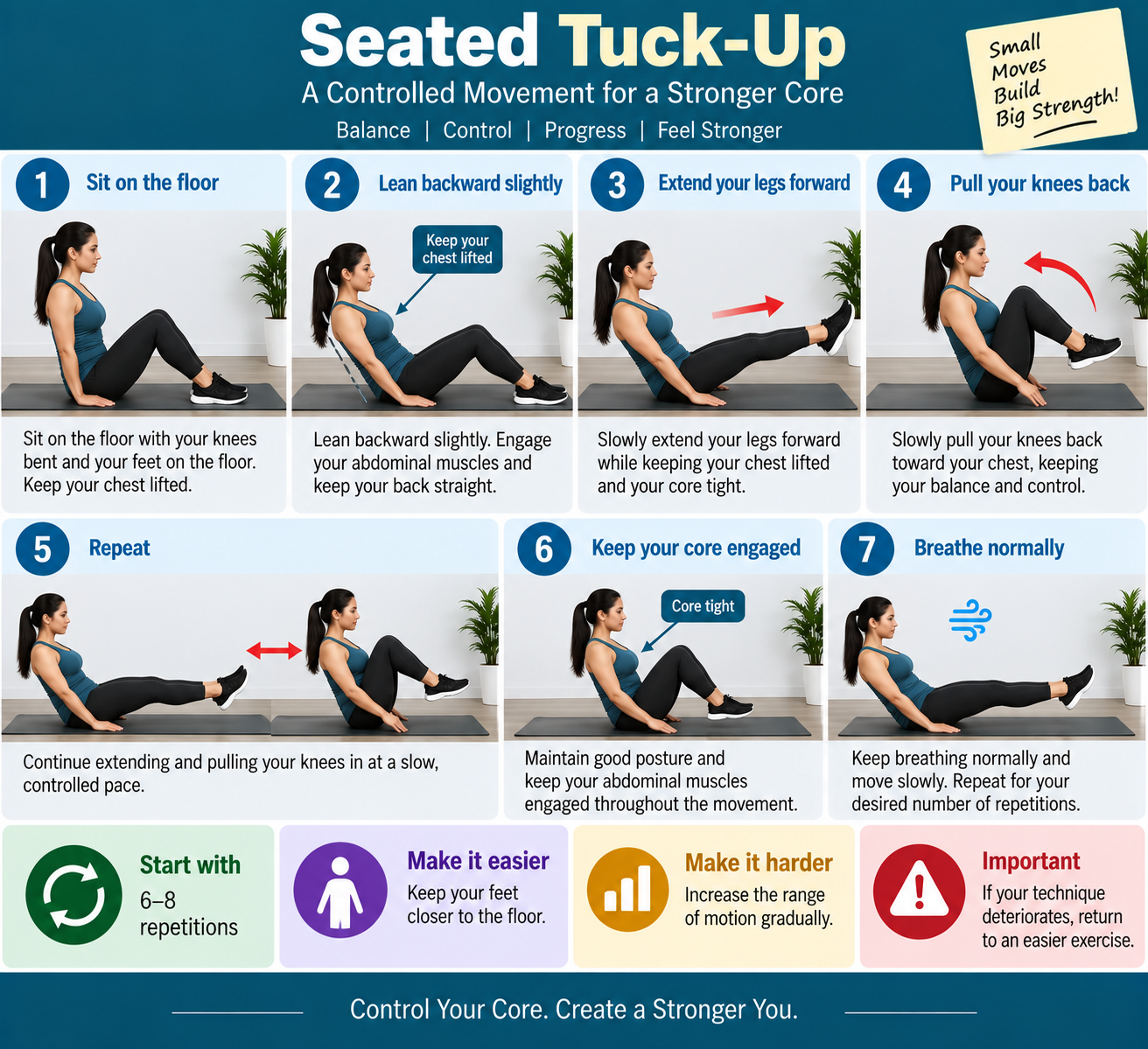
9. Seated Tuck-Up
This simple ab exercises at home is a progression for people who have already developed basic abdominal control.
How to do it
- Sit on the floor.
- Lean backward slightly.
- Bend your knees.
- Keep your chest lifted.
- Extend your legs forward.
- Pull your knees back toward your chest.
- Repeat slowly.
Start with
6–8 repetitions
Make it easier.
Keep your feet closer to the floor.
Make it harder.
Increase the range of motion gradually.
If your technique deteriorates, return to an easier exercise.
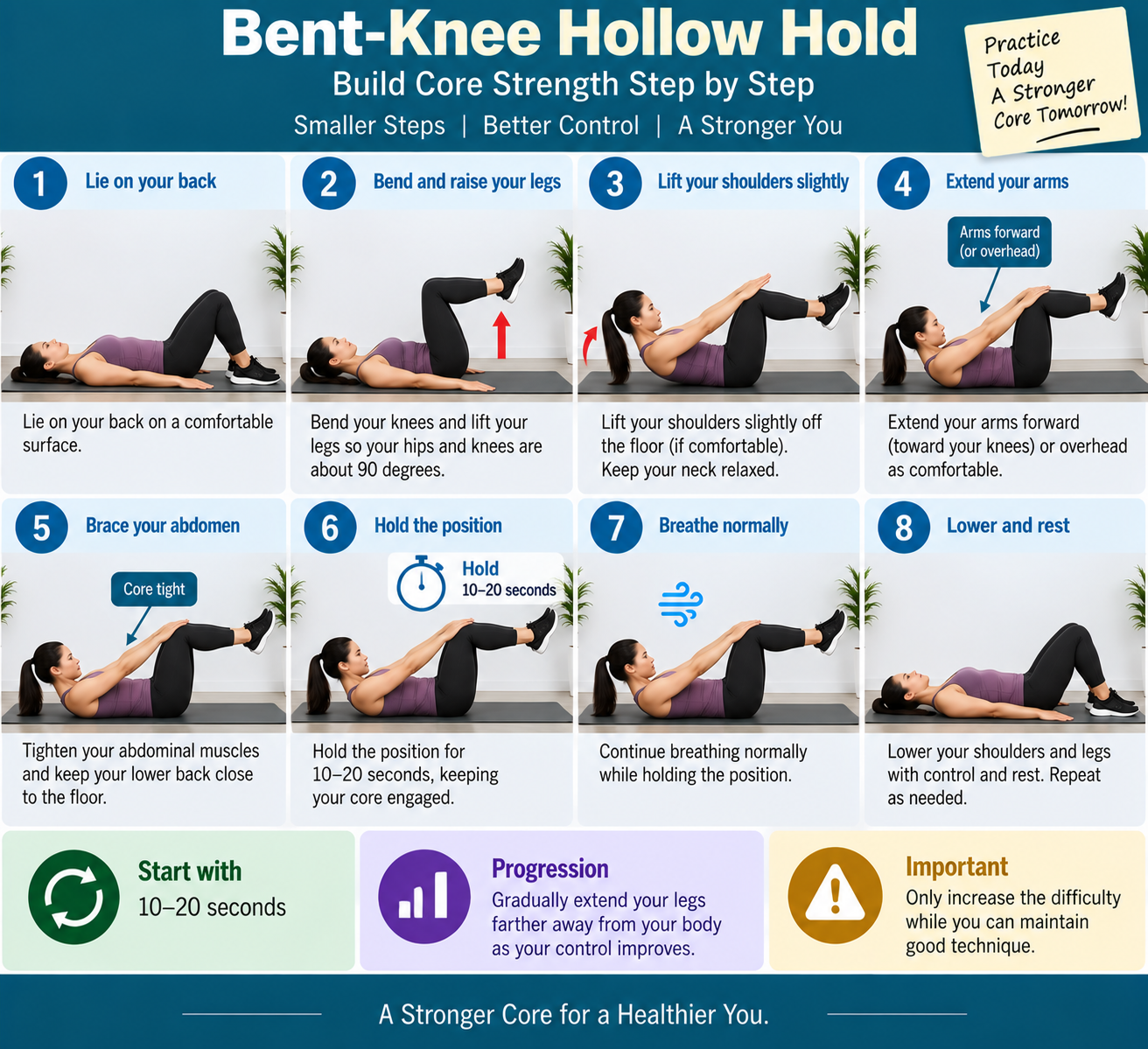
10. Bent-Knee Hollow Hold
A full hollow-body hold can be challenging.
This simple ab exercise at home, the bent-knee version, lets you practice the basic position first.
How to do it
- Lie on your back.
- Bend your knees.
- Raise your legs.
- Lift your shoulders slightly if comfortable.
- Extend your arms forward or overhead.
- Brace your abdomen.
- Hold the position.
- Breathe normally.
Start with
10–20 seconds
Progression
Gradually extend your legs farther away from your body.
Only increase the difficulty while you can maintain control.
Which Exercises Should You Combine?
Rather than performing all 10 exercises every day, create a balanced routine.
| Goal | Exercise |
|---|---|
| Controlled abdominal movement | Heel-tap crunch |
| Core coordination | Dead-bug reach |
| Pelvic control | Bent-knee reverse curl |
| Bracing | Wall plank |
| Lateral control | Side-lying knee lift |
| Dynamic stability | Bear hover shoulder tap |
| Standing core work | Knee-to-elbow crunch |
| Dynamic full-body movement | Slow mountain climber |
| Advanced trunk control | Seated tuck-up |
| Isometric control | Bent-knee hollow hold |
Different core exercises can emphasize different muscles and movement demands. A systematic review of core exercise studies found considerable variation in muscle activation among exercises. PubMed
A Simple 10-Minute Home Ab Workout
If you are starting from scratch, keep your routine short.
Perform:
Dead-bug reach
6–8 per side
Heel-tap crunch
8–10 per side
Wall plank
20–30 seconds
Bent-knee reverse curl
8–12 repetitions
Standing knee-to-elbow crunch
8–10 per side
Rest briefly between exercises.
Complete 2 rounds.
You can increase the workload later rather than trying to do everything on your first day.
How to Make Simple Exercises More Challenging
This is where many home workouts fail.
If the exercises never become more difficult, your body has less reason to continue adapting.
You can progress without buying equipment.
Try:
- More repetitions
- Longer holds
- Slower lowering phases
- Greater range of motion
- More difficult variations
- Additional sets
- Better control
- Less unnecessary rest
For example:
Wall plank → elevated plank → floor plank
Dead bug → longer-lever dead bug
Bent-knee reverse curl → slower reverse curl
Bent-knee hollow hold → longer-leg hollow hold
Progress does not mean making every workout harder.
It means gradually giving your body an appropriate new challenge.
Can Ab Exercises Burn Belly Fat?
This question deserves a careful answer.
Ab exercises can strengthen the muscles underneath your abdominal fat, but they should not be described as a guaranteed way to selectively burn belly fat.
Research suggests that exercise can reduce abdominal fat overall.
A 2025 systematic review and meta-analysis involving adults with higher weight or obesity found that exercise interventions reduced both visceral and subcutaneous abdominal fat. Higher-intensity exercise was also associated with greater reductions in that analysis. PubMed: 2025 Systematic Review and Meta-Analysis of Exercise and Abdominal Fat
That does not mean:
100 crunches = 100 calories of belly fat removed.
The body does not work that simply.
A better model is
Ab exercises → stronger abdominal muscles
Regular physical activity → greater energy expenditure and fitness
Appropriate nutrition → supports body-composition goals
Consistency → allows changes to accumulate.
The CDC also notes that physical activity increases energy expenditure and can support weight management. CDC: Physical Activity and Healthy Weight
Why You May Have Strong Abs Without Seeing a Six-Pack
This is an important reality check.
Your abdominal muscles can become stronger without immediately becoming highly visible.
Factors include:
1. Body composition
The amount and distribution of body fat affect how much abdominal muscle definition is visible.
2. Muscle development
A stronger abdominal muscle can become more developed, but development takes time.
3. Genetics
People naturally differ in body structure, fat distribution, and the appearance of their abdominal muscles.
4. Nutrition
Your eating pattern influences your overall energy balance and body composition.
5. Training history
Someone who has trained consistently for years will generally have a different starting point from a beginner.
6. Expectations
A photograph online may represent a particular combination of genetics, lighting, posing, training history, and body composition.
Your goal should therefore be improved fitness and realistic progress, not copying another person’s exact appearance
What Should You Eat While Training Your Simple Ab Exercises at Home?
There is no special food that magically reveals abdominal muscles.
Instead, build a sustainable eating pattern.
Prioritize:
- Protein-rich foods
- Vegetables
- Fruits
- Whole grains and other high-fiber foods
- Healthy sources of dietary fat
- Adequate fluids
- Reasonable portions
Avoid turning your diet into an extreme restriction program.
For exercising individuals, protein requirements can be higher than those of sedentary adults. The International Society of Sports Nutrition position stand reports that approximately 1.4–2.0 g of protein per kilogram of body weight per day is generally sufficient for many exercising people, although individual needs vary. PubMed: Protein and Exercise Position Stand
That range is not a universal prescription.
Your needs can differ depending on your body size, training, age, diet, and health circumstances.
Do You Need Cardio to Get Defined Abs?
Cardio is not an abdominal exercise, but it can be useful for overall health and physical activity.
The CDC recommends that adults get at least:
- 150 minutes of moderate-intensity aerobic activity per week, or
- 75 minutes of vigorous activity, plus
- muscle-strengthening activity on at least 2 days per week.
These recommendations are for overall health rather than specifically for developing visible abs. CDC: Adult Physical Activity Guidelines
Practical activities include:
- Brisk walking
- Cycling
- Swimming
- Dancing
- Jogging
- Recreational sports
You do not need to perform exhausting cardio every day.
How Often Should You Train Your Abs?
For a beginner, 2–3 focused abdominal sessions per week can be a practical starting point.
You can combine this with your broader strength and aerobic activity.
The goal is not to make your abdominal muscles sore every day.
Instead, look for gradual improvements in:
- Repetitions
- Hold duration
- Movement control
- Stability
- Range of motion
- Exercise difficulty
Training frequency should also fit the rest of your program.
Do You Need to Train Abs Every Day?
No.
You do not need a hard abdominal workout every day to make progress.
A common mistake is believing that more frequent training automatically produces faster results.
A better approach is to give your body enough training stimulus while allowing appropriate recovery.
Sleep is also an important part of physical recovery and adaptation. Research examining sleep and exercise highlights the relationship between sleep, recovery, and physical performance. PubMed: Sleep and Exercise Recovery Review
How Long Does It Take to See Results?
There is no reliable universal timeline.
Be cautious of headlines promising:
- Six-pack abs in 7 days
- Flat stomach in 10 days
- Guaranteed abs in 30 days
Your results depend on your starting point and many individual factors.
You may first notice:
Week-to-week improvements
- Better control
- More repetitions
- Longer plank holds
- Less fatigue during exercises
- Improved stability
Longer-term changes
- Greater abdominal strength
- Better muscular endurance
- Improved overall fitness
- Potential changes in body composition
Visual changes may take longer.
That is normal.
My Personal Observation From Home Workouts
When I started focusing on home exercise, I learned that simply increasing the number of repetitions was not necessarily the most useful approach.
Performing movements with better control and staying consistent felt more practical than trying to complete enormous numbers of repetitions.
This is my personal observation, not scientific evidence.
I include it because beginners can easily become discouraged when they see fitness programs based on hundreds of repetitions.
You do not need to start there.
A manageable routine that you can repeat consistently is a better foundation.
8 Common Mistakes to Avoid
1. Chasing huge repetition numbers
Doing more repetitions is not automatically better.
2. Training only the abdomen
A complete exercise program should involve the major muscle groups, not just the stomach.
The CDC’s recommendations include muscle-strengthening activity involving all major muscle groups. CDC Physical Activity Guidelines
3. Expecting spot reduction
Targeted abdominal training does not guarantee targeted fat loss.
4. Starting too advanced
A difficult exercise performed poorly is not necessarily better than a simple exercise performed well.
5. Moving too quickly
Speed can reduce control.
6. Changing the routine constantly
You need enough consistency to determine whether you are improving.
7. Following extreme diets
Very restrictive diets may be difficult to sustain and can make healthy long-term habits harder.
8. Ignoring recovery
Training is only one part of the process.
Recovery matters too.
A 4-Week Beginner Progression
Here is a simple way to start without overwhelming yourself.
Week 1
Perform 2 rounds:
- Dead-bug reach
- Heel-tap crunch
- Wall plank
- Bent-knee reverse curl
Train for 2 days.
Week 2
Keep the same exercises.
Add a few repetitions or several seconds to your plank if your technique remains good.
Week 3
Add:
- Standing knee-to-elbow crunch
- Bear hover shoulder tap
Train for 2–3 days.
Week 4
Choose one progression:
- Slightly more repetitions
- Longer holds
- Slower repetitions
- More difficult variation
- One additional round
Do not increase everything simultaneously.
How to Measure Progress Without Obsessing Over Your Appearance
The mirror is not your only measurement.
Track:
Strength
Can you perform more controlled repetitions?
Endurance
Can you hold a plank longer?
Stability
Can you move your arms and legs without losing trunk control?
Technique
Are your repetitions smoother?
Consistency
Are you completing your workouts regularly?
Overall fitness
Are everyday movements becoming easier?
These measurements can show meaningful improvement even before major visual changes appear.
What These Exercises Can—and Cannot—Do
| These exercises can help with | They cannot guarantee |
|---|---|
| Abdominal strength | A visible six-pack |
| Core control | Spot fat reduction |
| Muscular endurance | A specific body-fat level |
| Trunk stability | Identical results to another person |
| Exercise consistency | Rapid results |
| Progression at home | Permanent results without continued habits |
This distinction is important because fitness advice becomes misleading when an exercise is presented as a guaranteed shortcut.
Safety: When Should You Stop?
Exercise should challenge you, but you should not ignore warning signs.
Stop the exercise and seek appropriate medical advice if you experience symptoms such as:
- Sharp or severe pain
- Chest pain
- Fainting
- Significant dizziness
- Unusual shortness of breath
- Severe or persistent discomfort
If you have an injury, medical condition, or concerns about starting exercise, speak with a qualified healthcare professional before beginning a demanding program.
Frequently Asked Questions
Can I build stronger abs without going to the gym?
Yes. Bodyweight exercises can provide meaningful core training, particularly when you progressively increase the challenge.
What is the easiest exercise for beginners?
Wall planks and dead bugs are useful starting options for many beginners because they can be modified easily.
Can crunches give me a six-pack?
Crunches can train the abdominal muscles, but they cannot guarantee visible six-pack definition.
Can I lose belly fat by doing these simple ab exercises at homee?
Ab exercises strengthen the abdominal muscles. Overall physical activity and appropriate nutrition can help improve body composition, including abdominal fat, but targeted exercises should not be treated as guaranteed spot-fat-loss tools. PubMed: Exercise and Abdominal Fat Meta-Analysis
Should beginners train abs every day?
Not necessarily. Two or three focused sessions per week can be a practical starting point.
How many repetitions should I do?
Start with a manageable number that allows good technique. For many of the exercises in this guide, 6–12 controlled repetitions is enough to begin.
Are planks useful for abdominal training?
Yes. Planks challenge the trunk through sustained stabilization. You can begin with a wall or elevated version and progress gradually. Cleveland Clinic: Plank Exercise
Do I need special equipment?
No. The exercises in this guide can be performed without dedicated gym equipment.
Can higher-weight beginners do these exercises?
Many exercises can be modified for different fitness levels. Start with easier variations and progress gradually. If you have health concerns, seek individualized professional guidance.
Can women use these same exercises?
Yes. The basic principles of core training apply to both people. Exercise difficulty should be adjusted according to fitness level and individual needs.
Can I get visible abs in 30 days?
There is no reliable guarantee. Some people may notice strength or control improvements within weeks, while visible changes can take substantially longer.
Final Takeaway
Getting stronger abdominal muscles does not require an expensive gym membership or an extreme daily routine.
Start with simple exercises.
Learn proper control.
Train consistently.
Progress gradually.
Support your training with sensible nutrition, regular physical activity, and adequate recovery.
Most importantly, remember that building your abdominal muscles is not the same thing as revealing them visually.
The first goal is largely about training.
The second is influenced by body composition, genetics, nutrition, training history, and time.
Instead of asking how many crunches you can complete today, ask:
“Can I perform this movement better than I could a few weeks ago?”
That is a much more useful definition of progress.
Medical Disclaimer
This article is intended for general educational purposes and does not replace individualized medical or exercise advice. Exercise requirements vary from person to person. If you have an injury, medical condition, or concerns about beginning a new exercise program, consult an appropriately qualified healthcare professional.
Sources
- Read the CDC adult physical activity recommendations
- Read the CDC physical activity and healthy-weight information
- Read the systematic review on PubMed
- Read the 2025 meta-analysis on PubMed
- Read Cleveland Clinic’s abdominal-muscle guide
- Read the protein and exercise position stand
- Read Cleveland Clinic’s plank guide
- Read the research review on PubMed
You Also Like This Content
- 12 Dynamic Yoga Poses For Rapid Weight Loss
- Home
- How to Burn 1000 Calories Daily
- 10 Best Core Exercises for Beginners at Home: Build a Stronger Core Without EquipmentFull
- Abs Workout at Home: Daily Routine to See Results in 30 Days
- Category Active Living