















7 Healing Herbs for Natural Energy Support: Science-Backed Ways to Fight Fatigue
Author Note
A lot of people suffer times of low energy. Factors include busy schedules, insufficient sleep, stress, and lifestyle behaviors. This article looks at plants that people have historically used to increase energy and general well-being. The material is based on scientific research and recommendations from credible health organizations.
Introduction
Many individuals reach for coffee, energy drinks, or sugary snacks when they feel fatigued. These can give a quick boost. But the effect often does not last long.
That is why more people are looking at herbs for natural energy support. People have used these herbs in traditional wellness practices for hundreds of years. Even now, scientists are continuing to investigate how they could assist with energy, stress, focus, and physical performance.
I became interested in natural energy support after seeing how stress and poor sleep affected my daily life. No herb can replace restorative sleep or healthy habits. Still, some herbs may help the body handle everyday stress better.
The goal is not to find a magic cure. The aim is to create healthy habits for long-term wellness.
What you need to know
- Some herbs may help to naturally support energy levels.
- Adaptogenic herbs are being researched for stress and exhaustion.
- Herbs work better with healthy lifestyle practices.
- Research supports some traditional usage.
- Your results may vary.
- The dosage and quality matter.
- Consult a healthcare expert before utilizing supplements.
What Are Herbs for Natural Energy Support?
Herbs for natural energy support are plants that may assist in supporting physical and mental performance.
Some herbs may help the body deal with stress. Others may prefer attention, circulation, or stamina.
Many herbs function more slowly than stimulants. They are often used to promote general wellness, not a sudden energy boost.
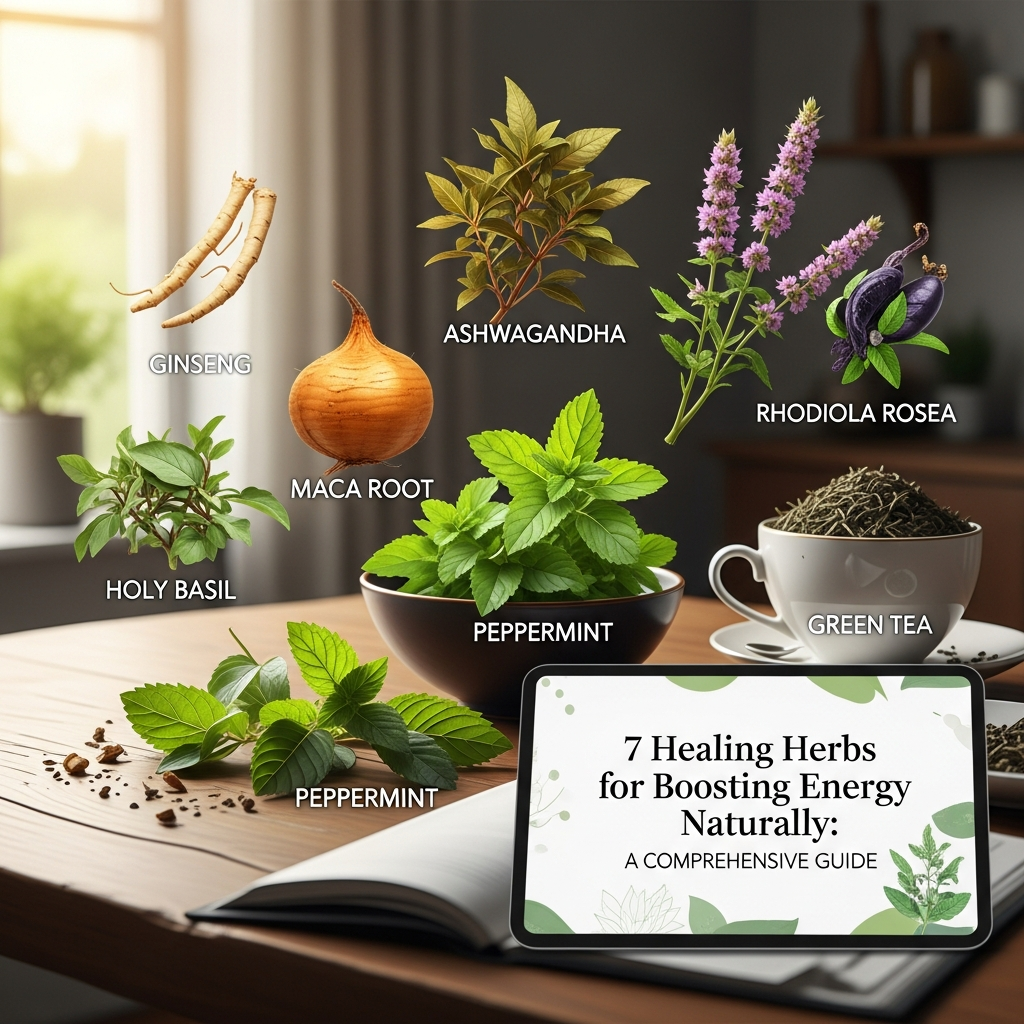
Popular examples are ashwagandha, ginseng, rhodiola, holy basil, maca, ginger, and peppermint.
These herbs are not a substitute for sleep, proper food, water, or medical attention. They can be useful as part of a well-rounded program of well-being.
1. Ashwagandha
Ashwagandha is one of the most researched adaptogenic herbs.
It is utilized since long ago in Ayurvedic treatment. It’s commonly tied to stress management and resilience.
Researchers are investigating if ashwagandha may aid support energy by helping the body regulate stress. Some studies also suggest it can aid with physical performance and weariness.
Practical advantages:
- May help to alleviate stress
- May help with exercise performance
- May support general health
2. Rhodiola Rosea
Rhodiola grows in cold mountain regions.
People in Europe and Asia have used it for many years.
Studies indicate that rhodiola may be able to help mental functioning during times of stress. Scientists are also exploring its effects on fatigue and concentration.
Rhodiola is often taken when someone is mentally weary or overworked.
Practical benefits:
- Might focus support
- Can help with tiredness sometimes
- May support mental performance during stress
3. Ginseng (Panax)
Panax ginseng is one of the best-known herbs for natural energy support.
It has been employed in traditional wellness systems for ages.
Researchers have researched its effects on stamina, mental performance, and tiredness. Research indicates that it may help support energy levels in some individuals.
Practical benefits:
- May enhance mental alertness
- May aid physical performance
- May help with energy overall
4. Tulsi (Sacred Basil)
Holy basil, also known as Tulsi, is an important Ayurvedic herb.
It is widely used to promote stress management and equilibrium.
Researchers are still exploring how tulsi may influence the body’s response to stress. It’s a daily wellness regimen many people love to do.
Practical advantages:
- May help with stress management
- May promote emotional wellness
- Maybe a nice addition to everyday wellness practices
5. Maca Root Extract
Maca is a plant indigenous to Peru.
It has been used for generations as both food and a wellness supplement.
Maca is gaining popularity, as it may assist in enhancing stamina and vitality. The study is ongoing; however, some studies show promising outcomes.
Practical benefits:
- May support endurance
- May support overall vitality
- Easy to add to smoothies and foods
6. Ginger
Most people know ginger as a kitchen ingredient.
But it also has a long history of traditional use.
Ginger has been explored for its benefits on digestion, inflammation, and general wellness. It’s not a stimulant, but better digestion may help with everyday energy.
The practical benefits are the following:
- Aids digestion.
- Simple to add to food
- Encourages general well-being
7. Peppermint
Peppermint is known for its pleasant flavor and scent.
Research has found that the smell of peppermint could boost alertness and attention. A lot of individuals have a cup of peppermint tea every day.
Practical benefits:
- May improve alertness
- So refreshing and simple to apply.
- May help concentration
What Does the Research Say?
Researchers continue to study the relationship between herbs, energy, stress, and overall health.
Some herbal products show promise, but more high-quality research is often needed, the National Institutes of Health (NIH) and the National Center for Complementary and Integrative Health (NCCIH) say.
The National Center for Biotechnology Information (NCBI) has published studies on adaptogenic herbs such as ashwagandha and rhodiola for stress management and fatigue support.
Harvard Health, Mayo Clinic, and Cleveland Clinic routinely point out that optimal energy levels depend on many things. They include sleep quality, nutrition, physical exercise, hydration, stress management, and underlying health issues.
The World Health Organization (WHO) also recognizes the widespread use of traditional herbal medicine globally and encourages evidence-based assessment and safe use.
Various studies have shown that various herbs may enhance energy, focus, resilience, and overall well-being. But they are most effective as part of a healthy lifestyle, not as a solitary therapy.
Potential Risks and Limitations
“Natural” is not always synonymous with “risk-free.”
Some herbs may interfere with drugs. Others may not be suitable when pregnant, breastfeeding, or for certain health issues.
Possible problems are:
- Allergy responses
- Gastrointestinal upset
- Drug interactions
- Product quality varies
- Individual differences in responses
Sometimes diseases such as anemia, thyroid issues, sleep issues, or nutritional deficits can be associated with energy-related complaints.
Chronic fatigue should always be discussed with a healthcare practitioner.
How to Get Started
If you are interested in trying herbs for natural energy support, start slow.
Beginner steps
- Sleep first.
- Improve your hydration habits.
- Eat balanced meals
- Choose one herb instead of many.
- Follow product directions carefully.
- Notice how you feel.
- If you are worried, talk to your health care practitioner.
Daily Recommendations
- Drink enough water.
- Stay physically active.
- Get outside.
- Sleep. First.
- Stress Control
- Learn how to control your stress.
Simple practices like walking, deep breathing, spending time in nature, or getting adequate sleep can help.
Long-term advice
- Build habits you can sustain every day to be healthy.
- No silver bullet. There’s no one simple solution.
- Check your progress from time to time. Make it a habit.
- Small things add up to a large difference in time.
Emphasize total well-being, not short-term energy spikes.
Common Mistakes to Avoid
Many newcomers make the same mistakes.
Examples of common ones are:
- Wanting instant results.
- Taking more than one vitamin at once
- Disregarding sleep quality
- Herbs as a substitute for good habits
- Buying bad quality products
- Taking excessive doses
- Comparing the results with other people
Small improvements often lead to better long-term results than major adjustments.
Expert Reviews
Health organizations always stress the importance of lifestyle foundations.
Experts from NIH, Harvard Health, Mayo Clinic, and Cleveland Clinic often advocate focusing on the following:
- Sleep is good
- Nutrition, balanced
- Physical exercise
- Stress control
- Adequate hydration
Registered dietitians and health care specialists generally tell patients that supplements should support healthy habits, not substitute for them.
Many doctors recommend adding herbs as part of an overall wellness strategy.
Personal Experience and Practical Lessons
I became interested in natural energy support when I saw how heavily stress affected my everyday routine.
At first, I looked for simple answers.
Throughout the years, I have found that sustainable energy usually requires multiple products.
The biggest gains were from simple habits.
- Better sleep.
- Regular movement.
- More time outdoors.
- Healthier meals.
The herbs I explored worked best when those habits were already in place.
That was the biggest lesson.
Consistency usually counts for more than intensity.
Frequently Asked Questions
1. What herbs are excellent for energy and tiredness?
Some common herbs to boost energy are ashwagandha, rhodiola, ginseng, holy basil, maca root, ginger, and peppermint.
Many people use these plants for energy, attention and general well-being. The research on each herb is different, however they are commonly used in natural wellness.
2. Are herbs a replacement for sleep?
“No.
Herbs can’t substitute proper sleep. Your body requires enough rest to recover, stay healthy.
Sleep is still one of the biggest things for energy and wellness in general.
3. How quickly do herbs work?
It depends on the individual.
Some people are seeing results in a few days. Others might take many weeks.
The results can be affected by your lifestyle, health, and the herb you use.
4. Are herbs for everyday energy support safe to take?
Most herbs are harmless when used correctly.
But each person is different. Some herbs may not be appropriate for those with particular health issues or those using drugs.
If you are concerned, consult a doctor or other health professional first.
5. Is it okay to utilize more than one herb at a time?
Yes, some items are blends of herbs.
However, if you are new to herbal supplements, you may want to start with one herb at a time.
This way you can see your body’s reactions more clearly.
6. Are herbs superior to coffee?
They function differently.
1 cup of coffee can give you a quick perk. Many herbs are commonly used to sustain stable energy and overall wellness throughout time.
More research is still needed; however, these herbs are commonly used for stress support and mental well-being.
Research Method
This article has been studied with evidence-based material from credible health organizations and peer-reviewed scientific publications. Sources: NIH, NCBI, Mayo Clinic, Harvard Health Publishing, Cleveland Clinic, WHO, and published research studies. The information was checked for accuracy, relevancy, and conformity with current health advice. Where personal observations were utilized, they were only used where suitable and were cross-checked with established scientific evidence.
Sources and References
- NIH National Institutes of Health
- National Center for Biotechnology Information (NCBI)
- National Center for Complementary and Integrative Health.
- Harvard Health Publishing
- Mayo Clinic
- Cleveland Clinic
- World Health Organization (WHO)
- Ethnopharmacology Journal
- Nutrients Frontiers in Nutrition
- Phytomedicine:
- Evidence-Based Complementary and Alternative Medicine
Conclusion
Herbs for natural energy support might be a beneficial addition to a healthy lifestyle. Herbs can assist in promoting energy, focus, and overall well-being, but they are not a panacea for weariness.
The finest benefits generally come from a combination of good behaviors and balance. Good sleep, regular exercise, good nutrition, and stress control are still the most important.
Begin with tiny. Be consistent . Simple everyday routines can make a bigger effect than you think in the long run.
RVLNSV Prasad is a wellness author and researcher with a focus on healthy behaviors, nutrition, natural wellness, lifestyle enhancement, and evidence-based health education. He focuses his work on converting scientific findings into practical advice for daily readers.
Medical Disclaimer:
This material is for educational purposes only and is not a substitute for professional medical advice, diagnosis, or treatment. Please consult a certified health care provider with respect to your personal health concerns and before changing your health routine.
Related Content:
- 8 Rapid Hair Growth Herbals You Should Try
- 15 Ayurvedic Remedies for High Blood Pressure
- Aromatherapy for Stress Relief and Relaxation: A Comprehensive Guide
- Natural Remedies for Boosting Immunity with Plants: A Comprehensive Guide
- How Nature Walks Can Improve Physical Health: A Comprehensive Guide
- 7 Healing Herbs for Boosting Energy Naturally: A Comprehensive Guide
- Benefits of Outdoor Activities for Mental Health: A Comprehensive Guide
- Best Superfoods Revealed: Truth Behind Nutrient Powerhouses
- Check our Blog and Category page (Nature’s & Healing)
- 22 Natural Remedies for Anxiety: What Really Works?
- 10 Best Herbal Teas for Calming the Mind:A Comprehensive Guide Natural Stress Relief
- 10 Best Herbal Remedies to Control Diabetes


