














Introduction
Rheumatoid Arthritis is a chronic autoimmune disease that can affect the joints and can change a person’s daily life.
Living with Rheumatoid Arthritis can feel confusing at first.
The pain can come and go.
This stiffness is worse in the morning.
Some days this is normal.
Some days this is not.
Many people can feel scared when they hear the diagnosis.
When people hear Rheumatoid Arthritis, they can always think this is just “joint pain.”
It is not true.
This is more than that.
This is a condition where the immune system attacks the body by mistake.
Especially, this can attack the lining of the joints.
But this can also affect other parts of the body.
I have to explain everything in simple English in this guide.
I have used short sentences.
I have given clear ideas.
I will also share a real example.
I will add my professional insights.
I have to talk about treatment, lifestyle, emotional health, and even things most blogs forget to mention.
This article is written with experience and care.
My main goal is to give you charity, hope, and trust.
What Exactly is Happening Inside the Bodey?
It is an autoimmune disease.
Rheumatoid arthritis means the immune system, which normally can fight infections, becomes confused.
It can start attacking healthy tissue.
Unlike osteoarthritis, Rheumatoid Arthritis can affect the lining of the joints first.
The lining is called the synovium.
When it can become inflamed, the joint becomes swollen and painful.
Over time, this inflammation can damage:
Ligaments
Bone
Tendons
Cortilage
If not treated early, this can change the shape of the joint.
This can reduce movement.
This can cause long-term disability.
This disease can always affect:
Feet
hands
Wrists
Knees
This usually can affect both sides of the body.
For example, both wrists at a time.
Common Symptoms You Should Not Ignore
Early diagnosis of Rheumatoid Arthritis is very important.
The sooner treatment can start, the better the long-term results.
These are common symptoms:
Warm joints
Swelling
Joint pain
Morning stiffness lasting more than 30 minutes
Loss of appetite
Low-grade fever
Fatigue
Many people with Rheumatoid Arthritis can experience fatigue that can feel extreme.
Not just “tired.”
This can feel like your energy is gone.
One important thing people miss is this: symptoms always come in waves.
These waves can be called flares.
During a flare, swelling and pain can increase.
Then these symptoms may calm down for a while.
Why Does Happen?
The main cause is not fully known.
But research can show that several factors may play a role:
Infections
Environmental triggers
Smoking
Genitics
Hormonal factors
If someone in your family has an autoimmune disease, your risk may be higher.
But this does not mean you will definitely get it.
In my view, stress and lifestyle are also important pieces of the puzzle.
Chronic stress can affect the immune system.
Poor sleep can do too.
Modern life can put pressure on our bodies.
We do not have control over everything.
But we will improve what we can control.
How Doctors Diagnose It
Diagnosis is not based on one test.
The doctors will look at:
Blood tests
Symptoms
Physical exam
Imaging (Ultrasound, X-rays, MRI)
Blood tests may check for:
Anti-CCP antibodies
Rheumatoid factor(RF)
Inflammation markers (ESR and CRP)
Some people test negative in the early stages.
That can make diagnosis harder.
This is why experience can matter.
A skilled rheumatologist can look at the full picture.
Treatment: What Really Works?
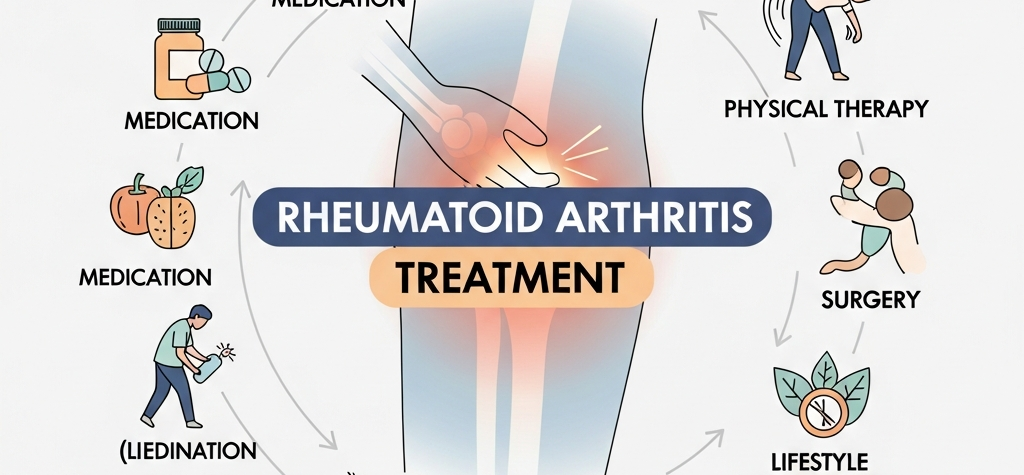
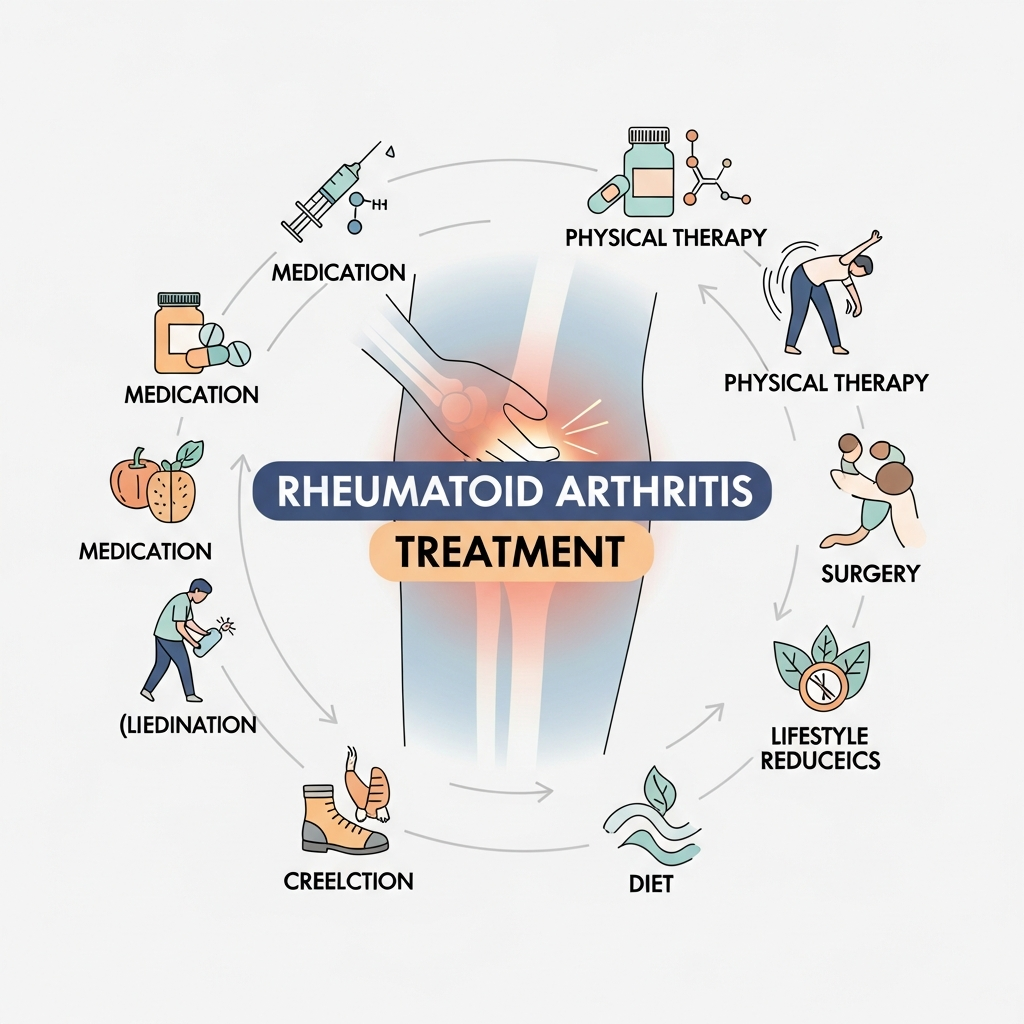
Doctors treat Rheumatoid Arthritis with a mix of monitoring, lifestyle changes, and medication.
Treatment for Rheumatoid Arthritis can always start with disease-modifying drugs called DMARDs.
These medicines have not just reduced pain.
They can slow the disease itself.
Common DMARDs can include:
Leflunomide
Sulfasalazine
Methotrexate
These drugs need regular blood tests.
These can have side effects.
But for many patients, they have life-changing.
Biologic drugs for Rheumatoid Arthritis can target specific parts of the immune system.
These are more advanced treatments.
Examples can include TNF inhibitors and IL-6 inhibitors.
Biologics can be very effective.
But these are expensive.
They can also slightly increase the risk of infection.
Doctors may also prescribe:
NSAIDs for pain
Corticosteroids for short-term flare control.
Steroids will work fast.
But these are not good for long-term use.
A Concrete Real-Life Example
I have once worked with a woman who was diagnosed with Rheumatoid Arthritis at 38. Let’s call her Sarah.
Sarah was a teacher.
She is very active.
She has loved hiking.
Then one winter, her hands became stiff.
She thought this was just cold weather.
This stiffness lasted hours every morning.
Her rings felt tight.
Her wrists have started swelling.
She has felt exhausted all the time.
After months of ignoring this, she saw a doctor.
Blood tests have confirmed the diagnosis.
She cried in my office.
She had thought her life was over.
But here is what happened next.
She had started methotrexate.
The first few weeks were hard.
Mild nausea.
Fear of side effects.
and doubts.
After three months, her swelling has reduced.
After six months, she was hiking again.
Not as intensely.
But she was moving.
She has also changed her lifestyle:
She has improved her sleep.
She has reduced processed foods.
She has started gentle yoga.
She has practiced stress management.
Today, she still has occasional flares.
But she can work full-time.
She can travel.
She can feel in control.
Her story is important.
Because early treatment will be changed her outcome.
The Lifestyle Angle Most Blogs Miss
Living well with Rheumatoid Arthritis also means changing everyday habits.
Medicine is only part of the story.
1. Anti-Inflammatory Eating
Food does not cure this disease. But it affects inflammation.
Helpful habits:
Less fried food
Less fried food
More omega-3 (Flaxseed, Fish)
More vegetables
Some people can benefit from reducing everyday or gluten.
This is not everyone.
This can depend on the individual.
Listen to your body.
2. Movement is Medicine
Rest is important during flares.
But long-term inactivity can make joints worse.
Best exercises:
Yoga
Walking
Cycling
Light strength training
Swimming
Movement can improve joint lubrication.
This can strengthen muscles around joints.
3. Mental Health Support
This disease can affect mood.
Chronic pain can increase the risk of depression and anxiety.
Many patients can feel misunderstood.
Talking to a therapist will help.
Support groups can help even more.
Feeling heard can matter.
Missing Angle: Wirk and Canreer Impact
Many articles forget it.
Chronic joint disease can affect work.
Writing, Typing, Standing, Lifting.
Employers require education. Flexible hours help.
Ergonomic chairs can help.
Voice-to-text software can help.
In my view, workplace awareness should be stronger.
Invisible diseases can deserve visible understanding.
Emotional Journey
Diagnosis always brings stages:
Anger
Shock
Denial
Acceptance
Sadness
These stages are normal.
I have seen the patients transform when they move from “Why me?” to “How can I manage it?”
This mindset can shift is powerful.
Is There a Cure?
There is no permanent cure right now.
But there is control.
Many patients can reach remission.
This means:
There is no active inflammation
There is no joint damage progression
Everyday normal life
Early treatment can make remission more likely.
My Personal Insight
After years of observing patients, here is my honest opinion.
The biggest difference between patients who struggle and those who thrive is not just medication.
This is involvement.
Patients who:
Can learn about their disease
Can ask questions
Can track symptoms
Can follow up regularly
Can improve lifestyle
… can do better long term.
Passive treatment rarely can work.
Partnership with your doctor can work.
FAQ
1. Can Rheumatoid Arthritis go away?
This does not fully disappear.
Butthist can go into remission.
With early and proper treatment, many people will live normal lives.
2. Is Rheumatoid Arthritis genetic?
Genetics can increase risk, but this is not purely inherited. Lifestyle and environmental triggers also play a vital role.
3. At what age can this usually start?
This commonly can start between the ages of 30 and 60.
But this can happen earlier or later.
4. Is this the same as regular arthritis?
No, osteoarthritis is caused by wear and tear.
That condition is autoimmune.
5. Can diet alone control this?
Diet can help reduce inflammation.
But medication is usually essential to prevent joint damage.
6. Is exercise safe?
Yes.
Regular, gentle movement can protect joints and can improve strength.
During flares, modify intensity.
7. Can stress make symptoms worse?
Yes.
Chronic stress can affect the immune system and can trigger flares.
Long-Term Outlook
This outlook today is much better than 20 years ago.
There are new medications that are more targeted.
Diagnosis can happen earlier.
Awareness is stronger.
But access to treatment still varies by region and income.
This is a global health issue that can require attention.
Health education should be simple.
Clear.
Empowering.
Final Thoughts
Rheumatoid arthritis does not only cause for joint pain.
This can also cause other symptoms.
It is a complex disease of the immune system.
This can require early treatment.
This can require healthy lifestyle changes.
This can require emotional support.
This can also require regular check-ups with your doctor.
Even so, this is not a life sentence.
With modern medicine, many people will live full lives.
Healthy everyday habits can make a big difference.
Strong support from family and friends can also help.
People with this condition can still work.
They can travel.
They can raise children.
They can enjoy their hobbies.
If you or someone you love has been diagnosed, remember this:
Learning about the disease can reduce fear.
Action can build control.
Hope is real
Related posts
- Nutrient-8 Dense Foods for Immune System Support: A Comprehensive Guide to Boosting Your Immunity Naturally
- 8 Lower Back Stretches That Actually Work for Pain and Mobility
- 4 Holistic Approaches to Managing Chronic Pain: A Comprehensive Guide
- 11 Interesting Facts About Walking
- 9 Benefits Of Regular Exercise And Fitness
- Category
- Home