




















































































































































12 Supplements for Skin Health: Benefits, Evidence and Safety
Author: RVLNSV PRASAD
Updated On: September 2026
About Us
Author Bio
Editorial Policy
Contact Us
Intrduction
Healthy skin does not come from one capsule.
Your skin needs adequate nutrition, protein, essential fatty acids, vitamins and minerals. It also depends on sun protection, sleep, physical activity, genetics, age, hormones, medications and appropriate skin care.
That is why choosing the best supplements for skin health is not as simple as finding a bottle with the longest ingredient list.
Some nutrients are essential for normal skin function. Others may be useful when a person has a deficiency. Some popular products, such as collagen and probiotics, have promising research but still have important limitations.
The American Academy of Dermatology recommends that otherwise healthy adults generally meet their nutritional needs through a balanced diet. Supplements may be appropriate when a dermatologist or other healthcare professional identifies a deficiency or another medical reason for additional nutrients. The AAD also warns that supplements can cause side effects, interact with medicines and sometimes fail to provide the benefits claimed on their labels. American Academy of Dermatology: Should I Take Vitamins or Supplements for My Skin? (AAD)
So instead of asking only, “Which supplement is best?”, ask three better questions:
What problem am I trying to solve?
What does human research actually show?
Do I have a reason to take this supplement safely?
That evidence-first approach makes this guide different from a typical beauty-supplement list.
Quick Answer
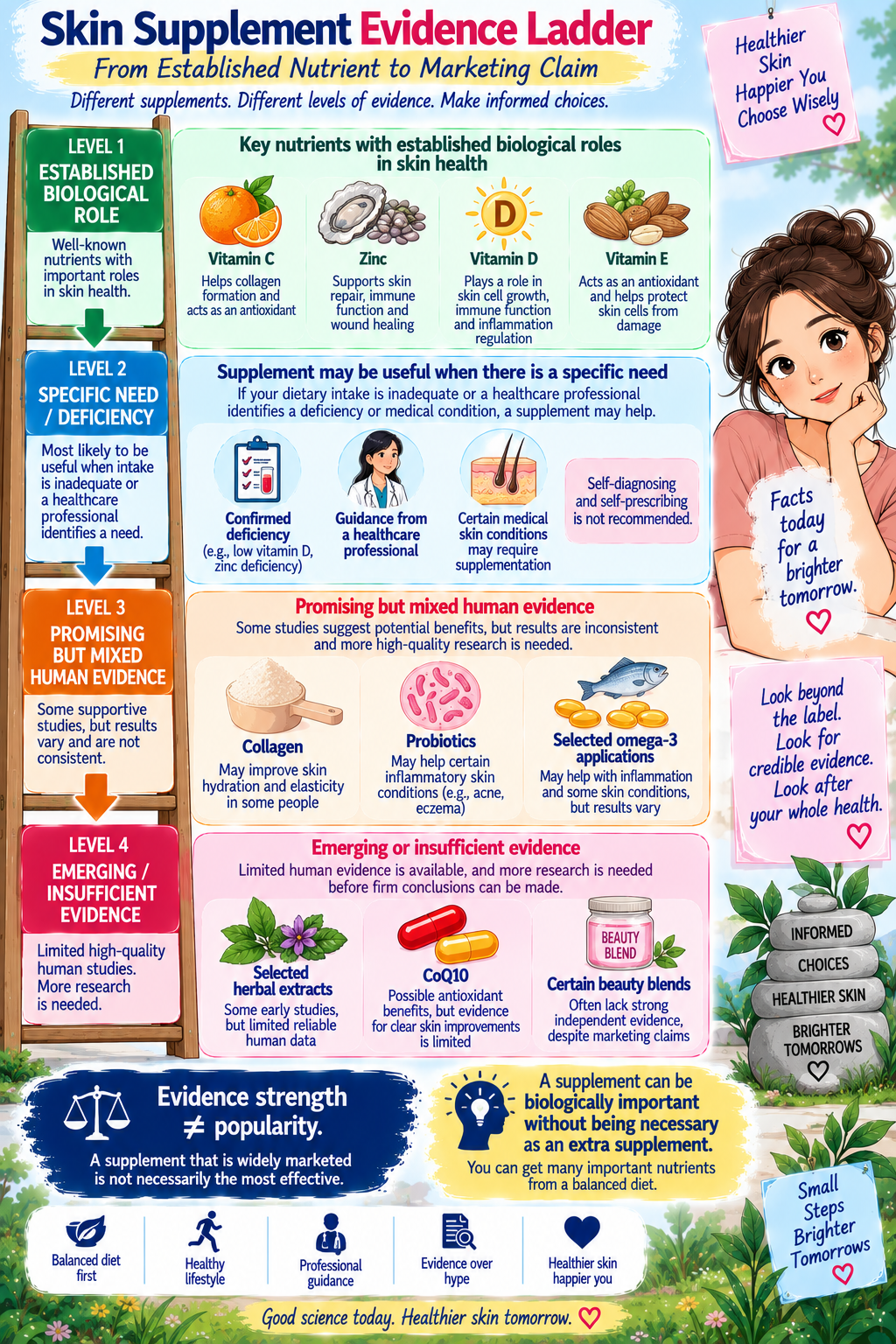
The most relevant supplements for skin health include nutrients such as vitamin C, zinc, vitamin D, vitamin E and omega-3 fatty acids, along with products such as collagen peptides and selected probiotics.
However, they do not all have equal evidence.
Vitamin C has an established role in collagen formation, while zinc participates in cell division, protein synthesis, immune function and wound healing. NIH Office of Dietary Supplements: Vitamin C Fact Sheet and NIH Office of Dietary Supplements: Zinc Fact Sheet (NIH ODS)
Collagen is more complicated. Earlier studies produced encouraging findings, but a 2025 systematic review and meta-analysis found that apparent benefits were not maintained when researchers examined higher-quality and non-industry-funded studies. PubMed: Effects of Collagen Supplements on Skin Aging (PubMed)
Probiotic research is also expanding, particularly around inflammatory skin conditions and the gut-skin connection. A large 2026 scoping review mapped 516 studies but also highlighted areas where stronger research is needed. PubMed: Probiotics, Prebiotics and Synbiotics for Skin Health (PubMed)
For most healthy people, food should remain the nutritional foundation. A supplement should fill a genuine nutritional or medical gap rather than replace a varied diet, sunscreen, appropriate skin care or treatment for a diagnosed skin condition.
Key Takeaways
- There is no scientifically established universal ranking of the “best” skin supplements.
- A balanced diet is the foundation of good nutrition for healthy skin.
- Vitamin C is required for collagen biosynthesis and has antioxidant functions. NIH ODS: Vitamin C
- Zinc is involved in DNA and protein synthesis, cell division, immune function and wound healing. NIH ODS: Zinc
- Vitamin D is an important nutrient, but taking high doses solely for cosmetic skin benefits is not automatically justified. NIH ODS: Vitamin D
- Vitamin E is an important antioxidant nutrient, but high-dose supplementation is not automatically better for skin. NIH ODS: Vitamin E
- Collagen research remains promising but controversial, with important differences between study quality and funding. PubMed: 2025 Collagen Meta-analysis
- Probiotic effects can depend on the strain, dose and condition being studied. PubMed: 2026 Probiotic Scoping Review
- High-dose biotin can interfere with certain laboratory tests. AAD: Supplement Secrets Unveiled
- “Natural” does not automatically mean safe.
- The right supplement depends on your nutritional status, health condition, diet and specific goal.
Why Nutrition Matters for Skin Health
Your skin is constantly renewing itself.
That process requires energy, protein, essential fatty acids, vitamins and minerals. Nutrients participate in collagen production, tissue repair, immune function, cell division and antioxidant defense.
Vitamin C is an excellent example.
The body cannot make vitamin C, so it must come from food or supplements. The nutrient is required for collagen biosynthesis and contributes to normal connective-tissue formation and wound healing. NIH Office of Dietary Supplements: Vitamin C Fact Sheet
This explains why vitamin C appears so frequently in discussions about skin health.
But there is an important difference between having enough vitamin C and taking extremely large amounts of vitamin C.
More is not automatically better.
Zinc provides another example. It is involved in protein synthesis, DNA synthesis, cell division, immune function and wound healing. NIH Office of Dietary Supplements: Zinc Fact Sheet
These biological roles help explain why adequate nutrition matters for skin.
They do not prove that taking extra zinc when your nutritional needs are already met will produce better-looking skin.
12 Supplements and Nutrients for Skin Health
The following list is deliberately evidence-focused.
Rather than simply calling every ingredient one of the “best supplements for skin health,” each section considers its biological role, available evidence and important limitations.
1. Collagen Peptides
Collagen is one of the most popular supplements for skin aging.
Hydrolyzed collagen peptides are smaller protein fragments that can be consumed orally. Researchers have studied whether they can improve skin hydration, elasticity and wrinkles.
Earlier evidence was encouraging.
A systematic review and meta-analysis of randomized controlled trials reported improvements in skin hydration and elasticity among people taking oral collagen. PubMed: Oral Collagen Supplementation and Skin Health
However, newer evidence requires a more cautious interpretation.
A 2025 systematic review and meta-analysis examined 23 randomized controlled trials involving 1,474 participants. The overall analysis reported improvements in hydration, elasticity and wrinkles. But when researchers restricted the analysis to studies without pharmaceutical-company funding or to higher-quality studies, the apparent benefits were no longer statistically significant. PubMed: Effects of Collagen Supplements on Skin Aging
This is an important development for anyone researching collagen supplements.
It does not prove that collagen can never help skin.
It means the evidence is not strong enough to describe oral collagen as a proven anti-aging treatment.
A newer 2026 systematic review of hydrolyzed collagen supplementation also highlights ongoing research into skin outcomes while emphasizing the need for better-quality evidence. PubMed: Hydrolyzed Collagen Supplementation and Skin Health
Evidence position: Promising but uncertain.
People-first insight: If you choose collagen, treat it as an optional supplement rather than a guaranteed wrinkle treatment.
2. Vitamin C
Vitamin C has a strong biological basis for its importance to skin.
The nutrient is required for collagen biosynthesis and acts as an important physiological antioxidant. NIH Office of Dietary Supplements: Vitamin C Fact Sheet
Good food sources include citrus fruits, guava, peppers, tomatoes, kiwi and many other fruits and vegetables.
A supplement may be useful when dietary intake is inadequate or a healthcare professional identifies a deficiency or increased need.
However, very high intake can cause gastrointestinal problems.
The NIH notes that excessive supplemental vitamin C can cause diarrhea, nausea and abdominal cramps. NIH ODS: Vitamin C — Health Professional Fact Sheet
Evidence position: Strong biological role; supplementation is most useful when there is an actual nutritional reason.
Easy food-first habit: Add a vitamin-C-rich fruit or vegetable to one meal rather than automatically adding another capsule.
3. Zinc
Zinc is an essential mineral with several functions relevant to skin.
It participates in DNA synthesis, protein synthesis, cell division, immune function and wound healing. NIH Office of Dietary Supplements: Zinc Fact Sheet
Zinc deficiency can affect many body systems, including the skin.
But taking large amounts of zinc without a reason can create another problem.
The NIH notes that excessive zinc intake can interfere with copper absorption and produce adverse effects. NIH ODS: Zinc — Health Professional Fact Sheet
Evidence position: Essential nutrient; supplementation is most appropriate when intake is inadequate or a healthcare professional identifies a need.
Food sources: Meat, seafood, dairy foods, beans, lentils, nuts and seeds.
4. Vitamin D
Vitamin D is another nutrient frequently marketed for skin health.
It has important roles throughout the body, but that does not mean everyone should take a vitamin D supplement for cosmetic skin benefits.
The NIH explains that vitamin D is involved in calcium absorption, bone health, immune function and other physiological processes. NIH Office of Dietary Supplements: Vitamin D Fact Sheet
Supplementation can make sense when dietary intake is inadequate or a person has vitamin D deficiency or another clinical reason for supplementation.
However, excessive vitamin D can be harmful.
The NIH notes that excessive vitamin D intake can lead to high blood calcium levels and associated complications. NIH ODS: Vitamin D — Health Professional Fact Sheet
Evidence position: Important nutrient; supplementation should be based on nutritional need rather than cosmetic marketing.
5. Omega-3 Fatty Acids
Omega-3 fatty acids are found in foods such as fatty fish, seafood, walnuts and some seeds.
They are components of cell membranes and participate in biological pathways involving inflammation.
Omega-3 fatty acids are also among the nutrients commonly included in skin supplement discussions. The AAD lists omega-3 among nutrients that can be obtained through foods such as fish, seafood, nuts and seeds. American Academy of Dermatology: Skin Supplements Guide
Research continues to examine their possible role in inflammatory skin conditions.
However, the evidence should be interpreted according to the particular condition and dose studied rather than treating omega-3 as a universal treatment for dry or aging skin.
Evidence position: Biologically relevant; condition-specific evidence continues to develop.
Food-first idea: Consider including appropriate omega-3-rich foods regularly before deciding that you need a supplement.
6. Vitamin E
Vitamin E is a fat-soluble antioxidant.
It helps protect cells from oxidative damage and has roles in immune function and other biological processes. NIH Office of Dietary Supplements: Vitamin E Fact Sheet
Food sources include nuts, seeds and vegetable oils.
The mistake is assuming that because vitamin E is beneficial at adequate levels, taking large supplemental doses will automatically make the skin healthier.
That conclusion is not supported.
The AAD also advises caution with skin, hair and nail supplements because some products can cause adverse effects or interact with medicines. American Academy of Dermatology: Should I Take Vitamins or Supplements for My Skin?
Evidence position: Essential nutrient; routine high-dose supplementation for cosmetic purposes is not established.
7. Niacinamide or Nicotinamide
Niacinamide is a form of vitamin B3.
Vitamin B3 compounds participate in cellular energy metabolism and other essential processes.
Nicotinamide has also been studied for specific dermatological applications.
However, a medical use in a particular population should not be confused with a general recommendation for everyone who wants healthier-looking skin.
This is one reason evidence-based supplement articles need to distinguish between:
nutritional requirement, medical use and cosmetic marketing.
Evidence position: Context-dependent.
8. Probiotics
The gut-skin connection is one of the fastest-growing areas of nutrition and dermatology research.
Scientists are investigating whether the intestinal microbiome can influence inflammation, immune activity and skin-barrier function.
A large 2026 scoping review examined 516 studies, including 73 systematic reviews, covering probiotics, prebiotics and synbiotics in relation to skin health and disease. Atopic dermatitis was the most extensively studied skin condition, while research into healthy skin, aging and UV-related outcomes is still developing. PubMed: Probiotics, Prebiotics and Synbiotics for Skin Health
This is promising, but it does not mean that every probiotic product improves skin.
Different strains can have different biological effects.
The AAD also cautions that evidence for beauty supplements such as probiotics can be inconsistent. AAD: Supplement Secrets Unveiled — Beauty Supplement Evidence and Safety
Evidence position: Promising but strain- and condition-dependent.
What to check: Strain, dose, condition studied, study duration and measured outcome.
9. Coenzyme Q10
Coenzyme Q10, or CoQ10, participates in cellular energy production and has antioxidant properties.
Because oxidative stress and cellular energy pathways are involved in aging, researchers have investigated CoQ10 in relation to skin aging.
However, a plausible biological mechanism is not the same thing as proof that a supplement produces meaningful clinical benefits.
Evidence position: Interesting but limited for routine skin supplementation.
10. Curcumin
Curcumin is a major compound found in turmeric.
It has attracted research because of its anti-inflammatory and antioxidant properties.
But concentrated curcumin supplements deserve more caution than turmeric used as a normal culinary ingredient.
The National Center for Complementary and Integrative Health states that conventional oral turmeric or curcumin is likely safe in recommended amounts for up to two or three months, but gastrointestinal side effects can occur. Some highly bioavailable formulations have also been associated with liver injury. NCCIH: Turmeric — Usefulness and Safety
This is an important safety lesson.
A product marketed as “natural” can still have pharmacological effects.
Evidence position: Interesting research area; not a universal skin treatment.
11. Green Tea Polyphenols
Green tea contains polyphenols with antioxidant and other biological activities.
Researchers have investigated their potential relationship with oxidative stress, inflammation and skin aging.
However, evidence from laboratory or animal research should not automatically be described as proof that an oral green tea supplement improves human skin.
This is particularly important when products claim to provide “natural sun protection.”
A supplement should never replace sunscreen, protective clothing, shade or other established UV-protection strategies.
Evidence position: Promising but developing.
12. Selected Herbal Supplements
Many herbal extracts are marketed for skin hydration, elasticity, pigmentation and aging.
Some have preliminary human research behind them, but evidence quality varies considerably.
A major problem is that different products may use different extracts, doses, formulations and combinations.
That makes it difficult to assume that one positive study applies to every product carrying the same ingredient name.
The AAD recommends looking carefully at supplement claims and considering independent verification because supplements are not required to demonstrate safety and effectiveness before marketing in the same way that medicines are. American Academy of Dermatology: Skin Supplements Guide
Evidence position: Emerging and ingredient-specific.
Supplements for Skin Health: Evidence at a Glance
| Supplement or nutrient | Potential relevance | Evidence position | Main consideration |
|---|---|---|---|
| Collagen peptides | Hydration, elasticity, wrinkles | Promising but inconsistent | Study quality varies |
| Vitamin C | Collagen formation | Strong biological role | Avoid unnecessary high doses |
| Zinc | Cell function, wound healing | Essential nutrient | Excess can affect copper |
| Vitamin D | Overall biological function | Important nutrient | High doses can be harmful |
| Omega-3 | Cell membranes and inflammatory pathways | Condition-specific | Food sources are useful |
| Vitamin E | Antioxidant function | Essential nutrient | High-dose use needs caution |
| Niacinamide | Cellular metabolism | Context-dependent | Not a universal beauty cure |
| Probiotics | Gut-skin interactions | Emerging | Strain-specific |
| CoQ10 | Cellular energy, antioxidant activity | Limited | More human research needed |
| Curcumin | Anti-inflammatory research | Emerging | Some formulations may affect liver |
| Green tea polyphenols | Antioxidant research | Emerging | Not sunscreen replacement |
| Herbal extracts | Skin-aging research | Preliminary | Evidence varies |
Which Supplements Have the Strongest Evidence?
There is no scientifically reliable universal ranking of the “best supplements for skin health.”
Instead, consider three different situations.
Correcting a Nutritional Deficiency
This is one of the clearest reasons for supplementation.
If the body does not have enough of an essential nutrient, correcting the deficiency can help restore normal physiological function.
Addressing a Specific Medical Need
Some nutrients or supplements may have evidence for particular patient populations or medical conditions.
That does not mean the same intervention is useful for everyone.
Pursuing a Cosmetic Goal
This is where evidence becomes much more variable.
Collagen, probiotics, antioxidants and herbal products may have interesting findings, but the certainty and consistency of evidence differ substantially.
The AAD recommends discussing supplements with a dermatologist when there are concerns about nutritional status, safety or interactions. American Academy of Dermatology: Should I Take Vitamins or Supplements for My Skin?
Latest Research: Why Collagen Is More Complicated Than Advertisements Suggest
Collagen deserves special attention because it is one of the most heavily marketed categories of skin supplements.
Earlier systematic-review evidence reported improvements in skin hydration and elasticity. PubMed: Oral Collagen Supplementation and Skin Health
But the 2025 systematic review and meta-analysis brought a more cautious perspective.
Researchers examined 23 randomized controlled trials involving 1,474 participants. Although the overall analysis showed improvements in hydration, elasticity and wrinkles, the effects were not significant in analyses restricted to non-industry-funded or high-quality studies. PubMed: Effects of Collagen Supplements on Skin Aging
The authors concluded that there was currently no clinical evidence sufficient to support collagen supplements for preventing or treating skin aging.
A separate 2026 systematic review shows that research into hydrolyzed collagen and skin outcomes remains active, which means this is an evolving area rather than a completely closed question. PubMed: Hydrolyzed Collagen Supplementation and Skin Health
For readers, the practical conclusion is:
Collagen is worth watching, but it should not be presented as a guaranteed anti-aging supplement.
Latest Research: The Gut-Skin Connection
The gut-skin connection is another rapidly developing field.
The 2026 scoping review identified 516 studies examining probiotics, prebiotics and synbiotics across skin health and disease. Atopic dermatitis accounted for the largest body of research, while acne, psoriasis and skin-aging research represented smaller areas. PubMed: Probiotics, Prebiotics and Synbiotics for Skin Health
This research is important because it demonstrates that microbiome science is moving beyond laboratory theories into human research.
But there is still a major limitation:
A probiotic is not a single intervention.
Different strains, doses and formulations may produce different results.
The AAD also notes that evidence for popular beauty supplements, including probiotics, can be inconsistent. AAD: Supplement Secrets Unveiled
Therefore, readers should avoid choosing a probiotic simply because the package says “for skin.”
Do You Really Need Supplements for Skin Health?
For many healthy adults, the answer may be no.
The American Academy of Dermatology recommends that healthy adults generally try to meet nutritional requirements through a balanced diet. Supplements can be appropriate when a doctor identifies a vitamin deficiency or another condition requiring additional nutrients. AAD: Should I Take Vitamins or Supplements for My Skin?
A practical food-first pattern includes:
- vegetables
- fruits
- legumes
- whole grains
- nuts and seeds
- adequate protein
- healthy fats
- appropriate calcium-rich foods
This does not mean supplements are useless.
It means their role should be based on need rather than marketing.
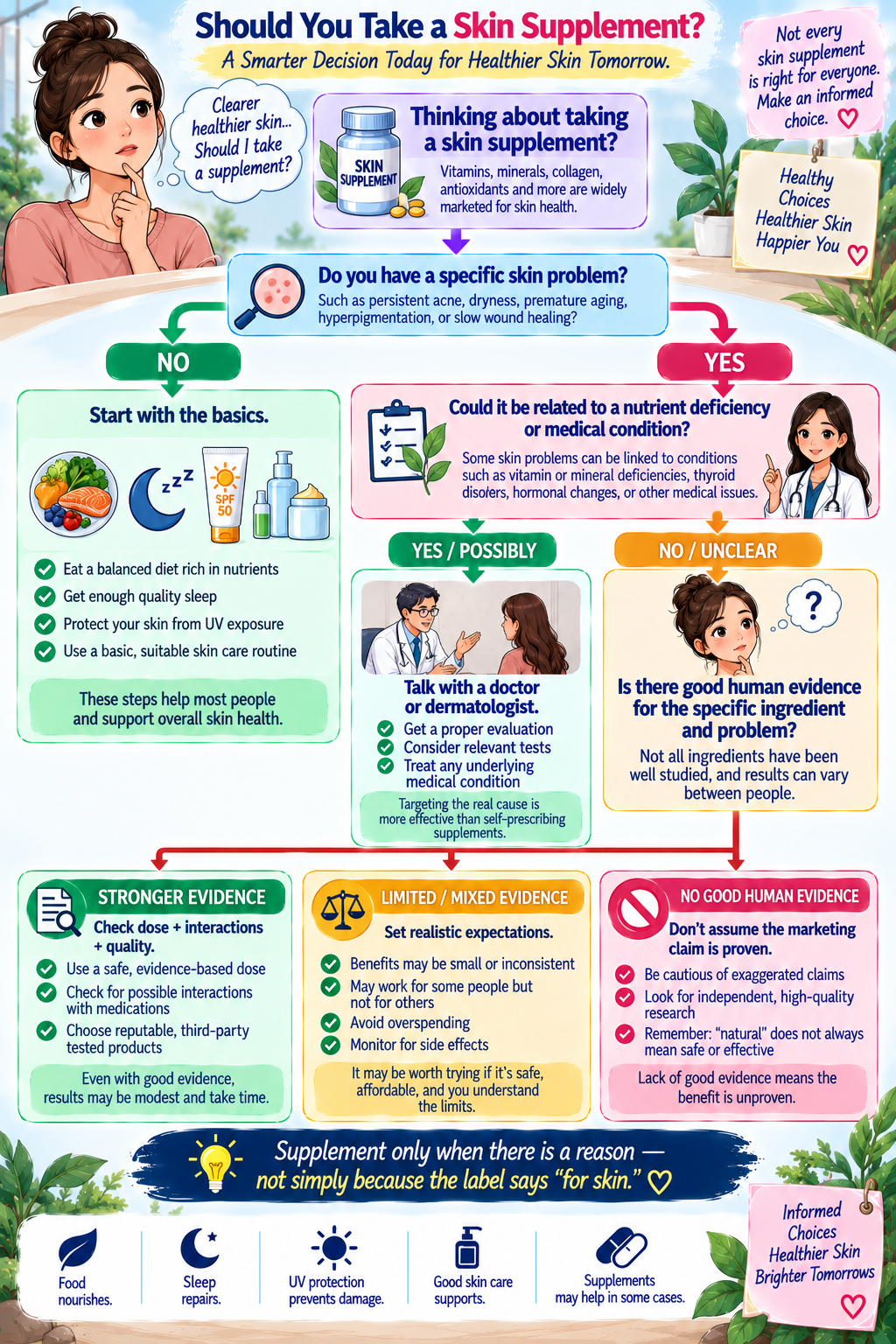
A Simple Skin-Supplement Audit You Can Do at Home
Before purchasing another bottle, write down every supplement you currently use.
Then record:
Product → Ingredient → Dose → Why you take it → Evidence → Possible interaction
Look for duplication.
For example, someone might take a multivitamin, hair supplement, collagen powder, immune supplement and separate zinc or vitamin D capsule without realizing that several products contain overlapping nutrients.
The AAD recommends checking whether a supplement is necessary, whether the dosage is appropriate and whether it is safe alongside medications and medical conditions. AAD: Skin Supplements Safety Checklist
This five-minute audit can be more useful than buying another beauty product.
Common Mistakes People Make With Skin Supplements
Mistake 1: Assuming Natural Means Safe
Natural ingredients can have biological effects.
For example, NCCIH reports that some highly bioavailable curcumin formulations have been associated with liver injury. NCCIH: Turmeric and Curcumin Safety
Mistake 2: Thinking a Higher Dose Works Better
Nutrients have physiological requirements and upper limits.
More is not automatically better.
Mistake 3: Taking Several Beauty Products Together
This can duplicate nutrients and make side effects harder to identify.
Mistake 4: Expecting Overnight Results
Most meaningful biological changes do not occur in a few days.
Mistake 5: Replacing Food With Capsules
Supplements provide selected nutrients. They do not reproduce the full nutritional complexity of a varied diet.
Mistake 6: Treating Supplements Like Skincare
A capsule cannot replace sunscreen, appropriate skin care or treatment for a diagnosed skin condition.
Mistake 7: Ignoring Laboratory-Test Interference
Biotin is a particularly important example.
The AAD warns that high-dose biotin can interfere with some laboratory blood tests and produce inaccurate results. AAD: Supplement Secrets Unveiled
How to Choose a Safer Skin Supplement
If you and your healthcare professional decide that a supplement is appropriate, look beyond the front of the package.
Check the Ingredient List
You should know exactly what you are taking and how much.
Avoid Miracle Claims
Claims such as “erases wrinkles,” “cures eczema” or “reverses aging” deserve skepticism.
The AAD specifically warns consumers to be cautious of supplement claims that sound too good to be true. AAD: Skin Supplements Guide
Look for Independent Verification
The AAD notes that seals from organizations such as USP, NSF, UL or ConsumerLab can provide additional assurance that the contents have been independently verified. AAD: Skin Supplements Guide
Check for Duplicate Nutrients
Compare your supplement with your multivitamin, fortified foods and other products.
Check Interactions
Tell your doctor or pharmacist about every supplement you take.
Consider Whether You Actually Need It
A supplement should fill a nutritional or medical gap rather than simply add another product to your routine.
Easy People-First Habits That Support Skin Health
One of the most useful alternatives to a large supplement stack is improving everyday habits.
Build Meals Around Variety
Rather than asking which capsule contains the most antioxidants, aim for variety across vegetables, fruits, legumes, whole grains, nuts, seeds and protein sources.
Protect Your Skin From UV Exposure
Sunscreen, protective clothing and shade remain important ways to reduce ultraviolet exposure.
Do not treat a supplement marketed as “internal sunscreen” as an alternative to established sun protection.
Get Adequate Protein
Protein provides amino acids needed for tissue maintenance and repair.
Avoid Smoking
Smoking harms overall health and contributes to premature skin aging.
Stay Physically Active
Regular physical activity supports overall cardiovascular and metabolic health.
Prioritize Sleep
Adequate sleep supports general health and may contribute to healthier-looking skin.
These habits may not look as exciting as a new supplement bottle, but they provide a stronger foundation for long-term health.
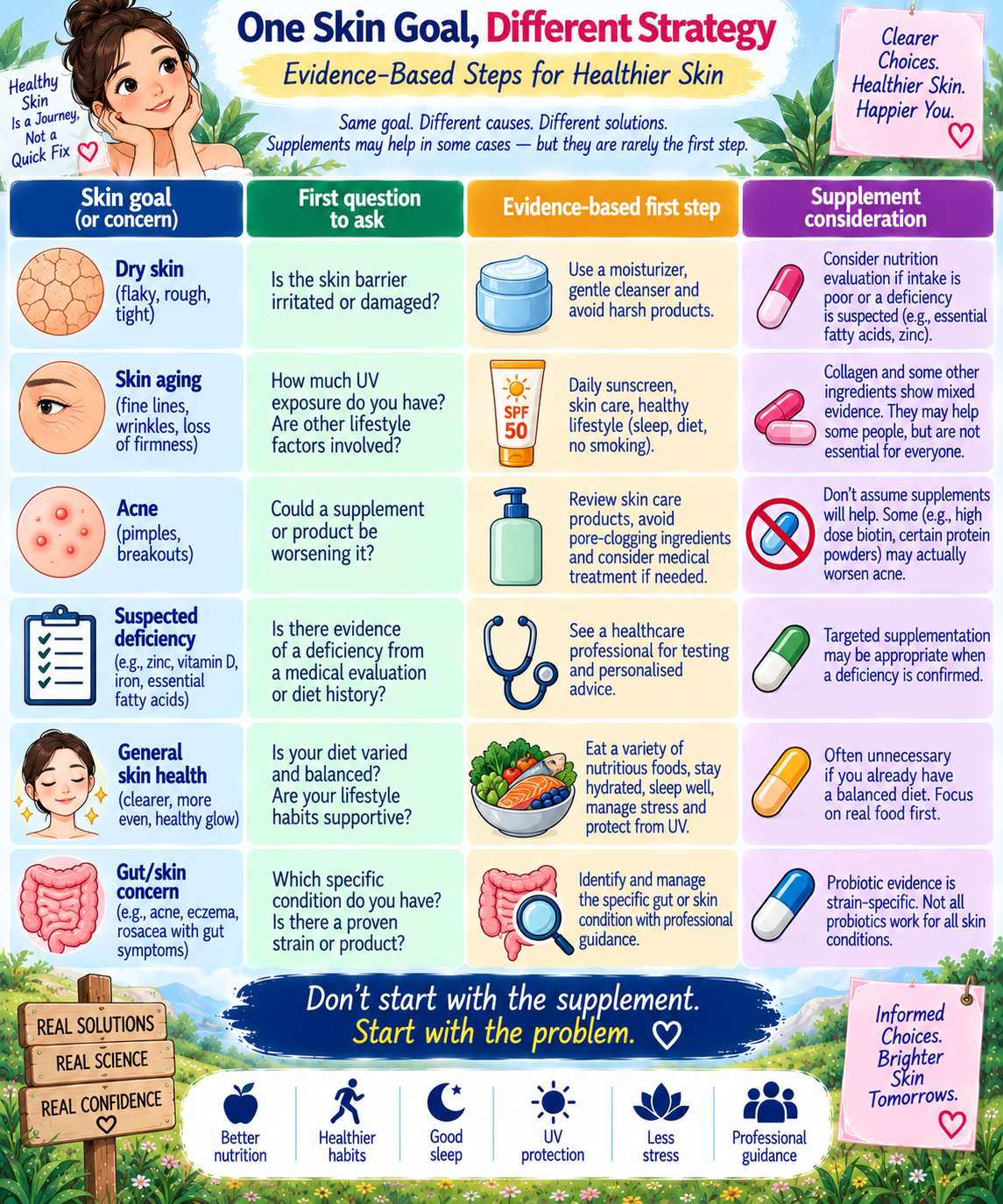
Personal-Experience Perspective
One common real-world problem is supplement overload.
A person may begin with vitamin C because they want brighter-looking skin. Later they add collagen, zinc, vitamin D, a hair-and-nail formula and finally a probiotic.
At that point, it becomes difficult to know what is helping, what is unnecessary and what might be causing an unwanted effect.
A more practical approach is to change one thing at a time.
Track the problem you are trying to address.
Keep the rest of your routine relatively stable.
Give an intervention reasonable time.
If symptoms appear, discuss them with a healthcare professional rather than adding another supplement to compensate.
This section is intentionally presented as a practical people-first perspective, not as a claim of personal medical experience.
Three Questions to Ask Before Buying a Skin Supplement
Instead of asking:
“What is the best supplement for skin health?”
Ask:
1. What specific problem am I trying to solve?
Dryness, acne, pigmentation, hair loss and a diagnosed nutrient deficiency are different issues.
2. Is there good human evidence for this ingredient and this problem?
Laboratory research is not the same as evidence from randomized human trials.
3. Do I have a reason to take it safely?
Consider your diet, medications, medical conditions and nutritional status.
These three questions can prevent many unnecessary purchases.
When Should You Talk With a Dermatologist or Doctor?
Professional advice is particularly important if you have:
- persistent acne
- unexplained rashes
- severe or persistent dryness
- unexplained pigmentation changes
- slow wound healing
- unexplained hair loss
- a restrictive diet
- suspected nutrient deficiency
- a digestive condition affecting nutrient absorption
- pregnancy or breastfeeding
- chronic disease
- regular prescription medications
- plans to take high-dose supplements
The AAD recommends discussing supplement concerns with a dermatologist because the appropriate choice depends on the person’s skin, health, nutritional needs and other medications. American Academy of Dermatology: Skin Supplements Guide
Important Safety Considerations
The word vitamin can make a supplement sound harmless.
It is not.
Excessive intake of some nutrients can cause adverse effects.
The AAD explains that supplements can cause side effects and interact with medications or medical conditions. AAD: Should I Take Vitamins or Supplements for My Skin?
Zinc is one example because excessive intake can interfere with copper status. NIH ODS: Zinc
Vitamin D is another example because excessive intake can lead to abnormally high calcium levels. NIH ODS: Vitamin D
High supplemental vitamin C can cause gastrointestinal symptoms. NIH ODS: Vitamin C
High-dose biotin can interfere with laboratory testing. AAD: Supplement Secrets Unveiled
These examples demonstrate why supplement decisions should be based on evidence and individual circumstances.
What About Supplements for Skin Lightening?
Be especially cautious with products marketed to dramatically change natural skin color.
Claims about “whitening,” “permanent brightening” or rapid changes in pigmentation can be much stronger than available evidence.
Pigmentation may have many causes, including UV exposure, acne-related inflammation, hormonal changes and specific dermatological conditions.
A supplement should not replace diagnosis and evidence-based treatment.
If pigmentation is persistent, changing or unexplained, a dermatologist can help determine the cause.
What About Biotin for Skin, Hair and Nails?
Biotin is frequently included in beauty supplements.
However, the AAD notes that biotin deficiency is rare and warns that high-dose biotin can interfere with certain blood tests. American Academy of Dermatology: Supplement Secrets Unveiled
Therefore, healthy people should not automatically assume that taking large amounts of biotin will improve their skin, hair or nails.
The appropriate question is whether there is an actual nutritional reason for supplementation.
Bottom Line
The best approach to supplements for skin health is not to find the product with the longest ingredient list.
It is to understand what your skin needs and what the evidence actually supports.
Vitamin C and zinc have established biological roles. Vitamin D and vitamin E are important nutrients whose supplementation should be guided by nutritional needs. Omega-3 fatty acids remain relevant to nutrition and dermatology research.
Collagen remains one of the most researched beauty supplements, but newer evidence has made its benefits more uncertain rather than universally established. PubMed: 2025 Collagen Systematic Review and Meta-analysis
Probiotics are another promising area, but their effects depend heavily on the specific strain, dose and condition being studied. PubMed: 2026 Probiotic Scoping Review
For most healthy people, the foundation remains straightforward:
Eat a varied diet, protect your skin from excessive UV exposure, avoid smoking, stay physically active, sleep adequately, use appropriate skin care and seek medical advice for persistent skin problems.
A supplement can sometimes fill a genuine nutritional or medical gap.
It should not become the foundation of your skin-health routine.
Frequently Asked Questions
What are the best supplements for skin health?
There is no scientifically established universal ranking of the best supplements. Vitamin C and zinc have important biological roles, while collagen and probiotics have more evolving and condition-specific evidence. AAD: Skin Supplements Guide
Do skin supplements really work?
Some may help in particular circumstances, but the evidence varies considerably between ingredients. Collagen is a good example because earlier research was encouraging while newer research has raised concerns about study quality and funding. PubMed: Collagen Supplements and Skin Aging
Is collagen good for skin?
Collagen supplementation has produced positive findings in some studies, especially for hydration and elasticity, but evidence is inconsistent. A 2025 meta-analysis found that benefits were not maintained in higher-quality and non-industry-funded study analyses. PubMed: Collagen Systematic Review
Is vitamin C good for skin health?
Vitamin C is essential for collagen biosynthesis and normal connective-tissue function. NIH ODS: Vitamin C
Can zinc improve skin?
Zinc is important for cell division, protein synthesis, immune function and wound healing. However, excessive zinc can interfere with copper status. NIH ODS: Zinc
Are probiotics good for skin?
Some probiotics may have benefits for specific skin conditions, but effects depend on the strain, dose and condition. Current research remains promising but incomplete. PubMed: Probiotics and Skin Health
Can supplements replace skincare?
No. Supplements should not replace sunscreen, appropriate skin care or medical treatment for diagnosed skin conditions.
Are natural skin supplements safe?
Not necessarily. Natural ingredients can have side effects and interactions. Some highly bioavailable curcumin formulations, for example, have been associated with liver injury. NCCIH: Turmeric and Curcumin Safety
Should healthy people take a daily skin supplement?
Not necessarily. The AAD recommends that healthy adults generally meet nutritional needs through a balanced diet, with supplements used when there is a deficiency or another medical reason. AAD: Skin Supplements Guide
How can I choose a safer skin supplement?
Look for transparent labeling, appropriate doses, realistic claims and independent quality verification. Also check potential interactions with medications and medical conditions. AAD: Skin Supplements Guide
Author Note
About the Author: RVLNSV PRASAD
This article is intended to provide evidence-based health education about nutrition and skin health. Supplement research continues to change, so readers should consider the publication date and discuss individual supplement decisions with a qualified healthcare professional.
Medical Disclaimer
This article is for general educational purposes only. It does not diagnose, treat, cure or prevent any medical condition. Dietary supplements can interact with medicines and may not be appropriate for everyone. If you have a medical condition, are pregnant or breastfeeding, take prescription medicines, or suspect a nutrient deficiency, speak with a qualified healthcare professional before starting a supplement.
Fitness and Lifestyle Disclaimer
The lifestyle recommendations in this article are general wellness information and are not a substitute for individualized medical, nutritional or fitness advice. Exercise, diet and supplement choices should be adjusted according to age, health status, medications and individual needs.
Strong E-E-A-T Sources
- American Academy of Dermatology — Should I take vitamins or supplements for my skin?
American Academy of Dermatology: Skin Supplements Guide - American Academy of Dermatology — Supplement secrets unveiled
American Academy of Dermatology: Beauty Supplement Evidence and Safety - NIH Office of Dietary Supplements — Vitamin C
NIH ODS Vitamin C Fact Sheet - NIH Office of Dietary Supplements — Vitamin D
NIH ODS Vitamin D Fact Sheet - NIH Office of Dietary Supplements — Zinc
NIH ODS Zinc Fact Sheet - NIH Office of Dietary Supplements — Vitamin E
NIH ODS Vitamin E Fact Sheet - PubMed — 2025 Collagen Systematic Review and Meta-analysis
PubMed: Effects of Collagen Supplements on Skin Aging - PubMed — 2026 Collagen Systematic Review
PubMed: Hydrolyzed Collagen Supplementation and Skin Health - PubMed — Probiotics, Prebiotics and Synbiotics for Skin Health
PubMed: Probiotics and Skin Health Scoping Review - NCCIH — Turmeric: Usefulness and Safety
NCCIH: Turmeric and Curcumin Safety
Similar Articles
- 11 Best Skin Lightening Treatments
- Best 5 Ways to Prevent Skin Cancer
- 10 Best Vitamins for Women After 50 to Boost Energy and Health
- 12 Significant Aging Effects on the Brain
- 12 Best Ways to Treat Acne