







































































































































































10 Healthy Lifestyle Habits for Busy Americans: A Practical Guide
Author: RVLNSV PRASAD
Updated On: October 2026
About Us
Author Bio
Editorial Policy
Contact Us

Introduction
A healthy lifestyle does not require a perfect diet, an expensive gym membership, or a complicated morning routine. It starts with the everyday choices that support your energy, physical health, mental well-being, and ability to manage daily responsibilities.
For many Americans, maintaining healthy habits can be challenging. Work schedules, commuting, family responsibilities, financial pressures, and long periods of sitting can make exercise, meal preparation, and adequate sleep harder to prioritize. Even people who understand the importance of wellness may struggle to turn good intentions into consistent actions.
The encouraging news is that improving your health does not require changing everything at once. The Centers for Disease Control and Prevention (CDC) explains that physical activity provides important health benefits, and even relatively small amounts of movement can be beneficial. The same practical principle applies to building sustainable routines: begin with manageable changes and develop them over time.
This guide explores ten evidence-based healthy lifestyle habits, practical ways to fit them into an American workday, and less obvious strategies for making healthier choices easier to maintain. Rather than promising instant results, the goal is to help you build a routine that works with your actual life.
Quick Answer: What Is the Best Way to Build a Healthy Lifestyle?
The best way to build a healthy lifestyle is to combine balanced eating, regular physical activity, sufficient sleep, stress management, meaningful social connections, and appropriate preventive healthcare. Start with one or two realistic changes, make them convenient, and gradually build on your progress.
According to the CDC’s healthy-weight guidance, nutrition, physical activity, sleep, and stress management can work together to support overall health. You do not need to follow an extreme wellness plan to begin making progress.
Key Takeaways
- Build healthy lifestyle habits around your real schedule rather than an idealized routine.
- Eat a varied diet that includes vegetables, fruits, whole grains, protein foods, and appropriate sources of healthy fats.
- Work toward at least 150 minutes of moderate-intensity aerobic activity each week, alongside muscle–strengthening activities on two days, as recommended for most adults.
- Protect your sleep schedule and create a relaxing evening routine.
- Use simple environmental changes to make healthy decisions easier.
- Treat setbacks as opportunities to adjust your plan rather than reasons to abandon it.
- Seek professional guidance when symptoms, chronic conditions, or persistent emotional difficulties require individual care.
Why Healthy Lifestyle Habits Matter in the USA
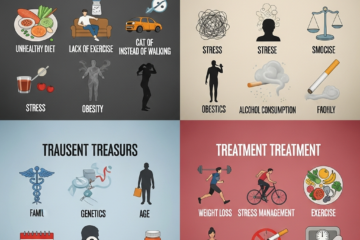
Health is influenced by much more than a single meal or workout. Everyday behavior interacts with age, genetics, medical conditions, medications, the environment, and access to healthcare.
A person who regularly moves, eats a varied diet, sleeps adequately, and avoids tobacco can support several aspects of long-term health. These habits are associated with important health benefits, although no routine can eliminate every disease risk.
The CDC’s overview of physical activity benefits, updated in March 2026, describes benefits that extend beyond weight management. Regular physical activity supports cardiovascular health, bone strength, sleep quality, and mental well-being, while helping reduce the risk of several chronic diseases.
However, healthy living should not become another source of pressure. A parent managing childcare, an employee working night shifts, and a retired adult with limited mobility may need very different routines. The most useful approach is one that accounts for those differences.
10 Healthy Lifestyle Habits That Fit Real Life
1. Build Balanced Meals Instead of Following Extreme Diets
Food choices influence energy intake, nutrient availability, digestive health, and long-term disease risk. Yet healthy eating does not have to involve expensive ingredients, restrictive meal plans, or avoiding every favorite food.
A useful starting point is to include a variety of vegetables, fruits, whole grains, protein sources, and suitable fats throughout the day. Beans, lentils, eggs, fish, nuts, yogurt, and tofu can all contribute useful nutrients, depending on individual needs and dietary preferences.
The Dietary Guidelines for Americans provide evidence-based recommendations for healthy eating patterns. The practical lesson is to focus on the overall pattern of your diet rather than judging your health by a single food.
Try this practical approach:
- Add a vegetable or fruit to a meal that currently lacks one.
- Keep convenient protein foods available for busy days.
- Choose whole grains more often when they suit your preferences and needs.
- Limit sugary drinks and frequently consumed foods high in sodium, added sugars, or saturated fat.
- Plan a few simple meals before the working week becomes hectic.
A less obvious strategy: Create a backup meal.
Many people plan healthy meals for ideal circumstances but have no alternative when they arrive home tired. Choose one or two easy backup meals, such as beans with whole-grain toast, eggs with vegetables, or a ready-to-assemble salad with a protein source.
The purpose is not to make every meal perfect. It is to reduce the likelihood that a busy day will leave you without a practical option.
2. Make Physical Activity Part of Your Existing Routine
Exercise can feel difficult to schedule when work, commuting, and family responsibilities already occupy much of the day. One solution is to stop treating physical activity as something that must happen in a dedicated gym session.
Walking during a break, cycling for transportation when practical, dancing at home, gardening, or using the stairs can all contribute to movement.
The CDC’s adult physical activity guidance recommends at least 150 minutes of moderate-intensity aerobic activity per week and muscle-strengthening activities on at least two days for adults. You can divide aerobic activity across the week, and some activity is better than none.
| Your situation | A practical starting point |
|---|---|
| Mostly desk-based work | Walk briefly during suitable breaks. |
| Long commute | Add movement before leaving or after arriving home. |
| Limited free time | Divide the activity into shorter sessions. |
| Prefer home workouts | Try bodyweight movements or resistance bands. |
| Limited mobility | Explore suitable seated, adapted, or supported activities. |
| Frequently travel | Walk where practical and use safe opportunities for movement. |
A practical tip: Attach movement to something you already do. For example, take a short walk after lunch or stretch after finishing a regular work task.
If you have been inactive, begin gradually. People with chronic conditions, injuries, or significant exercise limitations may need individualized advice before starting a new program.
3. Protect Your Sleep Before Trying to Optimize Everything Else
Sleep is often treated as the first thing to sacrifice when life gets busy. However, insufficient or disrupted sleep can affect attention, mood, daily functioning, and overall health.
Most adults generally need at least seven hours of sleep each night, although individual needs vary. The CDC’s sleep guidance offers recommendations for improving sleep and explains why adequate rest matters.
Instead of attempting a complicated nighttime routine, focus on consistency.
Start with these changes:
- Maintain reasonably consistent bedtimes and wake times.
- Allow enough time for sleep rather than planning around the minimum possible amount.
- Reduce stimulating activities when you are preparing for bed.
- Keep your sleeping environment comfortable, quiet, and dark when possible.
- Consider the timing of caffeine, especially if it affects your ability to fall asleep.
The bedtime reverse-planning method
Choose your intended bedtime and work backward. Include time for preparing for the next day, washing up, relaxing, and putting away work-related tasks.
This can help reveal whether your evening schedule realistically allows enough sleep. If you discover that your routine is too crowded, adjust an earlier activity instead of relying entirely on willpower at bedtime.
Persistent insomnia, loud snoring with gasping, or ongoing daytime sleepiness deserves medical assessment rather than endless experimentation with sleep products.
4. Manage Stress With Small, Repeatable Recovery Breaks
Stress is not always avoidable. Deadlines, financial concerns, caregiving, and uncertainty can create demands that cannot be solved by positive thinking alone.
Nevertheless, the way you respond to stress can influence how manageable daily life feels. The National Institute of Mental Health’s stress resource explains common stress responses and offers guidance on coping.
Consider a brief recovery break when tension builds. You might step away from a screen, take a gentle walk, practice comfortable slow breathing, or speak with someone you trust.
These actions are not substitutes for addressing serious problems. They are tools that may help you pause and respond more deliberately.
Try the transition reset: After completing a demanding task, spend two minutes identifying what is finished, what still needs attention, and what can wait. Then choose one next step instead of carrying every unfinished task mentally into the next activity.
If stress becomes persistent, interferes with daily functioning, or is accompanied by significant anxiety or depression, consider seeking support from a qualified mental health professional.
5. Drink Water Regularly Without Following Rigid Rules
Water supports normal body functions, and fluid needs vary according to factors such as activity, temperature, diet, health conditions, and pregnancy or breastfeeding.
There is no single amount that suits every person in every situation. The National Academies’ dietary reference intakes for water provide background on total water intake and the factors that influence hydration.
A practical strategy is to make water easy to access. Keep a bottle nearby if that helps, drink with meals, and increase fluid intake appropriately during hot weather or physical activity.
Do not assume that drinking excessive amounts of water will detoxify your body, accelerate fat loss, or cure health conditions. Your kidneys and liver already perform essential waste-processing functions.
People with kidney, heart, or other conditions that require fluid restrictions should follow their healthcare professional’s advice instead of applying general hydration targets.
6. Reduce Long Periods of Sitting
Meeting an exercise target does not automatically mean that the rest of your day should be spent sitting without interruption.
Office work, television, commuting, and extended computer use can create long sedentary periods. Breaking these periods up is a practical way to introduce more movement into daily life.
The CDC’s physical activity resources encourage adults to find ways to move more and sit less.
You do not need a sophisticated standing desk or wearable device to begin.
Try the movement-cue method:
Choose an event that already happens several times during your day, such as finishing a meeting or refilling a drink. Use it as a reminder to stand, stretch, or walk briefly when appropriate.
The goal is to create a repeatable cue rather than an elaborate tracking system. If standing or walking is difficult, consider safe seated movements or an adaptation recommended by a qualified professional.
7. Make Your Home and Workplace Support Healthier Choices
People often blame themselves for inconsistent habits when their environment makes those habits unnecessarily difficult.
If the only available lunch is an expensive takeaway, preparing balanced meals becomes harder. If exercise equipment is difficult to access, a workout may feel inconvenient. If your phone is beside your pillow, late-night scrolling may be more tempting.
Behavior is influenced by both motivation and the conditions in which decisions occur.
Use a simple environment audit:
| Challenge | Environmental adjustment |
|---|---|
| Forgetting to move | Place a reminder where you work. |
| Choosing convenience food when hungry | Keep practical meal ingredients available. |
| Staying on your phone at bedtime | Charge it away from the bed when feasible. |
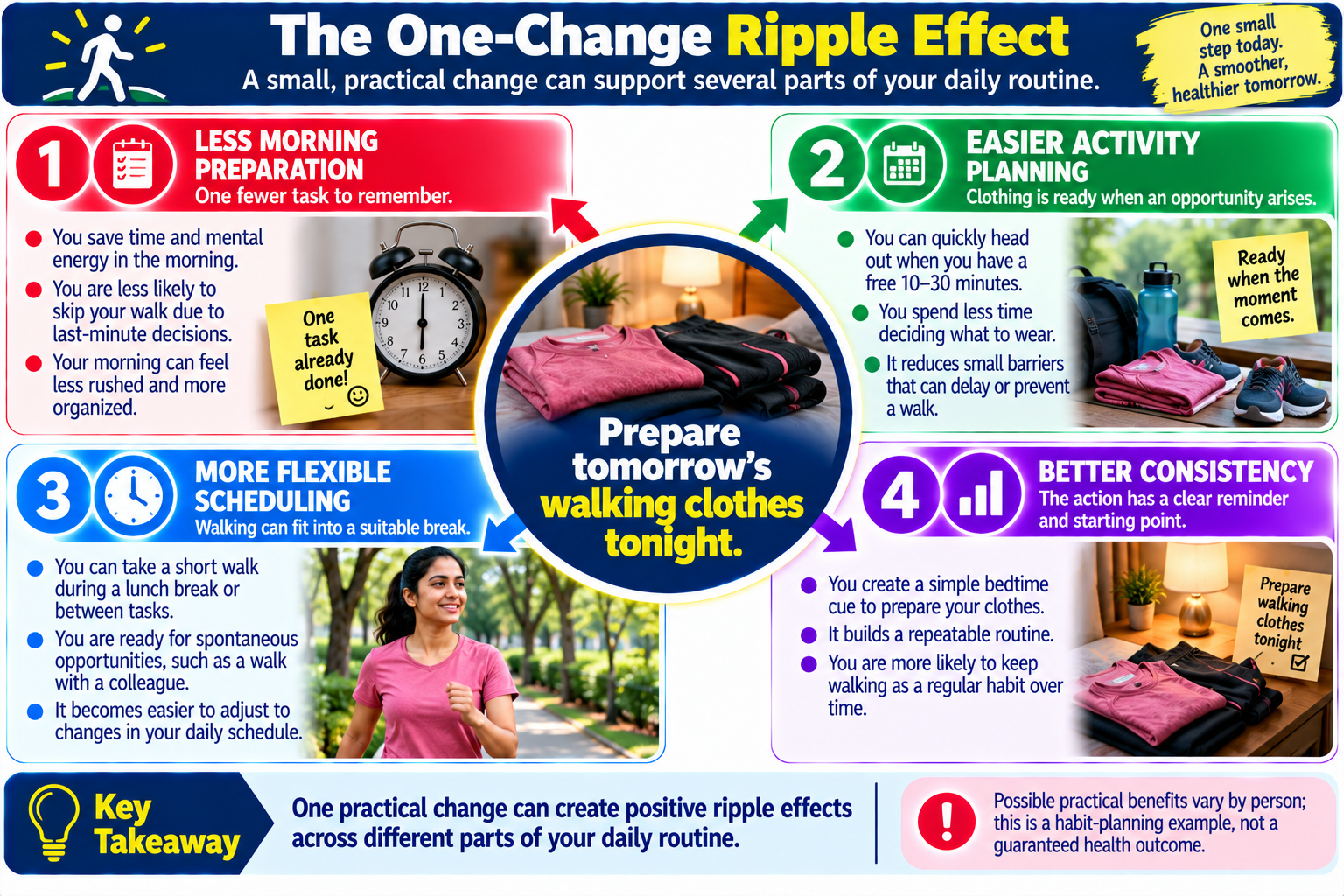
| Skipping planned activity | Prepare comfortable clothing in advance. |
| Losing track of appointments | Use one calendar or reminder system. |
The key is to make the desired action easier to begin and the unwanted action less automatic.
This approach is especially useful for people who have already tried repeatedly to improve their habits through motivation alone.
8. Protect Social Connection and Emotional Well-Being
Healthy living is not limited to diet, exercise, and sleep. Relationships and emotional well-being also influence how people experience everyday life.
Social connection may come from family, friends, neighbors, community groups, volunteering, or shared activities. The right balance depends on personal circumstances and preferences.
The U.S. Surgeon General’s advisory on social connection describes the importance of social connection for individual and community well-being.
You do not need a large social circle to begin strengthening connection.
Try scheduling a regular conversation with someone you trust, inviting a friend for a walk, or participating in an activity that naturally brings people together.
An overlooked strategy: Combine connection with an existing habit.
Instead of creating a completely separate commitment, arrange a walking conversation, prepare a meal with family, or call a friend while doing an appropriate household task.
This can make social contact easier to maintain without overcrowding your schedule.
Remember that loneliness and social isolation are not personal failures. If emotional distress is persistent or severe, professional support may be appropriate.
9. Use Preventive Healthcare as Part of Your Lifestyle
Healthy habits can reduce some health risks, but they cannot replace medical care. Preventive healthcare helps identify concerns that may not produce obvious symptoms.
Depending on your age, medical history, family history, and risk factors, preventive care may include blood pressure checks, recommended cancer screening, vaccinations, dental care, and discussions about cholesterol or blood glucose.
The U.S. Preventive Services Task Force publishes evidence-based recommendations for many preventive services.
Not every screening test is appropriate for every person. Benefits and potential harms vary by test and population, so discuss your individual needs with a healthcare professional.
Make prevention easier: Before an appointment, write down your medications, relevant family history, new symptoms, and questions. This simple preparation can help you use the appointment more effectively.
Do not wait for a routine checkup if you develop symptoms that require prompt assessment.
10. Build Consistency With Flexible Goals
One of the most common reasons healthy routines fail is that the original plan demands more time, energy, or organization than a person’s circumstances allow.
A person may begin with daily workouts, complicated meal preparation, strict sleep rules, and several new wellness practices simultaneously. When work becomes demanding, maintaining every change becomes difficult.
A more realistic approach is to start with a small number of measurable actions.
The CDC’s guidance on setting goals for healthy weight management recommends realistic goals and recognizes that setbacks can happen.
For example, instead of promising to exercise every day, you might begin with a 15-minute walk three times during the first week. Once that fits your schedule, you can gradually increase activity.
Use the minimum-viable-habit approach.
Choose a small version of the habit that you can perform under ordinary circumstances. On a busy day, a brief walk or a simple home-prepared meal may be more realistic than your ideal plan.
The small version is not the final goal. It is a way to maintain continuity while leaving room to progress.
A Practical Table: Healthy Habits for Different American Lifestyles
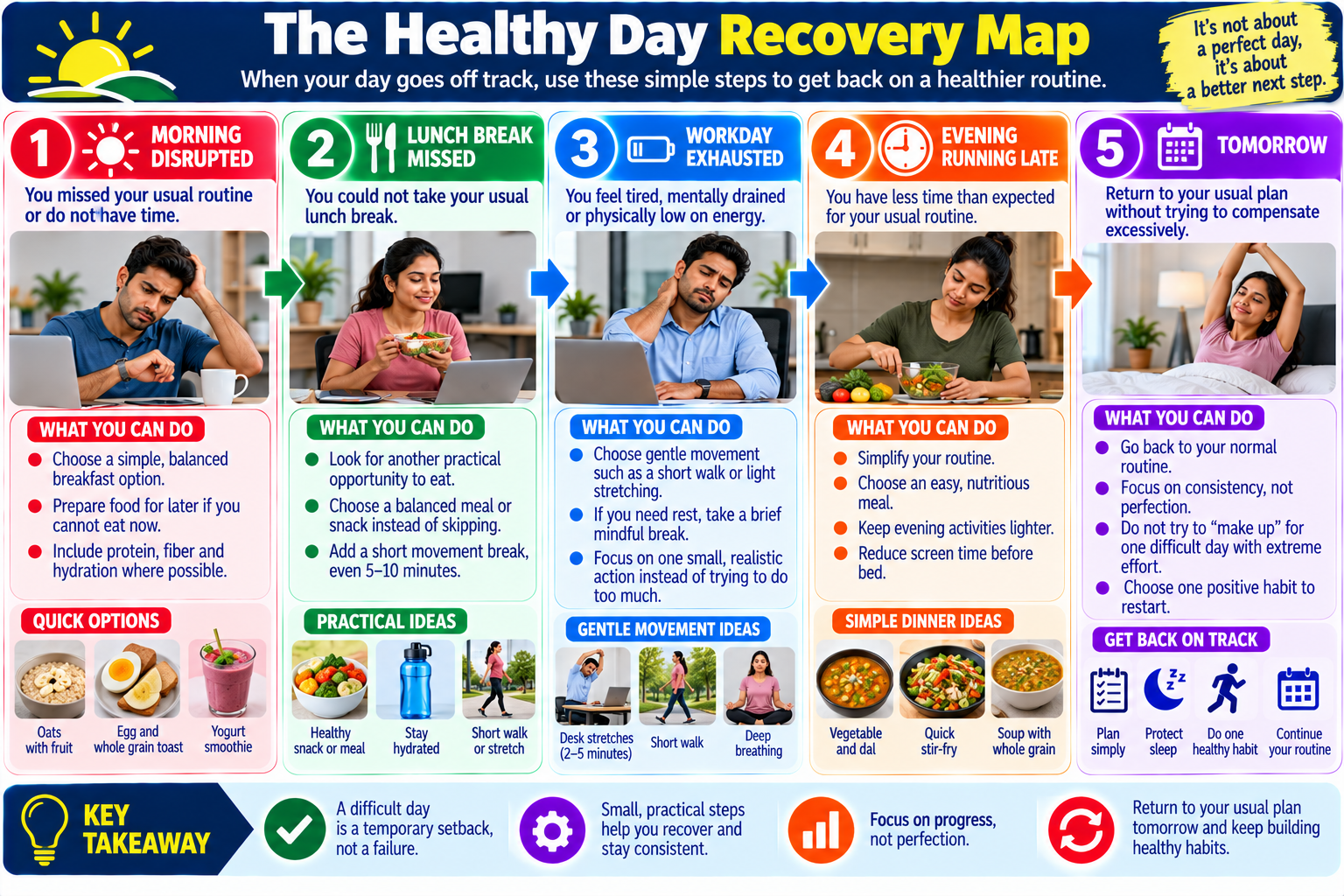
There is no single routine that fits every household. The following examples show how to adapt healthy lifestyle habits to common situations.
| Lifestyle or challenge | Realistic action | How to make it sustainable |
|---|---|---|
| Office-based work | Add movement between tasks. | Connect it to existing breaks. |
| Shift work | Protect a consistent sleep opportunity where possible. | Reduce avoidable disruptions. |
| Family caregiving | Prepare flexible, simple meals. | Use shared preparation when available. |
| Frequent travel | Walk when safe and practical. | Identify opportunities during the day. |
| Limited budget | Use affordable staples such as beans, oats, and seasonal produce | Plan around foods you can regularly obtain. |
| Limited mobility | Explore adapted physical activity. | Seek appropriate professional guidance |
| High stress | Schedule short recovery periods. | Pair them with natural transitions. |
| Inconsistent routines | Begin with one small habit. | Increase demands gradually. |
These are starting points, not prescriptions. A routine should account for health needs, financial resources, accessibility, cultural preferences, and the realities of each person’s schedule.
An Original Strategy: The Healthy Habit Friction Audit
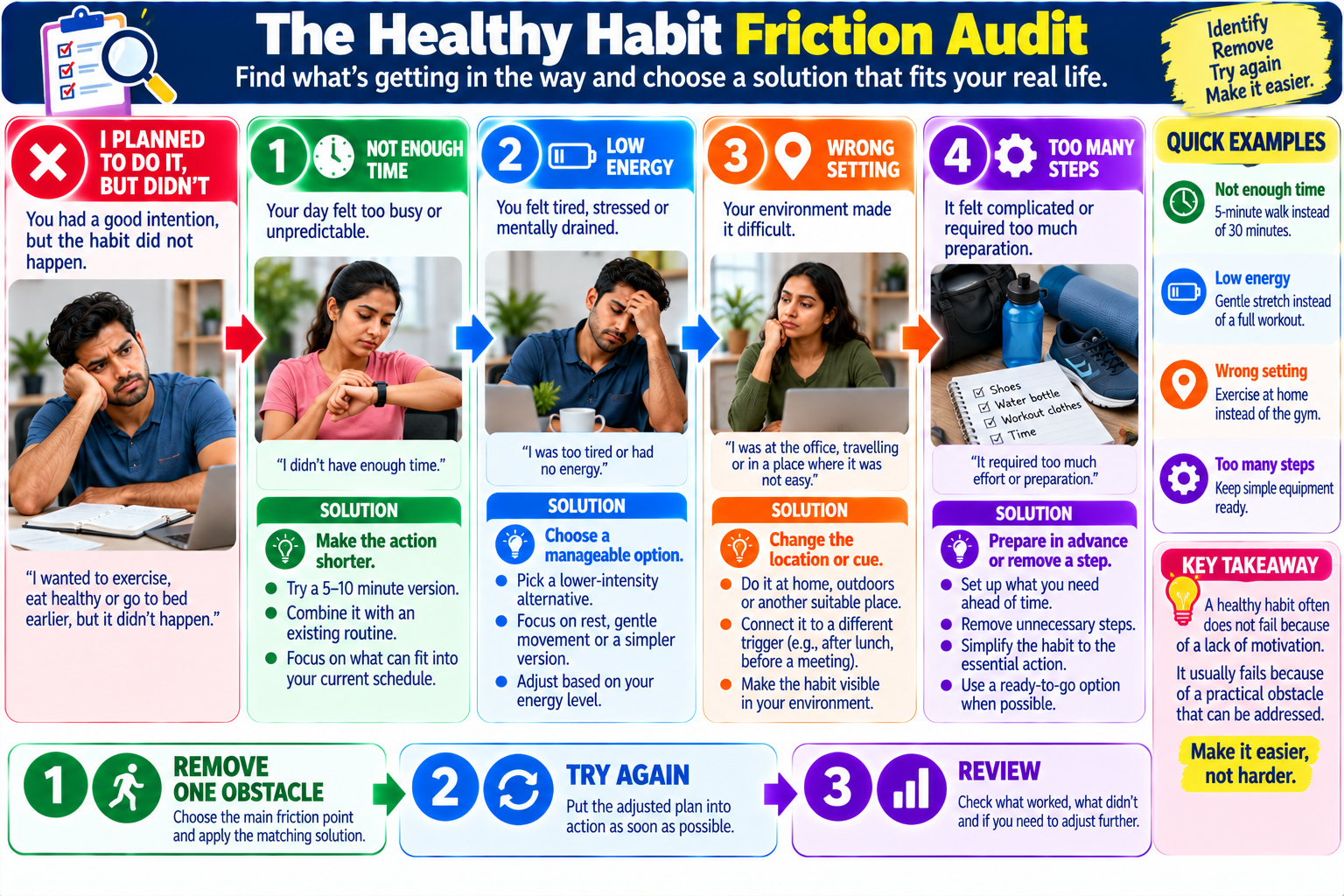
Many wellness guides tell readers what to do without helping them understand why they repeatedly struggle to do it.
A healthy habit friction audit focuses on the obstacles between an intention and an action. The goal is not to judge yourself. It is to identify the point where your current routine becomes unnecessarily difficult.
Step 1: Choose One Habit
Select a behavior you would like to improve, such as taking regular walks, eating lunch away from your desk, or preparing for sleep earlier.
Avoid trying to audit every part of your life simultaneously.
Step 2: Identify the Moment Things Go Wrong
Ask yourself what usually happens immediately before you skip the intended action.
Perhaps you arrive home exhausted, cannot find your walking shoes, forget to prepare food, or become distracted by notifications.
Be specific. “I lack discipline” does not identify an obstacle you can easily change.
Step 3: Remove One Obstacle
Match the adjustment to the problem.
If preparing lunch takes too long, prepare ingredients in advance. If exercise feels difficult to start, place suitable clothing where you can find it. If bedtime is delayed by unfinished tasks, set aside time earlier to prepare for the next morning.
Step 4: Test the Change
Try the adjustment for several days and observe whether it makes the habit easier.
You do not need a complex spreadsheet. A brief note about what worked and what did not can be enough.
Step 5: Adapt Rather Than Abandon
If the habit remains difficult, reconsider the timing, size, or method. A walking plan may need shorter sessions, while a sleep routine may require changes to work demands or environmental conditions.
This audit is a practical planning tool, not a clinically validated treatment. Its value lies in helping you solve specific problems instead of repeatedly making the same promise to yourself.
A Simple Seven-Day Healthy Lifestyle Starter Plan
You do not need to transform your entire routine in one week. Use this plan to experiment with manageable changes.
| Day | Main focus | Suggested action |
|---|---|---|
| Day 1 | Awareness | Notice your usual meal, movement, and sleep patterns |
| Day 2 | Nutrition | Add a fruit or vegetable to one meal. |
| Day 3 | Movement | Take a short walk or try a suitable adapted activity |
| Day 4 | Sleep | Set a realistic bedtime and wake-time plan. |
| Day 5 | Stress | Add a brief recovery break to your day. |
| Day 6 | Environment | Remove one obstacle to a healthy habit. |
| Day 7 | Review | Keep the changes that felt practical and adjust the rest. |
After the first week, choose one or two habits to continue. Gradually introduce additional changes when your existing routine feels manageable.
If a day does not go as planned, resume at the next reasonable opportunity. Missing one activity does not erase previous effort.
Common Healthy Lifestyle Mistakes to Avoid
Trying to Change Everything at Once
Too many simultaneous goals can make routines difficult to maintain. Begin with a few meaningful changes and add more when you are ready.
Confusing Restriction With Healthy Eating
Eliminating entire food groups without a medical or other appropriate reason can make eating unnecessarily difficult and may create nutritional problems. Focus on variety, balance, and your individual needs.
Treating Exercise as Punishment
Movement should support health and function, not compensate for eating or serve as punishment for body size. Choose activities that are appropriate for your ability and preferences.
Expecting Immediate Results
Some benefits may be noticeable relatively quickly, while other changes take longer or are not obvious without medical assessment. Avoid judging your progress only by weight, appearance, or daily energy.
Ignoring Medical Symptoms
Lifestyle changes are useful, but they are not a substitute for diagnosing or treating an illness. Seek appropriate care for persistent or concerning symptoms.
Giving Up After a Setback
Travel, illness, family responsibilities, and demanding work periods can disrupt routines. Adjust the plan to current circumstances instead of assuming that progress is impossible.
How Long Does It Take to Develop Healthy Habits?
There is no universal deadline for developing a habit. The time required depends on the behavior, the person, the environment, and how consistently the action occurs.
A simple routine performed in a stable context may become easier to repeat sooner than a complicated behavior that depends on changing schedules or substantial effort.
Rather than expecting a habit to become automatic by a particular date, monitor whether it becomes easier to start and maintain.
You can ask yourself three questions each week:
- Is the action easier to remember?
- Have I removed any obstacles that previously interrupted it?
- Does the routine still fit my health needs and daily responsibilities?
If the answer to these questions improves over time, your approach may be becoming more sustainable. If not, adjust the plan rather than treating the difficulty as a personal failure.
Frequently Asked Questions
1. What are the most important healthy lifestyle habits?
Balanced nutrition, regular physical activity, sufficient sleep, stress management, avoiding tobacco, appropriate preventive care, and meaningful social connection are important components of a healthy lifestyle. The best starting point depends on your current needs and circumstances.
2. How can I live a healthier lifestyle with a busy schedule?
Start with actions that fit naturally into your existing day. Prepare a simple meal, walk during a suitable break, establish a realistic sleep schedule, or attach movement to an activity you already perform. Gradually expand the routine when it becomes manageable.
3. How much exercise do adults need each week?
For most adults, U.S. guidance recommends at least 150 minutes of moderate-intensity aerobic activity weekly and muscle-strengthening activities on at least two days. See the CDC’s physical activity recommendations for further details and adaptations.
4. Do I need to join a gym to improve my health?
No. Walking, home-based strength exercises, dancing, cycling, and other suitable activities can contribute to physical activity goals. Choose options that are safe, accessible, and realistic for you.
5. Can small lifestyle changes make a difference?
Small changes can be useful starting points, especially when they are repeated and gradually expanded. Their effects vary, and they should not be presented as guaranteed protection against disease.
6. What is the easiest healthy habit to start with?
Choose an action that addresses a current problem and requires little additional organization. For example, if you spend much of the day sitting, a brief movement break may be easier to implement than an entirely new workout schedule.
7. How can I maintain healthy habits after missing a few days?
Identify what disrupted the routine and make a practical adjustment. Reduce the time required, change the cue, prepare materials in advance, or select a more realistic time. Resume when appropriate instead of trying to compensate with an extreme plan.
8. Are natural remedies necessary for a healthy lifestyle?
No. Healthy eating, suitable physical activity, adequate sleep, preventive care, and other established health practices are more important than buying wellness products or following detox trends. Supplements and herbal products can have risks and interactions, so discuss them with a healthcare professional when appropriate.
9. Does a healthy lifestyle guarantee that I will not develop chronic disease?
No. Healthy behaviors can help reduce certain health risks, but genetics, age, environmental exposures, medical conditions, and other factors also influence disease. Healthy habits complement rather than replace medical care.
10. When should I speak with a healthcare professional?
Seek professional advice when you have persistent symptoms, concerns about medications, difficulty managing a chronic condition, or questions about safe nutrition and exercise. Promptly assess symptoms that are severe, sudden, or worsening.
Author Note
Author: RVLNSV PRASAD
This article aims to help readers approach everyday wellness with practical, evidence-informed strategies rather than unrealistic routines or quick-fix promises.
For stronger editorial transparency, add a qualified medical reviewer where appropriate and verify the linked sources before publication. Any personal story should describe the author’s actual experience rather than imply clinical results or experiences that cannot be verified.
Medical Disclaimer
This article is for general educational purposes and is not a substitute for individualized medical advice, diagnosis, or treatment. Health needs differ according to age, medical history, medications, and other factors. Consult a qualified healthcare professional about personal health concerns, and do not delay necessary care because of information in this article.
Fitness Disclaimer
Exercise recommendations must be adapted to individual ability, health conditions, and injury history. Begin gradually if you are inactive. Seek professional guidance before starting a demanding exercise program if you have relevant medical conditions or limitations. Stop an activity and seek appropriate medical assessment if you experience concerning symptoms.
Sources
- Centers for Disease Control and Prevention (CDC) — Physical Activity Basics and Your Health. Explains physical activity benefits and opportunities to move more.
- Centers for Disease Control and Prevention (CDC) — Adding Physical Activity as an Adult. Summarizes adult aerobic and muscle-strengthening recommendations.
- Centers for Disease Control and Prevention (CDC) — Steps for Losing Weight. Discusses nutrition, physical activity, sleep, stress management, and realistic goals.
- U.S. Department of Agriculture and U.S. Department of Health and Human Services — Dietary Guidelines for Americans. Provides evidence-based guidance on healthy eating patterns.
- Centers for Disease Control and Prevention (CDC) — About Sleep. Offers information about sleep needs and healthy sleep practices.
- National Institute of Mental Health (NIMH) — I’m So Stressed Out! Fact Sheet. Explains stress and when to seek support.
- U.S. Department of Health and Human Services — Our Epidemic of Loneliness and Isolation: The U.S. Surgeon General’s Advisory on the Healing Effects of Social Connection and Community. Reviews evidence about social connection and health.
- U.S. Preventive Services Task Force (USPSTF) — Recommendations for Preventive Services. Provides evidence-based preventive screening recommendations.
- National Academies of Sciences, Engineering, and Medicine — Dietary Reference Intakes for Water, Potassium, Sodium, Chloride, and Sulfate. Explains scientific background on water and electrolyte intake.
Final Thoughts: Build a Healthier Life One Practical Choice at a Time
A healthy lifestyle is not a competition to follow the strictest routine. It is an ongoing process of choosing habits that support your health while respecting the time, resources, and responsibilities you have.
Some weeks will allow more exercise and home cooking. Others may require simpler meals, shorter activity sessions, or additional rest. These variations are normal, and they do not make your efforts meaningless.
Start by identifying one obstacle that makes healthy living difficult. Choose a realistic adjustment, test whether it helps, and build from there. When you focus on practical actions instead of perfection, healthy lifestyle habits can become a more sustainable part of everyday life.
Related content
For balancing health this article you should read
10 Best Herbal Remedies to Control Diabetes
7 Beyond the Scale: Transforming Your Mindset for Fat Loss
Related Topics
- Healthy Habits
- Smart Nutrition and Active Living: Keys to a Healthier USA
- How to Achieve Balance Holistic Wellness Practices
- Breaking Bad Habits: How Americans Are Redefining Health and Wellness
- 8 Effective Habits to Boost Mental Clarity and Focus
- Home










[…] From Coast to Coast: Embracing a Best Healthy Lifestyle in the USA […]