











































































































































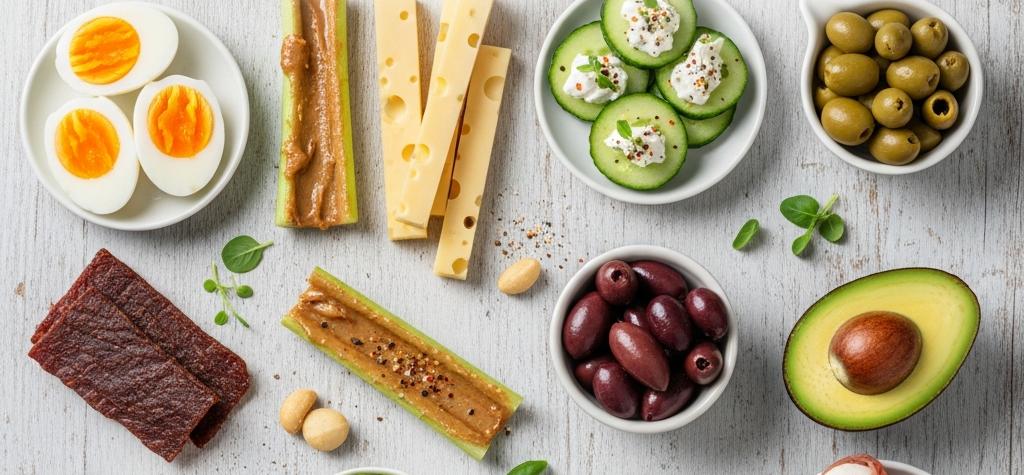
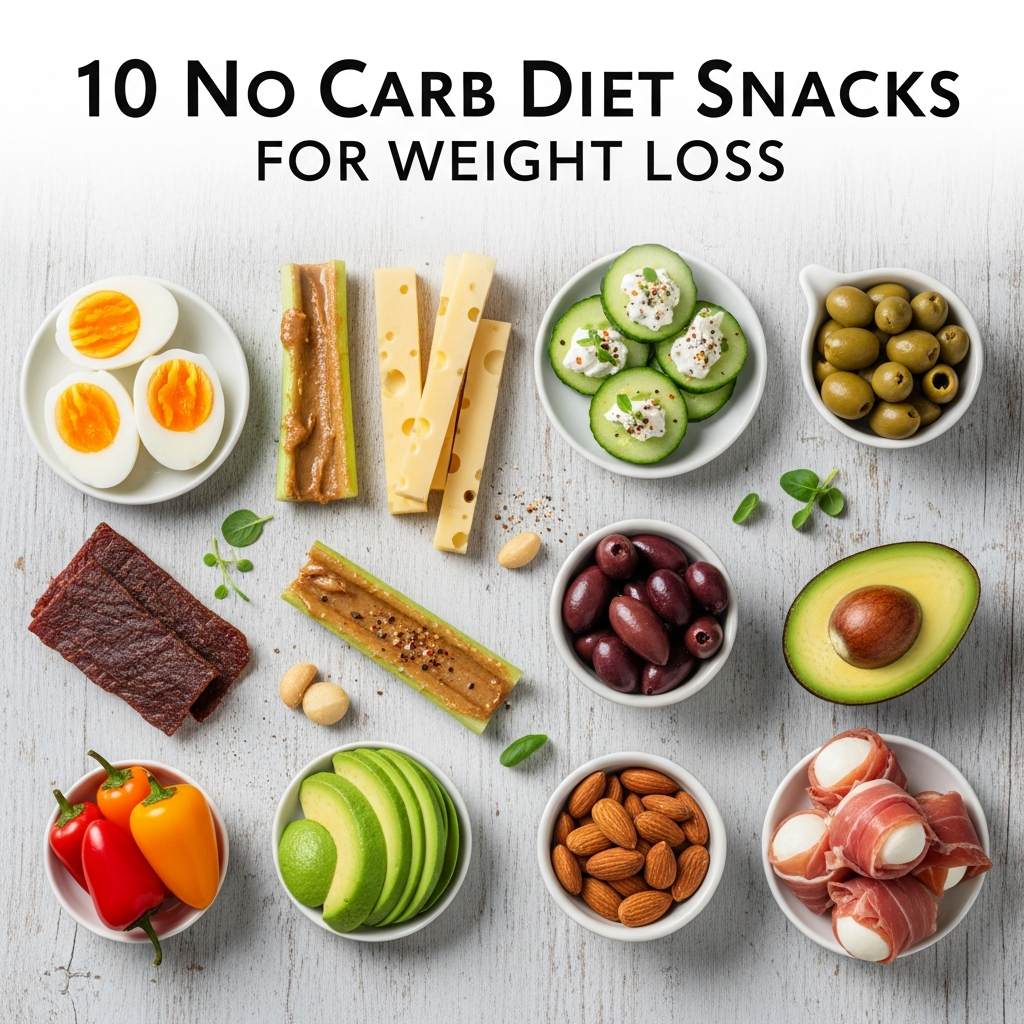
10 Low-Carb Snacks for Weight Loss That Actually Keep You Full
Author: RVLNSV PRASAD
Updated On: September 2026
About Us
Author Bio
Editorial Policy
Contact Us
Introduction
Finding low-carb snacks for weight loss can seem simple until hunger arrives between meals.
You may grab a protein bar because it looks healthy. Then you notice it contains added sugar and a long list of ingredients. You may choose a handful of nuts, only to realize later that the portion was much larger than you intended.
I learned this through my own eating routine.
A few years ago, I had improved my main meals but still reached for random snacks during busy work hours. Protein bars, flavored yogurt, and packaged “healthy” crackers seemed convenient, yet I often felt hungry again surprisingly soon.
Things changed when I stopped looking for the perfect diet snack and started choosing simpler combinations.
An egg with cucumber. Plain Greek yogurt with a small amount of seeds. Chicken with crunchy vegetables. A measured portion of nuts rather than eating directly from the packet.
These choices were easier to prepare and easier to control.
The important point is that low carb does not automatically mean weight loss. A snack can be low in carbohydrates but still provide substantial calories, sodium, or saturated fat. Your overall eating pattern, portions, and energy intake matter.
Current Harvard Health guidance on low-carb snacks describes a practical low-carb snack as one containing about 5 grams of carbohydrate or less per serving and emphasizes fresh, balanced foods that provide nutrients such as protein and fiber.
Cleveland Clinic’s guidance on snacks for weight management similarly emphasizes combinations containing protein, fiber, and healthy fats to help people feel satisfied between meals.
This guide focuses on that bigger picture.
Quick Answer
Some practical low-carb snacks for weight loss include:
- Hard-boiled eggs with cucumber
- Plain Greek yogurt with chia seeds
- Cottage cheese with a few berries
- Grilled chicken with crunchy vegetables
- Tuna and cucumber cups
- A measured portion of almonds or walnuts
- Avocado with boiled egg
- Cheese with fresh vegetables
- Turkey or chicken lettuce roll-ups
- Edamame with light seasoning
The best choice depends on your appetite, calorie needs, dietary preferences, and health goals.
A useful rule is
Choose a snack that gives you protein, fiber, or volume without turning into an unplanned second meal.
Key Takeaways
- Low-carb does not automatically mean a food is good for weight loss.
- Protein can make a snack more satisfying.
- Fiber and water-rich vegetables can add volume without many calories.
- Nuts, cheese, and avocado are nutritious but calorie-dense, so portions matter.
- Plain Greek yogurt can provide protein with relatively few carbohydrates.
- Processed meat should not become the main protein source simply because it is low in carbohydrates.
- A snack is optional. You do not need to snack if you are not hungry.
- The best snack is one that fits your overall diet and that you can realistically maintain.
- People with diabetes, kidney disease, eating disorders, or other medical conditions may need individualized nutrition advice.
What Makes a Low-Carb Snack Good for Weight Loss?
A useful low-carb snack has more going for it than simply having fewer carbohydrates.
Think about four factors.
Protein
Protein can make food more satisfying and helps support muscle maintenance. Cleveland Clinic’s nutrition guidance explains that protein can slow digestion and contribute to fullness, making it a useful part of a weight-management eating pattern.
Fiber
Fiber can add bulk and contribute to fullness while supporting digestive health. Vegetables, seeds, and nuts can help increase fiber intake without relying heavily on refined carbohydrates.
Volume
Foods containing plenty of water, such as cucumber and other non-starchy vegetables, can make a snack feel more substantial without adding many calories.
Portion Size
Even nutritious low-carb foods can contribute a large number of calories when portions become excessive.
This is particularly important with nuts, cheese, avocado, and nut butters.
Harvard Health’s guidance on healthy snacking also emphasizes sensible portions and minimally processed, nutrient-dense foods when snacks are used for weight management.
A Simple Snack Formula
Try building your snack around:
Protein + produce + optional healthy fat
For example:
Egg + cucumber
Greek yogurt + chia seeds
Chicken + lettuce
Tuna + cucumber
Cottage cheese + a few berries
Cheese + bell pepper
This approach gives you more flexibility than following a rigid list of “allowed” foods.
1. Hard-Boiled Eggs With Cucumber
Hard-boiled eggs are one of the easiest high-protein, low-carb snacks to prepare.
An egg provides protein and is naturally very low in carbohydrates. Harvard Health includes hard-boiled eggs among practical low-carb snack options.
Pair one or two eggs with sliced cucumber when you want something more substantial.
Why This Combination Works
- Protein from the egg
- Water and volume from cucumber
- Very little added sugar
- Easy meal preparation
- Convenient for workdays
You can add black pepper, paprika, or a small amount of herbs for flavor.
If you are watching sodium, you do not need to cover the snack with salt.
My Practical Experience
Keeping boiled eggs ready in the refrigerator made snacking easier during busy workdays.
The biggest benefit was not that eggs magically caused weight loss. They simply gave me a predictable option when hunger appeared, which made it easier to avoid random packaged snacks.
That distinction matters.
2. Plain Greek Yogurt With Chia Seeds
Plain Greek yogurt can be an excellent choice when you want a creamy snack with protein.
Harvard Health lists plain Greek yogurt as a high-protein, relatively low-carbohydrate snack option.
Cleveland Clinic also includes Greek yogurt among satisfying snack choices.
Choose plain, unsweetened yogurt when you want to keep added sugar low.
Add:
- 1 teaspoon chia seeds
- A small amount of cinnamon
- A few berries if they fit your carbohydrate target
You do not need to remove every carbohydrate from the snack.
A small portion of berries can add fiber and flavor while keeping the overall snack relatively low in carbohydrates.
What to Check on the Label
Look at:
- Protein
- Total carbohydrate
- Added sugar
- Serving size
Flavored yogurt can contain considerably more added sugar than plain yogurt.
3. Cottage Cheese With a Few Berries
Cottage cheese provides protein and can be very satisfying.
Cleveland Clinic includes cottage cheese with fruit among practical snack combinations, pairing protein-rich cottage cheese with fruit that contributes fiber and nutrients.
For a lower-carb version, use a modest amount of berries.
Try:
½ cup cottage cheese + a small serving of strawberries or blueberries
The exact portion can be adjusted to your calorie and carbohydrate needs.
This is an important lesson about low-carb eating:
You do not necessarily need to eliminate fruit.
Instead, you can choose a portion that fits your overall eating pattern.
4. Grilled Chicken With Crunchy Vegetables
If hunger is strong, a protein-rich snack may work better than a tiny “
” snack.
Leftover grilled chicken can become an easy option.
Try combining:
- Grilled chicken pieces
- Cucumber
- Lettuce
- Bell pepper
- Lemon
- Black pepper
Chicken provides substantial protein without many carbohydrates.
Protein is particularly useful when you want a snack that carries you through a longer gap between meals. Cleveland Clinic explains that protein can slow digestion and contribute to greater satisfaction.
People-First Tip
Do not cook an entirely separate meal just for snacking.
Use leftovers.
That makes the habit easier to maintain and reduces the temptation to buy packaged snacks when hunger appears.
5. Tuna and Cucumber Cups
Tuna can provide a convenient source of protein with very little carbohydrate.
Instead of turning it into a high-calorie tuna salad, keep the preparation simple.
Mix:
- Tuna
- Lemon juice
- Black pepper
- Chopped cucumber
- Optional herbs
Then spoon the mixture into cucumber slices or lettuce leaves.
Cleveland Clinic includes tuna among practical protein-rich snack choices.
One Thing to Remember
Tuna should be part of a varied diet rather than the only fish you eat.
Choosing a variety of seafood and other protein sources helps diversify your diet.
If you buy canned tuna frequently, compare labels for sodium and choose products that fit your dietary needs.
6. Almonds or Walnuts in a Measured Portion
Nuts are nutritious, convenient, and naturally lower in carbohydrates than many refined snack foods.
They also contain protein, fiber, and unsaturated fats.
Harvard Health includes almonds among practical low-carb snack choices.
The problem is portion size.
A “small handful” can become several handfuls when you eat directly from a large packet.
Instead, portion the nuts before eating.
Try This
Place your planned serving in a small bowl.
Put the packet away.
Then eat without continuing to reach for more.
This small behavioral change can matter because healthy foods can still contribute substantial calories.
7. Avocado With Boiled Egg
Avocado and egg make a simple combination of healthy fats and protein.
Try:
- ¼ avocado
- 1 boiled egg
- Black pepper
- Lemon juice
- Optional chili flakes
Avocado also provides fiber and unsaturated fat. Harvard Health includes avocado among lower-carbohydrate snack choices.
However, avocado is not a “free food.”
It is calorie-dense.
A quarter or half avocado may fit easily into a snack, while eating several avocados in addition to regular meals can make calorie control more difficult.
The Practical Lesson
Healthy fat is still fat.
You do not need to fear it, but you do need to respect the portion.
8. Cheese With Fresh Vegetables
Cheese can be useful when you want something savory.
Try a small portion of:
- Cheddar
- Mozzarella
- Parmesan
with:
- Cucumber
- Bell pepper
- Celery
- Lettuce
Harvard Health includes cheddar cheese among low-carb snack options and notes its protein contribution.
The advantage is convenience.
The limitation is calorie density and, depending on the product, saturated fat and sodium.
That means cheese works better as one component of a snack than as an unlimited low-carb food.
9. Turkey or Chicken Lettuce Roll-Ups
A lettuce roll-up can satisfy the desire for something savory and substantial without needing bread or crackers.
Use:
- Freshly cooked chicken or turkey
- Lettuce
- Cucumber
- A small amount of cheese
- Mustard, if desired
Roll everything together and eat immediately.
A Better Choice for Regular Use
Freshly cooked chicken or minimally processed turkey is preferable to making heavily processed deli meat the foundation of your daily snack routine.
Check labels for:
- Sodium
- Added sugars
- Preservatives
- Serving size
This is an example of why “low carb” and “healthy” are not always identical concepts.
10. Edamame With Light Seasoning
Edamame is an especially useful option for people who want a plant-based protein snack.
Cleveland Clinic’s snack guidance includes edamame among nutrient-rich options.
Try steamed edamame with:
- Lemon
- Chili flakes
- Garlic powder
- A small amount of salt
It is more substantial than many raw vegetable snacks because it provides protein and fiber.
Why It Deserves a Place on the List
Many low-carb snack lists focus almost entirely on eggs, cheese, and meat.
Edamame gives people a plant-based alternative.
That matters if you are vegetarian or simply want more variety.
Low-Carb Snack Comparison Table
| Snack | Main strength | Main caution |
|---|---|---|
| Eggs + cucumber | Protein + volume | Egg allergy or dietary preference |
| Greek yogurt + chia | Protein + fiber | Check added sugar. |
| Cottage cheese + berries | Protein + controlled fruit portion | Dairy may not suit everyone. |
| Chicken + vegetables | High protein + volume | Watch preparation and sauces. |
| Tuna + cucumber | Protein + low carbohydrate | Sodium and seafood variety |
| Almonds/walnuts | Healthy fats + fiber | Very calorie-dense |
| Avocado + egg | Protein + unsaturated fat | Portion size |
| Cheese + vegetables | Convenient and savory | Calories, sodium, and saturated fat |
| Chicken/turkey roll-ups | Portable protein | Processed meat can be high in sodium. |
| Edamame | Plant protein + fiber | Portion and preparation |
How to Choose the Right Snack When You Are Hungry
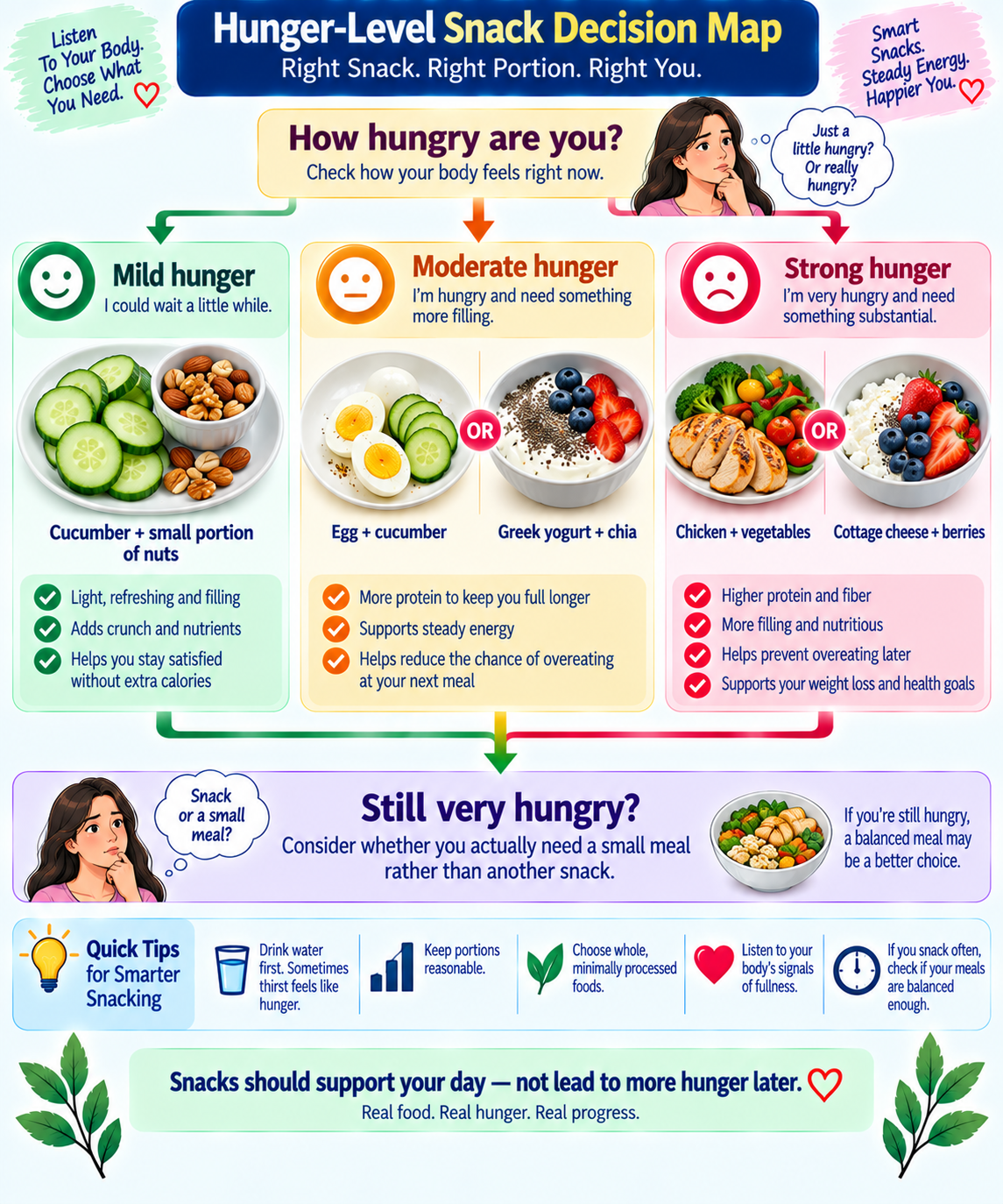
Not every hunger episode requires the same snack.
Ask yourself one question:
“How hungry am I right now?”
Mild Hunger
A small serving of cucumber, a few nuts, or a small portion of yogurt may be enough.
Moderate Hunger
Choose protein plus produce.
Examples include:
Egg + cucumber
Greek yogurt + chia
Chicken + lettuce
Strong Hunger
You may need something closer to a small meal.
Trying to survive on five almonds when you are genuinely hungry can backfire.
A more substantial protein-rich snack may prevent you from overeating later.
Do Low-Carb Snacks Actually Help With Weight Loss?
They can, but the answer is more nuanced than “yes.”
A low-carb snack may support weight management when it helps you:
- Manage hunger
- Avoid frequent highly processed snacks
- Control portions
- Increase protein or fiber intake
- Choose nutrient-dense foods
- Stay consistent with your overall eating pattern
But a low-carb snack can also make weight loss harder if it is extremely calorie-dense.
Consider nuts.
They are nutritious.
They are also easy to overeat.
The same applies to cheese, avocado, nut butter, and some low-carb packaged foods.
Therefore, carbohydrate content is only one part of the equation.
Harvard Health’s current guidance on lower-carbohydrate eating emphasizes nutritious food choices and a sustainable dietary pattern rather than simply removing carbohydrates.
Low Carb Does Not Mean Zero Carb
This is an important distinction.
Carbohydrates are one of the body’s main sources of energy.
Some carbohydrate-containing foods also provide fiber, vitamins, minerals, and other useful nutrients.
For example, berries contain carbohydrates but also provide fiber and micronutrients.
A diet that is lower in carbohydrates can still include carefully selected fruits and vegetables.
A review of the scientific literature also found that there is no single universally accepted definition of “low carbohydrate,” with clinical studies using different carbohydrate thresholds. (PubMed).
So don’t turn “low carb” into “no vegetables” or “no fruit.”
That is unnecessary for many people.
The Best Low-Carb Snack Formula for Fullness
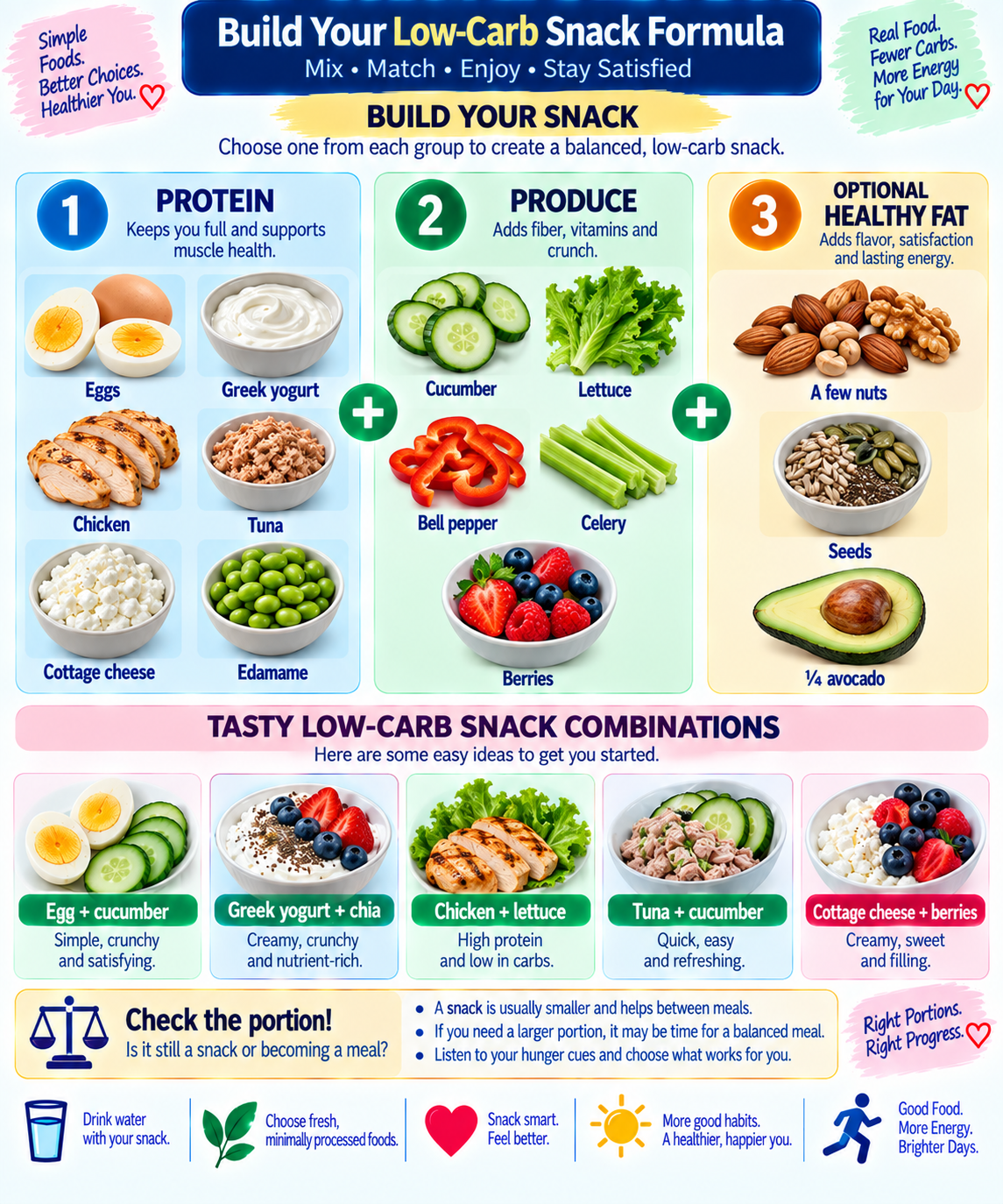
If you want a simple method rather than memorizing ten foods, use this formula:
Step 1: Choose a Protein
Examples:
- Egg
- Greek yogurt
- Cottage cheese
- Chicken
- Tuna
- Edamame
Step 2: Add a High-Volume Food
Examples:
- Cucumber
- Lettuce
- Celery
- Bell pepper
Step 3: Add Healthy Fat When Appropriate
Examples:
- A few nuts
- Small amount of avocado
- Seeds
Step 4: Check the Portion
Ask whether the snack is actually a snack or quietly becoming a meal.
This approach aligns with Cleveland Clinic’s current advice to combine protein, fiber, and healthy fats when building satisfying snacks.
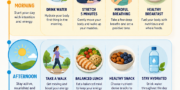
5 Low-Carb Snack Combinations You Can Prepare in Minutes
Morning
Plain Greek yogurt + chia seeds
Mid-Morning
Boiled egg + cucumber
Afternoon
Grilled chicken + lettuce
Evening
Cheese + bell pepper
After Exercise
Greek yogurt or cottage cheese + a small serving of fruit
The best option depends on when you eat, how hungry you are, and what your overall diet looks like.
Low-Carb Snacks for Evening Hunger
Evening hunger is common.
But eating at night does not automatically cause weight gain.
The bigger issue is often what you eat and how much you eat.
If you are genuinely hungry, choose something structured.
Good options include:
- Boiled egg + cucumber
- Plain Greek yogurt
- Cottage cheese
- A measured portion of nuts
- Chicken lettuce roll-up
- Edamame
Avoid eating directly from a large packet while watching television.
That makes it difficult to notice how much you have eaten.
My Practical Strategy
When I wanted something at night, I found it easier to decide on the portion first and then leave the kitchen.
That small boundary made mindless snacking less likely.
Low-Carb Snacks Before or After Exercise
Your snack should depend on the type and duration of your activity.
For a short, easy workout, you may not need a snack at all.
For longer or more demanding exercise, your body may benefit from carbohydrates as well as protein.
After exercise, a protein-containing snack can be useful for recovery, particularly when your next full meal is several hours away.
Harvard Health’s guidance on high-protein snacks notes that a low-calorie, high-protein snack can support fullness when trying to lose or maintain weight.
Do not assume that a strict low-carb approach is automatically better for exercise performance.
Your activity level and overall nutrition needs matter.
What About Low-Carb Packaged Snacks?
The words “keto,” “low carb,” and “sugar-free” can make a package appear healthier than it really is.
Read the nutrition label.
Check:
- Calories
- Protein
- Fiber
- Added sugar
- Sodium
- Saturated fat
- Serving size
A packaged snack with 2 grams of carbohydrate can still be calorie-dense and easy to overeat.
That does not mean packaged foods are forbidden.
They can be useful when traveling or working.
The important point is to evaluate the whole nutrition label, not just carbohydrate grams.
Common Mistakes With Low-Carb Snacks
Mistake 1: Thinking Low Carb Means Unlimited
Nuts, cheese, avocado, and nut butter can all fit into a healthy diet.
They still contain calories.
Mistake 2: Choosing “Keto” Products Automatically
A product marketed as keto is not necessarily nutrient-dense.
Look beyond the front of the package.
Mistake 3: Forgetting Protein
A snack consisting mainly of a low-calorie vegetable may not satisfy strong hunger.
Pairing it with protein can make it more substantial.
Mistake 4: Eating Nuts Straight From the Bag
This is one of the easiest ways for a small snack to become a large one.
Measure the portion.
Mistake 5: Eliminating Fruit Completely
Many fruits contain carbohydrates but can also provide fiber and micronutrients.
There is no universal requirement to eliminate fruit simply because you are reducing carbohydrates.
Mistake 6: Using Snacks as a Substitute for Every Meal
A snack should not automatically replace balanced meals throughout the day.
Mistake 7: Ignoring Overall Calories
Weight loss depends on the overall energy balance created by diet, activity, and other factors.
A low-carb snack can still contribute enough calories to make weight loss difficult if portions are consistently large.
Harvard Health’s discussion of low-calorie snacking specifically emphasizes sensible portions and avoiding excessive snacking when weight management is the goal.
When a Low-Carb Snack May Not Be the Best Choice
A lower-carb snack is not automatically the healthiest choice for every person.
You may benefit from a different approach if your activity requires more carbohydrate, if you struggle to meet your nutritional needs, or if a healthcare professional has recommended a specific dietary pattern.
People with diabetes, kidney disease, pregnancy-related nutritional needs, or a history of disordered eating should discuss major dietary changes with an appropriate healthcare professional.
The goal should be a sustainable eating pattern rather than the lowest possible carbohydrate intake.
What Does Current Research Say About Low-Carb Diets and Weight Loss?
Research supports the possibility that lower-carbohydrate diets can help with weight loss in some populations, but this does not mean that every low-carb food or snack causes weight loss.
A large systematic review and dose-response meta-analysis included 110 randomized controlled trials in adults with higher weight or obesity and found that greater carbohydrate restriction was associated with greater weight reduction at six and twelve months. However, the results concern dietary carbohydrate restriction as a broader dietary intervention, not individual snacks. (PubMed).
A separate umbrella review of systematic reviews and meta-analyses concluded that low-carbohydrate diets may promote weight reduction in adults with higher weight or obesity, while noting that much of the evidence was low- to moderate-strength. (PubMed).
Research does not support the idea that everyone needs to follow a very low-carbohydrate diet.
Instead, the practical question is whether a lower-carbohydrate eating pattern is nutritionally adequate, sustainable, and appropriate for the individual.
A 2024 network meta-analysis comparing Mediterranean, low-carbohydrate, and low-fat diets also found weight loss across the dietary approaches studied, while emphasizing that effects can vary between people and lifestyles. (PubMed).
What This Means for Snacks
The research does not tell you that:
“Eat a low-carb snack and lose weight.”
Instead, it supports a more realistic interpretation:
A lower-carbohydrate eating pattern can be one dietary approach for weight management, and well-chosen snacks can help some people manage hunger within that pattern.
That is a much safer and more evidence-based message.
A One-Day Example of Low-Carb Snacking
Here is an example of how snacks could fit around normal meals.
| Time | Example |
|---|---|
| Breakfast | Protein-rich breakfast with vegetables |
| Mid-morning | Boiled egg + cucumber |
| Lunch | Balanced meal with protein and vegetables |
| Afternoon | Plain Greek yogurt + chia |
| Dinner | Protein + vegetables + appropriate carbohydrate portion |
| Evening, if genuinely hungry | Small portion of cottage cheese or nuts |
This is not a prescription.
Your calorie and nutrient requirements depend on factors such as age, body size, activity, health status, and goals.
The key idea is to use snacks strategically rather than automatically.
How to Stop Snacking When You Are Not Actually Hungry
Sometimes the problem is not hunger.
It may be:
Try a short pause.
Ask:
“Would I eat a boiled egg or plain yogurt right now?”
If the answer is no and you only want a specific sweet or salty food, you may be responding to a craving rather than physical hunger.
You do not need to fight every craving.
Instead, notice the difference.
That awareness can make portion control easier.
A Practical Low-Carb Snack Preparation System
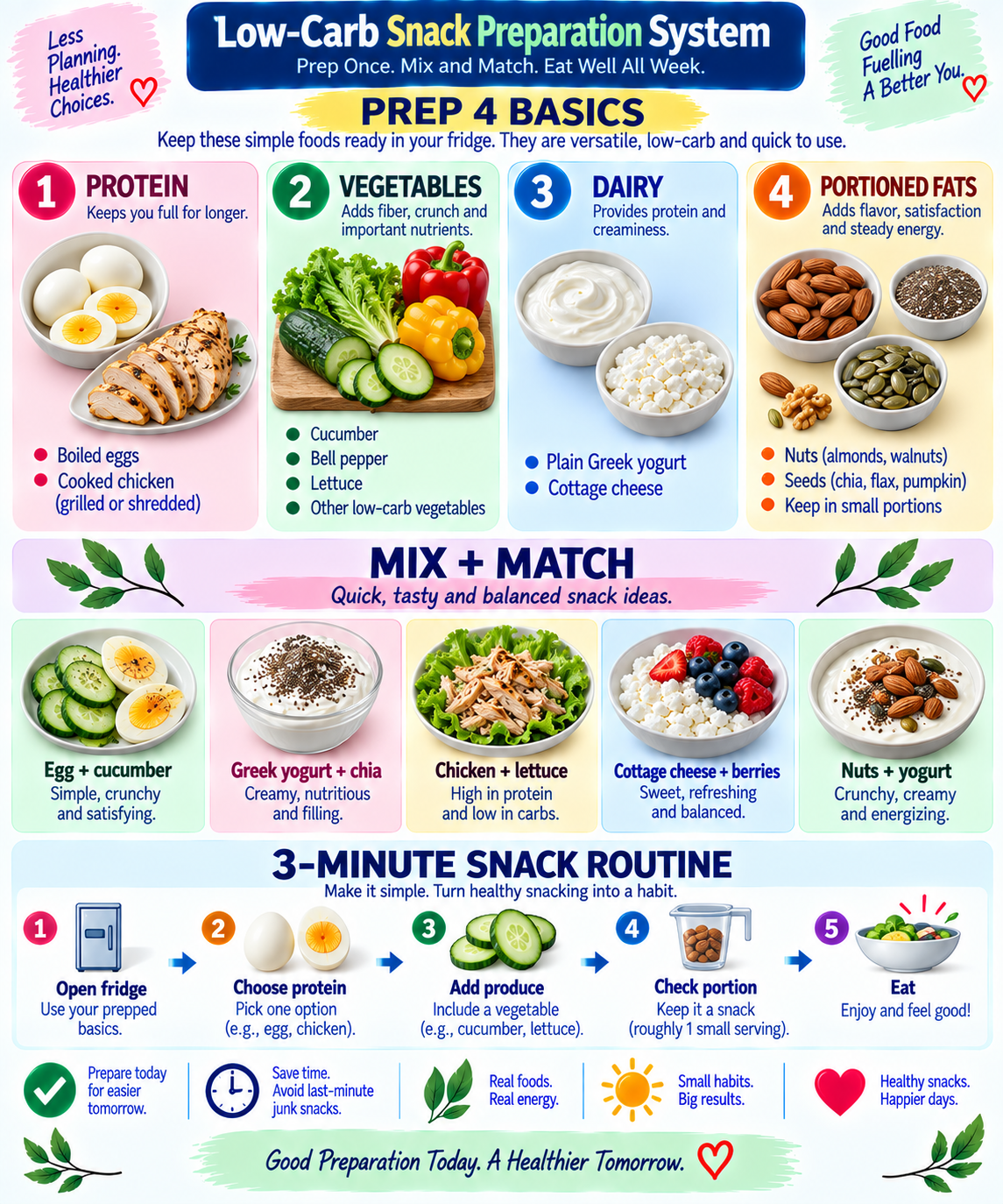
You do not need to spend your entire Sunday meal-prepping.
Try preparing four basics:
Protein: boiled eggs or cooked chicken
Vegetables: washed cucumber and bell peppers
Dairy: plain Greek yogurt or cottage cheese
Portioned fats: small containers of nuts or seeds
Now you can build several snacks without cooking from scratch.
This is one of the most realistic strategies because convenience strongly influences food choices.
If the healthier option is ready first, you are more likely to choose it.
Frequently Asked Questions
What are the best low-carb snacks for weight loss?
Practical options include eggs, plain Greek yogurt, cottage cheese, chicken, tuna, edamame, vegetables with protein, nuts in controlled portions, and small servings of avocado.
The best choice depends on your nutritional needs and overall diet.
What low-carb snack keeps you full the longest?
Protein-rich snacks are often more satisfying than snacks based mainly on refined carbohydrates. Combining protein with fiber or high-volume vegetables can make a snack more substantial. Cleveland Clinic’s current snack guidance emphasizes protein, fiber, and healthy fats for satisfaction.
Are eggs good low-carb snacks?
Yes. Eggs are naturally very low in carbohydrates and provide protein. Harvard Health includes hard-boiled eggs among practical low-carb snack choices.
Are nuts good for weight loss?
Nuts can fit into a weight-management diet because they provide protein, fiber, and unsaturated fats. However, they are calorie-dense, so portion control matters.
Is Greek yogurt a low-carb snack?
Plain Greek yogurt can be a relatively low-carbohydrate, high-protein snack. Check the nutrition label because flavored varieties can contain added sugar. Harvard Health lists plain Greek yogurt among high-protein low-carb snack choices.
Can I eat fruit on a low-carb diet?
Many lower-carbohydrate eating patterns can include carefully portioned fruit. Berries can be a practical choice when you want fruit with relatively modest carbohydrate content.
Are low-carb snacks necessary for weight loss?
No.
You do not need to snack to lose weight. If you are not hungry between meals, skipping a snack may be perfectly reasonable.
Are keto snacks the same as healthy low-carb snacks?
No.
A product can be low in carbohydrates while still being high in calories, saturated fat, sodium, or highly processed ingredients.
What is the best low-carb evening snack?
If you are genuinely hungry, try a protein-containing option such as plain Greek yogurt, an egg with cucumber, cottage cheese, or a measured portion of nuts.
Can low-carb snacks help control cravings?
They may help when they provide enough protein, fiber, or volume to satisfy hunger. However, cravings can also be influenced by stress, sleep, habits, and food environment.
Author Note
I believe the most useful nutrition advice is advice that people can actually follow.
In my own experience, replacing random packaged snacks with simple foods made my eating routine easier to manage. The change was not about finding a magical low-carb food. It was about having predictable options available when hunger appeared.
That experience shaped the practical approach used in this article.
Individual results vary, and personal experience should not be treated as proof that a particular snack causes weight loss.
Medical Disclaimer
This article is intended for general educational purposes and does not provide individualized medical or nutritional advice.
Low-carbohydrate eating may not be appropriate for everyone. People with diabetes, kidney disease, pregnancy-related nutritional needs, eating disorders, or other medical conditions should discuss significant dietary changes with a qualified healthcare professional.
Do not use this article to replace advice from your doctor or registered dietitian. https://healthtipstoyou.com/4-best-exercises-for-health/
Fitness Disclaimer
The exercise-related suggestions in this article are general wellness information and are not a personalized training program.
Your nutrition requirements may change depending on exercise intensity, duration, recovery needs, and overall health.
If you have a medical condition or specific athletic goals, consider individualized guidance from a qualified healthcare professional or sports nutrition professional.
Research Methodology
This article was developed using current guidance from established medical and nutrition organizations together with recent peer-reviewed research.
The evidence review focused on:
- Low-carbohydrate dietary patterns
- Protein and satiety
- Fiber and fullness
- Healthy snack composition
- Weight-management nutrition
- Portion control
- Nutrient-dense food choices
Current guidance from Harvard Health Publishing and Cleveland Clinic was used to assess practical snack composition and nutrition principles. Recent PubMed-indexed systematic reviews were used to put the potential weight-loss effects of carbohydrate restriction into context.
The article intentionally avoids presenting low-carbohydrate eating as a universal solution for weight loss.
Conclusion
The best low-carb snacks for weight loss are not necessarily the foods with the fewest possible carbohydrates.
They are foods that help you manage hunger while fitting into your overall nutritional and calorie needs.
Eggs can provide protein.
Greek yogurt can give you a convenient protein-rich option.
Cucumber and other vegetables can add volume.
Nuts and avocado provide useful fats but need sensible portions.
Chicken, tuna, and edamame can make a snack more substantial when hunger is stronger.
The biggest lesson is to look beyond the words “low carb.”
Ask what else the food provides.
Does it contain protein?
Does it provide fiber?
Is the portion reasonable?
Is it minimally processed?
Will you actually enjoy eating it?
Most importantly, does it fit your overall eating pattern?
A sustainable weight-management plan does not require you to eliminate every carbohydrate. It requires choices you can maintain over time.
If a lower-carb snack helps you manage hunger and avoid mindless eating, it can be a useful tool. If you are not hungry, you do not need a snack simply because the clock says it is time.
That flexible approach is more realistic than chasing the “perfect” diet food.
Strong EEAT Sources Used in This Article
- Harvard Health Publishing — Low-Carb Snacks: Easy and Healthy Options for Any Time of Day
- Harvard Health Publishing — Low-Carb Foods: Nutritious Choices for a Sustainable Diet
- Harvard Health Publishing — Low-Calorie Snacks
- Harvard Health Publishing — High-Protein Snacks
- Cleveland Clinic — Healthy Snacks for Weight Loss
- Cleveland Clinic — Protein and Weight Loss
- Cleveland Clinic — High-Protein Snacks
- PubMed — Effect of Carbohydrate Restriction on Body Weight: 110 Randomized Controlled Trials
- PubMed — Defining “Low-Carb” in the Scientific Literature
- PubMed — Impact of Low-Carbohydrate Diet on Health Status: Umbrella Review
- PubMed—Low-Carbohydrate vs Low-Fat Diet in Adolescents
- PubMed—Mediterranean, Low-Carbohydrate, and Low-Fat Diets
You also read these articles.
- 4 Week Diet Plan for Weight Loss
- How to Lose Weight on Keto Diet
- 14 Ways to Increase Protein Intake Daily Tips
- Best Weight Loss Nutrition
- 15 High Protein Low Carb Foods
- Home
- Category Weight Loss






[…] 10 No Carb Diet Snacks for Weight Loss […]
[…] 10 No Carb Diet Snacks for Weight Loss […]
[…] 10 No Carb Diet Snacks for Weight Loss […]
[…] 10 No Carb Diet Snacks for Weight Loss […]
[…] 10 No Carb Diet Snacks for Weight Loss […]
[…] 10 No Carb Diet Snacks for Weight Loss […]
[…] 10 No Carb Diet Snacks for Weight Loss […]
[…] 10 No Carb Diet Snacks for Weight Loss […]