



















































































































































7 Ways To Keep Your Heart Healthy: Practical Habits That Last
Author: RVLNSV PRASAD
Updated On: September 2026
About Us
Author Bio
Editorial Policy
Contact Us
Introduction
If you are looking for 7 ways to keep your heart healthy, the most useful approach is not to search for one miracle food, exercise, or supplement. Instead, focus on several everyday behaviors that work together to support cardiovascular health.
Cardiovascular health is influenced by several connected factors. The American Heart Association’s Life’s Essential 8 framework includes eating better, being more active, avoiding tobacco, getting healthy sleep, managing weight, controlling cholesterol, managing blood sugar, and managing blood pressure. American Heart Association: Life’s Essential 8
The World Health Organization also identifies unhealthy diet, physical inactivity, tobacco use, and harmful alcohol use as important behavioral risk factors for cardiovascular disease. These behaviors can contribute to high blood pressure, high blood glucose, abnormal blood lipids, and higher weight or obesity. World Health Organization: Cardiovascular Diseases
7 Ways To Keep Your Heart Healthy: Practical Habits That Last
Your heart does not need a perfect lifestyle.
It needs habits that you can actually maintain.
That distinction is important because heart-health advice often sounds easier on paper than it feels in everyday life. “Eat healthy.” “Exercise regularly.” “Reduce stress.” “Maintain a healthy weight.”
All of those recommendations can be useful, but they leave an important question unanswered:
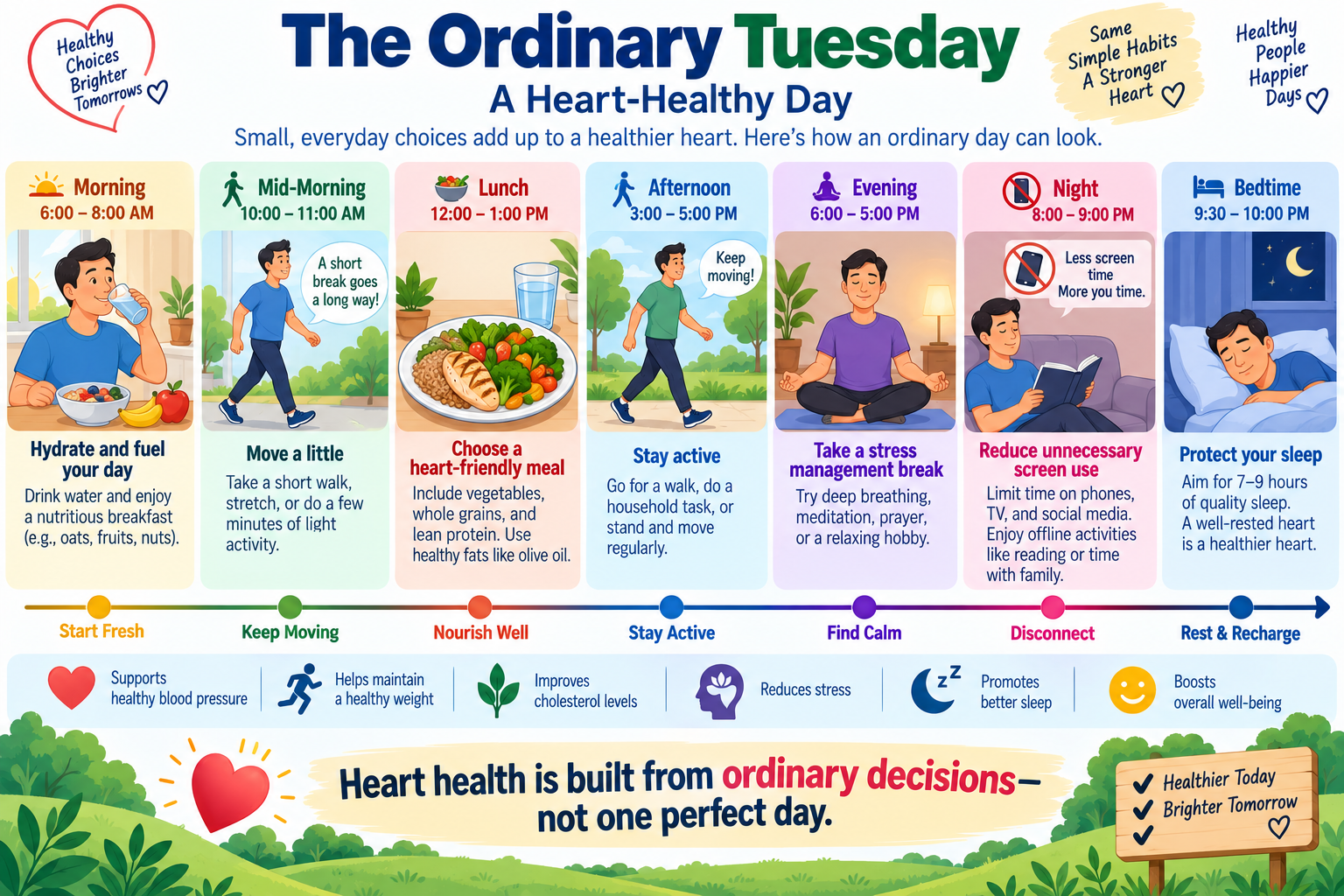
What does a heart-healthy lifestyle actually look like on an ordinary Tuesday?
Key Takeaways
- Build your eating pattern around nutritious foods rather than searching for one “superfood.” WHO recommends dietary patterns based on adequacy, balance, moderation, and diversity. WHO: Healthy Diet
- Aim for regular physical activity. The American Heart Association recommends at least 150 minutes of moderate-intensity aerobic activity or 75 minutes of vigorous activity per week for most adults. American Heart Association: Life’s Essential 8
- Know important cardiovascular health factors such as blood pressure, cholesterol, and blood sugar. CDC: Preventing Heart Disease
- Avoid tobacco and nicotine exposure. WHO states that tobacco use is a major cardiovascular risk factor and that all forms of tobacco use are harmful. WHO: Tobacco and Nicotine
- Protect your sleep. The American Heart Association generally recommends 7–9 hours of sleep for adults. American Heart Association: Life’s Essential 8
- Weight matters, but it is only one component of heart health. American Heart Association: Life’s Essential 8
- Stress management should support—not replace—appropriate medical care.
- Sustainable heart-healthy habits are more realistic than extreme routines that last only a few days.
What Does It Really Mean To Keep Your Heart Healthy?
Keeping your heart healthy does not mean guaranteeing that you will never develop heart disease.
Cardiovascular disease has multiple causes and risk factors. WHO identifies behavioral factors such as unhealthy diet, physical inactivity, tobacco use, and harmful alcohol use, as well as physiological factors including high blood pressure, high blood glucose, high cholesterol, and higher weight or obesity. WHO: Cardiovascular Diseases
Genetics, age, family history, environmental conditions, and other circumstances can also influence heart disease risk.
That is why heart health is better understood as risk reduction, not perfection.
The CDC explains that healthy lifestyle choices can help keep blood pressure, cholesterol, and blood sugar levels healthier and lower the risk of heart disease and heart attack. CDC: Preventing Heart Disease
So instead of asking:
“Am I doing everything perfectly?”
Try asking:
“What is one part of my routine I can improve and maintain?”
That question is much easier to act on.
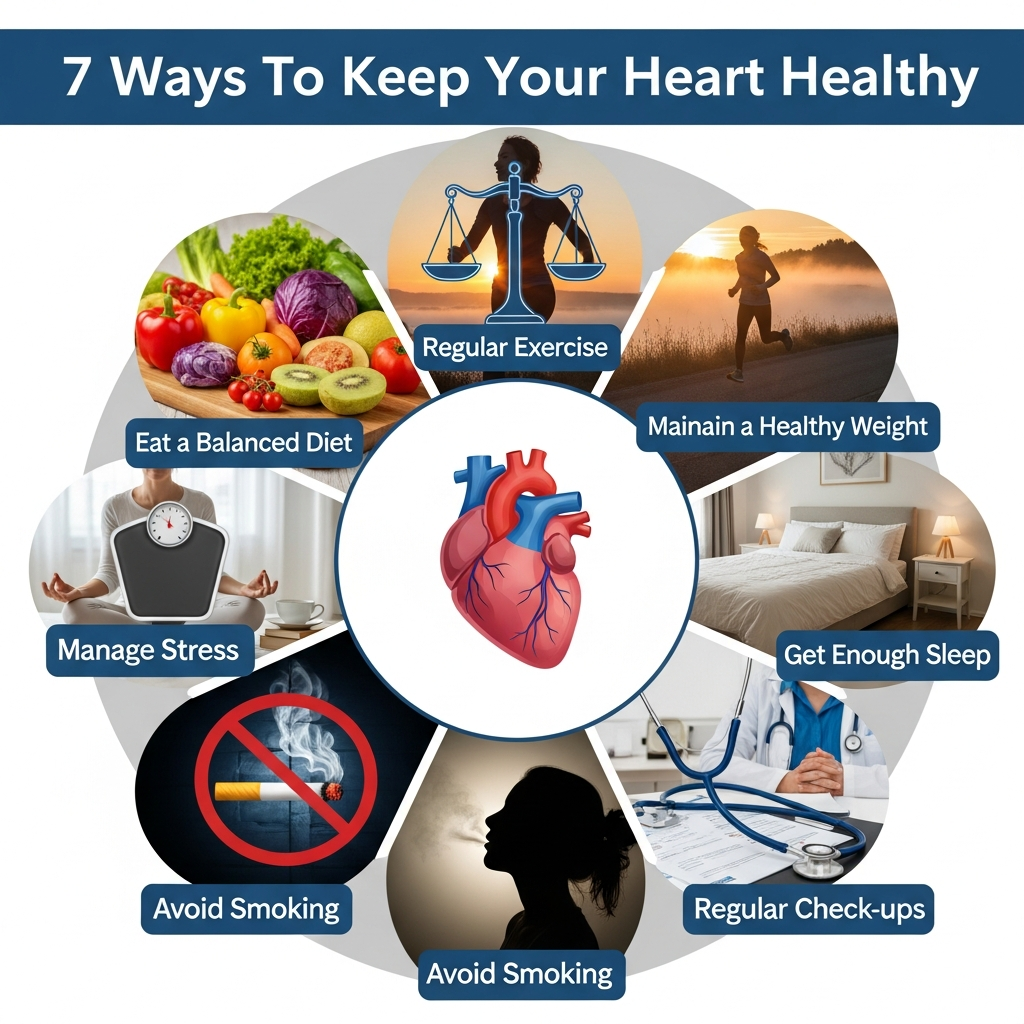
7 Ways To Keep Your Heart Healthy
1. Build a Heart-Healthy Eating Pattern Instead of Chasing Individual Foods
A heart-healthy diet is not about finding one food that magically protects your heart.
It is about the pattern of foods you eat repeatedly.
WHO’s current healthy-diet guidance describes a healthy diet through four principles: adequacy, balance, moderation, and diversity. It recommends a variety of minimally processed and unprocessed foods while limiting excessive sodium, free sugars, and unhealthy fats. WHO: Healthy Diet
The American Heart Association similarly recommends an overall healthy eating pattern that includes vegetables, fruits, whole grains, beans, legumes, nuts, seeds, plant-based proteins, and lean protein sources. American Heart Association: How to Eat Better
The CDC also recommends eating plenty of fruits and vegetables, choosing foods lower in saturated and trans fats, eating foods rich in fiber, and limiting sodium. CDC: Preventing Heart Disease
What does this mean in everyday life?
You do not need to throw away everything in your kitchen.
Instead, improve the meals you already eat.
| Instead of doing this frequently | Try this more often. |
|---|---|
| Sugary soft drinks | Water or unsweetened drinks |
| Highly processed snacks | Fruit, nuts, or minimally processed foods |
| Refined-grain-heavy meals | Add vegetables, pulses, or whole grains. |
| Frequent processed meats | Beans, lentils, fish, or other lean proteins |
| Very salty meals | Use herbs, spices, garlic, or other flavorings. |
| Frequent deep-fried foods | Baked, steamed, grilled, or lightly cooked options |
The American Heart Association specifically emphasizes an overall healthy eating pattern rather than relying on one “special” food. American Heart Association: How to Eat Better
A useful question before eating
Instead of asking:
“Is this food healthy or unhealthy?”
Ask:
“How can I make this meal a little better?”
- Maybe that means adding vegetables.
- Maybe it means choosing water instead of a sugary drink.
- Maybe it means reducing the amount of a highly processed food.
Small improvements are easier to repeat than extreme restrictions.
2. Make Movement Part of Your Day, Not Just a Workout
Physical activity is one of the most established foundations of cardiovascular health.
The American Heart Association recommends that adults get at least 150 minutes of moderate-intensity aerobic activity per week or 75 minutes of vigorous activity, or an equivalent combination. It also recommends muscle-strengthening activity. American Heart Association: Life’s Essential 8
The CDC notes that regular physical activity can help maintain a healthy weight and lower blood pressure, blood cholesterol, and blood sugar levels. CDC: Preventing Heart Disease
But “exercise regularly” does not have to mean joining a gym.
Walking, cycling, dancing, gardening, and other forms of movement can contribute to physical activity. American Heart Association: Life’s Essential 8
If you sit for long periods
Try building movement into the structure of your day.
For example:
- Walk for 10–15 minutes.
- Take the stairs when practical.
- Walk while making a phone call.
- Do active household tasks.
- Garden.
- Cycle.
- Take a walk with a family member.
- Add simple strength exercises to your week.
The mindset that makes exercise easier
Instead of asking:
“When can I find one uninterrupted hour to exercise?”
Ask:
“Where can I add more movement today?”
That change makes physical activity feel less like a separate task and more like part of daily life.
If you have a medical condition or are uncertain about starting vigorous exercise, discuss an appropriate activity level with a healthcare professional.
3. Know Your Heart Numbers: Blood Pressure, Cholesterol, and Blood Sugar
This is one of the most important—and often overlooked—ways to protect heart health.
You can feel perfectly normal while having an elevated cardiovascular risk factor.
Blood pressure is a good example.
WHO identifies high blood pressure as an important physiological risk factor for cardiovascular disease. WHO: Cardiovascular Diseases
The CDC also recommends taking charge of medical conditions and keeping important measures such as blood pressure, cholesterol, and blood sugar under appropriate control to reduce heart disease risk. CDC: Preventing Heart Disease
The American Heart Association includes blood pressure, cholesterol, and blood glucose among its Life’s Essential 8 health factors. American Heart Association: Life’s Essential 8
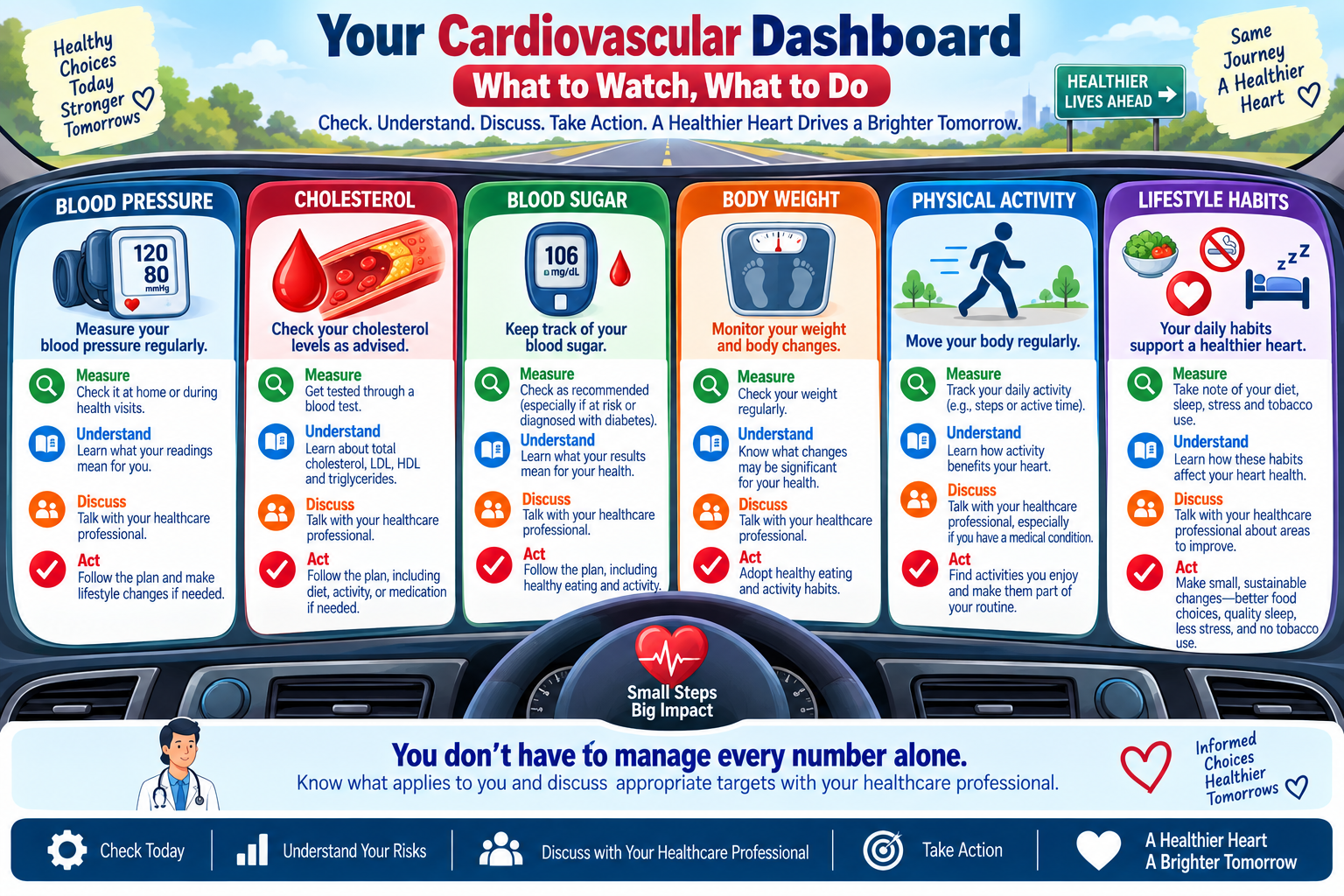
Think of these as your cardiovascular dashboard.
| Health factor | Why it matters | Practical step |
|---|---|---|
| Blood pressure | High blood pressure increases cardiovascular risk. | Have it measured appropriately. |
| Cholesterol | Abnormal blood lipids can contribute to cardiovascular risk. | Discuss appropriate testing. |
| Blood sugar | Persistently elevated glucose can indicate metabolic problems. | Follow appropriate screening. |
| Body weight | Excess weight can contribute to cardiovascular risk. | Focus on sustainable habits. |
| Physical activity | Supports several cardiovascular health factors | Move regularly. |
There is no single set of targets that applies identically to every person.
Your age, health history, medications, existing conditions, and overall cardiovascular risk can influence what your healthcare professional recommends.
Don’t wait for symptoms to tell you everything.
One important reason preventive health checks matter is that cardiovascular risk factors can exist without obvious symptoms.
WHO notes that there are often no symptoms of underlying blood-vessel disease and that a heart attack or stroke can sometimes be the first sign of underlying disease. WHO: Cardiovascular Diseases
That makes appropriate screening and medical follow-up important.
4. Protect Your Heart From Tobacco and Nicotine
If you smoke, quitting is one of the strongest lifestyle changes you can make for heart disease prevention.
WHO identifies tobacco use as a major cardiovascular risk factor and states that tobacco damages nearly every organ in the body. It also states that all forms of tobacco use are harmful. WHO: Tobacco and Nicotine
The CDC similarly identifies smoking as a major risk factor for heart disease and notes that quitting lowers cardiovascular risk. CDC: Preventing Heart Disease
The American Heart Association includes quitting tobacco among the major behaviors in its Life’s Essential 8 framework. American Heart Association: Life’s Essential 8
If you currently smoke
Do not assume that quitting is pointless because you have smoked for years.
The CDC states that quitting smoking lowers the risk of serious health problems, including heart disease. CDC: Preventing Heart Disease
If you have tried to quit before and returned to smoking, that does not mean the effort was useless.
You may need additional support, a different cessation strategy, or professional guidance.
What about secondhand smoke?
WHO states that tobacco smoke exposure is harmful and that there is no safe level of exposure to tobacco smoke. WHO: Tobacco and Nicotine
So protecting your heart can also mean reducing exposure to smoke in your environment.
5. Treat Sleep as Part of Heart Health
Sleep is often the first thing people sacrifice when life becomes busy.
But sleep belongs in the heart health conversation.
The American Heart Association includes healthy sleep among the eight measures used in its cardiovascular-health framework and states that most adults need 7–9 hours of sleep each night. American Heart Association: Life’s Essential 8
Sleep should therefore not be treated simply as “free time left over after everything else.”
Practical ways to protect sleep
Try to:
- Keep a reasonably consistent sleep and wake schedule.
- Allow enough time for sleep.
- Keep your bedroom comfortable.
- Reduce unnecessary late-night screen use.
- Avoid making late-night work a regular habit.
- Discuss persistent sleep problems with a healthcare professional.
A single poor night’s sleep does not mean you have damaged your heart.
The goal is to develop a healthy pattern over time.
6. Manage Stress Without Pretending Stress Alone Causes Heart Disease
Stress deserves a careful explanation.
It would be misleading to tell readers that every stressful day directly damages their heart.
At the same time, stress can interact with behaviors and circumstances that influence health.
WHO identifies stress and psychosocial factors among broader determinants associated with cardiovascular disease, while cardiovascular risk is also influenced by established behavioral and physiological factors. WHO: Cardiovascular Diseases
For some people, prolonged stress can make it harder to sleep, stay active or maintain a balanced eating pattern.
Practical stress-management ideas
You could:
- Take a short walk.
- Practice slow breathing.
- Talk with someone you trust.
- Take short breaks during long work periods.
- Spend time on a hobby.
- Protect your sleep schedule.
- Reduce unnecessary digital distractions.
- Seek professional support when stress becomes difficult to manage.
The purpose is not to eliminate every stressful event.
It is to develop healthier ways of responding to pressure.
And stress management should never replace appropriate treatment for high blood pressure, diabetes, high cholesterol, or cardiovascular disease.
7. Build a Personal Prevention Plan Instead of Chasing Perfection
This final step connects the other six.
Health advice becomes much more useful when it becomes a plan.
You do not need 20 goals.
Start with three.
Example
Food goal:
Add vegetables or fruit to more meals.
Movement goal:
Walk regularly and gradually work toward recommended activity levels.
Health-check goal:
Know when your blood pressure, cholesterol, or blood sugar should be assessed based on your individual risk.
Then add another goal when the first ones become routine.
The American Heart Association’s Life’s Essential 8 framework brings together health behaviors and health factors rather than treating each one as an isolated issue. American Heart Association: Life’s Essential 8
The CDC similarly emphasizes both healthy lifestyle choices and taking charge of medical conditions to lower heart disease risk. CDC: Preventing Heart Disease
That does not mean every person will see the same changes in the same timeframe.
It means that improving cardiovascular health can involve several manageable areas rather than waiting for one dramatic lifestyle transformation.
What Heart-Healthy Living Looks Like in Real Life
Health advice often sounds easiest when everything goes according to plan.
Real life rarely works that way.
- You may eat at a restaurant.
- You may miss your walk.
- You may have a stressful week.
- You may sleep badly.
- You may attend a family celebration.
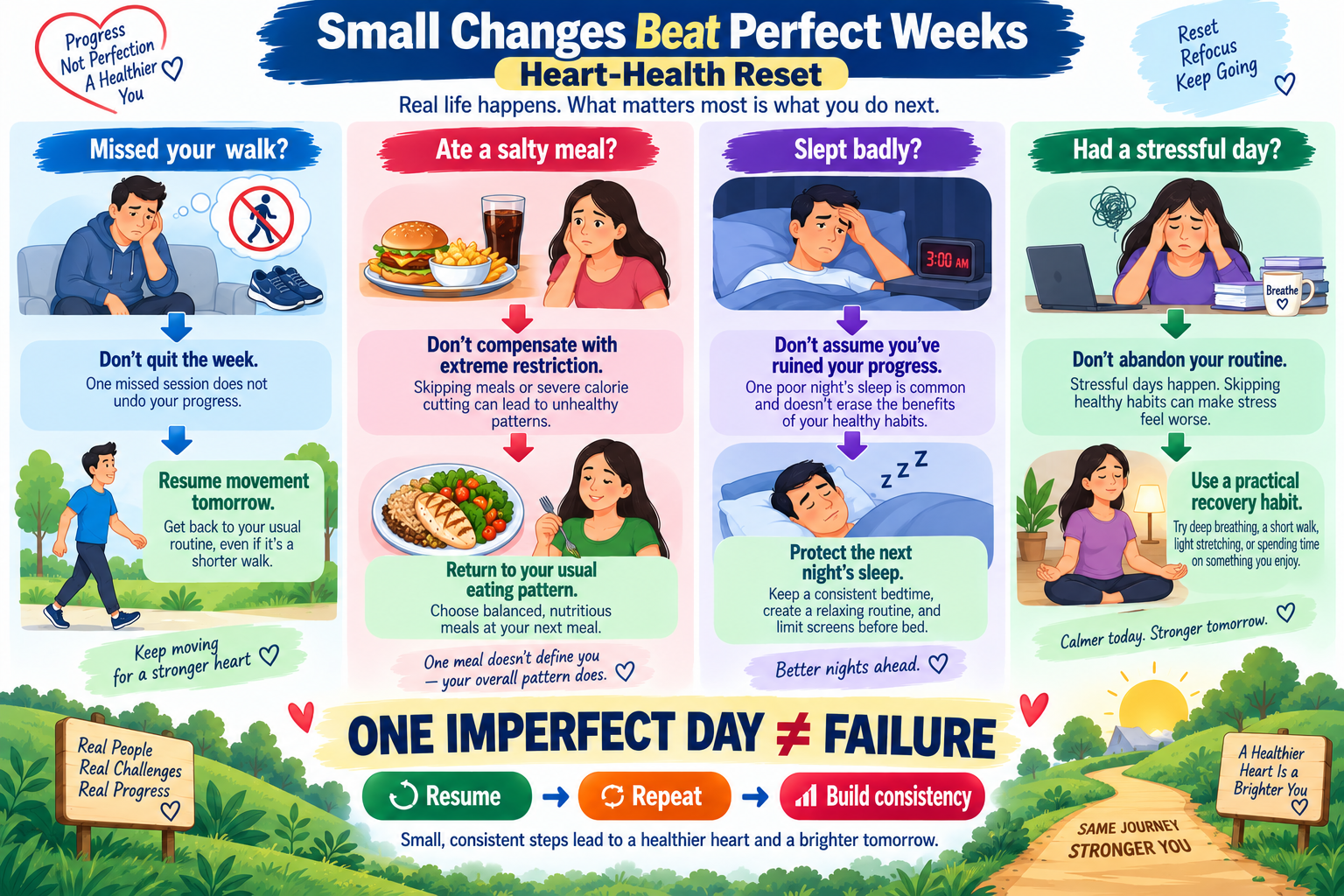
One imperfect day does not erase everything you have done before it.
The CDC’s prevention guidance emphasizes healthy behaviors and management of medical conditions as part of reducing cardiovascular risk. CDC: Preventing Heart Disease
| Real-life situation | A practical response |
|---|---|
| You ate a salty meal. | Return to your usual balanced pattern. |
| You missed exercise. | Resume activity when possible. |
| You slept badly. | Protect the following night’s sleep. |
| You ate dessert. | Return to your usual eating pattern. |
| You missed several workouts. | Restart with manageable activity. |
| Your weight changed. | Look at the longer-term trend. |
| Your blood pressure is elevated. | Discuss it with a healthcare professional. |
The goal is not perfection.
The goal is consistency over time.
A Simple 7-Day Heart-Healthy Routine
This is an example for general education, not an individualized medical prescription.
| Day | Food focus | Movement focus | Recovery focus |
|---|---|---|---|
| Monday | Add vegetables to two meals. | Brisk walking | Consistent bedtime |
| Tuesday | Choose fruit instead of a processed snack. | Walking + strength activity | Reduce late-night screen use. |
| Wednesday | Include beans or lentils. | 20–30 minute walk | Short relaxation break |
| Thursday | Reduce highly processed foods. | Brisk walking | Protect sleep time. |
| Friday | Choose a lower-sodium option. | Walking or cycling | Social connection |
| Saturday | Prepare a nutritious home meal. | Longer enjoyable activity | Relaxed evening |
| Sunday | Plan meals for the week. | Gentle walking | Prepare for consistent sleep. |
The physical-activity component of this routine can be adjusted toward the AHA’s recommended weekly activity levels. American Heart Association: Life’s Essential 8
The food component reflects the broader principles of dietary diversity, moderation, and minimally processed foods emphasized by WHO and the AHA. WHO: Healthy Diet American Heart Association: How to Eat Better
The important question at the end of the week is not
“Did I do everything perfectly?”
Ask:
“Which habits can I continue next week?”
Heart Health: Common Advice vs. What It Really Means
| Common advice | What it really means |
|---|---|
| “Eat healthy.” | Build a varied eating pattern around nutritious foods and limit excess sodium, sugars, and unhealthy fats. |
| “Exercise more.” | Accumulate regular physical activity throughout the week. |
| “Maintain a healthy weight.” | Focus on sustainable eating and movement rather than extreme diets. |
| “Reduce stress.” | Develop practical ways to cope and recover. |
| “Sleep well.” | Protect adequate sleep, with 7–9 hours generally recommended for adults. |
| “Know your numbers.” | Pay attention to blood pressure, cholesterol, and blood glucose when appropriate. |
| “Don’t smoke.” | Avoid tobacco and seek support if you want to quit. |
These recommendations correspond broadly with the AHA, CDC, and WHO approaches to cardiovascular prevention. American Heart Association: Life’s Essential 8 CDC: Preventing Heart Disease WHO: Cardiovascular Diseases
My Practical Perspective on Sustainable Heart Health
One lesson I have learned while writing about health is that advice becomes useful only when it survives ordinary life.
It is easy to decide that tomorrow will be completely different.
A new diet.
Daily workouts.
A perfect sleep schedule.
- No favorite foods.
- No missed days.
But the more useful question is
What can I still do three months from now?
That is why I view 7 ways to keep your heart healthy as a framework rather than seven rigid rules.
- One better meal matters.
- One walk matters.
Checking your blood pressure when appropriate matters.
Protecting your sleep matters.
Getting help to quit tobacco matters.
The objective is not to become perfect.
It is to make healthier decisions increasingly normal.
Author perspective: This section represents practical author perspective and is not a clinical study or substitute for professional medical advice.
When Heart Symptoms Need Urgent Medical Attention
A heart-health article should never encourage someone to manage potentially serious symptoms with lifestyle changes alone.
WHO notes that heart attacks can present with symptoms including chest discomfort, pain that may spread to the arm, shoulder, jaw, or back, shortness of breath, nausea, light-headedness, and cold sweating. WHO: Cardiovascular Diseases — Symptoms
Potential warning symptoms include:
- New or severe chest pressure, pain, or discomfort
- Pain or discomfort spreading to the arm, shoulder, jaw, or back
- Severe shortness of breath
- Fainting or severe light-headedness
- Sudden severe weakness
- Cold sweating with concerning symptoms
- Rapidly worsening symptoms
WHO advises people experiencing symptoms suggestive of a heart attack or stroke to seek medical care immediately. WHO: Cardiovascular Diseases
If you are experiencing potentially serious symptoms now, do not wait for a lifestyle change to help.
Seek emergency medical care.
Frequently Asked Questions
What are 7 ways to keep your heart healthy?
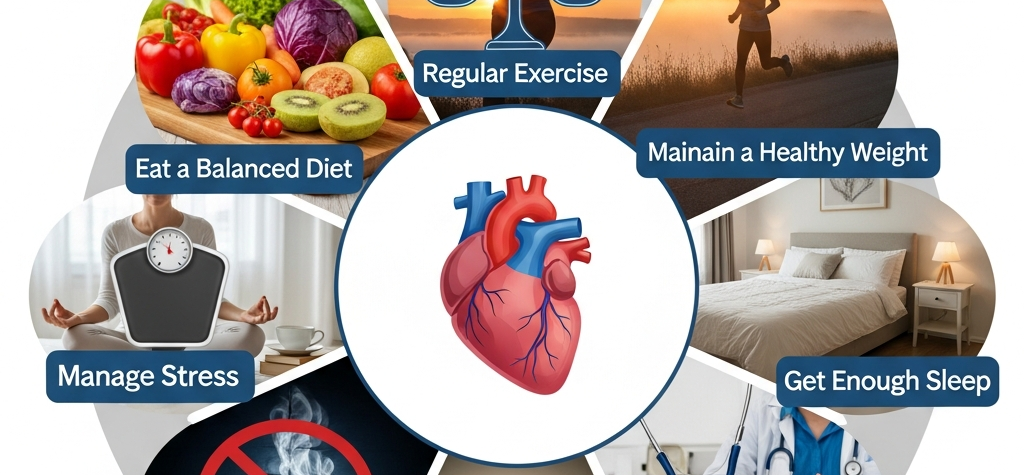
If you are asking 7 ways to keep your heart healthy, the practical answer is to build a nutritious eating pattern, stay physically active, know and manage important cardiovascular health factors, avoid tobacco and nicotine, get adequate sleep, develop practical ways to manage stress, and create a sustainable prevention plan.
These areas overlap with the American Heart Association’s broader Life’s Essential 8 framework. American Heart Association: Life’s Essential 8
What is the best food for heart health?
There is no single food that guarantees heart health.
WHO recommends a varied healthy diet based on adequacy, balance, moderation, and diversity, with minimally processed and unprocessed foods forming the foundation. WHO: Healthy Diet
The AHA similarly recommends vegetables, fruits, whole grains, beans, legumes, nuts, seeds, and appropriate protein sources as part of an overall healthy eating pattern. American Heart Association: How to Eat Better
How much exercise is good for your heart?
For most adults, the AHA recommends at least 150 minutes of moderate aerobic activity per week or 75 minutes of vigorous activity, with muscle-strengthening activity also recommended. American Heart Association: Life’s Essential 8
Your appropriate level may differ if you have a medical condition or physical limitation.
Is walking good for heart health?
Walking can be a practical form of aerobic activity. Brisk walking can contribute toward moderate-intensity physical activity and help you work toward weekly activity recommendations. American Heart Association: Life’s Essential 8
If you are currently inactive, beginning with manageable walking can be more realistic than immediately attempting a demanding exercise program.
How many hours should adults sleep?
The American Heart Association generally recommends 7–9 hours of sleep per night for adults as part of its cardiovascular-health framework. American Heart Association: Life’s Essential 8
Can losing weight improve heart health?
For people who have higher weight or obesity, achieving a healthier weight can improve some cardiovascular risk factors.
However, weight is only one component of cardiovascular health. The AHA includes weight alongside diet, activity, sleep, tobacco avoidance, cholesterol, blood glucose, and blood pressure. American Heart Association: Life’s Essential 8
Can someone have high blood pressure without symptoms?
Yes.
High blood pressure often has no symptoms. The CDC specifically notes that people with high blood pressure may not have symptoms and recommends appropriate monitoring. CDC: Preventing Heart Disease
WHO also notes that underlying cardiovascular disease can sometimes have no symptoms and that a heart attack or stroke may be the first sign of underlying disease. WHO: Cardiovascular Diseases
That is one reason appropriate preventive health checks matter.
Does quitting smoking help after years of smoking?
Yes.
The CDC states that quitting smoking lowers the risk of serious health problems, including heart disease. CDC: Preventing Heart Disease
WHO also identifies tobacco as a major cardiovascular risk factor. WHO: Tobacco and Nicotine
Can healthy habits completely prevent heart disease?
No.
Healthy behaviors can reduce risk, but they cannot eliminate every possible risk.
WHO identifies behavioral, physiological, environmental, and other factors that contribute to cardiovascular disease. WHO: Cardiovascular Diseases
That is why lifestyle habits and appropriate medical care should work together.
The Bottom Line
The best answer to “7 ways to keep your heart healthy” is not seven perfect rules.
It is a practical system.
Eat a varied, nutritious diet.
Move regularly.
Know important cardiovascular health measurements.
Avoid tobacco and nicotine.
Protect your sleep.
Develop realistic ways to manage stress.
Build a prevention plan that can survive ordinary life.
The AHA, WHO, and CDC all emphasize overlapping foundations of cardiovascular prevention, including healthy eating, physical activity, tobacco avoidance, and management of cardiovascular risk factors. American Heart Association: Life’s Essential 8. WHO: Cardiovascular Diseases CDC: Preventing Heart Disease
You do not have to change everything tomorrow.
Choose one realistic habit.
Repeat it.
Then build from there.
That is how heart-healthy habits become part of everyday life and how the 7 ways to keep your heart healthy can become practical rather than overwhelming.
Medical Disclaimer
This article is intended for general educational and informational purposes only. It is not a substitute for diagnosis, treatment, or individualized medical advice from a qualified healthcare professional.
Cardiovascular risk differs between individuals. Age, family history, genetics, medical conditions, medications, lifestyle, and environmental factors can influence risk. WHO recognizes several behavioral and physiological risk factors for cardiovascular disease. WHO: Cardiovascular Diseases
If you have high blood pressure, high cholesterol, diabetes, a diagnosed cardiovascular condition, significant risk factors, or concerns about your heart health, speak with an appropriate healthcare professional.
Do not start, stop, or change prescription medication based solely on information in this article.
If you develop potentially serious or rapidly worsening symptoms, seek urgent medical attention.
Author Note
R.V.L.N.S.V. Prasad is an independent writer and researcher focused on making health information easier for everyday readers to understand.
For this article, the emphasis was placed on translating established cardiovascular-health recommendations into practical decisions that readers can use in normal daily life.
The medical information was cross-checked against current guidance from the American Heart Association, the World Health Organization, and the Centers for Disease Control and Prevention.
Clickable Evidence-Based Sources
American Heart Association — Life’s Essential 8
The AHA’s cardiovascular-health framework covers eating better, physical activity, tobacco/nicotine, sleep, weight, cholesterol, blood glucose, and blood pressure.
Source: American Heart Association — Life’s Essential 8
American Heart Association — How to Eat Better
Guidance on healthy eating patterns, fruits, vegetables, whole grains, beans, legumes, nuts, protein sources, and limiting unhealthy foods.
Source: AHA — How to Eat Better
World Health Organization — Cardiovascular Diseases
Information on cardiovascular risk factors, prevention, and warning symptoms.
Source: WHO—Cardiovascular Diseases
World Health Organization — Healthy Diet
Current WHO guidance on healthy dietary patterns and the principles of adequacy, balance, moderation, and diversity.
Source: WHO—Healthy Diet
World Health Organization—Tobacco and Nicotine
Current information on tobacco-related cardiovascular risk and the harms associated with tobacco use and exposure.
Source: WHO—Tobacco and Nicotine
Centers for Disease Control and Prevention — Preventing Heart Disease
Current CDC guidance on diet, physical activity, smoking, blood pressure, cholesterol, and blood sugar.
Source: CDC—Preventing Heart Disease
Related Posts







[…] 7 Ways To Keep Your Heart Healthy […]
[…] 7 Ways To Keep Your Heart Healthy […]
[…] 7 Ways To Keep Your Heart Healthy […]
[…] 7 Ways To Keep Your Heart Healthy […]
[…] 7 Ways To Keep Your Heart Healthy […]
[…] 7 Ways To Keep Your Heart Healthy […]
[…] 7 Ways To Keep Your Heart Healthy […]
[…] 7 Ways To Keep Your Heart Healthy […]
[…] 7 Ways To Keep Your Heart Healthy […]
[…] 7 Ways To Keep Your Heart Healthy […]
[…] 7 Ways To Keep Your Heart Healthy […]
[…] 7 Ways To Keep Your Heart Healthy […]