













Introduction
Aging Effects on the Brain begin slowly.
They have not happened in one day.
They have grown over the years.
Many people fear aging.
They can fear memory loss.
They can fear confusion.
But aging is very natural.
The brain can change, just like the body.
This article is written for real people.
This is for parents.
This is for elders.
For anyone who wants to age with awareness.
I will explain everything in very simple English.
Very small sentences.
Here are very clear ideas.
I will also share real experiences.
I will also share honest opinions.
I will also share important facts people always miss.
What Does an Aging Brain Mean?
An aging brain means the brain can change over time.
This does not mean the brain can stop working.
This means it can work differently.
Some functions can slow down.
Some functions remain strong.
Wisdom can always increase.
Experience will become richer.
In my view, aging is not only decline.
This is also growth.
How Aging Affects the Nervous System
The nervous system can include the brain and nerves.
With age, signals travel more slowly.
Reaction time can increase.
The brain cells can shrink slightly.
Connections between cells reduce.
This can affect thinking and movement.
But the brain still can adapt.
This is called plasticity.
Even in old age, the brain can learn.
A Real Life Example
I remember my grandfather.
At 75, he forgot small things.
But he has remembered stories from 40 years ago.
He gave wise advice.
He stayed calm.
This can show something important.
Memory can change.
But wisdom can grow.
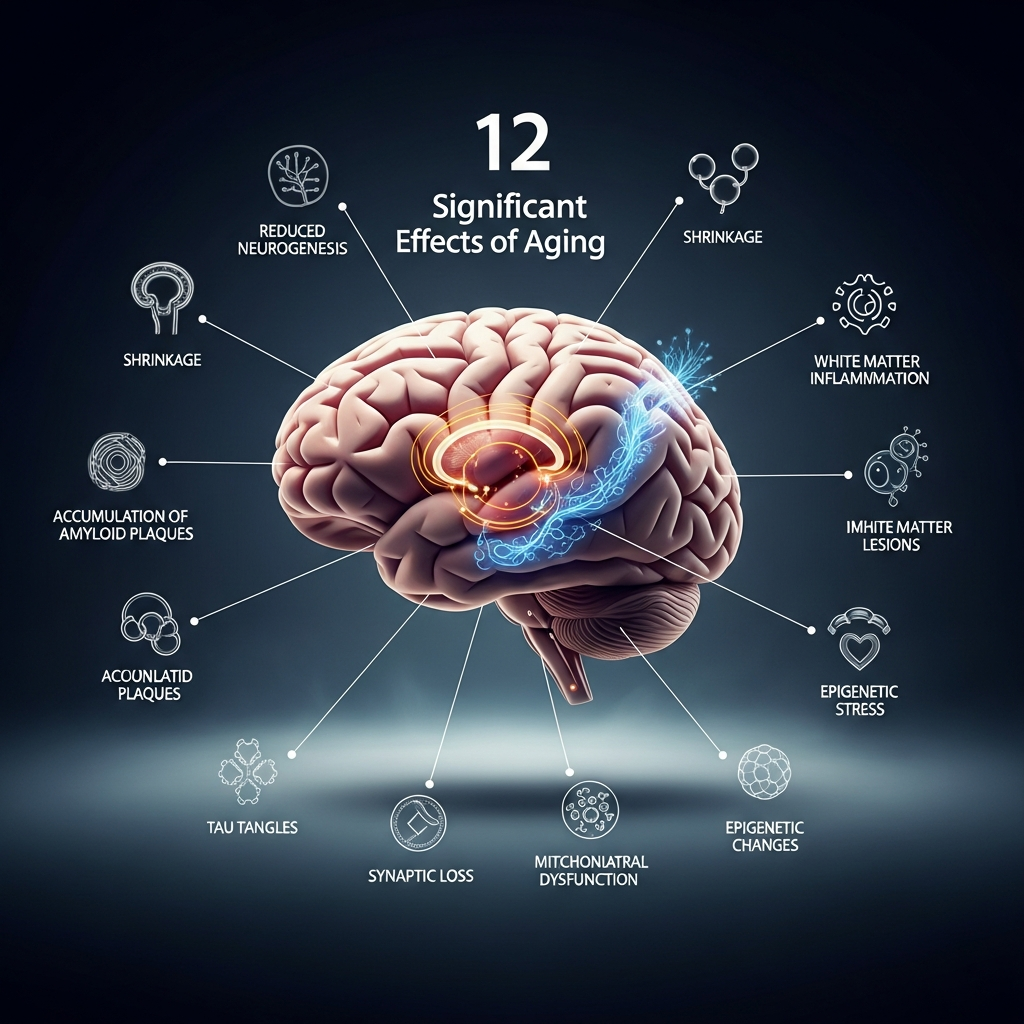
12 Significant Aging Effects on the Brain
Let us understand the Aging Effects on the Brain in a very simple way.
1. Slower Thinking Speed
Thinking can become slower with age.
This can take more time to process information.
This is normal.
This does not mean intelligence is lost.
2. Memory Changes
Short-term memory is affected more.
You may forget names.
You may forget where you kept things.
But long-term memory always can stay strong.
3. Reduced Attention
Focus becomes weaker.
Multitasking becomes harder.
This is a common Aging Effects on the Brain.
4. Emotional Changes
Older adults may become more sensitive.
They may also become calmer.
In my experience, emotional balance improves with age.
5. Sleep Pattern Changes
Sleep becomes lighter.
Waking up at night becomes common.
This can affect brain function.
6. Brain Shrinkage
The brain can slightly reduce in size.
This can affect some functions.
But this is a natural part of aging.
7. Slower Reflexes
Reaction time can increase.
This can affect driving and movement.
8. Language Difficulties
Finding the right word can become harder.
This is called tip of the tongue effect.
9. Decision-Making Changes
Decisions may take longer.
But they are always wiser.
Experience will help.
10. Increased Risk of Diseases
Conditions like dementia may develop.
Not everyone gets them.
But risk can increase with age.
11. Reduced Learning Speed
Learning new skills can take more time.
But this is still possible.
Practice will help.
12. Changes in Brain Chemicals
Neurotransmitters can reduce.
This can affect mood and memory.
Effects of Alcohol on the Aging Brain
Alcohol has a stronger effect on older adults.
The brain can become more sensitive.
Memory problems can increase.
Balance can become weak.
Long-term alcohol use can damage brain cells.
In my opinion, alcohol should be limited in old age.
Aging and Brain Health: What Science Says
Studies show that brain aging is gradual.
Not all people age the same way.
Lifestyle will play a big role.
Exercise will improve brain health.
Healthy diet will support memory.
Social interaction can keep the brain active.
A Missing Angle: Loneliness and Brain Aging
One important factor is loneliness.
Many older adults feel alone.
This can affect mental health.
This can increases risk of memory problems.
In my view, emotional connection is as important as medicine.
Another Missing Angle: Digital Overload
Technology can affect the brain.
Too much screen time can reduce focus.
Older adults may feel overwhelmed.
Balanced use is important.
Diet for Brain Health
Food will affect the brain.
Healthy diet will support memory.
Fruits can provide vitamins.
Vegetables can support brain cells.
Nuts can improve function.
Water can keep the brain active.
In my experience, small diet changes make a big difference.
Home Remedies for Brain Health
Home care can support brain health.
Regular walking can improve blood flow.
Meditation can calm the mind.
Reading can keep the brain active.
Talking to others will improve memory.
Good sleep supports recovery.
Personal Insight
After observing elders, one thing is clear.
The brain does not just decline.
This can change.
People who stay active age better.
People who can stay curious stay sharp.
In my opinion, mindset matters.
Statistical Data
Brain volume can decrease slightly with age.
Cognitive decline is not the same for everyone.
Only a small percentage can develop severe dementia.
Lifestyle will choice reduce risk.
These facts will give hope.
How to Slow Down Aging Effects
you have to stay physically active.
You have to keep learning new things.
You have to eat healthy food.
You have to sleep well.
You have to stay socially connected.
These simple steps can help a lot.
Emotional Strength and Aging
Emotional control often can improve with age.
Older adults handle stress better.
They can focus on meaningful things.
This is a positive side of Aging Effects on the Brain.
Conclusion
Aging Effects on the Brain are natural changes that come with time, but with the right lifestyle, awareness, and mindset, the brain can remain active, strong, and meaningful even in old age.
Aging is not the end.
This is a new phase.
This can be healthy and fulfilling.
FAQ
1. What are Aging Effects on the Brain?
They are natural changes in brain function as people grow older.
2. Are Aging Effects on the Brain normal?
Yes, they are a normal part of life.
3. Can Aging Effects on the Brain be slowed?
Yes, with healthy lifestyle and mental activity.
4. Does alcohol worsen Aging Effects on the Brain?
Yes, alcohol can increase memory and balance problems.
5. Do all people experience severe Aging Effects on the Brain?
No, it varies from person to person.
6. Can diet improve Aging Effects on the Brain?
Yes, healthy food supports brain function.
7. How can I protect my brain from Aging Effects on the Brain?
Stay active, eat well, sleep properly, and stay connected.
Related topics
- Best 7 Health Benefits Of Exercise
- 4 Best Exercises for Health
- 12 Best Supplements for Skin Health
- 8 Effective Habits to Boost Mental Clarity and Focus
- Fuel Your Body Right: 6 Best Ultimate Guide to Smart Nutrition
- Home